

 Tweet
Tweet
Originally posted by ScimitarXEdge
View Post
-
lol exactly edge wrora , we have peopleon here, who dont really know what pashtun culture is .thank you for this post excellentLast edited by Guest; 02-22-2011, 08:47 PM. -
Yes alright, modesty is certainly what is true. And I believe of Pashtun women that are Muslim, the same would be.Originally posted by Zayam View Post
But what is modesty in the society known as the UK, would not be the same as modesty defined in the society of Afghanistan currently.Comment
-
yeah, i m going to need one of those for my new youtube account.
I am no bird, and no nest ensnares me.
non commercial would cost less if he was in charge himself which he plans on doing. right now it's n herat but soon it will be in qanadahar.
Comment
-
Originally posted by roadrunner View Post
Salafist Islam was just a continuation? Or was it just that veiling was prominent everywhere amongst all Muslims? You seem to be changing goal posts here.
which era of traditional Pakhtuns are you talking about then and where are your references?Comment
-
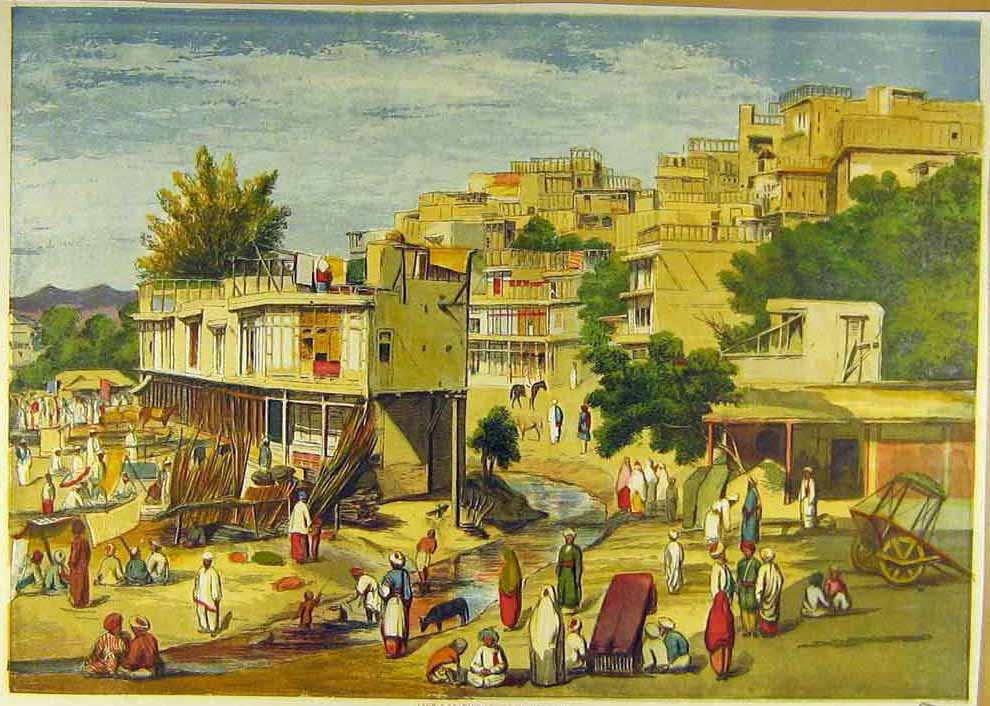
Scimitar. I'm not sure why you're posting all these images from the 1800s (in fact I'm having difficulty seeing any women in the photos).
I know for a fact that veiling did not occur in traditional Pashtun society from pre-Islam to quite a few centuries after the induction of Islam into Afghanistan.Comment
-
ok pre-Islam, ok sure, fine I can concede to that, where are your references for after they converted to Islam though?Originally posted by roadrunner View PostComment
-
I'm not changing any goalposts.Originally posted by ScimitarXEdge View Post
YOU have assumed i was talking about the 1800s and not before.
Traditional pashtun culture existed long before the 1800s.Comment
-
..and Roadrunner ..if veiling was a Middle Eastern custom, why didn't the women prior to Islam wear veils in Turkey, Iran and Arabian peninsula?Comment
-
then show us some referencesOriginally posted by roadrunner View Post
here is some of mine.
Poetry of Ahmad Shah Baba
O heart-ravisher! there will be none other in the world like unto thee:
Draw aside thy veil, or thy lover will of sorrow and grief expire!
With breast consumed by passion, I ever follow in search of thee;
But thy abode is neither on earth, nor in the heavens to be found.
why is AHmad Shah Baba asking someone to draw their veil if veiling wasnt common?Comment
-
The Holy Qur'an says "to lower your skirts". But it does not as far as I understand it, say exactly from where they should be lowered. So what is modest in the U.S. might be quite different in Germany or different again in Indonesia, or Africa. Dress often has so much to do with the climate and environment. Attitude is equally important. Do I dress to get attention from others, to feel comfortable, to protect myself from the elements or to protect myself from hypocrites or sex maniacs?Comment
-
Originally posted by Zayam View Post
there's also another verse, I think it's in Surah Al-Azhab which describes the jalaba to be worn all over the person, jalaba is a garment which does not expose the physical attributes of a woman.
I think the issue of gathering attention is a bit misrepresented, because when women in Muhammad(saw)'s time started veiling they used to get a lot of attention and stares from the Pagan Arabs. So I'm not sure that avoiding attention meaning, avoiding people looking at your peculiarly falls into that.Comment
-
edge wror excellent posts mashallah .Comment
-
I can assure you it wasn't until much much after the 11th century conversion that Afghan women started wearing the veil. I'll need to find references though.Originally posted by ScimitarXEdge View Post
This one quite clearly demonstrates it is NOT a Pashtun tradition to have veiled women.
Originally, it was the Chinese who kept women strictly covered thousands of years ago. In the varying dynasties, white was the preferred colour of full body cloaking, red for weddings. The reasoning behind this full covering for women was none other than wealth: hiding one’s jewellery and fine silk clothes from potential thieves was essential, and a woman was not permitted to leave her house without being covered from head to toe. For members of the aristocracy, they were also concealed underneath layers of curtains surrounding their carriages, suspended upon wooden poles and lifted by servants even if merely travelling from one house to another next door. Furthermore, every person on the street was required to turn around and look away until the procession had passed. Until the end of theQing dynasty in the 20th century, this remained Chinese custom.
Next door to China in Afghanistan, women covered because of the climate, as was the case in varying forms throughout the world, whether heavy fur coats, hats and gloves, or gossamer sarongs.
Afghan women did not, however, veil their faces like the Chinese, nor the Arabs to the West - who wore veils for practical reasons and to fend off blistering desert sandstorms.
Afghan women instead resorted to warm practical clothes to protect against harsh cold and snow. When Christian Byzantium entered Afghanistan after the 4th century AD, the women introduced their own top-to-toe coverings carried down through the centuries from ancient Greece and Macedonia. By then the Byzantines claimed the veils were a change away from paganism to honour God; in fact, veiling had been used for centuries for the same reason as in China: it demonstrated high societal rank. Afghanistan was now bookended on both sides by women who fully covered their bodies. It was not long before almost all Afghan women began adopting the Chinese and Greco-Roman practise of covering to shield precious jewels.
http://www.islamdaily.org/en/islam/8...-suspicion.htmComment
-
Who actually wears a burqa here?Comment
-
Veiling was highly common in pre-Islamic Iran and Arabia.Originally posted by ScimitarXEdge View Post
Where did you get the idea it was not?
Veiling IS a Middle Eastern, Iranian, Arabic cultural tradition.
It is not, and never was, a Pashtun tradition.Comment
Comment