Announcement

Collapse
No announcement yet.

Tajiks, Farsiwan, and Persianized Pashtuns

Collapse
X
 
  • Filter
  • Time
  • Show
Clear All
new posts

  • #91
    Originally posted by Sarbani View Post

    I did some searching and found that Khushal Khan Khattak used the term Afghan so you may be right, but there could have been others that used the term Pashtun, especially considering that they all called their language Pashto instead of Afghani (Pashto has the same etymology as Pashtun) and many Pashtun leaders such as Ahmad Shah Abdali called their land Pashtunkhwa.
    .
    The period of Ahmad Shah Abdali is relatively modern. What i meant was , a very long time ago. Pashto literature doesnt start from Khushal Khan Khattak. Pir Roshan and Arzani Kheshgi were poets of 16th century, but i dont know whether word Pashtun appear in Roshniya literature or not. Though Akhund Darweza of 16th century, uses word 'Afghan'. Legend is not history, but if Pashtuns in 16th century had legend of Afghan son of Saul.........then it implies that word Afghan is not of foreign extraction. Instead of Afghan , the legend should have been of Malik Pashtun bin Saul, but thats not the case.

    Kheen dialect even modifies the loanwords (e.g Hoshiar to hokhiar), so obviously its dialectal modification. Ush (camel) is original word, not "Ukh".

    We refer to ourselves as Pashtuns/Pakhtuns, while usage of Afghan is more in literature. So its obvious that Pashtun is our own word, but why it doesnt appear in very old sources, baffles me.
    Last edited by Samandri; 04-28-2016, 11:23 PM.

    Comment


    • #92
      Originally posted by History of Pashtuns View Post
      The period of Ahmad Shah Abdali is relatively modern. What i meant was , a very long time ago. Pashto literature doesnt start from Khushal Khan Khattak. Pir Roshan and Arzani Kheshgi were poets of 16th century, but i dont know whether word Pashtun appear in Roshniya literature or not. Though Akhund Darweza of 16th century, uses word 'Afghan'. Legend is not history, but if Pashtuns in 16th century had legend of Afghan son of Saul.........then it implies that word Afghan is not of foreign extraction. Instead of Afghan , the legend should have been of Malik Pashtun bin Saul, but thats not the case.

      Kheen dialect even modifies the loanwords (e.g Hoshiar to hokhiar), so obviously its dialectal modification. Ush (camel) is original word, not "Ukh".

      We refer to ourselves as Pashtuns/Pakhtuns, while usage of Afghan is more in literature. So its obvious that Pashtun is our own word, but why it doesnt appear in very old sources, baffles me.
      Pashtuns have always been a largely illiterate population with the elite often preferring Persian to Pashto. The elite would definitely have spoken a form of Pashto with much more Persian loanwords than the Pashto most locals spoke (as is the case today). That could be the reason why Afghan was used instead of Pashtun in earlier works (including the Saul myth), "just to appear more formal/sophisticated".

      The earliest works of Pashto are only in the 16-17th century, which is relatively recent, and Pashto was spoken for ages before that. So its hard to rely on Roshan so much even if he is the best evidence we have so far because 100% of the theories put out by scholars give the term Afghan a foreign origin.

      Comment


      • #93
        Originally posted by Sarbani View Post
        Pashtuns have always been a largely illiterate population with the elite often preferring Persian to Pashto. The elite would definitely have spoken a form of Pashto with much more Persian loanwords than the Pashto most locals spoke (as is the case today). That could be the reason why Afghan was used instead of Pashtun in earlier works (including the Saul myth), "just to appear more formal/sophisticated".

        The earliest works of Pashto are only in the 16-17th century, which is relatively recent, and Pashto was spoken for ages before that. So its hard to rely on Roshan so much even if he is the best evidence we have so far because 100% of the theories put out by scholars give the term Afghan a foreign origin.
        Its just that preserved Pashto literature dates back to 16th century, otherwise the Daftar of Shaikh Mali Yusufzai, which is mentioned by Khushal Khan Khattak, is of 15th century and is lost. Makhzan-i-Afghani also mentions a Pashto poet Shaikh Isa Mashwani of Sher Shah Suri period, and shares some couplets from his poetry, his work is also lost. Khan Khaju is also said to have been a Pashto poet, his work is also lost. There would have been many Pashto works before 15th century, its just that they got lost. Its not unusual, many pashto works of relatively even recent period are lost, for example diary/autobiography of Khushal Khan Khattak

        Comment


        • #94
          Originally posted by History of Pashtuns View Post
          Its just that preserved Pashto literature dates back to 16th century, otherwise the Daftar of Shaikh Mali Yusufzai, which is mentioned by Khushal Khan Khattak, is of 15th century and is lost. Makhzan-i-Afghani also mentions a Pashto poet Shaikh Isa Mashwani of Sher Shah Suri period, and shares some couplets from his poetry, his work is also lost. Khan Khaju is also said to have been a Pashto poet, his work is also lost. There would have been many Pashto works before 15th century, its just that they got lost. Its not unusual, many pashto works of relatively even recent period are lost, for example diary/autobiography of Khushal Khan Khattak
          Interesting, they would be a gem to find. Afghanistan/Pakistan is one of the least explored region by linguists/historians/archaeologists and there is a wealth of information that could be found by just a little searching.

          Still, the 14-15th century is around the same period as the 16th and also relatively recent. In my previous comment, I meant a much earlier time period. If any scholar had theorized a Pashto origin for the term Afghan, then I would have doubts, but until then I see it as an exonym. Btw, do you have any theories on the term "Pashtun" since you said it was unrelated to Pakhta and Paktya?

          Comment


          • #95
            Originally posted by Sarbani View Post
            Interesting, they would be a gem to find. Afghanistan/Pakistan is one of the least explored region by linguists/historians/archaeologists and there is a wealth of information that could be found by just a little searching.

            Still, the 14-15th century is around the same period as the 16th and also relatively recent. In my previous comment, I meant a much earlier time period. If any scholar had theorized a Pashto origin for the term Afghan, then I would have doubts, but until then I see it as an exonym. Btw, do you have any theories on the term "Pashtun" since you said it was unrelated to Pakhta and Paktya?
            According to Raverty, Pashtun is derived from word 'Pusht' i.e 'back'. Since the tribes lived on the back of the mountain. I dont know on what he based it.

            14th century (from 1300 A.D to 1400 A.D) is not same as 16th century, and 16th century is not same as 17th century. There may be some undiscovered and lost Pashto literature dating back to 13th and 14th century, but dont expect it be in the range of 6th or 7th century A.D. It seems Patta Khazana the fraud has elevated your expectations. What is relatively recent and modern (Ahmad Shah Abdali's period) appears old to you and what is medieval , appears 'relatively recent' to you. If there is no ancient Pashto literature, then 16th century work is the "oldest", not recent.

            Comment


            • #96
              Originally posted by History of Pashtuns View Post
              According to Raverty, Pashtun is derived from word 'Pusht' i.e 'back'. Since the tribes lived on the back of the mountain. I dont know on what he based it.

              14th century (from 1300 A.D to 1400 A.D) is not same as 16th century, and 16th century is not same as 17th century. There may be some undiscovered and lost Pashto literature dating back to 13th and 14th century, but dont expect it be in the range of 6th or 7th century A.D. It seems Patta Khazana the fraud has elevated your expectations. What is relatively recent and modern (Ahmad Shah Abdali's period) appears old to you and what is medieval , appears 'relatively recent' to you. If there is no ancient Pashto literature, then 16th century work is the "oldest", not recent.
              I didn't think Abdali's period was ancient, I only mentioned him cause I couldn't think of anyone else that used the term Pakhtunkhwa. I assumed at least some other Pashtuns had since Abdali had, but I'm not very knowledgeable on Pashto literature.

              The 16th century is very far back, but I'm just saying that the word Abghan is ancient and texts from the 1500s are not even close to acceptable for determining an etymology. They can certainly give us lots of information, but regarding our discussion, it simply isn't enough. You raise a good point by saying that the early poets (all literate upperclassmen) used the term Afghan, but they also used the term Pashto, which is a cognate of Pashtun, so its hard to determine from that information alone. I'm not saying its 100% percent impossible for it to have been an endonym, but so far the current evidence says no.

              Comment


              • #97
                Originally posted by Sarbani View Post
                My hypothesis was based on it sounding similar to Pakhta, which was the name for the ethnicity that lived in the territory inhabited by Pashtuns today in the Vedas. Also, the ethnicity of the people there was Paktyan, which sounds similar to both Pakhto and Pakhta. If the term Pashtun has nothing to do with either of those, then where did it come from?


                What makes you so sure the southern dialect is the original one?


                I did some searching and found that Khushal Khan Khattak used the term Afghan so you may be right, but there could have been others that used the term Pashtun, especially considering that they all called their language Pashto instead of Afghani (Pashto has the same etymology as Pashtun) and many Pashtun leaders such as Ahmad Shah Abdali called their land Pashtunkhwa.


                It was a name started by Persians (or maybe Indians) and then continued by outsiders. Similarly, India was a name started by people that lived in the parts of Asia west of India and then continued by outsiders (Europeans, Africans, etc.).


                Abghan was indeed used before Afghan was, but to make the case for it being the original endonym, you have to be able to prove its etymology to be of Pashto origin. All the proposed etymological roots for the word Afghan that I have seen have given it a foreign origin.
                The word "Afghanistan" is of Sanskrit origin, not Persian. In Persian, it would be stan-e-Afghan or something like that. Pashtuns have been calling themselves Afghan for a long time, it is probably not of foreign origin. To think that Afghan is of foreign origin is just as dumb as saying "Iranian" is of foreign origin.
                "If a lion comes and takes your share, go get it back from the mouth of the lion"

                Comment


                • #98
                  Originally posted by Aryana View Post
                  The word "Afghanistan" is of Sanskrit origin, not Persian. In Persian, it would be stan-e-Afghan or something like that. Pashtuns have been calling themselves Afghan for a long time, it is probably not of foreign origin. To think that Afghan is of foreign origin is just as dumb as saying "Iranian" is of foreign origin.
                  Didn't you just say it was of Sanskrit origin?? Sanskrit counts as a foreign language.

                  Comment


                  • #99
                    Originally posted by Sarbani View Post
                    Didn't you just say it was of Sanskrit origin?? Sanskrit counts as a foreign language.
                    The word "Afghanistan" is of Sanskrit origin, not "Afghan" if you read my post properly.
                    "If a lion comes and takes your share, go get it back from the mouth of the lion"

                    Comment


                    • Originally posted by Sarbani View Post
                      You're probably right regarding the roots of the word. I was just saying that Afghan was the word that Persians used for Pashtuns. They called us "Afghan" instead of the word Pashtun historically.
                      Persians prior to Islam/Arab invasion did not have F word either. This is why it was called Pars, and not Fars originally. So wouldn't they have called Pashtuns more like ''Apgan'' or ''Apghan''?


                      Originally posted by Win Butler View Post
                      Do you have any sources to back this up? What is a "real" Tajik? One can easily concoct arbitrary criteria to distinguish "real" Pashtuns from "fake" ones. Many Pashtuns are actually Pashtunized Dardics. There are Persianized Dardics as well now referred to as Tajik. Most ethnic groups emerge in a similar manner, doofus. Pashtuns don't have a monopoly on East Iranic-ness otherwise you could say even Pamiris are Pashtuns. Some Afghan Tajiks used to speak other East Iranic languages like Parachi, Ormuri, etc. What matters now is that they speak Persian and practice Persian culture and are thus culturally different from Pashtuns. There is a reason why the centers of intellectual activity in Afghanistan are Kabul, Herat, and Badakhshan.

                      Tajiks north of the Oxus and Afghan Tajiks from Balkh, Takhar, Kunduz, Samangan, Faryab, etc. essentially practice the same culture and are of the same ethnic stock. Afghans like to say Moulana/Rumi was from Balkh but he was technically from the Tajikistani portion of Greater Balkh in Vakhsh, Tajikistan. Southern Tajikistan is historically known as Northern Takharistan.


                      I am interested to search this term ''Afghan'' myself.

                      In Afghanistan, amongs the Tajiks and other higher class urban people, originally the term ''Awghan'' was a derrogatory term not much different from the term ''Hazara'' (which also was a derrogatory term for anyone that looked Mongol, but the Hazaras eventually have accepted it, and it's no longer a derrogatory term, but an ethnic group name for the Hazaras). ''Awghan'' was meant as derrogatory for nomadic pashto speakers in the manner that one was uncultured, uncivilized, nomadic, etc...

                      Today the term Afghan is nationality. Interesting how terms can have and different definition/canotion depending on the time.

                      I think there has been a lot of Persianization and Pashtunization going on in Afghanistan through out the ages. A lot of people who are Pashtuns might not even be Pashtun, and a lot of people who are Tajik are not even Tajik. Convertions have happened over the entire region, not just with Pasthuns and Tajiks, but I believe there have existed more groups than Tajiks and Pashtuns. Even tribal Pashtuns are obviously not inbred, this means they have Pashtunized various non-Pashtuns or married into non-Pashtuns/wifed non-Pashtuns...

                      Finding out who is exactly what might be rather complicated than just saying he speaks this or he looks this. After all you have the avarage Pakistani Pathans who look little to no different from Indics/Punjabis:


                      and you have Afghan Hazaras who look like Lawrence of Arabia:


                      The Afghan Hazara above and this Afghan Pashtun below is geneticaly and phenotypically closer to each other than they are to Pakistani Pathans who are Indic in genetics and phenotype and closer to their Punjabi bretheren than to Afghans:


                      A separation/disolving of Afghanistan with regards to ethnicity would've been ideal in paper, but people of different ethnic groups are scattered throughout the country making it virtually impossible to draw lines.
                      Last edited by Forreigner; 07-30-2016, 12:54 PM.

                      Comment


                      • Originally posted by Forreigner View Post
                        After all you have the avarage Pakistani Pathans who look little to no different from Indics/Punjabis:


                        and you have Afghan Hazaras who look like Lawrence of Arabia:


                        The Afghan Hazara above and this Afghan Pashtun below is geneticaly and phenotypically closer to each other than they are to Pakistani Pathans who are Indic in genetics and phenotype and closer to their Punjabi bretheren than to Afghans:


                        A separation/disolving of Afghanistan with regards to ethnicity would've been ideal in paper, but people of different ethnic groups are scattered throughout the country making it virtually impossible to draw lines.
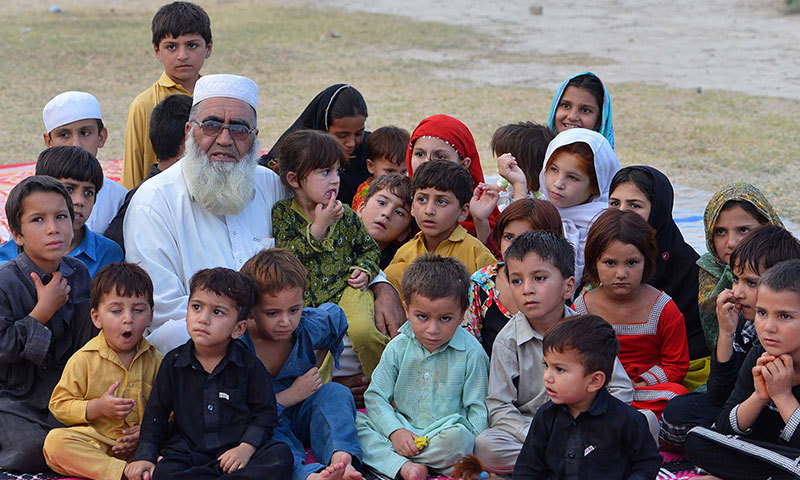
                        Nice try at trolling but you fail, why do you post the same individual pictures of the most indic looking pashtun from Pakistan? This is the group pictures of Pakistani pashtuns which Manzareh posted in another thread and this is the reality for anyone who has been to Pakhunkhwa in Pakistan like myself.

                        People of Swat 'Paki Pathans'


                        Swat Valley


                        Swat Valley


                        Dravidian Paki Pathans in Wana


                        Even DNA results have shown that Pashtuns in Pakistan and Afghanistan have the same genetics. Use your logic, how can a british create imaginary line called Duran Line, suddenly change people's looks, culture etc?

                        Comment


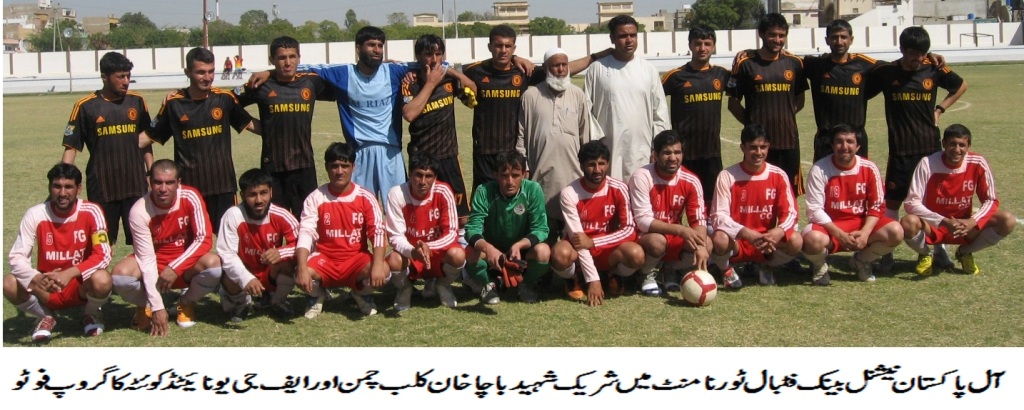
                        • Peshawar Football team


                          Swat Valley Paki Pathan Ranger
                          Cop.jpg
                          ----------

                          *You cannot climb the ladder of success with your hands in your pockets*

                          Originally posted by Karachi
                          like I said, there was only one reason I pretended to be pathan, for a girl, who was from Afghan forums and also registered here

                          Comment


                          • Originally posted by Forreigner View Post
                            Persians prior to Islam/Arab invasion did not have F word either. This is why it was called Pars, and not Fars originally. So wouldn't they have called Pashtuns more like ''Apgan'' or ''Apghan''?
                            Interesting point, but one should note that Afghan, Apghan etc are foreign words used for Pashtuns and not words Pashtuns called themselves.

                            A lot of people who are Pashtuns might not even be Pashtun, and a lot of people who are Tajik are not even Tajik. Convertions have happened over the entire region, not just with Pasthuns and Tajiks, but I believe there have existed more groups than Tajiks and Pashtuns.

                            This is actually a controversy I have with many Pashtun Nationalists, who often, based on very weak and flimsy linguistic associations are trying to claim Bactrians, Pactyans , Paktute, Pactuye etc. as evidence of ancient Pashtuns.

                            This argument is phonetically faulty, since Pashtuns, developed the harder dialect of Pashto much later, originally we would had to have been "Soft" Dialect speakers if we agree that Pashto branched from Avestan somehow. This would mean there's evidence from ethno-linguistics that Pashto as a language must have come from peoples who were not originally Pashtun, but ended up merging and creating a substrate for Pashto as a language, which in turn established the strata for the emergence of Pashtuns. These people probably spoke Soghdian or similar languages that inherited the phonetic attributes of Avestan which they lent into Pashto. It is most likely their collective genes which reflect Pashtuns today. Now I want to emphasize I'm not trying to suggest that linguistics implies genetics, but language movements and population movements often coincide.


                            Even tribal Pashtuns are obviously not inbred, this means they have Pashtunized various non-Pashtuns or married into non-Pashtuns/wifed non-Pashtuns...
                            For sure, there are stories for example that the Kharotai tribe were originally Ghaznavid Turks who eventually ended up blended into the Ghilzai tribes. Again these are stories, but these stories suggest that people of other nationalities or origins are said to have become apart of the Pashtun cultural landscape. Ghilzai's themselves are also alleged to have Turkic origins. Even some of the names of the Ghilzai tribes like "Hotak" and "Kharotai" don't have any meanings in Pashto, We'll need to have more rigorous research before we can iron out the details, but there's enough hints towards heterogenous origins of Pashtuns

                            The Afghan Hazara above and this Afghan Pashtun below is geneticaly and phenotypically closer

                            I want to caution that isn't a scientifically accurate statement, People can be phenotypically close but drastically far apart.

                            For example Australoids and African Blacks are phenotypically very close, but genetically pretty distant.Finding google pictures isn't going to give us aggregate representations of populations simply because they haven't been aggregated. You need some software to do do that.
                            Last edited by Iblis_Efreetzai; 08-01-2016, 03:33 PM.

                            Also, as economist Kaushik Basu says: "For a nation to progress it is important for people to spend time on science, mathematics and literature instead of spending time showing that 5,000 years ago their ancestors did science, mathematics and literature."


                            Originally posted by ذو الفقار
                            don’t try to be smart.

                            Comment


                            • You can spot Pashtuns anywhere.
                              ----------

                              *You cannot climb the ladder of success with your hands in your pockets*

                              Originally posted by Karachi
                              like I said, there was only one reason I pretended to be pathan, for a girl, who was from Afghan forums and also registered here

                              Comment


                              • Originally posted by Iblis_Efreetzai View Post
                                Interesting point, but one should note that Afghan, Apghan etc are foreign words used for Pashtuns and not words Pashtuns called themselves.


                                This is actually a controversy I have with many Pashtun Nationalists, who often, based on very weak and flimsy linguistic associations are trying to claim Bactrians, Pactyans , Paktute, Pactuye etc. as evidence of ancient Pashtuns.

                                This argument is phonetically faulty, since Pashtuns, developed the harder dialect of Pashto much later, originally we would had to have been "Soft" Dialect speakers if we agree that Pashto branched from Avestan somehow. This would mean there's evidence from ethno-linguistics that Pashto as a language must have come from peoples who were not originally Pashtun, but ended up merging and creating a substrate for Pashto as a language, which in turn established the strata for the emergence of Pashtuns. These people probably spoke Soghdian or similar languages that inherited the phonetic attributes of Avestan which they lent into Pashto. It is most likely their collective genes which reflect Pashtuns today. Now I want to emphasize I'm not trying to suggest that linguistics implies genetics, but language movements and population movements often coincide.
                                It isn't just upon the resemblance of names (though that's definitely the case). Pashtuns are no doubt a unification of Eastern Iranic tribes, these include Scythians, Bactrians, Kushans and Hepthalites. These people al spoke Eastern Iranic dialects, were tribal people, and even looked like Pashtuns.


                                Give this Scythian man a thick facial beard and he looks like an ordinary Pashtun. Do you think that Pashtuns came out of nowhere, or are you a follower of the Israelite theory?
                                "If a lion comes and takes your share, go get it back from the mouth of the lion"

                                Comment

                                Working...
                                X