Announcement

Collapse
No announcement yet.

Shia Islam for Dummies: Ask Those who Know

Collapse
X
 
  • Filter
  • Time
  • Show
Clear All
new posts

  • Originally posted by Qrratugai View Post
    Awwww thank you so much for seeing me this way, Sangar gula! How generous of you! How I wish I could return the good thought, though . . .


    Certainly not to anti-Shiite sources like you keep doing. While there's no harm in looking at those to understand what the opposing side has to say about them, you must turn mostly to Shiite sources themselves if you are sincere about learning. And when you read them, read them with an open mind, with the intention of learning something from them about a people who consider themslves as good Muslims as their opponents consider themselves.

    Or are you asking for specific names for Shiite books/literature? Do a literature review yourself. You live in a western country, so it shouldn't be difficult to find something pro-Shiite or just neutral towards Shiites. Once you find a collection, share it with me and I'll share my own with you as well.


    Wait, don't dodge the question. Please answer. Which books are we talking about here? Mention a few titles.

    I might be misinformed. I have learned that Al Kafi is a very important book. And that according to shi'ite scholars, its the most authentic book.

    So if I am wrong which books do I need to read to learn about Shi'ite Islam?

    Care to mention a few?
    [SIZE="4"][B][CENTER][URL="www.quranawsunnat.com"]www.quranawsunnat.com
    [/URL]
    [URL="www.youtube.com/Sangartube"]www.youtube.com/Sangartube
    [/URL][/SIZE]
    Mullah 4 Life! [/CENTER][/B]

    Comment


    • Originally posted by Abu Hurayrah View Post
      The khawarij formed in the caliphate of Uthman ibn Affan (ra). During Siffin they split, they fought against Ali (ra), and others just abandoned Ali (ra) and did not help him. Muawiyah (ra) and Ali (ra) fought for the caliphate. Ali (ra) was the caliph and was eventually in the right. But this does not allow us to curse or degrade certain Sahaba, because of their personal affairs. They did not consider each other as Kufaar, nor did they intend to kill each other. The whole battle was under influence of the hypocrites and khariji's, just like when they attacked the camp of Talha/Zubayr and simultaneously, the camp of Ali (ra), which made both of them believe they where attacked by each other.

      Remember when the sword of Zubayr ibn Al Awaam was brought to Ali (ra) (after he was killed at , after the battle of Jamal, ), he told the killer, I give you the news of the hellfire''

      Because Ali (ra) knew how much the prophet (s.a.w.) loved Zubayr, and how many times Zubayr had protected the prophet (s.a.w), he also knew tat the prophet (s.a.w.) guaranteed paradise for Zubayr, and what his status was among his Sahaba.
      Sorry to interrupt; not my topic but I just love your logic in most of your replies! lol

      I have many questions regarding what you said but due to the shortness of time I won't get in details. Here, read what the Prophet (SAW) said, according to Bukhari, regarding the killers of Ammar (RA)

      Bukhari Volume 1, Book 8, Number 438:
      Narrated 'Ikrima:
      Ibn 'Abbas said to me and to his son 'Ali, "Go to Abu Sa'id and listen to what he narrates." So we went and found him in a garden looking after it. He picked up his Rida', wore it and sat down and started narrating till the topic of the construction of the mosque reached. He said, "We were carrying one adobe at a time while 'Ammar was carrying two. The Prophet saw him and started removing the dust from his body and said, "May Allah be Merciful to 'Ammar. He will be inviting them (i.e. his murderers, the rebellious group) to Paradise and they will invite him to Hell-fire." 'Ammar said, "I seek refuge with Allah from affliction."
      Secondly, I thought you guys believed that by "ulil amre minkom" in "Atee'ullah wa Atee ur Rasool wa Ulil Amre Minkom" in Quran (4:59), it is meant "rulers" (although that's not what I believe). So if this your belief then how dare you say that we can't "curse or degrade certain Sahaba, because of their personal affairs"? The rebellion was against a Muslim ruler, or Caliph of the time, it was not "personal affairs". A rebellion doesn't fall under "personal affairs". And as I said, according to the above ayah, per Sunnis, it means "rulers" or "leaders", here check it for yourself, and Quran says (check the aya above) if you go against "ulil amrs" then you are Jahanami. So this way Moavia (LA) is jahanami, what do you say?
      Last edited by Guest; 08-31-2010, 12:57 AM.

      Comment


      • Sorry to interrupt; not my topic but I just love your logic in most of your replies! lol
        There is no need to be sarcastic about this, Allah subhana wa ta'ala says in the Qur'aan, which can be translated as:

        If two parties among the Believers fall into a quarrel, make ye peace between them: but if one of them transgresses beyond bounds against the other, then fight ye (all) against the one that transgresses until it complies with the Command of Allah; but if it complies, then make peace between them with justice, and be fair: for Allah loves those who are fair (and just), The Believers are but a single Brotherhood: so make peace and reconciliation between your two (contending) brothers; and fear Allah, that ye may receive Mercy." [Surat Al-Hujarat, verses 9 and 10]

        Allah (swt) mentions two parties of believers who can fight each other. What if the parties do not acknowledge that they are in the right or in the wrong? Each party will think they are in the right, and see each other as the transgressors.

        The prophet (pbuh) also said in several narrations about Uthman ibn Affan (ra) , O Uthman, If Allah gave you one day the leadership over this nation, and the hypocrites wanted you to remove your clothes which Allah gave you, then do not do it, and he repeated this for three times, (can be found in the collection of ibn Majah),

        Ka'ab ibn Murrah (ra) testified on Uthman (ra) innocence, when he was standing in front of Muawiya's army and he said, if it where not for the narration of the prophet, I would not support Muawiyah against Ali, (to punish Uthman's murderers), the prophet told us about the afflictions and he acknowledged them, then a masked man passed by and the prophet peace be upon him said, this man will be on the guidance, Ka'b went to him and he was Uthman, he told the prophet, this man? he said Yes, (this narration can be fount in the collection of At Tirmithi),

        What do we learn from this? Like I said, most of the men thought they where on the right path, it was their Ijtihaad and they where Sahaba, except for the hypocrites among them. This is why the scholars say that those fitan where issues of Ijtihad and we are not supposed to indulge ourselves in it. Off course the men in the army of Muawiyah (ra) thought they where right, because the group which assassinated Uthman (ra), where among the army of Ali (ra). In their eyes, it was not just to give allegiance to Ali (ra), since the killers of Uthman where standing by his side.

        Also a great deal of the companions of the Prophet peace be upon him resisted from selling or buying weapons, nor did they participate in the battle, Omran ibn Haseen for example, Sa'd ibn Abi Waqaas, Abdullah ibn Umar (r.a).

        It is either Muawiyah (ra) thought that the truth was on his side, or he was transgressing deliberately, in both cases, he was not infallible.

        It should also be clear that Ali (ra) did not consider Muawiyah (rah) as a criminal, a kafir, or a renegade. This is what Ali (ra) said in Nahjul Balagha, (a book which is accepted by the shi'a).

        "In the beginning of our matter, the people of Syria [Muawiyyah’s forces] and us met. It is obvious that our God is one, our Prophet is one, and our call in Islam is one. We do not see ourselves more in faith in Allah or more in believing His messenger than them, nor they do. Our matter is one, except for our disagreement in Uthman’s blood, and we are innocent from his murder.” [Nahjul Balagha, volume.3 page.648]"

        It is like when Ali (ra) was asked before the battle of Jamal, "Are they muslims?" He answered in the affirmative and said, they where mushrikin and they have come to Islaam, , then one asked him, are they hypocrites ? " He said, hypocrites are those who do not remember Allah, then one asked, then who are they? Ali (ra) said, they are our brothers who have rebelled from us" can be red in al bayhaqi.

        And it should be noted that Ali (ra) was not protecting the killers of Uthman (ra), nor was he a supporter of his death. Every muslim knew the narration of the prophet peace be upon him when he was standing on Uhud with Abu Bakr, Umar and Uthman and Uhud began to shake, he said " O Ohud, beware, for on you there is a prophet, A Siddiq, and two martyrs''
        Last edited by Guest; 08-31-2010, 07:42 PM.

        Comment


        • Originally posted by Abu Hurayrah View Post
          There is no need to be sarcastic about this, Allah subhana wa ta'ala says in the Qur'aan, which can be translated as:

          If two parties among the Believers fall into a quarrel, make ye peace between them: but if one of them transgresses beyond bounds against the other, then fight ye (all) against the one that transgresses until it complies with the Command of Allah; but if it complies, then make peace between them with justice, and be fair: for Allah loves those who are fair (and just), The Believers are but a single Brotherhood: so make peace and reconciliation between your two (contending) brothers; and fear Allah, that ye may receive Mercy." [Surat Al-Hujarat, verses 9 and 10]
          It would be great if you could please stop posting verses out of their context. This verse is about brotherhood; and Jang E Siffin is a totally different topic. This shows your desperate attempt to protect your leader (moavia). Here is a tafseer for you.
          However different the Muslims may be in race, colour and worldly possessions, they are brothers in faith. This is humanisation in the best sense of the word. Muslim brotherhood is the greatest social ideal known to human society. All the forms of worship (of Allah) prescribed by Islam-salat, hajj etcetera-bring them together in one brotherhood. Whatever be his race, colour or antecedents, every Muslim is received into the brotherhood of believers, and takes his place as an equal among equals.
          The Holy Prophet said:
          "None of you have faith until he desires for his brother what he desires for himself.
          Attend to the sick among your brothers; go at least two miles with the funeral of a believer; accept invitation of your brother in faith; keep your regular contact with the believers wherever they are; remove their distress; deliver them from oppression."
          What if the parties do not acknowledge that they are in the right or in the wrong? Each party will think they are in the right, and see each other as the transgressors.
          If there is a quarrel among two parties, one of them must be on Haq and the other must be on Batil. And beside, you didn't look enough, the prophet (SAW) in the above Hadeeth clearly said that the killers of Ammar (RA) (i.e. Moavia's army) would be inviting him (i.e. Ammar (RA)) to HELLFIRE and that Ammar(RA) (i.e. Ali's (AS) army) would be inviting them to rah-e-haq. Two things are cleared from this Hadeeth:
          1) Ammar (RA) and his party is on the haq (see the Hadeeth, "He will be inviting them (i.e. his murderers, the rebellious group) to Paradise").
          2) The rebellious party is nahaq/batil (see the Hadeeth, "they will invite him to Hell-fire")
          This is clear as crystal blue sky! If you don't accept it is either you are just stubborn or insincere in accepting the truth.

          The prophet (pbuh) also said in several narrations about Uthman ibn Affan (ra) , O Uthman, If Allah gave you one day the leadership over this nation, and the hypocrites wanted you to remove your clothes which Allah gave you, then do not do it, and he repeated this for three times, (can be found in the collection of ibn Majah),

          Ka'ab ibn Murrah (ra) testified on Uthman (ra) innocence, when he was standing in front of Muawiya's army and he said, if it where not for the narration of the prophet, I would not support Muawiyah against Ali, (to punish Uthman's murderers), the prophet told us about the afflictions and he acknowledged them, then a masked man passed by and the prophet peace be upon him said, this man will be on the guidance, Ka'b went to him and he was Uthman, he told the prophet, this man? he said Yes, (this narration can be fount in the collection of At Tirmithi),

          What do we learn from this?
          What we learn from this is that you are not answering the original questions and posting irrelevant stuff. And look at your sources, "can be found", uncertainty, shows how much "authenthic" your narrations are; beside, Bukhari has more power over tirmidhi narrations.

          Like I said, most of the men thought they where on the right path, it was their Ijtihaad and they where Sahaba, except for the hypocrites among them. This is why the scholars say that those fitan where issues of Ijtihad and we are not supposed to indulge ourselves in it. Off course the men in the army of Muawiyah (ra) thought they where right, because the group which assassinated Uthman (ra), where among the army of Ali (ra). In their eyes, it was not just to give allegiance to Ali (ra), since the killers of Uthman where standing by his side.
          Doesn't matter what most of the "men" thought, because what we care about is what the Prophet (SAW) said. And he said the rebellious group will be inviting people to hellfire! And you are making more controversial claims in your replies for which I don't have time to argue. Like in this very post, you claim that the killer of Usman were from Ali (AS)'s army? Ludicrous. But let's come back to the topic on hand.

          It is either Muawiyah (ra) thought that the truth was on his side, or he was transgressing deliberately, in both cases, he was not infallible.
          So he wasn't infallible and therefore cannot be held responsible or accountable for his actions? Are you serious? So then the people who killed Usman also shouldn't be cursed because they weren't infallible and therefore prone to make mistakes. So just because I am fallible I can go ahead and kill fellow muslims and claim that they had killed XYZ and in reality which wasn't the case and so I should expect to be forgiven? You must be kidding by presenting that logic.

          It should also be clear that Ali (ra) did not consider Muawiyah (rah) as a criminal, a kafir, or a renegade. This is what Ali (ra) said in Nahjul Balagha, (a book which is accepted by the shi'a).

          "In the beginning of our matter, the people of Syria [Muawiyyah’s forces] and us met. It is obvious that our God is one, our Prophet is one, and our call in Islam is one. We do not see ourselves more in faith in Allah or more in believing His messenger than them, nor they do. Our matter is one, except for our disagreement in Uthman’s blood, and we are innocent from his murder.” [Nahjul Balagha, volume.3 page.648]"
          From this narration it is clear that Imam Ali (AS) tried to settle things peacefully; he did not want blood shed. And the funny thing is, this matches perfectly with the Aya that you posted above, where it says to settle things peacefully. So Imam Ali (AS) was doing the right thing (i.e. obeying Quran, see aya above). But Moavia (LA) was prone on getting "revenge", although the motives behind his action were of capturing the Caliphate and not taking "revenge".

          "O Ali! A rebellious group will fight against you, and you will be on the truth. Whoever does not support you on that day will not be from us [i.e. they will be jahanami]" Kanzulal Ummal, hadeeth 32970.


          And it should be noted that Ali (ra) was not protecting the killers of Uthman (ra), nor was he a supporter of his death. Every muslim knew the narration of the prophet peace be upon him when he was standing on Uhud with Abu Bakr, Umar and Uthman and Uhud began to shake, he said " O Ohud, beware, for on you there is a prophet, A Siddiq, and two martyrs''
          LOL seriously, what does this have to do with moavia being jahanami or not? This shows your inability of answering the questions.
          Tell me, do you need references from your books proving Ali(AS) to be on HAq and moavia to be jahanami? Just say yes, and i will be more than happy to post scan pages for you here from your own books.

          And again man, go and read what I asked you about, you gol moled my questions just like you do everytime. Or should I post my questions again, in bold, for you to see it?
          Anyways, the truth speaks for itself.
          Accept it or be among the transgressors.
          Quran 17:81 And say: "Truth has (now) arrived, and Falsehood perished: for Falsehood is (by its nature) bound to perish."
          Last edited by Guest; 09-01-2010, 01:17 AM.

          Comment


          • It would be great if you could please stop posting verses out of their context. This verse is about brotherhood; and Jang E Siffin is a totally different topic. This shows your desperate attempt to protect your leader (moavia). Here is a tafseer for you.
            I am sorry for a late reply, I was occupied with certain obligations.

            My desperate attempt to protect my leader Muawiyah (ra) ? So be it. I am just looking at the facts and the course of history. It is not very hard to examine their sayings and motives and draw a non biased conclusion. I posted the intentions of Muawiya (r.a) and the intention Of Ali (ra).

            As far the aya which I posted goes, you say it's out of context? Why is it out of context? It is about two groups of muslims who are fighting against each other, and one group could transgress in the verse, which should be fought. It is only out of context by your , sorry for saying, narrow understanding of things.

            It can be only out of context, and it is only out of context because you and your shia tafsir + ulamaa are doing takfir on Muawiyah and his followers, they don't even consider them as muslims, while Ali (ra) himself is saying ''Our God is one, Our Prophet is one, And our Book is one''

            It is only out of context, if you consider the other party as NON MUSLIMS.

            So tell me, was Ali (ra) lying? And is it proper for you to stand up and start cursing?

            If there is a quarrel among two parties, one of them must be on Haq and the other must be on Batil. And beside, you didn't look enough, the prophet (SAW) in the above Hadeeth clearly said that the killers of Ammar (RA) (i.e. Moavia's army) would be inviting him (i.e. Ammar (RA)) to HELLFIRE and that Ammar(RA) (i.e. Ali's (AS) army) would be inviting them to rah-e-haq. Two things are cleared from this Hadeeth:
            1) Ammar (RA) and his party is on the haq (see the Hadeeth, "He will be inviting them (i.e. his murderers, the rebellious group) to Paradise").
            2) The rebellious party is nahaq/batil (see the Hadeeth, "they will invite him to Hell-fire")
            This is clear as crystal blue sky! If you don't accept it is either you are just stubborn or insincere in accepting the truth.
            In the beginning of this topic, I noted that Ali (ra) was more deserving and he was the calipha. But this does not mean that you should close your eyes and judge everybody else. Ali (ra) settled with them and they agreed that a calipha should be chosen, by holding a Sh'uraa. That is point 1. Point 2: How could Ali (ra) negotiate according to you with those ''kufar'' while he was appointed by God to be the ''infallible'' imam? This is not something to negotiate about, The prophet (s.a.w.) did not negotiate on his prophet hood, you and I can not negotiate on not praying, because those things are ordered by Allah (swt). So if Ali (ra) was chosen by Allah as the ''infallible imam'', then how could he compromise.

            Point 3, The same argument can be used for the other party as well, because the killers of Uthman (ra) where among the group of Ali (ra), when they heard about the death of Ammar, they said they killed Ammar, because they had brought him to the battlefield. None of them could imagine that the killers of Uthman (ra) would be on the party which would be right. And everyone is agreed upon the fact that Ali (ra) was right on this case, but also do mention that the intention of both of them was justified by there motives and evidences. Except that of the khawaari'j and Saba'ites in the group of Ali (ra) which where a minority. It should also be noted that the narratin about inviting to the hell-fire does not assure all those thousands of Muslims to the hell-fire. If I asked you to quite as salaah, I would be inviting you to the hell-fire, but does that mean I go to hell, and you also will he going to hell if you followed me in this kufr? Off-course not. The narration only sheds light on the party which was on the right and the party which was the transgressor. And none of the parties where infallible or ''masu'um''.

            And look at your sources, "can be found", uncertainty, shows how much "authenthic" your narrations are; beside, Bukhari has more power over tirmidhi narrations.
            - Sunan ibn Majah, number 112, the virtues of the sahaba, /Saheeh ibn Majah number narration number 90.

            - At Tirmidhi number 3704

            - Musnad Ahmad ibn Hambal, number 720, the book on virtues of the companions.

            Here you go.

            So he wasn't infallible and therefore cannot be held responsible or accountable for his actions? Are you serious? So then the people who killed Usman also shouldn't be cursed because they weren't infallible and therefore prone to make mistakes. So just because I am fallible I can go ahead and kill fellow muslims and claim that they had killed XYZ and in reality which wasn't the case and so I should expect to be forgiven? You must be kidding by presenting that logic.

            From this narration it is clear that Imam Ali (AS) tried to settle things peacefully; he did not want blood shed. And the funny thing is, this matches perfectly with the Aya that you posted above, where it says to settle things peacefully. So Imam Ali (AS) was doing the right thing (i.e. obeying Quran, see aya above). But Moavia (LA) was prone on getting "revenge", although the motives behind his action were of capturing the Caliphate and not taking "revenge".

            "O Ali! A rebellious group will fight against you, and you will be on the truth. Whoever does not support you on that day will not be from us [i.e. they will be jahanami]" Kanzulal Ummal, hadeeth 32970.


            Islaam is not the religion of cursing and yelling. And the forgiveness only comes from Allah. Muawiyah and his men where not the only men who fought and killed. It takes some history lessons, some reading into the matter and some common sense to understand this. Your whole point in this whole discussion is this, totally ignoring the content of my answers etc.

            - Muawiyah and his men where kuffaar (you even curse Muawiyah by putting a L.A ie. la'natullah alay'' behind his name. Typical.

            - Ali and his men where right (which I even agree with), Ali and his men wherei nfallible, they ALL where infallible and they killed those unbelievers.

            - The men of Muawiyah and he himself are going to hell. (first, this does not add up, totally misinterpreting and misusing the narration, while you get this from a narration which is not even authentic according to you, it's a ahl us sunnah narration). And you got this knowledge from who? One of your imams who did have knowledge of the present past and future?

            - I am wrong and you are right haha.

            -And after many tries, you post some made up ''narration'' in kanzul amal, which no-one really knows about, and a narration which you don't know by authenticity, and even if it where authentic, you would not believe in it, and try to prove you habit of cursing and yelling?


            - I mis-interpret the Qur'aan aya, but I, Bangash have the right tafsir, look it's about brotherhood. (Brothers NEVER fight). Right? Then what did the brothers of Yusuf alayhisalam do when they mistreathet Yusuf ? What did the son of Abu Bakr do when he misthreated Uthman (ra)? What did the people among the group of Talha and Zubayr do, when they and the men of Ali (ra) fought each other? They weren't brothers? Did not Ali (ra), what is recorded black on white in the history book, prayed the Jenaza prayer for all men who where killed, including the men from the other group? Didn't Ali (ra) forbade taking anything as Ghaneemah after those battle, because these battles where with and against their muslim brothers? YES HE DID.

            But you my brother bangash, you come here and curse the Sahaba like it is some 50 cent rap game.

            LOL seriously, what does this have to do with moavia being jahanami or not? This shows your inability of answering the questions.
            Tell me, do you need references from your books proving Ali(AS) to be on HAq and moavia to be jahanami? Just say yes, and i will be more than happy to post scan pages for you here from your own books.
            Yes go on, but don't go copy pasting stuff from the internet without any prove. Give us authentic narrations of the prophet (s.a.w.) that Muawiyah (ra) will be sentenced for the hell-fire forever by Allah (s.w.t). In clear words, not some biased, strange assumption.
            Last edited by Guest; 09-02-2010, 07:03 AM.

            Comment


            • Originally posted by Abu Hurayrah View Post
              I am sorry for a late reply, I was occupied with certain obligations.

              My desperate attempt to protect my leader Muawiyah (ra) ? So be it. I am just looking at the facts and the course of history. It is not very hard to examine their sayings and motives and draw a non biased conclusion. I posted the intentions of Muawiya (r.a) and the intention Of Ali (ra).

              As far the aya which I posted goes, you say it's out of context? Why is it out of context? It is about two groups of muslims who are fighting against each other, and one group could transgress in the verse, which should be fought. It is only out of context by your , sorry for saying, narrow understanding of things.

              It can be only out of context, and it is only out of context because you and your shia tafsir + ulamaa are doing takfir on Muawiyah and his followers, they don't even consider them as muslims, while Ali (ra) himself is saying ''Our God is one, Our Prophet is one, And our Book is one''

              It is only out of context, if you consider the other party as NON MUSLIMS.

              So tell me, was Ali (ra) lying? And is it proper for you to stand up and start cursing?

              In the beginning of this topic, I noted that Ali (ra) was more deserving and he was the calipha. But this does not mean that you should close your eyes and judge everybody else. Ali (ra) settled with them and they agreed that a calipha should be chosen, by holding a Sh'uraa. That is point 1. Point 2: How could Ali (ra) negotiate according to you with those ''kufar'' while he was appointed by God to be the ''infallible'' imam? This is not something to negotiate about, The prophet (s.a.w.) did not negotiate on his prophet hood, you and I can not negotiate on not praying, because those things are ordered by Allah (swt). So if Ali (ra) was chosen by Allah as the ''infallible imam'', then how could he compromise.

              Point 3, The same argument can be used for the other party as well, because the killers of Uthman (ra) where among the group of Ali (ra), when they heard about the death of Ammar, they said they killed Ammar, because they had brought him to the battlefield. None of them could imagine that the killers of Uthman (ra) would be on the party which would be right. And everyone is agreed upon the fact that Ali (ra) was right on this case, but also do mention that the intention of both of them was justified by there motives and evidences. Except that of the khawaari'j and Saba'ites in the group of Ali (ra) which where a minority. It should also be noted that the narratin about inviting to the hell-fire does not assure all those thousands of Muslims to the hell-fire. If I asked you to quite as salaah, I would be inviting you to the hell-fire, but does that mean I go to hell, and you also will he going to hell if you followed me in this kufr? Off-course not. The narration only sheds light on the party which was on the right and the party which was the transgressor. And none of the parties where infallible or ''masu'um''.

              - Sunan ibn Majah, number 112, the virtues of the sahaba, /Saheeh ibn Majah number narration number 90.

              - At Tirmidhi number 3704

              - Musnad Ahmad ibn Hambal, number 720, the book on virtues of the companions.

              Here you go.

              Islaam is not the religion of cursing and yelling. And the forgiveness only comes from Allah. Muawiyah and his men where not the only men who fought and killed. It takes some history lessons, some reading into the matter and some common sense to understand this. Your whole point in this whole discussion is this, totally ignoring the content of my answers etc.

              - Muawiyah and his men where kuffaar (you even curse Muawiyah by putting a L.A ie. la'natullah alay'' behind his name. Typical.

              - Ali and his men where right (which I even agree with), Ali and his men wherei nfallible, they ALL where infallible and they killed those unbelievers.

              - The men of Muawiyah and he himself are going to hell. (first, this does not add up, totally misinterpreting and misusing the narration, while you get this from a narration which is not even authentic according to you, it's a ahl us sunnah narration). And you got this knowledge from who? One of your imams who did have knowledge of the present past and future?

              - I am wrong and you are right haha.

              -And after many tries, you post some made up ''narration'' in kanzul amal, which no-one really knows about, and a narration which you don't know by authenticity, and even if it where authentic, you would not believe in it, and try to prove you habit of cursing and yelling?


              - I mis-interpret the Qur'aan aya, but I, Bangash have the right tafsir, look it's about brotherhood. (Brothers NEVER fight). Right? Then what did the brothers of Yusuf alayhisalam do when they mistreathet Yusuf ? What did the son of Abu Bakr do when he misthreated Uthman (ra)? What did the people among the group of Talha and Zubayr do, when they and the men of Ali (ra) fought each other? They weren't brothers? Did not Ali (ra), what is recorded black on white in the history book, prayed the Jenaza prayer for all men who where killed, including the men from the other group? Didn't Ali (ra) forbade taking anything as Ghaneemah after those battle, because these battles where with and against their muslim brothers? YES HE DID.

              But you my brother bangash, you come here and curse the Sahaba like it is some 50 cent rap game.

              Yes go on, but don't go copy pasting stuff from the internet without any prove. Give us authentic narrations of the prophet (s.a.w.) that Muawiyah (ra) will be sentenced for the hell-fire forever by Allah (s.w.t). In clear words, not some biased, strange assumption.
              Could you please like just answer my questions without diverting from them? Or otherwise I invite you to live one-o-one debate using Skype or whatever because really you just bring in more and more stuff to the topic and thus successfully leaving the original questions behind for which I don't really have time. And on top of that you just attribute things towards me that I never said or you take them in totally different sense then they were intended for. Also, before going any further, lets set up a standard here: any reference you or I make should be from either Quran or the most sacred Sunnist books after Quran, the Siha e Sitta. Let this be the standard because this way we could keep the discussion to point. So we cool? Alright, let me try to ask again bro and just answer them in simple words so people don't get confused or lost. Remember the rules.

              Okay let's start from the beginning, just tell me what do you think or have to say about this based on your own knowledge without going to google and typing stuff in, because that's just waste of time.

              Here we go, my original question:
              Bukhari Volume 1, Book 8, Number 438: Narrated 'Ikrima:
              Ibn 'Abbas said to me and to his son 'Ali, "Go to Abu Sa'id and listen to what he narrates." So we went and found him in a garden looking after it. He picked up his Rida', wore it and sat down and started narrating till the topic of the construction of the mosque reached. He said, "We were carrying one adobe at a time while 'Ammar was carrying two. The Prophet saw him and started removing the dust from his body and said, "May Allah be Merciful to 'Ammar. He will be inviting them (i.e. his murderers, the rebellious group) to Paradise and they will invite him to Hell-fire." 'Ammar said, "I seek refuge with Allah from affliction."
              Just tell me what do you think is the correct "tafseer" of this narration? Answer in such a fashion that even the dumbest person get it. Just tell me the meaning of this narration and also tell me who it was intended for.
              Please do not bring in other stuff without answer these questions, as it will lead nowhere that way.

              My second, original question was:
              Secondly, I thought you guys believed that by "ulil amre minkom" in "Atee'ullah wa Atee ur Rasool wa Ulil Amre Minkom" in Quran (4:59), it is meant "rulers" (although that's not what I believe). So if this your belief then how dare you say that we can't "curse or degrade certain Sahaba, because of their personal affairs"? The rebellion was against a Muslim ruler, or Caliph of the time, it was not "personal affairs". A rebellion doesn't fall under "personal affairs". And as I said, according to the above ayah, per Sunnis, it means "rulers" or "leaders", here check it for yourself, and Quran says (check the aya above) if you go against "ulil amrs" then you are Jahanami. So this way Moavia (LA) is jahanami, what do you say?
              Okay, so what do you have to say about this? Just answer these two questions to the best of YOUR knowledge, in simple terms. I will leave my other questions out for now, so this discussion can actually go somewhere. But if you don't wanna discuss the way I told you above, then that's fine, just say so, so I can stop replying here anymore. Thank you.

              PS: And don't worry the reply that you posted above, we will come to that eventually, I am holding my comments on it for now.
              Last edited by Guest; 09-02-2010, 03:37 PM.

              Comment


              • Could you please like just answer my questions without diverting from them?
                Maybe someone else can be the judge here, I have posted an answer to every letter you wrote towards me.


                Or otherwise I invite you to live one-o-one debate using Skype or whatever because really you just bring in more and more stuff to the topic and thus successfully leaving the original questions behind for which I don't really have time.
                I do not have the time either, there is no point in a Skype debate while you are ignoring everything I write and lable it under the umbrella of ''I don't have the time and you just go offtopic''

                Where did I go offtopic? Where did I post ANYTHING else which did not have to do with the topic?


                And on top of that you just attribute things towards me that I never said or you take them in totally different sense then they were intended for.
                Really? Show me.

                Also, before going any further, lets set up a standard here: any reference you or I make should be from either Quran or the most sacred Sunnist books after Quran, the Siha e Sitta. Let this be the standard because this way we could keep the discussion to point. So we cool? Alright, let me try to ask again bro and just answer them in simple words so people don't get confused or lost. Remember the rules.
                Islam is not Quran and Sahih Sitah, Islaam is Qur'aan and Sunnah. In the Shariah that we know of, there are 5 standards.

                - Qur'aan
                - Sunnah of Rasul allah
                - Sunnah of the Sahaba
                - Ijmaa'
                - Qiyaas

                So I do not have any idea why you want to use only those collections of Hadith, and even if you did, on top of that, you don't even believe in them, so what's the whole point?

                Just tell me what do you think is the correct "tafseer" of this narration? Answer in such a fashion that even the dumbest person get it. Just tell me the meaning of this narration and also tell me who it was intended for.
                Please do not bring in other stuff without answer these questions, as it will lead nowhere that way.
                If you took the time and had some respect for your co-debater, you would have red my reply before writing this. I wrote concerning this:

                It should also be noted that the narratin about inviting to the hell-fire does not assure all those thousands of Muslims to the hell-fire. If I asked you to quite as salaah, I would be inviting you to the hell-fire, but does that mean I go to hell, and you also will he going to hell if you followed me in this kufr? Off-course not. The narration only sheds light on the party which was on the right and the party which was the transgressor. And none of the parties where infallible or ''masu'um''.


                If two parties among the Believers fall into a quarrel, make ye peace between them: but if one of them transgresses beyond bounds against the other, then fight ye (all) against the one that transgresses until it complies with the Command of Allah; but if it complies, then make peace between them with justice, and be fair: for Allah loves those who are fair (and just), The Believers are but a single Brotherhood: so make peace and reconciliation between your two (contending) brothers; and fear Allah, that ye may receive Mercy." [Surat Al-Hujarat, verses 9 and 10]

                Here is the tafsir of the aya from Surah Nisa aya 59: about the ulul amr

                The Necessity of Obeying the Rulers in Obedience to Allah Al-Bukhari recorded that Ibn `Abbas said that the Ayah,
                ﴿أَطِيعُواْ اللَّهَ وَأَطِيعُواْ الرَّسُولَ وَأُوْلِى الاٌّمْرِ مِنْكُمْ﴾
                (Obey Allah and obey the Messenger, and those of you who are in authority.) "Was revealed about `Abdullah bin Hudhafah bin Qays bin `Adi, who the Messenger of Allah sent on a military expedition.'' This statement was collected by the Group, with the exception of Ibn Majah At-Tirmidhi said, "Hasan, Gharib''. Imam Ahmad recorded that `Ali said, "The Messenger of Allah sent a troop under the command of a man from Al-Ansar. When they left, he became angry with them for some reason and said to them, `Has not the Messenger of Allah commanded you to obey me' They said, `Yes.' He said, `Collect some wood,' and then he started a fire with the wood, saying, `I command you to enter the fire.' The people almost entered the fire, but a young man among them said, `You only ran away from the Fire to Allah's Messenger. Therefore, do not rush until you go back to Allah's Messenger, and if he commands you to enter it, then enter it.' When they went back to Allah's Messenger , they told him what had happened, and the Messenger said,
                «لَوْ دَخَلْتُمُوهَا مَا خَرَجْتُمْ مِنْهَا أَبَدًا، إِنَّمَا الطَّاعَةُ فِي الْمَعْرُوف»
                (Had you entered it, you would never have departed from it. Obedience is only in righteousness.)'' This Hadith is recorded in the Two Sahihs. Abu Dawud recorded that `Abdullah bin `Umar said that the Messenger of Allah said,
                «السَّمْعُ وَالطَّاعَةُ عَلَى الْمَرْءِ الْمُسْلِمِ فِيمَا أَحَبَّ وَكَرِهَ، مَا لَمْ يُؤْمَرْ بِمَعْصِيَةٍ، فَإِذَا أُمِرَ بِمَعْصِيَةٍ فَلَا سَمْعَ وَلَا طَاعَة»
                (The Muslim is required to hear and obey in that which he likes and dislikes, unless he was commanded to sin. When he is commanded with sin, then there is no hearing or obeying.) This Hadith is recorded in the Two Sahihs. `Ubadah bin As-Samit said, "We gave our pledge to Allah's Messenger to hear and obey (our leaders), while active and otherwise, in times of ease and times of difficulty, even if we were deprived of our due shares, and to not dispute this matter (leadership) with its rightful people. The Prophet said,
                «إِلَّا أَنْ تَرَوْا كُفْرًا بَوَاحًا، عِنْدَكُمْ فِيهِ مِنَ اللهِ بُرْهَان»
                (Except when you witness clear Kufr about which you have clear proof from Allah.)'' This Hadith is recorded in the Two Sahihs.

                This aya is no evidence for some Shia to curse the beloved ones and friends, deciples, of the prophet (s.a.w).

                So if this your belief then how dare you say that we can't "curse or degrade certain Sahaba, because of their personal affairs"? The rebellion was against a Muslim ruler, or Caliph of the time, it was not "personal affairs". A rebellion doesn't fall under "personal affairs".
                Ali (ra) agreed for a Shu'raa, and even Ali (r.a) did not curse them. It is your wrong and bad understanding of this religion to see it as something where people scream, yell and keep cursing after 1400 years.

                I think it is time to read my posts, if you don't, then I will insha allah end this discussion, and do something useful with my time.
                Last edited by Guest; 09-02-2010, 04:14 PM.

                Comment


                • Originally posted by Abu Hurayrah View Post
                  Islam is not Quran and Sahih Sitah, Islaam is Qur'aan and Sunnah. In the Shariah that we know of, there are 5 standards.

                  - Qur'aan
                  - Sunnah of Rasul allah
                  - Sunnah of the Sahaba
                  - Ijmaa'
                  - Qiyaas

                  So I do not have any idea why you want to use only those collections of Hadith, and even if you did, on top of that, you don't even believe in them, so what's the whole point?
                  I know what Islam is and what's not, but this particular argument is over a particular matter, not the whole Islam. I don't believe in any of your books, you are right, but remember, this is a debate, it's not like I can use Shia'ee books to prove something to you or can I? In debates, you use references that the other party believe in/ agree upon.

                  It should also be noted that the narratin about inviting to the hell-fire does not assure all those thousands of Muslims to the hell-fire. If I asked you to quite as salaah, I would be inviting you to the hell-fire, but does that mean I go to hell, and you also will he going to hell if you followed me in this kufr? Off-course not. The narration only sheds light on the party which was on the right and the party which was the transgressor. And none of the parties where infallible or ''masu'um''.


                  If two parties among the Believers fall into a quarrel, make ye peace between them: but if one of them transgresses beyond bounds against the other, then fight ye (all) against the one that transgresses until it complies with the Command of Allah; but if it complies, then make peace between them with justice, and be fair: for Allah loves those who are fair (and just), The Believers are but a single Brotherhood: so make peace and reconciliation between your two (contending) brothers; and fear Allah, that ye may receive Mercy." [Surat Al-Hujarat, verses 9 and 10]

                  Here is the tafsir of the aya from Surah Nisa aya 59: about the ulul amr

                  The Necessity of Obeying the Rulers in Obedience to Allah Al-Bukhari recorded that Ibn `Abbas said that the Ayah,
                  ﴿أَطِيعُواْ اللَّهَ وَأَطِيعُواْ الرَّسُولَ وَأُوْلِى الاٌّمْرِ مِنْكُمْ﴾
                  (Obey Allah and obey the Messenger, and those of you who are in authority.) "Was revealed about `Abdullah bin Hudhafah bin Qays bin `Adi, who the Messenger of Allah sent on a military expedition.'' This statement was collected by the Group, with the exception of Ibn Majah At-Tirmidhi said, "Hasan, Gharib''. Imam Ahmad recorded that `Ali said, "The Messenger of Allah sent a troop under the command of a man from Al-Ansar. When they left, he became angry with them for some reason and said to them, `Has not the Messenger of Allah commanded you to obey me' They said, `Yes.' He said, `Collect some wood,' and then he started a fire with the wood, saying, `I command you to enter the fire.' The people almost entered the fire, but a young man among them said, `You only ran away from the Fire to Allah's Messenger. Therefore, do not rush until you go back to Allah's Messenger, and if he commands you to enter it, then enter it.' When they went back to Allah's Messenger , they told him what had happened, and the Messenger said,
                  «لَوْ دَخَلْتُمُوهَا مَا خَرَجْتُمْ مِنْهَا أَبَدًا، إِنَّمَا الطَّاعَةُ فِي الْمَعْرُوف»
                  (Had you entered it, you would never have departed from it. Obedience is only in righteousness.)'' This Hadith is recorded in the Two Sahihs. Abu Dawud recorded that `Abdullah bin `Umar said that the Messenger of Allah said,
                  «السَّمْعُ وَالطَّاعَةُ عَلَى الْمَرْءِ الْمُسْلِمِ فِيمَا أَحَبَّ وَكَرِهَ، مَا لَمْ يُؤْمَرْ بِمَعْصِيَةٍ، فَإِذَا أُمِرَ بِمَعْصِيَةٍ فَلَا سَمْعَ وَلَا طَاعَة»
                  (The Muslim is required to hear and obey in that which he likes and dislikes, unless he was commanded to sin. When he is commanded with sin, then there is no hearing or obeying.) This Hadith is recorded in the Two Sahihs. `Ubadah bin As-Samit said, "We gave our pledge to Allah's Messenger to hear and obey (our leaders), while active and otherwise, in times of ease and times of difficulty, even if we were deprived of our due shares, and to not dispute this matter (leadership) with its rightful people. The Prophet said,
                  «إِلَّا أَنْ تَرَوْا كُفْرًا بَوَاحًا، عِنْدَكُمْ فِيهِ مِنَ اللهِ بُرْهَان»
                  (Except when you witness clear Kufr about which you have clear proof from Allah.)'' This Hadith is recorded in the Two Sahihs.
                  If you had just clicked on the link i provided, you will have seen that I gave you the exact same tafseer that you just posted. But when you post, do post the complete thing, don't leave things on purpose. Here is the complete tafseer by ibn katheer:

                  Al-Bukhari recorded that Ibn `Abbas said that the Ayah,
                  ﴿أَطِيعُواْ اللَّهَ وَأَطِيعُواْ الرَّسُولَ وَأُوْلِى الاٌّمْرِ مِنْكُمْ﴾
                  (Obey Allah and obey the Messenger, and those of you who are in authority.) "Was revealed about `Abdullah bin Hudhafah bin Qays bin `Adi, who the Messenger of Allah sent on a military expedition.'' This statement was collected by the Group, with the exception of Ibn Majah At-Tirmidhi said, "Hasan, Gharib''. Imam Ahmad recorded that `Ali said, "The Messenger of Allah sent a troop under the command of a man from Al-Ansar. When they left, he became angry with them for some reason and said to them, `Has not the Messenger of Allah commanded you to obey me' They said, `Yes.' He said, `Collect some wood,' and then he started a fire with the wood, saying, `I command you to enter the fire.' The people almost entered the fire, but a young man among them said, `You only ran away from the Fire to Allah's Messenger. Therefore, do not rush until you go back to Allah's Messenger, and if he commands you to enter it, then enter it.' When they went back to Allah's Messenger , they told him what had happened, and the Messenger said,
                  «لَوْ دَخَلْتُمُوهَا مَا خَرَجْتُمْ مِنْهَا أَبَدًا، إِنَّمَا الطَّاعَةُ فِي الْمَعْرُوف»
                  (Had you entered it, you would never have departed from it. Obedience is only in righteousness.)'' This Hadith is recorded in the Two Sahihs. Abu Dawud recorded that `Abdullah bin `Umar said that the Messenger of Allah said,
                  «السَّمْعُ وَالطَّاعَةُ عَلَى الْمَرْءِ الْمُسْلِمِ فِيمَا أَحَبَّ وَكَرِهَ، مَا لَمْ يُؤْمَرْ بِمَعْصِيَةٍ، فَإِذَا أُمِرَ بِمَعْصِيَةٍ فَلَا سَمْعَ وَلَا طَاعَة»
                  (The Muslim is required to hear and obey in that which he likes and dislikes, unless he was commanded to sin. When he is commanded with sin, then there is no hearing or obeying.) This Hadith is recorded in the Two Sahihs. `Ubadah bin As-Samit said, "We gave our pledge to Allah's Messenger to hear and obey (our leaders), while active and otherwise, in times of ease and times of difficulty, even if we were deprived of our due shares, and to not dispute this matter (leadership) with its rightful people. The Prophet said,
                  «إِلَّا أَنْ تَرَوْا كُفْرًا بَوَاحًا، عِنْدَكُمْ فِيهِ مِنَ اللهِ بُرْهَان»
                  (Except when you witness clear Kufr about which you have clear proof from Allah.)'' This Hadith is recorded in the Two Sahihs. Another Hadith narrated by Anas states that the Messenger of Allah said,
                  «اسْمَعُوا وَأَطِيعُوا، وَإِنْ أُمِّرَ عَلَيْكُمْ عَبْدٌحَبَشِيٌّ كَأَنَّ رَأْسَهُ زَبِيبَة»
                  (Hear and obey (your leaders), even if an Ethiopian slave whose head is like a raisin, is made your chief.) Al-Bukhari recorded this Hadith. Umm Al-Husayn said that she heard the Messenger of Allah giving a speech during the Farewell Hajj, in which he said;
                  «وَلَوِ اسْتُعْمِلَ عَلَيْكُمْ عَبْدٌيَقُودُكُمْ بِكِتَابِ اللهِ، اسْمَعُوا لَهُ وَأَطِيعُوا»
                  (Even if a slave was appointed over you, and he rules you with Allah's Book, then listen to him and obey him.) Muslim recorded this Hadith. In another narration with Muslim, the Prophet said,
                  «عَبْدًا حَبَشِيًّا مَجْدُوعًا»
                  (Even if an Ethiopian slave, whose nose was mutilated...) In the Two Sahihs, it is recorded that Abu Hurayrah said that the Messenger of Allah said,
                  «مَنْ أَطَاعَنِي فَقَدْ أَطَاعَ اللهَ، وَمَنْ عَصَانِي فَقَدْ عَصَى اللهَ، وَمَنْ أَطَاعَ أَمِيرِي فَقَدْ أَطَاعَنِي، وَمَنْ عَصَى أَمِيرِي فَقَدْ عَصَانِي»
                  (Whoever obeys me, obeys Allah, and whoever disobeys me, disobeys Allah. Whoever obeys my commander, obeys me, and whoever disobeys my commander, disobeys me.) This is why Allah said,
                  ﴿أَطِيعُواْ اللَّهَ﴾
                  (Obey Allah), adhere to His Book,
                  ﴿وَأَطِيعُواْ الرَّسُولَ﴾
                  (and obey the Messenger), adhere to his Sunnah,
                  ﴿وَأُوْلِى الاٌّمْرِ مِنْكُمْ﴾
                  (And those of you who are in authority) in the obedience to Allah which they command you, not what constitutes disobedience of Allah, for there is no obedience to anyone in disobedience to Allah, as we mentioned in the authentic Hadith,
                  «إِنَّمَا الطَّاعَةُ فِي الْمَعْرُوف»
                  (Obedience is only in righteousness.)
                  Now let me response to this narration, the first most contradiction in this narration is this:
                  1. The narration states that only righteous people are to be followed as 'ulim amrs'.... "Obedience is only in righteousness." (check it above).
                  2. Now, here is the contradiction: "The Messenger of Allah sent a troop under the command of a man from Al-Ansar. When they left, he became angry with them for some reason and said to them, `Has not the Messenger of Allah commanded you to obey me' They said, `Yes.' He said, `Collect some wood,' and then he started a fire with the wood, saying, `I command you to enter the fire.' The people almost entered the fire, but a young man among them said, `You only ran away from the Fire to Allah's Messenger. Therefore, do not rush until you go back to Allah's Messenger, and if he commands you to enter it, then enter it.Then they went back to Allah's Messenger , they told him what had happened, and the Messenger said,
                  «لَوْ دَخَلْتُمُوهَا مَا خَرَجْتُمْ مِنْهَا أَبَدًا، إِنَّمَا الطَّاعَةُ فِي الْمَعْرُوف»
                  (Had you entered it, you would never have departed from it. Obedience is only in righteousness.)
                  "
                  How did the people listen to the young man instead of listening to their leader? Was the young man greater in knowledge or authority then the military leader APPOINTED by the PROPHET (SAW) Himself, that he stopped the people from entering the fire? Secondly, why would the Prophet (SAW) appoint some one that is not among the righteous to the post of "ulil amr" (the requirement for ulil amr according to this hadeeth is that a person has to be righteous, and if the Prophet(SAW) appoints someone as leader, then there is no doubt that that person could not be among righteous)? Because the last part of the narration implies that the person appointed as the leader order people to sin "
                  (Had you entered it, you would never have departed from it. Obedience is only in righteousness.)'' So that's a clear contradiction right there.


                  Now coming to the Hadeeth again, read the the tafseer I posted above, there it says things like this:
                  "
                  (Even if a slave was appointed over you, and he rules you with Allah's Book, then listen to him and obey him.) Muslim recorded this Hadith". Now, you and I both agree that Ali (AS), the Caliph of the time, was on Haq in jang e siffin right? Now according to this tafseer, you had to OBEY him, whether you liked it or not right? If you didn't, then you transgressed right? And you know what happens if you don't follow Quran in any case right (i.e. not OBEYING the 'ulil amr' in this case, Jang e Siffin)? If you don't obey the Quran, then you are done for. Now, moavia (LA) did not OBEY Imam Ali(AS), despite knowing the fact that he was the Caliph of the time (i.e. the RIGHTEOUS one). And now let me quote the first aya that you posted; those who transgress (does not obey the quran), this is what has to be done to them:
                  "but if one of them transgresses beyond bounds against the other, then fight ye (all) against the one that transgresses" This is what you quoted in bold.

                  It is your wrong and bad understanding of this religion to see it as something where people scream, yell and keep cursing after 1400 years.
                  By "scream, yell, and keep cursing after 1400 years" you mean saying LAANAT on the enemies of Allah and his Prophet (SAW)? Tabarrah does not mean to abuse and curse someone (although there are extremists and ignorance everywhere). Tabbara means to disassociate or distant yourself from wrong doers. The true essence of Tabbara is to show dissent against certain actions, actions against the people you love and revere.

                  "And Ibrahim asking forgiveness for his sire was only owing to a promise whichhe had made to him; but when it became clear to him that he was an enemy of Allah, he declared himself to be clear of him; most surely Ibrahim was very tender-heartedforbearing." Quran 9:114

                  Tabarra is to clear yourself from the wrongdoers, just like Prophet Ibrahim (AS) did in this case.

                  Does Allah permit cursing the wrong doers?
                  "O you who have been given the Book! believe that which We have revealed, verifying what you have, before We alter faces then turn them on their backs, or curse them as We cursed the violaters of the Sabbath, and the command of Allah shall be executed." Quran 4:47

                  Even Allah cursed the wrong doers in Quran:
                  If a man kills a believer intentionally, his recompense is Hell, to abide therein (For ever): And the wrath and the curse of Allah are upon him, and a dreadful penalty is prepared for him. Quran 4:93

                  This aya is no evidence for some Shia to curse the beloved ones and friends, deciples, of the prophet (s.a.w).
                  A sahabi according to sunni is someone who seen the Prophet (SAW) in the state of believing right? So if the Prophet (SAW) appeared in Poara Chawk, Peshawar, in modern times, everyone from the milk man to the bust driver to the cinema man to the video selling person who see Him (SAW) would be a sahabi according to this logic? Where is the merit in this?

                  If a simple curse, a word of hatred against such personalities (i.e. Abu Bakr, Umar, Ali AS) can make you a kaafir, then what about those people who fought these people with the intentions to kill them? So what about people who fought against Hazrat Ali (AS) (i.e. moavia (LA), the cousin and son-in-law of Prophet (SAW), the Khalifa-e-Rashid and a lead Sahaba in your eyes.
                  If cursing Sahaba takes you outside the folds of Islam, then fighting a war against a Khalifa-e-Rashid, and Nafsur Rasul (SAW), takes you outside of Islam even faster. We are also saying the same thing. And if you defend some one who waged a war against Mawla Ali (AS) yet you hate us for our dislike for some of the companions, then this is your hypocrisy.
                  Last edited by Guest; 09-02-2010, 10:00 PM.

                  Comment


                  • I know what Islam is and what's not, but this particular argument is over a particular matter, not the whole Islam. I don't believe in any of your books, you are right, but remember, this is a debate, it's not like I can use Shia'ee books to prove something to you or can I? In debates, you use references that the other party believe in/ agree upon.
                    Bismillah,

                    Then I advise you to use the Islamic sources, that is what I accept. It is ridiculous this coming from a shi'a. (I don't believe in your book, but it's a debate, and I urge you to limit yourself to these sources, because that's the best way for me I suppose, deal?) LOL.

                    If you had just clicked on the link i provided, you will have seen that I gave you the exact same tafseer that you just posted. But when you post, do post the complete thing, don't leave things on purpose. Here is the complete tafseer by ibn katheer:'
                    I did not took things out, I just posted what was necessary, I could also post the next pages. Only that bit was concerning the core of the verse and it's meaning.

                    Now let me response to this narration, the first most contradiction in this narration is this:
                    1. The narration states that only righteous people are to be followed as 'ulim amrs'.... "Obedience is only in righteousness." (check it above).
                    2. Now, here is the contradiction: "The Messenger of Allah sent a troop under the command of a man from Al-Ansar. When they left, he became angry with them for some reason and said to them, `Has not the Messenger of Allah commanded you to obey me' They said, `Yes.' He said, `Collect some wood,' and then he started a fire with the wood, saying, `I command you to enter the fire.' The people almost entered the fire, but a young man among them said, `You only ran away from the Fire to Allah's Messenger. Therefore, do not rush until you go back to Allah's Messenger, and if he commands you to enter it, then enter it.Then they went back to Allah's Messenger , they told him what had happened, and the Messenger said,
                    «لَوْ دَخَلْتُمُوهَا مَا خَرَجْتُمْ مِنْهَا أَبَدًا، إِنَّمَا الطَّاعَةُ فِي الْمَعْرُوف»
                    (Had you entered it, you would never have departed from it. Obedience is only in righteousness.)
                    "
                    How did the people listen to the young man instead of listening to their leader? Was the young man greater in knowledge or authority then the military leader APPOINTED by the PROPHET (SAW) Himself, that he stopped the people from entering the fire? Secondly, why would the Prophet (SAW) appoint some one that is not among the righteous to the post of "ulil amr" (the requirement for ulil amr according to this hadeeth is that a person has to be righteous, and if the Prophet(SAW) appoints someone as leader, then there is no doubt that that person could not be among righteous)? Because the last part of the narration implies that the person appointed as the leader order people to sin "
                    (Had you entered it, you would never have departed from it. Obedience is only in righteousness.)'' So that's a clear contradiction right there.


                    Where is the problem, I really don't see your problem. The prophet (s.a.w.) had appointed a man from the Ansaar as the leader of the expedition. Oke? Yes.

                    The man became angry and invited the people to sin, right? Yes

                    The people did not listen to him, instead, the listened to a young man, yes? Yes.

                    The prophet (s.a.w.) approved their dicision, didn't he? Yes he did.

                    Was the expedition leader some sort of sinless creature who could never get angry or sin? Was he some kind of supernatural infallible ? No he wasn't.

                    Did he executed his command, and did the people executed his command? No they did not. And on top of that, there is also a narration which states:
                    innama-l-a'malu bil niyya , so deeds are according to intentions. In case it's a good deed, and one has the intention, this will be counted as a reward, in case it's a bad deed, and a person did not do it, it will not be counted.

                    It is not upto you to decide who is a kafir, who is not. And a shi'a should be the last person on earth to give lessons in doing takfir.


                    Now coming to the Hadeeth again, read the the tafseer I posted above, there it says things like this:
                    "
                    (Even if a slave was appointed over you, and he rules you with Allah's Book, then listen to him and obey him.) Muslim recorded this Hadith". Now, you and I both agree that Ali (AS), the Caliph of the time, was on Haq in jang e siffin right? Now according to this tafseer, you had to OBEY him, whether you liked it or not right? If you didn't, then you transgressed right? And you know what happens if you don't follow Quran in any case right (i.e. not OBEYING the 'ulil amr' in this case, Jang e Siffin)? If you don't obey the Quran, then you are done for. Now, moavia (LA) did not OBEY Imam Ali(AS), despite knowing the fact that he was the Caliph of the time (i.e. the RIGHTEOUS one). And now let me quote the first aya that you posted; those who transgress (does not obey the quran), this is what has to be done to them:
                    "but if one of them transgresses beyond bounds against the other, then fight ye (all) against the one that transgresses" This is what you quoted in bold.
                    What is this for hopeless answer man? It's like telling me

                    ''Your uncle does not pray, praying is fardh, not praying is going against the Qur'aan, going against the Qur'aan is going against Allah and his messenger, therefore you are a ''JAHANAMI'' a transgressor and a kafir. This is what you are implying in clear words.
                    If you have something to say which will contribute to my earlier posts, then do so, but don't go twisting words and making your own suggestions and fatwa's here.

                    Ali (ra) prayed the Jenaza prayer on all the muslims who had died during Sifin and Jamal.

                    Ali (ra) did not see Muawiyah as Kafir, nor did he curse him , like a coward as yourself would do.

                    Ali (ra) was on the Haq, and he did try to stop the shedding of blood.

                    "but if one of them transgresses beyond bounds against the other, then fight ye (all) against the one that transgresses" This is what you quoted in bold.
                    And where in this aya does is say that the transgressing party would be kuffaar?
                    It just gets funnier and funnier.

                    Tabarra is to clear yourself from the wrongdoers, just like Prophet Ibrahim (AS) did in this case.


                    So by doing takfir on almost all the Sahaba and comparing them with the mushrikin in the time of Ibrahim alayhisalam, you are clearing yourself from exactly WHAT?

                    A sahabi according to sunni is someone who seen the Prophet (SAW) in the state of believing right? So if the Prophet (SAW) appeared in Poara Chawk, Peshawar, in modern times, everyone from the milk man to the bust driver to the cinema man to the video selling person who see Him (SAW) would be a sahabi according to this logic? Where is the merit in this?
                    What poor example is this? If the prophet appeared in Peshawar? Don't you have better arguments left other than fantasising ?


                    If a simple curse, a word of hatred against such personalities (i.e. Abu Bakr, Umar, Ali AS) can make you a kaafir, then what about those people who fought these people with the intentions to kill them? So what about people who fought against Hazrat Ali (AS) (i.e. moavia (LA), the cousin and son-in-law of Prophet (SAW), the Khalifa-e-Rashid and a lead Sahaba in your eyes.
                    If cursing Sahaba takes you outside the folds of Islam, then fighting a war against a Khalifa-e-Rashid, and Nafsur Rasul (SAW), takes you outside of Islam even faster. We are also saying the same thing. And if you defend some one who waged a war against Mawla Ali (AS) yet you hate us for our dislike for some of the companions, then this is your hypocrisy.
                    Even Allah cursed the wrong doers in Quran:
                    If a man kills a believer intentionally, his recompense is Hell, to abide therein (For ever): And the wrath and the curse of Allah are upon him, and a dreadful penalty is prepared for him. Quran 4:93
                    Who said it makes you a Kafir? Takfir has a lot of conditions, even if a muslim killed another muslim, you can bring up a verse stating that he will enter hell, but who are you ? The hadd penalty can be given by an Islamic court if the evidence is sufficient, you are a nobody to pick up a verse from the Holy Qur'aan and draw some strange conclusion to support a desperate debate on pashtunforums.com. Come on, this is the religion of Islaam, it's no game, be serious. A believer can sin, he can even enter in the Hellfire for the punishment which is prepared for him, but does that make him necessarily a non believer and does that nullify his arkaan al Imaan? NO.
                    That is why Ali (r.a) considered the muslims from your ''transgressing kafir party'' also as believers and he prayed the Jenaza prayer for them, keeping in mind that this prayer can not be prayed over kuffaar. I suppose you are more knowledgeable than Ali ra.

                    Salam aleykum,
                    Last edited by Guest; 09-03-2010, 07:44 PM.

                    Comment


                    • LOL Abu Hurayrah, now you're just posting "stuff". I will let the readers decide for themselves. It was a fun conversation. Wa Alaikum Salam.

                      Comment


                      • come on now Bangash,

                        teach us about Shi'ism. Don't run away. We want to learn.
                        [SIZE="4"][B][CENTER][URL="www.quranawsunnat.com"]www.quranawsunnat.com
                        [/URL]
                        [URL="www.youtube.com/Sangartube"]www.youtube.com/Sangartube
                        [/URL][/SIZE]
                        Mullah 4 Life! [/CENTER][/B]

                        Comment


                        • Originally posted by شمله ور خراساني View Post
                          come on now Bangash,

                          teach us about Shi'ism. Don't run away. We want to learn.
                          Such a ludicrous comment (but you are not to blame, I don't expect anything different from the likes of you). And stop kidding yourself, you have no intention of learning or anything, because for that, you don't need me or anyone else, there are plenty of resources available to do it yourself. And Alhamdolillah, I am not a follower of those who "run away" (i.e. the marathon champs of Ghazva e Auhad), so I hope you would think twice next time before speaking.

                          Comment


                          • Originally posted by Haider Bangash 2.0 View Post
                            Such a ludicrous comment (but you are not to blame, I don't expect anything different from the likes of you). And stop kidding yourself, you have no intention of learning or anything, because for that, you don't need me or anyone else, there are plenty of resources available to do it yourself. And Alhamdolillah, I am not a follower of those who "run away" (i.e. the marathon champs of Ghazva e Auhad), so I hope you would think twice next time before speaking.

                            Do you have knowledge of the unseen like your imaams? How do you know what my intention is?

                            I sincerely want to know what your beliefs are.

                            Why is it that when people ask you shi'ites politely to proceed explaining your religion, you suddenly become hostile and stay very unpleasant things?

                            Is this how you Shi'ites invite people to your religion?

                            As I have asked Dreamer, I shall ask you too. If the truth is with you, and you are upon "sirat al mustaqeem" then why the hostility? Why not invite others to your religion by answering questions?

                            Why do you people throw the towel in the ring and leave while shouting profanity?
                            [SIZE="4"][B][CENTER][URL="www.quranawsunnat.com"]www.quranawsunnat.com
                            [/URL]
                            [URL="www.youtube.com/Sangartube"]www.youtube.com/Sangartube
                            [/URL][/SIZE]
                            Mullah 4 Life! [/CENTER][/B]

                            Comment


                            • Originally posted by Haider Bangash 2.0 View Post
                              LOL Abu Hurayrah, now you're just posting "stuff". I will let the readers decide for themselves. It was a fun conversation. Wa Alaikum Salam.
                              Originally posted by Haider Bangash 2.0 View Post

                              Such a ludicrous comment (but you are not to blame, I don't expect anything different from the likes of you). And stop kidding yourself, you have no intention of learning or anything, because for that, you don't need me or anyone else, there are plenty of resources available to do it yourself. And Alhamdolillah, I am not a follower of those who "run away" (i.e. the marathon champs of Ghazva e Auhad), so I hope you would think twice next time before speaking.


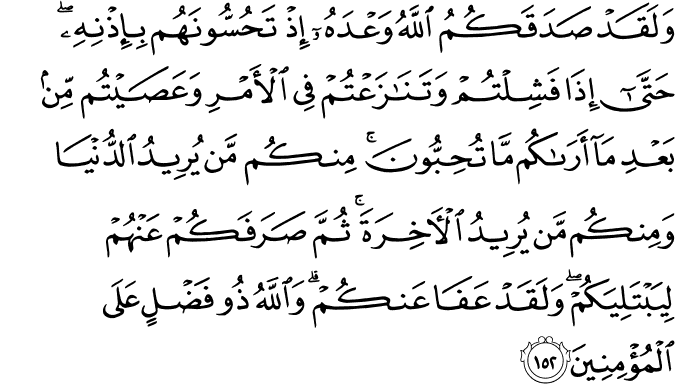
                              Surah Al Imraan
                              Aya: 152
                              And Allah did indeed fulfil His Promise to you when you were killing them (your enemy) with His Permission; until (the moment) you lost your courage and fell to disputing about the order, and disobeyed after He showed you (of the booty) which you love. Among you are some that desire this world and some that desire the Hereafter. Then He made you flee from them (your enemy), that He might test you. But surely, He forgave you, and Allah is Most Gracious to the believers.


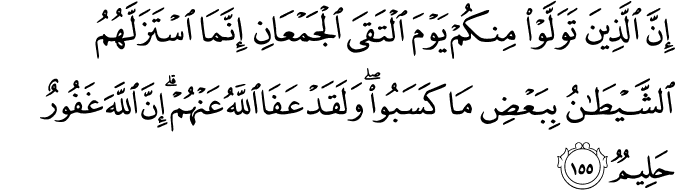
                              Surah Al Imraan
                              aya: 155
                              Indeed, those of you who turned back on the day the two armies met, it was Satan who caused them to slip because of some [blame] they had earned. But Allah has already forgiven them. Indeed, Allah is Forgiving and Forbearing.

                              I am not a follower of those who "run away" (i.e. the marathon champs of Ghazva e Auhad), so I hope you would think twice next time before speaking
                              Allah subhana wa ta'ala forgave those companions who disobeyed the prophet (s.a.w.)

                              So who are you ? Who are you Haider Bangash to utter such words and even think of making fun of the Sahaba? It was a shameless debate, not funny, but a shameless debate.

                              Wsalam.

                              Comment


                              • Originally posted by Abu Hurayrah View Post
                                Allah subhana wa ta'ala forgave those companions who disobeyed the prophet (s.a.w.)

                                So who are you ? Who are you Haider Bangash to utter such words and even think of making fun of the Sahaba? It was a shameless debate, not funny, but a shameless debate.

                                Wsalam.
                                LOL, Allah forgive those who REPENT. But your leaders didn't repent, SHOW ME, ANYWHERE IN ANY BOOK, IF THEY EVER EVER REPENTED after deserting the Prophet (SAW). You can't.
                                And sinners cannot and should not be chosen as the leaders of the faithfuls.

                                [Shakir 3:166] And what befell you on the day when the two armies met (at Ohud) was with Allah's knowledge, and that He might know the believers.
                                [Shakir 3:167] And that He might know the hypocrites; and it was said to them: Come, fight in Allah's way, or defend yourselves. They said: If we knew fighting, we would certainly have followed you. They were on that day much nearer to unbelief than to belief. They say with their mouths what is not in their hearts, and Allah best knows what they conceal.


                                [Shakir 3:176] And let not those grieve you who fall into unbelief hastily; surely they can do no harm to Allah at all; Allah intends that He should not give them any portion in the hereafter, and they shall have a grievous chastisement.

                                [Shakir 8:16] And whoever shall turn his back to them on that day-- unless he turn aside for the sake of fighting or withdraws to a company-- then he, indeed, becomes deserving of Allah's wrath, and his abode is hell; and an evil destination shall it be.

                                [Shakir 3:144] And Muhammad is no more than a messenger; the messengers have already passed away before him; if then he dies or is killed will you turn back upon your heels? And whoever turns back upon his heels, he will by no means do harm to Allah in the least and Allah will reward the grateful.

                                [Shakir 3:151] We will cast terror into the hearts of those who disbelieve, because they set up with Allah that for which He has sent down no authority, and their abode is the fire, and evil is the abode of the unjust. (COWARDS WHO RAN AWAY IN AUHAD)

                                [Shakir 9:26] Then Allah sent down His tranquillity upon His Messenger and upon the believers, and sent down hosts which you did not see, and chastised those who disbelieved, and that is the reward of the unbelievers.


                                [Shakir 8:20] O you who believe! obey Allah and His Messenger and do not turn back from Him while you hear.
                                [Shakir 8:21] And be not like those who said, We hear, and they did not obey.

                                [Shakir 8:23] And if Allah had known any good in them He would have made them hear, and if He makes them hear they would turn back while they withdraw.
                                [Shakir 8:24] O you who believe! answer (the call of) Allah and His Messenger when he calls you to that which gives you life; and know that Allah intervenes between man and his heart, and that to Him you shall be gathered.

                                Who am I to say something about your leaders? I am no one, but the above ayas are something. Now say who is Allah to say such words against your "sahaba" (astaghfirullah), and be among the transgressors? After leaving the Prophet (SAW) all of your so called sahaba became disbelievers as per the above ayahs. And I have never read in history they ever accepting the Islam again (I mean, when you become disbeliever you HAVE TO RECITE THE KALMA E SHAHADA AGAIN WITH THE INTENTION THAT YOU ARE KAFFIR AND WANT TO BECOME MUSLIM). So, who are you Abu Hurayra to say something regarding that which Allah has stated in Quran?

                                "And it is not for a believing man or woman that they should have any choice in a matter when Allah and his Messenger have decided a matter; and whoever disobeys Allah and his Messenger; surely strays off a manifest straying."
                                Last edited by Guest; 09-05-2010, 01:07 PM.

                                Comment

                                Working...
                                X