If this is your first visit, be sure to
check out the FAQ by clicking the
link above. You may have to register
before you can post: click the register link above to proceed. To start viewing messages,
select the forum that you want to visit from the selection below.
groups like Boko Haram are not muslim to begin with, I mean who in the right mind will support these groups? Also I believe the girls are actually muslim girls, because their parents were defiantly dressed like muslims in the interviews
I wish there was a muslim army itself which will take out these types of groups, who claim to be fighting for Islam, yet are doing completely opposite
I am not saying you be a Mahdi, but as indviduals we have to contribute positively towards muslim community in whatever we can, our community is a very broken community, any little helps it gets will be very good.
Also yes Quran/Sunnah are the solutions, but who is there to implement them and that too correctly? even these rebels are probably claiming to be following Quran/Sunnah
Behind the rise of Boko Haram - ecological disaster, oil crisis, spy games
Islamist militancy in Nigeria is being strengthened by western and regional fossil fuel interests The kidnapping of over 200 Nigerian school girls, and the massacre of as many as 300 civilians in the town of Gamboru Ngala, by the militant al-Qaeda affiliated group, Boko Haram, has shocked the world. But while condemnations have rightly been forthcoming from a whole range of senior figures from celebrities to government officials, less attention has been paid to the roots of the crisis. Instability in Nigeria, however, has been growing steadily over the last decade - and one reason is climate change. In 2009, a UK Department for International Development (Dfid) study warned that climate change could contribute to increasing resource shortages in the country due to land scarcity from desertification, water shortages, and mounting crop failures. A more recent study by the Congressionally-funded US Institute for Peace confirmed a "basic causal mechanism" that "links climate change with violence in Nigeria." The report concludes:
"...poor responses to climatic shifts create shortages of resources such as land and water. Shortages are followed by negative secondary impacts, such as more sickness, hunger, and joblessness. Poor responses to these, in turn, open the door to conflict."
Unfortunately, a business-as-usual scenario sees Nigeria's climate undergoing "growing shifts in temperature, rainfall, storms, and sea levels throughout the twenty-first century. Poor adaptive responses to these shifts could help fuel violent conflict in some areas of the country." According to the late Prof Sabo Bako of Ahmadu Bello University, the 1980s "forerunner" to Boko Haram was the Maitatsine sect in northern Nigeria, whose members included many victims of ecological disastersleaving them in "a chaotic state of absolute poverty and social dislocation in search of food, water, shelter, jobs, and means of livelihood." A year after the USIP study, Africa Review reported that many Boko Haram foot soldiers happen to be people displaced by severe droughtand food shortages in neighbouring Niger and Chad. Some 200,000 farmers and herdsman had lost their livelihoods and, facing starvation, crossed the border to Nigeria. "While a good number of these men were found in major cities like Lagos, pushing water carts and repatriating their earnings to the families they left behind," said Africa Review, "others were believed to have been lured by the Boko Haram." Indeed, one retired Nigerian security official told the journal that the Nigerian military recognised a correlation between regional climatic events, and an upsurge in extremist violence:
"It has become a pattern; we saw it happen in 2006; it happened again in 2008 and in 2010. If you remember, President (Olusegun) Obasanjo had to deploy the military in 2006 to Yobe State, Borno State and Katsina State. These are some of the states bordering Niger Republic and today they are the hotbeds of the Boko Haram."
The other issue is Nigeria's intensifying energy crisis. In recent months, the country has faced a fuel crisis partly due to the government slashing previously high fuel subsidies, contributing to increasing public anger and civil unrest. But while corruption and ageing infrastructure play an important role, the end of cheap oil is the real elephant in the room. One study by two Nigerian scholars concluded in 2011 that "there is an imminent decline in Nigeria's oil reserve since peaking could have occurred or just about to occur; this is shown to be in agreement with previous studies." According to one senior Shell official in March this year, crude oil production decline rates are "as high as 15 to 20 per cent." Replacing this "natural production decline rate... requires more funds than is currently available." The same month, the head of Nigeria's petroleum resources department called for more investment in exploration to offset rapid decline rates:
"Oil reserves are dropping, our output is dropping too... We need to do more in this regards to have more reserves. We have reached the plateau of production in the Niger Delta and we are already going down."
With such domestic oil production challenges undermining Nigeria's oil export revenues, the fuel subsidy slash has pushed the brunt of the crisis onto the population, escalating the poverty and inequality that is a recruiting sergeant for Islamist terror. In northern Nigeria, where Boko Haram hail from, there is little evidence of an oil boom. With about 70% of the population subsisting on less than a dollar a day - some 20% higher than the already dismal rate in the south, rates of illiteracy and illness are endemic. As noted by David Francis, one of the first western reporters to cover Boko Haram, "Most of the foot soldiers of Boko Haram aren't Muslim fanatics; they're poor kids who were turned against their corrupt country by a charismatic leader." Apart from the fact that the west has been content to turn a blind eye to these problems by propping up the corrupt Nigerian government while accelerating oil and gas deals, there is a further complication. Abundant evidence shows that al-Qaeda in the Maghreb (AQIM) haveexploited the rise of Boko Haram to gain increasing control of the Nigerian militant movement. What we're not being told, however, is that al-Qaeda's rapid expansion through northwest Africa has occurred under the rubric of Algerian state intelligence services - with US, French and British knowledge. Our relationship with the Algerian military junta, responsible for the massacre of hundreds of thousands of civilians, is driven by the usual unquenchable thirst to access what the US energy department estimates are the world's third largest shale gas reserves. According to Prof Jeremy Keenan, a leading Algeria expert at the School of Oriental and African Studies who advises the US State Department, European Union, and Foreign Office on regional security issues, AQIM's expansion across north Africa has focused on oil-rich regions - particularly Algeria, Niger Delta, Nigeria, and Chad; the latter three precisely where Boko Haram has reportedly received terrorist training. Over a decade ago, Keenan reports, these countries signed a "co-operation agreement on counter-terrorism that effectively joined the two oil-rich sides of the Sahara together in a complex of security arrangements whose architecture is American." The agreement evolved into the Trans-Sahara Counterterrorism Initiative, which was eventually absorbed into the US Army's African Command (AFRICOM). Keenan argues that the west's oil and gas greed has caused our governments to turn a blind eye to the role of oil states like Algeria in fostering regional terrorism - instead exploiting the resulting chaos to legitimise efforts to consolidate access to remaining African energy reserves. If this analysis is correct, then the hundreds of innocent girls kidnapped in Nigeria are not just victims of Islamist fanaticism; they are also victims of failed foreign, economic and security policies tied to our infernal addiction to black gold.
"2 crackheads don't become any better or stronger by sharing the same crack pipe." - Greatest PF quote
The U.S.-Algerian security pact is about energy, not al-Qaeda
Thursday, 10 April 2014 Last week, the United States and Algeria opened up strategic talks on regional security during U.S. Secretary of State John Kerry’s first visit to the north African country. Leaders of the two nations pledged to continue working together tocombat Islamist terrorismwithin Algeria and across the Maghreb. The spectre of terrorist unrest has never been far away since the last major incident involving an al-Qaeda assault on the Tiguentourine gas plant last January. The brutal attack included a gruelling five day siege which left at least 49 hostages dead. But inconsistencies in the Algerian state version of events reveal a dangerous game which is unravelling regional security to cater for foreign energy interests. Professor Jeremy Keenan, a world authority on the Sahara-Sahel region from the School of Oriental and African Studies (SOAS) in London, points to “longstanding collusion between Algeria’s secret police, the Département du Renseignement et de la Sécurité [Department of Intelligence and Security, or DRS] and local terrorists.” In a 2013 report published by Kings College London’s International State Crime Initiative (ISCI) - a research center partnered with Harvard, Hull and Ulster universities – Keenan shows that “the majority of ‘terrorist’ incidents within Algeria since 2002 have involved some degree of collusion between the DRS and the ‘terrorists’ involved in the operation.” Although Keenan advises the European Union, U.S. State Department, and UK Foreign Office on regional security issues, he complains that his criticisms of Algeria fall on deaf ears. Corroborated claims
Shocking though this seems, Keenan’s allegations are corroborated by intelligence experts. Former Algerian intelligence officer Habib Souaïdia, in his 2001 book La Sale Guerre (The Dirty War), confirmed that the DRS had penetrated Algeria’s al-Qaeda linked groups since inception, regularly disguised its officers as Islamist rebels, and largely masterminded the tremendous violence leading to the massacre of about 200,000 Algerians. French courts effectively underwrote the veracity of Souaïdia’s case when former Algerian Defense Minister Khaled Nezzar filed a libel suit in Paris against the publication, which was promptly thrown out by the court. Former National Security Agency counterintelligence officer John Schindler – now head of National Security Affairs at the U.S. Naval War College and chair of the NATO Partnership for Peace Combatting Terrorism Working Group – also confirms Keenan’s analysis.
According to intelligence documents, the U.S. and British governments believed the Algerian regime was involved in Islamist atrocities, contradicting their public narrative
Nafeez Ahmed
The Armed Islamic Group (GIA) of the 1990s, Schindler said, was created by the DRS precisely “to discredit the extremists.” The terrorist group's leadership comprised “DRS agents, who drove the group into the dead end of mass murder.” Most major terrorist operations “including the 1995 wave of bombings in France,” which was blamed on Islamists, were in fact “the handiwork of the DRS.” Recent evidence suggests that “DRS has continued to infiltrate and influence Islamist groups in the country.” After the gas plant attack, Schindler reiterated his concerns, noting: “There is ample evidence that the DRS maintains control of at least some of the jihadist bandit-groups operating under the rubric of al-Qaeda in the Islamic Maghreb (AQIM) across the Sahel.” This is not news to Britain either. As early as 2000, a revealing batch of classified Foreign Office documents, including MI5, MI6 and U.S. intelligence reports, emerged in a UK terror trial. The documents confirmed that the U.S. and British governments believed the Algerian regime was involved in Islamist atrocities, contradicting their public narrative. What are the ends?
So if the U.S.-Algerian “counter-terrorism” partnership is not really countering terrorism, what is it doing? Algeria has some of the largest oil and gas reserves in the region and is currently the third-largest gas supplier to the EU, providing 10-20 percent of its consumption. A recent UK government trade and investment briefing projects that expanded Algerian production could meet 10 percent of UK gas demand, while a U.S. Department of Energy assessment finds that Algeria has the world’s third largest recoverable shale gas reserves. British government documents obtained by the London-based oil and gas watchdog, Platform, show that the UK is playing a central role in the drive to cement Western energy ties with Algeria. The Algeria is part of a wider drive to diversify energy sources in the context of looming supply challenges. According to a UK government spokesman, when questioned about relations with Algeria, “by 2035 global oil demand, although reduced, will still exceed production from existing sources, and global gas demand will have risen.” UK strategy thus fits into a broader U.S.-led effort to dominate the region’s untapped oil and gas resources. AQIM’s expansion across north Africa, Keenan points out, has focused on oil-rich nations - particularly Algeria, Niger Delta, Nigeria, and Chad. Over a decade ago, the latter signed a “co-operation agreement on counter-terrorism that effectively joined the two oil-rich sides of the Sahara together in a complex of security arrangements whose architecture is American.” This evolved into the Trans-Sahara Counterterrorism Initiative, which was eventually absorbed into the U.S. Army’s AFRICOM. But as Keenan warns, bloodbaths like the gas plant siege prove that the new “Great Game” in the Maghreb is increasingly out of control. Short-sighted geopolitical interests in dominating regional energy reserves must be put aside before the cycle of violence escalates in ways all too familiar.
"2 crackheads don't become any better or stronger by sharing the same crack pipe." - Greatest PF quote
'Dear world, your hashtags won't #BringBackOurGirls'
Thanks for your concern but calling for America rather than Nigeria to take action does more harm than good, says Jumoke Balogun
Simple question. Are you Nigerian? Do you have constitutional rights accorded to Nigerians to participate in their democratic process? If not, I have news for you. You can’t do anything about the girls missing in Nigeria. You can’t. Your insistence on urging American power, specifically American military power, to address this issue will ultimately hurt the people of Nigeria.
It heartens me that you’ve taken up the mantle of spreading “awareness” about the 200+ girls who were abducted from their school in Chibok; it heartens me that you’ve heard the cries of mothers and fathers who go yet another day without their child. It’s nice that you care.
Here’s the thing though, when you pressure western powers, particularly the American government, to get involved in African affairs and when you champion military intervention, you become part of a much larger problem. You become a complicit participant in a military expansionist agenda on the continent of Africa. This is not good.
You might not know this, but the United States military loves your hashtags because it gives them legitimacy to encroach and grow their military presence in Africa. Africom (United States Africa Command), the military body that is responsible for overseeing US military operations across Africa, gained much from #KONY2012 and will now gain even more from #BringBackOurGirls.
Last year, before Barack Obama visited several countries in Africa, I wrote about how the US military is expanding its role on the continent. In 2013 alone, Africom carried out a total of 546 “military activities” which is an average of one and half military missions a day. While we don’t know much about the purpose of these activities, keep in mind that Africom’s mission is to “advance US national security interests”.
And advancing they are. According to one report, in 2013, American troops entered and advanced American interests in Niger, Uganda, Ghana, Malawi, Burundi, Mauritania, South Africa, Chad, Tanzania, and South Sudan
The US military conducted 128 separate “military activities” in 28 African countries between June and December of 2013. These are in conjunction with US-led drone operations in Northern Nigeria andSomalia. There are also counter-terrorism outposts in Djibouti and Nigerand covert bases in Ethiopia and the Seychelles which are serving as launching pads for the U.S. military to carry out surveillance and armed drone strikes.
Although most of these activities are covert, we do know that the US military has had a destabilising effect in a few countries. For example, aNew York Times article confirmed that the man who overthrew the elected Malian government in 2012 was trained and mentored by the United States between 2004 and 2010. Further, a US-trained battalion in the Democratic Republic of Congo was denounced by the United Nations for committing mass rapes.
Knowing this, you can understand my apprehension about Obama’s decision. As the Nigerian-American writer Teju Cole said yesterday, the involvement of the US. government and military will only lead to more militarism, less oversight, and less democracy.
Also, the last time military advisors were sent to Africa, they didn’t do much good. Remember #KONY2012? When Obama sent 100 combat-equipped troops to capture or kill Lord’s Resistance Army leader Joseph Kony in Central Africa? Well, they haven’t found him and although they momentarily stopped looking, Obama sent more troops in March 2014who now roam Uganda, Central African Republic, South Sudan, and the Democratic Republic of Congo.
Consequently, your calls for the US to get involved in this crisis undermines the democratic process in Nigeria and co-opts the growing movement against the inept and kleptocratic Jonathan administration. It was Nigerians who took their good-for-nothing president to task and challenged him to address the plight of the missing girls. It is in their hands to seek justice for these girls and to ensure that the Nigerian government is held accountable. Your emphasis on US action does more harm to the people you are supposedly trying to help and it only expands and sustain US military might.
If you must do something, learn more about the amazing activists and journalists like this one, this one, and this one just to name a few, who have risked arrests and their lives as they challenge the Nigerian government to do better for its people within the democratic process. If you must tweet, tweet to support and embolden them; don’t direct your calls to action to the US government who seeks to only embolden American militarism. Don’t join the American government and military in co-opting this movement started and sustained by Nigerians.
Jumoke is a Nigerian-American. She is the co-founder and co-editor of compareafrique.com ogo, Cameroon, São Tomé and Príncipe, Sierra Leone, Guinea, Lesotho, Ethiopia, Tanzania, and South Sudan.
"2 crackheads don't become any better or stronger by sharing the same crack pipe." - Greatest PF quote
I do agree with a lot of points made here .. I do agree that we muslims have more to complain about and we have been wronged much more compared to non-muslims.. also I do feel that their is organized propaganda campaign against muslims to vilify us. However, I would love for us to be smarter.. to learn from our experiences.. to sort those who break ranks. . to be able to read the writing on the wall,.. to have justice prevail in our lands.. and to own that moral high ground that we so love to claim. We should happened to things rather than things happening to us.. and to have control on our future... rather than fools or outsiders running our countries.
see.. when their is injustice.. there will be resentment and enemies would exploit weaknesses... Case in point.. IN Syria power is in shia hands not being shared with sunnis, vice versa in Iraq during Saddam. In Bahrain sunnies oppress shia, sunnies are oppressed in iran and vice versa in Saudi Arabia.. There is ethnic discrimination in a lot of muslim countries and outsiders exploit this.
What really drives me hazy is it me or are the others crazy
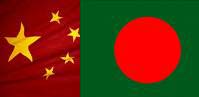
- Boko Haram (America) attack Chinese interests in Cameroon.
[MENTION=3580]asad71[/MENTION], Al-Qaeda are essentially the US foreign legion with the US using "Jihadists"/terrorists to carry out terrorism against Muslims and enemies of the US. Virtually everyone killed by "Al-Qaeda" (USA) has been Muslim except for some highly publicized incidents.
China has to defend itself but the question is how?
Can China send in troops to Africa or other places to defend its interests against Boko Haram and Al-Qaeda (America)?
I don't think that is feasible.
However the dragon (China) is playing long-term and is seeking to
1. End the US petro-dollar
2. Contain US aggression against UN members such as Syria.
US politician, McCain with Syrian radicals.
Boko Haram (America) and their attack on China just show why China and Russia decided that Syria was a red line and they would be prepared to go to nuclear war with the US if Syria was attacked. If Syria fell, next would have been Iran, then Russia and China themselves.
The Chinese (and Russians) are not dumb and know that the US war on Syria is a war against Russia and China, not on Russian or Chinese soil, but as much a war against them as if there were fighting in Shanghai or St Petersburg. This Boko Haram (American) attack on China in Cameroon is the same. Though it is not on Chinese soil it is an attack against China.
America will use its foreign legion, "Al-Qaeda" to cause problems for China in the hope that China will withdraw from Africa.
China is a civilization older than Christianity, America is an artificial nation less than 250 years old.
 Tweet



Comment