If this is your first visit, be sure to
check out the FAQ by clicking the
link above. You may have to register
before you can post: click the register link above to proceed. To start viewing messages,
select the forum that you want to visit from the selection below.
Georgian cuisine refers to the cooking styles and dishes with origins in the nation of Georgia and prepared by Georgian people around the world. The Georgian cuisine is specific to the country, but also contains some influences from other European culinary traditions, as well as those of the surrounding Western Asia. The cuisine offers a variety of dishes with various herbs and spices. Each historical province of Georgia has its own distinct culinary tradition, such as Megrelian, Kakhetian, and Imeretian cuisines. In addition to various meat dishes, Georgian cuisine also offers a variety of vegetarian meals.
The importance of both food and drink to Georgian culture is best observed during a feast, or supra, when a huge assortment of dishes is prepared, always accompanied by large amounts of wine, and dinner can last for hours. In a Georgian feast, the role of the tamada (toastmaster) is an important and honoured position.
Khachapuri (or "cheese bread") is a filled bread dish from Georgia. The bread is leavened and allowed to rise, and is shaped in various ways. The filling contains cheese (fresh or aged, most commonly suluguni), eggs and other ingredients.
Satsivi is a Georgian sauce made of walnuts and served cold either as a dipping sauce for bread, or sauce for boiled or fried game or fish. Traditionally, satsivi is made of walnuts, water, garlic, combination of dried herbs, vinegar, cayenne pepper, and salt to taste Sterlet with satsivi
Boiled turkey or chicken pieces submerged in satsivi is one of staples of winter holiday feasts.
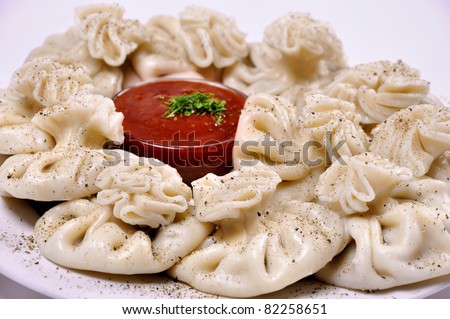
Khinkali are Caucasian dumplings filled with various fillings such as mushrooms or cheese, but mostly with spiced meat (usually beef and pork, sometimes mutton) with greens, onions and garlic. They are eaten plain, or with coarse black pepper. The meat filling is uncooked when the Khinkali is assembled, so when cooked the meat's juices are trapped inside the dumpling. To eat one must suck the juices while taking the first bite or the Khinkali will burst.
 Tweet








Comment