Announcement

Collapse
No announcement yet.

Afghanistan a military history from alexander the great to the fall of the taliban

Collapse
X
 
  • Filter
  • Time
  • Show
Clear All
new posts

  • Afghanistan a military history from alexander the great to the fall of the taliban

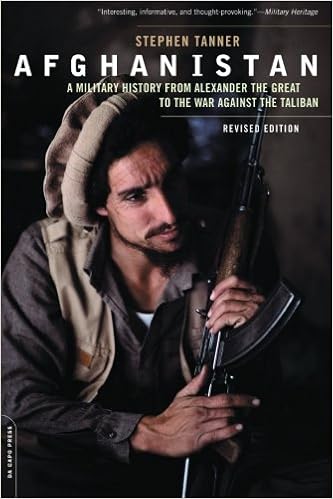
    Afghanistan a military history from Alexander the great to the fall of the Taliban by Stephen tanner.
    just pick this book to study , will share the interesting information here


  • #2
    The historian Arnold Toynbee once suggested that upon viewing
    the rise of civilization from its center in Mesopotamia, the map of the
    Old World becomes startlingly clear. He distinguished countries
    between blind alleys and highways, and among the latter he thought
    two held prominent place: Syria, which was the link between the civilizations
    of Europe, Africa, and Asia; and Afghanistan, which was the
    nodal point between the civilizations of India, East Asia, Central Asia,
    the Middle East, and thence Europe. "Plant yourself not in Europe but
    in Iraq," he wrote, and "it will become evident that half the roads of
    the Old World lead to Aleppo, and half to Bagram."
    Toynbee noted
    that Bagram was once the site of Cyrus the Great's Kapish-Kanish as
    well as Alexander the Great's Alexandria-in-the-Caucasus. He would
    have nodded appreciatively had he seen Bagram airfield become the
    primary Soviet base in Afghanistan during the 1980s and that at the
    onset of the twenty-first century not only American but British,
    German, and Australian troops have been disembarking at that strategic
    spot, nestled in the southern foothills of the Hindu Kush.

    Comment


    • #3
      Historian Rhea Talley Stewart has stated that two men did irreparable damage
      to Afghanistan. The first was Genghis Khan, for reasons that will later
      be examined; the second was Christopher Columbus, who sailed past
      the presumed ends of the earth, establishing tremendous avenues for
      commerce and conquest that did not depend on the land. "Afghanistan
      is far less important to a round world," Stewart wrote, "than it
      was to a flat one."

      Comment


      • #4
        you may come across people who will compare Afghanistan to Nepal , that it was not so important and that's the reason imperial were not interested in colonising it. here is what the author has to say

        Unlike some mountainous lands, such as Peru, Nepal, and
        Norway—even at times Switzerland, its closest European counterpart—
        it has never been Afghanistan's lot to exist benignly apart from
        the rest of the world. It has instead found itself at the hinge of imperial
        ambitions since the beginning of recorded history, from the
        world's first transcontinental superpower, the Persian Empire, to its
        latest, the United States.

        Comment


        • #5
          Modern Afghanistan is roughly egg-shaped, at a tilt, within which
          four strategically crucial cities form a quadrangle that frames the central
          mountain range, the Hindu Kush. In the west is Herat, in a fertile
          valley a short march from the present-day Iranian border. In the south
          is Kandahar, on an easy road from Herat and accessible through
          mountain passes from India. In the east, on a passable route (except in
          winter) from Kandahar is Kabul. In the northern center of the country,
          on a decent road from Herat and accessible from Kabul by high
          passes across the Hindu Kush, is Mazar-i-Sharif. Just west of Mazar
          lie the haunted ruins of Balkh (in Greek, Bactra; in Persian, Zariaspa),
          termed by the Arabs "the mother of cities." For at least two thousand
          years, Balkh—the legendary birthplace of Zoroaster, the site of
          Alexander the Great's marriage and one of Genghis Khan's greatest
          atrocities
          —was a magnificent city that dominated the region; but it is
          now a small, hardscrabble village next to an immense mass of ruins
          such as fuel the dreams of archaeologists.

          Comment


          • #6
            Ancient writers confuse more than clarify the distinction between
            Afghan and Indian, especially with references to "mountain Indians"
            or people such as the Parapamisidae: Indians who lived in the
            Parapamisus, the Persian word for the Hindu Kush

            Comment


            • #7
              Originally posted by marwat View Post
              Modern Afghanistan is roughly egg-shaped, at a tilt, within which
              four strategically crucial cities form a quadrangle that frames the central
              mountain range, the Hindu Kush. In the west is Herat, in a fertile
              valley a short march from the present-day Iranian border. In the south
              is Kandahar, on an easy road from Herat and accessible through
              mountain passes from India. In the east, on a passable route (except in
              winter) from Kandahar is Kabul. In the northern center of the country,
              on a decent road from Herat and accessible from Kabul by high
              passes across the Hindu Kush, is Mazar-i-Sharif. Just west of Mazar
              lie the haunted ruins of Balkh (in Greek, Bactra; in Persian, Zariaspa),
              termed by the Arabs "the mother of cities." For at least two thousand
              years, Balkh—the legendary birthplace of Zoroaster, the site of
              Alexander the Great's marriage and one of Genghis Khan's greatest
              atrocities
              —was a magnificent city that dominated the region
              ; but it is
              now a small, hardscrabble village next to an immense mass of ruins
              such as fuel the dreams of archaeologists.

              Its so sad and irritating to see how great Tajik-Persian cities such as Herat, Balkh, Termez, Panklent, Samarkand, Ghazni, Bukhara, Merv, Neyshabur,.. have lost all their importance. These places were the cultural capitals of Asia (and by extension, the rest of the world) for many centuries. Makes my blood boil.. but we shall raise again, God willing.
              "For thirty years, I endured much pain and strife,
              I awaken the Ajam by this Persian [language]. "

              -Ferdowsi.

              Comment


              • #8
                Originally posted by Firdousi View Post
                Its so sad and irritating to see how great Tajik-Persian cities such as Herat, Balkh, Termez, Panklent, Samarkand, Ghazni, Bukhara, Merv, Neyshabur,.. have lost all their importance. These places were the cultural capitals of Asia (and by extension, the rest of the world) for many centuries. Makes my blood boil.. but we shall raise again, God willing.
                To be fair, back then they were just Persian and if you look at where so many of those cities lie... the suffixes of the name are now -ov (e.g. Karimov) etc.

                And really, I mean they were not equipped to deal with the Golden Horde and really proved that their fighting capability and thus their survival capability was questionable man.

                It was like when Sikander came from Macedonia... those boys knew how to leave Civilization and fight head on with a Phalanx on a proper battle field but they also knew how to adjust themselves to different terrain. They really really tore apart the Persians man because the latter group got used to silk robes and licentious behavior.

                The Persians of those cities basically rolled over and even in the modern era roll over still. They use the excuse of "gotta get the goods from those that have them to advance" argument but that argument doesn't work when you aren't receiving those goods and training and technology at an equivalent level state to state (e.g. US to Britain).

                I think its going to be a very long time before those cities even reach "enjoyable to live in" status much less "glory" status.

                Client people and states usually have that sort of demise/bad outcome
                "2 crackheads don't become any better or stronger by sharing the same crack pipe." - Greatest PF quote

                Comment


                • #9
                  Originally posted by BarakzaiAbdali View Post
                  To be fair, back then they were just Persian and if you look at where so many of those cities lie... the suffixes of the name are now -ov (e.g. Karimov) etc.

                  And really, I mean they were not equipped to deal with the Golden Horde and really proved that their fighting capability and thus their survival capability was questionable man.

                  It was like when Sikander came from Macedonia... those boys knew how to leave Civilization and fight head on with a Phalanx on a proper battle field but they also knew how to adjust themselves to different terrain. They really really tore apart the Persians man because the latter group got used to silk robes and licentious behavior.

                  The Persians of those cities basically rolled over and even in the modern era roll over still. They use the excuse of "gotta get the goods from those that have them to advance" argument but that argument doesn't work when you aren't receiving those goods and training and technology at an equivalent level state to state (e.g. US to Britain).

                  I think its going to be a very long time before those cities even reach "enjoyable to live in" status much less "glory" status.

                  Client people and states usually have that sort of demise/bad outcome
                  We lost. I am not in denial. Persian culture has suffered a cultural genocide in Central Asia and in the Indian Subcontinent due to our own weakness.

                  Well Gengis Khan didn't want to invade Khorasan. It was our st*pid Shah who killed Gengis diplomats. Khawrezm Shah was in decay anyway. Too much inter fighting.

                  Iskander faced huge resistance in the eastern provinces. Spitamenes (Sogdian), Satibarzanes (Arian), Bessus (Bactrian) fought bravely. But the thing is good times make weak people, bro. Same thing happens now in the West: they are weak due to high life quality. Believe it or not same thing would happen to Pashtuns.
                  "For thirty years, I endured much pain and strife,
                  I awaken the Ajam by this Persian [language]. "

                  -Ferdowsi.

                  Comment


                  • #10
                    Originally posted by BarakzaiAbdali View Post
                    To be fair, back then they were just Persian and if you look at where so many of those cities lie... the suffixes of the name are now -ov (e.g. Karimov) etc.

                    And really, I mean they were not equipped to deal with the Golden Horde and really proved that their fighting capability and thus their survival capability was questionable man.

                    It was like when Sikander came from Macedonia... those boys knew how to leave Civilization and fight head on with a Phalanx on a proper battle field but they also knew how to adjust themselves to different terrain. They really really tore apart the Persians man because the latter group got used to silk robes and licentious behavior.

                    The Persians of those cities basically rolled over and even in the modern era roll over still. They use the excuse of "gotta get the goods from those that have them to advance" argument but that argument doesn't work when you aren't receiving those goods and training and technology at an equivalent level state to state (e.g. US to Britain).

                    I think its going to be a very long time before those cities even reach "enjoyable to live in" status much less "glory" status.

                    Client people and states usually have that sort of demise/bad outcome
                    Just a question are barakzais a sub tribe of kakar? or are they Abdalis?

                    Comment


                    • #11
                      Originally posted by Firdousi View Post
                      We lost. I am not in denial. Persian culture has suffered a cultural genocide in Central Asia and in the Indian Subcontinent due to our own weakness.

                      Well Gengis Khan didn't want to invade Khorasan. It was our st*pid Shah who killed Gengis diplomats. Khawrezm Shah was in decay anyway. Too much inter fighting.

                      Iskander faced huge resistance in the eastern provinces. Spitamenes (Sogdian), Satibarzanes (Arian), Bessus (Bactrian) fought bravely. But the thing is good times make weak people, bro. Same thing happens now in the West: they are weak due to high life quality. Believe it or not same thing would happen to Pashtuns.
                      He encountered us my friend

                      I referred to this previously here when I discussed Stephen Tanner's famous Military History of Afghanistan.

                      Tanner refers to the direct evidence, John of Plano Carpini's interview with Mongol vets 19 years after their Afghan disaster. The Mongols according to these vets traveled to that region after they laid waste to the other parts of Afghanistan, and even after they raided Peshawar, and Bajaur fruitlessly. The Mongol soldiers found a man and his wife and they were bought to Genghis. When he asked them where the people lived they replied "underground beneath the mountains." Genghis sent the couple to order the people to appear. "But then according to the Mongols 'these men gathered by ways hidden beneath the earth and came against the Tartars to do battle and sprang suddenly upon then and killed many."

                      Tanner goes on to say:
                      "What the Monk heard from Mongol veterans is strikingly similar to the stories Soviet soldiers told following their war in Afghanistan in the 1980s."

                      Tanner ends with this:
                      "It is interesting that Genghis Khan's baggage train, left behind north of the hindu kush when he began pursuit of Jalal ad Din was repeatedly raided and plundered in his absence. The sedentary communities of Afghanistan had fallen but the nomadic hill tribes remained free and were still dangerous."
                      We seem to somehow always survive.
                      "2 crackheads don't become any better or stronger by sharing the same crack pipe." - Greatest PF quote

                      Comment


                      • #12
                        Originally posted by Kakar-Wardak View Post
                        Just a question are barakzais a sub tribe of kakar? or are they Abdalis?
                        I think that there is a small sub tribe in Kakar that is also Barakzai but the Barakzai in Kandahar and in other regions are in the Abdali/Dorani Pashtun federation.
                        "2 crackheads don't become any better or stronger by sharing the same crack pipe." - Greatest PF quote

                        Comment


                        • #13
                          The rise of the Persian Empire in 550 B.C. marked the beginning of
                          recorded history, not so much because the Persians wrote down their
                          experiences (except in lists and pompous edicts carved in stone), but
                          because they were closely followed by the Greeks who observed that
                          empire closely.
                          The Greeks, and their equally curious Roman successors
                          who worked on Greek primary sources, have thus left us the bulk
                          of what we know about Afghanistan in ancient times. Some of their
                          conclusions continue to be reassessed by modern archaeologists, but
                          the Greek-based histories are the best starting point for examining the
                          early history of Afghanistan.

                          Comment


                          • #14
                            The founder of the Persian Empire, Cyrus the Great, did lay claim
                            to Afghanistan, though in at least two separate marches, and he may
                            never have crossed the Hindu Kush. In his first invasion, his army
                            stumbled out of the Masht-i-Dago (Desert of Death) in terrible shape
                            and was given succor by a people called the Ariaspians, who lived
                            along the Helmand River. Cyrus called them "The Benefactors," and
                            he proceeded through Kandahar and then north to the Kabul River
                            valley. Near Bagram at the foot of the Hindu Kush he founded a garrison
                            city, Kapish Kanish, or Kapisa, but whether he proceeded across
                            the mountains is unknown.

                            The evidence of Cyrus's conquest of northern Afghanistan, or
                            Bactria, is scanty. But one of his first, and certainly his last, campaigns
                            was against Scythian tribes dwelling between the Oxus and Jaxartes
                            Rivers,

                            Comment


                            • #15
                              Ariaspians not to be confused with Arimaspians.
                              the banks of the Etymandar (helmand) were inhabited by peaceful and industrious tribe, who for the service they had rendered to Cyrus when on expedition to Scythia they supplied his famishing army with provisions had been honored by the great king with the title of his benefactor.
                              history of greece volume 6
                              THE ARIMASPOI (Arimaspians) were a tribe of one-eyed men who lived at the foot of the Rhipaion (Rhipaean) Mountains in northern Skythia (probably the Carpathians). They warred constantly with the gold-guarding Grypes (Griffins) of the mountains--winged beasts with the heads of eagles and the bodies of lions.

                              Comment

                              Working...
                              X