Announcement

Collapse
No announcement yet.

Taliban oppression of Afghans backfires

Collapse
X
 
  • Filter
  • Time
  • Show
Clear All
new posts

  • #31
    Originally posted by Al-Afghani View Post
    In 2001, a few hundred US special forces and thousands of ragtag Northern Alliance fighters defeated the Taliban before the end of the year. They haven't recovered since, as evident by the total lack of Taliban control over the population centers. And I don't see them regaining lost territory in the near future, which requires a conventional fighting force and can be decimated by US or Afghan air power.
    Yes, and in addition to that, that particular period was a pre-internet one (it existed but not in the way it does now e.g. Youtube, social media) and Afghans had no idea of the outside world. Afghanistan is a more developed society then it was in the late 1990s.

    As long as the Taliban are quarantined in remote, rural areas with hardly anyone living there or any industry they can enjoy "ruling" barren deserts, mountains, valleys etc.

    However Kabul, which by itself is greater than the entire population of Turkmenistan, will be free from them and so will the other major centre especially in the north.

    In some ways we could even go as far as to say the Taliban have been "defeated" (i.e. they can't regain power).

    The key strategic goal for the Kabul government is to ensure security for economic investment in Afghanistan's mineral resources and the transport links for that e.g. with China.

    If the Kabul government can do that then they have essentially rendered the Taliban a nuisance in the same way that the FARC in Colombia, or the Shining path in Peru and other such rebel groups which controlled large chunks of territory in different countries i.e. they control unimportant regions large in size whereas the national government and state is still seen as a functioning one.


    Rebel controlled areas of Colombia a few years ago.


    Economist, Jan 2015:

    But they still have some 7,000 fighters; around 600 Colombians were killed in the conflict last year and tens of thousands were displaced from their homes...


    Despite the power of the FARC, Colombia has experienced huge economic growth.
    * * * * * * * * * * * * * * * * * * * * * * *

    Comment


    • #32
      As the US mission winds down, Afghan insurgency grows more complex


      Shah Waliullah Adeeb, the governor of Badakhshan province, fears that more foreign fighters could relocate to his region. "Once they get a foothold here, it will be impossible to remove them," he said.


      KIANA HAYERI/THE WASHINGTON POST
      By Sudarsan Raghavan
      The Washington Post
      Published: February 13, 2015


      FAIZABAD, Afghanistan — The Taliban in this northern province allows girls to attend school. It doesn’t execute soldiers or police. Its fighters are not Pashtun, the main ethnic group that bred and fueled the insurgency. Some members are even former mujahedeen, or freedom fighters, who once despised the Taliban and fought against its uprising.

      "The Taliban here are against the ideology of the Taliban in the south," explained Maizuddin Ahmedi, 20, a former Taliban member who reflects the local faction’s atypical nature: He has a Facebook page, tweets regularly and wears a beanie emblazoned with the letters "NY." "They don’t behead soldiers."

      As the United States reshapes its military footprint in Afghanistan, the Taliban is transforming into a patchwork of forces with often conflicting ideals and motivations, looking less like the ultra-religious movement it started out as in the mid-1990s. The fragmentation may suggest the movement is weakening, but it is forcing Afghanistan’s government to confront an insurgency that is becoming increasingly diverse, scattered - and more lethal.

      What is unfolding here in Badakhshan province offers a glimpse into these complexities - and the future of a conflict in which the U.S. combat mission is formally over. When the Taliban ruled Afghanistan, from 1996 to 2001, this was the only province it was never able to control. Now, the insurgency is making inroads here and in other parts of the north, outside its strongholds in the south and east.

      The Taliban in Badakhshan has gained strength precisely because it is different from the core insurgency. Its fighters are using their ethnic and tribal ties to gain recruits and popular support, while their knowledge of the landscape helps them outmaneuver Afghan security forces and control sources of funding.

      "They are trying to make northern Afghanistan insecure," Shah Waliullah Adeeb, the provincial governor, told a reporter in December. "By seizing areas in Badakhshan, they are trying to send a message that the national government is weak and inefficient, and helpless."

      America’s longest war has officially ended, at least in the form that manifested itself for the past 13 years, with tens of thousands of foreign troops, high-tech weaponry and countless airstrikes. The roughly 13,000 U.S. and NATO soldiers who remain have shrunken capabilities and more restrictions, and their ranks are scheduled to grow even smaller by the end of the year.

      But Afghanistan remains an unfinished conflict. In Iraq, the U.S. withdrawal in 2009 coincided with a reduction in violence. Here, the bloodshed is rising. Last year, there were more civilian and security-force deaths than in any year since the U.S.-led intervention ousted the Taliban government in 2001.

      In Badakhshan, a struggle is underway to prevent the Taliban from gaining more territory in this strategic corner that borders three nations - Pakistan, China and Tajikistan - and is a gateway for the smuggling of opium to Europe. In the provincial capital, Faizabad, ringed by snow-covered mountains, lingers a sense of disbelief that the region is now as fragile as any other area of Afghanistan.

      "We never expected the Taliban to rise up here," said Gen. Nazir Mohammed Nayazee, the mayor of Faizabad.

      Nayazee, a former top mujahedeen commander, speaks with the authority of experience. He was shot twice fighting the Russians in the 1980s and wounded twice battling the Taliban in the 1990s.

      In 1997, a year after it seized Kabul, the Taliban pushed northward. But it was stopped at Badakhshan’s borders by Nayazee and his mujahedeen forces. Under fire from cragged mountaintops, the Taliban could not break through the narrow passes.

      But in recent years, Afghan security forces have focused on fighting the militants in the south and east, leaving northern areas largely unprotected. In Badakhshan, security forces are ill-equipped and overstretched. When NATO troops departed the province in 2013, the Taliban seized more ground.

      Today, the insurgents have injected themselves into seven districts, a quarter of the province. They number around 800 to 1,000 fighters, according to provincial officials, and their command center is a mere 40 miles east of Faizabad. They have set up a shadow government, and fighters man checkpoints in villages.

      "The security forces can’t do anything against them," said Sadiqullah Khaliqi, 26, a taxi driver who frequently travels through Taliban-controlled areas.

      The Taliban here expresses allegiance to Mohammad Omar, the insurgency’s supreme leader, and is loosely aligned with the Taliban’s central command. It views the government as un-Islamic and a puppet of the West. But it otherwise shares little resemblance to its Pashtun brethren, who launched their revolt from the southern Afghan city of Kandahar.

      The Taliban here is predominantly local, a mix of ethnic Tajiks and Uzbeks, according to provincial officials and Ahmedi, the former Taliban member, who was interviewed two days after defecting. It also includes a small contingent of fighters from neighboring countries.

      Many fighters, like Ahmedi, were unemployed and lured by the militants’ promise of salaries and food. Others are escaping the law or disputes with local officials. They also include disgruntled former mujahedeen fighters who found no place within the government.

      Most were not even born or were children when the Taliban was created. That includes their top commander - Qari Fasihuddin - who is believed to be 27 or 28.

      And while the Taliban has imposed Islamic law in areas it controls, it has also allowed schooling for girls, satellite television and music - all forbidden under Taliban rule. It gets most of its financing, Ahmedi said, by taxing opium farmers and trucks ferrying marble from nearby mines.

      "They are not mullahs," said Nayazee, referring to religious scholars. "They are not ideological Taliban."

      To be sure, the Taliban has become increasingly disjointed. Omar has not been seen in years, and some analysts suspect he is dead. Founding commanders have been killed in battle or have defected, creating power vacuums and competing factions.

      A U.N. report last year said the Taliban is "experiencing a range of divisions driven primarily by differences over political strategy." Those divides, it continued, were "amplified" by factions that had acquired control over various funding sources and were able to "behave with increasing autonomy."

      Several Taliban groups have launched independent websites and social-media platforms, including some that sympathize with al-Qaida and its affiliates. Internal rivalries have led to assassinations of Taliban leaders, the U.N. report said.

      In southern and eastern Afghanistan, some local Taliban commanders have banned polio vaccinations, fearing health workers were spies, even though the movement’s central command has approved the campaign.

      "Which faction is in control of an area is an issue we face as we attempt to expand humanitarian access," said Akhil Iyer, head of UNICEF in Afghanistan.

      In Badakhshan, the insurgents admire the Islamic State, as well as Nigeria’s Boko Haram militancy, Ahmedi said. But they do not agree with their ultra-violent ways, he added.

      "The Taliban here are completely independent," Ahmedi said. "They are not taking orders from Pakistan, Mullah Omar or Kandahar."

      Noorulhuda, a police officer, remembers the day he was captured, his descriptions unwinding like a grainy film clip. The Taliban surrounding his outpost. The rockets raining from hilltops. The policemen dropping their weapons.

      Then the walk at gunpoint, deep into the frigid mountains. Noorulhuda and his 24 kidnapped comrades had become emblems of the Afghan government’s weakness.

      "I thought they would kill us," said Noorulhuda, who like many Afghans uses one name, speaking three days after he was released.

      If he were in southern or eastern Afghanistan, death would have been a certainty. The Taliban has killed thousands of Afghan security forces in the past year. Instead, Noorulhuda and his comrades were held for 47 days and fed three times a day, underscoring the operational differences between the Taliban here and elsewhere.

      Once, Noorulhuda recalled, some of the foreign fighters beat them with the butts of their guns, and one yelled, "We should behead you guys!"

      But, he said, local fighters prevented the foreigners from abusing them again, saying that they wanted to trade the officers for comrades and relatives being held by the provincial government.

      Ahmedi offered another explanation: The local fighters, he said, disapprove of the beheadings carried out by some factions, viewing them as against Afghan codes, though the Taliban has long employed public executions.

      "These Taliban think that the foreign hands are behind those Taliban who are executing security forces," he said.

      Eventually, tribal elders, who had relationships and ethnic ties with the Taliban, persuaded the insurgents to set them free.

      But the militants issued a warning.

      "They told us not to work for the government again," Noorulhuda recalled.

      As the Taliban presses, Adeeb, the governor, worries that the insurgents’ interest in his province goes beyond traditional goals of overthrowing the government.

      Badakhshan’s mountains and forests provide an ideal haven for al-Qaida and other foreign extremists. With Pakistan’s military staging operations to flush out Islamists across the border, Adeeb fears that more foreign fighters could seek sanctuary here.

      "Once they get a foothold here, it will be impossible to remove them," Adeeb said. "They can use it as a base to attack other Central Asian countries."


      - These fighters are given a sympathetic portrayal by this pro-American military site.

      However the narrative that this website is promoting of a simple almost heroic small group of fighters gaining control of such an area with little backing is most likely false.

      There are probably other players at work here.

      - The US left Iraq but years later ISIS emerged and are now threatening countries all over the world.

      It seems the US plan might be to make Badakhshan an Afghan version of Waziristan, i.e. a base for radical militants.

      Badakhshan can then be used to destabilize US economic and political rival, China as well as Russia in its "near abroad" i.e. ex-Soviet states such as Tajikistan.

      [MENTION=3580]asad71[/MENTION]

      However China with its thousands of years of civilization, history and culture will be able to deal with radicals sponsored by the land of hamburgers and coca-cola, the USA.


      China's powerful army ready to deal with US backed terrorists.


      China has a huge military and manufacturing capacity.


      China has over 1 million troops at its command and only needs 1% of that to deal with American-backed terrorists (feigning enemity to the US) and militants.
      Last edited by Bengal_Tiger; 02-14-2015, 05:49 PM.
      * * * * * * * * * * * * * * * * * * * * * * *

      Comment


      • #33
        Afghan military routes Taliban from key southern district in first solo offensive

        Article by: LYNNE O'DONNELL , Associated Press Updated: February 27, 2015 - 9:30 AM


        KABUL, Afghanistan — Afghan forces on Friday routed the Taliban from a large swath of a key southern province that has long been an important insurgent stronghold, in their first major solo operation since international combat forces pulled out of the country, an American general and a senior Afghan police officer said.

        The operation, which began Feb. 10, succeeded in clearing insurgents out of Sangin district in Helmand province, said Maj. Gen. Kurt Fuller, deputy chief of staff for U.S. and NATO operations in Afghanistan.

        The area has long been an important Taliban stronghold and a major poppy-producing region but on Friday, Afghan forces "secured Sangin and the whole district has been cleared," Fuller told The Associated Press.

        Fuller said the Afghan forces ran into "four strong points that the Taliban just didn't want to give up and it took them a while" to seize those, including a school that had been booby-trapped with explosives.


        The Taliban have had intermittent control of large parts of Helmand and neighboring Kandahar province since they were driven from power in a U.S.-led invasion in 2001, after the Sept. 11, 2001 al-Qaida attacks on the United States.

        The operation that secured Sangin also cleared the insurgents from large parts of the Helmand River valley, which has long supplied most of the world's heroin, through Taliban-financed poppy production.

        Much of the Taliban presence in the region is meant to protect supply routes for drugs, which fund the insurgency, and arms. Taliban leaders are believed to be based over the border in Pakistan.

        Fuller said that far from a previous reputation as incompetent, the Afghan security forces proved able to coordinate across all formats, including police, border police, special forces and intelligence.

        Gen. Mohammad Salim Ahses, Afghanistan's national police chief, said the operation had moved north up the valley in the past two weeks, clearing Taliban fighters from Nad Ali and Garmser districts before reaching Sangin.

        "Sangin district is secure and the operation has moved north toward Kajaki district," Ahses told the AP by telephone from Sangin.


        He said 385 Taliban fighters had been killed, including 31 commanders. Fuller said casualties among government forces were lower than the enemy by "a factor of 10 to 1."

        The Sangin operation coincides with Afghan government efforts to open negotiations with the Taliban leadership, and ahead of the insurgents' traditional spring offensive.


        1. The ANA (Afghan National Army) seem to be showing they are a professional and competent force able to take on the Taliban and capture territory and not just hold on to it.

        2. Kabul might be applying a carrot and stick policy with the Pakistani-backed Taliban.

        "Carrot: We are ready to talk and even share some power with you. Stick: Be ready to compromise or we can punish you militarily."

        [MENTION=17582]Al-Afghani[/MENTION] [MENTION=1444]Azmal[/MENTION]
        * * * * * * * * * * * * * * * * * * * * * * *

        Comment


        • #34
          Female ALP Commander Helps ANA In Helmand Operation

          Friday, 06 March 2015 21:31
          Last Updated on Friday, 06 March 2015 22:23
          Written by Shakila


          The Sistani village in Marja district of southern Helmand has been cleared of militants with the help of a female Afghan Local Police (ALP) commander as part of "Zulfiqar" operation which is successfully underway, officials said.

          The Helmand Police Chief Nabi Jan Mullahkhail told TOLOnews that at least 50 insurgents had been killed and wounded in the operation in Sistani village which was launched four days ago after the Taliban insurgents attacked police shells.

          After fighting the whole night the with Taliban insurgents, the female ALP commander Feroza was then helped by the security forces to push back the attackers from the area, Mullahkhail said.

          "Taliban attacked the security posts and seized them but I stood there and kept fighting with them," Feroza said.

          She added that her 13 family members were also serving in ALP and would not quit battling as long as the Taliban existed in their area.

          Mullahkhail confirmed that the control of whole village was retaken from the Taliban after three days of fierce battle, leaving 26 Taliban insurgents dead including four commanders.

          "The bodies of four Taliban commanders are lying on the ground along with their weapons," Mullahkhail said, adding 24 insurgents were injured in the fighting.

          The police forces who took part in the operation after fighting in Sangin district said they were helped by the Afghan National Army (ANA) soldiers after being surrounded for three days.

          "We resisted and finally suppressed them," a police soldier said.

          The Zulfiqar operation was launched three weeks ago in Sangin and other northern parts of Helmand which was then expanded to the southern parts, clearing several villages from militants.

          Sangin is one of the most insecure districts of Helmand which is also a major route for narcotics and drug trade, providing funding for insurgency.

          * * * * * * * * * * * * * * * * * * * * * * *

          Comment


          • #35
            72 suspects arrested in Nangarhar

            By KHAAMA PRESS - Mon Mar 09 2015, 10:24 am


            During the military operations security forces have arrested 72 suspects from the jurisdiction of Achin District in eastern Nangarhar province.
            A statement issued by the Ministry of Defense states that a number of heavy and light weapons were also confiscated by the security forces during the operation.

            The statement adds all of the arrested suspects were taken to the police headquarters of Achin District for further interrogation.
            According to the statement, the operation started yesterday and ended successfully later in the afternoon.
            After taking full responsibility of the security from NATO forces this year, Afghan National Security Forces have begun large scale operation across the country.

            The operations are led independently by the Afghan National Security Forces and NATO forces only train and support them in the time of need.
            One large scale military that begun about three weeks by hundreds of soldiers of the Afghan National Security Forces is still ongoing in Helmand Province.
            Around two hundreds of insurgents have been reportedly killed in this operation which is named Operation Zulfiqar.
            The other operation as been initiated in Zabul province to release the 30 abducted passengers by a group of unidentified gunmen.
            According to the government sources over 100 members of the group that is responsible for the kidnapping have been killed in this operation.
            Although, it is not officially confirmed by Kabul but local elders who were trying to negotiate the release with the insurgents said that the group is connected to DAISH also known as Islamic State.
            Taliban have also denied connection to the abduction.

            During the military operations security forces have arrested 72 suspects from the jurisdiction of Achin District in eastern Nangarhar province. A
            * * * * * * * * * * * * * * * * * * * * * * *

            Comment


            • #36
              15, 000 KG explosive materials seized, 12 insurgents arrested in Nangarhar


              By ZABIHULLAH MOOSAKHAIL - Wed Mar 11 2015, 10:24 am


              The personnel of the National Directorate of Security (NDS) – Afghanistan’s intelligence agency – has seized 15, 000 kilograms of explosive materials and arrested twelve insurgents in eastern Nangarhar province.
              According to a statement issued by the NDS Wednesday morning, the explosive materials were placed in the bags of cement – distinguished to be cement – which were seized in Jalalabad city, provincial capital of Nangarhar.
              As per the statement, the explosive materials were placed 300 cement bags with each bag the weight of 50 kilograms.
              The statement adds that the explosive materials were seized from a vehicle bearing the number plate of Herat province (H.R.T 15441).
              The statement further adds that the materials seized are the type of the explosives being used in suicide vests, car bombs and landmines.
              Toryalai, the driver of the vehicle was also arrested according to the statement.
              In a separate action of the personnel of the NDS, 11 insurgents who are related with Taliban were arrested in the same province.
              NDS statement states that the insurgents were busy in destructive activities in Nangarhar who were arrested with magnetic bombs, weapons and ammunitions.
              Statements issued by the National Directorate of Security (NDS) usually do not contain information about the date of the activity but their statements usually come after recent achievement.

              The personnel of the National Directorate of Security (NDS) – Afghanistan’s intelligence agency – has seized 15, 000 kilograms of explosive materials and
              * * * * * * * * * * * * * * * * * * * * * * *

              Comment


              • #37
                Civilian casualties decreased by 53 % in Maidan Wardak

                By ZABIHULLAH MOOSAKHAIL - Thu Mar 12 2015, 12:13 pm

                Officials of Maidan Wardak province say that civilian casualties have been decreased by 53 % in this province.

                Officials say looking at the information collected there is 53 % decrease in the civilian casualties in the year 2014 compared to 2013.
                According to Maidan Wardak officials, United Nations has recorded 126 separate incidents in Maidan Wardak province where 70 people including women and children were killed and 125 others wounded.
                As per the information provided to the governor’s office of Maidan Wardak province by the United Nations, out of 195 civilians killed or injured in 2014, 94 casualties were recorded in the attacks of the armed opponents, 51 in the security forces actions and 27 others were killed or wounded during the fighting by unknown sides.
                However, the information that is provided to the governor’s house of Maidan Wardak province by the United Nations shows that the civilian casualties recorded in Maidan Wardak province were 106 persons killed and 303 others wounded which is 53 percent more than that of recorded in 2014.
                In the meantime, Abdul Majid Khogyani, the acting-governor of Maidan Wardak province has ordered the security agencies in the province to put all efforts in bringing the percentage of the civilian casualties to zero in 2015.

                Officials of Maidan Wardak province say that civilian casualties have been decreased by 53 % in this province. Officials say looking at the information
                * * * * * * * * * * * * * * * * * * * * * * *

                Comment


                • #38
                  Afghanistan under direct invasion of Pakistan: Former Afghan National Security Advisor

                  Saturday, 21 March 2015 - 6:40pm IST | Place: Afghanistan | Agency: PTI


                  Rubbishing Pakistan's allegations against India, he noted various India-assisted developmental projects including construction of Salma Dam and Parliament House as also restoration of the monuments and said it was beyond understanding how these projects could threaten Pakistan's security.


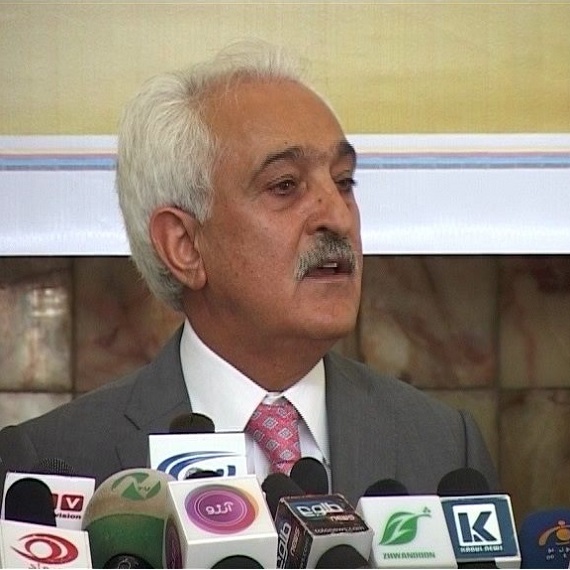
                  Afghanistan is under direct invasion by Pakistan, Former Afghan Foreign Minister Rangin Dadfar Spanta has said and rubbished Islamabad's claim that India was indulging in a "proxy war" with it in the country.

                  Asserting that Pakistan "provokes the Taliban against our people" and "organised, systematically and target-based attacks," Spanta said, "The Afghan intelligence agency and other covert national agencies have access to telephone conversations of Haqqanis and the Taliban with Pakistani officials where Haqqanis are ordered by Pakistan that how to conduct terror attacks and whom they should kill."

                  "In a number of cases they have been told that if they are not able to kill any figure alone, they should seek the help of Lashkar-e-Taiba
                  ," Spanta, who is also the former National Security Advisor of Afghanistan, said.

                  Rubbishing Pakistan's allegations against India, he noted various India-assisted developmental projects including construction of Salma Dam and Parliament House as also restoration of the monuments and said it was beyond understanding how these projects could threaten Pakistan's security.

                  Terming as "totally baseless" Pakistan's claim that India has 14 consulates in Afghanistan, he, in an article in Afghanistan Times, wrote there were only four such missions like Pakistan and Iran.

                  Pakistan was eyeing to compel Kabul on scaling back its relations with New Delhi, Spanta wrote.

                  "Now, if ISI's henchmen inside Afghanistan want the Afghan government to reject the consulates, it is up to them, but the freedom fighters of this country will never give this right to Pakistan to take control of Afghanistan's foreign policy and press Kabul to tell India to cease its consulates in the country," he said.

                  However, Spanta said he has never been happy about India's "debility in its foreign policy and security" while citing an example when then Hamid Karzai-led Afghan government had submitted the "wish list" to the Indian officials and the response came after the end of their tenure.

                  "We submitted our wish list to India and we received response after the end of our tenure. I revealed the facts here to tell Afghans that there is no 'proxy war' in Afghanistan. Neither India nor any other country was ready or is ready to accept danger for security in our country. And this is a good thing. We should learn that how to use the possible cooperation for defending the country.

                  "Our people should know that the country is under direct invasion by Pakistan. What does this country say is just excuses. Our people should know that the US, our main ally against Pakistan, is pursuing a soft policy against this country," he said.


                  [MENTION=1201]Toramana[/MENTION] [MENTION=1444]Azmal[/MENTION] [MENTION=5723]Kushan Prince[/MENTION]
                  * * * * * * * * * * * * * * * * * * * * * * *

                  Comment


                  • #39
                    1. Afghanistan and Bangladesh are two very different countries and I would in no way try to suggest that the average Afghan has any special affinity to Bangladesh besides it being a Muslim country. Other than that for many if not most it is a far away irrelevant country racially very different.

                    However in terms of security issues there are many commonalities.

                    Both countries are victims of Pakistan sponsoring terrorism inside the country and trying to promote Pakistani influence and also trying to undermine relations between these countries and India.


                    2. In Afghanistan, the Pakistani military and regime use the Taliban and in Bangladesh they use Jamaat e "Islami".

                    Also the Pakistani regime through their Jamaat e "Islami" puppet have successfully badmouthed Bangladesh to the rest of the Muslim world and portrayed war crimes trials (albeit not conducted in a totally satisfactory manner) as a "war against Islam", when in fact they are supported by the vast majority of Bangladeshis who are on the whole a pious and conservative society.

                    With Arab, Turkish and other "Islamists" lapping this false narrative and propaganda up.

                    The Bangladeshi embassy in Turkey was even physically attacked by pro-Erdogan thugs.

                    In other words the Pakistani military, who have murdered and raped more Muslims than Israel, are the masters of using the "Islam card" to promote their own selfish secular interests.


                    3. The Pakistani regime has portrayed the trial of war criminals and politicians in Bangladesh for crimes committed in Bangladesh against Bangladeshi civilians by Bangladeshi citizens as an "attack on Pakistan".

                    They have been supported in this by Turkey.

                    In the same way that the Pakistani regime bullies Bangladesh and expects deference from the Bangladeshi government it too expects a subservient government in Kabul one which should not have a fully independent foreign policy and which should be anti-India even at the cost of the welfare of Afghans.


                    How Afghanistan should deal with Pakistani bullying?


                    1. The Afghan government should contact the OIC (a Saudi run organization) but also tell Saudi Arabia and the rest of the GCC what Pakistan is doing.

                    How it is conducting a war of terrorism against a Muslim country.

                    How this is against Islam.

                    How the Arab world could suffer, especially given that in the past Yemeni Arab, Usama bin Laden, hid in Afghanistan and misused his presence there for terrorism.


                    2. The Afghan government should also tell the Turkish regime about Pakistan's war against a Muslim country.

                    Dostum as an ethnic Turk (Uzbek) can play a key role in this.


                    Two Turks, Dostum and Erdogan.


                    Dostum should tell Turkey the following.

                    a: Pakistan is waging war against a Muslim country, Afghanistan thus the millions of ethnic Turks there including the Uzbeks.

                    b: The Mongoloid Hazaras, who are considered Turks by the Turkish regime and patronized by them, are also at risk from Pakistani-backed terrorists.

                    c: If Turkey allows Afghanistan to fall to pro-Pakistan terrorists they have in fact betrayed the millions of Turks in Afghanistan.

                    Also the whole concept of pan-Turkism will suffer if the Turks of Uzbekistan, Kazakhstan, Turkmenistan and elsewhere see Turkey abandoning the Turks of Afghanistan.


                    Afghanistan should call upon Saudi Arabia and Turkey to pressure Pakistan to stop its war against a Muslim country.

                    The Turkish regime's foreign minister a few years ago, the notorious Ahmet Davutoglu, even wanted to phone the Saudi foreign minister to speak about the Qader Molla case (a pro-Pakistan politician executed for war crimes in Bangladesh).

                    This was escalated to such a high level for one single man, for one single controversial party, the Jamaat e "Islami".

                    What about helping the millions of Turks in Afghanistan?


                    The widely disliked Ahmet Davutoglu. He attempted to phone the Saudi foreign minister, Faisal Al-Saud a few years ago to pressure Bangladesh over the case of a pro-Pakistani politician executed for war crimes. It may be unlikely he will seek to protect the millions of Turks (Uzbeks) in Afghanistan from the war Pakistan is waging on them.


                    Turkish strongman Erdogan in the past with pro-Pakistan warlord Hekmatyar, it is unlikely the Turkish regime will seek to protect the millions of Turks from the Taliban and Pakistan given that the Turkish regime and military are extremely pro-Pakistan military.


                    If Pakistan does not end its war against the Muslim country of Afghanistan, even if countries like Saudi Arabia and Turkey do not help the Muslims of Afghanistan, then ultimately Pakistan will suffer bad karma as it has for the past few years.
                    * * * * * * * * * * * * * * * * * * * * * * *

                    Comment


                    • #40
                      India too should approach the Arabs, Turks, OIC and others about Pakistan's war against a Muslim country and the damage it will have for the region and Muslim world and the world in general, e.g. after 9/11 the whole world's eyes were on Afghanistan and Yemeni Arab militant leader, Osama bin Laden.


                      Saudi Arabia with de facto ruler of Pakistan, Raheel Sharif, Pakistan army chief.

                      Saudi has big - though not unlimited influence - on the Pakistani regime and military and could use it to help protect the Afghans from the de facto invasion of their country by Pakistani-backed terrorists.
                      * * * * * * * * * * * * * * * * * * * * * * *

                      Comment


                      • #41
                        Ghani eyes Saudi mediation in peace talks with Taliban


                        Published: March 21, 2015

                        ISLAMABAD: During his visit to Saudi Arabia this week, Afghan President Ashraf Ghani and King Salman bin Abdulaziz discussed the Kingdom’s potential role in the reconciliation with the Taliban.

                        According to Afghan Ambassador to Saudi Arabia Sayed Ahmad Omarkhil, the talks have raised prospects for stronger cooperation between the two countries regarding the negotiation process. Ghani’s maiden visit to Saudi Arabia since he assumed office in September 2014 has been viewed as an important development to ensure peace and stability in Afghanistan. On March 16, Afghanistan’s Deputy Foreign Minister Hekmat Khalil Karzai announced that face-to-face peace talks with the Taliban would begin soon. However, Taliban spokesperson Zabihullah Mujahid rejected Karzai’s claim, saying there was no change in their policy of not talking to the Kabul administration.

                        At a time when Afghan leaders have voiced optimism over the decision to initiate dialogue with the Taliban, Ghani’s visit to Saudi Arabia serves as a beacon of hope. Analysts believe Saudi Arabia’s assistance in this negotiation process can be particularly valuable since they have a strong influence on the Taliban.

                        Change of heart

                        Saudi Arabia is one of the three countries which recognised the Taliban government in Afghanistan between 1996 and 2001. Although it has not been active in the negotiation process so far, the country is now willing to assume an active role in this regard.
                        The change in Saudi Arabia’s outlook towards the Taliban was largely fuelled by suspicions of Taliban links with al Qaeda since the collapse of the Taliban regime in 2001.
                        Saudi officials have urged Taliban leaders to sever ties with al Qaeda. Moreover, Saudi rulers have also voiced reservations about the emergence of the Islamic State in Afghanistan as it would never want the IS to replace the Taliban.
                        Taliban officials have repeatedly clarified they do not want any country to mediate their talks with the Kabul administration. However, Hizb-e-Islami Afghanistan, the second largest resistance group, strongly believes Saudi Arabia can play a critical role in the negotiation process.
                        “Saudi Arabia can play a major role in bringing peace to Afghanistan because of Saudi Arabia’s special status among all Muslims and its long history of support for the Afghan cause,” Ghairat Baheer, head of the group’s political council, told The Express Tribune.
                        He added, “The Saudis have supported the Afghan cause since time immemorial. However, the matter predominantly depends on Afghan stakeholders who ought to realise their country is in desperate need of peace and stability.”

                        Mixed response

                        Politicians and the media in Afghanistan have remained cautiously optimistic about the outcome of President Ghani’s visit on talks with the Taliban. A large section of the media also believes Riyadh can play a vital role in the Afghan peace process.

                        “Saudi Arabia can play a significant role in mediating the peace process between the Afghan government and the Taliban as it has been financially supporting the latter,” stated an editorial comment in Cheragh, a privately-owned daily newspaper.
                        Similarly, Sarnawesht, an independent daily in Afghanistan, hoped the visit would produce positive results in the peace process.
                        Yet, lawmakers and politicians have expressed doubts about Saudi Arabia’s role in the political process.
                        Parliamentarian Baktash Siyavash told Tolo TV that he was unimpressed by the developments and said President Ghani would not be able to achieve peace in the country by asking Saudi Arabia for help. “If Ghani looks for the key to the peace process in the pockets of Arab leaders, he will repeat the same mistakes his predecessor Hamid Karzai made,” he added.


                        1. Saudi can play a big role in Afghan government & Taliban talks because everyone knows Taliban = Pakistan.

                        Saudi has lots of leverage and influence over Pakistan.

                        In fact the current Pakistani head of civilian administration, Nawaz Sharif, got his daughter married to a Saudi prince.


                        2. Ghani also needs to approach the following countries to put pressure on Pakistan to stop its aggression against Afghanistan.


                        Turkey: Turkey supports Uzbeks and Turkmens in Afghanistan as well as Hazaras. It supported the northern alliance in 2001 whilst Pakistan supported the Taliban.

                        Algeria: Algeria is the biggest country in Africa and the 2nd biggest Arab country by population.

                        It is the biggest country by size in the Arab world.

                        It successfully defeated an "Islamist" insurgency in the 1990s which featured radical Salafists, the most feared of whom were the veterans of the Afghanistan war called the "Afghanis" (Al-Afghaniyoon).

                        It also played a big role in helping Bangladesh to survive after its war of independence in 1971 by giving it immense diplomatic support.


                        Algerian soldiers, Algeria defeated an "Islamist" rebellion in the 1990s which featured Algerian militants who had fought in Afghanistan.


                        Though having no direct interest in Afghanistan, the Algerian government are strong opponents of fundamentalism and radicalism and would not welcome a Taliban takeover of Afghanistan especially if it increased the security threat to Algeria.

                        They can be asked to pressure the Pakistani military and regime to stop their aggression against Afghanistan.

                        Tajikistan: Tajikistan would not want a Taliban takeover of Afghanistan for obvious reasons and though not that influential if it joined Saudi Arabia, Turkey, Algeria, Turkmenistan, Uzbekistan, China and others in pressurizing Pakistan to stop its war against Afghanistan it could have an effect.


                        Uzbekistan: Uzbekistan is the largest country in central Asia alongside Afghanistan and like Tajikistan borders Afghanistan and wants a stable Afghanistan. If it joins hands with Saudi Arabia, Turkey, Turkmenistan, Algeria, Tajikistan and others in calling for Pakistan to end it was against Afghans it would help the Afghans.


                        Turkmenistan: Turkmenistan borders Afghanistan and would be effected by a Taliban takeover, it can lend its voice to other Muslim states telling Pakistan to stop supporting terror against Afghans.


                        Other Muslim states which can be approached to tell Pakistan to stop its war against Afghanistan, after the Afghan government providing photos, reports and recordings of Pakistani support for a war against their people are:

                        - Indonesia
                        - Malaysia
                        - Bangladesh
                        - Egypt
                        - Iran (which would totally oppose a Taliban takeover)

                        and others.

                        The Muslim world must unite and help Afghanistan to end the war that Pakistan is waging upon it.


                        OIC, Organization of Islamic Co-operation.
                        Last edited by Bengal_Tiger; 03-21-2015, 07:29 PM.
                        * * * * * * * * * * * * * * * * * * * * * * *

                        Comment


                        • #42
                          Malaysia condemns “deliberate targeting” of civilians by armed groups in Afghanistan


                          Victims of Pakistan, an Afghan civilian with a child. Pakistan is waging war against the Muslim nation of Afghanistan by sponsoring the Taliban. Personal comment by forum poster, "Bengal_Tiger" (not from original article).

                          United Nations Assistance Mission in Afghanistan (UNAMA) documented the highest number of civilian casualties in Afghanistan last year

                          BY ZARIZA CORRESPONDENT PUBLISHED 2015-03-18 | 12:05:00 94 Print | Email

                          Malaysia has strongly condemned the “deliberate targeting” of civilians by armed groups in Afghanistan.

                          Speaking at a UN Security Council briefing on the situation in Afghanistan on Monday, Malaysia’s permanent representative to the United Nations (UN), Datuk Hussein Haniff expressed concern over the increase in civilian casualties in Afghanistan.

                          According to the United Nations Assistance Mission in Afghanistan (UNAMA), the highest number of documented civilian casualties was recorded in Afghanistan last year, with 3,699 deaths and 6,489 injuries.

                          “My delegation was particularly alarmed on the increasingly negative impact of the conflict on children,” said Mr. Haniff. “We are shocked by the repeated incidents of anti-government armed groups killing and maiming Afghan children, as well as attacking schools and hospitals,” he said.

                          He emphasized the importance of respecting the international humanitarian laws to win the hearts and minds of people in Afghanistan.


                          He also congratulated the people of Afghanistan on the historic democratic transition, establishment of national unity government, and entry into the ‘decade of transformation’.

                          “The entry into the transformation decade will bring forth new challenges, as well as new approaches for collaboration in resolving them,” said Mr. Haniff.

                          He called on the international community to continue supporting Afghanistan and cautioned against abandoning the country at this crucial juncture in its history.

                          “We believe that at this stage it remains imperative for the UN and the international community to continue to lend their support, encouragement and assistance to Afghanistan through reconstruction and redevelopment efforts for rebuilding the country,” he said.

                          He also reaffirmed Malaysia’s commitment to peace-building efforts and provision of assistance to Afghanistan.

                          “I would like to take this opportunity in the council to record our appreciation to the Afghanistan government for inviting Malaysia to join the International Security Assistance Force (ISAF),” he said.

                          “Prior to the ending of the ISAF mandate, a Malaysian medical team had been stationed in the country to provide medical, dental and healthcare services to the Afghan civilian population,” he added.

                          - See more at: http://www.afghanzariza.com/2015/03/....3pNUx0iV.dpuf


                          1. Malaysia was seen by many Muslims, including even Arabs, as the model for the rest of the Muslim world. Economically successful but retaining Muslim values.

                          It is a very important member of the Muslim bloc.


                          2. The Malays should be commended for speaking out against the attacks on Afghan civilians and supporting the Afghan national government.

                          However when will they put pressure on Pakistan to stop sponsoring terrorism in Afghanistan?

                          The Malaysians even phoned up Bangladesh over Qader Molla, a pro-Pakistani politician accused of war crimes.

                          This over one man?

                          What about the millions of Afghans suffering from war and the thousands being killed by pro-Pakistan terrorists?

                          Are they not important?

                          Or is it just pro-Pakistani politicians and the Jamaat e "Islami" terrorist organization that matter to Malaysia?


                          Qader Molla, a pro-Pakistani politician accused of war crimes and executed. Malaysia contacted the Bangladeshi government over this issue, whilst the Erdogan regime took the lead. However it seems neither of these two governments cares about the millions of Afghans suffering from war by pro-Pakistan terrorists and will probably not pressure Pakistan to stop its war against Afghanistan.
                          Last edited by Bengal_Tiger; 03-23-2015, 04:46 PM.
                          * * * * * * * * * * * * * * * * * * * * * * *

                          Comment


                          • #43
                            Haqani Network weapon depots seized

                            By ZABIHULLAH MOOSAKHAIL - Mon Mar 23 2015, 5:19 pm


                            NDS

                            The National Directorate of Security (NDS)—Afghanistan’s intelligence agency—has seized two depots belonging to the terrorist Haqani Network.
                            A statement issued by the NDS on Monday states that one depot was seized in Pakhtoon Abad area of the provincial capital while the other one was seized in Chahardiwal area of Andar District.

                            The statement adds that both depots belong to Mawlawee Ismail, a commander of Haqani terrorist network.
                            The statement further adds that there were eight different types of heavy and light weapons, 13 anti-vehicle landmines, 75 kilograms of other explosive materials, hundreds of rounds of ammunition and wireless systems in the depots.
                            According to the statement two binoculars were also recovered from the depots.
                            NDS statements usually do not contain information about the exact date of the incidents but their statements come after recent achievements.
                            Haqani terrorist network, which according to Afghan officials is based in Pakistan, is blamed for several deadly attacks in Afghanistan.

                            The National Directorate of Security (NDS)—Afghanistan’s intelligence agency—has seized two depots belonging to the terrorist Haqani Network. A statement
                            * * * * * * * * * * * * * * * * * * * * * * *

                            Comment


                            • #44
                              Five PC-12 Surveillance aircraft to be given to the Afghan Air Force.

                              The United States will deliver five more Pilatus PC-12 surveillance aircraft to Afghan National Army (ANA) special forces. The Ministry of Defense (MoD)


                              A PC-12 used by the Finnish air force.


                              Some rotary craft (helicopters) of the Afghan air force.


                              The Afghanistan National Army has control over all major population centres of the country.

                              It has also recently captured key areas of Helmand province and the Taliban's drugs industry there.

                              It is only going to get stronger with more aircraft, more drones and more political support from China.
                              Last edited by Bengal_Tiger; 03-23-2015, 05:50 PM.
                              * * * * * * * * * * * * * * * * * * * * * * *

                              Comment


                              • #45


                                * * * * * * * * * * * * * * * * * * * * * * *

                                Comment

                                Working...
                                X