Announcement

Collapse
No announcement yet.

Bangladesh economy

Collapse
X
 
  • Filter
  • Time
  • Show
Clear All
new posts

  • #16
    'Bangabandhu Satellite-1' tender on cards


    The government has worked out a plan to complete the tender procedure of the country's first-ever satellite, 'Bangabandhu Satellite-1', by September next aiming to launch it by December 2017 for improving the country's IT services.

    According to a document, the government has decided to hold the pre-bid meeting by April 20 next, a news agency report said.

    "On completion of all the procedures, it'll be possible to sign the deal with the main contractor by September this year," the official document says.

    If the approval from all levels comes at the right time it can be hoped that the 'Bangabandhu Satellite-1' would be able to launch in its orbital by December 2017.

    The government, meanwhile, has floated the international tender in this regard. The last date for submission of the tender is June 2.

    On September 16, 2014, the Executive Committee of the National Economic Council (Ecnec) approved the 'Bangabandhu Satellite Launching Project' and the government promulgated an order in this connection on November 25 the same year.

    Bangladesh Telecommunication Regulatory Commission (BTRC) has inked an agreement with Russian INTERSPUTNIK International Organisation of Space Communications on January 15 this year to acquire orbital slot for the next 15 years.

    The duration of the deal for the slot in the 119.1 east longitude is extendable up to 45 years.

    According to the official sources, the government is likely to spend $36 million to procure the orbital slot needed for the launch of the satellite. The slot was rated as the best option for the satellite by the project's consultant, Space Partnership International, a US company.

    There is a scope to launch three satellites in a row from the slot and it will be possible to provide quality services to Bangladesh and other countries in the region through it.

    "If the second and the third satellites are not launched in the future, the country can earn revenue by leasing out or selling the remaining frequency to other countries," said an official involved in the project.

    At present, the country's demand for a satellite is met by renting bandwidth from different satellite operators. The cost for this services is not less than US$ 17 million per year. Once the satellite is launched, the country will be able to save foreign currency, the official said.

    Ecnec has allocated Tk 2,967 crore for the Bangabandhu Satellite Project. Of the amount, Tk 1,652 crore will come from aid, while the remaining to be raised through bidder finance.

    A satellite will be built and a ground station set up for launching it under the project. An authority will also be formed for the maintenance of the satellite.

    Bangladesh's leading English-language daily newspaper covering economy, business, politics, and national news.


    1. Quite funny an American consultancy company advises the Bangladeshi government to purchase a Russian orbit slot.


    2. We should have done this much earlier i.e. have a satellite in space.

    Indonesia was involved in satellite technology back in the 70s.


    As the first developing country to operate its own domestic satellite system in the mid seventies, Indonesia has consistently taken the steps necessary for developing its existing geostationary satellite system for multiple services, safeguarding its global orbital allocation on an equitable first come first served basis, and embracing emerging satellite communication systems (including non-geostationary ones) expected to yet emerge from their lingering stage.

    The program was started in February 1975, when the government of Indonesia awarded the contract for two satellites to Boeing. The name Palapa was chosen by president Suharto and means 'fruits of labor'.


    The first ever totally Indonesian made satellite was launched two months ago in January 2015.


    An Indonesian scientist works on Indonesia's first totally indigenously made satellite, the Lapan-A2.

    * * * * * * * * * * * * * * * * * * * * * * *

    Shukran ya Masr!!!

    Thanks to Egypt for supporting Bangladesh against Pakistani harassment and support for terrorists and war criminals!!

    Comment


    • #17


      Goldberg (Bangladeshi company) smartphone presentation.


      * * * * * * * * * * * * * * * * * * * * * * *

      Shukran ya Masr!!!

      Thanks to Egypt for supporting Bangladesh against Pakistani harassment and support for terrorists and war criminals!!

      Comment


      • #18
        Bangabandhu Satellite-1 nice name haha.

        good to see a prosperous Bangladesh

        Comment


        • #19
          Govt to launch 500 mobile apps today

          The apps will help people get government services easily


          Muhammad Zahidul Islam

          Passengers can now easily detect the location of a train using one of the 500 locally-developed apps that the government will launch today.

          One of the applications will enable customers to know about their utility bills from Dhaka Electric Supply Company, Power Development Board, and Dhaka Water Supply and Sewerage Authority.

          Android users can also get suggestions for primary healthcare, maternity and educational support through the apps developed by Ethics Advanced Technology Ltd (EATLApps) under a Tk 9-crore project of the ICT Division.

          The government has rolled out the apps as part of its effort to provide better services to the people, said G Fakhruddin Ahmed Chowdhury, a director of the 500 Applications Development Project.

          “We hope it will be easy for people to get government services through the apps developed in Bangla.”

          The mobile phone numbers and e-mail addresses of the contact persons of different government agencies will also be found in the apps, he said. The apps will be available on Google store and on an online platform which the government has been developing, he said.

          “Anyone can download the applications free.”


          Three hundred of the applications will provide services related to the government offices and institutions.

          The rest of the apps are innovative in nature, the ideas of which have been collected from 17 public and private universities, Chowdhury said. “Information on utility bills of the last three years will also be seen using one of the apps,” said Rajesh Palit, a director of EATLApps.

          There are 10 educational applications, which will help children learn Bangla and English alphabets and practise mathematics, Palit said. Visitors can find popular tourist destinations through an app and even use one of the apps as a medication reminder, Chowdhury said.

          Users also can check which products have been tested by Bangladesh Standards and Testing Institution by an app, he said.

          In September last year, the government introduced 100 applications. EATLApps developed 50 of the apps while the rest were made by MCC Ltd.

          Currently, Bangladesh has 12.6 crore active mobile connections, nearly 30 percent of whom use smartphones; the number of internet users is 4.74 crore.

          Passengers can now easily detect the location of a train using one of the 500 locally-developed apps that the government will launch


          Currently, Bangladesh has 12.6 crore active mobile connections, nearly 30 percent of whom use smartphones; the number of internet users is 4.74 crore.
          12.6 crore mobile connections = 126 million mobile connections.

          4.74 crore internet users = 47 million internet users


          Per capita there are more mobile phone users in Bangladesh than in India or Pakistan.


          In October 2013 it was 36 million internet users, and in less than 2 years the number has increased by 11 million.

          Source: Bangladesh ends 2013 with 36 million internet users.

          * * * * * * * * * * * * * * * * * * * * * * *

          Shukran ya Masr!!!

          Thanks to Egypt for supporting Bangladesh against Pakistani harassment and support for terrorists and war criminals!!

          Comment


          • #20
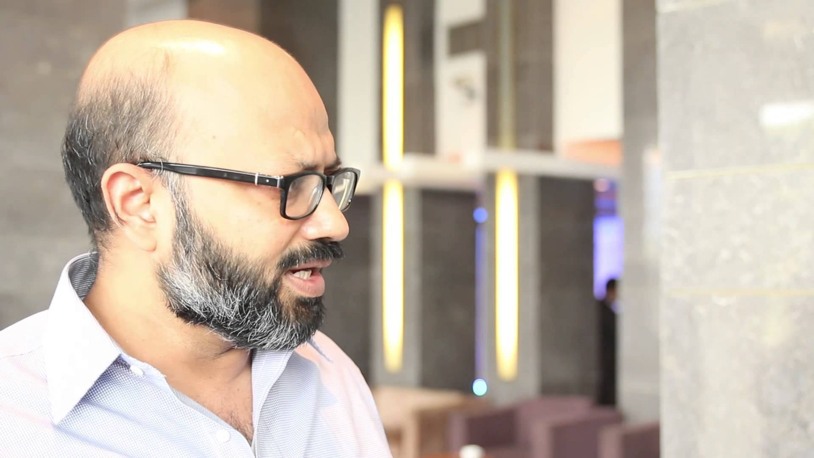
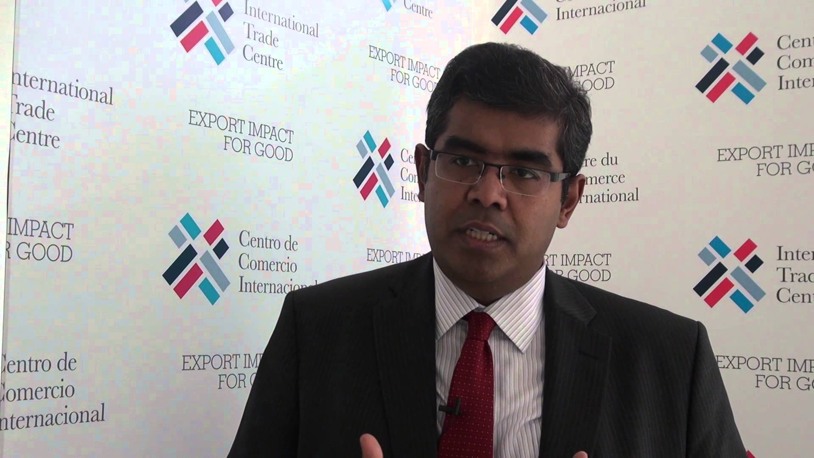
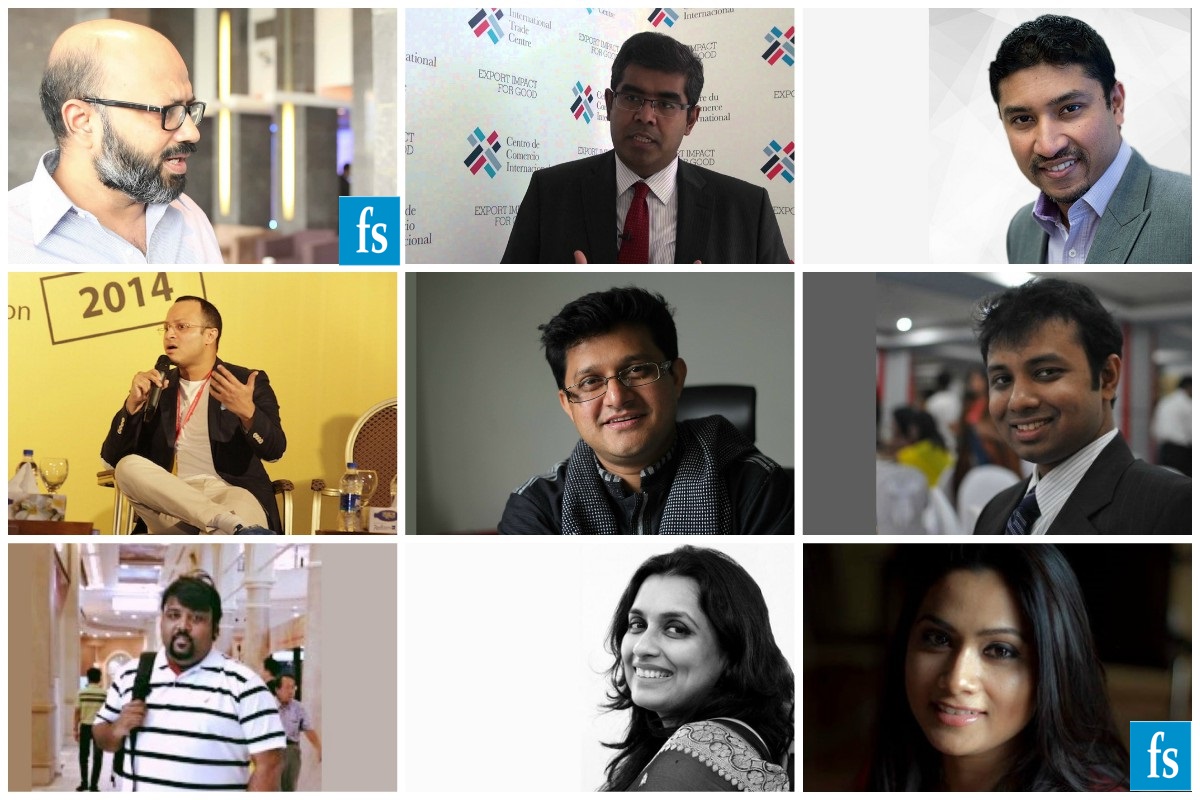
            14 Entrepreneurs Who Are Shaping The Future Of Bangladesh’s Tech Entrepreneurship


            Ibrahim Mahbub
            StartupsNovember 16, 2015

            Bangladesh’s technology scene is changing rapidly. New startups are entering the space at regular intervals. It will take few more years to mature but for now it is growing pretty fast. People are central to any big change and it is no different for Bangladesh’s tech industry. We have tried to find out tech entrepreneurs who are directly and indirectly contributing to moving Dhaka’s tech scene forward.

            Many of these are common names that come up when people talk about Bangladesh’s fledgling tech startup scene but many names are new. Some have already built and sold successful companies while others are building multimillion dollar companies and some are just starting out. Either way, these are the people who saw things coming before almost everyone else, took chances, and ventured into uncharted territory.

            We have tried to put together a list purely to see where Bangladesh’s tech scene is heading toward. This list is no ranking and neither the list is organized in any particular order.

            This is a subjective list about people who have built important things, put examples for others to move forward, and who are building exciting technology ventures in Bangladesh while also contributing to the ecosystem.


            Kamal S. Quadir
            CEO-bKash
            Founder, CellBazaar
            FSindex Profile


            Kamal S. Quadir was founder of CellBazaar, an electronic marketplace which, which was acquired by Norwegian telecommunications operator Telenor in 2010 and rebranded as Ekhanei.com this year. Kamal is the co-founder and CEO of country’s largest mobile money company bKash.

            He is a TED Fellow, a First Mover Fellow of The Aspen Institute and a Young Global Leader of the World Economic Forum. This year Kamal has been named as the Schwab Foundation’s Social Entrepreneur of the Year.


            Fahim Mashroor
            Co-founder and CEO- BDjobs.com
            Co-founder and CEO- Ajkerdeal.com
            Co-founder- Beshto
            FSindex Profile


            Fahim Mashroor is the Bangladesh’s first successful dotcom entrepreneur. His company BDjobs.com started back in 2000 and became a huge success later on. In 2014, BDjobs was valued at BDT 130 Crore when Seek International bought 25% at the company. Later on Fahim went on to found Ajkerdeal, and Beshto.


            Iraj Islam
            Co-founder, NewsCred
            FSindex Profile


            Iraj Islam is the co-founder of NewsCred, world’s leader in content marketing. Raised in Sweden, Iraj ventured back to Bangladesh during the early days of NewsCred. Founded in 2008 by Shafqat Islam, Iraj Islam and Asif Rahman, NewsCred raised more than USD 90 million from top-tier Silicon Valley venture capitalists and is today the world’s leading content marketing platform.

            Iraj was named one of Sweden’s top 3 entrepreneurs by Swedish magazine InternetWorld in 2006. He was also named in the Silicon Alley 100 2012 by US publication Business Insider.


            Shameem Ahsan
            Co-founder, Akhoni.com
            General Partner, Fenox Venture
            FSindex Profile

            Shameem Ahsan is the CEO of Akhoni.com, one of early ecommerce startups in the country. He is also President of BASIS, the highest body IT entrepreneurs in the country. Previously, he founded eGeneration Ltd. and Benchmark-eGeneration Ltd.


            Mahmudul Hasan Sohag
            Founder and Chairman, Onnorokom Group
            FSindex Profile


            Mahmudul Hasan Sohag is the Founder and Chairman of Onnorokom Group, one of the fastest growing new generation companies in Bangladesh. There are around seven entities under Onnorokom umbrella.

            Sohag is one of the most successful and extraordinarly entrepreneurs Bangladesh has seen in recent years and is known for his visionary thinking and for his distinct approach to doing business.


            Waseem Alim
            Founder, Chaldal
            FSindex Profile


            Waseem Alim is the co-founder and CEO of ChalDal, Inc. Founded in 2013, Chaldal graduated from Y Combinator this year and raised fund from 500 Startups and few notable Silicon Valley venture firms.

            Before Chaldal, Waseem worked as Director of Product Strategy at Sigfig, a Silicon Valley financial technology startup and Director of Product Development at Nvest.


            Muhammad Nazimuddaula
            Co-founder and CEO, G&R
            FSindex Profile


            Nazimuddaula is one of the few early internet entrepreneurs of Bangladesh. G&R started its journey back in 2009 but not exactly as what it is today. After trying and failing to build few internet businesses, G&R finally settled to become an Ad Network back in 2010. It took the company almost six years to become what it is today. The company has grown rapidly during past few years.

            Early this year Genex Infosys Ltd acquired G&R and the company became part of a larger empire.


            Zakaria Swapan
            Founder and CEO, Priyo
            FSindex Profile


            Returning from USA, Zakaria Swapan started Priyo.com back in 2011 with a very small team. With its controversial approach, the media startup has soon become a major destination for internet content in Bengali. In 2014, Priyo received an undisclosed amount of investment from Silicon Valley based Venture Capital firm Fenox Venture.


            Ivy Huq Russell
            Founder, Maya
            FSindex Profile


            Ivy Huq Russell, a former investment banker, Founded Maya with a vision to empower women through giving them access to information and a shared community. After beta launch in September 2011, Maya is now a home to Bangladeshi women seeking community, advice, and support for a better life.

            Last year, Maya launched Maya Apa, an app where anyone can ask and get personalized solutions for their problems. Born and grew up in Chittagong, Ivy went to Scholastica, Dhaka for her O and A level and then she went off to study in the UK where she worked in Finance.


            Maliha M Quadir
            Founding Managing Director, Shohoz.com
            FSindex Profile

            Maliha is the founding managing director of Shohoz.com, country’s first and fastest growing online ticketing platform. Started back in 2014, Shohoz has received venture funding from Fenox, and Singapore based Sengel Venture and has expanded its service in hotel booking as well. Recently, we have seen few new players in the market posing potential threat to Shohoz.

            However, Bangladesh market is pretty big to accommodate multiple ticketing companies and Shohoz has been able to position itself strongly in the market.


            Sabbir Rahman Tanim
            Co-founder, 3rd Bell
            FSindex Profile


            Sabbir Rahman Tanim is co-founder and CEO of 3rdBell, one of the Bangladesh’s fastest growing video streaming sites in Dhaka. Started early 2014, 3rdBell recently raised an undisclosed amount from few local investors.


            Zahidul Amin
            CEO And CO-Founder, Chorki.com
            FSindex Profile


            Zahidul Amin is the CEO of Chorki, a recently launched local search engine. Since its start early this year, Chorki has been doing great work and launched multiple products. Before Chorki, Zahid worked at Social Enterprise Dnet as CTO.


            Mohammad Abdul Matin Emon
            Co-founder and CEO, Doctorola
            FSindex Profile


            Mohammad Abdul Matin Emon is the Founder and CEO of Doctorola, a startup aims to disrupt the healthcare industry in Banhladesh. Emon has an astounding body of work. Previously, he started successful businesses, worked as CIO in a few leading local and international organizations, and also had taste of his share of failure in business. Doctorola just raised BDT 20m from BD Venture Limited.


            Md. Shofiul Alam
            Co-founder and CEO, Belancer

            FSindex Profile


            Shofiul is the Co-founder and CEO of the country’s first local freelancing marketplace. Started back in 2014, Belancer is one of the fastest growing startups in Dhaka.


            This list is far from complete. Please let us know if we missed anyone doing great work.

            * * * * * * * * * * * * * * * * * * * * * * *

            Shukran ya Masr!!!

            Thanks to Egypt for supporting Bangladesh against Pakistani harassment and support for terrorists and war criminals!!

            Comment


            • #21
              Dutch couple find entrepreneurship in Bangladesh

              They are establishing a high-end luggage brand based on jute and leather


              Dutch couple Rosanne van Kleef and Rik van Dueren den Hollander hope to take Bangladeshi jute and leather to the high end global fashion market with their new brand Juuty.

              Andrew Eagle

              When Dutch couple Rosanne van Kleef and Rik van Dueren den Hollander, both 23, set off on an around-the-world trip in September 2014 to celebrate Rosanne's graduation with a master's in entrepreneurship, they did not imagine they would discover Bangladesh, much less establish their luxury luggage brand Juuty.

              New Zealand, Australia and the Philippines: the trip was going well until, with dreams of India, they met a minor problem in Myanmar. To get an Indian visa would take time, they learnt, while Bangladesh offered visa-on-arrival. “It's impossible,” other travellers said. “You cannot go to Bangladesh. Nobody travels there.”

              “Other tourists had no experience but big opinions,” says Rik. “If everybody says it's impossible, we like to try.” In the Netherlands, Rik worked on ship safety at the Rotterdam port, and in agriculture.

              According to Rik, the general opinion of Bangladesh in Europe is similarly negative. “Everybody mentions poverty,” he says. “Everybody knows about Rana Plaza,” he adds, referring to the 2013 Savar garment factory collapse that claimed over 1,100 lives.

              Within a few days of the decision, the couple arrived in Dhaka. “We were overwhelmed by the hospitality,” says Rosanne, no doubt the experience of many first-timers.

              Having arranged online to stay privately, the couple had an instant social network. “It was unbelievable,” recalls Rik. “We had difficulty managing all the invitations. We thought it was because we were new. A few months later, it dawned on me that in Dhaka this is normal.” Busy with newfound friends and having renewed visas, plans for India never eventuated.

              “We liked Bangladesh so much that we wanted a reason to return,” says Rosanne on how thoughts turned into business. “We started asking anyone who'd listen what Bangladesh does well. Everybody spoke of the golden fibre: jute.”


              At the same time, the couple visited a garments factory to see if what they had heard about Rana Plaza was usual. “The first factory we saw,” recalls Rik, “was very well managed. They even had floor lines indicating where to walk safely.” They wondered if even some Dutch factories couldn't benefit from what they had seen. “It was a big surprise.”

              The couple visited many factories to be greeted with the same, warm reception. “We'd arrive at the front gate and the security guard would always run off to find an English speaker. We said we were tourists, just wanted to see... and everywhere drank tea.”

              Another discovery was the country's leather industry. “The leather is world class,” says Rik. “It's exported to Italy but isn't branded as Bangladeshi. Why can't it be called Bangladeshi leather? We want to change that.”

              The couple were still living out of suitcases. “We always have trouble finding things,” Rosanne laughs. A personal wish for a practical bag with generous pockets entered the idea mix that led to a product decision.

              Juuty, a word that sounds like the English and Dutch 'jute' and 'juti', which means 'couple' in Bangla, would be a Bangladesh-based exclusive luggage brand.

              “Others are making jute bags,” says Rik, “but the combination with leather is new. Bangladesh is good at bulk production but we hope to encourage high quality manufacturing.”

              During a visit to the Jute Research Institute, they saw a new type of jute that is soft as silk and without the usual jute smell. “Durable and strong, jute is the most eco-friendly fibre in the world,” says Rik. “It grows without chemicals.”

              Along with their personal commitment to eco-friendly production, the couple understood that to establish Juuty as a premier label, such standards are a must. “European consumers care about the environment,” says Rosanne.

              More challenging was leather production. Having visited the Hazaribagh workshops to the point they are well-known there, they are enthusiastic about the industry's relocation to Savar. “The new site has a water treatment plant,” says Rik. “In future, Bangladeshi leather will be produced in the best way.”

              They also decided to pay more for leather that uses biodegradable vegetable extracts rather than chemicals in the tanning process, consistent with Juuty's social responsibility promise.

              With initial designs sketched on envelopes, Rosanne and Rik sought out a trustworthy factory in Gazipur. They wanted to work with Bangladeshis rather than establish their own factory. “The workers only need quality training,” says Rosanne, noting that the first prototypes were not up to the mark.

              Similarly, the contract was a surprise to factory management. “They were shocked at all the quality assurance conditions,” laughs Rik. “The contract covers the entire supply chain. It's the size of a small book and took them two days to read.” Nonetheless with careful oversight, satisfactory systems were established.

              For workers, Juuty also brought innovation: comfortable uniforms to promote team spirit, and the desire that each worker knows every production step rather than working on only one step repeatedly.

              “Workers will know the whole bag,” explains Rosanne. “We want them to enjoy making our products, essential for quality.”

              Ultimately, Juuty plans to establish an online system to connect the worker responsible for each individually numbered item with the product's end user. Such personalisation will undoubtedly appeal to many customers and the worker-end user link brings yet another meaning of 'couple' to the word 'Juuty'.

              Initial market reaction has been promising. “We carried one of our bags in an exclusive store in Singapore,” says Rosanne. “The sales assistant stopped us to ask where she could buy one.” Interest was so great at a trade fair in China that the couple hid the Juuty bag to prevent copying.

              Early sales in the Netherlands have outperformed expectation. “Customers are happy with the bags and accessories, which are different to other brands,” says Rosanne. “They like the unique materials and appreciate that Juuty's items are manufactured in a sustainable and fair way.”

              Yet the couple believe some aspects of doing business in Bangladesh could be improved. “There is no structure to establishing a business. You do have to figure out everything yourself,” says Rosanne. She mentions several calls to the National Board of Revenue where the receivers hung up as soon as they heard English. “Much information is only in Bangla,” she says.

              “If you ask ten people about business rules, you will get ten answers. If you wait for all the answers, nothing happens, it will never start,” says Rik. Adopting a try-and-see approach, they imported Chinese metal fixtures, the only part of the bags not sourced locally, with the final cost being established only after goods arrived.

              The couple believe doing business in Bangladesh is satisfying because it is easy to make positive impacts on ordinary people's lives. “We hope to employ more people. We want to offer specialised manufacturing training in quality,” says Rik.

              Juuty is the Bangladesh of the future, a Bangladesh that can both bulk produce and meet the demands of high-end quality and design. The combination of jute and leather expertise, with a better understanding of what high-end consumers want, was almost waiting to happen. It was an opportunity waiting to be discovered by an enterprising couple like Rosanne and Rik.

              “We can't fix all the problems,” Rik says. “We will do what we can. Entrepreneurship can help a lot of people.”

              When Dutch couple Rosanne van Kleef and Rik van Dueren den Hollander, both 23, set off on an around-the-world trip in September
              * * * * * * * * * * * * * * * * * * * * * * *

              Shukran ya Masr!!!

              Thanks to Egypt for supporting Bangladesh against Pakistani harassment and support for terrorists and war criminals!!

              Comment

              Working...
              X