
 Tweet
Kachin clashes kill 5,000 Tatmadaw soldiers, destroy two helicopters: Jane’s
Defence Weekly
Published on Wednesday, 26 March 2014 16:41
A fighter jet used by the Myanmar air force during a military operation near Laiza in December 2012. (Photo-Nay Tun Naing)
The heavy fighting that broke out between Kachin Independence Army (KIA) and Myanmar army from mid-2011 until late 2012 killed 5,000 Myanmar army soldiers and destroyed two helicopters, according to a report in Jane’s Defence Weekly, a military news journal.
Author Tony Davis, in a Jane’s article entitled “Hostage to history?”, said the Myanmar air force used Mi-35 and K-8 Karakoram fighters in the largest operations launched near Laiza, the headquarters of KIO/KIA, despite objections raised by the international community. But the Myanmar government’s air strikes were not generally seen as effective operations, according to data obtained from those close to the KIA.
“According to statistics on pro-government military blog sites, between June 2011 and the beginning of the Laiza campaign in mid-December 2012, at least 5,000 Tatmadaw troops died in Kachin state. The Laiza campaign and smaller operations since then will have added several hundred fatalities to that toll,” the author said.
In response to a question raised by The Daily Eleven, a senior officer of the KIO replied that it was true that the casualty rate of the Myanmar army could be up to 5,000 soldiers and the KIA could have about 1,000 casualties.
Davis pointed out that operation commanders for the Tatmadaw felt like infantry forces stuck with heavy weapons used 20 years ago, and this could be confirmed by studying the operations launched against the KIA.
“In both new fixed-wing and rotary-wing capabilities, regional analysts note that a lack of pilot experience and weaknesses in maintenance and ground-to-air links still limit the operational effectiveness of the [Myanmar Air Force],” Davis wrote in the article.
The Myanmar air force used K-8s, G-4s, and Mi-35s in its ground-attack operations in Laiza from December 2012 to January 2013, according to the audio-visual aids.
If the government fails to reach a nationwide ceasefire, the army would be likely to try to weaken the ethnic armed groups financially. As the government has won clashes with the Kayin and Kachin, it would be likely to use this strategy in facing the United Wa State Army (UWSA), according to the author’s report.
The article said such casualty rates and ineffective use of air power raised questions over whether the Myanmar army would have the capability to take on the UWSA, the country’s largest and best armed insurgent group, which numbers around 20,000 fighters—twice the size of the KIA’s armed forces.
According to the report of the KIA, there were 2,400 clashes between the Tatmadaw and the KIA from 2012 June to December that year. The government’s report said that there were about 1,095 clashes. The KIO released a report saying that Myanmar had suffered losses of 5,000. But the government announced that the clashes caused the death of 35 soldiers and injured 190. There were more than 150,000 IDPs due to the clashes.
Although Eleven Media tried to make contact with the Ministry of Defence and presidential spokesperson Ye Htut on the issue, all efforts were in vain.

1. The Kabul government has more control of Afghanistan than the Burmese regime does over Burma.
Large parts of Burma are de facto independent statelets where ethnic rebel groups have their own states with their own education systems, health systems, TV stations etc.
2. The Burmese military is a poor one and has lost 5,000 men in the past three years to just one rebel group.
This rebel group is half the size of the biggest rebel group in the country.
The KIA (Kachin Independence Army) represents the heavily Christian Kachins of northern Burma.
3. If all the other rebel groups of Burma united they would probably be bigger in size than the Burmese army, the Tatmadaw.
4. The Burmese military though weak receives support from other states such as Russia, North Korea and Pakistan.

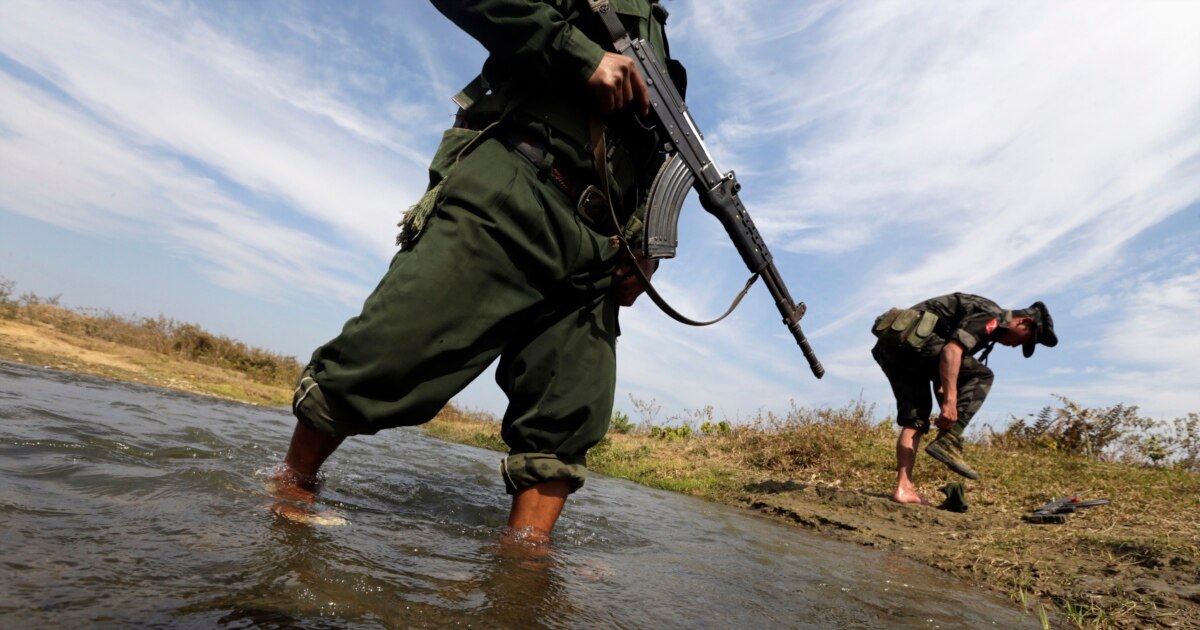
KIA fighters. The KIA have killed 5,000 Burmese soldiers in the past few years according to Jane's Defence Weekly.
5. If the KIA have killed 5,000 Tatmadaw soldiers then for every soldier they have killed, they have probably injured 2 or 3 more.
So the 5,000 dead Burmese soldiers and the 10,000 to 15,000 injured make 15-20,000 Burmese soldiers eliminated as being able to fight.
That is under 10% of the 300 to 400 thousand strong Burmese army.
If we imagined the UWSA replicated that but double as it is twice as big then that would mean 30-40,000 Burmese soldiers neutralized.
If all the 4-5 main rebel armies of Burma each neutralizing 15,000 combatants that would mean 75,000 Burmese soldies neutralized (killed or injured) or almost a 1/4 of their army.
If Islamic volunteers from Indonesia and elsewhere come to defend Muslims in Arakan, the weak Tatmadaw won't stand a chance.

Indonesians protest for oppressed Rohingya Muslims of Burma.

Protestors supporting the mainly Christian Kachin people of Burma whose churches have been burnt by the Burmese army and women raped.
Defence Weekly
Published on Wednesday, 26 March 2014 16:41
A fighter jet used by the Myanmar air force during a military operation near Laiza in December 2012. (Photo-Nay Tun Naing)
The heavy fighting that broke out between Kachin Independence Army (KIA) and Myanmar army from mid-2011 until late 2012 killed 5,000 Myanmar army soldiers and destroyed two helicopters, according to a report in Jane’s Defence Weekly, a military news journal.
Author Tony Davis, in a Jane’s article entitled “Hostage to history?”, said the Myanmar air force used Mi-35 and K-8 Karakoram fighters in the largest operations launched near Laiza, the headquarters of KIO/KIA, despite objections raised by the international community. But the Myanmar government’s air strikes were not generally seen as effective operations, according to data obtained from those close to the KIA.
“According to statistics on pro-government military blog sites, between June 2011 and the beginning of the Laiza campaign in mid-December 2012, at least 5,000 Tatmadaw troops died in Kachin state. The Laiza campaign and smaller operations since then will have added several hundred fatalities to that toll,” the author said.
In response to a question raised by The Daily Eleven, a senior officer of the KIO replied that it was true that the casualty rate of the Myanmar army could be up to 5,000 soldiers and the KIA could have about 1,000 casualties.
Davis pointed out that operation commanders for the Tatmadaw felt like infantry forces stuck with heavy weapons used 20 years ago, and this could be confirmed by studying the operations launched against the KIA.
“In both new fixed-wing and rotary-wing capabilities, regional analysts note that a lack of pilot experience and weaknesses in maintenance and ground-to-air links still limit the operational effectiveness of the [Myanmar Air Force],” Davis wrote in the article.
The Myanmar air force used K-8s, G-4s, and Mi-35s in its ground-attack operations in Laiza from December 2012 to January 2013, according to the audio-visual aids.
If the government fails to reach a nationwide ceasefire, the army would be likely to try to weaken the ethnic armed groups financially. As the government has won clashes with the Kayin and Kachin, it would be likely to use this strategy in facing the United Wa State Army (UWSA), according to the author’s report.
The article said such casualty rates and ineffective use of air power raised questions over whether the Myanmar army would have the capability to take on the UWSA, the country’s largest and best armed insurgent group, which numbers around 20,000 fighters—twice the size of the KIA’s armed forces.
According to the report of the KIA, there were 2,400 clashes between the Tatmadaw and the KIA from 2012 June to December that year. The government’s report said that there were about 1,095 clashes. The KIO released a report saying that Myanmar had suffered losses of 5,000. But the government announced that the clashes caused the death of 35 soldiers and injured 190. There were more than 150,000 IDPs due to the clashes.
Although Eleven Media tried to make contact with the Ministry of Defence and presidential spokesperson Ye Htut on the issue, all efforts were in vain.
1. The Kabul government has more control of Afghanistan than the Burmese regime does over Burma.
Large parts of Burma are de facto independent statelets where ethnic rebel groups have their own states with their own education systems, health systems, TV stations etc.
2. The Burmese military is a poor one and has lost 5,000 men in the past three years to just one rebel group.
This rebel group is half the size of the biggest rebel group in the country.
The KIA (Kachin Independence Army) represents the heavily Christian Kachins of northern Burma.
3. If all the other rebel groups of Burma united they would probably be bigger in size than the Burmese army, the Tatmadaw.
4. The Burmese military though weak receives support from other states such as Russia, North Korea and Pakistan.
KIA fighters. The KIA have killed 5,000 Burmese soldiers in the past few years according to Jane's Defence Weekly.
5. If the KIA have killed 5,000 Tatmadaw soldiers then for every soldier they have killed, they have probably injured 2 or 3 more.
So the 5,000 dead Burmese soldiers and the 10,000 to 15,000 injured make 15-20,000 Burmese soldiers eliminated as being able to fight.
That is under 10% of the 300 to 400 thousand strong Burmese army.
If we imagined the UWSA replicated that but double as it is twice as big then that would mean 30-40,000 Burmese soldiers neutralized.
If all the 4-5 main rebel armies of Burma each neutralizing 15,000 combatants that would mean 75,000 Burmese soldies neutralized (killed or injured) or almost a 1/4 of their army.
If Islamic volunteers from Indonesia and elsewhere come to defend Muslims in Arakan, the weak Tatmadaw won't stand a chance.
Indonesians protest for oppressed Rohingya Muslims of Burma.
Protestors supporting the mainly Christian Kachin people of Burma whose churches have been burnt by the Burmese army and women raped.




Comment