Announcement

Collapse
No announcement yet.

Saudi Arabia preparing attack on Syria

Collapse
X
 
  • Filter
  • Time
  • Show
Clear All
new posts

  • #91
    Originally posted by RevolutionThroughReason View Post
    You said that you're Russian, don't back peddle. Honestly I think you guys never got over being castrated during the Afghan-Soviet war.
    She's Jewish, from a former area of the Soviet Union. Most likely, one of the -Stans.

    And yes a lot of Russian Jews are still mad at Afghans from that war. I would know, they are all over NYC.

    Comment


    • #92
      Originally posted by Hallo View Post
      i'm god! do you get it? the castration of soviets happened not just by afghans. you did it with help of usa and saudi. so calm down. during the 80s soviet union had enough problems within own state.
      and where did i mention that i'm upset about the ending of the war?
      You make me sick.

      I don't think you're even a Jew.

      You are just a Satanist who calls herself Jew.

      Comment


      • #93
        Originally posted by Al Hanif View Post
        You make me sick.

        I don't think you're even a Jew.
        you got it

        You are just a Satanist who calls herself Jew.
        i'm a person with lots of sense of humor
        faye's chauffeur

        Pashton's girlfriend

        I'm a Pashtun Princes


        Comment


        • #94
          Originally posted by کیش View Post
          She's Jewish, from a former area of the Soviet Union. Most likely, one of the -Stans.
          hahaha you have to read mor posts of me
          And yes a lot of Russian Jews are still mad at Afghans from that war. I would know, they are all over NYC.
          again there are not. jews suffered in soviet union and after perestrojka they could move out from ukraine and russia
          what about jews from afghanistan

          lot sof them are in usa
          have you ever meet one
          or a buchara jew
          faye's chauffeur

          Pashton's girlfriend

          I'm a Pashtun Princes


          Comment


          • #95
            Originally posted by Hallo View Post
            i'm god! do you get it? the castration of soviets happened not just by afghans. you did it with help of usa and saudi. so calm down. during the 80s soviet union had enough problems within own state.
            and where did i mention that i'm upset about the ending of the war?
            Which explains your bitterness and why you're obsessed with supporting anything to suppress Islam. You know the potential dangers that would have for Mother Russia.
            [QUOTE=Afghanistan2010;658085][B]He is no different [COLOR="Red"]than us[/COLOR][/B],[B]he[COLOR="Red"] blindly believes [/COLOR]in the words [COLOR="Red"]of other men[/COLOR][/B],:[/QUOTE]

            2010 Admitting he's a blind believer not in God, but what other men says.

            Comment


            • #96
              The entire shai world supporting syrian army against sunis.
              There are armed men from iran,iraq,lebnon fighting alongside with alawi army of syria agains sunis.
              The saudis have to fight this war or it will come to their doors in shai dominated area of the kingdom.


              Support pashto language and greater pukhtoonkhwa.

              pa prady jaba khabarai pakhtun naka
              be laila bala soda kho majnon naka
              gero jabo kre lahoo pa khpal tahzeeb ki
              be pakhtu ba de bal hestsok rastoon naka
              hamza baba
              پَښتو کښې اُولېکئ
              Pashto Keyboard Online (Afghan) LEXILOGOS >>

              Comment


              • #97
                Originally posted by RevolutionThroughReason View Post
                Which explains your bitterness and why you're obsessed with supporting anything to suppress Islam. You know the potential dangers that would have for Mother Russia.
                **** of mother russia. she is not better than daddy usa with their imperialism
                faye's chauffeur

                Pashton's girlfriend

                I'm a Pashtun Princes


                Comment


                • #98
                  Is Pakistan aiding Syrian rebels?

                  Pakistan denies claims it is arming Syrian rebels at Saudi Arabia's behest. Experts, however, say Islamabad is not only providing military equipment to anti-Assad groups, it's also helping jihadists to go fight in Syria.

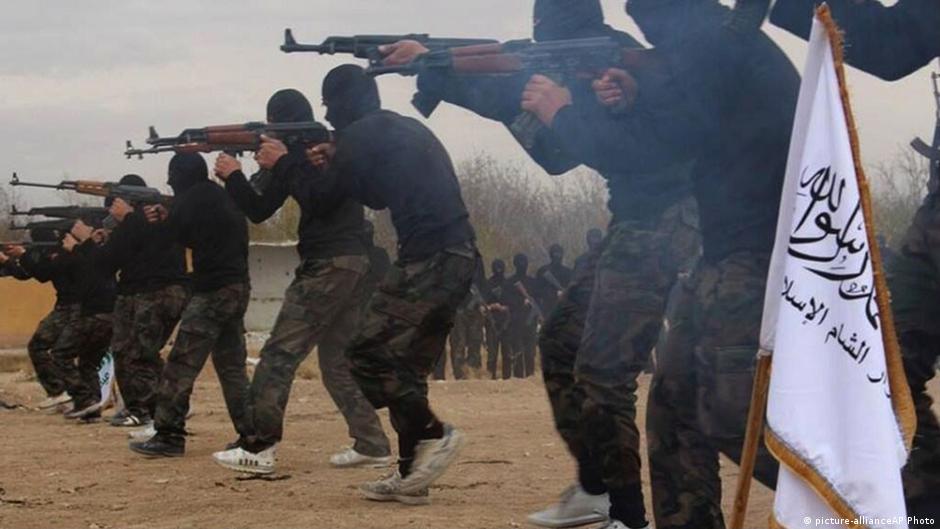
                  Pakistani and international media have reported about Pakistan-based Wahhabi militant groups, including al Qaeda and the Taliban, sending their members to Syria to fight against President Bashar Assad's forces. Some observers claim these fighters are also getting some kind of state support.

                  Despite the Pakistani government's categorical denial of any involvement in the Syrian conflict, the Islamic Republic's opposition parties, including the main opposition Pakistan People's Party (PPP) led by former President Asif Ali Zardari, have challenged Islamabad's claims. A number of political experts in Pakistan also disagree with the government's stance that it did not get itself involved in the violent Syrian conflict on Saudi Arabia's request.
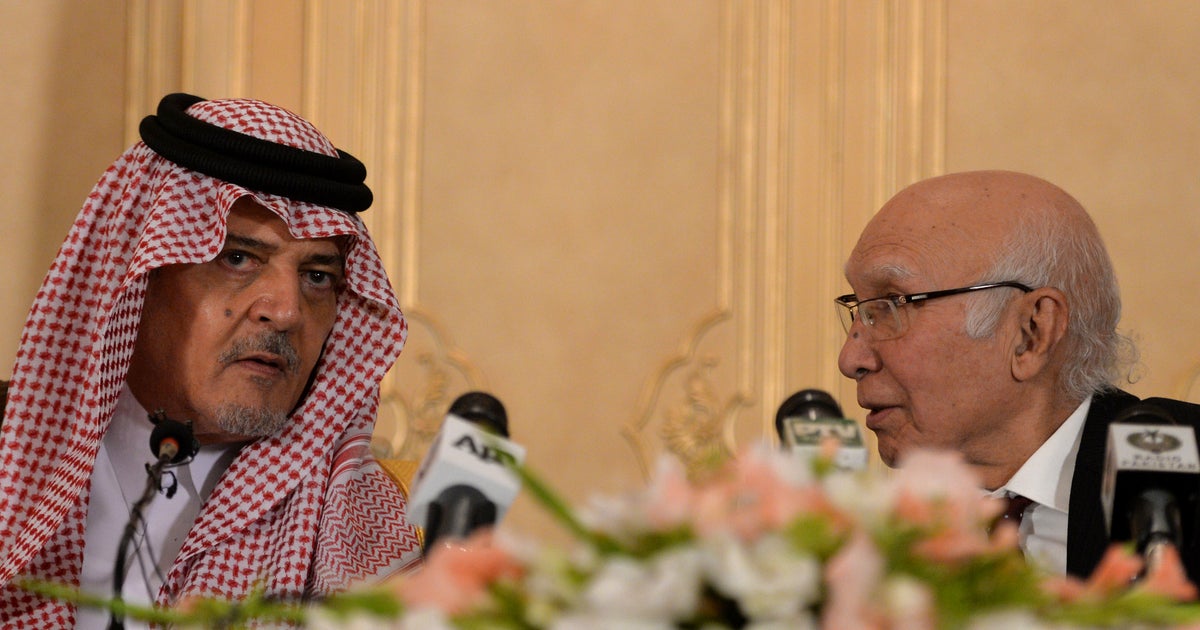
                  "We strongly reject the media speculation that Pakistan has changed its position on Syria or is supplying arms to Syrian rebels directly or indirectly. These impressions are totally baseless and misleading," Sartaj Aziz, an advisor to Pakistani Prime Minister Nawaz Sharif on national security and foreign affairs, recently told the country's parliament.

                  The discussion about whether or not the Pakistani government armed the Syrian rebels commenced after the Saudi Crown Prince, Salman bin Abdulaziz, travelled to Pakistan last month.

                  "I would like to clarify that during the Saudi Crown Prince's visit, the two sides only mentioned the need to enhance bilateral cooperation in the field of defense with an aim to have a mutually beneficial defense and security cooperation," said Aziz.

                  According to news agency AFP, which quoted a source close to Saudi decision-makers, Riyadh was interested in getting Pakistan-made shoulder-launched anti-aircraft missiles, known as Anza, and anti-tank rockets, to aid the rebels.

                  "The United States could allow their to allies provide the rebels with anti-aircraft and anti-tank weapons following the failure of Geneva talks and the renewed tension with Russia," AFP quoted the head of the Gulf Research Centre, Abdel Aziz al-Sager.

                  Ghaffar Husain, a London-based researcher and counter-terrorism expert, told DW that Saudi-Pakistani alliance is decades-long, and that it is highly likely that Riyadh could have asked for Islamabad's assistance in turning the tide in Syria.

                  Claims 'not exaggerated'

                  Ali K. Chishti, a security expert in Karachi, told DW that Pakistan's assistance to Syrian rebels was of covert nature, and that it was obvious why Pakistan did not officially admit it. "I don't think that the claims that Pakistan is helping Syrian opposition are incorrect or exaggerated. Islamabad believes that since Iran is openly supporting the Assad regime, which is responsible for killing hundreds of thousands of people in his own country, it is justified to aid the rebels," said Chishti.


                  Pakistani educationist and former BBC journalist, Nauman Naqvi, says there is no doubt whatsoever that Pakistan and Saudi Arabia are on same page over the Syrian conflict.

                  "The Pakistani government can deny it, but everyone knows what is going on. Pakistan's respectable journalists have written about the matter," Naqvi told DW, adding that Pakistan had put its relations with Iran at stake in order to please Saudi Arabia. "Pakistan has been serving the Saudi interests in the Middle East and South Asia for a long time. Our relations with Tehran were different in the 1970s. They have been severely damaged since the last phase of the Cold War. The expert gave the example of Pakistan-based terrorist organization Jundullah, which Iran claimed to be a proxy group used by its enemies, to highlight the worsening Iranian-Pakistani ties.

                  Sharif's personal involvement

                  Some experts argue that the alleged Saudi-Pakistani deal on Syria was a result of Sharif's personal connections with the Saudi rulers. Earlier this month, Pakistan received a 1.5 billion USD loan from Riyadh, which Pakistani opposition parties claimed was a "gift' from Saudis to Sharif for his "services" to the kingdom.

                  Husain says Pakistan has "the expertise, weapons and fighters for the Syrian war, and Saudi Arabia has the cash that Pakistan desperately needs right now."
                  Naqvi, however, says that any other head of the government in Islamabad would have complied with the Saudi demands. "We must not forget that Sharif has no say in defense related matters. It is the Pakistani army which calls the shots. Former President Zardari would not have acted differently in this scenario."


                  Saudi Arabia wants to minimize Iranian influence in Syria, say experts
                  For Chishti, accepting the Saudi demands was a sensible decision: "Iran is openly supporting Assad whereas Saudi Arabia is aiding the rebels - both for their sectarian interests. Why would then the Pakistani state, which follows the Saudi Wahhabi Islamic ideology, side with the Shiite Tehran on this?"
                  Pakistani militants migrating to Syria

                  "A large number of foreign fighters are based in Pakistan's northern Waziristan area, which shares border with Afghanistan. Some of them are now migrating to Syria. The Pakistani Taliban have actually established a cell to monitor the Syrian situation. Al Qaeda's head, Aymen al-Zawahiri sent out a message to Pakistani militants to move to Syria," told Chishti, adding that Muslim al Shishani, a Chechen commander from North Waziristan, was one such Islamist who migrated to Syria on March 27.

                  Most Pakistani militant groups are pro-Saudi Arabia and anti-Iran
                  The expert, however, is not sure whether it's a good thing for the Pakistani state. "We need to see how certain non-state actors are being used in this conflict. It can be a double edged sword," he said.

                  For his part, Naqvi says there is "structural linkage" between the Pakistani military apparatus and the jihadists. "These militants have been doing what the army thinks is in Pakistan's geo-strategic interests," said Naqvi. The expert is of the view that Pakistan finds itself in a quagmire for not keeping itself non-aligned in regional and international conflicts and will ultimately have to pay a big price for its actions.


                  Pakistan denies claims it is arming Syrian rebels at Saudi Arabia's behest. Experts, however, say Islamabad is not only providing military equipment to anti-Assad groups, it's also helping jihadists to go fight in Syria.


                  1. Pakistan sending "Jihadist" cannon fodder to Syria makes no major difference to the conflict. Like the other "Jihadists" in Syria they will be eliminated by Syrian air power and other things.

                  Waziristan and other Pashtun areas will have less "Jihadists", though the JUI and JI parties and their madrassas can produce thousands upon thousands of "Jihadist" fighters for Pakistani "strategic interests".


                  2. Saudi Arabia gave Pakistan $1.5 billion. No one knows the true reason. Officially the two regimes say it was an act of friendship. Here is some of the speculation.


                  a: It was an act of friendship by the Saudi regime. Saudi Arabia has given aid to Pakistan more than any other country on earth in the past century and is very close to Pakistan e.g. it carries out sanctions against Bangladesh when the centre-left Awami League party is voted in to power.


                  b: It was bribe money to sabotage the Iran-Pakistan gas deal: A Pakistani writer in the Asia Times proposed this opinion.


                  c: It was bribe money to get militants and weapons to destabilize Syria. This is the opinion of the article above and the predominant opinion.


                  If it is a: then the Saudis are stupid as the Pakistanis will take the $1.5 billion and then it flush it down the drain quickly.

                  If it is b: then the Saudis are greedy and evil as they have destroyed a deal which would have helped Pakistan and its economy.


                  If it is c: then the Saudis are not so stupid, not so greedy but taking a risk in getting Pakistan involved in this conflict.

                  Pakistan's Shia population may be up to 20% of the population, their sympathies would lie with the Assad regime.


                  * * * * * *


                  Will this stop the Assad government from continuing their battlefield successes and winning the war?

                  Unlikely.

                  Syrian military plans consist of scenarios which deal with an all out Turkey v Syria war. So a few thousand Pakistani militants, who can be wiped out by Syrian air power, are nothing in comparison.

                  The real danger to the Syrians now is the Turkish regime of Erdogan and there is strong suspicion in the region that Erdogan plans to try and launch a major attack on Syria soon.


                  Erdogan suspected of planning to save his popularity in Turkey by attacking Syria.
                  * * * * * * * * * * * * * * * * * * * * * * *

                  Comment


                  • #99
                    Pakistan to sell arms to Saudi Arabia

                    There is nothing dubious about Saudi Arabia’s interest in purchasing weapons, official says

                    Mohsin Ali, CorrespondentPublished: 20:49 April 2, 2014Gulf News


                    Islamabad: Pakistan is making efforts to sell small arms and fighter jets to Saudi Arabia, Prime Minister Nawaz Sharif’s advisor on national security and foreign affairs said in an interview with the BBC.
                    Sartaj Aziz said that like any country with an arms industry, Pakistan was trying to sell its arms and there was nothing dubious about Saudi Arabia’s interest in purchasing weapons from Pakistan.
                    He reiterated Pakistan’s neutral stance on the civil war in Syria.
                    Aziz said Pakistan wanted to restore balance in relations with Saudi Arabia and Iran, which he said had been disturbed during the past five years.


                    He said not a single Saudi minister visited Pakistan during the tenure of the previous government but after the Pakistan Muslim League, led by Nawaz Sharif, came into power last year, the government and military leadership of both countries had exchanged visits.
                    The advisor added that he hoped Prime Minister Sharif would visit Iran in May or June this year in line with promoting peace in the region.


                    There is nothing dubious about Saudi Arabia’s interest in purchasing weapons, official says


                    1. Saudis give $1.5 billion to the Pakistanis.


                    2. Pakistanis shortly after announce sales of arms to the Saudis and then say it "has nothing to do with Syria" (of course).


                    3. The Saudi regime is anti-PPP, the Shia-led party that ruled Pakistan before the current PML-N of Nawaz Sharif, who works with Sunni extremists.

                    As the article above says they never sent a single minister to Pakistan during the rule of the PPP, showing their supposed respect for Pakistan is not for the state of Pakistan itself, but conditional upon which party is in power.

                    Nawaz Sharif is known to be very close to Saudi.
                    * * * * * * * * * * * * * * * * * * * * * * *

                    Comment


                    • Massive sandstorm overruns Saudi capital


                      A sandstorm invaded Saudi Arabia's cental areas on Wednesday. (Al Arabiya)


                      Staff Writer, Al Arabiya News

                      Thursday, 3 April 2014

                      A massive sandstorm overran Saudi Arabia’s capital Riyadh on Wednesday followed by heavy rain, bringing traffic to a halt and forcing people to stay indoors.


                      A Sandstorm took over the central part of Saudi Arabia on Wednesday. (Al Arabiya)

                      Khaled Zaqaziq, a weather expert, told Al Arabiya News that the impact of the sandstorm was slowed by the rain in the capital. But when the storm moved to a dry area to the south, it picked up again.


                      A Sandstorm took over several areas in central Saudi Arabia on Wednesday. (Al Arabiya)


                      He said the sandstorm will likely continue through the day in the central Qassim Region and will start to subside on Thursday morning.

                      Last Update: Thursday, 3 April 2014 KSA 00:53 - GMT 21:53


                      - The Saudis need to be careful. Allah has sent this sandstorm to their capital. They need to reflect on this. They may sponsor terrorists and radicals in other countries (e.g. Syria, Bangladesh etc) but that does not mean they are immune, as this event in their capital shows.


                      Such sandstorms are far from infrequent in Saudi, but Saudis need to be careful and not play with fire in Syria because if they do things that anger Allah, Allah ta'ala may punish them. May Allah protect us all and bestow his mercy upon us.


                      Sand Storm in Riyadh Saudi Arabia... Day time Suddenly Changes to Night - YouTube
                      * * * * * * * * * * * * * * * * * * * * * * *

                      Comment


                      • Will Pakistan get caught in "Saudi-Iranian turf war?"


                        ISLAMABAD -- Pakistan's main opposition party is demanding a transparent discussion in parliament over the origins of $1.5 billion paid into the country's coffers in March, and what the government agreed to in exchange for the funds.

                        The money is widely believed to have come from Saudi Arabia -- a donation aimed at cementing a new and potentially controversial security deal with the nuclear armed south Asian country.

                        Pakistan's liquid foreign currency reserves unexpectedly swelled to about $9.5 billion dollars in early March. Prime Minister Nawaz Sharif's government has refused to name the country which provided the funds, saying only that it came from a "friendly Islamic country" to support Pakistan's weak economy.

                        Officials at Pakistan's central bank confirmed that the money came from Saudi Arabia, and the government's opponents want a full explanation.

                        Sharif's refusal to be more transparent on the terms of the Saudi cash infusion has only fueled skepticism over the motives behind it.
                        Defense experts note Pakistan's long security relationship with Saudi Arabia, which in the past has seen Islamabad deploy troops to the kingdom.

                        "In the 1980s, Pakistani troops served in places like Tabuk (in Saudi Arabia) and the (Pakistani) troops served in Saudi uniforms. That deployment was part of Pakistan's defense agreement with Saudi Arabia," explains defense analyst Farooq Hameed Khan, a retired Brigadier in the Pakistani army. "There is nothing new about Pakistan having a defense agreement with Saudi Arabia which involves Pakistani troops serving there."

                        Khan says the current scandal springs from reports which circulated last month suggesting a new agreement between the two countries is focused on Pakistan helping the Saudis bolster the opposition fighting forces in Syria, and -- either in tandem or by default -- shoring up Sunni Muslim ally Saudi Arabia in its regional standoff with Shiite-majority Iran. The problem is that Iran is Pakistan's neighbor, and also a nation with which Islamabad has enjoyed relatively cordial relations.

                        "The danger now is of Pakistan getting caught in a Saudi-Iranian turf war," one opposition lawmaker, who didn't want to be named, told CBS News.

                        Khursheed Shah, leader of the opposition Pakistan People's Party (PPP) in the lower house of parliament, known as the National Assembly, says it is an issue he and his fellow lawmakers "need to discuss," adding that in his party's view, "Pakistan should not provide weapons or troops (to Saudi Arabia)."

                        Though Shah gave the Prime Minister the benefit of the doubt, accepting a statement from Sharif insisting the money is not tied to any commitment to send troops to oil-rich Saudi, other PPP members and some diplomats in the region remain unconvinced.

                        The concerns are driven by more than three decades of uncomfortable relations between Saudi Arabia, where the ruling family and vast majority of residents are Sunni, and Iran, where the ruling clerics and vast majority of residents are of the Shiite sect of Islam.

                        The two powerful countries have sought to increase their influence in the region, including in Pakistan and Afghanistan, in part by pouring huge sums of money into all levels of society, from government right down to local Islamic organizations of the same sectarian leaning.

                        And while the money from Saudi "may help boost Pakistan's finances in the short term," respected Pakistani security and political analyst Hasan Askari Rizvi says it "carries the risk of dividing Pakistan internally."

                        An estimated 20 to 30 percent of Pakistan's total population (of about 200 million) is Shiite Muslim. Almost all other Pakistanis belong to the Sunni sect -- only one or two percent of the population is non-Muslim.

                        "This is a very, very delicate situation for Pakistan," said the Western diplomat in Islamabad. "It would be very difficult for the Pakistani government to remain friends with Saudi Arabia and Iran at the same time."


                        Pakistan's leaders won't confirm $15B cash infusion came from Saudi Arabia, but opposition lawmakers want to know what was promised in return


                        1. The Saudis are angry with the Americans for compromising with the Iranians, whom they wanted America to attack.

                        They are also scared. Scared about the volatile situation in the post-"Arab spring", middle east.


                        2. They now realize Americans will no longer fight for them or other gulf Arabs as they did in 1991, thus they are turning to nuclear Pakistan.


                        3. Iran realizes this, so this is why Iran is turning the heat on Pakistan - as a message "don't side with the Saudis or there'll be trouble" - which maybe why around a month ago they even spoke about sending their army across the Pakistani border to catch militants.


                        4. The other problem is, as the article highlights, any Iran-Saudi turf war in Pakistan can escalate and ruin the already unstable and poverty-stricken country as there are anything between 30-60 million Shias (depends if you think Pakistan is 180-200 million, and whether the percentage of Shias is 20-30%), so at the very least 30 million Shias, more than the total population of Saudi Arabia itself.

                        Iraq has seen Shia-Sunni fighting.

                        Syria is seeing it now.

                        Bahrain has

                        Yemen has

                        Turkey has to a limited degree (virtual Sunni-Alevi civil war in the 1970s and now heavily Alevi riots against the Erdogan regime).

                        Lebanon is seeing limited fighting.

                        Saudi Arabia itself has seen disturbances in its heavily Shia Qatif region.


                        Pakistan has a population bigger than any of the countries and is awash with guns and with fundamentalists (of different sects) far more militant than their Arab counterparts.
                        * * * * * * * * * * * * * * * * * * * * * * *

                        Comment


                        • Syria update:


                          - Saudi spy chief, Bandar kicked out of his job.


                          Bandar.

                          - Syrian army takes more towns in the Qalamoun region, now controlling the vast majority of the strategic area.

                          If it secures control of this area it has secured its Syria-Lebanon flank, next
                          are two more flanks.

                          * Syria-Jordan flank

                          * Syria - Turkey flank.


                          - The Turkish-backed "rebel" offensive in Latakia has been repulsed.

                          - The Iranian drone, the Shahed 129 is now in action in Syria.


                          Shahed 129.


                          Syrian soldier after securing Rankous, Qalamoun.
                          * * * * * * * * * * * * * * * * * * * * * * *

                          Comment


                          • The Syrian army has taken Zabadani, the last stronghold in the Qalamoun region.


                            The Assad government has now secured control of the Lebanon-Syria flank.

                            Having won in Qalamoun it is being said by some the Syrian army will now be re-deploying the 20,000 or so troops that fought there to other regions including:

                            1: Outskirts of Damascus on the east e.g. Ghouta.

                            2: Aleppo


                            With more troops able to take on rebels in the eastern zones of the Damascus province (I lived in Damascus and no one really considers "Ghouta" as part of Damascus proper, Masakin Barzeh is one of the last places in the east of the city actually considered Damascus) as well as Aleppo the rebels should fold in both areas at a relatively quicker pace than now.


                            Once the government establishes full control of the 1st and 2nd biggest cities - having already taken control of most other important cities - the rebels will be weaker.

                            My guess is that after the Damascus countryside is secured and Aleppo too, the government will focus on either the Turkey-Syria border or the Jordan-Syria border.


                            i: Jordan-Syria border is not that problematic as it is small and manageable and even the west has admitted anything that goes through there can be shot down by the Syrians.

                            The Jordanian army is weak and if the Syrians really wanted to they could even overrun Jordan, not that they would do such a silly thing as they would lose moral support and be seen as aggressors plus the Jordanian people themselves would not accept it.


                            ii: Turkey-Syria border is bigger and the AKP regime of Erdogan provides militants and rebels with lots of support. However the Syrians have kept Erdogan at bay by using 4 allies.

                            a: Russia. Russia harasses the Turkish coast with aggressive aerial patrolling as a message to the Turks and to intimidate them. The Turks know the Russian bear has got Syria's back.


                            Russian fighter planes.

                            b: Iran: Iran will declare all out war on Turkey if Turkey starts a full war against Syria one reason for the relatively restrained behaviour from the generally aggressive Turks towards Syria despite their planes being shot down.

                            c: Kurds: Syria's Kurds control much of their northern areas now and stopped these areas from being taken over by anti-Assad "Jihadists". If Erdogan goes for a war against Syria, the YPG and PKK (Kurdish nationalists in Syria and Turkey respectively) will start a war in Turkey's south-east.


                            d: Turkey's Alevis: The Turkish left is heavily dominated by Alevis and Alevis played a key part in the Gezi uprising in Turkey last summer. Turkey's Alevis have the potential to make Istanbul and other parts of Turkey ungovernable and plunge the country in to chaos.


                            Gezi uprising last summer in Turkey, where around 2 million people across 70+ towns and cities across Turkey demonstrated against the Erdogan regime.


                            Assad is on course to win the war with billions being pumped in from Iran, de facto inclusion of Russia in their nuclear umbrella (nuclear umbrella means that if for example anyone were to attack South Korea then the US would be prepared to bomb that state with nuclear weapons) and air supremacy of Syrian skies from where he can pound rebel positions incessantly.


                            The Saudis however are now facing various crises including:

                            1. Mers outbreak in Saudi with millions of Muslims from all continents and regions of the world coming to Jiddah and Mecca soon. Their health minister has already been removed.

                            2. Dissent on Youtube from ordinary Saudis.


                            3. Daughter of the "King" calling for resistance to the regime.
                            Last edited by Bengal_Tiger; 04-27-2014, 07:28 AM.
                            * * * * * * * * * * * * * * * * * * * * * * *

                            Comment


                            • Comment


                              • Comment

                                Working...
                                X