Announcement

Collapse
No announcement yet.

Jamaat e "Islami" watch

Collapse
X
 
  • Filter
  • Time
  • Show
Clear All
new posts

  • #46
    By the way the Bangladeshi courts have awarded 8 Awami League (ruling party) activists the death sentence for the murder of a 24 year old.

    8 Awami League activists sentenced to death in Bangladesh for murder

    Dhaka, Wed Dec 18 2013, 15:43 hrs SmallLargePrint


    Eight activists of the Awami League were sentenced to death and 13 others were given life terms today by a fast-track Bangladeshi court here for hacking to death a tailor during an opposition enforced blockade in 2012.
    8 Awami League activists sentenced to death in Bangladesh for murder - Indian Express

    - Will Erdogan be shedding tears for these 8 Awami league activists, as he did for Kader Molla?

    - Will Imran Khan and the Pakistani regime say they are innocent because their defence lawyer said they were innocent?

    - Will the Jamaati-supporters on this forum say it was "judicial execution".

    - Will the global Brotherhood/"Islamist" network with its hatred for Bangladesh and Bangladesh's existence as an independent country complain?
    * * * * * * * * * * * * * * * * * * * * * * *

    Comment


    • #47
      Money found in the house of the son of one of the AKP ministers.


      This is the same AKP regime who a few days ago had one of its ministers basically accuse the government of Bangladesh of murder.

      “Justice, human rights and the law have been trampled"
      Erdo


      Bekir Bozdag, AKP minister who attacked the government of Bangladesh.

      So Bozdag and Erdogan were making comments about a country 2,000 miles away from Turkey a few days ago. A country they know nothing about and whose suffering and genocide they seem to know nothing about or care about.

      Now karma is hitting them hard.

      Already another AKP Mayor has resigned from the party.

      The mayor of Hatay (Arab Alawi region next to Syria) has left the AKP and joined the opposition, CHP.


      The mayor of Hatay, Lutfu Savas, has abandoned Erdogan's AKP and joined the opposition.

      He is the third AKP politician in the last few weeks to leave the party but the first since the Halkbank scandal where the sons of 3 AKP ministers were arrested.


      Maybe with his regime under serious attack, Erdogan and his friend Bekir Bozdag should contact Kader Molla's friends in "Jamaat e Islami" for advice on how to survive.


      Kader Molla, a man who claimed that he fought against the Pakistan army in 1971 despite being a senior member of a party which is a proxy of Pakistan, Jamaat e Islami. This man who claimed to have fought against the Pakistan army has now been glorified by Imran Khan and other ignorant Pakistani nationalists.

      Erdogan should also contact the other Middle eastern friend of Jamaat, Morsi for advice. Erdogan was harassing Egypt over Morsi and calling Morsi the true leader of Egypt, now Erdogan is facing a crisis in Turkey.


      From a Jamaati facebook fan page for Morsi.
      * * * * * * * * * * * * * * * * * * * * * * *

      Comment


      • #48
        Jamaat Takes Bangladesh to the Brink

        The resurgence of Islamist violence threatens one of the greatest success stories in the developing world.


        By K. ANIS AHMED

        Dec. 19, 2013 11:47 a.m.

        On Dec. 12, Abdul Quader Mollah became the first person executed in Bangladesh for war crimes committed during the country's Liberation War in 1971. That night, Jamaat-e-Islami, the Islamist party of which Mollah was a senior member, went on a nationwide rampage that left several people dead.

        The Jamaat violence was neither new nor unexpected, as the group has waged a terror campaign since February this year to derail Bangladesh's war-crimes trials. It has targeted ruling-party politicians, police and, increasingly, ordinary citizens. Petrol bombs hurled by Jamaat activists killed and maimed riders on commuter buses last week.


        A man cries after Jamaat rioters torched his car on Dec. 13 in Dhaka.


        Jamaat was banned in the first years after Bangladesh's independence, but was allowed to resume activities following the assassination of the nation's founder, Sheikh Mujibur Rahman, in 1975. The ban on Jamaat was lifted by Ziaur Rahman, founder of the Bangladesh Nationalist Party now in opposition.

        The BNP and Jamaat have remained close allies since the advent of democracy in the early 1990s. The ruling Awami League set up the special war-crimes tribunal in 2009, and most of those indicted have been Jamaat leaders. This makes sense to most Bangladeshis given the group's role in 1971, but the BNP claims that it is politically motivated.

        Outside observers shouldn't dismiss this as just the minutiae of a faraway clan war. As Jamaat victims climb into the hundreds, something great is in jeopardy: a success story of the developing and Muslim worlds. Bangladesh now outperforms both India and Pakistan on most social and human development indicators, including life expectancy, infant mortality and female literacy. Less than 2% of the country's annual budget now comes from foreign aid.

        Both leading parties, BNP and AL, have contributed to these gains, but they could be lost if Jamaat retains its influence. Several recent polls show support for Jamaat at an all-time low of 2% to 4%, but the BNP seems unable to cut the group loose, partly because of Jamaat's force on the street.

        For two years the BNP has unsuccessfully tried to mount a mass movement to restore Bangladesh's "caretaker" election system, whereby neutral, eminent citizens oversee the government at election time. The BNP's persistent tinkering with the caretaker provisions, and AL's protest movement, prevented elections being held in 2006.

        That impasse led to a State of Emergency and a caretaker government that overstayed its remit by nearly two years. Consequently on returning to power the Awami League government scrapped the system in 2011.

        Because the BNP is loath to come to polls under its rivals' administration, the Awami League floated the possibility of an interim government consisting of an equal number of ministers from both parties. It even asked the BNP to pick any ministries it liked. But the BNP stuck to its demand that the prime minister step down and refused to engage in any talks, complaining that the concessions were too late and too piecemeal.

        Now the country is headed for a Jan. 5 election that the BNP is boycotting. So 150 seats are uncontested and the poll is rendered a rather empty ritual. If the two sides can reach a compromise, though, the new parliament could be dissolved and a date set for fresh polls.

        That "if" has brought Bangladesh to the brink. Earlier this month, the United Nations managed to get both parties to talk, but Jamaat's continuing street violence makes for a poor environment for talks, to say nothing of costing precious lives and paralyzing the economy.

        Jamaat apologists say that a recent court order that prevents the party from taking part in polls leaves it with little recourse. In truth, all it has to do to contest polls is make its charter consistent with the constitution.

        The BNP's defenders argue that there wouldn't be violence if the caretaker system had been left untouched. More likely, Jamaat would have waged its terror campaign against the war-crimes tribunal no matter what happened with the election process.

        The BNP was once seen as a center-right party, but it has taken a worrying turn since 2001. During its last tenure in government, from 2001 to 2006, terrorist attacks killed senior Awami League figures including former Finance Minister S.A.M.S. Kibria. Current Prime Minister Sheikh Hasina herself narrowly escaped a grenade attack in 2004. Members of terror groups such as Harkat-ul-Jihad and Jamatul Mujahideen Bangladesh, both now banned, have confessed to links with BNP politicians.

        As long as a mainstream party maintains links with extremists, no election-oversight mechanism will be enough to ensure democracy in Bangladesh. The international community's studious even-handedness between the BNP and the Awami League doesn't help either. Those who want a peaceful and democratic Bangladesh must ask both sides to negotiate in earnest what terms they would accept—both in and out of power—for years to come. For a durable peace to hold, the same voices must also urge the BNP to disassociate itself from Jamaat.

        Ahmed: Jamaat Takes Bangladesh to the Brink - WSJ.com
        * * * * * * * * * * * * * * * * * * * * * * *

        Comment


        • #49
          Bangladesh PM Hasina ready for fresh polls if BNP cuts Jamaat ties

          Last Updated: Thursday, December 19, 2013, 23:30

          Dhaka: Bangladesh Prime Minster Sheikh Hasina today said she was ready to dissolve the next Parliament to be constituted after the January 5 polls and hold fresh elections if the BNP-led opposition shuns violence and cuts ties with the fundamentalist Jamaat-e-Islami.

          BNP led by Khaleda Zia is boycotting the January 5 polls claiming that they would not be credible if held under the care-taker government led by her arch-rival Hasina.

          The Prime Minister asked main opposition Bangladesh Nationalist Party leader and her Zia to stop "killing people in the name of political movements and come to an agreement."


          "We can hold fresh elections dissolving (the 10th) Parliament if we reach a settlement through negotiations," Hasina said, while addressing a joint meeting of the Awami League Central Working Committee, Election Conducting Committee and party's Advisory Council at her official residence.

          Hasina also added that "there was no scope for them (opposition) to take part in the January 5 polls", since they have failed to nominate candidates.

          BNP standing committee member Nazrul Islam Khan said the BNP will come up with a formal reaction to the prime minister's proposal later, The Daily Star reported.

          Her comments came hours after Awami League spokesman Mohammad Nasim said the UN initiated dialogue was yet to end, though the elections would be held on scheduled date.

          "Parliament will be convened after the election and talks will be held to evolve a consensus for holding the 11th parliament polls," Nasim told a press conference at the party office.

          UN chief Ban Ki-moon's envoy Oscar Fernandez-Taranco came to Dhaka in early December and made Awami League and BNP leaders to hold dialogue to find a political solution.

          "Talks are ongoing and it will continue even after the general elections," said the Prime Minister.

          The BNP-led 18 party opposition alliance started enforcing prolonged blockades after the Election Commission on November 25 announced the schedule for the 10th parliamentary polls on January 5.

          Former premier Zia-led BNP, Jamaat and their smaller allies have been staging protests since late October to try to force Hasina to step down so that a neutral caretaker government can oversee the election.

          Hasina is refusing to accept the arrangement, which was in place during previous national polls.

          The BNP has refused to field candidates for the January election, saying the vote under Hasina will be rigged - an accusation the premier flatly rejects.

          Protests over the divisive polls and the trials of those accused of war crimes during the 1971 liberation war have left at least 264 people dead since January, making this year one of the the bloodiest in Bangladesh's history.

          Bangladesh PM Hasina ready for fresh polls if BNP cuts Jamaat ties


          *As a Bangladesh, I would urge these two leaders, Hasina and Khaleda to do the following.

          - Hasina must release all BNP leaders being held.

          - Khaleda must severe her ties with Jamaat whom are hated by 90% of Bangladeshis.

          However regardless of whatever happens and what Hasina does, she will be out of power in the next few months.
          * * * * * * * * * * * * * * * * * * * * * * *

          Comment


          • #50
            [MENTION=7736]Barakzai[/MENTION]
            I would love to see your comments on the developments in Turkey as shown above.

            Comment


            • #51
              Originally posted by Badlun View Post
              This is the crux of the matter. I am surprised to see that people oppose Pakistan in spite of the fact that it is the most Islamic country on the world, an Islamic Republic and its constitution the most Islamic one.

              All say that Pakistan is the only country in the world born on the name of Islam. All other Muslim countries including Afghanistan is a nation state. It does not mean I love the Islamist Pakistan but I wonder why the lovers of Islam or Islamism hate the Islamic Pakistan. Can you show me another country more Islamic than Pakistan?

              Also Pakistan is a sovereign independent country with 190 millions of inhabitants and hosting more than 40 millions of Pashtuns. I am against Islamism but not against any state including Pakistan.
              most islamic country in the world, is this a joke? considering that you take islam to be some metaphorical joke, i can see how you can believe such a thing. pakistan was born out of a homeland for muslims, not out of islam.

              you hate shariah and love pakistan, makes sense.
              There are people today who think that admitting God’s absolute greatness decreases the value and importance of humans in the creation, as if God and mankind are rivals competing in greatness and power. Meanwhile I feel that whenever our perception of God’s greatness increases, with it we become greater, because we are the creation of a great God.

              Sayyid Qutb

              Comment


              • #52
                Corruption carried AK Party to power, may spell party's end

                Corruption, a large and troublesome problem for Turkey, led to the demise of several governments in the past and analysts warn that the same fate might await the Justice and Development Party (AK Party), some of whose members have been targeted as part of a major bribery and fraud operation along with dozens of businessmen and bureaucrats, unless the party proves itself “clean...

                On Dec. 17, İstanbul and Ankara police staged dawn raids and detained over 50 people as part of a major investigation into claims of corruption and bribery. Among the detainees were bureaucrats, well-known businesspeople and the sons of three ministers. Allegations emerged that several ministers were also implicated in bribery.

                Corruption carried AK Party to power, may spell party's end - Today's Zaman, your gateway to Turkish daily news


                *The above are extracts from a Zaman (Gulenist newspaper) article on the possible fall of the AKP.

                The recent crises in Turkey are the biggest threat to Erdogan's regime even more than the Gezi riots.

                * Virtually all of the Kemalist generals and others in prison will probably be released by the Gulenist judiciary. They will be eager for blood as these men are dangerous military thugs and are known for their brutality. They will also probably start re-connecting with officers in the Kemalist Turkish military.

                If there is another Gezi-style uprising and the Gulenist-influenced Turkish police refuse to follow Erdogan's orders, the army may carry out a soft-coup i.e. declare a state of emergency, temporary suspension of government and call for new elections.

                Erdogan should never have glorified Jamaati criminal, Kader Molla.

                He is now feeling the heat.


                A recent picture of Erdogan.


                Kemalist general, Cevik Bir was released from prison this week by the Gulenist judiciary.

                He will be eager for revenge.


                Kemalist general, Cetin Dogan, has also been released this week by the Gulenist judiciary.

                By the way the recent police arrests of the sons of AKP ministers is only the very beginning of the Gulenist campaign against Erdogan. Ultimately he cannot defeat the powerful Gulenists, especially if they - as it seems they have - ally with the Kemalist military, CHP, Gezi movement.

                If Erdogan is removed, here are the countries that will be happy.


                Saudi Arabia

                - The Saudis are angry with Erdogan's support for the Muslim Brotherhood and Morsi. They see the Brotherhood as a very dangerous threat to their survival that must be crushed at all costs and were furious with Morsi's opening up to Iran.


                Iran

                - Iranians will be happy to see the end of Erdogan as his regime sponsored war against Syria.


                Egypt

                - The Nasserite Egyptian military that now rules Turkey hate Erdogan and will be delighted to see him removed. Nasser himself was an admirer of dictator Mustafa Kemal.


                Bangladesh

                - Bangladeshis as a whole are not well-informed people (still a mainly rural society) but for those who are educated, they will be happy to see pro-Jamaati Erdogan out. A Bangladeshi newspaper recently hinted at diplomatic action against Turkey.


                Syria

                - Syrians will be ecstatic to see the removal of Erdogan from power and an end to "Neo-Ottomanism".


                Germany

                - Germans did not like Erdogan's interference in to their affairs regarding the Turkish community. While Turk denies indigenous Kurds language rights it demands language privileges for immigrant Turks in Germany.


                Algeria

                - The Algerian government is run by their military and the Algerian military like the Nasserite Egyptian army, Kemalist Turkish army, Baathist Syrian army is a secular republican nationalist one and dislikes fundamentalists.

                Though Algeria will not issue any official declarations and in reality has no policy conflicts with Ankara, it will just be glad to see pro-Brotherhood Erdogan out.


                Many through out the world, including the Muslim world, will be glad to see the back of Erdogan. However I hope the Turkish military do not end up killing him as they did to Menderes.

                Last edited by Bengal_Tiger; 12-22-2013, 05:12 AM.
                * * * * * * * * * * * * * * * * * * * * * * *

                Comment


                • #53
                  Don't know why Bengal_kitty hates Erdogan, he's done a lot better for Turkey than Sheikh Hasina has done for Bangladesh.

                  Erdogan has transformed Turkey's economy and has turned them into a superpower in the Muslim world, before he was PM, the Turks were wannabe-Europeans, but now they've embraced their identity and rich history, the only people that hate him are Kemalist hippies.

                  Turkey isn't some strict "Islamic state" like Saudi Arabia, but if that's what you call Islamism, I'll take Islamist Turkey over Secular Bangladesh any day.

                  7 Reasons Why You Should Support Erdogan and Not the Protesters | MuslimMatters.org
                  "If you're not ready to die for it, put the word 'freedom' out of your vocabulary." -Malcolm X

                  Comment


                  • #54
                    Originally posted by randolph85 View Post
                    most islamic country in the world, is this a joke? considering that you take islam to be some metaphorical joke, i can see how you can believe such a thing. pakistan was born out of a homeland for muslims, not out of islam.

                    you hate shariah and love pakistan, makes sense.
                    Actually Badlun is right, Pakistan has the most Islamic constitution in the world.

                    Pakistani culture is far from Islamic, and Pakistani rulers/politicians etc are far from Islamic but the constitution of Pakistan is the most pro-Islam one in the world, even more so than Iran or Saudi Arabia.

                    It isn't perfectly Islamic but compared to other Muslim majority countries, it's constitution is relatively more "halal".
                    "If you're not ready to die for it, put the word 'freedom' out of your vocabulary." -Malcolm X

                    Comment


                    • #55
                      Saudi Arabia is Jamaat's prime foreign backer.

                      The Saudi regime is not in any way affected by what happens in Bangladesh nor is it threatened in anyway by the Awami League. However whenever an Awami League government comes in to power the Saudi regime implement sanctions one for example being the ban on recruitment of new Bangladeshi workers. This damages the Bangladeshi economy.

                      This is just simple bullying on a weaker state as the Saudis have no problem with Hindu India whom they are engaged in ever-increasingly good relations.

                      There is also some racism involved as Saudis are well-known racists and dislike Africans, dark skinned people and so on. So they will always prefer lighter-skinned Pakistanis to darker Bengalis.

                      Saudi Man Ruthlessly Beats Asian Worker (Caught On Camera) - YouTube

                      - However this is the last time that the Saudi regime (if it survives) may be able to carry out such bullying.

                      Saudi-Indian relations


                      The Indian prime minister was given extra-special treatment in a visit to Riyadh that other foreign leaders are not given.


                      - The Saudi regime is seeking to develop relations with India. However Indian-Saudi relations may be strained by Saudi backing of the Jamaat and blackmailing of Bangladesh.

                      a: Bangladesh is a neighbour of India and is home to over 150 million Muslims. Whatever happens in Bangladesh affects India as they are part of the same region. It does not affect Saudi Arabia which is in a different part of the world. The Jamaat is a Pakistani-backed extremist organization that targets Hindus and preaches hatred of India. Saudi Arabia's support for such an organization will cause tensions between New Delhi and the princes of Riyadh who will have to justify their meddling (simple bullying) in a state bordering India that has no impact on Saudi itself.

                      b: If Bangladesh were to be destabilized by Saudi-Pakistani backed Jamaatis then - as in 1971 - there could be a refugee crisis. India had to house 10 million refugees from Bangladesh during the 1971 genocide.

                      Saudi will have to house none.

                      c: Bangladesh borders India's strategic and volatile north-east region which borders India. The BNP (right wing opposition party in Bangladesh) worked with Pakistan's ISI to promote separatists in north-eastern India as payback for India's support for anti-Bangladeshi separatists. New Delhi does not want this and if New Delhi can re-direct Saudi energy away from harassing Bangladesh in to Saudis encouraging Pakistan to stop destabilizing India's north-east they would seek to do that.


                      India's volatile North-east bordering Bangladesh.

                      d: Also last year events took place in north-east India that led to chaos through out the country. Killings of Muslims took place in Bodoland which angered Muslims across India leading to riots in Mumbai. Why is Saudi Arabia intervening in Bangladesh next door? Why is Saudi Arabia supporting an extremist organization which preaches hatred of Hindus and targets them for violence?


                      Attacks against Muslims led to chaos in India's economically most important city.

                      Saudi Arabia will not be able to justify to New Delhi why they do this in a region over a thousand miles away from Saudi Arabia, in a country which does not border Saudi Arabia nor has neighbours which border Saudi Arabia, nor even has borders with neighbours of states that border Saudi Arabia.


                      With India becoming more assertive on the world stage and recently taking very strong action against the US over the Deyvani Khobragade scandal, will New Delhi tell Saudi Arabia to stay out of the eastern part of the south Asia region and to stop destabilizing it?


                      Will the Saudis still keep on seeking to destabilize Bangladesh and support Jamaat?

                      Who knows.

                      However the Saudi regime and Saud tribe are now engaged in a struggle for very survival with fellow Arab tyrants falling in Egypt, Tunisia, Libya, Yemen, Iraq and so on.

                      - The middle east is in flames.

                      - Saudi has told its citizens to leave Lebanon (some suspect so that Saudi backed extremists can carry out terrorist attacks).

                      - There is a war in Syria, which the Saudis are losing thus potentially having wasted billions on dollar for supporting terrorism but gaining nothing. Wasted money.

                      - There is conflict in Yemen, bordering Saudi Arabia, between Shias and others.

                      - There is tension in Bahrain - now de facto the 14th province of Saudi - with the Shia majority wanting their rights.

                      - Shias in Saudi have rioted in the past few years.

                      - Saudi women are using social media to call for the right to drive, though they have been arrested.

                      - There were riots in Riyadh last month by Ethiopian workers.

                      - The Saudis have succeeded in destabilizing Iraq and creating a mini-civil war there by promoting anti-Shia Wahabis. However how long can they succeed in making Iraqis kill each other, rather than having a truce?

                      On top of all these problems for this regime the Americans have recently said the families of 9/11 victims can sue Saudi Arabia.

                      This shows the Americans clearly do not need Saudi Arabia as much as they did before and can be hostile to it.

                      Saudi Arabia has billions and billions in American banks which the Americans could - if they wanted to - simply say has been frozen, as they did to other regimes.

                      The problems are mounting for the Saudi regime and they are losing in Syria and are facing increasing dissent at home. On top of this does this regime really want to use Bangladesh as a play-thing and punching bag purely for the pleasure of bullying and support radical Jamaatis, and then earn the curses of 150 million Muslims on the Saudi regime?

                      ‫آل سعود هم المفسدون في الارض‬‎ - YouTube

                      Saudi dictatorship of Abdullah Al-Saud is facing a struggle for survival as it seeks to destabilize Muslim countries and spread war, killing and hatred.
                      Last edited by Bengal_Tiger; 12-22-2013, 02:09 PM.
                      * * * * * * * * * * * * * * * * * * * * * * *

                      Comment


                      • #56
                        1902 comments on this Reddit page about American court's ruling that 9/11 families can sue Saudi Arabia.

                        Court rules that 9/11 families can now sue Saudi Arabia : worldnews


                        Here are some comments:

                        tibataw 21 points 1 day ago

                        That's wrong. Saudi govt assets in the us can be confiscated to pay any judgment


                        Fake_William_Shatner 19 points 1 day ago

                        A lawsuit can grab Saudi assets in the USA and it can force an investigation -- the sovereignty of the nation, however, does stop people from arresting the actual country.
                        And "an ally in that region"? -- we are only in that REGION to provide cheap oil for oil companies that don't pass the savings onto us. If we spend a few hundred billion less having such a big military and investing in the money pit that is the Middle East -- we could spend all that on alternative energy
                        .


                        But the White House never let it see an entire section of Congress’ investigative report on 9/11 dealing with “specific sources of foreign support” for the 19 hijackers, 15 of whom were Saudi nationals.
                        It was kept secret and remains so today.

                        President Bush inexplicably censored 28 full pages of the 800-page report. Text isn’t just blacked-out here and there in this critical-yet-missing middle section. The pages are completely blank, except for dotted lines where an estimated 7,200 words once stood (this story by comparison is about 1,000 words).

                        A pair of lawmakers who recently read the redacted portion say they are “absolutely shocked” at the level of foreign state involvement in the attacks...

                        The Saudis deny any role in 9/11, but the CIA in one memo reportedly found “incontrovertible evidence” that Saudi government officials — not just wealthy Saudi hardliners, but high-level diplomats and intelligence officers employed by the kingdom — helped the hijackers both financially and logistically. The intelligence files cited in the report directly implicate the Saudi embassy in Washington and consulate in Los Angeles in the attacks, making 9/11 not just an act of terrorism, but an act of war.

                        The findings, if confirmed, would back up open-source reporting showing the hijackers had, at a minimum, ties to several Saudi officials and agents while they were preparing for their attacks inside the United States. In fact, they got help from Saudi VIPs from coast to coast.
                        A poster quotes the New York Times: Inside the Saudi 9/11 coverup | New York Post


                        [–]wonderful_wonton 17 points 1 day ago

                        Saudis in general provide the seed money and organization for Islamic Jihadist teaching. Saudis created & paid for the system of Wahabi madrasses throughout Pakistan and elsewhere that feeds the a hardline religious culture of antipathy toward Muslim moderates and non-Muslims. It's not just some coincidence that Osama Bin Laden happened to be Saudi and ended up embedded in Pakistan.


                        chaunceyvonfontleroy 11 points 1 day ago

                        Judgments from foriegn jurisdictions can be enforced already, it's just a pain in the ass. But, if an entity has assets in the judgment jurisdiction, it's easy to enforce. Not saying these people will be able to obtain a judgment, but if they do, enforcing it most likely wouldn't be an issue because Saudi Arabia has assets inside the US.


                        Prince Bandar, the head of the Saudi national security council, and son of the crown prince, was alleged in court to be the man behind the threats to hold back information about suicide bombers and terrorists. He faces accusations that he himself took more than £1bn in secret payments from the arms company BAE.
                        A poster quoting this link: BAE: secret papers reveal threats from Saudi prince | World news | The Guardian


                        - So the American media are now turning their focus on Saudi Arabia.

                        - Saudi Arabia can obviously refuse to pay but then the Americans could try and freeze some of their assets. However at the very least the Saudi regime will face embarassment as being sponsors of terrorism.


                        In terms of Saudi bullying of Bangladesh.


                        1. The Hasina regime will be out sooner or later in the next few months. Khaleda will become the leader again and Saudi will restore full relations with Khaleda including possibly ending the ban on recruiting Bangladeshi workers.


                        2. Khaleda's BNP party will probably rule for another 5 years but 5 years later:

                        - Saudi Arabia will no longer be the same Saudi Arabia, it will be

                        a: Weaker economically due to declining oil sales, expanding population

                        b: Politically and socially more liberal, with less inclination to support terrorists and extremists like Jamaat.


                        - Bangladesh will be stronger than it is now as the Bangladeshi economy is average 6% growth every year and in the next few years should hit 7-8% growth and follow China's south-eastern regions as an economic miracle.

                        So by the end of the next BNP government the Saudi regime and its little mini-mes in Kuwait, UAE etc will not be able to bully Bangladesh as they do now.


                        3. Social media will be stronger and Saudi support for Jamaat and harassment of Bangladeshi workers will be harder to hide.

                        Also Jamaat won't be able to hide. Within the next few years they will be banned. As Bangladesh progresses economically, people become more educated and thus less inclined to fundamentalism and more aware of Jamaati war crimes. Jamaat's support has dropped from 10% a few decades back to 1% now, and now they are banned from elections and their senior leadership are in prison, with their main partner the BNP not even protesting much about that.

                        Within 5 years it is also possible Pakistan will cease to exist and "Saudi" Arabia as well as the Saudi regime - like Gaddafi, Saddam, Mubarak, Ben Ali - may be removed.
                        * * * * * * * * * * * * * * * * * * * * * * *

                        Comment


                        • #57
                          ‘Jamaat-Shibir activists fell 40,000 trees’

                          Mohosinul Karim

                          Forests minister says opposition activities are like those of a banned political party


                          Since the protests against the sentence handed down to war criminal Delawar Hossain Sayedee on February 28, the activists of the opposition BNP, Jamaat-e-Islami and Islami Chhatra Shibir have destroyed around 40,000 trees across the country during hartal and blockade programmes.

                          They chopped down around 15,000 roadside trees in the past two months, during the opposition’s blockade programmes enforced in demand for a non-partisan polls-time government.

                          Environment and Forests Minister Hassan Mahmud disclosed the information at his office yesterday.

                          Earlier, Australian High Commissioner in Bangladesh Greg Wilcock held a meeting with the minister at his office.

                          Hassan Mahmud said: “The diplomat expressed concern on the prevailing political unrest and violence all over the country. He urged the government to find a solution through discussions with the opposition, and to hold a free and fair election. I briefed him on the situation. When we amended the constitution, we had invited the opposition to give their opinion. But, they did not join the dialogue,” he said.

                          Terming the attacks “activities like those of a banned political party,” the minister said: “The prime minister has already made an announcement on the dissolution of the 10th parliament followed by fresh polls, if the opposition comes to a compromise.”

                          But, the opposition has declared a war against the people and trees of the country, avoiding the proposal of the premier, he added.

                          The minister urged conservationists to raise their voice against such mindless tree felling.

                          When asked about the action of the government against such activities, he said: “Cases have been filed against the saboteurs who cut down the trees. Tough action will be taken against them.”

                          - See more at: http://www.dhakatribune.com/environm....tOvN1ads.dpuf


                          *Bangladesh is still mainly a rural country but very green and leafy. Jamaati terrorists cut down trees in order to create blockades and block transport across the country as part of their campaigns of strike against the government.

                          In any other country this anti-Hindu terrorist party would be banned. However it is difficult to ban it as it is supported by America, Saudi Arabia, Turkey and Pakistan.


                          * * * * * * * * * * * * * * * * * * * * * * *

                          Comment


                          • #58


                            Son of a Jamaat e Islami leader.
                            * * * * * * * * * * * * * * * * * * * * * * *

                            Comment


                            • #59
                              Controversial Saudi ban of Brotherhood backfires

                              Samira Shackle

                              Friday, 21 March 2014 17:26

                              Earlier this month, Saudi Arabia declared the Muslim Brotherhood a terrorist organisation, in an escalation of the campaign to stamp out the group across the region. Saudi Arabia's decree equates the Brotherhood with groups widely classified as terrorist, such as Al-Qaeda, Hezbollah, and the Islamic State of Iraq and Syria. This is despite the fact that the Brotherhood has long denounced violence. Another controversial inclusion was Hamas, the Palestinian organisation that holds power in Gaza. The ban imposes lengthy prison sentences for even expressing sympathy with the named groups.

                              The United Arab Emirates (UAE) threw its support behind its neighbour's decision to classify the Brotherhood as a terrorist group. Egypt, where the Muslim Brotherhood was in power until a military coup in July, has been home to a violent crackdown on the group. It was the first to designate it a terrorist organisation, back in December, blaming it for orchestrating a series of attacks by militant groups.

                              Between Saudi Arabia and the UAE, it is clear that the Gulf countries are ramping up the pressure on the Brotherhood. Elsewhere in the region, the picture is more complicated: if all affiliates or allies of the Brotherhood in the region were implicated by Saudi Arabia's ban, the prime ministers or Turkey, Morocco, and Tunisia would be liable, as well as the recognised opposition parties of Jordan and Bahrain.

                              It has also been controversial in other countries with large Muslim populations, with scholars expressing concern about the condemnation of a group that promotes Islamic values and carries out valuable social work. As such, the kingdom has sent delegations to discuss the policy with various scholars around the world and convince them of its merits.

                              One such visit was due to take place in India on 16 March, to the Nadwatul Ulama in Lucknow, a prominent Islamic institution and seminary. However, the visit was cancelled by the university. The reason, it transpired, was the decision to designate the Muslim Brotherhood and Hamas as terrorist organisations. The Times of India reports that a senior representative of the seminary said that the move was "more cruel than the genocide of hundreds of Muslims in 2002 that was allegedly led by then chief minister of Gujarat, Narendra Modi". Given the fact that anger about this massacre still resonates, this was an exceptionally emotive comparison to draw. On his Facebook page, the Dean of the Faculty of Sharia at the organisation, Maulana Salman Nadwi, also said that the decision to cancel the trip was because of their "religious, community, and reformative responsibility". His statement approvingly described the Brotherhood as an international reformative social organisation and Hamas as a group that fiercely resists Israel.

                              The decision has drawn largely positive responses from Muslims in the subcontinent, with many taking to social media to express their support. Saudi Arabia, the home of many revered Islamic sites, holds a special status for most Muslims and public protestations against its policies are unusual. However, many are also uncomfortable with the despotism of its government.

                              The Nadwatul Ulama is not the only Indian organisation to express concern about the decree. Mualana Jalaluddin Umri, head of Jamaate-e-Islami Hind, was quoted by an Indian website as saying: "The movement of Al Ikhwaan ul Muslimoon [Muslim Brotherhood] is based on Islamic principles of tolerance and brotherhood, so banning it would definitely hurt Muslims all world over." A group of Muslim organisations in India released a statement saying that the decision by Saudi was "unjust" and "un-Islamic".

                              Of course, the Nadwatul Ulama and other Islamic institutes are not representative of the Indian government, which retains strong ties to Saudi Arabia, and formalised a $750 million investment fund earlier this week. The scholars' refusal to meet with representatives of the kingdom is not significant as a marker of India's position, but of concern about the move that is held across the wider Muslim world.

                              The Saudi decree sprung from increased sectarianism in the Middle East, and anxiety about unrest spilling over its own borders. Outside the immediate region, however, such concerns are immaterial, and international Islamic organisations appear reluctant to be drawn into a polarisation motivated by local political concerns.


                              1.

                              Mualana Jalaluddin Umri, head of Jamaate-e-Islami Hind, was quoted by an Indian website as saying: "The movement of Al Ikhwaan ul Muslimoon [Muslim Brotherhood] is based on Islamic principles of tolerance and brotherhood, so banning it would definitely hurt Muslims all world over."
                              The Jamaat e Islami Hind is the Indian version of the Jamaat e Islami in Pakistan and Bangladesh i.e. party founded by Maudoodi.

                              They claim they preach tolerance but were involved in genocide, massacres and mass rapes in Bangladesh in 1971.


                              2. The Jamaat e Islami is a controversial terrorist organization which has in the past been banned in:

                              - Pakistan (Yahya Khan period)
                              - Bangladesh
                              - India

                              However all these bans were revoked, but the current government of Bangladesh has stated they will outlaw the radical organization in a few months time.

                              If there was a referendum in Bangladesh on whether to ban the Jamaat e Islami organization, the Muslims of Bangladesh would overwhelmingly vote to ban it.


                              2. Qutb (main inspiration for the "Muslim" Brotherhood after Hassan Al-Banna the group's founder) was influenced by Maudoodi.

                              The Jamaat e Islami in south Asia is the local version of the "Muslim" Brotherhood in the Arab world. In Turkey their allies are the Milli Gorus.


                              Radicals of the Jamaat e Islami terrorist organization in Turkey with a Milli Gorus linked figure.


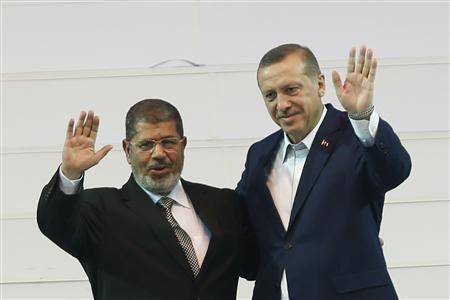
                              Turkish strong-man, Erdogan with deposed Brotherhood leader, Morsi.

                              3. Bangladesh should ban the "Muslim" Brotherhood as a terrorist organization and provide complete support to Saudi Arabia and Egypt against this terrorist organization.

                              The Bangladeshi foreign ministry should issue press statements supporting the Egyptian and Saudi governments for their courageous ban on the Brotherhood.


                              4. Bangladesh should also ban the Jamaat e Islami Hind and the Jamaat e Islami in Pakistan as terrorist organizations.

                              5. Saudi Arabia should not be bothered by the ranting and raving of a few Deobandi and Jamaati leaders in India as the majority of Pakistanis, Indians and Bangladeshis are against the Jamaat.

                              The Jamaat e Islami Hind in India must be asked why it defends and lionizes radicals and war criminals in Bangladesh who carried out war crimes and genocide.


                              Jalaluddin Umri, the chief of the Jamaat e Islami Hind group in India (right). Umri's group supports war criminals, murderers and rapists. They are now angry with Saudi Arabia


                              We totally support the Saudi decision on banning the "Muslim" Brotherhood.

                              We are 150 million Bangladeshis with an economy of $150 billion +, largest NGO in the world, largest army of peacekeepers in the world, highest concentration of mosques in the world and we support our Saudi brothers.


                              Far from this move "backfiring" as the article above tries to convince its readers, Saudi Arabia and Egypt have weakened the power of the "Muslim" Brotherhood, which is militarily being crushed in Syria too.
                              * * * * * * * * * * * * * * * * * * * * * * *

                              Comment


                              • #60
                                ikhwan > bangladesh
                                There are people today who think that admitting God’s absolute greatness decreases the value and importance of humans in the creation, as if God and mankind are rivals competing in greatness and power. Meanwhile I feel that whenever our perception of God’s greatness increases, with it we become greater, because we are the creation of a great God.

                                Sayyid Qutb

                                Comment

                                Working...
                                X