Announcement

Collapse
No announcement yet.

Vladimir Putin saves the world?

Collapse
X
 
  • Filter
  • Time
  • Show
Clear All
new posts

  • A lot of my predictions or general opinions are coming true e.g. I mentioned Russia in the Yemeni context and Russia has now started to get involved in Yemen.


    Yemen Ready to Cooperate With Russia In Counter-Terrorism Efforts: President

    MOSCOW, October 21 (RIA Novosti) - Yemeni authorities are ready to cooperate with Russia on various issues, including the fight against terrorism, the country's President Abd Rabbuh Mansur Hadi said Tuesday.
    "President Hadi announced his readiness to consider the issue of cooperation with the Russian Federation in different areas <…> including training and retraining of the local personnel, particularly for the fight against terrorism," Saba news agency quoted the Yemeni leader as saying after a meeting with Russian Ambassador Vladimir Dedushkin.

    The agency added that the sides have also discussed possible steps for reconciliation of the political crisis in Yemen. President Hadi stressed the importance of an urgent creation of a unity government which would represent interests of the majority of Yemen's political spectrum.

    Ambassador Dedushkin assured the Arab leader of Moscow's full support in political stabilization efforts.

    After the 2011 power transition, Yemen has seen an increase in terrorist activity, particularly by al-Qaeda fighters. The Houthis, the main opposition force in Yemen, have been carrying out protests in the country since mid-August, demanding the resignation of the Yemeni government, which they say was corrupt and marginalized the Shiite community in the country. Houthi militias have taken over many Yemeni cities, including areas of the capital Sanaa. The fighters claim they are acting to protect civilians from terrorism.
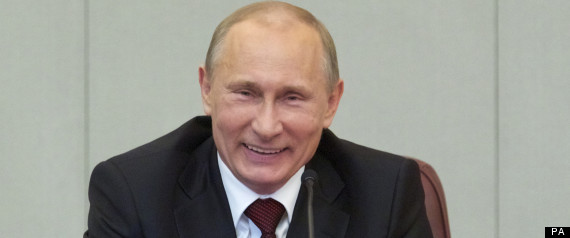
    Russian and Yemeni leaders have discussed the issue of cooperation in training personnel to fight terrorism and considered possible steps for reconciliation of the political crisis in Yemen.


    *

    1. Russians are sending a signal to everyone that they are a party in what happens in Yemen.

    2. The question is where would the Russian training of Yemeni forces take place? If Russia starts training Yemeni soldiers in Saudi Arabia's southern neighbour i.e. Yemen, the Saudi regime would not be too thrilled.

    What sort of training would it be?

    Would the Russians and their allies the Iranians and Chinese supply Yemen with big quantities of arms to send a message to Saudi not to misbehave in Syria or something could happen to them from Yemen?


    The Russians will be laughing at how the Saudis have been outplayed in Yemen by their allies the Iranians.


    Last edited by Bengal_Tiger; 10-21-2014, 07:02 PM.
    * * * * * * * * * * * * * * * * * * * * * * *

    Comment


    • Oil politics: The secret US-Saudi deal

      2014-10-31 00:20:57


      Saudi King Abdullah listens to U.S. Secretary of State John Kerry during a meeting at the royal palace in Jeddah, Saudi Arabia, on Sept. 11, 2014. Pic Brendan Smialowski/Reuters.


      Is oil a bane or a boon? A blessing or a curse? If there had been no oil, would we have reached the advanced stage that we are in today in industrial development? There would not have been aircraft. Neither would there have been rockets going to the moon and Mars or launching satellites. No oil, no internet, and, of course, no social media.

      "The fall of oil prices during conflict times is something unheard of. But it is happening today. Despite the fears of the current wars in Syria and Iraq spreading to other countries in the oil-producing region -- the Middle East accounts for 66% of the OPEC total -- oil prices are now plummeting.'


      On the other hand, if oil had not been discovered, the Earth would have been a better place to live in. It would have been comparatively peacful. The United States and Britain would not have become oil-hungry invaders. The Middle East would not have suffered most of the wars that it has been subjected to. And of course, we will be healthier and breathing cleaner air, free of greenhouse gases.

      Since oil became a commercial commodity a little more than a century ago, it has become the foundation of the world’s economy. If suddenly all the oil reserves in the world disappear, we will be forced to give up many of our luxuries. Such is oil’s importance to the world’s nearly 6.5 billion people.

      "The why and how of this weird phenomenon is found in a secret deal the United States and Saudi Arabia entered into last month. If oil prices fall, the US and its Gulf allies believe, Russia can be brought to its knees, for it earns 50 per cent of its revenue through oil and gas exports."


      But apart from oil’s immense contribution to the economy, it is also a cause of turmoil and wars. It was because of oil that the colonialists occupied West Asia. It is because of oil, even today, the same ole colonialists who now pursue a policy of neocolonialism manipulate and control events in West Asia and the West Asian monarchs and dictators. It was because of oil that the democratically elected government of Mohammed Mossadegh in Iran was overthrown by the CIA and MI6 in 1953 at the behest of oil giants British Petroleum and Shell. It was because of oil that the then US president George Bush and his coterie of coalition partners invaded Iraq in 2003 and the present US president Barack Obama intervened in Libya in 2012. It is because of oil that Syria is engulfed in a war which nobody knows when it will end.

      Then oil is also used as a political weapon. One such instance was when in 1973 oil-producing Arab countries decided not to sell oil to the West because of its blind support of Israel.

      Oil as a weapon is not the monopoly of the Arabs. The West also has used this commodity as a weapon to punish hostile regimes. The West, by manipulating the United Nations Security Council or otherwise, has imposed crippling economic sanctions on countries such as Iraq, Iran, Libya and Sudan with the aim of preventing these countries from selling oil and becoming economically independent and politically and militarily powerful. Nearly half a million children died as a result of the west-backed UN economic sanctions on Saddam Hussein’s Iraq. Today, Iran is facing economic hardships as a result of US sanctions and is forced to negotiate a deal with the P5+1 – the five permanent members of the UN Security Council and Germany – to define a ceiling to its nuclear programme.

      But there are ways other than economic sanctions to throttle the economies of hostile nations. Usually, when there is war or turmoil in an oil-producing region, it is expected that the world oil prices will rise. In 1973, when the Arab countries imposed the oil embargo on the West, the world oil prices shot up from US$ 3 to US$ 12 a barrel -- a quadruple jump -- within days and were moving towards the US$ 20 plus mark as the crisis dragged on. Oil prices remained high during the nine-year Iran-Iraq war and sharply increased during Iraq’s invasion of Kuwait in 1991 and the US invasion of Iraq in 2003. Crossing the US$ 100 mark, oil prices reached a peak in 2007-2008 owing to various political disturbances and the growing concern over the fast diminishing oil reserves.

      The fall of oil prices during conflict times is something unheard of. But it is happening today. Despite the fears of the current wars in Syria and Iraq spreading to other countries in the oil-producing region -- the Middle East accounts for 66% of the OPEC total -- oil prices are now plummeting. Adding to the conundrum is the East Ukraine crisis, where oil-and-gas producing Russia is threatening to curtail supplies to Ukraine and other European countries in response to the US and European economic sanctions slapped on Moscow. In all probability, tensions in Russia and the Middle East -- with the ISIS capturing oil fields in Iraq and Syria to boot – will deal a double blow to oil-buying nations. But instead, oil-importing countries are reaping a windfall from the price fall. Prices have fallen from a high of US$112 to about US$ 80 a barrel.

      The why and how of this weird phenomenon is found in a secret deal the United States and Saudi Arabia entered into last month. The logic behind this is: If oil prices rise as a result of the Middle East tensions, it will help oil-exporting Russia to earn enough money to circumvent the adverse effects of the economic sanctions imposed by the US and its European allies. Russia was in economic chaos following the crash of the ruble in the mid-1990s. It was the rising oil prices that enabled Russia by 2005 to regain at least a semblance of its superpower status and assert its authority, by waging war on Georgia in 2008 and annexing Crimea this year. If oil prices fall, the US and its Gulf allies believe, Russia can be brought to its knees, for it earns 50 per cent of its revenue through oil and gas exports.

      This strategy worked in the late 1980s when the US and Saudi Arabia got together and manipulated the market to bring down the oil prices to as low as US$ 10 a barrel with the aim of punishing the Soviet Union. They did succeed in precipitating the collapse of the Soviet Union and ending the Cold War.


      The West feels that if Russia is allowed to go unpunished or unchecked now, the world’s largest country will be emboldened to embark on ambitious moves that could be more serious than annexing Crimea. The West and its Gulf allies, especially Saudi Arabia, are angry with Russia, because Russian President Vladimir Putin is a staunch supporter of Syria’s Bashar al-Assad.

      Months before the Winter Olympics games in Sochi, Russia in February this year, Saudi Arabia’s Intelligence Chief, Prince Bandar bin Sultan, had met Putin near Moscow and reportedly warned him that if Moscow did not stop supporting the Assad regime, Saudi Arabia would have no option but to take measures harmful to Russia. At that time, many analysts believed that what Bandar meant was a terrorist attack by a Saudi-sponsored Chechen rebel group on the Olympic village.

      But this did not happen. Instead, Saudi Arabia and the United States have decided to use oil prices as a weapon -- not only to punish Russia, but also Iran, which is a stauncher ally of the Assad regime than Russia. Like Russia, Iran also pins hopes on oil price hikes to overcome the economic difficulties that it is facing because of the crippling US sanctions.

      Besides, the US-Saudi oil price weapon is also connected to US-Israeli moves to pressurise Iran to stop its nuclear programme. Parallel to these moves, the European Union is assisting Ukraine to obtain some of its gas supplies from sources other than Russia. A long term plan is for Ukraine to get Middle Eastern gas via Europe. For this to happen, Assad must go. If he goes, oil and gas from Saudi Arabia, the UAE and Qatar could reach the European markets via pipelines to be built across Syria.

      As per the secret deal entered into during US Secretary of State John Kerry’s talks in Jeddah last month with King Abdullah and Prince Bandar, Saudi Arabia, the world’s second largest oil producer after Russia, has agreed to flood the market and sell oil to some of its key customers such as China at prices well below the market price.

      Accordingly, Saudi Arabia is said to be selling oil to China at US$ 50-60 a barrel. This concession is also perhaps to discourage China from buying Russian oil. Joining the Saudis in flooding the oil market are Kuwait and the UAE. Their move has shattered the oil cartel OPEC’s collaborative unity and has forced Iran, the fourth largest oil producer, also to flood the markets. This way, Iran seeks to minimise its losses as a result of the plummeting prices.

      But will the US-Saudi plan succeed this time?
      No, says ​​​​F. William Engdahl, author of A Century of War: Anglo-American Oil Politics in the New World Order.


      In a recent article, he says: “It (the US-Saudi strategy) is doomed to fail for many reasons, not the least, because Putin’s Russia has taken major strategic steps together with China and other nations to lessen its dependence on the West. In fact the oil weapon is accelerating recent Russian moves to focus its economic power on national interests and lessen dependence on the dollar system. If the dollar ceases being the currency of world trade, especially oil trade, the US Treasury faces financial catastrophe. For this reason, I call the Kerry-Abdullah oil war a very stupid tactic.”

      Engdahl’s argument is valid. Recent developments indicate that the dollar is losing its position as the number 1 world currency. On the one hand BRICS nations – Brazil, Russia, India, China and South Africa -- have started a bank of their own and are moving towards a common currency. On the other China last Friday posed a bigger threat to the dollar by launching its $50 billion Asian Infrastructure Investment Bank (AIIB). Analysts believe the creation of this bank -- twenty nations, including Sri Lanka, and India joined the bank last Friday -- is a serious challenge to the World Bank and the Asian Development Bank, both of which count Washington and its allies as their biggest financial backers.
      It seems, in world politics, every move has a counter move.


      - See more at: http://www.dailymirror.lk/55515/oil-....H9qHzObo.dpuf


      1. Americans and Saudis are working together to devastate Russia by reducing oil prices.

      2. The Chinese know exactly what is going on and as I said earlier in a previous post above have helped the Russians.
      * * * * * * * * * * * * * * * * * * * * * * *

      Comment


      • China snubs Saudi oil in sign of weakening OPEC

        Despite discount, China chooses Colombian oil

        By Chris Tomlinson

        October 22, 2014


        The global oil market is undergoing dramatic and unexpected changes well beyond our borders, and frankly, our control.

        The latest surprise comes from China, which chose to ignore the lower Asian prices on offer from Saudi Arabia and instead boosted imports from Colombia, Bloomberg reports. China also boosted imports from Russia, as the world is awash with crude, largely because the U.S. is now producing so much of its own.


        This is the main reason why prices have plummeted in recent weeks. This move by China could possibly send oil prices even lower if Saudi Arabia drops prices again because it feels their market share is more threatened than they initially feared....


        1. China has chosen to import oil from Colombia rather than Saudi Arabia.

        2. China is also working with Russia to end the petro-dollar.

        3. The US' status as global bully and mafia godfather is dependent on the petro-dollar, once that goes, the US is no longer the world's no.1 power and can bully the rest of the world as it is currently doing.
        * * * * * * * * * * * * * * * * * * * * * * *

        Comment


        • The End Of An Era: Is The US Petrodollar Under Threat?

          By Andrew Topf | Tue, 28 October 2014 22:39 |


          Recent trade deals and high-level cooperation between Russia and China have set off alarm bells in the West as policymakers and oil and gas executives watch the balance of power in global energy markets shift to the East.

          The reasons for the cozier relationship between the two giant powers are, of course, rooted in the Ukraine crisis and subsequent Western sanctions against Russia, combined with China's need to secure long-term energy supplies. However, a consequence of closer economic ties between Russia and China could also mean the beginning of the end of dominance for the U.S. dollar, and that could have a profound impact on energy markets.


          Rein of the USD

          Before the 20th century, the value of money was tied to gold. Banks that lent money were constrained by the amount of their gold reserves. The Bretton Woods Agreement of 1944 established a system of exchange rates that allowed governments to sell their gold to the U.S. Treasury. But in 1971, U.S. President Richard Nixon took the country off the gold standard, which formally ended the linkage between the world's major currencies and gold.

          Related: Should Europe Be Concerned About Russia’s Growing Energy Relationship with Asia

          The U.S. dollar then went through a massive devaluation, and oil played a crucial role in propping it back up. Nixon negotiated a deal with Saudi Arabia whereby in exchange for arms and protection, the Saudis would denominate all future sales of oil in U.S. dollars. Other OPEC members agreed to similar deals, ensuring perpetual global demand for greenbacks. The dominance of the U.S. "petrodollar" continues to this day.

          Russia and China Cozy Up

          Recent news coming out of Russia, however, suggests that the era of U.S. dollar dominance could be coming to an end, due to increasing competition from the world's second largest economy and primary consumer of commodities, China.

          China and Russia have been furiously signing energy deals that indicate their mutual energy interests. The most obvious is the $456 billion gas deal that Russian state-owned Gazprom signed with China in May, but that was just the biggest in a string of energy agreements going back to 2009. That year, Russian oil giant Rosneft secured a $25 billion oil swap agreement with Beijing, and last year, Rosneft agreed to double oil supplies to China in a deal valued at $270 billion.

          Since Western sanctions against Russia took hold in reaction to the Russian land grab in Crimea and the shooting down of a commercial airliner, Moscow has increasingly looked to its former Cold War rival as a key buyer of Russian crude -- its most important export.

          Liam Halligan, a columnist for the Telegraph, says "the real danger" of closer Russian-Chinese ties is not a bust-up between China and the U.S., which could threaten crucial shipping routes for China-bound coal and LNG, but its impact on the U.S. dollar.

          "If Russia’s 'pivot to Asia' results in Moscow and Beijing trading oil between them in a currency other than the dollar, that will represent a major change in how the global economy operates and a marked loss of power for the U.S. and its allies," Halligan wrote in May. "With China now the world’s biggest oil importer and the U.S. increasingly stressing domestic production, the days of dollar-priced energy, and therefore dollar-dominance, look numbered."

          While no one is arguing that could happen anytime soon, considering the dollar remains the currency of choice for central banks, Halligan's proposition is gathering strength. In June, China agreed with Brazil on a $29 billion currency swap in an effort to promote the Chinese yuan as a reserve currency, and earlier this month, the Chinese and Russian central banks signed an agreement on yuan-ruble swaps to double trade between the two countries. Analysts says the $150 billion deal, one of 38 accords inked in Moscow, is a way for Russia to move away from U.S. dollar-dominated settlements.

          "Taken alone, these actions do not mean the end of the dollar as the leading global reserve currency,” Jim Rickards, portfolio manager at West Shore Group and partner at Tangent Capital Partners, told CNBC. “But taken in the context of many other actions around the world including Saudi Arabia's frustration with U.S. foreign policy toward Iran, and China's voracious appetite for gold, these actions are meaningful steps away from the dollar."

          Rise of the Yuan

          It is no secret that Beijing has been looking to promote the yuan as an alternative reserve currency. Having that status would allow China cheap access to world capital markets and cheaper transaction costs on international trade, not to mention increased clout as an economic power commensurate with its rising proportion of world commerce.

          However, the Chinese have a problem in their plans for the yuan. The government has not yet removed capital controls that would allow full convertibility, for fear of unleashing a torrent of speculative flows that could damage the Chinese economy.

          However, "[It] is clear that China is laying foundations for wider acceptance of the yuan," said Karl Schamotta, a senior market strategist at Western Union Business Solutions," as quoted in an International Business Times article. IBT pointed out that "more than 10,000 financial institutions are doing business in Chinese yuan, up from 900 in June 2011, while the pool of offshore yuan, non-existent three years ago, is now near 900 billion ($143 billion). And the proportion of China’s exports and imports settled in yuan has increased nearly sixfold in three years to nearly 12 percent."

          Conspiracy Theory Spoiler Alert

          Adding some vivid color to this story, Casey Research energy analyst Marin Katusa speculated in a recent column that the death of Total CEO Christophe de Margerie, whose private jet collided with a snowplow in Moscow, may not have been an accident. Instead, Katusa muses that the mysterious circumstances surrounding his death and the unlikely odds of being hit by a snowplow at an airport, could have more to do with de Margerie's business interests in Russia than being at the wrong place at the wrong time.


          According to Katusa, de Margerie was "a total liability" due to Total's involvement in plans to build an LNG plant on the Yamal Peninsula along with partner Novatek. The company was also seeking financing for a gas project in Russia despite Western sanctions.

          "It planned to finance its share in the $27-billion Yamal project using euros, yuan, Russian rubles, and any other currency but U.S. dollars," Katusa writes, then entices the reader with this: "Did this direct threat to the petrodollar make this 'true friend of Russia'—as Putin called de Margerie - some very powerful and dangerous enemies amongst the power that be, whether in the French government, the EU, or the U.S.?"

          That may be a stretch, but Katusa's U.S. dollar reference shows that any developments that point to a move away from the dominance of the greenback are not going un-noticed.

          By Andrew Topf of Oilprice.com

          Amid ever-increasing trade ties between China and Russia, the global dominance of the US Petrodollar may be under threat as China seeks to promote the Yuan


          Christophe de Margerie - on left - who some suspect was killed due to speaking about ending oil trade in dollars as well as speaking against sanctions against Russia.


          Despite the politico-economic war against Russia by America and the Saudis, Russia and China are working closely together to bring the US down.

          Not to destroy the US but to make it a more equal partner in a multi-polar world.
          * * * * * * * * * * * * * * * * * * * * * * *

          Comment


          • Free Sheikh Al-Nimr protests in cities around the world.


            Los Angeles.


            Stockholm, Sweden.


            Bangalore, India.


            * * * * * * * * * * * * * * * * * * * * * * *

            Comment


            • * * * * * * * * * * * * * * * * * * * * * * *

              Comment


              • Russia, China Add to $400 Billion Gas Deal With Accord

                By James Paton and Aibing Guo Nov 10, 2014 1:35 PM GMT 137 Comments


                Russian Direct Invest Fund CEO on Russia-China Ties

                China and Russia deepened their energy ties with a second blockbuster deal that lessens Russian reliance on Europe and would secure almost a fifth of the gas supplies China needs by the end of the decade.

                Russian President Vladimir Putin and Chinese President Xi Jinping signed the preliminary gas-supply agreement in Beijing as U.S. President Barack Obama arrived in the Chinese capital for the Asia-Pacific Economic Cooperation summit. The deal is slightly smaller than the $400 billion pact reached earlier this year, shortly after Russia annexed Crimea.

                Russian oil firm OAO Gazprom is negotiating the supply of as much as 30 billion cubic meters of gas annually from developments in West Siberia to China over 30 years, it said. At the same time, another Russian producer, OAO Rosneft, agreed to sell a 10 percent stake in a Siberian unit to state-owned China National Petroleum Corp.

                The export of new supplies to Asia increases the possibility of a glut on global energy markets by early next decade. Once deliveries begin, China would supplant Germany as Russia’s biggest gas market, even as relations have soured with the U.S. and Europe over the Ukraine crisis.

                Huge Exports

                The gas glut could resemble what’s happened in the iron ore industry, said Kenneth Courtis, chairman of Starfort Holdings and former Asia vice chairman at Goldman Sachs Group Inc. That industry has seen miners ramp up production in the teeth of falling prices, shaking out higher cost suppliers.


                “There is going to be new supply of natural gas coming from everywhere,” including Australia, the U.S., Canada and Mozambique, Courtis wrote in an e-mail.

                The accord “will make Russia rely more on China both economically and politically,” said Lin Boqiang, director of the Energy Economics Research Center at Xiamen University.

                The Bank of Russia today cut its growth forecast for next year to zero, citing continuing sanctions and oil prices at $95 a barrel. The ruble has depreciated to record levels.

                ‘Sustainable Basis’

                “China is probably the only country in the world that has both the financial ability and the market capacity to consume Russia’s huge energy exports on a sustainable basis over a long period of time,” Lin said today by phone.

                It gives Putin an opportunity to show Europe and the U.S. that his country won’t be isolated over Ukraine, he said.

                The two deals could account for almost 17 percent of China’s gas consumption by 2020, Gordon Kwan, a Hong Kong-based analyst at Nomura Holdings Inc., wrote today in an e-mail.

                Russia may start selling gas to China within four to six years as part of its agreement with CNPC, Alexey Miller, the chief executive officer of Gazprom, told reporters in Beijing.

                “Together we have carefully taken care of the tree of Russian-Chinese relations,” Xi Jinping said at a meeting with Putin at the economic forum. “Now fall has set in, it’s harvest time, it’s time to gather fruit.”

                Australia Pressure

                A second China-Russia agreement adds to pressure on liquefied natural gas suppliers, mainly in Australia where costs to build new plants are high, Adrian Wood, a Sydney-based analyst at Macquarie Group Ltd., said today by phone.

                “There is a general view out there that China is going to underwrite all these projects, that Chinese demand is insatiable,” Wood said. “We’ve never shared that view. This is going to certainly weigh on demand, and therefore there will be even more competition for customers.”

                Putin called the earlier agreement between state-run Gazprom and its Chinese partners “epochal.”

                CNPC also signed an initial agreement with Rosneft to acquire 10 percent of the Vankorneft business. Russia and China also are considering gas supplies from Russia’s Far East, Gazprom’s Miller said.

                Under the agreement earlier this year, China will import 38 billion cubic meters of gas from Russia annually over three decades starting as soon as 2018.

                Gas will account for more than 10 percent of China’s energy consumption by 2020, compared with 6 percent currently, according to the National Development and Reform Commission, China’s national economic planner.


                * Major $300 billion deal.


                Comment:


                The Novosibirsk-Urumqi-New Delhi pipeline will become the vertebral column from the BRICS, along with new infraestructure connecting the three largest nations in Eurasia, including fiber optics and railways. India is an essential part in that equation being the largest Defense partner from Russia in all the World.

                A Common Market of 2,700 million people (Russia+China+India), with $ 5 Tr. currency reserves, 3,000 tonnes of gold reserves, and a combined $ $ 14 Tr. economy at market prices, and $ 24 Tr. at PPP.

                Those three economies are complementary and need each other to develop several areas. For example, the agreement to combine the Russian and Chinese aircraft industries to create a large plane which can compete with Boeing and Airbus in the 300 + range. Russia and India are great software developers while China is the largest manufacturer of new technology products.

                The Sino-Russian alliance continues to work together to weaken US global power.

                Syria and Ukraine are just different battle fields in a wider war.

                This move also helps to counter the Saudi-US move to weaken Russia by putting down oil prices.
                * * * * * * * * * * * * * * * * * * * * * * *

                Comment


                • Obama gives Putin chilly reception at APEC summit in China


                  It&#8217;s not the Cold War, but a cold shoulder. President Obama appeared to blow off Russian President Vladimir Putin during the Asia-Pacific Economic Cooperation summit of world leaders on Tuesday. The rebuff came as the two leaders&#8230;


                  Putin thinking:"Don't worry Obama, don't take it too personally I've outplayed you in Syria and Ukraine, you'll get over it.

                  Obama thinking: "Why you %U£*%&£%)! "


                  Obama and Putin in China today at a recent major world meeting.


                  Other Obama v Putin pictures:


                  Last edited by Bengal_Tiger; 11-11-2014, 07:46 PM.
                  * * * * * * * * * * * * * * * * * * * * * * *

                  Comment


                  • Russia sends the Australian regime a message.

                    Russians warships headed for Australia, Putin bound for G20

                    RUSSIAN warships are north of Australian waters in an unprecedented show of strength to accompany Russian President Vladimir Putin’s visit to the G20 in Brisbane this weekend.


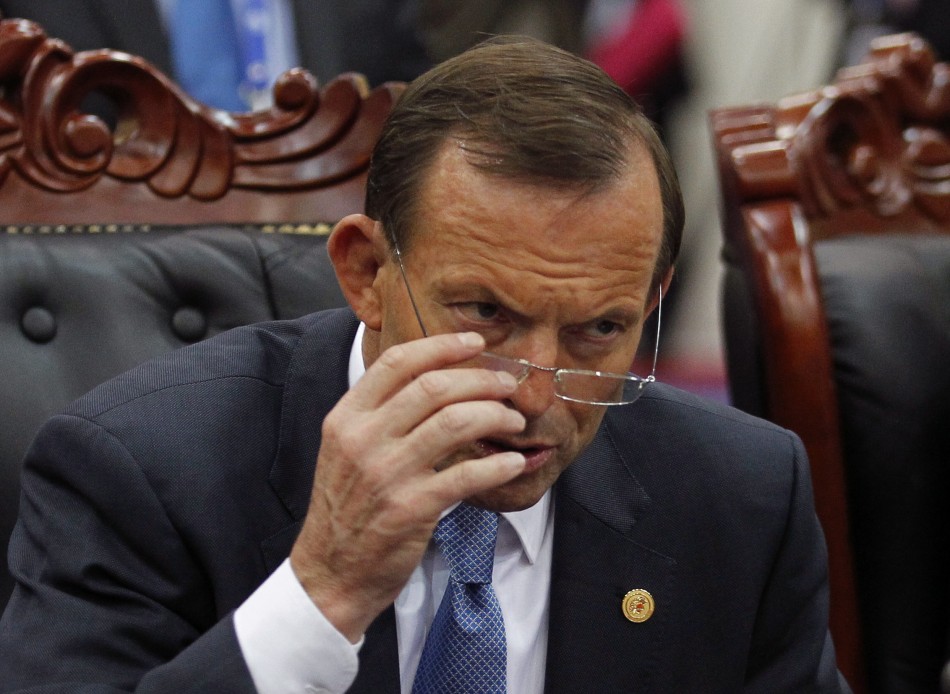
                    * The Australian leader Abbot was quite coarse and obnoxious and said he would "shirt-front" Putin over the crash of a Malaysian plane in Ukraine. He also said other things.

                    This in diplomatic terms is a highly aggressive message and warning from Russia - which has submarines carrying nuclear missiles that can go to the Pacific and target Australia - to the Australian regime to behave itself and that its wild and irresponsible way of speaking will have consequences.

                    Australia is a country built on the genocide and mass murder of Aborigines who originally lived in that country.


                    Australian leader Abbot with Putin in China a few days ago at the APEC summit.


                    Australia was a southern-hemisphere Israel but far worse with the mass murder of native Aborigines.


                    Russia however did not genocide the ethnic groups it conquered including Tatars, Kalmyks, Yakuts, central Asian Turks and many others.


                    Yakuts in the Russian federation. An Asiatic race amongst many of the non-Slavic races the Russians did not exterminate or genocide when expanding their borders.

                    Russia is now the target of an economic, political and media war by western powers such as America and Australia who have carried out war crimes and genocide against native Americans, Aborigines, Iraqis, Vietnamese and countless others.


                    President of the Russian federation, Vladimir Putin in the Yakutia region of Russia. Putin is defending Russia and others from western aggression and hegemony.
                    * * * * * * * * * * * * * * * * * * * * * * *

                    Comment


                    • For anyone that doesn't know what "shirtfront" means. The video below gives an example:

                      Shirtfront - YouTube

                      [MENTION=1753]Manzareh[/MENTION]


                      * * *

                      Now this is what the Australian "leader", Abbot threatened to do to the president of 140+ million Russians, Vladimir Putin.

                      &#39;Immature&#39; Australian PM Vows To Shirt-front Putin - YouTube

                      Watch 0.33 mins to hear him say: "I'm going to shirtfront Mr Puin, you bet..."
                      * * * * * * * * * * * * * * * * * * * * * * *

                      Comment


                      • Putin delivers another vicious blow to Australia

                        ROBERT GOTTLIEBSEN 12 NOV, 7:37 AM 7


                        While the focus of Australian attention on APEC was all about whether Tony Abbot would shirtfront Russian President Vladimir Putin over the Ukraine, in fact, it was Putin who delivered a vicious uppercut to Tony Abbott. It was a blow that will set future Australian LNG projects back a decade or two. This follows Putin’s earlier dairy blow to Australia.

                        LNG has been a major driving force behind the mining investment boom. At the start of APEC, Russia announced that it has reached a basic agreement with China to expand and accelerate the supply of gas from Siberia.

                        Russia’s Putin signed a framework agreement to accelerate supply by 30bcm of gas a year via the Altai pipeline. That’s about the equivalent of Australia’s entire LNG output and represents just shy of 20 per cent of China’s current demand. The Altai pipeline follows a much shorter route than the Western pipeline, which will deliver an additional 38bcm of gas a year -- a total of 68bcm by the 2020s. Add the planned US LNG exports, and China will only need top up gas, so there is no room for new Australian base load contracts unless Korea or Japan are prepared to commit. It's unlikely that they will be prepared to accept prices that exceed that of the Russian gas.

                        It’s also clear that Siberian gas via the Altai pipeline will be much cheaper than Australian LNG. Effectively, that means that there will be no more LNG projects, and, if oil prices remain depressed, then LNG revenue will be much less than originally expected.

                        Just to make sure Australia takes heed of Russian power, Putin also maintained his ban on Australian dairy exports to Russia but continues to allow New Zealand exports. As I pointed out last month, the ban on Russian imports of dairy products coincided with the tough measures against Russia taken by Europe after the Malaysian airlines crash (Putin's dairy war is hurting our farmers, October 14)

                        I don’t think the current government fully understands the extent of the end of the mining investment boom.

                        Had they understood what was ahead, they would not have been anywhere near as cavalier as they have been in encouraging the demise of motor production and the associated fall in high-technology parts operators.

                        Mining revenue has been a valuable addition to Australian taxation receipts for well over a decade, allowing former treasurer Peter Costello to always have extra funds to spend on new projects. Joe Hockey will not have that luxury.

                        The requirement to cut existing government outlays will intensify in coming years. The Australian population has simply not been told that it was the mining boom that delivered their bountiful rewards -- instead the politicians took the credit. Now, governments will have to tell the truth and explain that a different approach is going to be required from this country.

                        Of course, Russia has always been one of the main beneficiaries of the mining boom, so it will suffer from the current decline in oil prices. But the Russian ‘rubble’ is falling dramatically which will insulate Russia from the worst of the decline. Our dollar has fallen, but our rates of interest are higher than the US and Europe, so we continue to receive large amounts of capital.

                        I suspect the current Chinese Australian property investment momentum will continue for some time, but, eventually, the Chinese will find that those countries that are benefitting from the end of the mining investment boom are the best places to look for bargains -- that means the US, Mexico and, of course, China itself.


                        Putin's reaction to Abbot's "shirtfront" threat (apart from sending 4 Russian warships close to Australian waters) is:


                        * * * * * * * * * * * * * * * * * * * * * * *

                        Comment


                        • * * * * * * * * * * * * * * * * * * * * * * *

                          Comment


                          • FORBES.COM


                            Is Putin About To Invade Ukraine?


                            As I write this, observers report a huge buildup of Russian military forces on Ukraine’s borders. We are talking about 7000 or more troops already inside Ukraine and some 50,000 massing outside. Besides scores of howitzers, rocket launchers, and armored vehicles the estimates specify 100 tanks inside and another 400 tanks outside the porous border. You could call it an escalation; the invasion began with Crimea and moved to Donbas and hasn’t stopped since. But that would be a euphemism. Actually, we are witnessing preparation for outright war along the lines of the Georgian protocol: first arm separatists, then send in Russian troops disguised as separatists, stir and bring to boil and then invade full throttle. Two other facts need considering. Putin just signed a deal to expand Iran’s nuclear infrastructure. Turkey’s Erdogan called Putin to complain about Syria, and according to some sources a roaring argument ensued in which Putin told Erdogan to stop trying to unseat Assad and even threatening war if Erdogan interfered militarily. Here’s an item in a Turkish newspaper saying so (in Turkish).

                            Why all this now? In this space I’ve written numerous times that Moscow operates strategically, with global co-ordination and with precise timing. Indeed, that’s the entire message of the recent book I wrote with Douglas Schoen about Russia and China and the New Cold War—that they have a game plan and we don’t. Mr. Schoen and I started the project when Putin’s rampage seemed likely but still in the future. A couple of years later, as we finished, everything we set out to warn against was happening in the present. It was so utterly predictable, once you saw the pattern. It didn’t take much seeing—but nobody wanted to. Now they can’t not. Still, we’re all mesmerized and irresolute in the face of Putin’s stop-go rhythms, his almost incredible mendacity hidden in plain sight, his straight-faced brutality, as he makes his moves. We refuse to grasp the full scope of his strategic orchestration of global incidents. Partly because it seems audacious and cynical beyond all plausibility, partly because we in the West are incapable of it these days, mostly because we shy from sparking a world war. That too is in his calculus. That is what emperors do; they make such calculations and push forward. We still think that empires and emperors are a thing of the past, very 19th century. But the age of empire has resurfaced: Iran’s Shiite empire, Putin’s own, the Caliphate yearnings of ISIS, Erdogan’s own delusions of a Caliphate.

                            Repeatedly I’ve written that Moscow expanded its power during, because of, the ten years we in the West slogged about mired in Islamic wars. Surely Putin didn’t orchestrate that interlude, you might say. Perhaps not but he took full advantage. Through his ally, Syria, he made sure Iraq cost us trillions while insurgents came across the border. He knew about war fatigue – a lesson we had taught his ilk in Afghanistan. Now that we’re wading back into the mire anew Putin will move his pieces. Surely he didn’t plan for ISIS, for the Iraqi army’s collapse, for the beheadings that caught our conscience and lured President Obama back into the Mideast? Surely not? Here is a column in which I argue that Putin did just that, via the Shiite crescent’s co-ordination, via Assad’s deliberate empowering of ISIS, via a gameplan that goes way back to the second war of Chechnya.


                            Admittedly, I do get a couple of things wrong. The price of oil certainly didn’t go up. But that’s a side issue for the present. Iraqi PM Maliki lost his job—which didn’t seem central and from a strategic perspective doesn’t change things. I wasn’t far off all else. We ended up fighting side by side with Iran. Putin launched his East Ukraine campaign as we geared up for Iraq. The pressure of sanctions abated, as did initiatives to investigate Iran-Syria money laundering. Much of the fighting is now between Sunni factions in Iraq and Syria, though it took a couple of months longer than I thought. In short, the rise of ISIS helped Putin and his Shiite axis allies. I stand by my argument that Putin exploited, exploits, our Iraq-Syria distraction, may even have planned it. In order to invade Ukraine.

                            As the US stutters toward a nuclear deal with Iran, Putin has just made it much harder by upping the ante with his own deal to expand Tehran’s nuclear program massively. He certainly doesn’t want his Shiite ally to turn coat and befriend the West. That would lead to a sea-change. Iran would become a bridge by which Central Asia’s natural resources flow out to the West rather than being bottled up and serving only Russia and China. The Iranians have grown tired of dependency on their former 19th century imperial hegemony in Moscow. They’re also tired of having China as their main trading partner; the Chinese strike very hard bargains and often don’t stick to them. Tehran really does want a deal with the West. They may have just blown it. But the US might not be able to backtrack so easily, being now committed to the ISIS war alongside Iran. We’ve been snookered.

                            Meanwhile, Erdogan. He didn’t just call Putin out of the blue about Syria. He first signed a deal with Turkmenistan for a gas pipeline across the Caspian to deliver supplies all the way to Europe. Is there anyone who doesn’t grasp the import of this? A Europe liberated from Russian gas imperatives might even stand up to Moscow’s bullying—on Ukraine and elsewhere. Erdogan’s friendly phone chat undoubtedly pulsed with that subtext. As in “Hello Vladimir, I’m going to funnel Turkmen gas to Europe unless you stop backing Assad.” Hence Putin’s anger. Expect more PKK attacks in Turkey and a rise in rebel violence in Chechnya. The pipeline should be finished by 2018. As the Russian economy dives and Moscow’s gas leverage begins to crumble, while the US wrestles and wrangles with the Mideast, Putin has to act on his megalo-expansion plans quickly. Facts on the ground. Now happening in Ukraine.


                            1. The Turkish website saying Putin threatened Turkey with war also has a link to a Russian website:

                            Moscow- Nov 09, 2014 - &#1042;&#1086;&#1080;&#1085;&#1089;&#1090;&#1074;&#1077;&#1085;&#1085;&#1099;&#1081; &#1090;&#1091;&#1088;&#1077;&#1094;&#1082;&#1080;&#1081; &#1087;&#1088;&#1077;&#1079;&#1080;&#1076;&#1077;&#1085;&#1090; &#1089;&#1076;&#1077;&#1083;&#1072;&#1083; &#1088;&#1077;&#1076;&#1082;&#1080;&#1081; &#1090;&#1077;&#1083;&#1077;&#1092;&#1086;&#1085;&#1085;&#1099;&#1081; &#1079;&#1074;&#1086;&#1085;&#1086;&#1082; &#1089;&#1074;&#1086;&#1077;&#1084;&#1091; &#1088;&#1086;&#1089;&#1089;&#1080;&#1081;&#1089;&#1082;&#1086;&#1084;&#1091; &#1082;&#1086;&#1083;&#1083;&#1077;&#1075;&#1077;, &#1095;&#1090;&#1086;&#1073;&#1099; &#1086;&#1073;&#1089;&#1091;&#1076;&#1080;&#1090;&#1100; &#1087;&#1086;&#1089;&#1083;&#1077;&#1076;&#1085;&#1080;&#1077; &#1080;&#1079;&#1084;&#1077;&#1085;&#1077;&#1085;&#1080;&#1103; &#1086;&#1073;&#1089;&#1090;&#1072;&#1085;&#1086;&#1074;&#1082;&#1080; &#1074; &#1088;&#1077;&#1075;&#1080;&#1086;&#1085;&#1077;, &#1080; &#1074; &#1086;&#1089;&#1086;&#1073;&#1077;&#1085;&#1085;&#1086;&#1089;&#1090;&#1080; - &#1089;&#1074;&#1080;&#1088;&#1077;&#1087;&#1089;&#1090;&#1074; | &#1046;&#1077;&#1089;&#1090;&#1082;&#1080;&#1081; &#1090;&#1077;&#1083;&#1077;&#1092;&#1086;&#1085;&#1085;&#1099;&#1081; &#1088;&#1072;&#1079;&#1075;&#1086;&#1074;&#1086;&#1088; &#1084;&#1077;&#1078;&#1076;&#1091; &#1069;&#1088;&#1076;&#1086;&#1075;&#1072;&#1085;&#1086;&#1084; &#1080; &#1055;&#1091;&#1090;&#1080;&#1085;&#1099;&#1084; &#1079;&#1072;&#1082;&#1086;&#1085;&#1095;&#1080;&#1083;&#1089;&#1103; &#1074;&#1079;&#1072;&#1080;&#1084;&#1085;&#1099;&#1084;&#1080; &#1091;&#1075;&#1088;&#1086;&#1079;&#1072;&#1084;&#1080; |&#1040;&#1074;&#1090;&#1086;&#1088; Maks. &#1041;&#1086;&#1083;&#1100;&#1096;&#1077; &#1089;&#1090;&#1072;&#1090;&#1077;&#1081; &#1072;&#1074;&#1090;&#1086;&#1088;&#1072; &#1095;&#1080;&#1090;&#1072;&#1090;&#1100; &#1085;&#1072; &#1089;&#1072;&#1081;&#1090;&#1077;.


                            2. NATO has said Russian troops are pouring in to Ukraine.

                            Business Insider:


                            3. Russia has sent a severe warning to the US in the form of long-range bomber flights near the US.

                            USA Today:


                            Russia’s decision to send long-range strategic bombers on regular patrol missions across the Gulf of Mexico is unprecedented, a senior U.S. military official said Wednesday, claiming that the country has never done so before – even during the Cold War
                            .

                            Source: FoxNews,


                            Reuters video:

                            Colombia to protest against Russia for airspace violation - YouTube


                            Putin is sending the American regime a strong message. He is backed with total support from China.

                            Last edited by Bengal_Tiger; 11-13-2014, 06:57 PM.
                            * * * * * * * * * * * * * * * * * * * * * * *

                            Comment


                            • US watches as nuclear sub may be accompanying Putin flotilla


                              THE AUSTRALIAN NOVEMBER 14, 2014 12:00AM

                              Brendan Nicholson

                              Defence Editor

                              Canberra

                              US warships monitored a Russian naval task group as it headed down through Asia towards Australia in an apparent show of force by Russian President Vladimir Putin, who arrives in Brisbane tonight for the G20 summit.

                              The US surface warships are believed to have kept watch on the four Russian vessels near Japan as they headed south.

                              The Australian has been told the US and the Australian Defence Force have been in close contact over the group’s progress.

                              When the Russians headed southward more than a week ago, the Royal Australian Navy frigates HMAS Paramatta and HMAS Stuart, and a long-range P3 Orion maritime patrol aircraft from the RAAF were sent to monitor them.

                              It has also been suggested that a US submarine was observing the ships. The presence of the four Russian ships has triggered speculation that there could be a fifth vessel in the group — a nuclear submarine.

                              It was common in the past for a Russian taskforce far from home to be escorted by a nuclear submarine, which would scout ahead of the flotilla. Naval sources say that is a less common practice now but the increasing Russian posturing around the globe has raised the possibility it is happening again.

                              The Russians’ arrival appeared to be part of its global show of strength, which in recent weeks has included sending bombers towards NATO airspace in Europe and towards the US and over Japanese territorial waters.

                              The ships’ arrival comes after weeks of tension between Mr Putin and Tony Abbott, with the Prime Minister vowing to “shirt-front” the Russian leader after the shooting-down of flight MH17 over Ukraine, which killed 298 people, including 38 Australian citizens and residents.

                              Former Australian rear admir*al James Goldrick, now a Lowy Institute fellow, said the Russian voyage was probably planned before the “shirt-fronting” comment was made.

                              “It is a message that Russia is a Pacific power and that it has military capabilities in the Pacific, that it has reach and that it is prepared to demonstrate it,” he said.

                              “It is about being assertive.


                              “Clearly it is a message for other countries, but also it is part of a continuing demonstration by Putin to the Russian public that Russia is a great power asserting its presence and that it won’t be ignored.”

                              Mr Abbott said it was not unusual for Russia to deploy naval ele*ments during a significant international event but “certainly it is unusual for Russian naval elements to be in Australian waters”.

                              He said Russia was being more assertive and its decision to deploy into the Pacific would have been made months ago.

                              “We’re seeing — regrettably — a great deal of Russian assertiveness right now in Ukraine,’’ Mr Abbott said. “So, it’s not really surprising and we are doing what you’d expect us to do. We are carefully monitoring the movements of these ships when they are in Australia’s approaches.”

                              Additional reporting: Peter Alford, Simon King


                              The Australian Newspaper, a leading paper in Australia.

                              Russia&#39;s new nuclear submarine - YouTube


                              Obama, the American regime leader whose state has murdered countless in Iraq and elsewhere will be worried by the show of Russian military strength.


                              Putin reaction....


                              "What an imbecile!"
                              Last edited by Bengal_Tiger; 11-13-2014, 07:41 PM.
                              * * * * * * * * * * * * * * * * * * * * * * *

                              Comment


                              • Russia says Mohammed (PBUH) cartoon publication illegal
                                AFP


                                Published 2 days ago


                                Russia's media watchdog warned publications from publishing caricatures that can be seen as a violation of the country's laws.

                                MOSCOW: Russia's media watchdog on Friday warned publications that printing cartoons of the Prophet Mohammed (PBUH) was against the country's law and ethical norms following the Charlie Hebdo attack in France.

                                “The publication in Russian media of such caricatures go against ethical and moral norms worked out over centuries,” said the media and communications watchdog Roskomnadzor.


                                “Disseminating caricatures on religious themes in the media can be considered insulting or humiliating to the representatives of religious confessions and groups, and qualified as inciting ethnic and relgious hatred”, an offence under Russian law, it said.

                                The publication would also violate the Russian media and anti-extremism laws, the watchdog said, adding that it was asking Russian media to “refrain from publishing caricatures that can be seen as a violation”.

                                The watchdog published the statement as a response to the ongoing debate on the "legality of publishing caricatures depicting religious objects of worship which affect feelings of religious people."

                                Many newspapers and magazines around the world reprinted cartoons of the Prophet Mohammed (PBUH) by Charlie Hebdo, whose Paris office was attacked by Islamist gunmen on January 7, leading to the deaths of 12 people.

                                Although Russia's leadership extended its condolences to France, and Foreign Minister Sergei Lavrov participated in the unity march staged at the weekend, pro-Kremlin commentators and Muslims accused the cartoonists of provoking the attack.

                                Russia's Council of Muftis - a top Muslim authority - condemned the attack but said that “perhaps the sin of provocation... is no less dangerous for peace than the sin of those who yield to the provocation”.

                                It further said after Charlie Hebdo published a post-attack issue with the Prophet Mohammed (PBUH) on the front page that it is an “unacceptable response” to the shooting because one "cannot laugh at the feelings of the faithful."

                                Several rallies have been announced next week by Muslims opposing the cartoons, including one in Chechnya's main city Grozny.

                                Chechnya's leader Ramzan Kadyrov said those who drew the cartoons were “people without spiritual and moral values” and said that 500,000 people would participate in the rally scheduled for Monday morning.

                                Meanwhile some protesters who have picketed in support of Charlie Hebdo have been punished. Moscow's Tverskoy District Court on Friday sentenced Mark Galperin, an opposition activist who held up a “Je Suis Charlie” poster near the Kremlin last Saturday, to eight days of arrest.

                                Another picketer, 75-year-old Vladimir Ionov, was fined. Both were found guilty of staging an unsanctioned public event.


                                Putin with Russian Muftis.


                                * * * * * * * * * * * * * * * * * * * * * * *

                                Comment

                                Working...
                                X