Announcement

Collapse
No announcement yet.

Kurdish disaster

Collapse
X
 
  • Filter
  • Time
  • Show
Clear All
new posts

  • #76
    Originally posted by ذو الفقار View Post
    The Encounter of Zoroastrianism with Islam
    Author(s): Marietta Stepaniants
    Source: Philosophy of East and West, Vol. 52, No. 2 (Apr., 2002), pp. 159-172
    Published by: University of Hawai'i Press

    “Yet, there might also be factors of an ideological nature that might have tended to favor the success of Islam. I would suggest that in at least four ways the teachings of Muhammad would have looked more attractive than those of Zoroaster. First, the former was addressed to all peoples regardless of such factors as race, ethnicity, and language. Zoroastrianism, on the other hand, was a ‘provincially confined truth.’ Similar to Judaism, all Iranians were supposed to follow the teachings of Zoroaster, but no foreigners were allowed into the faith community (although on occasion, for example, at the time of Kartir at the end of the third century, certain groups of non-Zoroastrians were converted by force). Even in modern times, when the prominent Iranian scholar Poure Davoud desired to become a convert, Zoroastrian communities in both Iran and India rejected his request despite his contributions to the study of Zoroastrianism. Furthermore, after Zoroastrianism had become the state religion of Iran it demonstrated its intolerance of the followers of other religious beliefs by persecuting Jews, Buddhists, Brahmins, Nestoreans, Christians, Manichaeans, and Mazdean heretics.

    Second, Islam preached brotherhood and, at least in its early period, disapproved of social discrimination, whereas Zoroastrianism, particularly during the Sassanid period, differentiated its community into four groups (very much like the four varnas or castes in Hinduism). In the Dadestan i menog i xrad (Judgments of the spirit of wisdom), a Pahlavi text probably composed in the sixth century, the Spirit of Wisdom (or Goodness), in response to questions about these four social groups, describes in detail the duties of their members (XXVII.33-34). It is well known that in India many among the lower castes and outcastes (untouchables) freely and willingly converted to Islam, hoping in this way to overcome caste discrimination. The same motivation might conceivably have been behind the mass conversions in Iran.

    Third, Islam attracted people through the simplicity of its rituals. In the Sassanid period, the faith of Zoroaster “had become so overlaid with outward ceremonial and mere bodily purifications and baths and penances for all occasions, possible and impossible, that people ceased to care for such mere outer forms of purity, which neither inspired them nor satisfied spiritual thirst.”

    Fourth, early Islam demonstrated a great capacity for cultural assimilation by incorporating into its teachings and practices ideas, values, and institutions borrowed from others. Such a policy was justified by the most important doctrine of Islam, which affirms: ‘There is no god but God [Allah], and Muhammad is His Prophet.’ According to Islam, Muhammad is the ‘seal of prophecy,’ meaning that he is the last among the prophets to be sent to the people. This notion has different connotations, and it can be used to justify and promote both tolerance and fanaticism. The latter may occur when the claim is made that since Muhammad is the last of the prophets, then his message is the most perfect. However, the very fact that prior professions of faith were recognized by the Muslim authorities indicates a degree of respect toward other sacred literatures and teachings. This could have served to justify the borrowing of ideas, values, and customs of other cultures on the one hand, and, on the other, it could have allowed the adherents of other religious beliefs to adopt Islam, seeing it as a continuation of the prophetic tradition.”
    i like this guy... seems like a salafi but he's wise, reminds me when i was into hadiths.
    I am gone...


    farewell

    Comment


    • #77
      Originally posted by ذو الفقار View Post
      The Encounter of Zoroastrianism with Islam
      Author(s): Marietta Stepaniants
      Source: Philosophy of East and West, Vol. 52, No. 2 (Apr., 2002), pp. 159-172
      Published by: University of Hawai'i Press

      “Yet, there might also be factors of an ideological nature that might have tended to favor the success of Islam. I would suggest that in at least four ways the teachings of Muhammad would have looked more attractive than those of Zoroaster. First, the former was addressed to all peoples regardless of such factors as race, ethnicity, and language. Zoroastrianism, on the other hand, was a ‘provincially confined truth.’ Similar to Judaism, all Iranians were supposed to follow the teachings of Zoroaster, but no foreigners were allowed into the faith community (although on occasion, for example, at the time of Kartir at the end of the third century, certain groups of non-Zoroastrians were converted by force). Even in modern times, when the prominent Iranian scholar Poure Davoud desired to become a convert, Zoroastrian communities in both Iran and India rejected his request despite his contributions to the study of Zoroastrianism. Furthermore, after Zoroastrianism had become the state religion of Iran it demonstrated its intolerance of the followers of other religious beliefs by persecuting Jews, Buddhists, Brahmins, Nestoreans, Christians, Manichaeans, and Mazdean heretics.

      Second, Islam preached brotherhood and, at least in its early period, disapproved of social discrimination, whereas Zoroastrianism, particularly during the Sassanid period, differentiated its community into four groups (very much like the four varnas or castes in Hinduism). In the Dadestan i menog i xrad (Judgments of the spirit of wisdom), a Pahlavi text probably composed in the sixth century, the Spirit of Wisdom (or Goodness), in response to questions about these four social groups, describes in detail the duties of their members (XXVII.33-34). It is well known that in India many among the lower castes and outcastes (untouchables) freely and willingly converted to Islam, hoping in this way to overcome caste discrimination. The same motivation might conceivably have been behind the mass conversions in Iran.

      Third, Islam attracted people through the simplicity of its rituals. In the Sassanid period, the faith of Zoroaster “had become so overlaid with outward ceremonial and mere bodily purifications and baths and penances for all occasions, possible and impossible, that people ceased to care for such mere outer forms of purity, which neither inspired them nor satisfied spiritual thirst.”

      Fourth, early Islam demonstrated a great capacity for cultural assimilation by incorporating into its teachings and practices ideas, values, and institutions borrowed from others. Such a policy was justified by the most important doctrine of Islam, which affirms: ‘There is no god but God [Allah], and Muhammad is His Prophet.’ According to Islam, Muhammad is the ‘seal of prophecy,’ meaning that he is the last among the prophets to be sent to the people. This notion has different connotations, and it can be used to justify and promote both tolerance and fanaticism. The latter may occur when the claim is made that since Muhammad is the last of the prophets, then his message is the most perfect. However, the very fact that prior professions of faith were recognized by the Muslim authorities indicates a degree of respect toward other sacred literatures and teachings. This could have served to justify the borrowing of ideas, values, and customs of other cultures on the one hand, and, on the other, it could have allowed the adherents of other religious beliefs to adopt Islam, seeing it as a continuation of the prophetic tradition.”
      I always had a huge crush on Zoroastrism. When I was younger, I embraced Tajik nationalism. Nationalism is an amazingly destructive and irrational ideology. As an Iranic nationalist, I considered Islam as some sort of Arab imperialist and foreigner tool, so I hated it with a passion. In order to fill the spiritual vacuum left behind, nationalist people tend to fill it with some sort of primitive spirituality. In Germany it was the old pagan Valhalla deities. In Italy, the Roman deities. In India and Pakistan, many Muslims who embrace nationalism they go for Hinduism (Anwar Shaikh) and so on. In our case, Tajik, Persian and Kurdish nationalists reject Islam and embrace Zoroastrism.

      I even considered conversion. I always found Zoroastrism as a magic, exotic and old faith. I imagined Zardusht converting the Bactrian king Vishtaspa into his new faith. That was what made Zoroastrism so cool to me: Islam is an universalist faith but Zoroastrism, it was our faith. It belonged only to us. It was that what made us special and different than the rest of the world. We created the first God damn monotheistic faith in history, how can't you be proud of that? I did a lot of research about Zoroastrism. I visited Parsis in Bombay (according to Qissa Sanjar they were all from Khorasan ergo our "countrymen") and also visited a Parsi cemetery in Hong Kong (in Wan Chai. It was a cemetery not a Tower of Silence). Since there is no Zoroastrians left in Afghanistan, I even planned to visit Yazd in Iran.

      Well, now that my Tajik nationalism is gone, my love for Zoroastrism is gone as well. I still have a lot of respect for that faith, but now I am bit more critical. I found Zoroastrism extremely absurd. I mean the Zoroastrian community is dying but still don't allow conversions. Even us, native Persianspeakers are not allowed! Zoroastrian rituals makes no sense, prayers are not catchy, morality is inexistent (when the Greeks invaded Aryana, they stole cows, which by the time was like the worst crime in Zoroastrism and led to the rebellion of Spitamenes. I was like, come on, stealing cows the worst crime ever? Doesn't make any sense lol), there is no Zoroastrian law or philosophy,.. actually most of Zoroastrism is made up.

      So I came to the conclusion that Zoroastrism is an inferior faith. Islam is a superior faith. No other religion can match Islam in teachings, philosophy, law, history, idiosyncrasy and so on.
      "For thirty years, I endured much pain and strife,
      I awaken the Ajam by this Persian [language]. "

      -Ferdowsi.

      Comment


      • #78
        Originally posted by RightWingPakhtun View Post
        i like this guy... seems like a salafi but he's wise, reminds me when i was into hadiths.
        He is a Salafi. Most of Salafis are not radical and violent people. They are rather like those Jewish orthodox who prefer to isolate themselves and not to get involved too much in the affairs of the modern world. Instead they focus on spiritual purification.

        Zulfiqar once told us about an Islamic practice. Some sort of Islamic seclusion. I don't remember the name, but its a common practice among Salafis.
        "For thirty years, I endured much pain and strife,
        I awaken the Ajam by this Persian [language]. "

        -Ferdowsi.

        Comment


        • #79
          Originally posted by Firdousi View Post
          I always had a huge crush on Zoroastrism. When I was younger, I embraced Tajik nationalism. Nationalism is an amazingly destructive and irrational ideology. As an Iranic nationalist, I considered Islam as some sort of Arab imperialist and foreigner tool, so I hated it with a passion. In order to fill the spiritual vacuum left behind, nationalist people tend to fill it with some sort of primitive spirituality. In Germany it was the old pagan Valhalla deities. In Italy, the Roman deities. In India and Pakistan, many Muslims who embrace nationalism they go for Hinduism (Anwar Shaikh) and so on. In our case, Tajik, Persian and Kurdish nationalists reject Islam and embrace Zoroastrism.

          I even considered conversion. I always found Zoroastrism as a magic, exotic and old faith. I imagined Zardusht converting the Bactrian king Vishtaspa into his new faith. That was what made Zoroastrism so cool to me: Islam is an universalist faith but Zoroastrism, it was our faith. It belonged only to us. It was that what made us special and different than the rest of the world. We created the first God damn monotheistic faith in history, how can't you be proud of that? I did a lot of research about Zoroastrism. I visited Parsis in Bombay (according to Qissa Sanjar they were all from Khorasan ergo our "countrymen") and also visited a Parsi cemetery in Hong Kong (in Wan Chai. It was a cemetery not a Tower of Silence). Since there is no Zoroastrians left in Afghanistan, I even planned to visit Yazd in Iran.

          Well, now that my Tajik nationalism is gone, my love for Zoroastrism is gone as well. I still have a lot of respect for that faith, but now I am bit more critical. I found Zoroastrism extremely absurd. I mean the Zoroastrian community is dying but still don't allow conversions. Even us, native Persianspeakers are not allowed! Zoroastrian rituals makes no sense, prayers are not catchy, morality is inexistent (when the Greeks invaded Aryana, they stole cows, which by the time was like the worst crime in Zoroastrism and led to the rebellion of Spitamenes. I was like, come on, stealing cows the worst crime ever? Doesn't make any sense lol), there is no Zoroastrian law or philosophy,.. actually most of Zoroastrism is made up.

          So I came to the conclusion that Zoroastrism is an inferior faith. Islam is a superior faith. No other religion can match Islam in teachings, philosophy, law, history, idiosyncrasy and so on.
          It's unlikely the ancients were praying to a physical thing like fire. Fire most likely symbolized energy to them. Everything in the physical universe is a product of energy (matter turning into energy and vice versa) in some way or shape. Fire can represent that energy, how do we else ultimately define God, if we can? if God created light and darkness, then a fire temple represents merely something symbolic, just like a Church or Mosque is called ''House of God''.

          I am not advocating ''destruction'' of Islam btw. Actually most Eastern cultures have values that are more or less similar with Islamic values. Ancient Zoroastrians would've been not much disimilar to Muslims, Orthodox Christians, etc. except their rituals and philosophy were different. Although they did pray 5 times a day, and some other things similar to Islam.

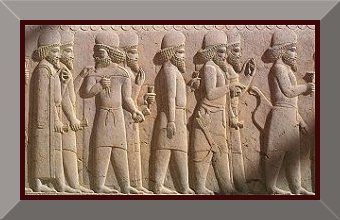
          How dissimilar is the dresscode of ancient people of the region compared to conservative Islamic dress code?


          if you compare ancient persian reliefs with other liberal cultures like Greeks, Indians, etc. (open displays of nudity, and other degenerate social behavior), etc. you can see they likely had a conservative type of culture similar to what you have today and what Muslims have.

          You can say Islam is ''universal'' but in the end of the day it's a religion originally meant for Arabs (written in Arab language, has an Arab prophet, God has an Arabic name, etc. etc. as far as universalism, non-Arabs directly or indirectly assimilate into Arab culture/lifestyle/identity, etc.)

          As far as universal or provincial, really no different from Zoroastrianism or Hinduism, Judaism, etc. all region/culture specific religions. Islam is just more ''universal'' due to expansion, an expansion only possible due to that ''Fighting for God'' (Islam and Christianity) is always a far bigger motivation than going on conquests for financial rewards (Cyrus, Darius, Xerxes etc. expansions were mostly non-religios motivated).

          can a (neutral) universal religion exist? possibly not. It has to come from somewhere, born into/along a culture.

          The advantage of Islam is it has bigger following now. Being part of a 'bigger gang' is better than going on your own I guess.

          Comment


          • #80
            Originally posted by salman47 View Post
            The high fertility rate does not matter, because most of them in Turkey do not identify as Kurds at all!
            In Fact the Turkish Kurds have become like the 'Pathans'. Can't even say hello in Kurdish, but somehow they are Kurdish.
            They have become the same subjects as our Northern Iranic cousins, who became Turks.
            Even if most Kurds oppose Kurdistan, they at least have separatist parties and militant organizations. At least a significant minority of Kurds support independence. Pak Pashtuns are complete cuckolds in comparison to them.

            Comment


            • #81
              Originally posted by Firdousi View Post
              He is a Salafi. Most of Salafis are not radical and violent people. They are rather like those Jewish orthodox who prefer to isolate themselves and not to get involved too much in the affairs of the modern world. Instead they focus on spiritual purification.

              Zulfiqar once told us about an Islamic practice. Some sort of Islamic seclusion. I don't remember the name, but its a common practice among Salafis.
              I'm not really a Salafi though. More inclined to the Panjpiri da'wa.

              I'd say the difference is that while Salafism wants a general return to practice and conception of Islam from the earliest Muslim generation wanting to "purify" Islam of all innovations especially Sufism, the Panjpiri da'wa is more focused on the issue of Tawhid and fighting popular manifestations of Shirk such as grave veneration and amulets. In the analogy of politics, we Panjpiris are more of a single-issue party, while Salafis have a broad platform and campaign on many different issues.

              Hence, the Panjpiri da'wa is a lot more open to Sufism than the Salafis are. Furthermore, because it is a da'wa that is focused on Tawhid, it is a lot more zealous in condemning Shirk and doesn't get consumed by other issues that have come to distinguish Salafism from mainstream practice of Islam.

              One of my major criticisms of Salafism is its over emphasis on scholasticism to the detriment of other dimensions of Islam, such as Tabligh, Worship, Dhikr, Politics and Mysticism. Salafis want everyone to focus most on acquiring knowledge, and so they are very much a scholarly-based community. To them the Aalim is the main point of reference.

              Believe it or not, Salafism, despite its desire to return to the 'Salaf', has a very modernist flavor to it. After all, the ones who revived the Salafi philosophy in modern times were modernists like Muhammad Abduh and Rashid Rida. Going to a Salafi dars is very much like sitting in at a university lecture. It's a very somber atmosphere, with the "shaikh" speaking in his monotone voice discussing some point of knowledge in the style of a professor. There is no charisma and sense of ecstasy, unlike in the preaching sessions of the Panjpiris. In our gatherings there is a spiritual energy, and the crowds are vocal in praising God (Allahu Akbar, Subhan Allah, Ma Sha Allah etc.), the style of preaching is for the commoner, unlike the Salafi lecture which to understand and appreciate you have to be a student of knowledge at some level.
              [SIZE="4"][FONT="HardTimesW01-Roman"]My Blog
              [url]www.salvation-from-hell.com[/url][/FONT][/SIZE]

              Comment


              • #82
                Originally posted by UnknownUser View Post
                It's unlikely the ancients were praying to a physical thing like fire. Fire most likely symbolized energy to them.
                It's the same argument of idol worshipers. They claim not to be worshiping the graven image itself, only what it symbolizes.

                The "New Age" idea that God is energy is diametrically opposed to Abrahamic monotheism. We believe in a very Personal and Conscious Deity that is both Immanent and Transcendent. We don't conceive of Him being made of some substance or otherwise as a material Being. Energy is something that is part of our created world, but God is beyond our World, beyond matter and energy.

                You can say Islam is ''universal'' but in the end of the day it's a religion originally meant for Arabs (written in Arab language, has an Arab prophet, God has an Arabic name, etc. etc. as far as universalism, non-Arabs directly or indirectly assimilate into Arab culture/lifestyle/identity, etc.)
                I take exception with your assertion that Islam is originally meant for Arabs. Yes, Islam's Revelation is in Arabic, but that hardly concludes that the Religion itself is primarily meant for Arabs. A lot of the subjects we study, especially related to science, are usually imparted in the English language, but does anyone conclude from it that learning these subjects is primarily for Anglo-Saxon people?

                In Islam there is a concept of chosen people, but unlike Judaism, it is not static. If the "chosen people" prove to be unfaithful, God transfers His favoring of them to a new people more deserving of it. The original chosen people were the Israelites. When the Arabs were favored with Islam, they too enjoyed many divine blessings. But when they became corrupt, I argue that the "chosen people" were shifted to the East, especially the Iranians.

                Based on this Hadith:

                Narrated Abu Hurairah:
                "Some people among the Companions of the Messenger of Allah (ﷺ) said: 'O Messenger of Allah! Who are these people whom Allah mentioned, that if we turn away they would replace us, then they would not be like us?'" He said: "And Salman was beside the Messenger of Allah (ﷺ), so the Messenger of Allah (ﷺ) patted Salman's thigh and said: 'This one and his companions, and by the One in Whose Hand is my soul! If faith were suspended from Pleiades, then it would be reached by men from Persia.'"

                Islam is just more ''universal'' due to expansion
                Islam was expressed as a universalist creed from its very inception, going back to the Meccan phase of weakness. Among the Prophet's companions were many blacks, slaves, and non-Arabs. One could argue that although the language of Islam's Revelation is Arabic, it is simply a continuation of the message and ideas of the Hebrew Revelation to the Israelites. The Quran itself says that its function is to serve as Muhaymin (guardian) of that which was revealed in the previous Scripture (Sura 5:48)

                The advantage of Islam is it has bigger following now. Being part of a 'bigger gang' is better than going on your own I guess.
                The advantage of Islam is that on every level it is superior to Zoroastrianism, as Firdousi himself has testified, someone intimately acquainted with Zoroastrianism and in a position to compare and contrast the two religions.

                Its not a matter of Zoroastrianism having a smaller following. Zoroastrianism has absolutely no dynamism anymore, it has been defeated on every front by Islam, today only practiced in a ritual sense by a tiny ethno-religious community, more as a cultural tradition than as an actual Religious path meant for personal salvation of the soul.
                [SIZE="4"][FONT="HardTimesW01-Roman"]My Blog
                [url]www.salvation-from-hell.com[/url][/FONT][/SIZE]

                Comment


                • #83
                  Originally posted by Sarbani View Post
                  Even if most Kurds oppose Kurdistan, they at least have separatist parties and militant organizations. At least a significant minority of Kurds support independence. Pak Pashtuns are complete cuckolds in comparison to them.
                  I have a lot of Kurdish friends here in Turkey. All of them(except one) are 'Native Turkish' speakers, and have broken level fluency(almost none) in Krudi(just like the way 'Western Scholars' speak Ancient non existent languages).
                  This one friend of mine is really interesting. He is a Native Kurmanji Kurdi speaker by Birth(unlike the others). And he was subject to Racism in 'Turkish' parts of Turkey, just because he couldn't speak Turkish.
                  دا اوړاندیځ خبره به په پښتو کښې وکم: دې اکه کردې دې چه کم ته یادۍ. لکه دې اغې بیلو کردی ډلو سرې ملاتړې کئ!

                  Comment


                  • #84
                    Originally posted by Sarbani View Post
                    Even if most Kurds oppose Kurdistan, they at least have separatist parties and militant organizations. At least a significant minority of Kurds support independence. Pak Pashtuns are complete cuckolds in comparison to them.
                    Suppose if a ‘Pashtunistan’ is created. Will it make any practical change in the life of the ordinary Pashtun? Will it uplift their economic situation? Arguably, it may end up doing the exact opposite. Where is the charm in an ethnic state? The modern states are so similar in structure and function, that their ‘ethnic’ differences are merely superficial. What really matters is the policy of the State, both internal and external. In practical terms all it boils down to is language. If you want to create a separate state where you official language is Pashto instead of Urdu, that doesn’t seem like much of a reason to ask people to start sacrificing their lives (there has to be a popular will where people are willing to do so in any movement for a separate state, especially these days).

                    Does the movement for Pashtunistan have any actual ideology behind it? The movement for a Jewish state ‘Zionism’ certainly did, which explains its success and vibrance. Not to sound harsh, but does Pashtun ethnic identity even have a strong enough cultural narrative in terms of accomplishments and contributions to warrant it being considered something ‘special’ and ‘unique’ in the vast galaxy of ethnicity? When Afghan Pashtuns have failed to stabilize a country where they are clearly the majority, a country embroiled in a serious civil war, wracked by corruption with no real State institutions, what makes you think the Pashtuns on this side of the Durand Line will fare any better?
                    Creating a new state isn’t a piece of cake. Your society is largely uneducated and illiterate. You want to emulate the success of Jewish Israel, but the Jews are a highly educated, intellectual, and literate group, with a vibrant political culture. The Pashtuns, in their present condition, emulating that success is nothing but a joke. I simply am not convinced that Pashtuns are warranted a separate state based on their ethnic identity. Any compelling intellectual arguments that prove otherwise?
                    [SIZE="4"][FONT="HardTimesW01-Roman"]My Blog
                    [url]www.salvation-from-hell.com[/url][/FONT][/SIZE]

                    Comment


                    • #85
                      Originally posted by UnknownUser View Post
                      It's unlikely the ancients were praying to a physical thing like fire. Fire most likely symbolized energy to them. Everything in the physical universe is a product of energy (matter turning into energy and vice versa) in some way or shape. Fire can represent that energy, how do we else ultimately define God, if we can? if God created light and darkness, then a fire temple represents merely something symbolic, just like a Church or Mosque is called ''House of God''.

                      I am not advocating ''destruction'' of Islam btw. Actually most Eastern cultures have values that are more or less similar with Islamic values. Ancient Zoroastrians would've been not much disimilar to Muslims, Orthodox Christians, etc. except their rituals and philosophy were different. Although they did pray 5 times a day, and some other things similar to Islam.

                      How dissimilar is the dresscode of ancient people of the region compared to conservative Islamic dress code?


                      if you compare ancient persian reliefs with other liberal cultures like Greeks, Indians, etc. (open displays of nudity, and other degenerate social behavior), etc. you can see they likely had a conservative type of culture similar to what you have today and what Muslims have.

                      You can say Islam is ''universal'' but in the end of the day it's a religion originally meant for Arabs (written in Arab language, has an Arab prophet, God has an Arabic name, etc. etc. as far as universalism, non-Arabs directly or indirectly assimilate into Arab culture/lifestyle/identity, etc.)

                      As far as universal or provincial, really no different from Zoroastrianism or Hinduism, Judaism, etc. all region/culture specific religions. Islam is just more ''universal'' due to expansion, an expansion only possible due to that ''Fighting for God'' (Islam and Christianity) is always a far bigger motivation than going on conquests for financial rewards (Cyrus, Darius, Xerxes etc. expansions were mostly non-religios motivated).

                      can a (neutral) universal religion exist? possibly not. It has to come from somewhere, born into/along a culture.

                      The advantage of Islam is it has bigger following now. Being part of a 'bigger gang' is better than going on your own I guess.
                      That subject has been discussed several times. I used to believe Islam is an Arabic faith but I dont think thats true. Several well educated members such as Iblis, Zulfiqar or Khushal proved me wrong. Islam is an universalist faith. Actually its the most universalist faith ever created. Brotherhood (at least on paper) among Muslims is much stronger than any other faith. Period.

                      Dont kid yourself, bro. Zoroastrism is an inferior faith. Thats why when Arabs took over Zoroastrism just collapsed. I mean this is something most of Persian, Tajik and Kurdish nationalists cant digest basically because it contradicts their narrative regarding Islam being an invader ideology imposed on them by foreigner Arabs. This is BS. Most of Zoroastrians, first in the cities and then in the rural areas, happily embraced Islam. Actually most of our forefathers left Zoroastrism under the rule of native Iranian and Persianized Turkic dinasties such as Ghaznavids, Samanians, Tahirids, Saffarids or Khwarezmids so how can we consider this an imposition?

                      Zoroastrism is doomed. It cant become the main religion in our countries because most of his teachings are outdated and absurd in the modern world. On the other hand, Islam has a rich heritage, with centuries of philosphy, jurisprudence and experience to help people deal with their daily problems. Just few deluded nationalist morons believe they can bring the teachings of guy who as far as I know probably didnt even exist!!

                      Regarding the rest of your comment, its not even worth my reply. Its pretty obvious every region, country has different cultures and ways of life. That cultural and moral relativism of yours aint going to work with me, dude.
                      "For thirty years, I endured much pain and strife,
                      I awaken the Ajam by this Persian [language]. "

                      -Ferdowsi.

                      Comment


                      • #86
                        Originally posted by ذو الفقار View Post
                        I'm not really a Salafi though. More inclined to the Panjpiri da'wa.

                        I'd say the difference is that while Salafism wants a general return to practice and conception of Islam from the earliest Muslim generation wanting to "purify" Islam of all innovations especially Sufism, the Panjpiri da'wa is more focused on the issue of Tawhid and fighting popular manifestations of Shirk such as grave veneration and amulets. In the analogy of politics, we Panjpiris are more of a single-issue party, while Salafis have a broad platform and campaign on many different issues.

                        Hence, the Panjpiri da'wa is a lot more open to Sufism than the Salafis are. Furthermore, because it is a da'wa that is focused on Tawhid, it is a lot more zealous in condemning Shirk and doesn't get consumed by other issues that have come to distinguish Salafism from mainstream practice of Islam.

                        One of my major criticisms of Salafism is its over emphasis on scholasticism to the detriment of other dimensions of Islam, such as Tabligh, Worship, Dhikr, Politics and Mysticism. Salafis want everyone to focus most on acquiring knowledge, and so they are very much a scholarly-based community. To them the Aalim is the main point of reference.

                        Believe it or not, Salafism, despite its desire to return to the 'Salaf', has a very modernist flavor to it. After all, the ones who revived the Salafi philosophy in modern times were modernists like Muhammad Abduh and Rashid Rida. Going to a Salafi dars is very much like sitting in at a university lecture. It's a very somber atmosphere, with the "shaikh" speaking in his monotone voice discussing some point of knowledge in the style of a professor. There is no charisma and sense of ecstasy, unlike in the preaching sessions of the Panjpiris. In our gatherings there is a spiritual energy, and the crowds are vocal in praising God (Allahu Akbar, Subhan Allah, Ma Sha Allah etc.), the style of preaching is for the commoner, unlike the Salafi lecture which to understand and appreciate you have to be a student of knowledge at some level.
                        Hmm, good to know. You should open a new thread about all these things, dude. I mean most of people dont even know the difference between Hanbalism, Wahabbism, Salafism or Islamism.
                        "For thirty years, I endured much pain and strife,
                        I awaken the Ajam by this Persian [language]. "

                        -Ferdowsi.

                        Comment


                        • #87
                          Originally posted by ذو الفقار View Post
                          Suppose if a ‘Pashtunistan’ is created. Will it make any practical change in the life of the ordinary Pashtun? Will it uplift their economic situation? Arguably, it may end up doing the exact opposite. Where is the charm in an ethnic state? The modern states are so similar in structure and function, that their ‘ethnic’ differences are merely superficial. What really matters is the policy of the State, both internal and external. In practical terms all it boils down to is language. If you want to create a separate state where you official language is Pashto instead of Urdu, that doesn’t seem like much of a reason to ask people to start sacrificing their lives (there has to be a popular will where people are willing to do so in any movement for a separate state, especially these days).

                          Does the movement for Pashtunistan have any actual ideology behind it? The movement for a Jewish state ‘Zionism’ certainly did, which explains its success and vibrance. Not to sound harsh, but does Pashtun ethnic identity even have a strong enough cultural narrative in terms of accomplishments and contributions to warrant it being considered something ‘special’ and ‘unique’ in the vast galaxy of ethnicity? When Afghan Pashtuns have failed to stabilize a country where they are clearly the majority, a country embroiled in a serious civil war, wracked by corruption with no real State institutions, what makes you think the Pashtuns on this side of the Durand Line will fare any better?
                          Creating a new state isn’t a piece of cake. Your society is largely uneducated and illiterate. You want to emulate the success of Jewish Israel, but the Jews are a highly educated, intellectual, and literate group, with a vibrant political culture. The Pashtuns, in their present condition, emulating that success is nothing but a joke. I simply am not convinced that Pashtuns are warranted a separate state based on their ethnic identity. Any compelling intellectual arguments that prove otherwise?
                          Nobody cares about Pashtunistan anymore but few deluded Pashtun nationalists living in Europe. Ghani, a pretty well known Pashtun nationalist, has been ruling Afghansitan for three years now.. have you ever heard him bringing this issue up? No. He knows its a lost cause. A dead horse.

                          Jews are the most successful and admirable people in the world. Especially Askenazi Jews. Its hilarious how so many people look down on Jews although they are by far superior (as a collective I mean) than most of the people around the world.
                          "For thirty years, I endured much pain and strife,
                          I awaken the Ajam by this Persian [language]. "

                          -Ferdowsi.

                          Comment


                          • #88
                            Originally posted by ذو الفقار View Post
                            Suppose if a ‘Pashtunistan’ is created. Will it make any practical change in the life of the ordinary Pashtun? Will it uplift their economic situation? Arguably, it may end up doing the exact opposite. Where is the charm in an ethnic state? The modern states are so similar in structure and function, that their ‘ethnic’ differences are merely superficial. What really matters is the policy of the State, both internal and external. In practical terms all it boils down to is language. If you want to create a separate state where you official language is Pashto instead of Urdu, that doesn’t seem like much of a reason to ask people to start sacrificing their lives (there has to be a popular will where people are willing to do so in any movement for a separate state, especially these days).

                            Does the movement for Pashtunistan have any actual ideology behind it? The movement for a Jewish state ‘Zionism’ certainly did, which explains its success and vibrance. Not to sound harsh, but does Pashtun ethnic identity even have a strong enough cultural narrative in terms of accomplishments and contributions to warrant it being considered something ‘special’ and ‘unique’ in the vast galaxy of ethnicity? When Afghan Pashtuns have failed to stabilize a country where they are clearly the majority, a country embroiled in a serious civil war, wracked by corruption with no real State institutions, what makes you think the Pashtuns on this side of the Durand Line will fare any better?
                            Creating a new state isn’t a piece of cake. Your society is largely uneducated and illiterate. You want to emulate the success of Jewish Israel, but the Jews are a highly educated, intellectual, and literate group, with a vibrant political culture. The Pashtuns, in their present condition, emulating that success is nothing but a joke. I simply am not convinced that Pashtuns are warranted a separate state based on their ethnic identity. Any compelling intellectual arguments that prove otherwise?
                            Well who knows!

                            1) Loy Afghanistan might bring stability back to the region(it lost since KP/Balochistan got separated by the Britons.)
                            2) Hopefully we'll stop killing each other for useless reasons.
                            3) There's a higher possibility we'll prosper if united.
                            4) whatever is wrong in Afghanistan/KP and Balochistan today is because of Durand Line. If it is removed, many problems will be solved.
                            5) The Muslim Brotherhood has kind of died(not saying Islam is bad.). It is just that no one cares anymore. Everyone is going through nationalism at the moment. Also I don't understand, when we Pashtun/Afghan raise our voices for a united Pashtunistan, suddenly we're silenced by everyone(Imam, Jumat Islami etc.) that "Nationalism is Haram". But when it comes to ither nations: Fully Halal.
                            Etc.. Etc..

                            Can create a thousand other Positive Reasons for a Loy Pashtunistan/Pakhtunistan.

                            P.S. About Muslim Brotherhood part:
                            In the 'Superficial Muslim Brotherhood' sphere, only the cases of Syria, Palestine, Iraq matter the most. Afghanistan, Pakistan, Rohingya, CAR, Kashmir, West China etc. Muslim issues are almost non-existent in that sphere.
                            Of course people know about most of the issues in the world, but let's be realistic in the Islamic Worldwide Brotherhood, 'Arabic' Issues are the most important issues and are given priority over any Ajam in the world.

                            Comment

                            Working...
                            X