Announcement

Collapse
No announcement yet.

Pakistani's low self worth

Collapse
X
 
  • Filter
  • Time
  • Show
Clear All
new posts

  • #31
    Alberuni says that Afghans are people akin to Hindus............pagans of Kafiristan have also been referred to as Hindus in various sources, due to lack of sufficient knowledge. Buddhists have also been referred to Hindus.

    There are two other sources which has clues about pre-Islamic religion of Afghans and it appears Afghans were following religion different from Hinduism. Ajā'ib al-makhlūqāt wa gharā'ib al-mawjūdāt says that Afghans worship a giant tree in had-i-Afghan. Worshiping trees is associated with Paganism. Hadud-i-Alam says that King of Nangarhar had Muslim, Hindu and Afghan wives......indicating that Afghans were distinct from Hindus and that those in Ningarhar and environs had not yet converted to Islam. Akhund Darweza (a tajik by origin) of later period says that Afghans say that they were never Hindus.
    Last edited by Samandri; 11-22-2016, 08:59 PM.

    Comment


    • #32
      Originally posted by Samandri View Post
      Alberuni says that Afghans are people akin to Hindus............pagans of Kafiristan have also been referred to as Hindus in various sources, due to lack of sufficient knowledge. Buddhists have also been referred to Hindus.

      There are two other sources which has clues about pre-Islamic religion of Afghans and it appears Afghans were following religion different from Hinduism. Ajā'ib al-makhlūqāt wa gharā'ib al-mawjūdāt says that Afghans worship a giant tree in had-i-Afghan. Worshiping trees is associated with Paganism. Hadud-i-Alam says that King of Nangarhar had Muslim, Hindu and Afghan wives......indicating that Afghans were distinct from Hindus and that those in Ningarhar and environs had not yet converted to Islam. Akhund Darweza (a tajik by origin) of later period says that Afghans say that they were never Hindus.
      FYI, tree worshipping is an integral part of Hinduism.
      Religious Trees & Their Significance in Hinduism | OnlineTemple Blog

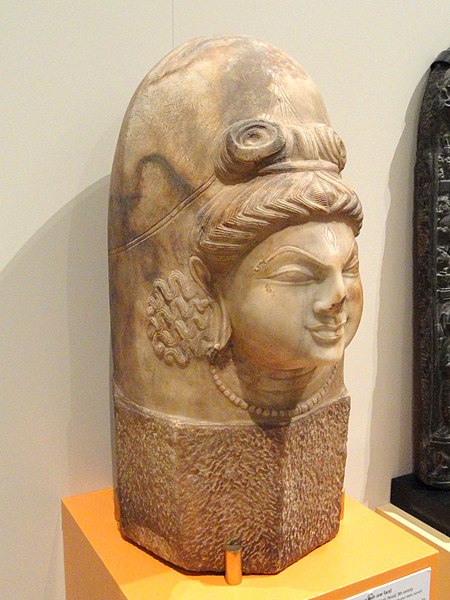
      Statues of Hindu gods like Ganesha, Shiva and Hanuman have been found all over Afghanistan.

      Comment


      • #33
        And also, for supposed confusion between Buddhist and Hindu made by writers of that time, Arabs of 8th century did not confuse between Hindu and Buddhist in Sindh. In the Chachnama, most of Sindh is said to be inhabited by Buddhist tribes who are contrasted with the Hindus, with whom they had enmity with.
        Last edited by Dovahkiin; 11-22-2016, 09:11 PM.

        Comment


        • #34
          Originally posted by Dovahkiin View Post
          Statues of Hindu gods like Ganesha, Shiva and Hanuman have been found all over Afghanistan.
          Only in Kabulistan region, which was under rule of Hindu Shahis. In the same region you will find Buddhist artifacts and monuments of the same period, in overwhelmingly larger number than Hindu's , indicating that population was largely Buddhist under Hindu Shahis.

          Agra city of India is founded by an Afghan sultan and Afghan monuments are found through out India, it doesnt mean Indian people are Afghans or India is an extension of Afghanistan.
          Last edited by Samandri; 11-22-2016, 09:16 PM.

          Comment


          • #35
            Originally posted by Samandri View Post
            Only in Kabulistan region, which was under rule of Hindu Shahis. In the same region you will find Buddhist artifacts and monuments of the same period, in overwhelmingly larger number than Hindu's , indicating that population was largely Buddhist under Hindu Shahis.

            Agra city of India is founded by an Afghan sultan and Afghan monuments are found through out India, it doesnt mean Indian people are Afghans or India is an extension of Afghanistan.
            Well, your example is not of religion so it is pointless to compare.
            In Rig Veda, many modern Afghan regions are mentioned especially Kabul, Kurram etc. rivers which are tributaries of the Indus.
            Many sources of that time mention them as Hindus, and many Hindu gods/statues are found in Afghanistan.

            Ganesha the elephant god from Kabul/Gardez


            Shiva's lingam from Afghanistan
            Last edited by Dovahkiin; 11-22-2016, 09:43 PM.

            Comment


            • #36
              Originally posted by Dovahkiin View Post
              Well, your example is not of religion so it is pointless to compare.
              In Rig Veda, many modern Afghan regions are mentioned especially Kabul, Kurram etc. rivers which are tributaries of the Indus.
              Many sources of that time mention them as Hindus, and many Hindu gods/statues are found in Afghanistan.
              There is another source "Sirat-ul-ard" by Arab geographer ibni-Hawkal, written in 977 AD..........it says "Kabul is a town with a very strong castle, accessible only by one road : this is in the hands of Musalman ; but the town belongs to the infidel Indians" (English trans. by William Ouseley, p-226)

              From Ibn-i-Haukal account it appears that Hindus/Indians were merely ruling a foreign place just like Turks were ruling a foreign place India in 12th and 13th century. The indigenous population of Kabulistan was non-Hindu, many of them had even converted to Islam.

              The same source , after talking about Kabul, comes to Ghor and says "Ghor is a mountainous country. In the places above it there are Musalmans ; but Ghor is mostly inhabited by infidels. Here are great mountains . The dialect of Ghor is like that of Khorasan"

              So it agrees with you that most of its inhabitants were infidels (religion is not mentioned). But Hadud-i-Alam, a Persian source from Juzjan (Northern Afghanistan) is much more reliable about the demography of Ghor than Arab geographer.
              Last edited by Samandri; 11-23-2016, 12:09 AM.

              Comment


              • #37
                Originally posted by Azmal View Post
                Tens of skin color or race threads here in this forum by Pakis or all the news items and youtube videos by Pakistan like these.


                https://www.youtube.com/watch?v=8_BZZzRSJyY
                or
                https://www.youtube.com/watch?v=Fiuys9jBYD8


                Do Arabs HATE PAKISTANi?
                https://www.youtube.com/watch?v=VbyoXbZUNcM


                Proves how worthless Pakistanis think of themselves…especially since a person or people that need the perception of others to evaluate their identity lacks self-esteem, self-respect and most of all is a slave of what others think of them. No wonder Pakistanis hates us Afghans--bc they need our approval--like a child needs parent's... in order to justify their self worth----Pakis are telling themselves---look we are burning a fire in land and People of Ghanzavi, Goris, Lodis, Suri, durranis and rest...we are not good for nothing people that come to being 70 years ago.lol


                On other hand, Afghans—not just Pashtuns but all Afghans… no matter how uneducated, ill-informed or even ignored he is, will always think of him/herself as king/queen. Specially our village people, I have seen this in recent arrival to US…there high self-esteem and confidence (I admit when deal with recent arrival it gets annoying) but no matter how rich or power an Afghan will always act superior.
                Yeap you guys have such high self esteem that you come here for medical , education , business and millions of you were fed here. Everything from cement and steel to a bottle of Rooh afza is provided to you by Pakistan .

                These videos are done for fun and everyone does it. You must be day dreaming if you think a regional power like Pakistan needs approval from a nobody like Afghanistan

                International tourism, number of arrivals | Data

                Over 1 million foreign tourists visit Pakistan . How many visit Afghanistan? If anyone needs validation from anyone its you because the only foreign people you see are the american soldiers that walk all over your man ego and soverignity
                Last edited by Peshawer_222; 11-23-2016, 02:52 AM.

                Comment


                • #38
                  Originally posted by DaZahroJaam. View Post
                  manzareh and iblees are not afghans or 90% of afghans. you are all trash and all you do is talk about women or each other's skin colour. bloody termites.
                  Thats the only thing they can talk about .What else do they have to brag about . They certainly cant talk about winning nobel prizes or scientific research . They have to keep themselves busy in the past so as to not feel sorry about afghanistans present situation.

                  Comment


                  • #39
                    Originally posted by Shapur View Post
                    That's true but a persianised Pashtun would not identify as a Tajik, maybe Farsiwan or Herati, Mazari depending on where he lived unless he is mixed or completely assimilated to the point where he has no idea about his origins but most Pashtuns are recent migrants in the north so they know where they have come from.
                    That depends. Per se, not even Heratis consider themselves "Tajik" (we rather use the term "farsizabon", Persianspeaker and Pashtuns to us are "awghons"). But the thing is there are many Pashtuns in Herat (10-50%, who knows?), in many places they make up majority (Shindand, Thorgwhoondi, Islam Qali, Adraskan and Pashtun Zarghoon. There are also many Pashutns in Herat city and the rest of the districts).

                    My point is most of them are Persianspeakers. And believe me man, they are damn proud to be Heratis. According my own experience, most of Heratis, regardless being Tajiks or Pashtuns, don't care so much about ethnicity. Herati is a cultural term and most of Heratis are fine with it. Few Pashtun Heratis are quite annoying, because they are always bragging about their "Pashtuniyat" despite being unable to speak one single word of Pashto. But most of them don't really care. I must point out that there is a huge minority of Pashtuns who consider themselves Tajik or despise/make fun of Pashtun tribal ways. They even removed "-zai" from their surnames (one close friend of my dad, his surname was popalzai but he removed the zai). I know also some Pashtun guys from Gozara who changed his surname from Jamalzai into Rahimi. So its complicated, dude.
                    "For thirty years, I endured much pain and strife,
                    I awaken the Ajam by this Persian [language]. "

                    -Ferdowsi.

                    Comment


                    • #40
                      Originally posted by Samandri View Post
                      Ghaznavids were not persianized or any thing like that, Farsi was their court language just like it was court language of Ahmad Shah Abdali. Sebuktagin was born in modern day Kyrgyzstan.

                      Although Ghurids claim descent from mythological ruler of Iran, Zohak bin Tazi , but some of the dynasties in India and elsewhere have also done the same to make their genealogy appear illustrious. Moreover Zohak bin Tazi was Syrian Arab in legend. They were certainly speaking another language and their culture , life style was very different and distinct from Persians/Iranians. They were like Burkis and Gibaris of Pashtun belt. Gibaris ruled Swat and Bajaur before arrival of Afghans. They had their own language called Gibari but are put in category of Tajiks. "Dihgan" Shilmanis of Peshawar valley (who were subjects of Gibaris) are also categorized as Tajiks and their native place was in Kurram. Remnants of Gibaris nowadays speak Pashto, same is the case with Shilmanis who can be found in Khyber agency.

                      What is called "Hindu" in Utbi and Bayhaqi's history, was Buddhist.......the term was in usage for infidels....moreover they have also used the term for faithless people.....the ruler of Ghor was Muhammad ibn-i-Suri, a Muslim, yet he is called Hindu by Utbi out of contempt. Ghor had Muslims as well as non-Muslims as evident from 10th century source Hadud-i-alam. The Kafirsitanis have also been referred to as Hindus by some sources. No traces of Hindu monuments can be found in Ghor, only Buddhist.
                      Samandri Khan, Ghaznawids were heavily Persianized. The were patrons of Persian culture. Despite being Turks their contributions to Persian Heritage is far bigger and deeper than the ethnically Persian Shia Buyids, who at the time ruled over large parts of modern Iraq, Syria and Western Iran.

                      Ghaznawids, just like Khwaremzsha, Seljuqs, Safavids or Qajars, were an offshoot of Persian civilization.

                      It seems to be a "fact" that most of ancient Ghoryans were not Zoroastrians but rather Hindus or Buddhist. But they were ethnically Iranian and at the end of the day since they became heavily Persianized and made huge contributions to Persian culture, they could be considered more part of the "Perso-Tajik" history than any other.
                      "For thirty years, I endured much pain and strife,
                      I awaken the Ajam by this Persian [language]. "

                      -Ferdowsi.

                      Comment


                      • #41
                        Originally posted by Samandri View Post
                        There is another source "Sirat-ul-ard" by Arab geographer ibni-Hawkal, written in 977 AD..........it says "Kabul is a town with a very strong castle, accessible only by one road : this is in the hands of Musalman ; but the town belongs to the infidel Indians" (English trans. by William Ouseley, p-226)

                        From Ibn-i-Haukal account it appears that Hindus/Indians were merely ruling a foreign place just like Turks were ruling a foreign place India in 12th and 13th century. The indigenous population of Kabulistan was non-Hindu, many of them had even converted to Islam.

                        The same source , after talking about Kabul, comes to Ghor and says "Ghor is a mountainous country. In the places above it there are Musalmans ; but Ghor is mostly inhabited by infidels. Here are great mountains . The dialect of Ghor is like that of Khorasan"

                        So it agrees with you that most of its inhabitants were infidels (religion is not mentioned). But Hadud-i-Alam, a Persian source from Juzjan (Northern Afghanistan) is much more reliable about the demography of Ghor than Arab geographer.
                        This was the quote

                        "Kábul has a castle celebrated for its strength, accessible only by one road. In it there are Musulmáns, and it has a town, in which are infidels from Hind."[13]

                        — Istahkrí, 921 AD

                        Now, Al-Beruni mentions Afghans as Hindus and part of Western India or Frontier of India so Hind could either be referring to Kabul Shahi rulers of Afghanistan or Afghans themselves while Muslims might be the invading Turks.

                        "Al Beruni mentions the Afghans once (ed Sachau, I 208) saying that in the western mountains of India live various tribes of Afghans who extend to the neighbourhood of the Sindh (ie Indus) valley. Thus in the eleventh century when the Afghans are first mentioned, they are found occupying the Sulaiman Mountains now occupied by their descendents, the very tribes which the advocates of the exclusive claims of the Durannis will not admit to be true Afghans. Al Beruni no doubt also alludes to them in the passage (loc. Cit .p 199) where he says that rebellious savage races, tribes of Hindus, or akin to them inhabit the mountains which form the frontier of India towards the west.[6]"

                        "The most explicit mentioning of the Afghans appears in Al- Baruni’s Tarikh Al-Hind (eleventh century AD). Here it is said that various tribes of Afghans lived in the mountains in the west of India. Al Baruni adds that they were savage people and he describes them as Hindus.[7]"

                        Ghorians have been mentioned as Persianized Hindus who were converted by the invading Ghaznawi Turks.

                        "The region had previously been conquered by Mahmud of Ghazni, and the population converted to Islam.[11]
                        It was also the last stronghold of an ancient religion professed by the inhabitants when all their neighbors had become Muhammadan. In the 11th century AD Mahmud of Ghazni defeated the prince of Ghor Ibn–I-Suri, and made him prisoner in a severely contested engagement in the valley of Ahingaran. Ibn-I-Suri is identified a Hindu by the author, who has recorded his overthrow.[12]"

                        Also the Ajā'ib al-makhlūqāt wa gharā'ib al-mawjūdāt mentioning that Afghans worship a giant tree in Had-i-Afghan might be sort of famous Hindu ritual of worshipping Banyan Tree.

                        The Sanctity of Banyan Tree in Hinduism - Sanskriti - Indian Culture

                        Whether Afghans were converted to it by their Kabul Shahi rulers or not is unclear.

                        What I don't get, is why would Arab historians use Hindu and Buddhist interchangeably when they differentiated between both very clearly in the same time period at Sindh. In Chachnama, Sindh is mentioned as being majority Buddhist and are being contrasted with the Hindus by the Arab writers of that time. Therefore, I don't think Arab historians used Buddhist and Hindu interchangeably and used Hindu in Afghan's case for actual Hinduism not Buddhism.
                        Last edited by Dovahkiin; 11-23-2016, 10:06 AM.

                        Comment


                        • #42
                          ^ Its Budhists who worship a single large tree and from Ajaib-ul-makhluqat it appears that Afghans were not just worshiping all or regular trees but single giant tree. Bodhi Tree is said to be the tree under which Budha attained enlightenment. Now interestingly a Bodhi tree also exists in Sri Lanka , a stronghold of Buddhism, and other might have existed in had-i-Afghan.

                          Bodhi Tree - Wikipedia

                          Hindus would worship every damn thing on earth and worshiping trees is not central theme of their religion at all. Concept of worshiping holy trees existed in pagan religions all around the world. The concept of Chrismis tree has roots from paganism.

                          Comment


                          • #43
                            And Turks in these parts were foreigners from Central Asia just like Indians. The majority of population of Kabul-Kunar-Nangarhar region in that time appears to be non-Afghan , consisting of people akin to Tajiks , Dards, Nuristanis etc and many of them must have converted to Islam.

                            Here is description of Kabul from Hudud-i-Alam "" a borough possessing a solid fortress known for its strength. Its inhabitants are Muslims and Indians , and there are idol-temples in it. The royal power of Raja of Qannauj is not complete untill he has made a pilgrimage to those idol-temples , and here too his royal standard is fastened."
                            Last edited by Samandri; 11-23-2016, 07:25 PM.

                            Comment


                            • #44
                              Originally posted by Samandri View Post
                              And Turks in these parts were foreigners from Central Asia just like Indians. The majority of population of Kabul-Kunar-Nangarhar region in that time appears to be non-Afghan , consisting of people akin to Tajiks , Dards, Nuristanis etc and many of them must have converted to Islam.

                              Here is description of Kabul from Hudud-i-Alam "" a borough possessing a solid fortress known for its strength. Its inhabitants are Muslims and Indians , and there are idol-temples in it. The royal power of Raja of Qannauj is not complete untill he has made a pilgrimage to those idol-temples , and here too his royal standard is fastened."
                              what happened to all the turkic blood in India where did it all go? I never seen a turkic pakistani or indian muslim in apperance.

                              Comment


                              • #45
                                Originally posted by Kakar-Wardak View Post
                                what happened to all the turkic blood in India where did it all go? I never seen a turkic pakistani or indian muslim in apperance.
                                There is no trace of Turkic blood in the subcontinent, only Dravidian blood with some rape blood of Indo-Aryan invader.

                                Babur invaded the subcontinent with only several thousand Turks. Homayoun reconquered what Babur had with just a few thousand Persians loaned to him from Safavids. Turks and Persians serving Moghals did not settle in India, they made their money and left. All the new towns and cities founded by Moghals were built using Indian labourers and then settled by natives. Just the city designs and architecture were devised by foreigners.

                                Moghals and other Turks did not permanently settle in one place, they were mostly on the move travelling in a mobile tent city which by the time of Aurangzeb became overwhelmingly populated by natives, which is the reason why Urdu developed and became the lingua-franca of the Moghals after Aurangzeb died.

                                All Turkic and Afghan invaders of the subcontinent came in such small numbers that they had no impact on the demographics except in the very fringe northwest, which is today's lowland areas of Khyber-Pakhtunkhwa like Peshawar where the older Indic inhabitants were largely displaced by incoming Pashtuns.

                                Everywhere else in the subcontinent the smelly people are the same smellies as they have been for thousands of years.

                                The only foreign people in the entire subcontinent are the Parsis but today even they have become mostly Indianized. The only thing they have kept which is still unique to them is their religion. But their blood is mostly Indian now.
                                Long Live Baloch Freedom Struggle Until Victory!
                                sigpic
                                Long Live Baloch Freedom Struggle Until Victory!

                                Comment

                                Working...
                                X