Announcement

Collapse
No announcement yet.

Poverty In Afghanistan.

Collapse
X
 
  • Filter
  • Time
  • Show
Clear All
new posts

  • Poverty In Afghanistan.

    Rural poverty in the Islamic Republic of Afghanistan

    Afghanistan is one of the poorest countries in the world. Since the Soviet invasion in 1979, it has been the scene of a series of conflicts that have continued for three decades.

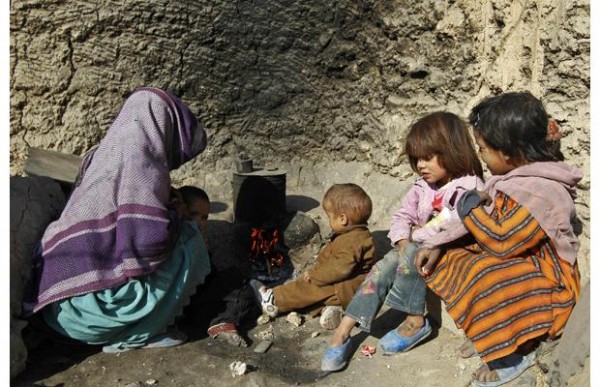
    Poverty in Afghanistan is widespread throughout rural and urban areas. The government estimates that 42 per cent of the country's total population lives below the national poverty line. Another 20 per cent of the people live just above that line and are highly vulnerable to the risk of falling into poverty.

    Afghan households tend to be large. They include numerous children and several generations that share the same dwelling. Agriculture is traditionally the major activity for a large portion of the population, but the sector has suffered from nearly 30 years of conflict, low investments and natural disasters. The average size of landholdings is small, and as a result agriculture is rarely the main source of food or income. About two thirds of rural households own some livestock, and farmers also sell their labour.

    Who are Afghanistan's rural poor people and where are they?
    The incidence of poverty is more severe in rural areas. About 45 per cent of rural people and the nomadic Kuchi people are poor, as compared to 27 per cent of the urban population.

    The poorest rural people include small-scale farmers and herders, landless people and women who are heads of households. There are an estimated 1 million Afghan widows. Their average age is 35, and 90 per cent of them have an average of four or more children. Without the protection of a husband, widows suffer from social exclusion in Afghanistan's patriarchal society. Many widows have no choice but to become beggars.

    Children aged five or under are the most vulnerable segment of Afghan society. As many as 50 per cent of them suffer from chronic malnutrition.

    The estimated 1.5 million Kuchis are nomadic herders whose livelihood depends heavily on livestock and migration patterns. As a result of conflict and insecurity, in recent years 15 per cent of Kuchi families have been forced to settle because they have lost their livestock and migration routes. They are now among the poorest households in rural areas.

    Between 2002 and 2005 there was a major inflow of refugees returning to their homes. The flow has dwindled because of increasing insecurity, limited economic opportunities and limited access to basic social services. For people who have resettled after as many as two decades of exile, economic and social reintegration is a serious challenge. And internal displacement remains a problem. There are as many as 160,000 internally displaced persons, mainly in southern Afghanistan.

    Poverty varies significantly between provinces, from a poverty headcount of 10 per cent to more than 70 per cent. Poverty is most severe in the Northeast, Central Highlands and parts of the Southeast. The provinces of Daikundi, Badakhstan, Zabul and Paktika represent large pockets of poverty.

    Up to 70 per cent of Afghans are food insecure, according to the UN Food and Agriculture Organization, and high food prices have recently pushed millions into high-risk food insecurity.

    Why are they poor?

    A basic lack of resources affects the majority of Afghans who depend on agriculture for their livelihood. There is little arable land per capita, precipitation is scarse, and climatic conditions are difficult in many parts of the country. Since 1999, recurrent droughts have severly affected the livelihoods of rural households, which had already lost many of their assets.

    Despite significant improvements since 2001 in governance, social services and transport infrastructure, three decades of conflict have left most Afghans in conditions of hardship and insecurity. Much infrastructure remains to be reconstructed, and internal markets are still disrupted.

    Poverty in Afghanistan is closely related to:
    • the high illiteracy rate in rural areas, where 90 per cent of women and 63 per cent of men are unable to read or write
    • rural people's dependance on livestock and agricultural activities for at least part of their income
    • inadequate land ownership and access to land
    • lack of irrigation infrastructure

    Many rural households are poor because they have incurred heavy debts, or because they live in remote, disadvantaged areas, or because they have lost the male head of the household. Often one or more members of the households is disabled.
    I believe the sun should never set upon an argument.
    I believe forgiveness is the key to your unhappiness.


  • #2
    Suffering and Poverty in Afghanistan - YouTube

    Poverty is on the grow. 11 years of War has destroyed a lot.
    Last edited by Breshna; 10-09-2012, 08:22 PM.
    I believe the sun should never set upon an argument.
    I believe forgiveness is the key to your unhappiness.

    Comment


    • #3


      I believe the sun should never set upon an argument.
      I believe forgiveness is the key to your unhappiness.

      Comment


      • #4
        Britain built too much': Cash-strapped Afghanistan may shutter schools and clinics

        Get short URL
        email story to a friend print version
        Published: 28 September, 2012, 13:41


        TAGS:
        Children, Health, Military, UK, Afghanistan, Education


        AFP Photo / Aref Karimi


        RT on


        Dozens of UK-built schools and clinics in Afghanistan may be closed as the government cannot afford to maintain them, a confidential report revealed. They were built for a ‘hearts and minds’ campaign that cost the UK hundreds of millions of dollars.
        The report, acquired by the Guardian, was commissioned by the Afghan Helmand Provincial Reconstruction Team (PRT) and US General Charles Gurganus.
        Members of the British government’s Stabilisation Unit compiled the report this year by examining the construction projects completed in Helmand province, and comparing the costs to the province’s available budget.
        There is a "mismatch between the value of the assets and the Afghan government's ability to maintain them," the report said. It went on to claim that several of Helmand’s schools and clinics were constructed without proper consultations with local Afghan authorities, and with no plan for long-term sustainability.
        The British “had built too much” in Helmand in order to win the “hearts and minds” of Afghans, the report said.
        According to a UN report, Afghanistan’s southwestern Helmand province is the country’s largest single region, and the world’s biggest producer of opium.
        Since 2009, the British helped build 15 health centers and 26 new schools, and restored and reopened 86 older schools in Helmand.
        "We didn't think about how the Afghans would pay for it. But it was understandable. We wanted to show them what we could do for them, but without regard for sustainability," one official told the Guardian.
        Senior UK officials are currently working to identify which institutions can closed, and which are vital and must remain open. The exact number of closures needed is not yet known, but the report predicted that dozens of facilities in the province will be affected.
        The closures will likely come as a severe disappointment to the 1.4 million Afghans residing in Helmand.
        The UK's ambassador to Afghanistan Sir Richard Stagg told the Guardian that the overages were a result of Britain’s desire to show Afghans that they were "serious" about helping them: "We focused on the physical and visible rather than the human capital which would manage the country in the longer term.”
        "The challenge for Afghanistan now is not a lack of roads and school buildings. It is a lack of capacity in its governmental structures in particular to run the country,” he said.
        I believe the sun should never set upon an argument.
        I believe forgiveness is the key to your unhappiness.

        Comment


        • #5
          Afghanistan: Family-related determinants of poverty

          KABUL, - Family size and composition have strong economic and social consequences in Afghanistan, experts say.

          "The larger a family is the greater its vulnerability to poverty, illiteracy, food insecurity and other shocks," said Abdul Rahman Ghafoory, director of the government's Central Statistics Office (CSO).

          His analysis is based on a National Risks and Vulnerability Assessment (NRVA) which indicated there was an apparent correlation between poverty and household size.

          But others point to family composition as being a key determinant of poverty.

          "If large families have multiple able bodied working age members, and particularly working age men, then they are better placed to respond to risks and diversify livelihood activities," said Paula Kantor, director of the Afghanistan Research and Evaluation Unit.

          She said if a large family is comprised primarily of children and the elderly it could be more vulnerable to poverty.

          At least 70,000 households are headed by women, mostly widows, in Afghanistan, NRVA statistics show.

          "Households that are headed by women are usually poorer and more vulnerable than those headed by men," said Ghafoory, who also noted the social restrictions on the kinds of work women can do.

          "In the Afghan context, the absence of a male head of household can signify a highly vulnerable position of the household members in terms of income security and social protection," said NRVA.

          "Human rights deficit"

          Abject poverty is widespread and multidimensional in Afghanistan, according to a report by the UN Office of the High Commissioner for Human Rights.

          "Poverty is neither accidental, nor inevitable in Afghanistan: it is both a cause and consequence of a massive human rights deficit including widespread impunity and inadequate investment in, and attention to, human rights," said the 30 March report.

          At least nine million Afghans (36 percent of the population) live in absolute poverty, and five million "non-poor" live on 2,100 Afghanis (US$43) a month, according to NRVA figures.

          Three decades of conflict as well as factors such as illiteracy, poor health care and unemployment also stimulate poverty, experts say.

          "Poverty and joblessness have strong links to insecurity and war in this country," said Ghafoory, adding that many youths were joining criminal and insurgent groups out of desperation and joblessness.

          Afghanistan's unemployment rate is estimated by the Labour Ministry at over 40 percent and millions of young Afghan men travel abroad - legally or illegally - in search of work. In 2008 UNHCR said Afghan migrants in Iran send home up to US$500 million a year in remittances.

          Men generally have better opportunities than women, however, whose literacy, income and health indicators, and participation in decision-making, are far inferior to those of men.

          More men die in armed conflict than women but their deaths do not match the high number of women who die for lack of a decent health care system. Every day at least 48 mothers die of pregnancy-related complications, according to aid agencies.

          Population pressure?

          With virtually no welfare system, people seek protection in large and/or extended families where parents and the elderly rely on the young. Half of the country's population of 25 million was under 15, according to NRVA

          "Population dynamics, including growth rates, age structure, fertility and mortality, migration and more, influence every aspect of human, social and economic development," says the UN Population Fund.

          Afghanistan's annual population growth is estimated by CSO at over 500,000 but the country has few means of covering the basic needs of this growing population.

          Development projects tend not to factor in population growth, and there is virtually no government policy on birth control, according to experts and NGOs.

          "In order to reduce poverty we need to fairly distribute wealth and opportunities among citizens rather than overemphasizing population reduction," said Ghafoory.

          Average household size is 7-8 individuals and girls often marry before their legal age (16) and are usually seven years younger than their husbands, according to NRVA.

          "I find it hard to feed my children let alone help with their education, clothing, medical and other expenses," said Zarlashta, a mother of 10, whose husband died last year. Two of her eldest sons, Qudratullah 16 and Esmatullah 15, have quit education to work full time and support their younger siblings.
          I believe the sun should never set upon an argument.
          I believe forgiveness is the key to your unhappiness.

          Comment


          • #6
            Home » Afghanistan » Above 30% of Afghan population facing poverty: Officials

            Above 30% of Afghan population facing poverty: Officials

            By Ghanizada - Sun Oct 16, 10:57 pm


            Edited byGhanizada

            • Also Wrote


            Sunday, October 16, 2011 – Afghan government officials on the occasion of World Food Day on Sunday announced that more than 30% of the Afghan population live under the line of poverty.
            16 October has been named as the World Food Day by United Nation Food and Agriculture Organization on 1945, which is also equivalent to United Nations establishment.
            The United Nations assigned a new slogan “Investment in agriculture to improve food security” for the World Food Day.
            Mohammad Asif Rahimi, Afghan Agriculure Minister said, Afghanistan require at least $1 billion investment budget on Afghan agriculture sector on annual basis to prevent the poverty and hunger crisis in the country.
            According to statics by Afghan government, more than 90% of the annual income of Afghans are spent on food commodities.
            Afghan Agriculture Minister, Mr. Rahimi also expressed concerns over the reduction of agriculturural products in Afghanistan due to drought and Afghanistan’s dependency in global economy.
            He also said, more than 30% of the Afghan population are poor and are living under the line of poverty and require urgent assistance.
            Mohammad Asif Rahimi, Afghan Agriculture Minister said, based on the central statistics of Rural Development Ministry, more than 30% of the Afghan population are living with the poverty specifically during the winter times.
            This comes as Mohammad Karim Khalili, second deputy vice president urged the International Community to step up actions to prevent poverty and hunger in the country.
            Afghan government announced that more than 2 million Afghans are facing serious food shortages and require at least $142 million funds to fight drought in the country.
            I believe the sun should never set upon an argument.
            I believe forgiveness is the key to your unhappiness.

            Comment


            • #7
              Afghan families living in extreme poverty: 30,000 children dying

              by Sarah Jacobs


              February 19, 2012 | Filed under: Afghanistan,Featured,News | Posted by: MV Events


              Leila is watching her baby intently, as his mouth moves trying to swallow the small blob of yellow peanut paste Dr Tayab has spooned gently into his mouth.
              She sits on the floor of her one-room mud house and rocks his tiny, malnourished body on her lap. After a tense pause, the baby’s neck strains and he’s sick into a cloth the doctor holds up to his chin.
              Leila holds her bundled son, Mohammed, to her face and begins to cry. Her voice is desperate. “Every time he has food he is sick. I’m so scared he’s going to die.”
              She hides her face in the blankets wrapped around her son’s body, as Dr Tayab calmly prepares the next spoon of therapeutic food and begins the process again.
              Leila’s fear is well-founded. Last winter, she and her husband lost their last baby – she says because the winter was so cold. The year before, her other son fell ill with pneumonia and died within a few days.
              Her story is one you hear repeated across Afghanistan. More than half of the country’s families here live in extreme poverty, and this year a severe drought and high food prices have made it even harder for parents to afford enough food to feed their children properly.
              The destruction is shockingly visible. Driving through Balkh province in the north, frozen rocky ground has replaced last year’s cotton and wheat fields. In the homes, most families have little to give their children except for bread and tea. For as with Leila’s husband, any chance of finding work has disappeared with the crops.
              Food prices have also rocketed. The cost of wheat – the basic staple for most families – has increased by 60% since last year. Vegetables, pulses, milk or meat – foods that would give children the nutrients they need – are way out of reach for most.
              Huge progress has been made in Afghanistan over the past ten years, as the international community has pumped aid into the country. Child mortality has halved, with one in ten children now dying before the age of five, compared to one in five in 2001. Maternal mortality has also plummeted, from one mum in 11 dying from issues relating to pregnancy or childbirth, to one in 50.
              But these successes are under threat from the damage caused by malnutrition. More than 30,000 children already die every year in Afghanistan because they don’t get the nutritious food they need to survive. Weakened by relentless hunger, their immune systems collapse and they are unable to survive the basic diseases that finally kill them, like pneumonia or diarrhoea.
              Thankfully many malnourished children will survive – and get healthy again – especially if they’ve been able to get help from local health workers and doctors.
              But there is a crucial window to get help. If a child is malnourished before the age of two or in the womb – a result of pregnant women not eating enough nutritious food – the resulting damage is likely to last their whole lives. Their bodies and brains won’t develop properly, resulting in a condition called stunting. This leaves children physically shorter, with lower IQs, more likely to drop out of school early, and more likely to die. In Afghanistan, this is the case for a staggering three million children.
              According to Save the Children, nearly half a billion children’s lives will be blighted by malnutrition over the next 15 years if world leaders don’t act to tackle hunger. The good news, it says, is that the solutions are known, proven, and not expensive. Basic things like fortifying food – as we do routinely in rich countries, and making sure mums are breastfeeding properly, will save millions of lives. Now we need the political will to make it happen.
              Here in Afghanistan, much of the hope comes with a growing army of volunteer health workers, who are teaching mums the importance of breastfeeding, nutrition, family planning and safe childbirth.
              The challenges could seem overwhelming in a place where food is so scarce. But enter a smoky mud room in Balkh, and all that changes. Around the edge of the room sit 20 women and their children, listening to Masuri, an exuberant health worker trained by Save the Children, talk to them about cooking. Individually, each woman struggles to feed her family. But here each has brought one ingredient – carrots, rice, potatoes, egg, oil or salt – to the shared pot.
              In this village, under the beady eye of Masuri, the mums are able to cook regular, nutritious meals for themselves and their kids. One look at the chubby cheeks of their children and the possibility for Afghanistan’s future is clear.
              I believe the sun should never set upon an argument.
              I believe forgiveness is the key to your unhappiness.

              Comment


              • #8
                The only way to eradicate the poverty in Afghansitan is to learn from those who have already done so and have no poverty. The modern developed world is the model and the method is democracy, modern education and free market economy. These are the recipes.

                Comment


                • #9
                  model and the method is democracy, modern education and free market economy. These are the recipes.
                  hahhahaha yes dream on ...

                  Comment


                  • #10
                    Dear osho, I fear the prosperity of those you see s a model is based in part on the poverty of Your people!
                    Ա՜խ, ընկել եմ քար ու քարափ,
                    Իմ սրբություն, ե՛տ արի, ե՛տ,

                    Ես ծովակ եմ առանց կարապ,
                    Իմ էություն, ե՛տ արի, ե՛տ:

                    Ես անտառ եմ առանց եղնիկ
                    Իմ վեհություն, ե՛տ արի, ե՛տ:

                    Comment


                    • #11
                      Originally posted by osho View Post
                      The only way to eradicate the poverty in Afghansitan is to learn from those who have already done so and have no poverty. The modern developed world is the model and the method is democracy, modern education and free market economy. These are the recipes.
                      capitalism and education, is being utilised by the few for power of the many, in your idealised developed world, osho.
                      i love democracy and the freedom i have in a democracy, but there are other ingredients which need to be added to this recipe, such as compassion, awareness that we have an earth that needs to be cared for and evolution is not just of the physical, but also of consciousness.
                      this involves the realistaion that all human beings are equal and the need to be rid of the desire to control others.
                      unfortunately, there are those who are incapable of acknowledging that those who have different ideas, beliefs and lifestyles, are not inferior, but each have experiences and knowlege thereby, to contribute to the whole .

                      Comment


                      • #12
                        Originally posted by osho View Post
                        The only way to eradicate the poverty in Afghansitan is to learn from those who have already done so and have no poverty. The modern developed world is the model and the method is democracy, modern education and free market economy. These are the recipes.
                        you mean afghanistan should steal land from indigenous peoples, engage in wars abroad, take advantage of slave labor, and keep its own people stupid with shows like keeping up with the kardashwals to keep them from questioning reality? we know we have reached oshos dream of a liberal/democratic model based on kaffir ideals when an afghan can turn the channel to tolo-max to watch naked afghan women.

                        disclaimer: this isn't just a response to this one post by osho but the last few he has made, so excuse some of the off topic things here.
                        There are people today who think that admitting God’s absolute greatness decreases the value and importance of humans in the creation, as if God and mankind are rivals competing in greatness and power. Meanwhile I feel that whenever our perception of God’s greatness increases, with it we become greater, because we are the creation of a great God.

                        Sayyid Qutb

                        Comment


                        • #13
                          Originally posted by osho View Post
                          The only way to eradicate the poverty in Afghansitan is to learn from those who have already done so and have no poverty. The modern developed world is the model and the method is democracy, modern education and free market economy. These are the recipes.
                          Osho are you saying we should go and bully other countries and take

                          everything by Force?

                          Because that's how the West made it self.
                          I believe the sun should never set upon an argument.
                          I believe forgiveness is the key to your unhappiness.

                          Comment


                          • #14
                            I believe the sun should never set upon an argument.
                            I believe forgiveness is the key to your unhappiness.

                            Comment


                            • #15
                              www.youtube.com/watch?NR=1&v=m5D_rFHRG78&feature=endscreen

                              Its worst now in 2012 we have more kids on heroin.
                              I believe the sun should never set upon an argument.
                              I believe forgiveness is the key to your unhappiness.

                              Comment

                              Working...
                              X
