Announcement

Collapse
No announcement yet.

Pathans of Punjab

Collapse
X
 
  • Filter
  • Time
  • Show
Clear All
new posts

  • #16
    This is quite interesting to me as my grandfather from my dads side is a pathan from Jalandhar. He speaks Pashto, but it is very sloppy compared to my grandma from SWAT.
    He moved into Lahore during partition...
    My moms side on the other hand is quite different, one parent from jalalabad and other is qandahari.
    Now my dads parents live in California and my moms parents who are both Afghan born are living in pakistan

    Comment


    • #17
      Originally posted by PaXTooN View Post
      This is quite interesting to me as my grandfather from my dads side is a pathan from Jalandhar. He speaks Pashto, but it is very sloppy compared to my grandma from SWAT.
      He moved into Lahore during partition...
      My moms side on the other hand is quite different, one parent from jalalabad and other is qandahari.
      Now my dads parents live in California and my moms parents who are both Afghan born are living in pakistan

      In other words, you are gadwadation.
      [SIZE="4"][B][CENTER][URL="www.quranawsunnat.com"]www.quranawsunnat.com
      [/URL]
      [URL="www.youtube.com/Sangartube"]www.youtube.com/Sangartube
      [/URL][/SIZE]
      Mullah 4 Life! [/CENTER][/B]

      Comment


      • #18
        Lol @ gadwad -ation. Sounds funny.

        Comment


        • #19
          There are around 8 million pashto speaking pakhtuns in Panjab. Those who claim to be Pathans (and they are right) but can not speak pashto, include them then the number might be over 16 milllion. If you include those who migrated from Afghanistan during the last 20 years as refugees and now settled down in Panjab. the number will go much higher. The statistics of Panjab are not showing ethnic groups. There is no such ethnic population as Panjabis. Sikhs called theselves Panjabis and they are in East Panjab (India).
          Panjab (Pakistan) is a multi ethnic society.
          The end of Ignorance, is the beginning of Knowledge.
          Knowledge has no end. It keeps expanding into the infinity.

          Comment


          • #20
            You are wrong. I got punjabi pathan neighbors and they look pakthun as anyone.

            Comment


            • #21
              How do your genetics change if you move to a different place or speak a differen language.

              Anyway Pakhtuns are mixed and from diff races... Pakhtuns look different there is no set look. They can be dark/light ..big nose/ small nose. Chinky eyed/or not.

              Comment


              • #22
                Originally posted by unknownprince
                'Pathans' of punjab don't look pashtun at all. That's probably why they refer to themselves as pathan.

                I kind of wish maseed reinstated to tell you the truth

                By the way who appointed you to speak for all Pakhtuns where ever they live?

                Did some one asked your approval?
                The end of Ignorance, is the beginning of Knowledge.
                Knowledge has no end. It keeps expanding into the infinity.

                Comment


                • #23
                  I dont understand peoples views

                  what's the difference between Pashtuns who moved to Punjab, and India. And Pashtuns who moved to America and London? People are saying the ones who moved to India are not Pashtuns, but the ones insp the west are?

                  Comment


                  • #24
                    techinically (imran khan) is pathan of punjab, doesn't he look pashtun?? i agree there are some who dont, but many do

                    Comment


                    • #25
                      Pathans are Punjabies anyway lol, a real pashtun won't call himself Pathan.

                      Comment


                      • #26
                        Where does the divide between Pashtun and Punjabi begin

                        Salam Aelikum,
                        There are Pashtun communities on the right side of the Indus, for example in Attock. The Sikhs under Ranjit captured the fort of Atoock which was the gateway to KP. Therefore there is land in the Punjab which is Pashtun inhabited historically so and for good reason.


                        Originally posted by Karachi View Post
                        i have always wondered how the dividing line between punjab and KP developed?

                        if you look at the map KP and Punjab are really close, i guess the pashtun areas start asoon as the mountains start, and the green plains belong to Punjab, i guess this has alway been the boundry line between Punjabies and Pashtuns:

                        Comment


                        • #27
                          Pashtuns in India and Punjab

                          The other interesting fact is of Pashtuns from Rohilkand in India please see below taken from www.silkroadbooksandphotos.com
                          Afghans in India


                          Afghans in India came as conquerors, as mercenaries to serve the various Princely states and in the Nineteenth Century as exiles. Famous Afghans like Ayub Khan who defeated the British during the Second Anglo Afghan War were forced to seek exile in British India when he had nowhere else to turn (See Victor of Maiwand by M Ali). Descendants of Ayub Khan lived in Allahabad India and Lahore Pakistan.
                          Afghans as Conquerors


                          Many towns and cities were established by the Pakhtuns in India. One of the many examples was founded by the Lodhi dynasty is the city of Ludhiana on the banks of the Sutlej located in Eastern Punjab Modern day India. The graves of the Lodhis were located in this city before 1947 which was used to be a Muslim Majority city. The city was founded in 1480 AD by the Lodhi Chief Nihand Khan of Lodhi dynasty in Mir Hota village.Ludhiana was initially called as Lodhi-ana. The Lodhis built a fort in this city, which is now dilapidated.
                          Afghans as Exiles


                          The city of Ludhiana figured prominently in Afghan history since it was the place to which Shah Shuja ul Mulk and his brother Zaman Shah were exiled under British protection until the First Anglo Afghan War of 1839-1842 when Shuja was placed on the throne of the Kingdom of Kabul.
                          Pakhtuns settlement to achieve security and the state of Rohilkand


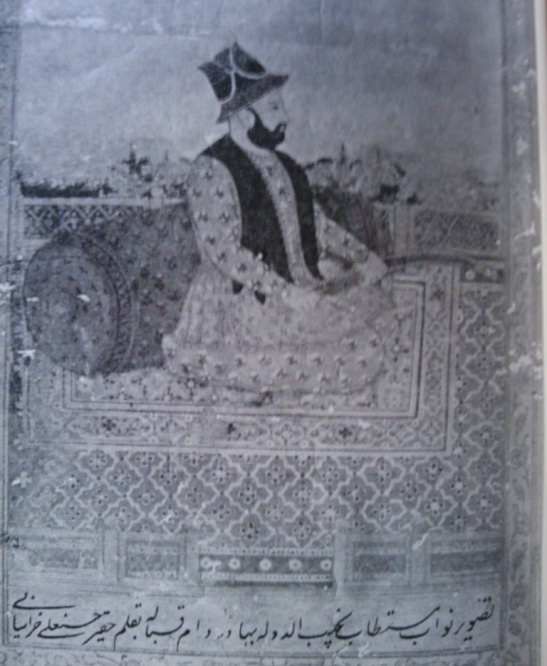
                          Figure 1Najib Ud Daula Rohilla Leader from Ganda Singh – ‘Ahmed Shah Durrani the Father of Modern Afghanistan’
                          In Pashto Roh means mountains and Rohilla means mountaineer. The area was made famous by the settlement of Pakhtuns of the Yusufzai tribe who were awarded this region in northern India by the Mughal emperor Aurangzeb to suppress Rajput uprisings. Similarly in Jullundher there was a large settlement of Pathans from the Niazi tribe(See Imran Khan Warrior Race ). The large settlements of Rohilla Pakhtuns in the City of Bareilly and Rampur were also included in the territory of Rohilkand. Very few books in English have been written on the Rohillas one of the few is Rise and decline of the Rohilla Chieftancies in 18th Century India
                          Rohillas were distinguished from local people by their tall stature, fair complexion, and by their separate language and culture. They used to speak Pashto among each other but gradually lost their language. Indeed the loss of native language fluency has long been a feature of the Pakhtun settlement in India:
                          “It is interesting to note that the Pukhtun (Afghan) Kings ruled Delhi for almost five centuries(1193-1526 CE) but they couldn’t rule their own people in the territory between Kabul and the Indus. This was due to the nature of a tribal society that didn’t permit unity under one banner. However, these Pukhtun kings encouraged many of their kind to migrate to India to help govern the local population there. After a few generations, these migrants were effectively. Cut off from their land, their culture and their language. Today, millions of Indian Muslims trace their roots to the Peshawar Valley and eastern Afghanistan.”(Page23 Hussain, Sayed Amjad:The Frontier Town of Peshawar A Brief History

                          Comment

                          Working...
                          X