Announcement

Collapse
No announcement yet.

How The Pashtun tribe's sent the Brit's back to London.

Collapse
X
 
  • Filter
  • Time
  • Show
Clear All
new posts

  • How The Pashtun tribe's sent the Brit's back to London.

    We have heard the stories of fearless and brave warriors of the mountains of Khyber and how these tribal warriors defeated the mighty and modern army of British conquerors. Yet only so little details have been mentioned about those historic wars,No real battle tactics or any details about armor or weapons has been discussed.So much detail is missing from those historic times .
    Upon visiting an auction website in Philadelphia,USA. I saw an old rifle which was very long and beautifully crafted with unique designs up for auction. I was surprised when i saw its label which said "Afghan jezail"


    upon doing some research i was amazed how a single rifle was the reason why the British army couldn't advance on to the Pushtun lands of Khyber.
    The 55 to 60 caliber Afghan jezail were far superior to the Britsh Brown Bess musket.They were more accurate and very light for a weapon of its size.
    the tribesman would hold high position on mountains and effortlessly target the advancing British infantry with their jezail's.
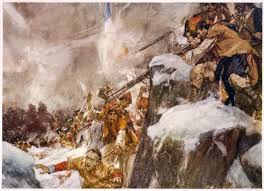
    The Brits had no the option but to retreat and run away even with twice as many men and twice as many weaponary they were no match for the marksman tribesman and their high caliber Afghan jezail's
    Bacha Khani pakr da

  • #2
    Rudyar Kipling makes references to the Jezail a few times:

    A scrimmage in a Border Station

    A canter down some dark defile

    Two thousand pounds of education

    Drops to a ten-rupee jezail.

    In "The Man Who Would be King" he refers to the "Kohat Jezail" somewhere.

    Comment


    • #3
      Originally posted by Elite Pakhtun View Post
      Rudyar Kipling makes references to the Jezail a few times:

      A scrimmage in a Border Station

      A canter down some dark defile

      Two thousand pounds of education

      Drops to a ten-rupee jezail.

      In "The Man Who Would be King" he refers to the "Kohat Jezail" somewhere.
      A pretty accurate duscription of the Jezail.
      Bacha Khani pakr da

      Comment


      • #4
        Originally posted by jhangir swati View Post
        We have heard the stories of fearless and brave warriors of the mountains of Khyber and how these tribal warriors defeated the mighty and modern army of British conquerors. Yet only so little details have been mentioned about those historic wars,No real battle tactics or any details about armor or weapons has been discussed.So much detail is missing from those historic times .
        Upon visiting an auction website in Philadelphia,USA. I saw an old rifle which was very long and beautifully crafted with unique designs up for auction. I was surprised when i saw its label which said "Afghan jezail"


        upon doing some research i was amazed how a single rifle was the reason why the British army couldn't advance on to the Pushtun lands of Khyber.
        The 55 to 60 caliber Afghan jezail were far superior to the Britsh Brown Bess musket.They were more accurate and very light for a weapon of its size.
        the tribesman would hold high position on mountains and effortlessly target the advancing British infantry with their jezail's.

        The Brits had no the option but to retreat and run away even with twice as many men and twice as many weaponary they were no match for the marksman tribesman and their high caliber Afghan jezail's
        Where did these Pashtun tribesmen obtain their jezails from? Where was it manufactured?

        Comment


        • #5
          Originally posted by toughpashtun View Post
          Where did these Pashtun tribesmen obtain their jezails from? Where was it manufactured?
          I think they were homemade. Same way there is still a cottage gun industry in FATA to this day.
          Originally posted by Kaushika

          majority of Hilly Rajputs are the product of these cross breeding and want to disassociate with their past. rajputs with rajwadi surnames consider themeselves superior but those native kings who look darker gets mocked as "gola" (mix breed, son of rakhile) so they actually invite light skinned rajputs and kshatriya tribes from Jammu region such as jamwals to sleep with their women so that their wives can give birth to pure white looking Native Child.

          Comment


          • #6
            Originally posted by Traveller View Post
            I think they were homemade. Same way there is still a cottage gun industry in FATA to this day.
            Possible.
            But they would have had some sort of model to copy from , maybe links with the Ottomans?

            Comment


            • #7
              Originally posted by Elite Pakhtun View Post
              Rudyar Kipling makes references to the Jezail a few times:

              A scrimmage in a Border Station

              A canter down some dark defile

              Two thousand pounds of education

              Drops to a ten-rupee jezail.

              In "The Man Who Would be King" he refers to the "Kohat Jezail" somewhere.
              Probably meant ones made in Darra Adam khel where they still make guns.

              Comment


              • #8
                Originally posted by toughpashtun View Post
                Possible.
                But they would have had some sort of model to copy from , maybe links with the Ottomans?
                They probably took British muskets and reengineered them.
                Originally posted by Kaushika

                majority of Hilly Rajputs are the product of these cross breeding and want to disassociate with their past. rajputs with rajwadi surnames consider themeselves superior but those native kings who look darker gets mocked as "gola" (mix breed, son of rakhile) so they actually invite light skinned rajputs and kshatriya tribes from Jammu region such as jamwals to sleep with their women so that their wives can give birth to pure white looking Native Child.

                Comment


                • #9
                  I wonder if they still make those. It would be cool to collect for people interested in collecting older weapons.

                  Comment


                  • #10
                    Originally posted by toughpashtun View Post
                    Where did these Pashtun tribesmen obtain their jezails from? Where was it manufactured?
                    Typically the main part know as lock pick which holds the trigger mechanism was eihter purchesd,stolen or captured from foreign power typically the British and then a local gunsmith will attach the barell and stock which were the easy parts to the lock mechanism which were mostly from the british muskets but with some litle tweeks.
                    Bacha Khani pakr da

                    Comment


                    • #11
                      Originally posted by Traveller View Post
                      They probably took British muskets and reengineered them.
                      The musket version of Jezail has nothing to do with East India company or British invading from the East direction. Matchlocks were obsolete in Europe before 1700 and they were using flintlock as early as 1620s.

                      Decorated Jezail with extraordinary long barrels (seven or eight feet long) , is Pashtun innovation. In fact its Rohilla Pashtuns who introduced this design of Jezails into India, they were considered the best matchlock-men in early I8th century India (no other force in India at that time was overwhelmingly matchlockmen infantry force, East India Company had not yet plunged into wars). ..Neither matchlock nor zumburak is Afghan innovation or invention but Afghans modified Jezail and revived Zumurak and it became heavily popular in 18th century warfare. Pashtuns/Afghans themselves adopted use of matchlock from Mughals who adopted it from Ottomans. But Mughals got lazy and degenerated ,so that in early 18th century, large Mughal armies were no match to Rohillas in military organization, tactics and weapons.

                      Comment


                      • #12
                        Originally posted by jhangir swati View Post
                        We have heard the stories of fearless and brave warriors of the mountains of Khyber and how these tribal warriors defeated the mighty and modern army of British conquerors. Yet only so little details have been mentioned about those historic wars,No real battle tactics or any details about armor or weapons has been discussed.So much detail is missing from those historic times .
                        Upon visiting an auction website in Philadelphia,USA. I saw an old rifle which was very long and beautifully crafted with unique designs up for auction. I was surprised when i saw its label which said "Afghan jezail"


                        upon doing some research i was amazed how a single rifle was the reason why the British army couldn't advance on to the Pushtun lands of Khyber.
                        The 55 to 60 caliber Afghan jezail were far superior to the Britsh Brown Bess musket.They were more accurate and very light for a weapon of its size.
                        the tribesman would hold high position on mountains and effortlessly target the advancing British infantry with their jezail's.

                        The Brits had no the option but to retreat and run away even with twice as many men and twice as many weaponary they were no match for the marksman tribesman and their high caliber Afghan jezail's
                        Pardon me in which battle or war tribes of Khyber pass have defeated British? Perhaps you are referring to First Anglo-Afghan war in which Afghans (mostly Ghilzais) sniped down large number of Angraiz from long distances and chased them out of Afghanistan. Its your exaggeration that Jezail prevented the advance of British forces on Pashtun lands. If you read the details of first Anglo-Afghan war, you will realize that incompetent Afghans/Pashtun forces were utterly defeated by disciplined and highly organized British forces and East India company occupied Afghanistan for almost three years (1839-1842)....as always has happened, and is happening, Afghans/Pashtuns started an insurgency against foreign occupation which has always been deadly on terrain of Afghanistan for any unfamiliar foreign force.......British were not taken by surprise in second Anglo-Afghan war , they came prepared and did not repeat the mistakes of first war but they had not expected that Afghans could defeat them in pitched battle (battle of Maiwand).......so the greatest military feat of Afghans in 19th century is not killing retreating Angraiz (accompanied with camp followers and families) with Jezail in winter of 1842 but defeating Angraiz in a pitched battle at Maiwand 1880........and even after scoring a splendid victory in one battle, Afghans lost the overall war in 1878-1880, British annexed large territories of Afghanistan after treaty of Gandamak.......

                        The independent tribes on Pakistani side could not be expected to defeat a super power so all they did was provoke the British from time to time and face the might of British empire fearlessly , with the results that they always got their asses kicked and had to pay the heavy fines as punishment....the exception being the Wazirs and Mehsuds of South Waziristan in 1919-1920 who actually managed to defeat British army and forced them out of Waziristan (British were so terrorized that after five years, they decided to punish the Mehsuds with just air strikes for months without ground troops....the indiscriminate air bombardments on Mehsud villages obviously forced the Mehsuds to accept defeat)

                        Comment


                        • #13
                          Originally posted by Samandri View Post
                          Pardon me in which battle or war tribes of Khyber pass have defeated British? Perhaps you are referring to First Anglo-Afghan war in which Afghans (mostly Ghilzais) sniped down large number of Angraiz from long distances and chased them out of Afghanistan. Its your exaggeration that Jezail prevented the advance of British forces on Pashtun lands. If you read the details of first Anglo-Afghan war, you will realize that incompetent Afghans/Pashtun forces were utterly defeated by disciplined and highly organized British forces and East India company occupied Afghanistan for almost three years (1839-1842)....as always has happened, and is happening, Afghans/Pashtuns started an insurgency against foreign occupation which has always been deadly on terrain of Afghanistan for any unfamiliar foreign force.......British were not taken by surprise in second Anglo-Afghan war , they came prepared and did not repeat the mistakes of first war but they had not expected that Afghans could defeat them in pitched battle (battle of Maiwand).......so the greatest military feat of Afghans in 19th century is not killing retreating Angraiz (accompanied with camp followers and families) with Jezail in winter of 1842 but defeating Angraiz in a pitched battle at Maiwand 1880........and even after scoring a splendid victory in one battle, Afghans lost the overall war in 1878-1880, British annexed large territories of Afghanistan after treaty of Gandamak.......

                          The independent tribes on Pakistani side could not be expected to defeat a super power so all they did was provoke the British from time to time and face the might of British empire fearlessly , with the results that they always got their asses kicked and had to pay the heavy fines as punishment....the exception being the Wazirs and Mehsuds of South Waziristan in 1919-1920 who actually managed to defeat British army and forced them out of Waziristan (British were so terrorized that after five years, they decided to punish the Mehsuds with just air strikes for months without ground troops....the indiscriminate air bombardments on Mehsud villages obviously forced the Mehsuds to accept defeat)
                          yeah i might have exagerated a little by usin the word "war" should have used something like "skirmishes" or 'battles" anyhow the main focus of post was on the Jezail which DID indeed played a big part in resistance to british . Now you are right about British occupying Pushtun lands that's true however as you said they had to,in the end run back and use airstrikes(A cowards tactic considering they were getting bummed by mountain men even being one of modern army) and in the end never being able to rule the lands as they have planned . But as i said focus was more on weapon jezail and not on wars themselves
                          Bacha Khani pakr da

                          Comment


                          • #14
                            The tribes that were shooting at the brit convoys wanted "wulja." They heard that the brits were carrying large amounts of gold. Wazir Akbar Khan actually did not want to completely destroy the brit force out of fear that the brits would retaliate but he had lost control of the tribesmen eagerness to grab the gold the brits were allegedly carrying.

                            Comment

                            Working...
                            X