
 Tweet
Hajji Mirwais Khan Hotak (1673–1715) was an influential tribal chief of the Ghilzai Pashtuns from Kandahar, Afghanistan, who founded the Hotaki dynasty that ruled a wide area in Persia and Afghanistan from 1709 to 1738. He is known in Kandahar and among many Pashtun people as Mirwais Neeka ("Mirwais the grandfather" in the Pashto language).
Early life
Mirwais Hottak was born in a well known, rich and political family in the Kandahar area. His family was involved in social and community services since long ago. He is the son of Salim Khan and Nazo Tokhi (also known as "Nazo Anaa"), grandson of Karum Khan and great grandson of Ismail Khan, a descendant of Malikyar, the ancient head of Hottaki or Hotaks. The Hottaki is a strong branch of Ghilzai, one of the main tribes among the Pashtun people. Hajji Amanullah Hottak reports in his book that the Ghilzai tribe is the original residents of Ghor or Gherj. This tribe migrated later to obtain lands in southeastern Afghanistan and multiplied in these areas.Mirwais Hotak was married to Khanzada Sadozai, who belonged the rival Abdali tribe of Pashtuns.
Rise to power
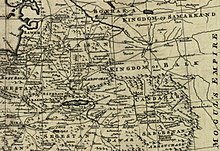

Greater Kandahar (Candahar) during the Safavid dynasty and Mughal period
In 1707, Kandahar was in a state of chaos due to it being fought for control by the Shia Persian Safavids and the Sunni Moghuls of India. Mirwais Khan, a Sunni tribal chief whose influence with his fellow-countrymen made him an object of suspicion, was held as a political prisoner by Gurgin Khan and sent to the Safavids court at Isfahan (now Iran). He was later freed there and even allowed to meet with the Shah, Soltan Hosein, on a regular bases. Having sown this seed of suspicion and completely ingratiated himself with the Persian Court, Mirwais sought and obtained permission to perform the pilgrimage to Mecca in Ottoman empire. He has studied carefully all the military weaknesses of the Safavids while he spent time there in their court.
While in Mecca, he came up with new ideas and sought from the leading authorities an Islamic fatwa against the Shia foreign rulers who brutality persecuting his people in his native homeland. The fatwa was granted and he carried it with him to Iṣfahan and subsequently to Kandahar, with permittion to return and strong recommendations to Gurgin Khan. It was in 1709 when he began organizing his countrymen for a major uprising, and when a large part of the Persian garrison was on an expedition outside the city, he and his followers fell on the remainder and killed the greater number of them, including Gurgin Khan..
The Pashtun tribes rankled under the ruling Safavids because of their continued attempts to forcefully convert them from Sunni to Shia Islam. After Gurgin Khan was killed along with his army, the Hotaki tribe took control of the city and the province. Mirwais and his rebels then defeated a large Persian army, sent to regain control over the area.
Mirwais Khan As a Youth
Since his youth, Mirwais Neeka became famous for genius thinking and analysis of events. He was honorable, gentle, kind, benevolent, just and honest. His speeches were fruitful, convincing and inspirational. People were grateful for his social courtesy and endurance. Mirwais Neeka had the appearance of a descendant of the original Ariana tribe. He was tall, well-built, light-brown skin, black hair, dark-brown eyes, and a long, straight but slender nose.
He is well-known as a strikingly handsome, strong man who wore richly decorated and embroidered clothes.
Mirwais Neeka proposed peace and unity and wanted stable relations between the government administration and the people of Afghan tribes. He recognized the need to build a strong and prosperous nation which would be able to stand on its own feet.,, He wished to strengthen Afghanistan's position in international affairs through economics. During his father's time as well as after that Mirwais; Neeka wisely
continued business transactions and acquainted himself with influential dignitaries in the governmental circles of Persia and India.
Mirwais Khan earned several tides from his people, such
as:
Mirwais Khan (Chief)
Mirwais Baba (Father)
Mirwais Neeka (Grandfather)
Meer Khan (Grand Chief)
Haji Mir Khan (Chief Who Pilgrimage to Mecca).
Gorgin in Kandahar
Persian king, Sultan Hussian Safavid, appointed Gorgin of the Giorgi tribe as governor of Kandahar, Afghanistan (1709). He soon became the most brutal and truculent authority in the region. Gorgain was a ruthless and contemptuous person. He proved this as soon as he entered Kandahar with 20,000 Persian savage soldiers.
Persia exercised this political force to demonstrate its power to Afghans and to establish a strategic stand to the Moghol's empire in India- The intoicrable acts of Gorgin forced the Afghan nation to seek peace and safety. In unity, they turned towards Mirwais Neeka authorizing him to find a remedy. Mirwais contacted the Persian ruler, King Hussian Safavid, about the murderous administration of Gorgin going on in Kandahar and over the Afghan people.
Reedi Khan Momand, a learned political poet, has mentioned in his book of poetry that Mirwais contacted the Persian court four times in vain about the cruelty of Gorgin.
Governor Gorgin received reports about this political and secret action of Mirwais. He planned to send Mirwais and his prominent followers to Persia to be detained in Persia so that Afghanistan would be ruled peacefully. But Mirwais had better plans for Gorgin's future.
The Fall of Gorgin
In Isfahan, the Court of Persia, Mirwais made plans to invoke opposition of King Hussian towards Gorgin. He treated all dignitaries in that court with courteous manners and used his political charisma and wealth to achieve his goals. He offered all those involved in decision making with gifts. Soon he became close to the authorities and even was consulted as political advisor in all the political affairs of the court. The king himself was fascinated with Mirwais's vigor of political talent and marvelous manners.
Mirwais knew that Gorgin had friends in the king's court. He kept his opposition of Gorgin secret from them
and instead gifted them as others in authority. Mirwais had no problem in the Persian court and the need for his consultation increased continuously. This successful policy and logical approach by Mirwais paved the way for granting royal permission to go to Arabia. There he performed the Hajj(pilgrimage) Ceremony, the fifth pillar of the religion of Islam that obligates every able Muslim to go to Mecca once in life time for pilgrimage. During the Haij offering in Arabia, Mirwais Khan was able to visit several political and religious influential persons. They offered support for Mirwais Khan's secret plan to free Afghanistan from the hands of Persians. The Ulama in Arabia approved in writing of launching a war by Afghans against Corgin of Persia. Mirwais kept this document secret and returned to Persia- Tbe document is called Fatwa 1(4(Religious authorization, in this case, for war against the enemy).
Mirwais Neeka;
After a short stay in Persia, Mirwais convinced the king that he needed to leave for Kandahar, his home, to advise Gorgin in person on major issues. Otherwise, Gorgin might plan covert action against Persia to get independence in Kandahar with the help of Moghols.
The concern of the Persian king had become gigantic and he was afraid that Gorgin will seek cession from Persia with the help of Moghols in India. The king accepted the political analysis of Mirwais and allowed him to go to Kandahar. There he was to council and advise Gorgin very closely. Gorgin +ad to listen and obey Mirwais' advice. Mirwais went to Kandahar with the new orders for Gorgin.
The Afghan people were relaxed that Gorgin was limited in power and Mirwais was now his boss in important decisions.
Historic Lova Jirga
In competing with Mirwais' friendship in the Persian court, Gorgin jealously stepped up his dictatorship and ruthless warlordism. Mirwais, now among his people, made contacts through meetings and secret visits with the heads of the numerous tribes and reinforced the idea of national unity against the tortures of Gorgin and foreigners. All Afghans gave assurance of their determination and requested Mirwais to lead the way. Mirwais promptly invited a Loya Jerga (a traditional grand national assembly). The Loya Jirga gathered under Mirwais Khan near his hometown of Shari Safa which is in the vicinity of Manja Village near Kandahar.
Members in Lova Jirga
According to Said Kasim, Rishtia 'Loya Jirga" was gathered in Shahri Safa in 1707. According to Mir Ghulam M. Ghobar this Loya Jirga was gathered in Manja in 1709.
This difference will be cleared in future research. Both small cities are adjacent to each other and situated (30-32 km) east of Kandahar City. Also both cities were under the authority of Kandahar provincial administration. Mr. Amanullah Hottak reports that Reedi Khan in his book Mahmoud Nama mentioned the following prominent people as members of Mir Wais's Loya Jirga:
1. Saidal Khan Nasir, Chief of Hottaki Army
2. Babu Jaan Baabi, Chief of Hottaki Army
3. Mir Alarn Khan Nasir. Chief of Turnak Army
4. Sado Khan Nasir, Chief of Turnak Army
5. Yusuf Khan Hottak, Chief of Turnak Army
6. Bahadur Khan Anderh, Conqueror of Shall, Zoob,Derajat
7. Mullah Peer M. Mianji, Chief Religious Leader
8. Gul Khan Babar, Chief of Babar Tribe
9. Noor Khan Barizhi, Chief of Barizhi Tribe
10. Nassro Khan Alakozai, Chief of Shorawak City
11. Yahya Khan, Brother of Mirwais Neeka
12. Haji Noor M. Khan, a Nephew of Mirwais Neeka
13. Aziz Khan Noorzai, a Hero from Delaram City
14. Yusuf Khan Hottak, Chief of Seyori City
15. Gull Khan Barizhi, Chief of Barizhi Tribe
16. Yunus Kakar, Chief of Kakar Tribe and Representative from Zoob and Baluchistan.
Also the following names have been reported by other sources of which HaJi Amanullah Hottak makes no mention.
I- Mir Abdullah Khan of the Barizhi Tribe.
2- Tarin Representative from Payshin City.
3- Kasim Khan from Shall Kote City.
4- Sayyed Ali Khan from Hazara Tribe.
5- Zaberdast Khan from Han a Tribe.
Why Call It Lova Jirga?
Dr. Zirakyar, in his research on Mirwais Khan indicates several logical analysis for raising the status of this
"national assembly" to the status of Loya Jirga(grand national assembly holding session on special essential occasion). His statements are deemed considerate and agreeable. They are as follows:
1. The establishment of the Mirwais grand meeting was highly necessary as it was against foreign invasion.
2. Mirwais' proposed grand national assembly deserves the status of Loya Jirga because it was for overthrowing Gorgin and the Persian invasions .
3. This grand national meeting tricked Gorgin to come out of Kandahar Port to an open battle field where Afghan armies can attack the enemy to avoid civilian casualties.
4. The unusual meeting of Mirwais had the full unity and cooperation of all the Afghan tribes. Even those who could not attend it, agreed to the decisions which would benefit all Afghans.
5. The meeting was for all Afghan tribal, religious, military and learned or professional leaders. Mirwais
was able to express his desire of war and show in person the permission of the war which he brought in
writing from Arabian religious authorities.
The Fruits of Lova Jirga
As soon as the accord and consent of the emergency Loya Jerga of Mirwais Khan was approved by the
participants, all the tribes unified. A strong Afghan army was installed. Mirwais Khan with the association of Saidal Khan Nasir brought an indispensable assail on Gorgin. The two armies struck each other at Sheikh Kali Village of Arghasan town near Kandahar. The assail of Mirwais prevailed easily because Gorgin's army came out of the reinforced Port of Kandahar. Gorgin was arrested and then convicted in court. Gorgin was then immolated by Murad Khan for his transgressions and inhuman sins (1709). The Persian king sent two separate envoys to Kandahar to obtain the news account of Gorgin and protested to Mirwais. Both protests were neglected and both men were arrested one after the other. Mirwais took the reins of government in his hands (1709-1715), calling himself a "Misher" chief of the people. His son, Mahmoud then took possession and ruled courageously. In 1722, he even conquered Isfahan, the capitol of Persia. Mahmoud died in 1725. He was succeeded by his cousin, Ashraf. In 1730, an Afghan Baluch killed Ashraf for the Persians. Thus, the Afghan rule in Persia and Afghanistan ended. Turmoil from neighboring kings and disorder in the national unit lasted until 1747 when Ahmad Shah Durani came into power and gave leadership to new Afghanistan.
Tomb of Mirwais Neeka

Mirwais Neeka rests in peace in a distinguished mausoleum in Kohkaran Garden. It is surrounded by the Valley of Arghandab River joining Helmand River near Kandahar City. It is also amid the wonderful excursions recreation spots around Sarpoza Bazaar in KaridAar.
Opposite the tomb is the curious attraction of Chihil-zeena (forty steps) curving from the bottom to the top of a high mountain. The mountain is very rough and the steps are steep for tourists.The steps lead to the niche known as the Thom of Babur, and a stone lion on each side. The place and building of the historic mausoleum was done by the influential and beloved Governor Wazir Muhammad Gull Khan Momand. His other creative service is the establishment of Pashtoo Language Academy(1932), the progressive research and publishing of Pashtoo literature and culture.
Examples of Mirwais
The achievements of Mirwais Neeka prove that in the mountains of Afghanistan there are always able leaders of intelligence, political wisdom, and genius leadership, with golden performances. They will fight the odds with endurance to save the nation and independence. Such examples are:
Shah Mahmoud Hottak, Ahmad Shah Durani, Akbar Khan, Ayub Khan and Amir Amanullah Khan.
Now, Afghans seriously need such a leader to unify and stabilize Afghanistan which once again is under the atrocities of civil war by the hands of selfish and opportunistic war organizations since the Soviet invasion.
After the Soviets left, six years ago, the selfish parties are impeding unification and causing civil war with tremendous casualties.
Death
Mirwais remained in power until his death in 1715 and was succeeded by his son Mir Mahmud, who took advantage of the political weakness of the Persian Shahs and conquered Persia several years later. Mirwais is buried at his Mausoleum in the Kokaran section of Kandahar City of Afghanistan.
Sources:
Mirwais Neeka
Early life
Mirwais Hottak was born in a well known, rich and political family in the Kandahar area. His family was involved in social and community services since long ago. He is the son of Salim Khan and Nazo Tokhi (also known as "Nazo Anaa"), grandson of Karum Khan and great grandson of Ismail Khan, a descendant of Malikyar, the ancient head of Hottaki or Hotaks. The Hottaki is a strong branch of Ghilzai, one of the main tribes among the Pashtun people. Hajji Amanullah Hottak reports in his book that the Ghilzai tribe is the original residents of Ghor or Gherj. This tribe migrated later to obtain lands in southeastern Afghanistan and multiplied in these areas.Mirwais Hotak was married to Khanzada Sadozai, who belonged the rival Abdali tribe of Pashtuns.
Rise to power
Greater Kandahar (Candahar) during the Safavid dynasty and Mughal period
In 1707, Kandahar was in a state of chaos due to it being fought for control by the Shia Persian Safavids and the Sunni Moghuls of India. Mirwais Khan, a Sunni tribal chief whose influence with his fellow-countrymen made him an object of suspicion, was held as a political prisoner by Gurgin Khan and sent to the Safavids court at Isfahan (now Iran). He was later freed there and even allowed to meet with the Shah, Soltan Hosein, on a regular bases. Having sown this seed of suspicion and completely ingratiated himself with the Persian Court, Mirwais sought and obtained permission to perform the pilgrimage to Mecca in Ottoman empire. He has studied carefully all the military weaknesses of the Safavids while he spent time there in their court.
While in Mecca, he came up with new ideas and sought from the leading authorities an Islamic fatwa against the Shia foreign rulers who brutality persecuting his people in his native homeland. The fatwa was granted and he carried it with him to Iṣfahan and subsequently to Kandahar, with permittion to return and strong recommendations to Gurgin Khan. It was in 1709 when he began organizing his countrymen for a major uprising, and when a large part of the Persian garrison was on an expedition outside the city, he and his followers fell on the remainder and killed the greater number of them, including Gurgin Khan..
The Pashtun tribes rankled under the ruling Safavids because of their continued attempts to forcefully convert them from Sunni to Shia Islam. After Gurgin Khan was killed along with his army, the Hotaki tribe took control of the city and the province. Mirwais and his rebels then defeated a large Persian army, sent to regain control over the area.
Several half-hearted attempts to subdue the rebellious city having failed, the Persian Government despatched Khusraw Khán, nephew of the late Gurgín Khán, with an army of 30,000 men to effect its subjugation, but in spite of an initial success, which led the Afgháns to offer to surrender on terms, his uncompromising attitude impelled them to make a fresh desperate effort, resulting in the complete defeat of the Persian army (of whom only some 700 escaped) and the death of their general. Two years later, in A.D. 1713, an*other Persian army commanded by Rustam Khán was also defeated by the rebels, who thus secured possession of the whole province of Qandahár.
Mirwais Khan's Inspirations
From the early 16th Century to the late 18th Century the Land of Afghans was occupied by the Uzbic Turk power. The east of the land was invaded by Moghuls from India. In the West, the Afghan land was under continued aggression of Persian Safavid kings. In this way the unity, independence and the life of Afghans were disrupted and diversely affected under these powers. Famous, learned, intelligent and talented Afghan administrators and politicians were contributing in the courts of these foreign rulers on one hand and waiting for proper opportunity to rise against them on the other hand.
Such intolerance was unacceptable to the Afghan population. It caused uprisings around the country, especially in the Pashtoon areas. The eastern movement of Peer Rooshan (1579) was supported and continued by Khushal Khan Khattak (1613-1690) and his sons. In the southwest, national independence movements were aggressively headed under the leadership of Mirwais Khan Neeka, (1673-1715).
Mirwais Khan As a Youth
Since his youth, Mirwais Neeka became famous for genius thinking and analysis of events. He was honorable, gentle, kind, benevolent, just and honest. His speeches were fruitful, convincing and inspirational. People were grateful for his social courtesy and endurance. Mirwais Neeka had the appearance of a descendant of the original Ariana tribe. He was tall, well-built, light-brown skin, black hair, dark-brown eyes, and a long, straight but slender nose.
He is well-known as a strikingly handsome, strong man who wore richly decorated and embroidered clothes.
Mirwais Neeka proposed peace and unity and wanted stable relations between the government administration and the people of Afghan tribes. He recognized the need to build a strong and prosperous nation which would be able to stand on its own feet.,, He wished to strengthen Afghanistan's position in international affairs through economics. During his father's time as well as after that Mirwais; Neeka wisely
continued business transactions and acquainted himself with influential dignitaries in the governmental circles of Persia and India.
Mirwais Khan earned several tides from his people, such
as:
Mirwais Khan (Chief)
Mirwais Baba (Father)
Mirwais Neeka (Grandfather)
Meer Khan (Grand Chief)
Haji Mir Khan (Chief Who Pilgrimage to Mecca).
Gorgin in Kandahar
Persian king, Sultan Hussian Safavid, appointed Gorgin of the Giorgi tribe as governor of Kandahar, Afghanistan (1709). He soon became the most brutal and truculent authority in the region. Gorgain was a ruthless and contemptuous person. He proved this as soon as he entered Kandahar with 20,000 Persian savage soldiers.
Persia exercised this political force to demonstrate its power to Afghans and to establish a strategic stand to the Moghol's empire in India- The intoicrable acts of Gorgin forced the Afghan nation to seek peace and safety. In unity, they turned towards Mirwais Neeka authorizing him to find a remedy. Mirwais contacted the Persian ruler, King Hussian Safavid, about the murderous administration of Gorgin going on in Kandahar and over the Afghan people.
Reedi Khan Momand, a learned political poet, has mentioned in his book of poetry that Mirwais contacted the Persian court four times in vain about the cruelty of Gorgin.
Governor Gorgin received reports about this political and secret action of Mirwais. He planned to send Mirwais and his prominent followers to Persia to be detained in Persia so that Afghanistan would be ruled peacefully. But Mirwais had better plans for Gorgin's future.
The Fall of Gorgin
In Isfahan, the Court of Persia, Mirwais made plans to invoke opposition of King Hussian towards Gorgin. He treated all dignitaries in that court with courteous manners and used his political charisma and wealth to achieve his goals. He offered all those involved in decision making with gifts. Soon he became close to the authorities and even was consulted as political advisor in all the political affairs of the court. The king himself was fascinated with Mirwais's vigor of political talent and marvelous manners.
Mirwais knew that Gorgin had friends in the king's court. He kept his opposition of Gorgin secret from them
and instead gifted them as others in authority. Mirwais had no problem in the Persian court and the need for his consultation increased continuously. This successful policy and logical approach by Mirwais paved the way for granting royal permission to go to Arabia. There he performed the Hajj(pilgrimage) Ceremony, the fifth pillar of the religion of Islam that obligates every able Muslim to go to Mecca once in life time for pilgrimage. During the Haij offering in Arabia, Mirwais Khan was able to visit several political and religious influential persons. They offered support for Mirwais Khan's secret plan to free Afghanistan from the hands of Persians. The Ulama in Arabia approved in writing of launching a war by Afghans against Corgin of Persia. Mirwais kept this document secret and returned to Persia- Tbe document is called Fatwa 1(4(Religious authorization, in this case, for war against the enemy).
Mirwais Neeka;
After a short stay in Persia, Mirwais convinced the king that he needed to leave for Kandahar, his home, to advise Gorgin in person on major issues. Otherwise, Gorgin might plan covert action against Persia to get independence in Kandahar with the help of Moghols.
The concern of the Persian king had become gigantic and he was afraid that Gorgin will seek cession from Persia with the help of Moghols in India. The king accepted the political analysis of Mirwais and allowed him to go to Kandahar. There he was to council and advise Gorgin very closely. Gorgin +ad to listen and obey Mirwais' advice. Mirwais went to Kandahar with the new orders for Gorgin.
The Afghan people were relaxed that Gorgin was limited in power and Mirwais was now his boss in important decisions.
Historic Lova Jirga
In competing with Mirwais' friendship in the Persian court, Gorgin jealously stepped up his dictatorship and ruthless warlordism. Mirwais, now among his people, made contacts through meetings and secret visits with the heads of the numerous tribes and reinforced the idea of national unity against the tortures of Gorgin and foreigners. All Afghans gave assurance of their determination and requested Mirwais to lead the way. Mirwais promptly invited a Loya Jerga (a traditional grand national assembly). The Loya Jirga gathered under Mirwais Khan near his hometown of Shari Safa which is in the vicinity of Manja Village near Kandahar.
Members in Lova Jirga
According to Said Kasim, Rishtia 'Loya Jirga" was gathered in Shahri Safa in 1707. According to Mir Ghulam M. Ghobar this Loya Jirga was gathered in Manja in 1709.
This difference will be cleared in future research. Both small cities are adjacent to each other and situated (30-32 km) east of Kandahar City. Also both cities were under the authority of Kandahar provincial administration. Mr. Amanullah Hottak reports that Reedi Khan in his book Mahmoud Nama mentioned the following prominent people as members of Mir Wais's Loya Jirga:
1. Saidal Khan Nasir, Chief of Hottaki Army
2. Babu Jaan Baabi, Chief of Hottaki Army
3. Mir Alarn Khan Nasir. Chief of Turnak Army
4. Sado Khan Nasir, Chief of Turnak Army
5. Yusuf Khan Hottak, Chief of Turnak Army
6. Bahadur Khan Anderh, Conqueror of Shall, Zoob,Derajat
7. Mullah Peer M. Mianji, Chief Religious Leader
8. Gul Khan Babar, Chief of Babar Tribe
9. Noor Khan Barizhi, Chief of Barizhi Tribe
10. Nassro Khan Alakozai, Chief of Shorawak City
11. Yahya Khan, Brother of Mirwais Neeka
12. Haji Noor M. Khan, a Nephew of Mirwais Neeka
13. Aziz Khan Noorzai, a Hero from Delaram City
14. Yusuf Khan Hottak, Chief of Seyori City
15. Gull Khan Barizhi, Chief of Barizhi Tribe
16. Yunus Kakar, Chief of Kakar Tribe and Representative from Zoob and Baluchistan.
Also the following names have been reported by other sources of which HaJi Amanullah Hottak makes no mention.
I- Mir Abdullah Khan of the Barizhi Tribe.
2- Tarin Representative from Payshin City.
3- Kasim Khan from Shall Kote City.
4- Sayyed Ali Khan from Hazara Tribe.
5- Zaberdast Khan from Han a Tribe.
Why Call It Lova Jirga?
Dr. Zirakyar, in his research on Mirwais Khan indicates several logical analysis for raising the status of this
"national assembly" to the status of Loya Jirga(grand national assembly holding session on special essential occasion). His statements are deemed considerate and agreeable. They are as follows:
1. The establishment of the Mirwais grand meeting was highly necessary as it was against foreign invasion.
2. Mirwais' proposed grand national assembly deserves the status of Loya Jirga because it was for overthrowing Gorgin and the Persian invasions .
3. This grand national meeting tricked Gorgin to come out of Kandahar Port to an open battle field where Afghan armies can attack the enemy to avoid civilian casualties.
4. The unusual meeting of Mirwais had the full unity and cooperation of all the Afghan tribes. Even those who could not attend it, agreed to the decisions which would benefit all Afghans.
5. The meeting was for all Afghan tribal, religious, military and learned or professional leaders. Mirwais
was able to express his desire of war and show in person the permission of the war which he brought in
writing from Arabian religious authorities.
The Fruits of Lova Jirga
As soon as the accord and consent of the emergency Loya Jerga of Mirwais Khan was approved by the
participants, all the tribes unified. A strong Afghan army was installed. Mirwais Khan with the association of Saidal Khan Nasir brought an indispensable assail on Gorgin. The two armies struck each other at Sheikh Kali Village of Arghasan town near Kandahar. The assail of Mirwais prevailed easily because Gorgin's army came out of the reinforced Port of Kandahar. Gorgin was arrested and then convicted in court. Gorgin was then immolated by Murad Khan for his transgressions and inhuman sins (1709). The Persian king sent two separate envoys to Kandahar to obtain the news account of Gorgin and protested to Mirwais. Both protests were neglected and both men were arrested one after the other. Mirwais took the reins of government in his hands (1709-1715), calling himself a "Misher" chief of the people. His son, Mahmoud then took possession and ruled courageously. In 1722, he even conquered Isfahan, the capitol of Persia. Mahmoud died in 1725. He was succeeded by his cousin, Ashraf. In 1730, an Afghan Baluch killed Ashraf for the Persians. Thus, the Afghan rule in Persia and Afghanistan ended. Turmoil from neighboring kings and disorder in the national unit lasted until 1747 when Ahmad Shah Durani came into power and gave leadership to new Afghanistan.
Tomb of Mirwais Neeka
Mirwais Neeka rests in peace in a distinguished mausoleum in Kohkaran Garden. It is surrounded by the Valley of Arghandab River joining Helmand River near Kandahar City. It is also amid the wonderful excursions recreation spots around Sarpoza Bazaar in KaridAar.
Opposite the tomb is the curious attraction of Chihil-zeena (forty steps) curving from the bottom to the top of a high mountain. The mountain is very rough and the steps are steep for tourists.The steps lead to the niche known as the Thom of Babur, and a stone lion on each side. The place and building of the historic mausoleum was done by the influential and beloved Governor Wazir Muhammad Gull Khan Momand. His other creative service is the establishment of Pashtoo Language Academy(1932), the progressive research and publishing of Pashtoo literature and culture.
Examples of Mirwais
The achievements of Mirwais Neeka prove that in the mountains of Afghanistan there are always able leaders of intelligence, political wisdom, and genius leadership, with golden performances. They will fight the odds with endurance to save the nation and independence. Such examples are:
Shah Mahmoud Hottak, Ahmad Shah Durani, Akbar Khan, Ayub Khan and Amir Amanullah Khan.
Now, Afghans seriously need such a leader to unify and stabilize Afghanistan which once again is under the atrocities of civil war by the hands of selfish and opportunistic war organizations since the Soviet invasion.
After the Soviets left, six years ago, the selfish parties are impeding unification and causing civil war with tremendous casualties.
Death
Mirwais remained in power until his death in 1715 and was succeeded by his son Mir Mahmud, who took advantage of the political weakness of the Persian Shahs and conquered Persia several years later. Mirwais is buried at his Mausoleum in the Kokaran section of Kandahar City of Afghanistan.
Sources:
Mirwais Neeka
- ^ Malleson, George Bruce (1879) "Chapter 7: The Ghilzai Rule" History of Afghanistan, from the Earliest Period to the Outbreak of the War of 1878 W.H. Allen & Co., London, OCLC 4219393, limited view at Google Books
- ^ a b c Ewans, Martin (2002) Afghanistan: A Short History of Its People and Politics HarperCollins, New York, Page 30 ISBN 0-06-050507-9
- ^ Axworthy, Michael (2006) The Sword of Persia: Nader Shah, from Tribal Warrior to Conquering Tyrant I.B. Tauris, New York, Page 186, ISBN 1-85043-706-8
- ^ a b c Mirwais Neeka
- ^ a b c Packard Humanities Institute - Persian Literature in Translation - Chapter IV: An Outline Of The History Of Persia During The Last Two Centuries (A.D. 1722-1922)...page 29
- ^ Dupree, Mir Wais Hotak (1709–1715)
Works Cited
Ali, Mohammad, A New Guide to Afghanistan; Kabul; 1958
Ali, Mohammad; Afghanistan: A Historical Sketch; Kabul; 1957
Benawa, Abdul Raouf-, The Hottakis; Kabul-, 1956
Dupre, Louis; Afghanistan; Princeton Press; New Jersey; 1980
Ghubar, Ghularn M.; Afghanistan Dar Maseer-i-Tarikh; Kabul; 1968
Habibi, Abdulhai; Tarikh-i-Afghanistan baA az Islam; Kabul; 1967
Habibi, Abdulhai; Afghan and Afghanistan; Kabul; 1969
Hottak, Haji Amanullah; D'Khapalwakai Lmar Srak; Queta; 1989
Lockhart, L.; The Fall of the Safavid Dynasty and the Afghan Occupation
of Persia; Cambridge, 1958
Nazari, Rahmattullah; A Glance at Kandahar City; the History,
Geography and Economics; Thesis; Kabul University; 1964
Rishtya, Said Qassim; Afghanistan Dar Nozda Qam, Kabul; 1958
Zirakyar, Rahmat; Mirwais Neeka; Sabawoon, Pashtoo Part; Issue 7

Comment