Announcement

Collapse
No announcement yet.

Battles of the First Anglo-Afghan War

Collapse
X
 
  • Filter
  • Time
  • Show
Clear All
new posts

  • Battles of the First Anglo-Afghan War

    War: First Afghan War
    Date: 23rd July 1839
    Place: Central Afghanistan


    The City of Ghuznee

    Combatants: British and Indians of the Bengal and Bombay Armies and the army of Shah Shuja against the Afghans of Dost Mohammed.

    Generals: General Sir John Keane, Commander in Chief of the Bombay Army against Hyder Khan, a son of the Amir Dost Mohammed.

    Size of the armies: 9,500 British and Indian troops of the Bengal Army, 5,000 of the Bombay Army and 6,000 men headed by Shah Shujah against the Afghan garrison of 3,500 men.

    Uniforms, arms and equipment:
    The British infantry, wearing cut away red coats, white trousers and shako hats, were armed with the old Brown Bess musket and bayonet. The Indian infantry were similarly armed and uniformed.


    Her Majesty's 4th Light Dragoons (Hussars)


    The 4th Hussars wore the standard hussar uniform of pelisse, dolman and shako rather than a busby, and were armed with swords and carbines. The 16th Lancers wore scarlet tunics and the Polish tzapka hat and carried carbines, swords and lances.


    Her Majesty's 16th Light Dragoons (Lancers)

    The Afghan soldiers were dressed as they saw fit and carried an assortment of weapons, including muskets and swords. The Ghilzai tribesmen carried swords and jezail, long barreled muskets.

    Winner: The British and Indian Army.


    The Capture of Ghuznee by the Army of the Indus

    British and Indian Regiments:
    British:
    4th Hussars, now the Queen’s Royal Hussars. *
    16th Lancers now the Queen’s Royal Lancers. *
    2nd Queen’s Foot now the Princess of Wales’s Royal Regiment. *
    13th Foot now the Light Infantry. *
    17th Foot now the Royal Anglian Regiment. *
    Indian:
    2nd Bengal Light Cavalry
    3rd Bengal Light Cavalry
    3rd Skinner’s Horse *
    31st Lancers *
    34th Poona Horse *
    3rd Sappers and Miners *
    Shah Shujah’s Regiment
    1st Bengal Fusiliers (European Regiment) later the Munster Fusiliers. *
    16th Bengal Native Infantry
    48th Bengal Native Infantry
    31st Bengal Native Infantry
    42nd Bengal Native Infantry
    43rd Bengal Native Infantry
    2nd Bengal Native Infantry
    27th Bengal Native Infantry
    19th Bombay Infantry later the 119th Multan Regiment. *
    * These regiments have Ghuznee as a battle honour. The Bengal native regiments were all swept away in the Indian Mutiny in 1857.


    Madras Native Infantry

    The War:
    The British colonies in India in the early 19th Century were held by the Honourable East India Company, a powerful trading corporation based in London, answerable to its shareholders and to the British Parliament.

    In the first half of the century France as the British bogeyman gave way to Russia, leading finally to the Crimean War in 1854. In 1839 the obsession in British India was that the Russians, extending the Tsar’s empire east into Asia, would invade India through Afghanistan.

    This widely held obsession led Lord Auckland, the British governor general in India, to enter into the First Afghan War, one of Britain’s most ill-advised and disastrous wars.

    Horse Artillery advancing into Afghanistan: The troop, raised for Shah Shujah's army, after the war was incorporated into the British Service. The battery is now part of 12 Regiment Royal Artillery with the title "Shah Sujah's Battery"


    Until the First Afghan War the Sirkar (the Indian colloquial name for the East India Company) had an overwhelming reputation for efficiency and good luck. The British were considered to be unconquerable and omnipotent. The Afghan War severely undermined this view. The retreat from Kabul in January 1842 and the annihilation of Elphinstone’s Kabul garrison dealt a mortal blow to British prestige in the East only rivaled by the fall of Singapore 100 years later.

    The causes of the disaster are easily stated: the difficulties of campaigning in Afghanistan’s inhospitable mountainous terrain with its extremes of weather, the turbulent politics of the country and its armed and refractory population and finally the failure of the British authorities to appoint senior officers capable of conducting the campaign competently and decisively.

    The substantially Hindu East India Company army crossed the Indus with trepidation, fearing to lose caste by leaving Hindustan and appalled by the country they were entering. The troops died of heat, disease and lack of supplies on the desolate route to Kandahar, subject, in the mountain passes, to constant attack by the Afghan tribes. Once in Kabul the army was reduced to a perilously small force and left in the command of incompetents. As Sita Ram in his memoirs complained: “If only the army had been commanded by the memsahibs all might have been well."

    The disaster of the First Afghan War was a substantial contributing factor to the outbreak of the Great Mutiny in the Bengal Army in 1857.

    The successful defence of Jellalabad and the progress of the Army of Retribution in 1842 could do only a little in retrieving the loss of the East India Company’s reputation.

    The army of the Indus entering Kandahar

    Account:

    By the 1830s the British Indian Empire stretched to the border of the Sikh Kingdom of the Punjab in the North West. The British increasingly considered their responsibilities extended over the whole of the Indian sub-continent, even though many of the Indian states retained their independence. There was little to fear from these kingdoms. What did cause alarm was the threat from the Russian Empire. Tsarist expansion down the eastern shore of the Caspian Sea, south towards Persia and Western Afghanistan, and to the North of the Himalayas created a concern that became an obsession, the perceived British/Russian rivalry known during the 19th Century as “The Great Game”.

    In 1838 a joint Persian/Russian force laid siege to Herat, the important north western Afghan city. The British Viceroy in India, Lord Auckland, and his advisers planned an invasion of Afghanistan to combat the siege of Heart and to place an Ameer favourable to Britain on the throne in Kabul, the Afghan capital, in place of the existing incumbent, Dost Mohammed. The candidate to be made Ameer was Shah Shujah, then languishing in the Sikh capital Lahore on an East India Company pension.

    Horse Artillery advancing into Afghanistan: The troop, raised for Shah Shujah's army, after the war was incorporated into the British Service as T Battery, Royal Horse Artillery. T Battery is now part of 14 Regiment Royal Artillery with the title "Shah Shujah's Battery"

    A force of two divisions from the Bengal Army under the commander in chief, Sir Harry Fane, assembled in Ferozepore on the border of the Punjab, as the Army of the Indus. The quickest route to Kabul was to march across the Punjab and enter Afghanistan by way of Peshawar and the Khyber Pass, but Ranjit Singh would never consent to such a large force crossing the Punjab. The invasion was route had to be through the southern passes, with the approach to Kabul via Kandahar and Ghuznee; a journey three times the distance of the direct route.

    A second force of a single division from the Bombay Army under its commander in chief, Sir John Keane, would join the Bengal force, landing by sea at the mouth of the Indus.

    Before the march could begin news reached India that the Persians and Russians had abandoned the siege of Herat. The view of many British officials was that the reason for the invasion of Afghanistan had gone. Lord Auckland resolved to continue with his plan, although the size of the force was scaled down with the second Bengal division remaining as a reserve at Ferozepore. The nominated commander in chief of the army, Sir Harry Fane, refused to take further part in the venture, leaving the command to Sir John Keane.The Army of the Indus began the campaign in December 1838, marching down the left bank of the Indus to cross at Roree for the march to Quetta where the rendezvous with the force from the Bombay Army would take place. The Indus was crossed by way of a long bridge of boats built by the Bengal Army Sappers and Miners. A diversion to quell the Ameers of Scinde briefly delayed the march.

    The Bombay and Bengal forces met at Quetta and prepared for the invasion of Afghanistan. Supplies were low and the troops near to starvation. The Army hurried as best it could up the Bolan and Kojuk passes and marched the 147 miles to Kandahar, arriving on 4th May 1839. The local leaders showed their opinion of their new Ameer by escaping to the West.

    Sir John Keane continued his advance towards Kabul on 27th June 1839 after a foray to Girishk on the Helmond River, after the fleeing Khans of Kandahar. A severe shortage of draft horses forced Keane to leave his siege train in Kandahar. On 21st July 1839 the army arrived before Ghuznee, an important town on the road to Kabul. Reconnaissance showed Ghuznee to be occupied in force and strongly fortified with a 70 foot wall and a flooded moat. The lack of a siege train was now severely felt. The town had to be taken before the final advance to Kabul and the only way was by storm, promising heavy losses.

    The narrow Bolan pass on the road from Quetta to Kandahar by which the Army of the Indus marched into Afghanistan

    The Army’s chief engineer, Colonel Thompson, reconnoitred the town and interviewed captured Afghans. This intelligence revealed that the garrison had sealed all the gates by piling stones and debris behind them; that is except the Kabul Gate to the North. Thompson observed this gate and saw an Afghan courier admitted to the town. The gate appeared to be clear and inadequately defended. This was the only possible point of assault. The Army marched around Ghuznee and camped on the north side to prepare for the attack.

    The British and Indian column storming the gates of Ghuznee

    On 22nd July 1839 thousands of Ghilzai tribesmen attacked Shah Shujah’s contingent and had to be repelled. The preparations for storming the Kabul Gate were then made. Artillery was positioned to cover the approach and the light companies of the three British regiments (3rd, 13th and 17th Foot) and the one Bengal European regiment formed into a storming party commanded by Lieutenant Colonel Dennie of the 13th Foot. The rest of the three British regiments formed the main attacking column commanded by Brigadier Sale. High winds prevented the garrison from realising they were about to be attacked.


    Her Majesty's 17th Foot storming the Kabul Gate

    At 3am on 23rd July 1839 a party of engineers commanded by Captain Peat of the Bombay Sappers and Miners moved to the gate. Lieutenant Durand commanded the explosion party.

    The engineers were 150 yards from the gate when they were challenged and fire given from the town wall, blue flares being thrown down from the battlements to illuminate the scene. The British artillery opened a bombardment of the walls and musket and gun fire erupted round the town.

    Peat’s party rushed forward to the wall and Durand’s men placed powder bags and unrolled a length of quick match. The explosion blew in the gate.The signal to attack was to be given by Peat’s bugler, but he was killed. Durand hurried back and brought forward the storming party. Dennie’s four light companies rushed through the shattered gate and met the Afghan defenders in a savage hand to hand fight in the semi-dark of the gate tunnel.

    An Afghan counterattack cut Dennie’s party off from the supporting column. Sale was severely wounded by an Afghan swordsman as his men fought through. Finally the column cut its way through the gate into the streets beyond. The citadel was found to be undefended and the town was in British hands by dawn.
    Casualties: British casualties were 200 killed and wounded. The Afghans lost 500 killed and 1,600 prisoners. The number of wounded is not known.
    Follow-up:

    Keane left a garrison in Ghuznee and the Army marched on towards Kabul on 30th July 1839. When Dost Mohammed heard of the fall of Ghuznee, he sent to the British asking what terms he was offered. The answer was “honourable asylum in India”. This was not acceptable but his army would not fight. Dost Mohammed fled his capital, leaving it to the invading British and their puppet ruler, Shah Shujah.

    Afghan Chiefs


    Regimental anecdotes and traditions: General McMunn in his book “Afghanistan from Darius to Amanullah” states that the Army of the Indus was taken by surprise when it moved from India proper into the area north west of the Indus where the usual network of Indian merchants and suppliers did not reach, with the consequence that there were no supplies to be bought. This is the same problem that British generals encountered in America (see Braddock on the Monongahela).
    References:

    The Afghan Wars by Archibald Forbes
    Afghanistan from Darius to Amanullah by General McMunn
    History of the British Army by Fortescue.

    © britishbattles.com 2005.
    Last edited by Darweshkhel; 06-17-2010, 08:49 AM.

  • #2
    Siege of Jalalabad

    War: First Afghan War
    Date: 12th November 1841 to 13th April 1842.


    Skinner's Horse at exercise

    Place: North Eastern Afghanistan.

    Combatants: British and Indian troops of the Bengal Army and soldiers of the army of Shah Shuja against Afghans and Ghilzai tribesmen..

    Generals: Brigadier Sir Robert Sale against Ameer Akbar Khan.

    Size of the armies: 1,500 British and Indian troops against 5,000Afghans.

    Uniforms, arms and equipment:
    The British infantry, wearing cut away red jackets, white trousers and shako hats, were armed with the old Brown Bess musket and bayonet. The Indian infantry were similarly armed and uniformed.

    The Afghans and Ghilzai tribesmen carried swords and jezail, long barrelled muskets.

    Winner: The British and Indian Army under Brigadier Sir Robert Sale.

    British Regiments:
    13th Foot.
    35th Bengal Native Infantry.
    1 Squadron of Skinner’s Horse.
    Shah Shujah’s Sappers.
    Artillery.


    The War:
    The British colonies in India in the early 19th Century were held by the Honourable East India Company, a powerful trading corporation based in London, answerable to its shareholders and to the British Parliament.

    In the first half of the century France as the British bogeyman gave way to Russia, leading finally to the Crimean War in 1854. In 1839 the obsession in British India was that the Russians, extending the Tsar’s empire east into Asia, would invade India through Afghanistan.


    The Battle of Jellalabad on 7th April 1842 that ended the siege

    This widely held obsession led Lord Auckland, the British governor general in India, to enter into the First Afghan War, one of Britain’s most ill-advised and disastrous wars.

    Until the First Afghan War the Sirkar (the Indian colloquial name for the East India Company) had an overwhelming reputation for efficiency and good luck. The British were considered to be unconquerable and omnipotent. The Afghan War severely undermined this view. The retreat from Kabul in January 1842 and the annihilation of Elphinstone’s Kabul garrison dealt a mortal blow to British prestige in the East only rivaled by the fall of Singapore 100 years later.

    The causes of the disaster are easily stated: the difficulties of campaigning in Afghanistan’s inhospitable mountainous terrain with its extremes of weather, the turbulent politics of the country and its armed and refractory population and finally the failure of the British authorities to appoint senior officers capable of conducting the campaign competently and decisively.

    The substantially Hindu East India Company army crossed the Indus with trepidation, fearing to lose caste by leaving Hindustan and appalled by the country they were entering. The troops died of heat, disease and lack of supplies on the desolate route to Kandahar, subject, in the mountain passes, to constant attack by the Afghan tribes. Once in Kabul the army was reduced to a perilously small force and left in the command of incompetents. As Sita Ram in his memoirs complained: “If only the army had been commanded by the memsahibs all might have been well."

    The disaster of the First Afghan War was a substantial contributing factor to the outbreak of the Great Mutiny in the Bengal Army in 1857.

    The successful defence of Jellalabad and the progress of the Army of Retribution in 1842 could do only a little in retrieving the loss of the East India Company’s reputation.

    Account:
    Brigadier Sir Robert Sale’s brigade, retreating from Kabul under constant attack from the Ghilzai tribesmen and ignoring a frantic order from the British commander, General Elphinstone, to return to Kabul, reached the Afghan town of Jellalabad on 12th November 1841.

    Jellalabad’s defences were in a ruinous state, but the indefatigable Captain George Broadfoot set his sappers to work rebuilding them. The Afghans, following the British and Indian troops to Jellalabad, harried the sappers with a constant fire, particularly from a neighbouring hill where they were inspired by a Ghilzai bagpiper until driven away by a sortie on 15th November 1841.


    Jellalabad: an Afghan band led by its chief

    The Afghans surrounded the town but were pushed back by another determined sortie led by Colonel Dennie of the 35th BNI on 1st December 1841.

    As the siege got under way dismal communications reached Jellalabad from Kabul, charting the desperate straits of the British and Indian garrison in the Afghan capital.

    On 12th January 1841 the news arrived that the garrison had abandoned Kabul and was journeying the hazardous route through the mountains to Jellalabad.


    Soldiers of the 13th Foot and 35th Bengal Native Infantry in Jellalabad

    On 13th January 1841 the sole survivor of the Kabul army, Dr Brydon, extensively wounded and in a state of collapse reached Jellalabad. The garrison stood to its posts in the expectation of an immediate attack by the pursuing Afghans, which did not materialise.

    Almost simultaneously, news arrived from India that the force under General Wilde lying at the base of the Khyber Pass could not begin its advance, so the Jellalabad garrison could expect no early relief.

    Following this dismal news from the East, a series of communications arrived from Shah Shuja, the puppet Ameer in Kabul, demanding that the Jellalabad brigade abandon the town to an Afghan governor and withdraw to India. Brigade Sir Robert Sale held a council of war with the senior officers of his regiments. Brigadier Sale and his chief of staff Major Macgregor were for abandoning Jellalabad and retreating east to India. Broadfoot, Captain Oldfield of the artillery and Captain Havelock urged that the town must be held.


    Jellalabad

    On 12th February 1842 a further demand that the town be given up arrived from Kabul, but by this time the senior officers had recovered their composure. The demand was rejected and the officers resolved to hold Jellalabad to the end. They were reinforced in their resolve by the arrival of a message from General Pollock, the new commander of the relieving army, announcing that he would advance at the first opportunity.

    During the period of correspondence with Shah Shujah, Broadfoot and his sappers had worked untiringly to strengthen the fortifications. On 19th February 1842 an earthquake destroyed much of his efforts, but Broadfoot’s leadership was inspirational and the garrison quickly restored the broken works.

    The Afghans, now commanded by Akbar Khan, invested the town closely. On 11th March 1842 Colonel Dennie led out a further sortie and captured some 500 Afghan sheep left to graze under the town walls, a welcome addition to the commissariat stores.

    On 9th April 1842 the Afghans fired a series of salutes. This coupled with disturbing messages from the East led the commanders of the garrison to believe that General Pollock had been driven back.

    Brigadier Sir Robert Sale resolved on a major sale sortie by the entire garrison in an attempt to drive the Afghan besiegers away. The odds were not in the garrison’s favour. Akbar had some 5,000 to 6,000 men. The garrison numbered around 1,500. At dawn on 7th April 1842 three columns issued from the Kabul Gate into the open country outside Jellalabad. The columns advanced in line towards Akbar’s camp, some 3 miles away, its right flank resting on the river.

    Half way to the camp lay a ruined fort, held by Afghans. Colonel Dennie allowed his column to be diverted into the fort, where a vicious hand to hand fight accounted for several British and Indian casualties including Dennie himself.

    Dennie’s troops finally conformed to the other two columns, commanded by Havelock and Monteath of the 13th, and the advance continued. The artillery came up in support and a heavy fire was opened on the Afghans, as the three columns advanced into Akbar’s camp capturing his artillery and driving his soldiers away in rout.

    By 7am on 8th April 1842 the Afghan besieging force had fled and the 35th BNI, 13th Foot and the artillery were enabled to march back into Jellalabad in triumph. The garrison had raised the siege without assistance.

    On 13th April 1842 Pollock’s Army of Retribution arrived, to be played into Jellalabad by the band of the 13th with the Scottish song “Oh but you’ve been a lang time acoming.”

    A regiment of Her Majesty's Foot


    Casualties:
    The British and Indian garrison had casualties of 20 during the siege and 42 during the final sortie, including Colonel Dennie. Afghan casualties are unknown.

    Follow-up:
    The holding of Jellalabad was an enormous boost to the British in India and to Britain after the disasters of Kabul and Gandamak. Pollock left Jellalabad for Kabul, to punish the Afghans for having the temerity to defend their country.

    Regimental anecdotes and traditions:
    The defence of Jellalabad made heroes of the 13th Foot. It is reported that as the regiment marched back through India to return to Britain every garrison fired a ten gun salute in its honour. HM Queen Victoria directed that the regiment be made Light Infantry, carry the additional title of “Prince Albert’s Own” and wear a badge depicting the walls of the town with the word “Jellalabad”.

    References:
    Afghanistan From Darius to Amanullah by Lieutenant General Sir George McMunn.
    The Afghan Wars by Archibald Forbes.

    Comment


    • #3
      The Battle of Kabul and the retreat to Gandamak!!

      War: First Afghan War
      Date: January 1842.
      Place: Central Afghanistan.

      Combatants: British and Indians of the Bengal Army and the army of Shah Shuja against Afghans and Ghilzai tribesmen..


      Afghans attacking the retreating British and Indian army


      Generals: General Elphinstone against the Ameers of Kabul, particularly Akbar Khan, and the Ghilzai tribal chiefs.

      Size of the armies: 4,500 British and Indian troops against an indeterminate number of Ghilzai tribesmen, possibly as many as 30,000.

      Uniforms, arms and equipment:
      The British infantry, wearing cut away red jackets, white trousers and shako hats, were armed with the old Brown Bess musket and bayonet. The Indian infantry were similarly armed and uniformed.

      The Ghilzai tribesmen carried swords and jezail, long barrelled muskets.
      Winner: The British and Indian force was wiped out other than a small number of prisoners and one survivor.


      The route taken by the Kabul garrison during its disastrous retreat to India in January 1842


      British Regiments:
      44th Foot, later the Essex Regiment and now the Royal Anglian Regiment.
      Regiments of the Bengal Army:
      2nd Bengal Light Cavalry
      1st Bengal European Infantry
      37th Bengal Native Infantry
      48th Bengal Native Infantry
      2nd Bengal Native Infantry
      27th Bengal Native Infantry.
      Bengal Horse Artillery

      The War:
      The British colonies in India in the early 19th Century were held by the Honourable East India Company, a powerful trading corporation based in London, answerable to its shareholders and to the British Parliament.

      In the first half of the century France as the British bogeyman gave way to Russia, leading finally to the Crimean War in 1854. In 1839 the obsession in British India was that the Russians, extending the Tsar’s empire east into Asia, would invade India through Afghanistan.

      This widely held obsession led Lord Auckland, the British governor general in India, to enter into the First Afghan War, one of Britain’s most ill-advised and disastrous wars.

      Until the First Afghan War the Sirkar (the Indian colloquial name for the East India Company) had an overwhelming reputation for efficiency and good luck. The British were considered to be unconquerable and omnipotent. The Afghan War severely undermined this view. The retreat from Kabul in January 1842 and the annihilation of Elphinstone’s Kabul garrison dealt a mortal blow to British prestige in the East only rivaled by the fall of Singapore 100 years later.

      The causes of the disaster are easily stated: the difficulties of campaigning in Afghanistan’s inhospitable mountainous terrain with its extremes of weather, the turbulent politics of the country and its armed and refractory population and finally the failure of the British authorities to appoint senior officers capable of conducting the campaign competently and decisively.

      The substantially Hindu East India Company army crossed the Indus with trepidation, fearing to lose caste by leaving Hindustan and appalled by the country they were entering. The troops died of heat, disease and lack of supplies on the desolate route to Kandahar, subject, in the mountain passes, to constant attack by the Afghan tribes. Once in Kabul the army was reduced to a perilously small force and left in the command of incompetents. As Sita Ram in his memoirs complained: “If only the army had been commanded by the memsahibs all might have been well."

      The disaster of the First Afghan War was a substantial contributing factor to the outbreak of the Great Mutiny in the Bengal Army in 1857.

      The successful defence of Jellalabad and the progress of the Army of Retribution in 1842 could do only a little in retrieving the loss of the East India Company’s reputation.

      Account:
      Following the British capture of Kandahar and Ghuznee Dost Mohammed, whose replacement on the throne in Kabul by Shah Shujah was the purpose of the British expedition into Afghanistan, despairing of the support of his army fled to the hills. On 7th August 1839 Shah Shujah and the British and Indian Army entered Kabul.

      The British official controlling the expedition was Sir William Macnaghten, the Viceroy’s Envoy, acting with his staff of political officers.

      At first all went well. British money and the powerful Anglo-Indian Army kept the Afghan tribes in controllable bounds, pacifying the Ameers with bribes and forays into the surrounding districts.


      Afghan tribesmen waiting to attack the Kabul Brigade during the agonising retreat to India

      In November 1840 during a raid into Kohistan two squadrons of Bengal cavalry failed to follow their officers in a charge against a small force of Afghans led by Dost Mohammed himself. Soon afterwards, despairing of his life in the mountains, Dost Mohammed surrendered to Macnaghten and went into exile in India, escorted by a division of British and Indian troops no longer required in Afghanistan and accompanied by the commander in chief Sir Willoughby Cotton.

      In December 1840 Shah Shujah and Macnaghten withdrew to Jellalabad for the ferocious Afghan winter, returning to Kabul in the spring of 1841.

      In the assumption that the establishment of Shah Shujah as Ameer was complete, the British and Indian troops were required to move out of the Balla Hissar, a fortified palace of considerable strength outside Kabul, and build for themselves conventional cantonments. A further complete brigade of the force was withdrawn, leaving the remaining regiments to settle into garrison life as if in India, summoning families to join them, building a race course and disporting themselves under the increasingly menacing Afghan gaze.

      There were plenty of signs of trouble. The Ghilzai tribes in the Khyber repeatedly attacked British supply columns from India. Tribal revolt made Northern Baluchistan virtually ungovernable. Shah Shujah’s writ did not run outside the main cities, particularly in the South Western areas around the Helmond River.
      Sir William Cotton was replaced as commander in chief of the British and Indian forces by General Elphinstone, an elderly invalid now incapable of directing an army in the field, but with sufficient spirit to prevent any other officer from exercising proper command in his place.


      Afghan tribesmen armed with jezails

      The fate of the British and Indian forces in Afghanistan in the winter of 1840 to 1841 provides a striking illustration of the collapse of morale and military efficiency where the officers in command are indecisive and wholly lacking in initiative and self-confidence. The only senior officer left in Afghanistan with any ability was Brigadier Nott, the garrison commander at Kandahar.

      Crisis struck in October 1841. In that month Brigadier Sale took his brigade out of Kabul as part of the force reductions and began the march through the mountain passes to Peshawar and India. Throughout the journey his column was subjected to continuing attack by Ghilzai tribesmen and the armed retainers of the Kabul Ameers. Sale’s brigade, which included the 13th Foot, fought through to Gandamak, where a message was received summoning the force back to Kabul, Sale did not comply with the order and continued to Jellalabad.

      In Kabul serious trouble had broken out. On 2nd November 1841 an Afghan mob stormed the house of Sir Alexander Burnes, one of the senior British political officers, and murdered him and several of his staff. It is the authoritative assessment that if the British had reacted with vigour and severity the Kabul rising could have been controlled. But such a reaction was beyond Elphinstone’s abilities. All he could do was refuse to give his deputy, Brigadier Shelton, the discretion to take such measures.

      Until the end of the year the situation of the Kabul force deteriorated as the Afghans harried them and deprived them of supplies and pressed them more closely.

      On 23rd December 1841 Macnaghten was lured to a meeting with several Afghan Ameers and murdered. While the Kabulis awaited a swift retribution the British and Indian regiments cowered fearful in their cantonments.

      Attempts to clear the high ground that enabled the Afghans to dominate the cantonments failed miserably, because the troops were too cowed to be capable of aggressive action.

      The beginning of the end came on 6th January 1842 when the British and Indian garrison, 4,500 soldiers, including 690 Europeans, and 12,000 wives, children and civilian servants, following a purported agreement with the Ameers guaranteeing safe conduct to India, marched out of the cantonments and began the terrible journey to the Khyber Pass and on to India. As part of the agreement with the Ameers all the guns had to be left to the Afghans except for one horse artillery battery and 3 mountain guns and a number of British officers and their families were required to surrender as hostages, taking them from the nightmare slaughter of the march into relative security.

      In spite of the binding undertaking to protect the retreating army, the column was attacked from the moment it left the Kabul cantonments.

      The army managed to march 6 miles on the first day. The night was spent without tents or cover, many troops and camp followers dying of cold.

      The next day the march continued, Brigadier Shelton, after his ineffectiveness as Elphinstone’s deputy, showing his worth leading the counter attacks of the rearguard to cover the main body.

      At Bootkhak the Kabul Ameer, Akbar Khan, arrived claiming he had been deputed to ensure the army completed its journey without further harassment. He insisted that the column halt and camp, extorting a large sum of money and insisting that further officers be given up as hostages. One of the conditions negotiated with the Ameers was that the British abandon Kandahar and Jellalabad. Akbar Khan required the hostages to ensure Brigadier Sale left Jellalabad and withdrew to India.

      The next day found the force so debilitated by the freezing night that few of the soldiers were fit for duty. The column struggled into the narrow five mile long Khoord Cabul pass to be fired on for its whole length by the tribesmen posted on the heights on each side. The rearguard was found by the 44th Regiment who fought to keep the tribesmen at bay. 3,000 casualties were left in the gorge.

      On 9th January 1842 Akbar Khan required further hostages in the form of the remaining married officers with their families. For the next two days the column pushed through the passes and fought off the incessant attacks of the tribesmen.

      On the evening of 11th January 1842 Akbar Khan compelled General Elphinstone and Brigadier Shelton to surrender as hostages, leaving the command to Brigadier Anquetil. The troops reached the Jugdulluk crest to find the road blocked by a thorn abattis manned by Ghilzai tribesmen. A desperate attack was mounted, the horse artillery driving their remaining guns at the abattis, but few managed to pass this fatal obstruction.


      The last stand of the survivors of Her Majesty's 44th Foot at Gandamak

      The final stand took place at Gandamak on the morning of 13th January 1842 in the snow. 20 officers and 45 European soldiers, mostly of the 44th Foot, found themselves surrounded on a hillock. The Afghans attempted to persuade the soldiers that they intended them no harm. Then the sniping began followed a series of rushes. Captain Souter wrapped the colours of the regiment around his body and was dragged into captivity with two or three soldiers. The remainder were shot or cut down. Only 6 mounted officers escaped. Of these 5 were murdered along the road.

      On the afternoon of 13th January 1842 the British troops in Jellalabad, watching for their comrades of the Kabul garrison, saw a single figure ride up to the town walls. It was Dr Brydon, the sole survivor of the column.


      Dr Brydon arrives at Jellalabad, the last survivor of an army of 16,500 soldiers and civilians

      Casualties:
      The entire force of 690 British soldiers, 2,840 Indian soldiers and 12,000 followers were killed or in a few cases taken prisoner. The 44th Foot lost 22 officers and 645 soldiers, mostly killed. Afghan casualties, largely Ghilzai tribesmen, are unknown.

      Follow-up:
      The massacre of this substantial British and Indian force caused a profound shock throughout the British Empire. Lord Auckland, the Viceroy of India, is said to have suffered a stroke on hearing the news. Brigadier Sale and his troops in Jellalabad for a time contemplated retreating to India, but more resolute councils prevailed, particularly from Captains Broadfoot and Havelock, and the garrison hung on to act as the springboard for the entry of the “Army of Retribution” into Afghanistan the next year.

      Regimental anecdotes and traditions:
      The First Afghan War provided the clear lesson to the British authorities that while it may be relatively straightforward to invade Afghanistan it is wholly impracticable to occupy the country or attempt to impose a government not welcomed by the inhabitants. The only result will be failure and great expense in treasure and lives.
      The British Army learnt a number of lessons from this sorry episode. One was that the political officers must not be permitted to predominate over military judgments.
      The War provides a fascinating illustration of how the character and determination of its leaders can be decisive in determining the morale and success of a military expedition.
      It is extraordinary that officers, particularly senior officers like Elphinstone and Shelton, felt able to surrender themselves as hostages, thereby ensuring their survival, while their soldiers struggled on to be massacred by the Afghans.

      References:
      Afghanistan From Darius to Amanullah by Lieutenant General Sir George McMunn.
      The Afghan Wars by Archibald Forbes.
      © britishbattles.com 2005.

      Comment


      • #4
        The Battle of Kabul

        The Battle of Kabul 1842
        Battle: Kabul 1842
        War: First Afghan War
        Date: August to October 1842.
        Place: Afghanistan

        Combatants: British and Indian troops against Afghan levies and tribesmen.

        Generals: General George Pollock and Brigadier Nott against Akbhar Khan and a number of leaders and tribal chiefs.

        Size of the armies: General Pollock’s army numbered 8,000. Brigadier Nott’s force numbered around 3,000. Afghan numbers varied widely across the country. In the advance up the Jugdulluk Pass Akhbar Khan faced Pollock with some 15,000 men.Uniforms, arms and equipment:
        The British infantry, wearing cut away red coats, white trousers and shako hats, carried the old Brown Bess musket and bayonet. The Indian infantry were similarly armed and uniformed.

        The Light Dragoons (Hussars) wore the standard hussar uniform of pelisse, dolman and shako rather than a busby, and were armed with swords and carbines.

        The Afghan soldiers were dressed as they saw fit and carried an assortment of weapons, including muskets and swords. The Ghilzai tribesmen carried swords and jezails, long barrelled muskets.

        Winner: The British and Indians.

        British Hussar


        Afghanistan showing the routes to Kabul from Punjab and the South

        British and Indian Regiments:
        General Pollock’s army:
        British:
        3rd HM Light Dragoons (Hussars) now Queen’s Royal Hussars
        9th HM Foot, later Norfolk Regiment and now the Royal Anglian Regiment
        13th HM Foot, later Somerset Light Infantry and now the Light Infantry
        31st HM Foot, later East Surrey Regiment and now the Princess of Wales’s Royal Regiment


        3rd (King's Own) Light Dragoons

        Indian:
        1st Bengal Light Cavalry
        10th Bengal Light Cavalry
        2 Regiments of Irregular Horse
        6th Bengal Infantry
        26th Bengal Infantry
        30th Bengal Infantry
        33rd Bengal Infantry
        35th Bengal Light Infantry
        53rd Bengal Infantry
        60th Bengal Infantry
        64th Bengal Infantry
        2 batteries of Horse Artillery
        3 batteries of Field Artillery
        1 battery of Mountain Artillery


        HM Regiment of Foot

        Brigadier Nott’s army:
        British:
        40th HM Foot, later South Lancashire Regiment and now the Queen’s Lancashire Regiment
        41st HM Foot, later the Welch Regiment and now the Royal Regiment of Wales
        Indian:
        3rd Bombay Cavalry
        Skinner’s Horse
        Regiment of Irregular Horse
        16th Bengal Infantry
        38th Bengal Infantry
        42nd Bengal Infantry, later 5th Jat Light Infantry
        43rd Bengal Infantry, later 6th Jat Light Infantry
        12th Khelat-i-Ghilzai Regiment (of Shah Shujah)
        2 batteries of Horse Artillery
        2 batteries of Field Artillery


        Royal Artillery 6 pounder in action

        The War:
        The British colonies in India in the early 19th Century were held by the Honourable East India Company, a powerful trading corporation based in London, answerable to its shareholders and to the British Parliament.

        In the first half of the century France as the British bogeyman gave way to Russia, leading finally to the Crimean War in 1854. In 1839 the obsession in British India was that the Russians, extending the Tsar’s empire east into Asia, would invade India through Afghanistan.

        This widely held obsession led Lord Auckland, the British governor general in India, to enter into the First Afghan War, one of Britain’s most ill-advised and disastrous wars.


        Skinner's Horse on March

        Until the First Afghan War the Sirkar (the Indian colloquial name for the East India Company) had an overwhelming reputation for efficiency and good luck. The British were considered to be unconquerable and omnipotent. The Afghan War severely undermined this view. The retreat from Kabul in January 1842 and the annihilation of Elphinstone’s Kabul garrison dealt a mortal blow to British prestige in the East only rivaled by the fall of Singapore 100 years later.

        The causes of the disaster are easily stated: the difficulties of campaigning in Afghanistan’s inhospitable mountainous terrain with its extremes of weather, the turbulent politics of the country and its armed and refractory population and finally the failure of the British authorities to appoint senior officers capable of conducting the campaign competently and decisively.


        HM 9th Foot entering Allahabad after the march from Kabul


        The substantially Hindu East India Company army crossed the Indus with trepidation, fearing to lose caste by leaving Hindustan and appalled by the country they were entering. The troops died of heat, disease and lack of supplies on the desolate route to Kandahar, subject, in the mountain passes, to constant attack by the Afghan tribes. Once in Kabul the army was reduced to a perilously small force and left in the command of incompetents. As Sita Ram in his memoirs complained: “If only the army had been commanded by the memsahibs all might have been well."

        The disaster of the First Afghan War was a substantial contributing factor to the outbreak of the Great Mutiny in the Bengal Army in 1857.


        Bengal Native Infantry

        The successful defence of Jellalabad and the progress of the Army of Retribution in 1842 could do only a little in retrieving the loss of the East India Company’s reputation.

        Account:
        Learning of the massacre of the British and Indian Army retreating from Kabul in January 1842, the Governor General in Calcutta, Lord Auckland, rushed reinforcements across India to Peshawar and appointed General George Pollock commander in chief of the relieving force, the first artillery officer to hold high command in a British Army.

        Pollock reached Peshawar on 6th February 1842 to find the 2 brigades of Indian sepoys in a state of neardisintegrated morale. It took months of encouragement and training to restore the regiments to a condition of battle readiness, all the while receiving pleas for help from Brigadier Sale, besieged in Jellalabad beyond the Khyber Pass.

        In March 1842 a third brigade consisting of cavalry reached the army, a reinforcement that completed the restoration of the sepoys’ morale.

        On 5th April 1842 Pollock’s army of 8 infantry regiments, 3 cavalry regiments and 2 batteries of artillery, 8,000 in all, marched out for the Khyber.


        The British Army marching out of the mountains into Central Afghanistan

        Afridi tribesmen blocked the pass with a barricade of wood and thorns. Columns of infantry infiltrated along the peaks on either side of the barricade while the artillery blasted grape shot into the thicket and the Afridis abandoned the barricade without a fight. That night the army encamped beneath the recaptured strongpoint of Ali Masjid, the iconic feature at the top of the pass.

        At about this time the Ameer left in Kabul by the British, Shah Shujah, was murdered by the Sirdars in his capital city and his son Futteh Jung reluctantly and fearfully took the throne for a short time before escaping to the British camp and surrendering to Pollock.

        In the South of Afghanistan Brigadier Nott resolutely held Kandahar with a force maintained at a high level of efficiency and morale, in sharp contrast to the state of the dispirited and finally annihilated troops that marched from Kabul in January 1842.


        An Afghan village in the Khyber Pass

        In December 1841 Elphinstone despairing called for Brigadier Maclaren’s brigade to march from Kandahar to Kabul, but the Afghanistan winter had balked the journey and forced Maclaren to return to Kandahar, leaving Nott with a powerful and self-confident force.

        In January 1842 Nott received the same message that Shah Shujah sent to Sale in Jellalabad directing him to retreat to Indian. In marked contrast to Sale’s vacillations Nott refused point blank.

        In March 1842 news reached Kandahar of the surrender of the garrison in Ghuznee to the Afghans. In spite of a guarantee of safe conduct the Afghans massacred the sepoys and took the British officers prisoners, among them John Nicholson, later to earn fame at the Siege of Delhi during the Indian Mutiny.
        Also in March 1842 Pollock’s force reached Jellalabad, where the garrison was found to have fought off the besieging Afghans. Pollock and Nott awaited instructions from the new Governor General in Calcutta, Lord Ellenborough, Pollock’s primary concern being to secure the release of the British prisoners from the Kabul garrison still held by the Afghans.


        Indian sepoys picketing a gorge surprise Afghan tribesmen

        Ellenborough’s initial order sent in mid-May 1842 was for both forces to retreat to India, with the implication that the prisoners would be abandoned.Before either force was ready to begin the withdrawal Ellenborough, on 4th July 1842, varied his orders by permitting Nott to withdraw to India via Kabul and Jellalabad and Pollock to withdraw via Kabul.

        This was the wide discretion each general sought and both rushed for Kabul. Pollock fought two vigorous skirmishes on the way, in one of which, at Huft Kotal, he inflicted a heavy reverse on Akhbar Khan and his army of 15,000 Afghan troops, before marching onto the old race course outside Kabul on 15th September 1842. For much of the route the troops were forced to trample over the bones of their colleagues and their families massacred and mutilated during the terrible retreat in January.

        The progress of Pollock’s army was marked with the utmost savagery. Not for nothing was it named the “Army of Retribution.” In areas known to have taken part in the massacre of the Kabul garrison, whole populations were slaughtered and villages burnt.

        On 9th August 1842 Nott sent the greater part of his force back to India from Kandahar via the southern route through Quetta while he marched for Kabul with his two British battalions, his “beautiful sepoy regiments” and his artillery.


        Captain Colin Mackenzie, Madras Army, after his release from captivity


        On 28th August 1842 as Nott’s army approached Ghuznee his cavalry was badly mauled in a bungled attack on an Afghan force. On 30th August 1842 an army of 10,000 Afghans formed on the hills to the left of the Kabul road. Nott attacked and forced the Afghans off the battlefield with substantial losses.
        Nott reached Ghuznee on 5th September 1842 and drove the Afghans out before pillaging the town in revenge for the massacre of the sepoy garrison and the ill-treatment of the British officers.

        The spurious Gates of Somnath carried from Ghuznee in Afghanistan back to India by the 43rd Bengal Native Infantry (now the 9th Jat Light Infantry) in 1842 on the orders of Lord Ellenborough, the Governor General

        It was the command of the new Governor General, Lord Ellenborough, that the army bring away a set of ornate gates, known as the Somnath Gates, looted from India by the Afghans and hung at the tomb of Sultan Mohammed in Ghuznee. A sepoy regiment, the 6th Jat Light Infantry, was required to carry the gates back to India.

        On 17th September 1842 Nott’s army reached Kabul to find, to his chagrin, Pollock there before him.
        It was known that the British prisoners from the Kabul garrison were being taken west towards Bamian. Nott on his march to Kabul had refused to comply with the urgings of his officers to dispatch a force to Bamian. Pollock sent a force of Kuzzilibash Horse under Sir Richmond Shakespear to Bamian. Brigadier Sale was sent with a force of infantry to support Shakespear, appropriately as Lady Sale was one of the prisoners.


        Shakespear arrived at Bamian on 17th September 1842 to find the British prisoners had negotiated their own release and were in command of their prison and the surrounding area. Prisoners and escort arrived in Kabul on 21st September 1842 to a rapturous greeting. Before the British and Indian troops left Afghanistan for India there was still unfinished business.

        The Kohistanees were known to have played a major part in the uprisings of December 1841 and January 1842 leading to the massacre of the Kabul garrison. A division from the “Army of Retribution” conducted a foray into Kohistan burning the capital Charikar to the ground and massacring much of the population.
        In Kabul Pollock’s army destroyed the main bazaar on the basis that the heads of Macnaughten and Burnes had been carried through it after their murder in 1841.

        Skinner's Horse at exercise

        On 12th October 1842 Pollock and Nott left Kabul with their troops and began the retreat to India via Gandamak, Jellalabad and Peshawar, destroying Jellalabad and Ali Masjid and many villages and towns on the way. Yet again the truth of Wellington’s words were demonstrated (“It is easy to get into Afghanistan. The problem is getting out again.”) The Afghans harried the retreating troops along the route, particularly through the gorges of Jugdulluk and the Khyber Pass. In the final fighting 60 of Nott’s force were killed before the British and Indians reached Peshawar.

        Casualties: British and Indian casualties were around 500. Afghan casualties are unknown. Many thousands of Afghans were slaughtered in the reprisals.

        Follow-up:
        Britain’s involvement in Afghanistan has always been dramatic and destructive; never more so than in the First Afghan War.

        Britain had enough of Afghanistan after the terrible events of 1839 to 1842. The policy of the Government of India, particularly that of the “masterful inactivity” of Lord Lawrence, kept the British out of Afghanistan for thirty years, until another lapse of good sense and restraint saw the outbreak of the Second Afghan War.

        Regimental anecdotes and traditions:
        The Gates of Somnath: In around 1025 Mahmud of Ghuznee pillaged the Hindu Temple of Somnath on the south western Indian coast. Tradition had it that the Afghans removed the sandalwood gates of the shrine and took them to Ghuznee where they were hung on Mahmud’s tomb. Lord Ellenborough, the Governor General, in a curiously smug attempt to gain the approval of his Hindu subjects ordered that the gates be recovered and brought to India. In obedience to Ellenborough’s order, Nott’s men, during the pillage of Ghuznee in revenge for the massacre of its garrison, removed the gates. On hearing that his orders had been complied with, Lord Ellenborough issued a sententious declaration that the British in recovering the gates had wiped out a disgrace of 800 years standing. The 6th Jats carried the Somnath Gates back to India where Ellenborough caused them to be paraded across India in a special ceremonial car, before being returned in triumph to the shrine at Somnath. On examination Hindu scholars rejected the idea that the gates were the originals taken from Somnath and they were relegated to the fort at Agra. No doubt there was unflattering comment made of the Governor General in the ranks of the 6th Jats.
        The Khelat-i-Ghilzai Regiment of the Shah Shujah’s service on its arrival in India was taken into the British service with that name and continues in the Indian Army.
        A battery of horse artillery in Shah Shujah’s army was also taken into the British Army and continues as T Battery of 14th Regiment, Royal Artillery, with the subsidiary name of Shah Shujah’s Battery; a reminder of Britain’s involvement in the First Afghan War.

        References:
        The Afghan Wars by Archibald Forbes
        Afghanistan from Darius to Amanullah by General McMunn
        History of the British Army by Fortescue.

        Comment


        • #5
          Thanks for Posting.
          Just an Advice for those who are reading this, this is good for Western Education purposes, and knowing what British has written about us, but we should not reflect to this, because its full of BS, biasness and Propaganda. The Pictures and Diagrams are nice too.

          thanks Derweshkhel
          Happy Ramadan everyone. [url=http://www.youtube.com/watch?v=Dym5AVwvc7c&feature=related]‫نشيد (زين الشهور) كااااملة || Zain Ramadan Nasheed-Full Version‬‎ - YouTube[/url]

          Comment


          • #6
            The great Darweshkhel and his always amazing posts. Thank you for yet another great piece of information.

            Now, being the annoying me I've always been.... I assume the figures are paintings.... By whom? And where are they exposed, would you know and satisfy my curiosity?

            Thanks again.

            Comment


            • #7
              Originally posted by Gaia View Post
              The great Darweshkhel and his always amazing posts. Thank you for yet another great piece of information.

              Now, being the annoying me I've always been.... I assume the figures are paintings.... By whom? And where are they exposed, would you know and satisfy my curiosity?

              Thanks again.
              Yeah those are paintings but not by me=) Nice work isnt it?
              Just google them some are well-known like that one of Dr. Brydon (last survivor).

              Oh and your welcome I appreciate that

              Comment


              • #8
                Malgaro, a general question.

                Who were the foor soldiers of the British Army that raided the Moslem Pashtun Watan in the 19th and 20th century? And who were the foot soldiers when the British Army invaded Moslem Ottoman Iraq and Moslem Ottoman Palestine?

                Comment


                • #9
                  Originally posted by Jasmine
                  ^Werent the soldiers 99.9 percent Indians?
                  Yeah. Mostly Punjabis. And now they have the nerve to tell us how to follow Islam. The same Chaudhry Zia ul Haq massacred Al-Fatah mujahids in Jordan.

                  Comment


                  • #10
                    Originally posted by Nadir Shah View Post
                    Yeah. Mostly Punjabis. And now they have the nerve to tell us how to follow Islam.

                    Salam wrora,

                    I can only agree with you and my father has always told me that!

                    Comment


                    • #11
                      thx you, this is a good post. i know the orginal site and its writen by some english historian, i wished i could find on internet the pashtun version with all details from the anglo wars anyways salamuna

                      Comment


                      • #12
                        A Book on Second Anglo-Afghan War written by Pashtun historian Hassan Mohammad Kakar'.
                        Enjoy reading this in your favorite language;-)
                        http://www.afghanjirga.net/pdf/afghanenglishwar.pdf

                        Kakar' has written many books on Afghan history in Pashto, English and Dari.

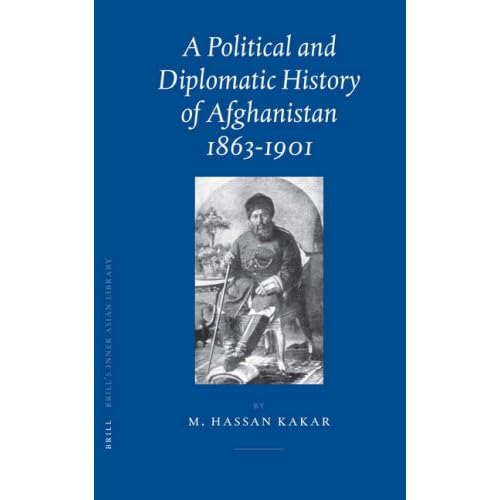
                        More books by Hassan M. Kakar'.
                        Afghanistan: The Soviet Invasion and the Afghan Response, 1979-1982

                        A Political And Diplomatic History of Afghanistan, 1863-1901


                        More info on Anglo-Afghan wars coming soon..

                        Comment


                        • #13
                          Battles of the Second Anglo-Afghan War

                          The Battle of Ali Masjid

                          War: Second Afghan War.

                          Date: 21st November 1878.

                          Place: At the Afghan, western, end of the Khyber Pass on the border between Afghanistan and India.

                          Combatants: British and Indian troops against the Afghan army and tribesmen.

                          Generals: Lieutenant General Sir Sam Browne VC against Gholam Hyder Khan.

                          Size of the armies: 12,000 British and Indian troops against 3,700 Afghan troops and an unknown number of Afghan tribesmen.


                          Afghan Tribesmen


                          Afghanistan showing all the battle sites of the Second Afghan War:
                          Ali Masjid, Peiwar Kotal, Charasiab and Kabul in the North East:
                          Ahmed Khel in the centre and Maiwand and Kandahar in the South

                          Uniforms, arms and equipment:
                          The British and Indian forces were made up predominantly of native Indian regiments from the three presidency armies: the Bengal, Bombay and Madras armies with smaller regional forces such as the Hyderabad contingent, and the newest, the powerful Punjab Frontier Force. Indian regiments were brigaded with British regiments for deployment in the field.

                          The Mutiny of 1857 had brought great change to the Indian Army. Prior to the Mutiny the old regiments of the presidencies were recruited from the higher caste Brahmin Hindus and Muslims of the provinces of Central and Eastern India, principally Oudh. 60 of the 90 infantry regiments of the Bengal Army mutinied in 1857 and many more were disbanded leaving few to survive in their pre-1857 form. A similar proportion of Bengal Cavalry regiments disappeared.

                          British infantry firing the opening shots of the Second Afghan War at the Battle of Ali Masjid


                          The British Army overcame the mutineers with the assistance of the few loyal regiments of the Bengal Army and the regiments of the Bombay and Madras Presidencies, which on the whole did not mutiny. But principally the British turned to the Gurkhas, Sikhs, Muslims of the Punjab and Baluchistan and the Pathans of the North West Frontier for the new regiments with which Delhi was recaptured and the Mutiny suppressed.

                          After the Mutiny the British developed the concept of the “Martial Races” of India. Certain Indian races were more suitable to serve as soldiers, went the argument, and those were coincidentally the races that had saved India for Britain. The Indian regiments that invaded Afghanistan in 1878, although mostly from the Bengal Army, were predominantly recruited from the “martial” races: Jats, Sikhs, Muslim and Hindu Punjabis, Pathans, Baluchis and Gurkhas.

                          Prior to the Mutiny each army had a full quota of field and horse artillery batteries. The only Indian artillery units allowed to exist after the Mutiny were the mountain batteries. All the horse, field and siege batteries were from 1859 found by the British Royal Artillery.

                          In 1878 the regiments were beginning to adopt “khaki” for field operations. The technique for dying uniforms varied widely producing a range of shades of khaki, from bottle green to a light brown drab.

                          As regulation uniforms were unsatisfactory for field conditions in Afghanistan, the officers in most regiments improvised more serviceable forms of clothing.

                          Every Indian regiment was commanded by British officers, in a proportion of some 7 officers to 650 soldiers in the infantry. This was an insufficient number for units in which all tactical decisions of significance were taken by the British and was particularly inadequate for less experienced units.

                          The British infantry carried the single shot, breech loading, .45 Martini-Henry rifle. The Indian regiments still used the Snider; also a breech loading single shot rifle, but of older pattern and a conversion of the obsolete muzzle loading Enfield weapon.

                          The cavalry were armed with sword, lance and carbines, Martini-Henry for the British; Sniders for the Indian.

                          The British artillery, using a variety of guns, many smooth bored muzzle loaders, was not as effective as it could have been if the authorities had equipped it with the breech loading steel guns being produced for European armies. Artillery support was frequently ineffective and on occasions the Afghan artillery proved to be better equipped than the British.

                          The army in India possessed no higher formations above the regiment in times of peace other than the staffs of static garrisons. There was no operational training for staff officers. On the outbreak of war brigade and divisional staffs had to be formed and learn by experience.

                          The British Army had in 1870 replaced long service with short service for its soldiers. The system was not yet universally applied so that some regiments in Afghanistan were short service and others still manned by long service soldiers. The Indian regiments were all manned by long service soldiers. The universal view seems to have been that the short service regiments were weaker both in fighting power and disease resistance than the long service.

                          Winner: The British and Indians.

                          British cavalry newly arrived in India reviewed by the Commander in Chief


                          British and Indian Regiments:
                          British Regiments:
                          10th Hussars, now the King’s Royal Hussars *.
                          Rifle Brigade (4th Battalion), now the Royal Green Jackets *.
                          Royal Horse Artillery
                          Royal Field Artillery
                          Royal Garrison Artillery
                          17th Regiment, later the Leicestershire Regiment and now the Royal Anglian Regiment*.
                          51st Regiment, later the King’s Own Yorkshire Light Infantry and now the Light Infantry*.
                          81st Regiment, later the North Lancashire Regiment and now the Queen’s Lancashire Regiment*.

                          Indian Regiments:
                          11th Bengal Cavalry (Probyn’s Horse) *.
                          Queen’s Own Guides Cavalry*.
                          6th Bengal Native Infantry (Jat Light Infantry) *.
                          14th Bengal Native Infantry (14th Ferozepore Sikhs)*.
                          20th Bengal Native Infantry (Brownlow’s Punjabis) *.
                          27th Bengal Native Infantry (Punjabis) *.
                          45th Bengal Native Infantry (Rattray’s Sikhs) *.
                          4th Gurkha Regiment*.
                          Queen’s Own Guides Infantry*.
                          1st Sikh Infantry, (FF) *.
                          1st Bengal Sappers and Miners *.
                          *These regiments have Ali Masjid as a battle honour.
                          Order of Battle of the Peshawar Valley Field Force:
                          GOC: Lieutenant General Sir Samuel Browne VC.

                          Cavalry Brigade: commanded by Brigadier-General Charles Gough VC.
                          10th Hussars: 2 squadrons.
                          11th Bengal Cavalry (Probyn’s Horse)
                          Queen’s Own Guides Cavalry.

                          The Colour Party of a Sikh Regiment


                          Royal Artillery: commanded by Colonel Williams.
                          1 battery RHA
                          1 battery RFA
                          3 batteries RGA.
                          (several batteries carried on elephants).
                          3 batteries Mountain Artillery (the guns carried on mules).

                          Queen's Own Corps of Guides


                          Officers of the 51st King's Own Light Infantry after the capture of Ali Masjid


                          1st Infantry Brigade: commanded by Brigadier-General Macpherson VC.
                          4th Bn Rifle Brigade.
                          20th Bengal Native Infantry (Brownlow’s Punjabis)
                          4th Gurkhas.

                          2nd Infantry Brigade: commanded by Brigadier-General Tytler VC.
                          1st Bn 17th Foot.#
                          Guides Infantry.
                          1st Sikh Infantry, (FF)

                          3rd Infantry Brigade: commanded by Brigadier-General Appleyard.
                          81st Foot.
                          14th Bengal Native Infantry (14th Ferozepore Sikhs)
                          27th Bengal Native Infantry (Punjabis)

                          4th Infantry Brigade: commanded by Brigadier-General Browne.
                          51st Foot.
                          6th Bengal Light Infantry (Jats).#
                          45th Bengal Native Infantry (Rattray’s Sikhs)

                          # These regiments fought in the First Afghan War.

                          Account:
                          The Second Afghan War devastated areas of Afghanistan, particularly around Kabul, had the British and Indian Army on the brink of disaster at Sherpur on the outskirts of Kabul and led to the loss of the 66th Foot and two Indian regiments at Maiwand. The inspired generalship of Sir Frederick Roberts, with the brilliant tactical leadership of many junior officers and the dogged determination of Indian, Gurkha, Highland and English troops brought the British and Indian armies to victory. Against them the Afghans fought with intense religious and national fervour, striving ceaselessly to drive the unbelieving foreigners from their country’s soil.

                          The Battle of Ali Masjid


                          The legacy of the Crimean War from 1854 to 1856 was continuing mistrust between Britain and Russia, focused on the disintegrating Turkish Empire in the near East. The concern of the British Government in Delhi was that Russia would push its eastern borders around and through Afghanistan into India. The intelligence intrigue between the two empires simmered through the second half of the 19th Century under the half mocking title of “The Great Game”.

                          Relations between Britain and Russia deteriorated dramatically during the Russo-Turkish War of 1877. The Tsar’s governor in Central Asia compelled the Amir of Afghanistan, Sher Ali, to accept a Russian Mission at his capital. Spurred on by the Home Government the British Viceroy of India, Viscount Lytton, demanded that the Afghans accept a counterbalancing British Mission in their capital headed by General Sir Neville Chamberlain and accompanied by a substantial military escort. Sher Ali refused.

                          The view from Ali Masjid down the Khyber Pass


                          Negotiations took place between the British and the Afghans at Peshawar.
                          On 21st September 1878 Major Cavagnari led the advance party of the British Mission into the Khyber Pass on its way to Kabul, to be stopped by Afghan troops on the border and turned back.

                          Incensed, Lord Lytton issued an ultimatum to Sher Ali, requiring him to accept the mission or face invasion. Sher Ali would probably have accepted the mission, given time, but the British did not give him the chance. On 20th November 1878 the ultimatum expired and the British/Indian armies crossed the border into Afghanistan.


                          The Afghan fort of Ali Masjid seen from the Khyber Pass.


                          The invasion followed three routes: The Peshawar Valley Field Force, commanded by Lieutenant General Sir Sam Browne VC, was to leave Peshawar and head directly west up the Khyber Pass to the Afghan fort of Ali Masjid, guarding the pass from the top of an imposing mountain. Once Ali Masjid was taken the force would continue to Dakka or on to Jellalabad.

                          The Kurram Field Force, 16,200 men and 48 guns, commanded by Major General Roberts VC, was to leave Kohat on the Indus and enter Afghanistan by the Kurram Pass, following the Kurram River up to the Shutargardan Pass; in many ways the most direct route to Kabul.

                          From the South, Lieutenant General Stewart, with the South Afghanistan Field Force, would enter Afghanistan through the Bolan and Khojak Passes, taking Quetta and heading for the southern Afghan city of Kandahar.

                          The task of each force was limited; to seize some Afghan territory and halt.

                          On 20th November 1878, Browne’s force, the strongest, was over the border, heading for the Afghan fort at Ali Masjid, lying at the head of the Khyber Pass. Major Cavignari and Lieutenant Colonel Jenkins of the Guides Cavalry had reconnoitred the Khyber and the plan of attack was in place.

                          3,700 Afghans with 24 guns held the positions in and around the fort and along the line of heights stretching to each side.

                          Elephant drawn battery of guns advancing up the Khyber Pass


                          The 1st and 2nd Infantry Brigades moved up the Lashora Valley, 4 miles to the East of the Khyber, with the aim of outflanking the Afghan positions and occupying the pass behind them.

                          The 3rd and 4th Infantry Brigades pushed straight up the Khyber Pass to pin the Afghans and begin the attack on the fort.

                          The 1st and 2nd Brigades had some 18 hours to make their journeys of around 11 miles, but the night was dark and movement was difficult.

                          The main force moved up the Khyber in the early morning of 21st November 1878, exchanging shots with Afghan patrols. Guns were brought up and the artillery in the pass and in the fort bombarded each other, while the British waited for the outflanking move to take effect.

                          Afghan guns captured at Ali Masjid


                          At around 2.30pm Browne sent his two infantry brigades forward on either side of the pass to attack the Afghan positions. The fighting continued until around 5pm when it became clear that little progress was likely to be made that day and the two brigades withdrew and camped for the night.

                          The next morning, 22nd November 1878, the attack was renewed, but it immediately became apparent that the Afghans had withdrawn. The outflanking force was still short of the Khyber and the Afghans made good their retreat, largely unimpeded.
                          The rest of the day was spent regrouping.

                          Punjab Mountain Artillery


                          On 23rd November 1878 General Browne took his cavalry forward and the next day occupied Dakka, where his force remained for the rest of the first part of the war.
                          Casualties: British casualties were 58. Among those low casualties were Major Birch and Lieutenant Fitzgerald of the 27th Punjabis killed and the sole British officer of the 14th Sikhs wounded in the attack. Afghan casualties are unknown but will have been around 1,000 including 500 captured during the retreat.

                          Follow-up:

                          The British aim in the war was to occupy Afghan territory and thereby force the Ameer to concede the British mission at Kabul.

                          With the capture of Ali Masjid and the advance to Dakka, General Sam Browne’s Peshawar Field Force achieved its strategic aim. Following the success of Roberts’ Kurram Valley Field Force at Peiwar Kotal and the occupation of Kandahar by the South Afghanistan Field Force, the Ameer’s successor, Sher Ali, agreed to the Kabul mission in negotiations at Gandamak.

                          The murder of the British envoy to Kabul, Sir Louis Cavignari, within two months of the signing of the Treaty of Gandamak, led promptly to the terrible second phase of the war.Regimental anecdotes and traditions:
                          The 17th Foot entered Afghanistan for the second time in 1878, having taken a notable part in the First Afghan War, including the storming of the Kabul Gate at Ghuznee in 1839. For its long service in India the 17th was awarded as its badge the Tiger with the inscription “Hindoostan”. The Leicestershire Regiment, as the 17th became in 1882, carried the nickname of the Leicestershire Tigers. The regiment was amalgamated into the large “Royal Anglian Regiment” but the name the Tigers lives on with the Leicester City Rugby Football Club.

                          References:
                          The Road to Kabul; the Second Afghan War 1878 to 1881 by Brian Robson.
                          The Afghan War medal issued to a trooper in the 10th Hussars with the clasp Ali Masjid. With thanks to Historik Orders of Greenwich, Connecticut, USA (right)

                          The Kabul and Kandahar Star, issued to those regiments that fought at Kabul, took part in General Roberts’ march to Kandahar and in the battle at Kandahar. With thanks to Historik Orders of Greenwich, Conn. USA.

                          Comment

                          Working...
                          X