

 Tweet
Pashtun embroidery is very beautiful  Embroidery is used by Pashtuns to decorate a wide range of objects. It is used for household objects such as table cloths, mats, towels, curtains, bags, prayer cloths, as well as decorative blankets for horses and camels. In this thread please post pictures of Pashtun embroidery.
I found this article about Pashtun embroidery here:
http://www.texdress.nl/de.afemb.014.html
"There are various groups of Pashtun, each with their own style of embroidery. There is also a difference between Pashtun urban embroidery and Pashtun nomadic embroidery.
The Pashtun living in the Wardak region, for example, are noted for multi-coloured silk embroideries on a monochrome cotton or silk ground. The embroideries are worked in satin stitch in complex geometric designs that radiate out from a central motif, such as a star.
Mangal Pashtun, from eastern Afghanistan, often use satin stitch to create lozenges that cover the whole embroidered surface. The difference is in the accent, worked in holbein and back stitches in black and white, so contrasting with the colour of the rest of the embroidery. The designs do not follow the grain, but instead form diagonal lines that accentuate the lozenge designs.
Waistcoats for Pashtun men are often decorated with gold or silver coloured braids, which are sewn in intricate, geometric designs onto the ground material, such as red velvet. This type of embroidery is also used for women's dresses."
Embroidery is used by Pashtuns to decorate a wide range of objects. It is used for household objects such as table cloths, mats, towels, curtains, bags, prayer cloths, as well as decorative blankets for horses and camels. In this thread please post pictures of Pashtun embroidery.I found this article about Pashtun embroidery here:
http://www.texdress.nl/de.afemb.014.html
"There are various groups of Pashtun, each with their own style of embroidery. There is also a difference between Pashtun urban embroidery and Pashtun nomadic embroidery.
The Pashtun living in the Wardak region, for example, are noted for multi-coloured silk embroideries on a monochrome cotton or silk ground. The embroideries are worked in satin stitch in complex geometric designs that radiate out from a central motif, such as a star.
Mangal Pashtun, from eastern Afghanistan, often use satin stitch to create lozenges that cover the whole embroidered surface. The difference is in the accent, worked in holbein and back stitches in black and white, so contrasting with the colour of the rest of the embroidery. The designs do not follow the grain, but instead form diagonal lines that accentuate the lozenge designs.
Waistcoats for Pashtun men are often decorated with gold or silver coloured braids, which are sewn in intricate, geometric designs onto the ground material, such as red velvet. This type of embroidery is also used for women's dresses."
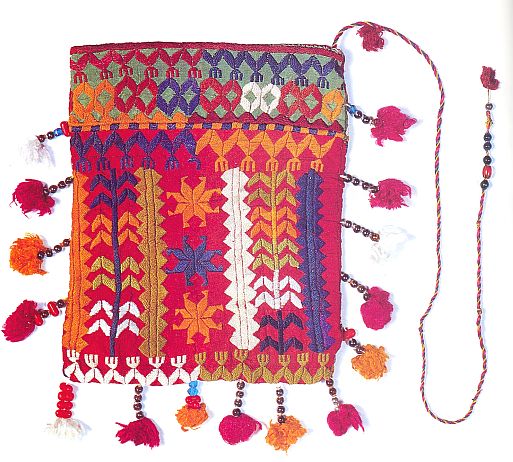
The item above is described as a Pashtun purse, Maydan, 1950

Described as Pashtun Jacket Mangal, Paktya, 1930.
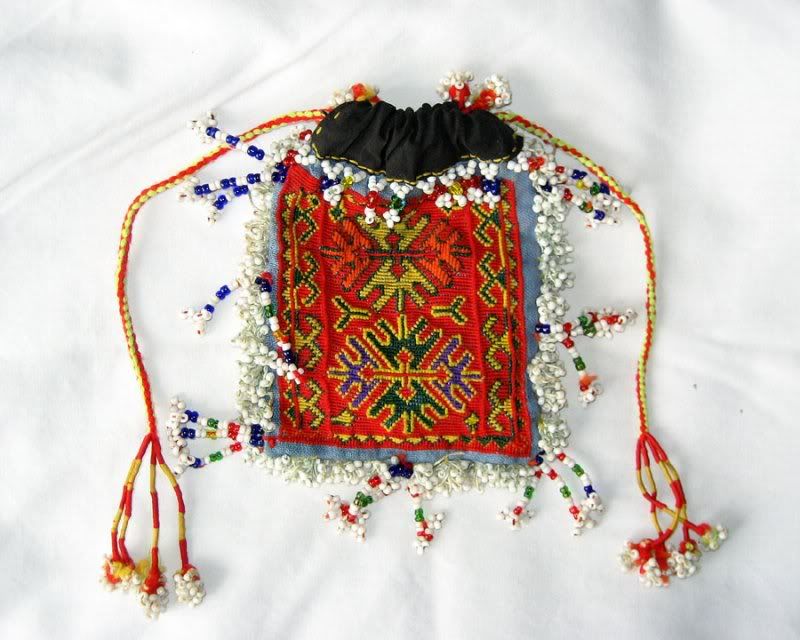
Purse-Swat, Pakistan
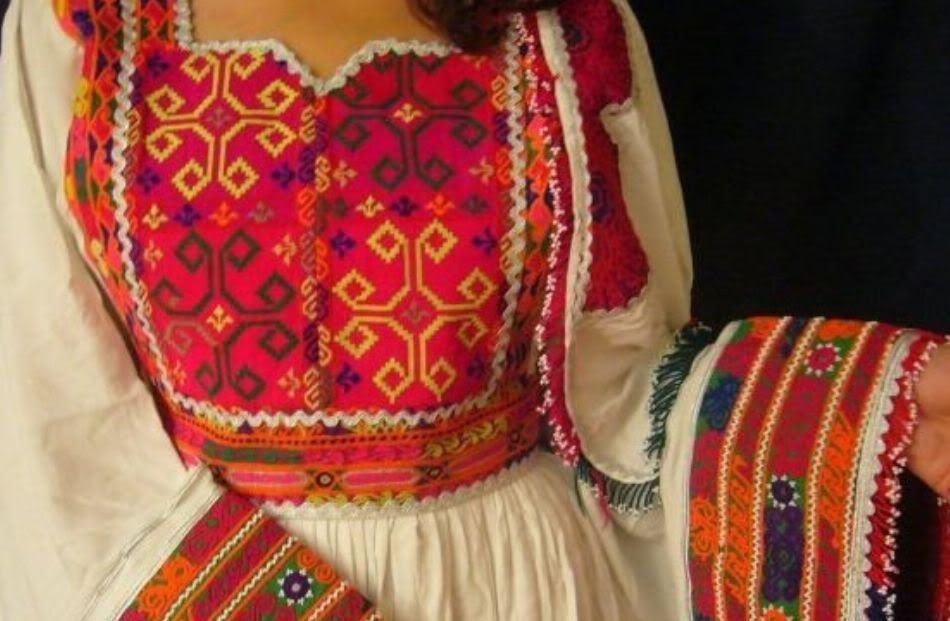
Wardak embroidery on traditional dress
Afghanistan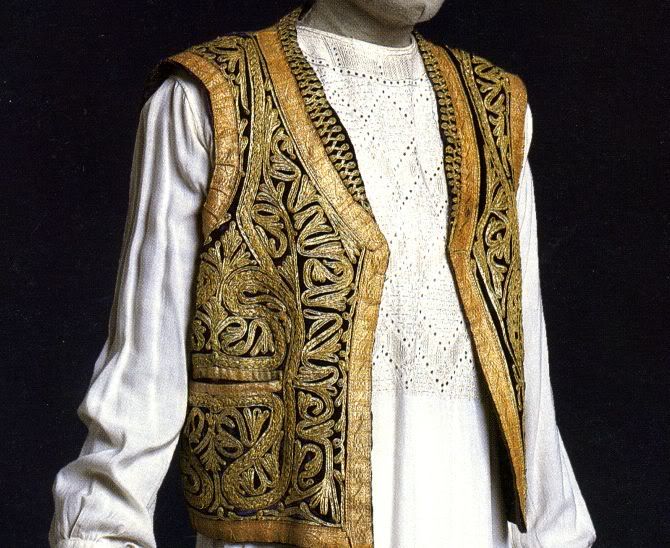
Pashtun embroidered waistcoat
Afghanistan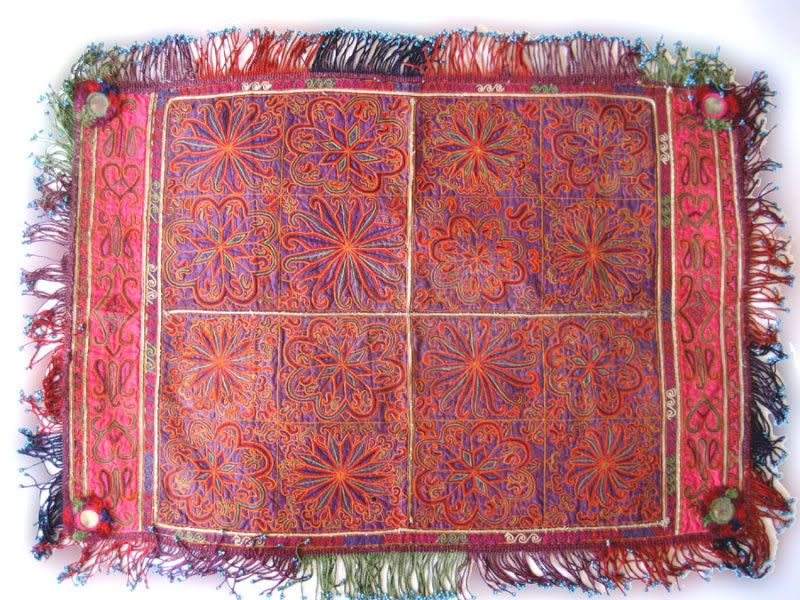
Afghanistan - chain stitch
Paktia, Afghanistan
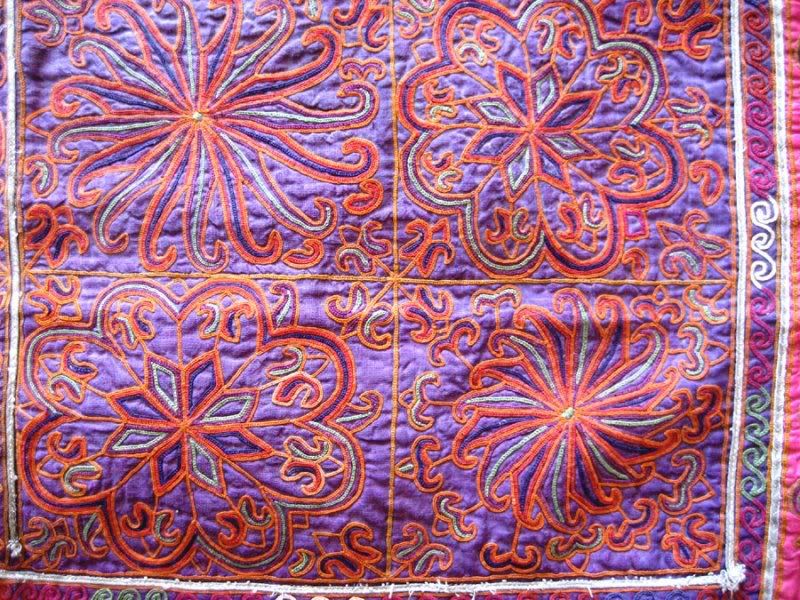
Afghanistan - chain stitch (detail)
Paktia, Afghanistan

Koochie Embroidery
Gardez, Afghanistan

Silver thread and mirror embroidery
Silver thread and mirror embroidery
Ghazni, Afghanistan
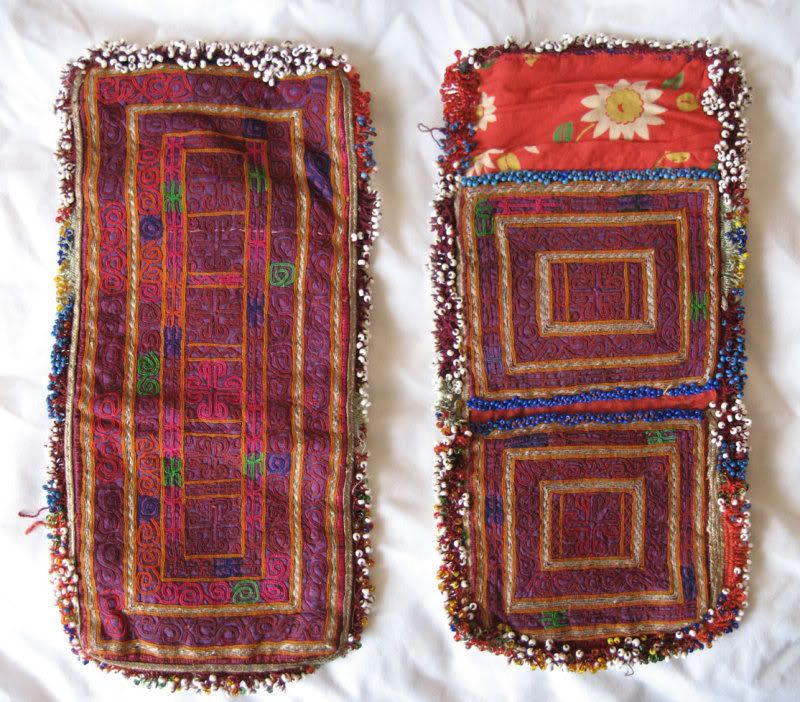
Koochie embroidered wallet
Afghanistan
Very tight chain stitch on Bukara silk.
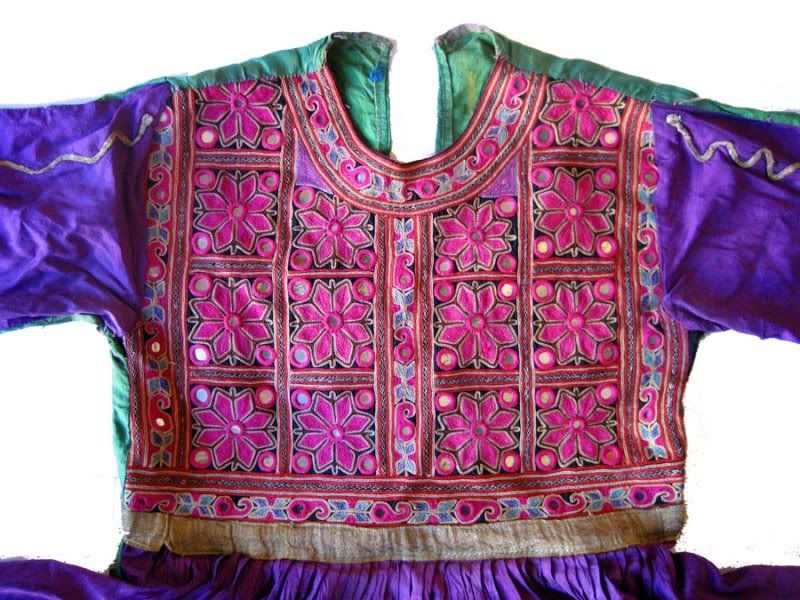
Koochie dress-detail
Afghanistan
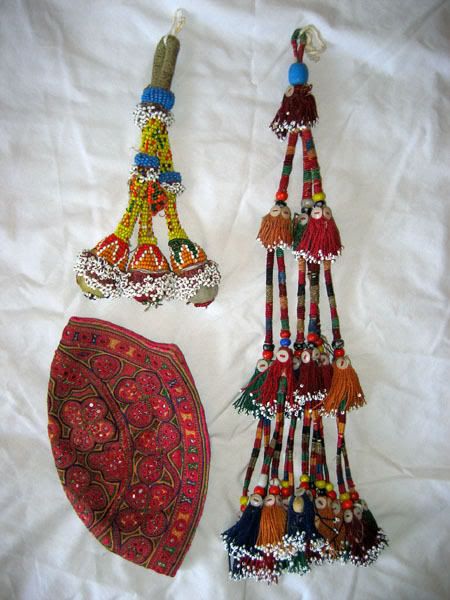
Embroidered cap and tassels
Embroidered cap from Kandahar. Tassels nomadic.

Pashtun Vest
Ghazni area, Katawaz. Afghanistan.

Pashtun Cushion Cover
Pakistan
Silk embroidery on cotton

Pashtun Shawl
Swat Valley, Pakistan
Silk satin-stitch embroidery on cotton.

Pashtun Cushion Cover
Swat Valley, Pakistan
Silk embroidery on cotton

Pashtun Child's Vest
Ghazni area, Afghanistan
Fine silk cross-stitch embroidery on cotton, with silver couching, applied gold braid, and beaded edging.


Comment