Announcement

Collapse
No announcement yet.

Non-muslims of Afghanistan & Afghania (NWFP)

Collapse
X
 
  • Filter
  • Time
  • Show
Clear All
new posts

  • Non-muslims of Afghanistan & Afghania (NWFP)

    This thread is strictly non-political & is to celebrate the history, culture of non-muslims in the Pashtoon belt areas.

    There is a long history of Buddhists, Sikhs, hindus & even probably some Christians from these areas. They deserve some respect for their contributions to the rich culture, architecture, language etc


    Temple at Hurripore [Hazara District]
    [B]Photograph of a small shrine at Haripur, North West Frontier Province, taken by an unknown photographer in the 1860s. This temple has two cat-like stone figures guarding the steps.

    The town of Haripur was founded in 1822 by Sardar Hari Singh, the Sikh Governor of Hazara.

    It became the headquarters of the Haripur tahsil of the Hazara District after annexation. However, it was abandoned in favour of Abbottabad in 1853.

  • #2
    Stunningly beautiful Bhai Joga Singh Gurdwara, in Peshawar

    The safest and most inclusive global community of photography enthusiasts. The best place for inspiration, connection, and sharing!

    The safest and most inclusive global community of photography enthusiasts. The best place for inspiration, connection, and sharing!

    At the Bhai Joga Singh Gurdwara, in Peshawar, Pakistan.

    Comment


    • #3

      Comment


      • #4
        Daulat Ram & his family in the back streets of Kandhar

        Comment


        • #5
          Originally posted by PashtunDost View Post
          I have always wondered how this statue must have looked at night time, imagine the moon light shining on it at night, it must have look majestic

          Comment


          • #6
            Thank you very very much, very nice pics
            .

            Comment


            • #7
              Originally posted by PashtunDost View Post
              they look pashtun not indian.
              "You have the watches, we have the time.” – a Talib.

              Comment


              • #8
                Originally posted by Old School Killiwal View Post
                they look pashtun not indian.
                They are hindu pashtuns
                .

                Comment


                • #9
                  Originally posted by Bharati View Post
                  They are hindu pashtuns
                  Hindu Pashtuns are from India. They settled in Pashtunkhwa and started adopting Pashtun customs.
                  "You have the watches, we have the time.” – a Talib.

                  Comment


                  • #10


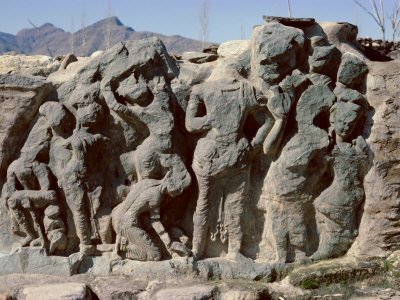
                    Introducing the Butkara ruins in legendary land of Swat. Swat has to be the most beautiful district in Pakhtunkhwa.
                    I am the author of Badal, an upcoming fiction novel on the War on Terror. For more information about me visit [URL="http://www.havisultan.com"]www.havisultan.com[/URL]

                    Follow me on twitter:
                    [url]https://twitter.com/#!/HaviZSultan[/url]

                    Comment


                    • #11
                      Maa Sokhtagan Nashinas - YouTube

                      I am no bird, and no nest ensnares me.

                      non commercial would cost less if he was in charge himself which he plans on doing. right now it's n herat but soon it will be in qanadahar.

                      Comment


                      • #12
                        ^ Can I get the translation of that, it sounds beautiful

                        Comment


                        • #13
                          A small christian cemetary in Kabul that survived Talibans


                          I remember the first time I went to that graveyard.

                          It was a cold winter’s day in early 1994 when I first met Rahimullah, grave digger and caretaker of the British Cemetery in Kabul. He looked poor in tattered Shalwah Kamez and a shawl wrapped round his shoulders to keep out the biting cold. The headstones and graves were dusted with snow. In the distance the Hindu Kush range stood high above Koh Daman, the hills that skirt Kabul. Rahimullah looked about 50 then.

                          Since the Soviets withdrew from Kabul in 1989 he hadn’t been paid. I knew that Aurel Stein, the famous Hungarian born British Archaeologist was buried here in 1943. I didn’t know that this would to prove to be the most interesting grave yard I had ever seen. Its oldest residents are British soldiers from the Anglo-Afghan wars. Like the 29 members of the 67th Foot (South Hampshire Regiment), buried in a mass grave after a failed attempt to climb a hill south of Kabul on the 13th December 1879.

                          All that really remains of them is part of their grave stone, stuck along one side of the cemetery wall with other fragments of history. Long lists that tell no stories other than the staccato military details of name, rank, regiment and date. In between are assorted ranks of other visitors who never made it home.

                          Explorers, journalists, hippies who lost the trail, engineers and aid workers; Italians and Germans and Canadians and Polish and many from other countries.

                          Their headstones tell a snippet of Afghanistan’s rich history.


                          Rahimullah died last year and responsibility for maintaining the graveyard has passed to his son, Abdul Sami.

                          ''This place is very nearly not here,'' he tells the Herald through an interpreter. ''But my father was enthusiastic and passionate. During the Taliban days, I remember, they would come here and tell him to stop looking after the cemetery, he should not tend the graves of the infidels. They threatened him.

                          ''But my father knew it was his responsibility, that he should care for it. So he did, it didn't matter what the Talibs said, or that the people buried here are Christians,'' he said.


                          ''Sometimes families come but usually there is no one.'' ... Abdul Sami, who inherited the guardianship of the British Christian Cemetery in Kabul from his father. Photo: Kate Geraghty

                          Comment


                          • #14
                            ^ more like a snippet from afghanistans dark history. those people are the ones who invaded and occupied afghanistan because the country wanted relations with more than just 1 country.
                            There are people today who think that admitting God’s absolute greatness decreases the value and importance of humans in the creation, as if God and mankind are rivals competing in greatness and power. Meanwhile I feel that whenever our perception of God’s greatness increases, with it we become greater, because we are the creation of a great God.

                            Sayyid Qutb

                            Comment


                            • #15
                              On the same grounds that Auschwitz is seen as a stain on German history, the graves of the dead Anglo-intruders should be deemed as such as well.
                              [QUOTE=Afghanistan2010;658085][B]He is no different [COLOR="Red"]than us[/COLOR][/B],[B]he[COLOR="Red"] blindly believes [/COLOR]in the words [COLOR="Red"]of other men[/COLOR][/B],:[/QUOTE]

                              2010 Admitting he's a blind believer not in God, but what other men says.

                              Comment

                              Working...
                              X