
 Tweet
پښتو درس
Pakhto Dars
Pakhto Dars
Inspired by MsFutureDoc & Mesbah - thanks both - دواړه ته ډیره مننه. Like many here, I'm not in any Pashto Master class - I'm a learner too and I too have many many questions that I would like to put to other contributing members. Support required to keep this going.
I'm hoping that we can build the پښتو درس section together with other lessons and members willing to take on the teacher role.
Keyboarding is much easier [for me] in English (speed/accuracy), but I'm willing to give it a go in Pashto (possible, just a much slower process) and would encourage others to contribute in Pashto within a supportive environment. No politics or drag-downs. Just support, gentle correction, and more support - and an acceptance that Pashto spellings (in Pashto) vary especially the more we study the written form.
Oh, and it's not meant to be competitive - did I say I preferred "supportive"?
I've taken this from http://gloss.dliflc.edu/index.aspx
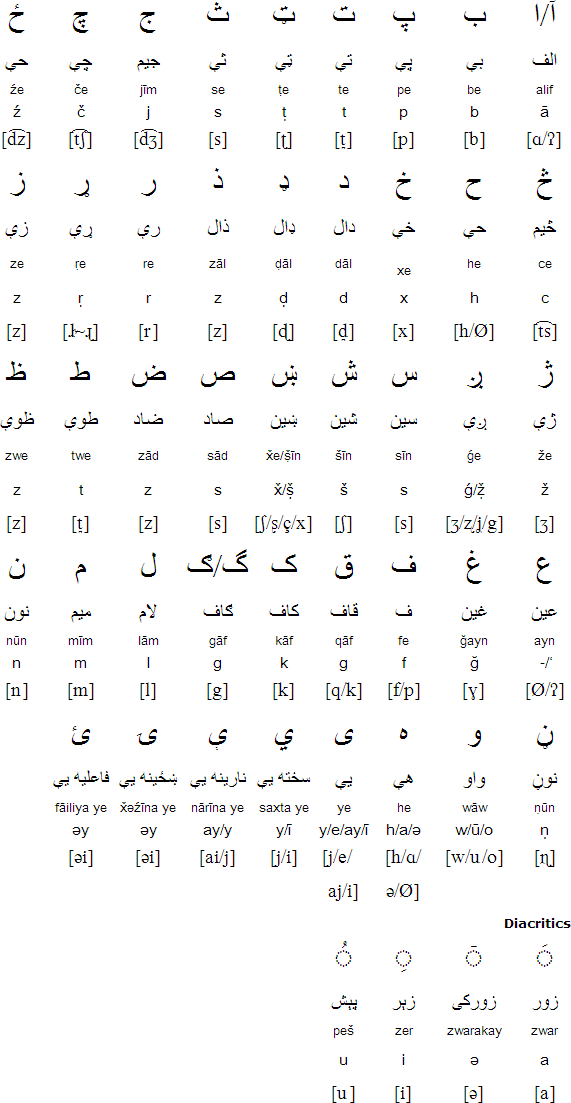
I think it illustrates a simple conversation (at Level 1) that can be used as a learning point for reading and comprehension. Some of the vocabulary isn't what some of us use in our daily speech, but most of us live in a situations where we are surrounded by Arabic, Farsi, Urdu and various forms of Pashto, so it should begin to make sense. I make a basic assumption that most here know the Arabic alphabet and how this joins. With that I think I can assume that most of us will pick up the unique Pashto characters (it's just a skills transfer, after all).
عزیزالله. سلام وعلیکم مدیر صاحب. زه عزالله یم د احمد پلار
مدیر. وعلیکم وسلام . مهربانی وکی کینی. څه خدمت درته کولی شم؟
عزیزالله . غوارم احمد په ښوونځی کی شامل کړم
مدیر. ډیرښه , دا فورمه ډکه کره, احمد به ښوونځی کې شامل شی
عزیزالله. ډیره مننه
Listen to the audio file (last conversation)/see English translation to assist with the reading if you need. (Link: http://gloss.dliflc.edu/products/glo...08_source.html)
Some questions to start the comprehension check:
1. Who are the two speakers?
2. Who is Ahmad?
3. What is the question that is asked here?
4. What is the second instruction that is given here?
5. Define ښوونځی andمدیر
6. What phonemes do the letters ړ ځ څ پand ډ represent?






Comment