
 Tweet
Tweet
 Climate change: Bank on it
Climate change: Bank on it
Never mind those dire 100-year forecasts; World Bank is setting aside billions to deal with catastrophes within 20 years
[IMG]http://media.winnipegfreepress.com/images/240*173/5070730.jpg[/IMG],
By: Howard Schneider
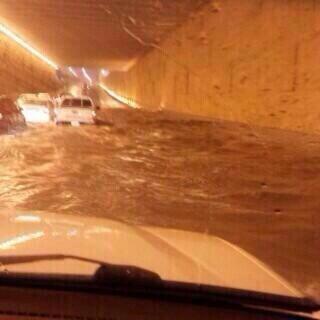
The World Bank is beginning to commit billions of dollars to flood prevention, water management and other projects to help major Asian cities avoid the expected impact of climate change, a dramatic example of how short the horizon has become to alleviate the effects of global warming.
000
Bank officials said this week that those effects are not considered a distant risk anymore, but rather are a near certainty "in our planning period" of the next 20 years or so.
In a recent study, the bank, for example, projected that major portions of Bangkok would be flooded by 2030. A flood control system built for Ho Chi Minh City only a decade ago is now considered inadequate and needs a $2-billion overhaul, said Rachel Kyte, the bank's vice president for the environment and sustainable development.
The system "was built for a scenario that no longer exists," Kyte said. "The investment they made is obsolete" for the sea level rise projected in coming years -- about half a foot by 2030 under current projections, and double that a decade later.
World leaders have committed to try to curb greenhouse gas emissions enough to limit the global temperature increase to about 3.6 degrees Fahrenheit, or 2 degrees centigrade. A World Bank report last year projected that the world is currently on pace for an increase of perhaps twice that over the next century -- potentially devastating the water and food supplies in some parts of the world and creating tens of millions refugees fleeing a degraded environment.
But that dire prediction 100 years off still seemed "a long way away," Kyte said, so the bank commissioned a follow-up report to look at what is likely to happen in the next few years as global temperatures move towards the two degree centigrade increase.
The impact is substantial, and falls most heavily on less developed nations in sub-Saharan Africa, and parts of Asia most prone to flooding and harsh tropical storms.
In Africa, areas relied on for corn and other crops may become too arid to farm, and grazing lands wither. Though a serious problem, bank officials said they are hopeful that advances in crop science and genetics by then will have produced drought-resistant varieties of corn and other plants adaptable to the emerging environment.
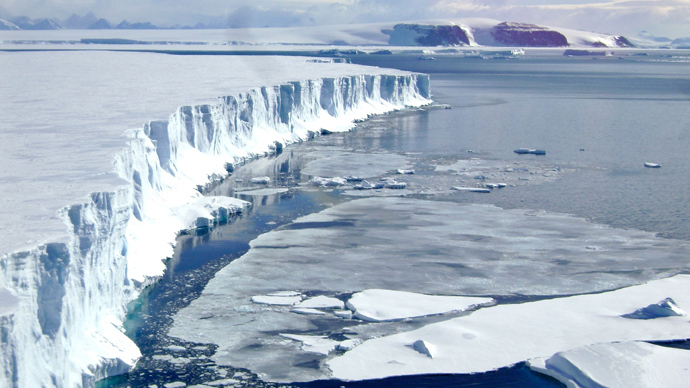
In Asia the threat is from too much water as seas rise, mountain glaciers melt, and intense storms overwhelm urban systems. Rising ocean temperatures and saltwater intrusion into rivers could ruin local fisheries -- a key source of protein -- in nations like Vietnam.
The issue has become a main concern for World Bank President Jim Yong Kim, who sees it as a chief risk to alleviating global poverty. The progress of the last 20 years, he argues, could be set back substantially if nations are forced to devote resources to recovering from storms and natural disasters instead of investing in health, education and other services that could boost their societies.
As a result, Kyte said the bank is now focusing much of its planning in some countries on how to build infrastructure and re-engineer cities to better withstand environmental stress.
That might include elaborate dike networks to hold back the rising tide, construction of holding areas that could capture water running downhill after intense rains, or ensuring that generators or other critical power equipment is moved out of basements, and pumping or other systems are installed to protect major structures.
Among the world's several development banks, funding for projects to help poorer countries battle climate change rose from $10 billion in 2011 to nearly $25 billion in 2012, Kyte said, and is expected to continue rising.
-- Washington Post
Republished from the Winnipeg Free Press print edition June 22, 2013 D5
Never mind those dire 100-year forecasts; World Bank is setting aside billions to deal with catastrophes within 20 years
[IMG]http://media.winnipegfreepress.com/images/240*173/5070730.jpg[/IMG],
By: Howard Schneider
The World Bank is beginning to commit billions of dollars to flood prevention, water management and other projects to help major Asian cities avoid the expected impact of climate change, a dramatic example of how short the horizon has become to alleviate the effects of global warming.
000
Bank officials said this week that those effects are not considered a distant risk anymore, but rather are a near certainty "in our planning period" of the next 20 years or so.
In a recent study, the bank, for example, projected that major portions of Bangkok would be flooded by 2030. A flood control system built for Ho Chi Minh City only a decade ago is now considered inadequate and needs a $2-billion overhaul, said Rachel Kyte, the bank's vice president for the environment and sustainable development.
The system "was built for a scenario that no longer exists," Kyte said. "The investment they made is obsolete" for the sea level rise projected in coming years -- about half a foot by 2030 under current projections, and double that a decade later.
World leaders have committed to try to curb greenhouse gas emissions enough to limit the global temperature increase to about 3.6 degrees Fahrenheit, or 2 degrees centigrade. A World Bank report last year projected that the world is currently on pace for an increase of perhaps twice that over the next century -- potentially devastating the water and food supplies in some parts of the world and creating tens of millions refugees fleeing a degraded environment.
But that dire prediction 100 years off still seemed "a long way away," Kyte said, so the bank commissioned a follow-up report to look at what is likely to happen in the next few years as global temperatures move towards the two degree centigrade increase.
The impact is substantial, and falls most heavily on less developed nations in sub-Saharan Africa, and parts of Asia most prone to flooding and harsh tropical storms.
In Africa, areas relied on for corn and other crops may become too arid to farm, and grazing lands wither. Though a serious problem, bank officials said they are hopeful that advances in crop science and genetics by then will have produced drought-resistant varieties of corn and other plants adaptable to the emerging environment.
In Asia the threat is from too much water as seas rise, mountain glaciers melt, and intense storms overwhelm urban systems. Rising ocean temperatures and saltwater intrusion into rivers could ruin local fisheries -- a key source of protein -- in nations like Vietnam.
The issue has become a main concern for World Bank President Jim Yong Kim, who sees it as a chief risk to alleviating global poverty. The progress of the last 20 years, he argues, could be set back substantially if nations are forced to devote resources to recovering from storms and natural disasters instead of investing in health, education and other services that could boost their societies.
As a result, Kyte said the bank is now focusing much of its planning in some countries on how to build infrastructure and re-engineer cities to better withstand environmental stress.
That might include elaborate dike networks to hold back the rising tide, construction of holding areas that could capture water running downhill after intense rains, or ensuring that generators or other critical power equipment is moved out of basements, and pumping or other systems are installed to protect major structures.
Among the world's several development banks, funding for projects to help poorer countries battle climate change rose from $10 billion in 2011 to nearly $25 billion in 2012, Kyte said, and is expected to continue rising.
-- Washington Post
Republished from the Winnipeg Free Press print edition June 22, 2013 D5
 ,
,  ,
, ,
, ,
, ,
, ,
,
 ,
, ,
,
Comment