Announcement

Collapse
No announcement yet.

End of empire for Western universities?

Collapse
X
 
  • Filter
  • Time
  • Show
Clear All
new posts

  • End of empire for Western universities?

    End of empire for Western universities?
    By Sean Coughlan
    BBC News education correspondent

    By the end of this decade, four out of every 10 of the world's young graduates are going to come from just two countries - China and India.

    The projection from the Organisation for Economic Co-operation and Development (OECD) shows a far-reaching shift in the balance of graduate numbers, with the rising Asian economies accelerating ahead of the United States and western Europe.

    The forecasts for the shape of the "global talent pool" in 2020 show China as rapidly expanding its graduate numbers - set to account for 29% of the world's graduates aged between 25 and 34.

    The biggest faller is going to be the United States - down to 11% - and for the first time pushed into third place, behind India.

    The US and the countries of the European Union combined are expected to account for little more than a quarter of young graduates.

    Russia is also set to decline - its share of the world's graduates almost falling by half since the beginning of the century.

    Indonesia, according to the OECD's projections, will rise into fifth place.

    Degrees of change
    Is this an end-of-empire moment?

    Higher education has become the mirror and magnifier of economic performance - and in the post-World-War-II era, universities in the US, western Europe, Japan and Russia have dominated.

    The US in particular has been the university superpower - in wealth, influence and until recently in raw numbers.


    Chinese parents rent apartments near schools to cut travelling time during university entrance exams
    Up until 2000, the US still had a share of young graduates similar to China. And Japan had as big a proportion of young graduates as India.

    Now China and India are the biggest players.

    Their rise in graduate numbers reflects their changing ambitions - wanting to compete against advanced economies for high-skill, high-income employment.

    Instead of offering low-cost manufacture, they are targeting the hi-tech professional jobs that have become the preserve of the Westernised middle classes.

    Fivefold growth
    As the OECD figures show, this is not simply a case of countries such as China expanding while others stand still.

    Across the industrialised world, graduate numbers are increasing - just not as quickly as China, where they have risen fivefold in a decade.

    The OECD notes that by 2020, China's young graduate population will be about the same as the total US population between the ages of 25 and 64.


    India will have the second largest share of the world's graduates by 2020, says the OECD
    This changing world map will see Brazil having a bigger share of graduates than Germany, Turkey more than Spain, Indonesia three times more than France.

    The UK is bucking the trend, projected to increase its share from 3% in 2010 to 4% in 2020.

    This push for more graduates has a clear economic purpose, says the OECD's analysis.

    Enough jobs?
    Shifting from "mass production to knowledge economy occupations" means improved employment rates and earnings - so there are "strong incentives" for countries to expand higher education.

    But will there be enough graduate jobs to go round?


    Ballpark figures: The US has been the university superpower in the post-World-War-II era
    The OECD has tried to analyse this by looking at one aspect of the jobs market - science and technology-related occupations.

    These jobs have grown rapidly - and the report suggests it is an example of how expanding higher education can generate new types of employment.

    These science and technology jobs - for professionals and technicians - account for about four in every 10 jobs in some Scandinavian and northern European countries, the OECD suggests.

    In contrast - and showing more of the old order - these technology jobs are only a small fraction of the workforce in China and India.

    The OECD concludes that there are substantial economic benefits from investing in higher education - creating new jobs for the better-educated as unskilled manufacturing jobs disappear.

    Quantity or quality?
    The OECD forecast reveals the pace of growth in graduate numbers. But it does not show the quality or how this expansion will translate into economic impact.

    There are other ways of mapping the changing distribution of knowledge.

    Continue reading the main story
    “
    Start Quote

    Each era has its own distinct geography. In the information age, it's not dependent on roads or waterways, but on bases of knowledge”

    Prof Viktor Mayer-Schonberger
    Oxford Internet Institute
    A team at the University of Oxford's Internet Institute has produced a set of maps showing the "geography of the world's knowledge".

    This measures how populations are consuming and producing information in the online world - mapping the level of internet use, the amount of user-generated material in Google, concentrations of academic activity and the geographical focus of Wikipedia articles.

    And in contrast to the rise of the Asian economies, this tells a story of continuing Western cultural dominance.

    "In raw numbers of undergraduates and PhDs, the Asian economies are racing ahead," says Prof Viktor Mayer-Schonberger, from the Oxford Internet Institute.

    "But what's interesting is how the West persists in its positions of strength - because the West controls the institutions.

    Mapping a new world
    "There are more students in China than ever before - but they still use Western mechanisms to publish results, they accept the filters," says Prof Mayer-Schonberger.


    In Oxford's world map of internet users, Europe is bigger than Africa
    "The big question will be whether the Chinese researchers can be as insightful as their Western counterparts - we don't know yet."

    The maps also reveal how much Africa and South America are losing out in this new scramble for digital power.

    Prof Mayer-Schonberger said he was "completely shocked" at the extent of the imbalance.

    Another feature of the Oxford study is to show how research bases and their spin-out economic activity are clustered into relatively small areas.

    In the US, says Prof Mayer-Schonberger, there is hugely disproportionate investment around Silicon Valley and the Boston area, with large tracts of "wasteland" between.

    "Each era has its own distinct geography. In the information age, it's not dependent on roads or waterways, but on bases of knowledge.

    "This is a new kind of industrial map. Instead of coal and steel it will be about universities and innovation."
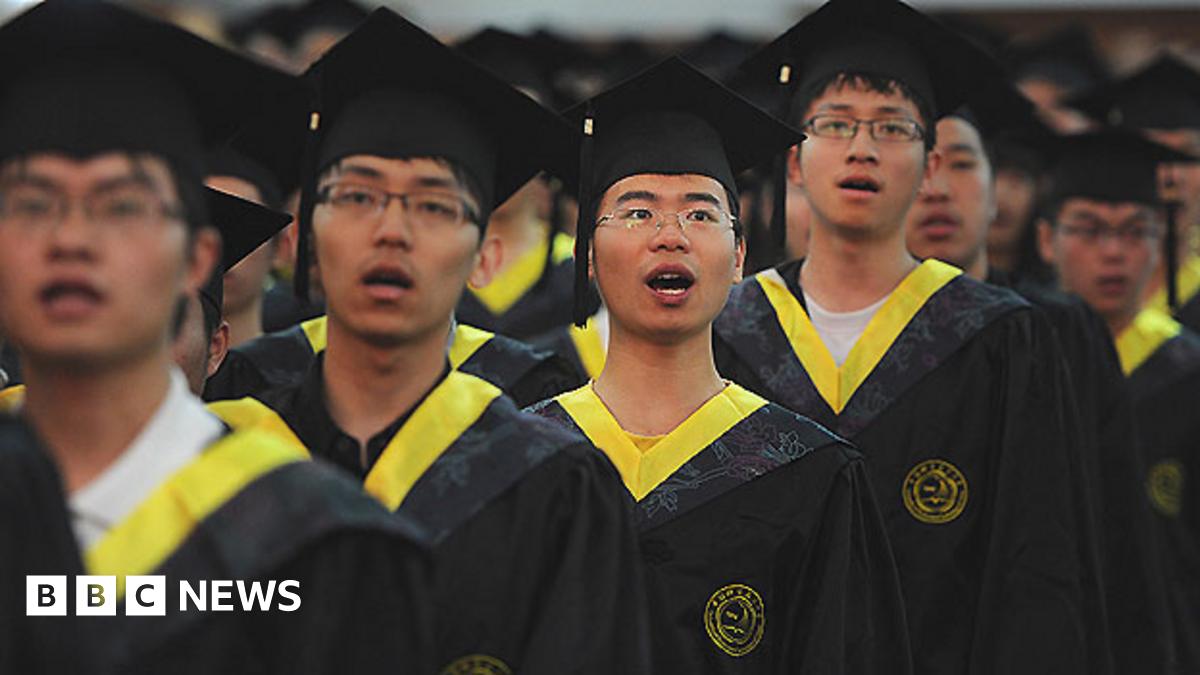
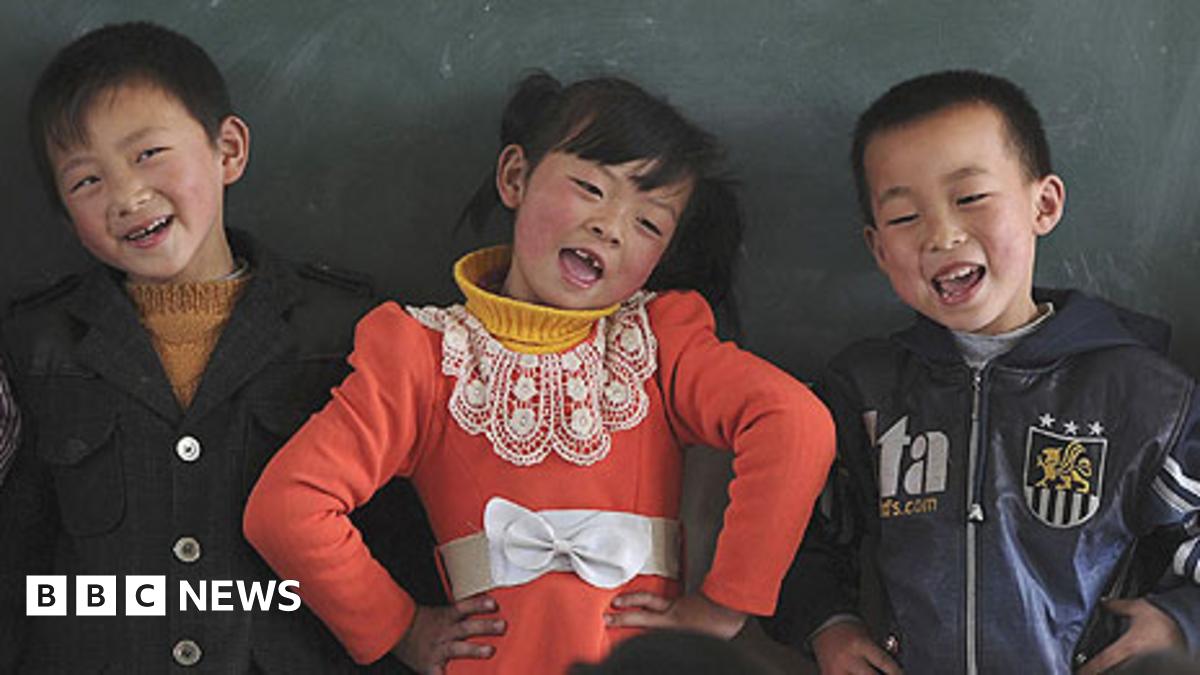
    By the end of this decade, four out of 10 of the world's young graduates are going to come from just two countries - China and India

  • #2
    China's results in international education tests - which have never been published - are "remarkable", says Andreas Schleicher, responsible for the highly-influential Pisa tests.

    These tests, held every three years by the Organisation for Economic Co-operation and Development, measure pupils' skills in reading, numeracy and science.

    Pisa tests - the Programme for International Student Assessment - have become the leading international benchmark.

    The findings indicate that China has an education system that is overtaking many Western countries.

    While there has been intense interest in China's economic and political development, this provides the most significant insight into how it is teaching the next generation.

    'Incredible resilience'
    The Pisa 2009 tests showed that Shanghai was top of the international education rankings.

    But it was unclear whether Shanghai and another chart-topper, Hong Kong, were unrepresentative regional showcases.


    The OECD's Andreas Schleicher: "Fairness and relevance are not the same thing"
    Mr Schleicher says the unpublished results reveal that pupils in other parts of China are also performing strongly.

    "Even in rural areas and in disadvantaged environments, you see a remarkable performance."

    In particular, he said the test results showed the "resilience" of pupils to succeed despite tough backgrounds - and the "high levels of equity" between rich and poor pupils.

    "Shanghai is an exceptional case - and the results there are close to what I expected. But what surprised me more were the results from poor provinces that came out really well. The levels of resilience are just incredible.

    "In China, the idea is so deeply rooted that education is the key to mobility and success."

    Investing in the future
    The results for disadvantaged pupils would be the envy of any Western country, he says.

    Mr Schleicher is confident of the robustness of this outline view of China's education standards.

    In an attempt to get a representative picture, tests were taken in nine provinces, including poor, middle-income and wealthier regions.


    High school students shout slogans such as "I must go to college" in a pre-exam event in Nanjing
    The Chinese government has so far not allowed the OECD to publish the actual data.

    But Mr Schleicher says the results reveal a picture of a society investing individually and collectively in education.

    On a recent trip to a poor province in China, he says he saw that schools were often the most impressive buildings.

    He says in the West, it is more likely to be a shopping centre.

    "You get an image of a society that is investing in its future, rather than in current consumption."

    There were also major cultural differences when teenagers were asked about why people succeeded at school.

    "North Americans tell you typically it's all luck. 'I'm born talented in mathematics, or I'm born less talented so I'll study something else.'

    "In Europe, it's all about social heritage: 'My father was a plumber so I'm going to be a plumber'.

    "In China, more than nine out of 10 children tell you: 'It depends on the effort I invest and I can succeed if I study hard.'

    "They take on responsibility. They can overcome obstacles and say 'I'm the owner of my own success', rather than blaming it on the system."

    Education's World Cup
    This year will see another round of Pisa tests - it's like World Cup year for international education. And Mr Schleicher's tips for the next fast-improving countries are Brazil, Turkey and Poland.

    Continue reading the main story
    GLOBAL EDUCATION RANKINGS

    Pisa tests are taken by 15-year-olds in reading, maths and science. Previous leaders in these subjects:

    2000: Finland, Japan, South Korea
    2003: Finland, Hong Kong, Finland
    2006: South Korea, Taipei, Finland
    2009: Shanghai, Shanghai, Shanghai
    Mr Schleicher, a German based in the OECD's Paris headquarters, has become the godfather of such global education comparisons.

    Armed with a spreadsheet and an impeccably polite manner, his opinions receive close attention in the world's education departments.

    The White House responded to the last Pisa results with President Barack Obama's observation that the nation which "out-educates us today will out-compete us tomorrow".

    The next round of global league tables will test 500,000 pupils in more than 70 countries - with the results to be published late next year.

    Education ministers will be looking nervously at the outcome.

    "In the past, politicians could always say we're doing better than last year - everyone could be a success," he says, describing the tendency for national results to rise each year.

    The arrival of Pisa tests sent an icy draught through these insulated corridors.

    No excuses
    Perhaps the biggest discomfort of all was for Germany - where "Pisa shock" described the discovery that their much vaunted education system was distinctly average.


    Finland was the education world leader in rankings a decade ago
    And the biggest change in attitude, he says, has been the United States - once with no interest in looking abroad, now enthusiastically borrowing ideas from other countries.

    "Education is a field dominated by beliefs and traditions, it's inward looking. As a system you can find all kinds of excuses and explanations for not succeeding.

    "The idea of Pisa was to take away all the excuses.

    "People say you can only improve an education system over 25 years - but look at Poland and Singapore, which have improved in a very short time, we've seen dramatic changes."

    The biggest lesson of the Pisa tests, he says, is showing there is nothing inevitable about how schools perform.

    "Poverty is no longer destiny. You can see this at the level of economies, such as South Korea, Singapore."

    Fair comparison?
    A criticism of such rankings has been that it is unfair. How can an impoverished developing country be compared with the stockpiled multiple advantages of a wealthy Scandinavian nation?

    Here Mr Schleicher makes a significant distinction. It might not be fair, but such comparisons are extremely relevant. "Relevance and fairness are not the same thing," he says.


    South Korea is identified by the OECD as an example how education can drive economic growth
    Youngsters in the poorest countries are still competing in a global economy. "It's a terrible thing to take away the global perspective."

    He also attacks the idea of accepting lower expectations for poorer children - saying this was the "big trap in the 1970s".

    "It was giving the disadvantaged child an excuse - you come from a poor background, so we'll lower the horizon for you, we'll make it easier.

    "But that child has still got to compete in a national labour market.

    "This concept of 'fairness' is deeply unfair - because by making life easier for children from difficult circumstances, we lower their life chances."

    'Sorting mechanism'
    So why are the rising stars in Asia proving so successful?

    Mr Schleicher says it's a philosophical difference - expecting all pupils to make the grade, rather than a "sorting mechanism" to find a chosen few.

    He says anyone can create an education system where a few at the top succeed, the real challenge is to push through the entire cohort.

    In China, he says this means using the best teachers in the toughest schools.

    The shifting in the balance of power will be measured again with Pisa 2012, with pupils sitting tests from Stockholm to Seoul, London to Los Angeles, Ankara to Adelaide.

    "I don't think of Pisa as being about ranking, it tells you what's possible. How well could we be doing?"

    China's results in international school tests are "remarkable", says Andreas Schleicher, responsible for the highly-influential Pisa tests.

    Comment


    • #3
      India: The next university superpower?
      By Yojana Sharma

      India has ambitious plans to increase graduate numbers in a way which would give it the size and status of an education superpower.

      The figures are staggering. India's government speaks of increasing the proportion of young people going to university from 12% at present to 30% by 2025 - approaching the levels of many Western countries.

      It wants to expand its university system to meet the aspirations of a growing middle class, to widen access, and become a "knowledge powerhouse".

      It will mean increasing the country's student population from 12 million to over 30 million, and will put it on course to becoming one of the world's largest education systems.

      "We will very likely be number two if not number one in terms of numbers," says Pawan Agarwal, a former civil servant and author of Indian Higher Education: Envisioning the Future.

      With US enrolment stagnating and the UK cutting back on university places, "Indian graduates will become more visible globally, particularly in technical and engineering fields", Mr Agarwal predicts.

      'Great leap forward'
      KN Panikkar, vice chairman of the Kerala State Higher Education Council, describes India's higher education spending as undergoing a "great leap forward".

      The amount of money in the central budget for higher education in the current five year plan (2010-2015) is nine times the amount of the previous five years.

      But there is a steep hill to climb. India's National Knowledge Commission estimated the country needs 1,500 universities compared to around 370 now.

      Hundreds of new institutions are being set up, including large new public universities in each state. The number of prestigious Indian Institutes of Technology (IITs) and Management (IIMs) are being expanded from seven to 15.

      India's private university sector is also growing rapidly, particularly in professional education in information technology, engineering, medicine and management where there is huge demand from the burgeoning middle classes.

      But that will not be enough. To bridge the gap the government last year tabled legislation to invite foreign universities to set up branch campuses. The Foreign Providers Bill is currently making its way through parliament.

      'Fever pitch'
      Last year there were reports of up to 50 foreign universities being interested in setting up in India. The hype reached fever pitch in November during the visit of US President Barack Obama and a large group of US university presidents.

      Continue reading the main story
      “
      Start Quote

      If only 1% of the population can afford the fees, then it will be very serious for the country in terms of equity”

      KN Panikkar
      Kerala State Higher Education Council
      UK Higher Education minister David Willetts and the largest-ever Canadian delegation were also in the country, enthusiastically talking of university partnerships.

      Some foreign universities are already in place. The UK's Leeds Metropolitan University provides management degrees on a 36-acre campus in Bhopal in central India.

      Lancaster University runs courses at the GD Goenka World Institute - a 69-acre site near Delhi. Both institutions opened in 2009 as joint ventures with Indian non-profit partners under existing laws.

      Some bring faculty and staff from their home institutions, but even the most prestigious public institutions, including the IITs, are struggling to fill top faculty positions and teacher student ratios are deteriorating.

      Foreign institutions able to lure staff with higher salaries will make the situation worse, detractors of the Foreign Providers Bill point out.

      Mr Panikkar says foreign and private institutions are not the answer. "If only 1% of the population can afford the fees, then it will be very serious for the country in terms of equity."

      Fair access
      Access is an important issue for the government which came to power because the benefits of India's rapid economic growth were seen to have bypassed the country's poor.


      Students in the chemistry department at the private Amity University in Noida
      While more than 95% of children now attend primary school, just 40% attend secondary school, according to the World Bank. That in itself will limit growth in university enrolment.

      The World Bank has said India's economic success cannot be sustained without major investment in education, including higher education, with public spending on the sector still lagging behind countries like China and Brazil.

      But the gold-rush mentality has dissipated. The Foreign Providers Bill is stuck in a parliament that has done little business since a telecommunications corruption scandal erupted last year.

      "There has been some toning down of expectations of foreign universities," said Rahul Choudaha, associate director, World Education Services in New York and a close observer of the sector.

      "The public university system in many countries is in crisis, facing serious budget cuts. They are not ready to invest money in partnerships."

      Some "gold diggers" were dissuaded as the government made it clear for-profit companies would not be allowed to exploit India's thirst for higher education.

      Unlike Singapore and China, the Indian government does not want to appear to favour foreign institutions by providing public money or large land grants.

      Duke University, based in North Carolina in the US, has been interested in India for some time.

      "We want to develop Duke as a globally-networked university. The best researchers are those connected globally," says Gregory Jones, Duke's vice president and vice provost for global strategy.

      'Eastward shift'
      But its Shanghai campus will be in operation first. "They [Shanghai] were willing to donate and build the first phase at their expense so it was a financially-viable proposition for us," said Mr Jones.

      "It is not yet clear how we will develop our presence in India. It is a complicated reform bill."

      An eastward shift in the geography of science and technology is a major draw as international companies set up research and development sites in India and China.


      "We are tapping into the research potential of these Asian countries," says Professor Pradeep Khosla, dean of Carnegie Mellon University's College of Engineering.

      The prestigious US institution has teamed up with India's Shiv Nadar Foundation to open an engineering college in the southern state of Tamil Nadu.

      But these joint ventures are not fully-fledged overseas campuses. "Only a handful of overseas universities are thinking about that seriously," said Mr Agarwal. "But even if they go ahead it will not be enough. They will only increase capacity for hundreds of Indian students, not millions."

      That means huge public spending on colleges outside the cities, says Mr Panikkar who has written extensively on social justice in higher education. He believes the enrolment targets are too ambitious given limited public resources and bottlenecks in staffing and infrastructure.

      "What is achievable is adding perhaps 10 million students to existing capacity in the next five to seven years," he says.

      That would still be a major achievement, but some way from making India an education superpower.

      India has ambitious plans to increase graduate numbers in a way which would give it the size and status of an education superpower.

      Comment


      • #4
        Graduates - the new measure of power
        By Sean Coughlan

        At the beginning of the last century, the power of nations might have been measured in battleships and coal.

        In this century it's as likely to be graduates.

        There has been an unprecedented global surge in the numbers of young people going to university.

        Among the developed OECD countries, graduation

        Universities have unprecedented growth and have expanded into global institutions.

        Comment


        • #5
          over 65% of the doctoral candidates I work with are from China, the rest are from Turkey, Egypt, India and Eastern Europe.

          There is not a single Afghan in the graduate roster, other than me.
          [QUOTE=Afghanistan2010;658085][B]He is no different [COLOR="Red"]than us[/COLOR][/B],[B]he[COLOR="Red"] blindly believes [/COLOR]in the words [COLOR="Red"]of other men[/COLOR][/B],:[/QUOTE]

          2010 Admitting he's a blind believer not in God, but what other men says.

          Comment


          • #6
            some of these asian countries are now 2 or 3 years ahead of america in their educational standards, including japan.

            Comment


            • #7
              Producing more students has nothing to do with the quality of the universities. If you think the Chinese or Indians have stopped flocking to the USA, think twice. Educational tourism is on the rise, and most of the world craves for an American degree, in particular medical or STEM. China despite have 3x the US population publishes far lesser than the US, and you can't name a single European nation that does as much research as the USA. Hate it or love it, US higher education is unparalleled, and it's every Australian, Chinese, Indian or any nation you can think of students dream to study in a US tier-1 university -- because of the standards and research budgets. Toramana, if you ever visit Princeton, MIT, Stanford, CalTech, Columbia, UCB,UIUC,MU,KU,UPENN, PSU,UMD,Yale,BU, and most of the 5 thousand universities, you will realize how silly all these articles you posted are. Do you have any clue how hard it is to set up a quality university? The US has nearly 5,000 of em. Even though most have huge international student bodies, the quality of a university is what matters and given the international appeal, there must be something special. Again, I hope we don't drag politics into this, but aside of the world renowned US schools, just think of 300 million people, and 5000 colleges. Let's not even get into NSF grants, etc.
              Even Adobe Photoshop can't change me.

              A line[Durrand line] of hatred that raised a wall between the two brothers -Hamid Karzai

              For generations, the Hindus of India prayed for deliverance from "the venom of the cobra, the teeth of the tiger and the vengeance of the Afghan."


              The men of Kábul and Khilj also went home; and whenever they were questioned about the Musulmáns of the Kohistán (the mountains), and how matters stood there, they said, "Don't call it Kohistán, but Afghánistán; for there is nothing there but Afgháns and disturbances." Thus it is clear that for this reason the people of the country call their home in their own language Afghánistán, and themselves Afgháns. The people of India call them Patán; but the reason for this is not known. But it occurs to me, that when, under the rule of Muhammadan sovereigns, Musulmáns first came to the city of Patná, and dwelt there, the people of India (for that reason) called them Patáns—but God knows!

              -Ferishta, 1560–1620

              Comment

              Working...
              X