
 Tweet
ESHAWAR, Feb 22 2011 (IPS) - The government has launched a programme to modernize religious schools so that students get a basic education in such subjects as math, English and even computers.
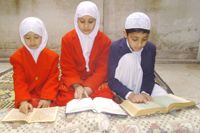
Children at the Kausar Darul Uloom near the University of Peshawar. Credit: Ashfaq Yusufzai
Sardar Hussain Babak, education minister for the province of Khyber Pakhtunkhwa, said the move was aimed at providing both students and teachers proper education. But leaders of religious schools see the programme as interference, and have turned down government support.
“Most of these teachers are unable to teach properly. They don’t have modern education. The government wants to support them financially and technically but they don’t want (that),” he told IPS.
Babak said the decision to modernize was made amid reports that some of these schools were the breeding ground of militants. The government wants to integrate religious education with formal education and bridge the gulf between the two systems.
Muhammad Asif, a teacher at the Uma Hatul Momineen, explained the need for such a programme. He said about 96 percent of students of religious schools are illiterate “because they don’t go to formal schools but take admission directly in seminaries.”
“Religious schools are very good because they teach you the true meaning of Islam. But religious schools must teach modern education, such as computer, mathematics, English etc.,” said 25-year-old Asif, who first went to a government high school and then joined a religious seminary where he obtained a degree in Islamic jurisprud...


Comment