Announcement

Collapse
No announcement yet.

Pakistanis condemn thug Imran Khan for support for war criminals

Collapse
X
 
  • Filter
  • Time
  • Show
Clear All
new posts

  • Pakistanis condemn thug Imran Khan for support for war criminals

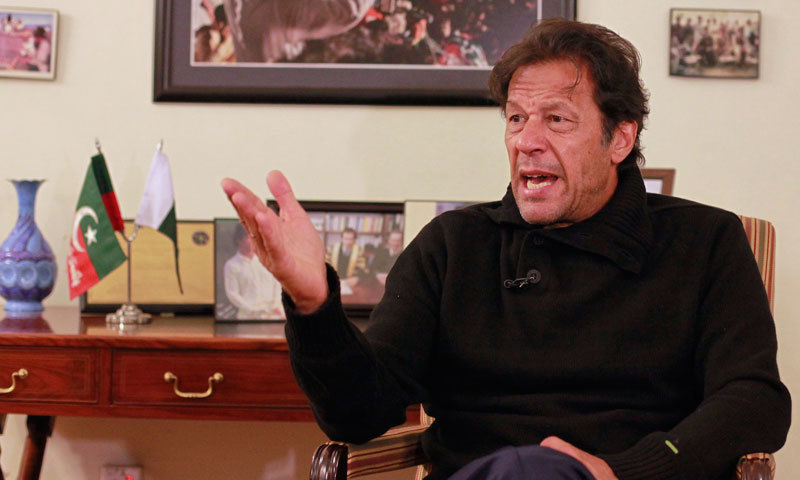
    Thug Imran Khan, who has had rumours of alleged wife-beating of his recently divorced wife, Reham Khan has been condemned by Pakistanis online for his support for war criminals in Bangladesh.


    Imran Khan, I would like to make my own plea to a brainless, foul-mouthed thug like you...

    Can you please stop your agenda of kicking out Muslims from the land in which they were born?

    That is can you stop your hate campaign against Afghan refugees born in Pakistan whom you are trying to kick out and force back to Afghanistan?


    Afghan refugees in Pakistan, thug Imran Khan wants to expel them from Pakistan.


    Meanwhile, "pious Muslim", Imran Khan lives in luxury with his dogs in Punjab, accused of wanting to have these dogs in his room whilst he slept by his ex-wife Reham Khan.


    IMRAN KHAN: "THIS DOG SHOULD STAY IN PAKISTAN BUT NOT MUSLIM CHILDREN BORN IN THE COUNTRY".


    IMRAN KHAN: "I WILL KICK EVERY AFGHAN GIRL AND BOY OUT OF PAKISTAN BEFORE I DIE. THIS IS MY DREAM WHILST I SLEEP IN MY ROOM WITH MY DOGS EVERY NIGHT!"


    IMRAN KHAN: NO AFGHANS IN PAKISTAN, BUT DOGS YES....BTW PAKISTAN IS A DEFENDER OF MUSLIMS.


    IMRAN KHAN: THE THOUGHT OF KICKING OUT MUSLIM CHILDREN BORN IN PAKISTAN BACK TO AFGHANISTAN, FILLS ME WITH PASSION! PTI ZINDABAD!


    IMRAN KHAN: I WANT O AFGHANS IN AFGHANIA, THE "A" IN PAKISTAN, ANOTHER NAME FOR OUR NORTHERN PROVINCE.


    IMRAN KHAN: KICK MUSLIMS OUT OF PAKISTAN NOW! KICK AFGHANS OUT!


    Reham Khan: I'm so lucky I left this loser and hate-filled retard. Why's he in such a frenzy to kick all Afghans out?
    * * * * * * * * * * * * * * * * * * * * * * *

    Shukran ya Masr!!!

    Thanks to Egypt for supporting Bangladesh against Pakistani harassment and support for terrorists and war criminals!!

  • #2
    Critics of Bangladesh War Crimes Tribunal ignore the victims


    By Praphulla Ranjan Sinha - - Friday, December 11, 2015


    Shortly after 9 a.m. on April 13, 1971, my father, Nutan Chandra Sinha, was working in the herbal medicine factory he founded in Chittagong, a seaport city in southeastern Bangladesh. Our country had just declared its independence from Pakistan and was fighting a war against the Pakistani Army and its collaborators inside Bangladesh.

    One of those collaborators – Salauddin Quader Chowdhury – showed up at my father’s factory, angry, accompanied by Pakistani troops. My father was a supporter of independence. Chowdhury was not. The men spoke and Chowdhury left.


    My father, 71, went inside our home next door and began praying in his temple. Moments later, Chowdhury returned with soldiers and burst into the house, guns blazing. They riddled my father with bullets, pulled him into the courtyard and shot him some more.

    In November of this year — after 44 years of evading justice for this crime and even, improbably, rising to a leadership role in a prominent national political party — Chowdhury was hanged for this and other heinous crimes. Bangladesh’s International Crimes Tribunal (ICT) found Chowdhury guilty on nine counts of murder, torture and crimes against humanity committed against my father and many others during Bangladesh’s 1971 war of independence and the attendant genocide committed by Pakistan, which claimed 3 million Bangladeshi lives.

    Instead of being cheered, the ICT and the government of Bangladesh have received undeserved criticism from some foreign governments and international organizations. Critics wrongly said the trials have been flawed. In fact, they follow the Rome Statute, the world’s gold standard for war crimes tribunals.

    Critics also wrongly said the ICT is being used by the government to eliminate political opponents. In fact, the ICT has convicted war criminals from many political parties, including a former member of the party currently in power.


    The trials have been carried out in a transparent manner, open to anyone, and defendants are afforded rights including the right to call witnesses and provide alibis. The ICT is also the world's only war crimes tribunal that allows those convicted to appeal to the country’s Supreme Court. Chowdhury did so and his appeal was denied.

    After Chowdhury and fellow war criminal Ali Ahsan Mohammad Mujahid were hanged, celebrations broke out across Bangladesh as people flooded into the streets happy that justice had been done. The ICT is overwhelmingly popular in Bangladesh. Prime Minister Sheikh Hasina was elected in 2005 after promising to start the tribunals.

    International critics have focused so much on the allegedly violated rights of the defendants that they have forgotten about the victims.

    My father was a pharmacist, social worker, educator and philanthropist. He established several schools, including a school and college for girls who traditionally had been denied education. His accomplishments were great enough that the government issued a postage stamp bearing his likeness. He was a patriot and believed in a free and independent Bangladesh.

    Once war broke out, my father knew his status as a pro-independence Hindu put him in the crosshairs. He sent our family to live in India. He refused to leave his motherland. The decision proved fatal.

    At the time of his death, we were powerless to pursue justice. In the years following the war, Bangladesh’s founding father and leader of the independence movement was assassinated. Coups and counter-coups plunged our young, impoverished nation into chaos. Once the ICT started in 2009, our family finally found hope that justice might be done.

    When the ICT took up Chowdhury’s case in 2012, I testified before the court: “I am such a helpless son that I could not even light the funeral pyre of my father.”

    “We have waited an agonizing four decades for this trial,” I told the Dhaka media. “At long last, justice has been delivered.”

    Chowdhury and men like him convicted by the ICT did horrific things in 1971. The passage of time and the elevation of some of the accused to high social and political status does not erase the sins of the past. Families such as the ours are receiving justice at long last. Critics of the ICT would do well to remember that.


    Praphulla Ranjan Sinha is the son of a victim of war crimes committed during Bangladesh’s 1971 war of independence.


    Salahudeen Qauder Chowdhury was a Pakistani-asset operating in Bangladesh.

    He was also liked by the Saudis.


    Saudi propagandist and anti-Bengali racist, Ali Al Ghamdi, circled in red. Ghamdi and other anti-Bengalis are powerful in the Saudi establishment and media. Saudi Arabia supported the 1971 genocide as its establishment continues to do today.


    Qauder Chowdhury was helped by Pakistani officials in the trial when out of nowhere he started mentioning about a Pakistani university degree which he had never ever mentioned before in his life even though in the 2010 elections he had to mention all educational qualifications as part of standing as a candidate.

    Imran Khan is a supporter of war criminals in Bangladesh and an ally of the Jamaat e Islami terrorist organization operating inside Pakistan and Bangladesh.


    Imran Khan, his PTI are allied with Jamaat e Islami, founded by the controversial Maudoodi whose books are banned in Saudi Arabia and Bangladesh.
    * * * * * * * * * * * * * * * * * * * * * * *

    Shukran ya Masr!!!

    Thanks to Egypt for supporting Bangladesh against Pakistani harassment and support for terrorists and war criminals!!

    Comment


    • #3
      The Liberation of Dhaka and the Whitewashing of Pakistan's History


      Posted 16 December 2015 20:06 GMT

      Imagine yourself advocating for the absolution of the masterminds behind the Peshawar Army public school attack. Imagine that those killers have been given the highest medals of honor and are being celebrated as heroes— brave soldiers who killed for the sake of their country. Now imagine that it is not a single person, but a whole nation standing together to justify such a brutal act.

      I can’t, and I don’t want to imagine a world like that for either myself or for anyone else. Unfortunately, the truth is that I am part of such a world, community and nation that stands proudly and defends firmly war crimes that were committed against their own fellow citizens. Do you remember the “fall of Dhaka“, on December 16 1971?

      We are all bloodthirsty, closet war lovers. We justify wars, violence and atrocities for our own convenience. If this premise is untrue, and if it is still unimaginable to endorse a world where killers and looters are allowed to walk freely, then why is it that we have still been silent for decades about our Bengali brothers and sisters demanding justice?

      When I look at my newsfeed today, on December 16, it is full of grief for the children who lost their precious lives in the Army Public School attack one year ago today. Everyone is being explicitly kind towards the victims’ families and condoling with them on the anniversary of their children’s deaths. Messages and special songs, courtesy the Inter Service Public Relations (ISPR), the public relations wing of Pakistani army, are being shared to show that the entire nation stands united against terrorists. The message of the day is that no kind of terrorism will be tolerated.

      “Pakistan’s education system is a smokescreen designed to alter the course of history for the upcoming generation. It fails to mention a single word about the atrocities and war crimes committed by the country’s armed forces in Bangladesh (then East Pakistan) in 1971.”

      ISPR’s “heart-warming” music video, “Mujhe Dusham Key Bachon ko Parhan hai” (“I want to take revenge and educate enemies’ children”) is one such “beautiful” attempt. The concept of sending books instead of bullets to our enemies’ children makes my heart melt on the one hand, but on the other, my mind still poses questions. Shouldn’t we do some soul searching before we send books that are filled with hatred? The irony is, the enemy referred to in this song is not from other lands, but our own—being created and nurtured in our very own religious education facilities, or madrassas.

      Education that furthers ignorance

      Pakistan’s education system is a smokescreen designed to alter the course of history for the upcoming generation. It fails to mention a single word about the atrocities and war crimes committed by the country’s armed forces in Bangladesh (then East Pakistan) in 1971. Our curriculum cites Indian-backed “Mukti Bahini” as the culprits. The Al-Badr, Al Shams and Razakar militia are referred to as “armed volunteers” of Jamat-e-Islami supporting West Pakistan’s armed forces.

      The other side of the story, in which these “volunteers” allegedly acted as the Pakistan army’s death squad to kill off the left-wing intellectual elite is conveniently absent from our textbooks. The same books also cite “lack of resources” as one of the main reasons for the loss of Pakistan’s eastern province, and do not highlight the fact that it was in fact the economic and cultural repression of Bengalis by the Punjabi ruling elite that led to the separation.

      One example of such cultural repression was the ban imposed in 1967 on playing the works of the great Bengali poet, Rabindranath Tagore on Radio Pakistan. Tagore was the first non-European to win Nobel peace prize in Literature in 1913.

      These perceptions are evident not only in our text books but in our political and social opinions as well. Pakistanis, for instance, have expressed great concern and have deemed the trial of former Al-Badr leader Mujahid “deeply flawed”. Time and again, Pakistanis have opposed judgments against the Jamat-e-Islami leaders for war crimes committed and proven.

      Feed lies, breed violence

      Pakistan’s school and college textbooks are full of hate speech and convenient lies. The official narrative whitewashes war crimes and endorses jihad as a noble act in religious history. The National Commission of Justice and Peace has discovered blatant religious biases in textbooks used in English, Urdu, Pakistan studies and social studies classes.

      K.K. Aziz’s Murder of History: A critique on History textbooks used in Pakistan is an insightful book that raises pertinent questions about the education system and challenges the conspiracy theories being taught. It was published in 1985, and is a solid source of information for those interested in examining the divide between historical evidence the information presented in our textbooks. In one of the chapters, Aziz questions the false account of 1971 war, according to which the Pakistani armed forces are celebrated as setting new records for bravery, and Indian forces are portrayed as the defeated. As a child, I’d always found it confusing and wondered what really happened.

      In addition to Aziz’s book, there are war museums full of historical evidence and international newspapers, books and journals with pictures and videos that prove what the Pakistani military did in 1971 in Bangladesh was not brave, but heinous.

      “…And the students at the university
      Asleep at night quite peacefully
      The soldiers came and shot them in their beds
      And terror took the dorm awakening shrieks of dread
      And silent frozen forms and pillows drenched in red…

      Bangladesh, Bangladesh
      Bangladesh, Bangladesh
      When the sun sinks in the west
      Die a million people of the Bangladesh”

      From “Song of Bangladesh” by Joan Baez, performed live at the concert of Bangladesh at Madison Square Garden in New York City on Sunday, 1 August 1971, in front of 40,000 people.

      44 years have elapsed since these crimes were committed, since the Pakistani army raped Bangladeshi women and murdered their country’s children and youth. In 2002, one of Pakistan’s military rulers, Pervez Musharraf, expressed regret for the harm done, and was the first to offer a subtle apology.

      Earlier this month, however, Pakistan suddenly retracted that stance, and categorically denied that any war crimes were committed in 1971. The statement came after one of the Jamat-e-Islami leaders was executed in Bangladesh for those crimes in November.

      By issuing this denial, is Pakistan sending a clear message of support to killers, and stating that military boots are still stronger than any democratic force? Back then no one dared to question the army, and it looks like no one will question them for their failures now. The 195 Pakistani war criminals handed over in 1974 under the tripartite agreement were supposed to be tried under Pakistani law, but were—and remain—protected.

      My thoughts are with the families who lost their children last year in Peshawar, but I also can't stop thinking about those Bangladeshi families who suffered at the hands of Pakistani army. Those families know their enemies and want justice for their loved ones, and their pain must also resurface every year, just as it does, and will continue to, for the families of APS victims.

      I just wonder how long the combination of pain of loss and sense of injustice will have to be endured by those on both sides.


      Pakistan's official account of their Armed Forces' surrender in Dhaka 44 years ago ignores the realities of the bloody conflict that resulted in Bangladesh's secession.


      1. The author of this article is a Pakistani.


      Qurratulain Zaman.


      2. Pakistan and Saudi Arabia are the two most anti-Bangladeshi countries in the world and interestingly the two countries associated the most with terrorism and "Islamic" extremism.


      3. Imran Khan needs to grow up.

      Everyone knows what the Pakistan army did in Bangladesh and the atrocities and war crimes.

      It is only brainwashed Pakistanis and others who deny it.

      Imran Khan has to ask himself is he Muslim first or a Pakistan-wala, fauj-wala first?

      If he is a Muslim first then he cannot be proud of Muslim women and children being raped and killed by soldiers, be they Pakistani soldiers.


      Imran Khan may be remembered in history as a man who led a life of rampant sexual activity in his youth then worked with terrorists and fundamentalists later on. It is also said that he tricked his ex-wife Reham by letting her fly to London and then divorcing her knowing full well she would not have gone to London if she had known this.

      What he should have done, if he was a man, was be honest and say things weren't working out and give her some indication/warning, but apparently he cowardly waited for her to fly off to London to text her his divorce message.

      Unfortunately for Imran Khan though, Bangladesh is now an independent state and has won its freedom.


      Imran Khan a supporter of fundamentalists, terrorists and war criminals in Bangladesh.
      * * * * * * * * * * * * * * * * * * * * * * *

      Shukran ya Masr!!!

      Thanks to Egypt for supporting Bangladesh against Pakistani harassment and support for terrorists and war criminals!!

      Comment


      • #4
        Apologising to Bangladesh


        Babar Ayaz

        What is Bangladesh today was not made in those crucial eight months. It was a consequence of the wrongs done to the people of East Pakistan

        Each year for the last 43 years we discuss the separation of East Pakistan in December. Much of the discussion is around the military operation rashly started in early 1971. Of course that was a major blunder of the establishment of that time.

        But what is Bangladesh today was not made in those crucial eight months. It was a consequence of the wrongs done to the people of East Pakistan by both the West Pakistan ruling classes and the military who wanted to rule the eastern wing as a colony.

        For East Pakistan, it was thus a liberation movement that was supported by the Indian government because we provided them an opportunity to prove that the Two-Nation Theory was fragile.

        Soon after Pakistan was established the Muslim League leaders led by the then prime minister Liaquat Ali Khan thought it appropriate to impose Urdu as the only national language in February 1948.

        Mohammed Ali Jinnah jumped into this debate on March 21, stating that: “let me make it clear to you that the state language of Pakistan is going to be Urdu and no other language.”

        This was not acceptable to the Bengalis because they would have been placed in a disadvantageous position in competition with the Punjabi and Mohajir west Pakistanis, who had a better understanding and command of Urdu.

        The protests continued, and then took a violent turn on February 21, 1952 when the state government opened fire on the protesting students. According to different accounts, seven to nine students died and several were injured. The attempt by the students to construct a memorial (Shaheed Minar) was also foiled, though eventually, the government had to give in. This memorial became a rallying point for Bengali nationalists even during their independence war.

        After giving the East Bengalis a ‘Shaheed Minar’, it was finally agreed in the third draft of the constitution in 1954 that Bengali and Urdu would be the official languages of the country. “At the same time it provided for the use of English as the “official language of the country for twenty years” (Mehrunnisa Ali, 1966).

        But it was an expensive trade-off for the Bengalis as they had to accept the perfidious idea of ‘One Unit’, thereby giving away their majority in the assembly. Not only that, once all of West Pakistan was declared one province, what was called East Bengal in the official documents until 1954 was renamed East Pakistan. Let us take a cursory look at a few disparities:

        The total government expenditure in 20 years (1950-70) in Pakistan was $30.95 billion, out of which West Pakistan extracted the lion’s share of $21.49 billion – meaning over 69 percent – while East Pakistan, despite having 55 percent of the population, was doled out only $9.45 billion, which was just 30.45 percent of the total.

        This distribution of resources was in sharp contrast to the income generated by both East and West Pakistan. All through the 24 years, East Pakistan had enjoyed foreign trade surplus.

        In a paper titled ‘Why Bangladesh’, a group of scholars in Vienna collected data from the government of Pakistan’s official papers showing how East Pakistan was exploited by West Pakistan.

        Taking stock of the foreign trade they pointed out: “In foreign trade East Pakistan exports constituted 59 percent of the total but imports only 30 percent of the total imports…During the same period West Pakistan earned 41 percent of the total foreign exchange and was allowed 70 percent of the foreign exchange earnings.”

        While the surplus generated by East Pakistan was invested in the infrastructure and industry of West Pakistan, it was a secured market for the West Pakistani goods. Between 1964 and 1969 West Pakistan exported goods worth Rs5.29 billion to East Pakistan, while it imported goods of Rs3.17 billion.

        Of the total foreign assistance almost 80 percent was consumed by West Pakistan. On the whole, again according to the Vienna Group, 77 percent of the funds allocated for development went to West Pakistan in the first 20 years. Not only were all the major investments in the jute and paper industry in East Pakistan owned by the big business houses of West Pakistan, East Pakistan was their undisputed market of over 50 million people. It was because of the loss of this colony that Pakistan had to devalue its currency by 135 percent in 1972 and its textile and consumer industry had a great fall.

        The East Bengal middle classes were also bitter because of their meagre share in government services. For example, by 1971 the share of 54 percent of East Pakistan’s Bengalis in the central civil services was 16 percent; in foreign services, 15 percent; in the army, out of total 17 generals, there was only one Bengali. And in PIA, the state-owned airline, only 280 employees were from East Pakistan as against 7,000 from West Pakistan.

        I spoke with General (r) Tikka Khan, when he was the secretary general of the PPP. To my observation that he shouldn’t be talking about democracy because they had killed over 250,000 Bengalis in East Pakistan, his simplistic answer was: “You people in the media always exaggerate such figures, only 35,000 Bengalis were killed during the military operations.”

        Whether it is three million as claimed by Bangladesh or 35,000, it doesn’t matter. Thirty-five thousand is not a small figure either. The real figure of Bengalis killed may be somewhere between the two claims. This does not include the killings of the Biharis and West Pakistani civilians in reaction to the operation.

        The Germans have museums to tell the future generation what the Germans did wrong. Will we be able to apologise for the wrongs done to East Pakistan and move on instead of living in our cocoon believing that it was all an Indian conspiracy?

        - See more at: http://www.dhakatribune.com/world/20....XXvfDmtn.dpuf


        1. Babar Ayaz is a Pakistani.

        He deals with reality, with facts and statistics, things which Imran Khan does not deal with.


        2. Imran Khan is a thug and a liar who supports war criminals and terrorists in Bangladesh and very vocal about it, whilst completely indifferent to the suffering of millions of Bengalis who lost loved ones in the 1971 war.

        Imran Khan needs to grow up and stop believing the propaganda he is receiving from the Jamaatis around him and thugs like Jahangir Tareen Khan, Shah Mahmood Qureishi, Pakistan-walas and others.

        The Bangladesh genocide was real.

        Bangladesh is real.

        Imran Khan is probably still angry that we are independent and wishes for the old days where "Pathans"/Pakistanis like him could exploit our country. Those days have gone.


        Khan a supporter of war criminals, fundamentalists and terrorists in Bangladesh.
        * * * * * * * * * * * * * * * * * * * * * * *

        Shukran ya Masr!!!

        Thanks to Egypt for supporting Bangladesh against Pakistani harassment and support for terrorists and war criminals!!

        Comment


        • #5


          * * * * * * * * * * * * * * * * * * * * * * *

          Shukran ya Masr!!!

          Thanks to Egypt for supporting Bangladesh against Pakistani harassment and support for terrorists and war criminals!!

          Comment


          • #6


            Pakistanis talking about the war crimes carried out by the Pakistani army and ISI.
            * * * * * * * * * * * * * * * * * * * * * * *

            Shukran ya Masr!!!

            Thanks to Egypt for supporting Bangladesh against Pakistani harassment and support for terrorists and war criminals!!

            Comment

            Working...
            X