Announcement

Collapse
No announcement yet.

Punjabi Taliban watch

Collapse
X
 
  • Filter
  • Time
  • Show
Clear All
new posts

  • Punjabi Taliban watch

    PUNJABI TALIBAN WATCH

    Background

    "The Punjabi Taliban" is a term used to refer to extremist Deobandi militant groups based in the Punjab. In actual fact most of these groups are based in the Saraiki belt of southern Punjab, with some Saraikis stating they are a different ethnic group to the Punjabis of the north.

    These groups include the Lashkar e Jhangvi (LEJ) named after the Punjabi (Saraiki) anti-Shia preacher, Haq Nawaz Jhangvi.

    Jhang being an area in the Saraiki belt of southern Punjab.

    The LeJ itself is the paramilitary arm of the SSP (Sipah i Sahab i Pakistan i.e. "Defenders of the Companions, Pakistan".


    Nawaz Sharif's party, the Punjabi nationalist PML-N have worked with the Punjabi Taliban.

    The Pakistani security forces recently turned on the Punjabi Taliban whom they have patronized for years and killed some of them recently.


    Head of the LeJ killed

    Last month, the head of the LeJ was killed by Pakistani police.

    Pakistani police have killed the head of the banned group Lashkar-e-Jhangvi as he attempted to escape custody in Punjab province, officers have said.

    Malik Ishaq, along with his two sons Usman and Haq Nawaz, and 11 others, were killed in an exchange of fire with police personnel late on Tuesday night, police said. At least six policemen were injured in the encounter.
    Police say Malik Ishaq, head of banned group behind Shia attacks, killed when supporters tried to free him from custody.


    The revenge of the Punjabi Taliban?

    Now less than a month after the killing of their leader it seems the Punjabi Taliban have struck revenge and killed an ex-military official belonging to the party of Punjabi* head of Pakistan's government, Nawaz Sharif.

    The assassinated ex-military man was Shuja Khanzada.


    Shuja Khanzada, killed by the Punjabi Taliban in what seems to be a revenge attack for the killing of their leader by Pakistani police.


    WHAT'S NEXT?

    Here are some possibilities.


    1) The Pakistani security forces will carry out a massive operation in the Punjab against the Punjabi Taliban and rapidly and decisively destroy them, a far easier job than in the more remote and mountainous Pakhtun regions of the north-west.

    2) The Pakistani security forces will see some sort of low-level terrorist campaign breaking out in the Punjab.


    To be honest, with the success of Pakistan's military in Swat, Waziristan and elsewhere I am of the opinion that it will be more likely to be 1.


    *NB: As I have some abusive Pakistani nationalist trolls on here on my ignore. I will not be able to refute their propaganda (unless they are quoted), but a pre-emptive refutation of their lies.

    a: Nawaz Sharif is a Punjabi who was born in Punjab and his family migrated from the Indian Punjab. Pakistani/Punjabi nationalists love to claim he is a "Kashmiri" to divert the reality of Punjabi hegemony in Pakistan.

    To say that he was born and grew up in Punjab and his father migrated from Indian Punjab but he is a "non-Punjabi" is nonsensical, plus there is no Punjabi ethnicity anyway as there are Gujjars, Jatts, Awans all in the Punjab too.


    b: Sharif's party is a well-known Punjabi nationalist party (something also denied by Pakistan-walas, Pakistani nationalist fanatics).

    In fact Sharif's party is even disliked by many in the south of Punjab who view his party as engaging in discrimination in favour of Lahore and the central Punjab i.e. "Takht i Lahore".
    * * * * * * * * * * * * * * * * * * * * * * *

  • #2
    Pakistani Taliban faction assassinates Punjab minister

    BY BILL ROGGIO | August 17, 2015 | admin@longwarjournal.org | @billroggio


    Jamaat-ul-Ahrar, a faction of the Movement of the Taliban in Pakistan, killed the home minister of Punjab province in a suicide attack at his home on Aug. 16. The group said the assassination was “revenge” for the killing of Malik Ishaq, the founder and leader of Lashkar-e-Jhangvi, who was gunned down by Pakistani police at the end of July.

    Jamaat-ul-Ahrar’s spokesman, Ishanullah Ihsan, claimed credit for the suicide bombing that killed Punjab Home Minister Shuja Khanzada and 16 other people in the city of Attock. Pakistani police said that two suicide bombers executed the attack, The Express Tribune reported. The blasts were so large that they caused the home to collapse.

    “We accept responsibility of ATTOCK attack Shuja khn zada was killed in the attack,” Ihsan wrote in a series of tweets that were published on his official Twitter account.

    Ihsan was clear that the suicide assault was executed to punish the Pakistani government for killing Ishaq, the leader of the al Qaeda-linked Lashkar-e-Jhangvi. Ishaq, his two sons, and eight other jihadists were killed a shootout with police after a prison break that took place on July 28.

    “The ATTOCK attack is revenge for the martyrdom of malik Ishaq shaheed and other mujahideen brothers,” Ihsan said.

    Ihsan also indicated that the attack was executed with the help of another Pakistan-based terrorist group.

    Jamaat-ul-Ahrar's spokesman said that the Punjab home minister was killed in "revenge for the martyrdom" of Malik Ishaq, the head of the Lashkar-e-Jhangvi who was killed by Pakistani police in late July.


    Comment: To be honest, I personally don't expect Pakistan to be particularly troubled by the Punjabi Taliban. After the December 16th massacre of school children in Pekhawar, the Pakistani regime has been hanging militants left, right and centre in scores, with complete impunity.

    Most likely the Punjabi Taliban will be dealt with by the Pakistani security forces.

    It is worth remembering that in the 90s after years of massacring Shias, Musharraf dealt with the Punjabi Taliban by locking up most of their leaders leading to a huge decrease if not virtual eradication of anti-Shia murders/massacres in the Punjab.

    * * * * * * * * * * * * * * * * * * * * * * *

    Comment


    • #3
      Recently 16 Pakistanis were killed by Pakistanis in a mosque in north-west Pakistan on an attack by Pakistani militants on a Pakistani air force base.

      The Punjabi Taliban have not issued any condemnation of this but are in fact part of the same overall TTP terrorist movement.

      The TTP stands for Tehrik i Taliban i Pakistan.

      It is a pan-Pakistani organization that encompasses militants in Punjab, Sindh, Balochistan and northern areas.


      What do the Punjabi Taliban think of this attack?

      Well they are part of the same overall coalition so it's just a terrorist attack on Pakistanis by a fellow coalition member.


      However though 16 Muslims were murdered by Pakistani terrorists, this should not be regarded as some sort of hugely historic event. Such terrorist attacks were almost a weekly event a few years ago and now they happen very rarely.

      The fact that there is so much anger over this, rather than indifference as there used to be a few years ago when such incidents were regular, points to the huge decrease of Taliban terrorism in Pakistan.
      * * * * * * * * * * * * * * * * * * * * * * *

      Comment


      • #4
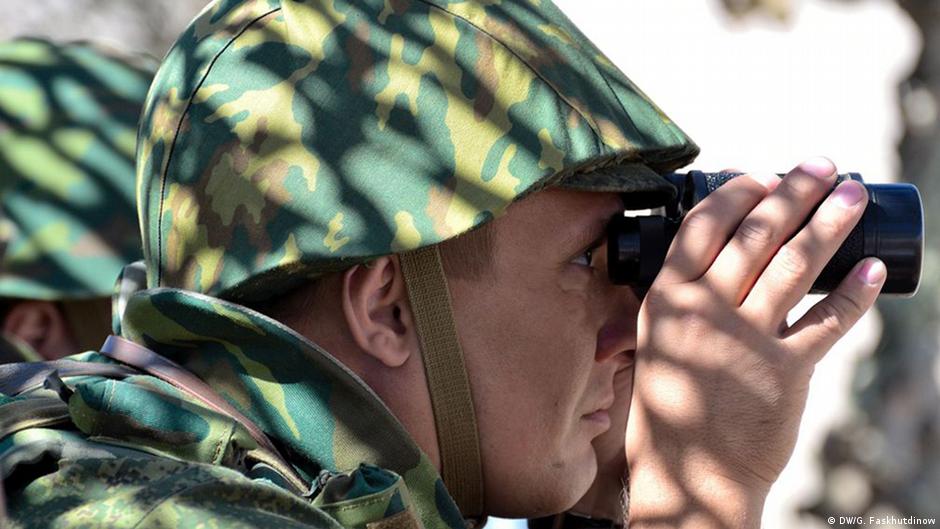
        Why Central Asia is increasingly worried about Afghanistan


        As foreign militants join the Taliban's fight against government forces in Afghanistan, Central Asian countries are more and more worried about the danger of Islamic fighters infiltrating the region. DW examines.


        US Secretary of State John Kerry recently concluded a five-nation tour of Central Asia, reassuring the countries' leaders - increasingly concerned about the threat of Islamic extremism - that Washington remains committed to the region's security, even though the US has scaled down its military presence in Afghanistan.

        In fact, during a meeting with Tajikistan's President Imomali Rakhmon, Kerry reaffirmed Washington's intentions of helping that country secure its border with Afghanistan, and explained that the US decision to slow the drawdown from the war-torn country also served that purpose.
        Afghanistan has been a source of concern in recent years for the former Soviet states which fear the fighting in the war-torn country could spill over into their territory, particularly after reports emerged that a large number of Central Asian militants - Uzbeks, Chechens, Tajiks and Kazakhs - fought alongside the Taliban during the insurgents' brief capture of the northern Afghan city of Kunduz in late September.
        "Terrorists of different stripes are gaining more influence and do not hide their plans for further expansion," Russian President Vladimir Putin said last month at a summit of the Commonwealth of Independent States (CIS) in Kazakhstan.


        Kerry reassured Central Asian states that the US remains committed to the region's security

        There is also a growing concern about the spread of extremist ideas in the region. For instance, Tajikistan's authoritarian government - which has been in power since 1992 - faced embarrassment earlier this year when the commander of the country's Special Forces declared himself a member of "Islamic State" (IS). There have also been reports of attacks on police staged by militants allegedly sharing IS views.

        Assessing the threat

        Any signs of instability in Tajikistan are a source of concern to Washington, but especially to Moscow upon which Dushanbe relies through the Collective Security Treaty Organization (CSTO) for external security. For instance, Moscow has military bases in both Kyrgyzstan and Tajikistan.
        But just how serious is the threat emerging from Afghanistan? According to President Putin, the situation is "genuinely close to critical." But analysts say there has been limited evidence of that so far. So in order to fully understand the issue, it's important to take a broader look at ties between Afghanistan and Central Asia.

        Afghanistan's immediate neighbors - Turkmenistan, Uzbekistan and Tajikistan - still share a common cultural and social heritage with their Afghan neighbors despite their isolation during the Soviet rule.
        Tajikistan, for instance, is both an important trade partner - especially for energy - and a comfortable fall-back "base" for many Afghan politicians and commanders of Tajik ethnicity, said Alexey Yusupov, director of the Afghanistan office of the German foundation Friedrich-Ebert-Stiftung (FES), explains.

        But although generally stable, Kabul's relations with its neighbors to its north are not necessarily tension-free. There is a long legacy of cross-border crime and violence, much of it fueled by the drug trade, and such unrest has sometimes ratcheted up tensions.


        'Terrorists of different stripes are gaining more influence and do not hide their plans for further expansion,' said Putin

        'The wake-up call'

        Central Asian states are particularly concerned about the trajectory of the Taliban insurgency, because in recent years it has become so much stronger in northern Afghanistan than it had been before.
        "I think we can assume that the Taliban's brief takeover of Kunduz was a wake-up call for some of the more naïve officials in Central Asia who may have believed that the violence was restricted to areas further away from Central Asian borders," Michael Kugelman, Afghanistan expert at the Washington-based Woodrow Wilson Center for Scholars, told DW.
        "My sense is that Central Asian states worry greatly about increased fighting in northern Afghanistan, not just because of the violence but also because of the refugee flows and drug trafficking that could intensify," Kugelman added.
        Although the Taliban have repeatedly stated they have no ambitions beyond reclaiming control over Afghanistan, it is known that foreign Islamist groups operating in Afghanistan such as IS or the Islamic Movement of Uzbekistan (IMU) have a much broader agenda.

        Returning jihadists and Pakistan

        Nevertheless, analysts argue that security threats to Central Asia don't come mainly from Afghanistan, but are rather posed by returning homegrown jihadists and groups based in countries such as Pakistan who have infiltrated Afghanistan.

        "For Central Asia, the primary concern is descendants from the region who fight in Syria in the al-Nusra Front or IS-affiliated brigades," said Yusupov. Moscow says some 5,000 to 7,000 people from former Soviet states, including Russia, are fighting alongside IS jihadists in the Middle East.


        "Their eventual return would mean an influx of experienced and radicalized militants thereby constituting a serious threat to the ruling regimes and societies of Central Asia. This is why preventing this scenario is one of the motivational rationales behind the recent Russian campaign in Syria," the FES expert added.

        But that's not all. Tamim Asey, a research fellow at the Kabul-based Afghan Institute for Strategic Studies (AISS), points to a host of Pakistani groups such as Lashkar-e-Jhangvi, Lashkar-e-Taiba, and Sipah-e-Sahaba as contributing to the overall security threat in the region. It is believed that many of these militant outfits crossed into neighboring Afghanistan when the Pakistani army decided to launch a military offensive against them in 2014.
        "Right now - their aim is to either return to North Waziristan or find an alternative sanctuary. Once resettled, they want to step up their operations in Pakistan, Afghanistan and Central Asia," said Asey.


        IS gaining a following

        As for IS in Afghanistan, experts indicate that the group's factual weight and importance is currently significantly lower in comparison to the public perception.
        "Their territorial control is so far limited to a couple of districts in Nangarhar Province, with some incidents also reported in Kunar Province," said Yusupov. Afghanistan expert Kugelman agrees: "Despite all the hype and threats, IS remains a big threat in the Middle East, and not beyond that region - at least not yet."

        The more pressing issue for Central Asia and Afghanistan is that many radicalized and unaligned militants are galvanized by the IS brand and wish to associate themselves with it, even if they have no formal institutional linkages.

        This means, in effect, that many militants in the region are carrying out attacks and giving IS the credit, especially after the confirmed death of Taliban leader Mullah Omar.


        Foreign Islamist groups operating in Afghanistan such as IS harbor ambitions to spread beyond the country

        "Though there's no indication of formal allegiances between these disaffected militants and IS, the group is starting to gain, at least rhetorically, a following that is more than negligible," said Kugelman. On top of that is the fact that the Central Asian IMU, described by some as one of the most vicious militant groups in the world, recently announced its loyalty to IS.
        "The IMU has been close to al-Qaeda and has fought very closely alongside the Taliban. It's staged countless attacks in Afghanistan and Pakistan, and the fact that it's now tied to IS is nothing but bad news," Kugelman added.
        This means that IS militants in Afghanistan could indeed become a significant threat if the country and especially its economy continue to deteriorate. What's surprising in this context, despite their proximity to Afghanistan, the Central Asian states do not have extensive legitimate economic relations with Afghanistan.


        This is in part testament to the fractured nature of the larger region but also to the sheer profitability of the illegal drug trade, which links elites in Afghanistan and the Central Asian states, Deirdre Tynan, Central Asia Project Director at the International Crisis Group in Kyrgyzstan, explained.
        "Efforts to stem the drugs trade in Central Asia have failed largely because there has not been the political will at the highest levels to do so. At the same time, there has not been the wherewithal to open the economic space between Afghanistan and Central Asia to legitimate cross border trade."
        In the meantime, it seems the militants' main objective remains Afghanistan, especially since most of the fighters involved seem to share the Taliban's ideology of establishing a hard-line Islamist Afghan state and, perhaps more importantly, already enjoy de facto control of large swaths of the country.
        By comparison, the situation to the north is very different. "In Central Asian states you have these large crackdowns against militant groups, which curtail their freedom of movement and make it harder for them to operate. In an ideal world, the militants would redirect their attention back to Central Asia and perhaps Russia, but they simply don't see a very easy environment to work in back in those areas at the moment," said Kugelman.
        This, however, doesn't exclude a scenario of increased terrorist attacks in the area - probably the reason why Moscow recently decided to beef up its 7,000-strong military presence in Tajikistan with attack and military-transport helicopters.

        A failed strategy?

        Although both Russia and Central Asian republics have had their experience with combating domestic Islamism, they have concentrated thus far on instruments of law enforcement and intelligence control. But as FES analyst Yusupov explains, this strategy does not address the social issues and the economic factors underlying the recruitment dynamics.
        "Most of the Central Asian combatants in Syria left their countries as migrant workers to Russia trying to support their families through remittances. The economic crisis in Russia took them then to the paying 'jobs' inside the IS, thus intertwining economic and ideological motivations," he said.

        As foreign militants join the Taliban's fight against government forces in Afghanistan, Central Asian countries are more and more worried about the danger of Islamic fighters infiltrating the region. DW examines.


        1. The Punjabi Taliban are not just based in Punjab, but have terrorized people in Pakistani-occupied Pakhtunkhwa, as well as Afghanistan e.g. their role in the massacre of Hazaras in the 1990s when the Taliban took control of Mazar e Sharif.

        2. The Punjabi Taliban may seek to expand their terrorist activities to central Asia.

        This may cause problems between central Asian states and the Pakistan military that runs Pakistan and sponsors "Islamist" terrorist groups in Kashmir, Afghanistan and Bangladesh.
        * * * * * * * * * * * * * * * * * * * * * * *

        Comment

        Working...
        X