Announcement

Collapse
No announcement yet.

Has China pressured Pakistan to working for peace in Afghanistan?

Collapse
X
 
  • Filter
  • Time
  • Show
Clear All
new posts

  • Has China pressured Pakistan to working for peace in Afghanistan?

    1. In the past half a year or so, the real ruler of Pakistan, the head of the army and also the ISI chief have been flying to Kabul almost regularly.

    This is unprecedented and signifies a major if not historic change.

    2. We have had the Taliban drop their almost 15 year line that they will never negotiate with the Afghan government in Kabul but only with the Americans.

    For the Taliban (and their supporters on this forum), the Kabul government is the "puppet" and America is the "puppet master", why negotiate with the puppet and not the actual puppet master?

    It's obvious that the Pakistanis have told the Pakistani-based "Afghan" Taliban to start working for some sort of solution or at least be seen to be so.

    But why this change?

    Pakistan is a brutal country which has carried out genocide and mass rape in Bangladesh in 1971, slaughtered thousands of Mohajirs in Karachi in the 1990s, levelled Waziristan to the ground and created 1 million Pashtun refugees in the past year.

    If Israel made 1 million Palestinians from Gaza homeless refugees the world outcry would be greater.

    In short Pakistan is a mafia-state, and the mafia and other thugs only respect force and power.

    So some sort of strong power must have moved Pakistan to changing its Afghan policy (destabilizing the country and inserting a compliant proxy and render it a weak vassal state).

    What do others think?

    [MENTION=1201]Toramana[/MENTION] [MENTION=17579]Loy Afghanistan[/MENTION] [MENTION=5723]Kushan Prince[/MENTION] [MENTION=1498]ComradePashtun[/MENTION] [MENTION=303]kunar1990[/MENTION] [MENTION=8995]DSM0305[/MENTION]
    13
    Yes
    46.15%
    6
    Yes, but just slightly
    15.38%
    2
    No
    38.46%
    5
    Other
    0.00%
    0

    The poll is expired.

    * * * * * * * * * * * * * * * * * * * * * * *

  • #2
    Originally posted by Bengal_Tiger View Post
    1. In the past half a year or so, the real ruler of Pakistan, the head of the army and also the ISI chief have been flying to Kabul almost regularly.

    This is unprecedented and signifies a major if not historic change.

    2. We have had the Taliban drop their almost 15 year line that they will never negotiate with the Afghan government in Kabul but only with the Americans.

    For the Taliban (and their supporters on this forum), the Kabul government is the "puppet" and America is the "puppet master", why negotiate with the puppet and not the actual puppet master?

    It's obvious that the Pakistanis have told the Pakistani-based "Afghan" Taliban to start working for some sort of solution or at least be seen to be so.

    But why this change?

    Pakistan is a brutal country which has carried out genocide and mass rape in Bangladesh in 1971, slaughtered thousands of Mohajirs in Karachi in the 1990s, levelled Waziristan to the ground and created 1 million Pashtun refugees in the past year.

    If Israel made 1 million Palestinians from Gaza homeless refugees the world outcry would be greater.

    In short Pakistan is a mafia-state, and the mafia and other thugs only respect force and power.

    So some sort of strong power must have moved Pakistan to changing its Afghan policy (destabilizing the country and inserting a compliant proxy and render it a weak vassal state).

    What do others think?

    @Toramana @Loy Afghanistan @Kushan Prince @ComradePashtun @kunar1990 @DSM0305
    Remember when I predicted this just 1 or 2 weeks ago? I told you guys only China can make porkistan to obey. Now the thing is. UK/USA have power over Porkistanis as well. So this will lead to a conflict inside porkistanis with pro east vs pro western.

    Porkistan will burn harder soon.
    To Paradise, with Pakhto, I will go.

    Comment


    • #3
      Originally posted by Loy Afghanistan View Post
      Remember when I predicted this just 1 or 2 weeks ago? I told you guys only China can make porkistan to obey. Now the thing is. UK/USA have power over Porkistanis as well. So this will lead to a conflict inside porkistanis with pro east vs pro western.

      Porkistan will burn harder soon.
      There are a lot of idiots on this forum, but at least we have sensible people such as yourself on this forum wrora.

      1. Yes, only an idiot (and as I said there are a few on this forum) would not believe that Pakistan's leaders have been flying to Kabul lots of times in the past few months and now working on some sort of solution based on some sort of external compulsion or pressure.

      This pressure is not internal i.e. from the murderous Pakistani army or ISI, but external.

      Why now?

      What is the difference?

      The difference is China.

      2. The Taliban supporters on this forum would like us to believe their glorious "heroes" the Taliban have nothing whatsoever to do with Pakistan.

      The same Pakistan in which they live.

      The same Pakistan in which they have just had the talks, Murree.

      Of course the Taliban are just in Pakistan, without any involvement or support from the Pakistan army or ISI, just like Swiss tourists roaming the mountains of Swat, harmless foreigners who the authorities do not care about.

      *sarcasm*


      The Taliban themselves would not have dropped their historical demand for direct negotiations with America unless it was for some sort of pressure on them.

      I wonder what that could be?


      Maybe, just maybe...pressure from the Pakistanis?


      Anyway aside from the Taliban-supporters on this forum, normal people know that Pakistan sponsors the Taliban and have pressurized them to try and create some sort of resolution with the Afghan government or at least give that impression, this new change in Pakistani policy can only be a result of an external force applying pressure on Pakistan. It's definitely not the US but China.

      China is offering Pakistan just under $50 billion worth of investment and has the ability to apply both hard pressure and incentives on the murderous generals of Rawalpindi who rule Pakistan.

      Anyway I doubt these guys (below) will ever rule Afghanistan ever again, and only as junior coalition partners where their ideology will be heavily diluted:


      Pakistani-sponsored Taliban beating Afghan women.

      * * * * * * * * * * * * * * * * * * * * * * *

      Comment


      • #4
        Pakistan and China ready to become guarantors of Afghan peace deal

        By KHAAMA PRESS - Wed Jul 22 2015, 8:56 am


        As the Afghan officials are expecting to sit-in for the second round of peace talks with the Taliban group in the near future, the Pakistani officials have said Islamabad and Beijing are ready to become guarantors of a possible peace deal.

        A senior Pakistani official has said Pakistan has no problem in playing its role beyond that a facilitator if talks make progress and all sides agree.
        “We are ready to go the extra mile. We are even willing to become guarantors for any peace agreement,” the official speaking on the condition of anonymity told The Express Tribune.

        The Foreign Affairs Ministry of China also issued a statement stating Beijing was ready to work with relevant parties and play a constructive role in achieving broad and inclusive peace and reconciliation in Afghanistan.
        The anti-government armed militant groups including Haqqani Network members and Taliban group representatives attended peace talks with the Afghan officials in Islamabad, the capital city of Pakistan earlier this month.
        The meeting was also attended by officials from Pakistan, China and the United States where the Afghan officials and representatives of the Taliban group agreed to hold the next round of talks on reconciliation process after the holy month of Ramadan.

        As the Afghan officials are expecting to sit-in for the second round of peace talks with the Taliban group in the near future, the Pakistani officials


        Pakistan has spent decades destabilizing Afghanistan and creating bloodshed and suffering there, so for them now to abandon their policy of "strategic depth" (a weak and war-torn Afghanistan) and say they are willing to be a guarantor for peace is just another reflection of the pressure the Chinese are piling on them.
        * * * * * * * * * * * * * * * * * * * * * * *

        Comment


        • #5

          Taliban Were Authorized to Talk, Afghan Envoys Say

          By MUJIB MASHALJULY 9, 2015


          Rejecting claims that they had met with an unauthorized Taliban delegation, Afghan government envoys said on Thursday that the insurgents they held initial talks with in Pakistan this week had the blessing of the Taliban’s deputy leader, Mullah Akhtar Muhammad Mansour.


          The comments by Afghan government envoys, briefing the news media in Kabul for the first time since their return from the talks, added to speculation that there was a widening rift among the Taliban’s leadership over the Afghan peace process. On Wednesday, a representative of the Taliban’s official political office in Qatar claimed that the talks had been “hijacked” by Pakistani officials who had brokered a meeting with unauthorized Taliban representatives.


          Mullah Mansour is believed to be locked in a struggle for influence with other senior Taliban commanders, and he has used his credentials as a confidant of the insurgency’s reclusive leader, Mullah Muhammad Omar, to seed the group’s ranks with more of his loyalists in recent years.
          An increasingly splintered Taliban movement would have serious repercussions for the peace process, raising questions about how much cooperation Taliban leaders in favor of negotiating could command.
          But members of the Afghan delegation expressed optimism for the process ahead. During the late-night discussions in Murree, a resort town near the Pakistani capital, Islamabad, the two sides agreed to seek a peaceful end to the conflict by attending regular meetings, the officials said. The sides also drew up a list of all the issues and demands for the negotiations.


          Hekmat Khalil Karzai, the Afghan deputy foreign minister who attended the talks, said the government’s delegation had set no preconditions and was willing to engage the Taliban on any of the group’s demands, including the release of prisoners and the future of American military forces in Afghanistan.
          “We went with good intentions and good authority,” Mr. Karzai said. “We said we are willing to discuss anything, but within a framework that leads to a continuous process.”
          He added, “We will let prisoners out, but on the condition that they give us guarantees they won’t kill innocent people anymore.”


          The delegations also discussed the possibility of a temporary cease-fire during the three-day festival of Eid al-Fitr, which will signify the end of fasting for Ramadan later this month, the officials said, without elaborating on whether an agreement had been reached. But specific methods “to stop the bloodletting” will be the central topic in the next round of negotiations, said Azizullah Din Mohamed, a member of the Afghan government’s High Peace Council who was part of the Afghan delegation.


          With the Afghan government under severe pressure from Taliban offensives in several provinces, the public will mostly judge the talks on whether a visible reduction in the violence is achieved, said Haroun Mir, a political analyst. Decreasing the bloodshed would also be a test of the authority of the delegation that represented the Taliban.


          “Without a reduction of violence, the Afghan government won’t be able to sell this to the people,” Mr. Mir said.


          While the meeting this week was hailed as a breakthrough in Kabul, the Afghan capital, concerns have remained about just what faction of the insurgency was present.


          Mr. Karzai, who admitted to rifts among the Taliban, said the Afghan envoys had been assured that the delegation they met had permission from Mullah Mansour and the rest of the Taliban leadership based in Pakistan. He would not describe how that assurance was given. But a diplomatic official, speaking on the condition of anonymity to discuss the talks, said Pakistan’s military spy chief had vouched for the standing of the Taliban delegation with the insurgents’ leadership council.


          What Pakistan managed to deliver at Murree were members of the Taliban closest to its establishment, some analysts and Taliban members believed. The insurgent delegation included Mullah Abbas Akhund, a member of the movement’s health commission and a longtime liaison with the Pakistani government, according to a member of the Taliban’s official political office in Qatar. The delegation also included a representative from the Haqqani insurgent network, Afghan attendees said.


          The political office is now deciding whether Mullah Akhund “is still trusted” after he gave in to Pakistani pressure and attended the meeting without permission, the Qatar office representative said.
          Some analysts expressed doubt that Mullah Mansour had given his full blessing to the delegation, saying the claim did not fit with the developments in the recent months.


          On the urging of Afghanistan’s president, Ashraf Ghani, the Pakistani military increased pressure on the Taliban’s leadership to sit down for direct talks months ago. But the pressure seemed to backfire in some ways. Members of the office in Qatar, long seen as official representatives of the Taliban’s highest leadership, expressed dismay that the Afghan government saw them as Pakistani proxies. The insurgency began its deadly spring offensive anyway.


          Mr. Ghani’s patience with Pakistani officials began to run out this spring, as the violence continued with little sign of a breakthrough on talks, officials said. The Pakistani military, which has sheltered the Taliban’s leadership for years, redoubled its pressure on the insurgents to come to the table. As a result, some Taliban commanders began fleeing Pakistan, said Borhan Osman, a researcher at the Afghan Analysts Network who has written extensively about the insurgency.


          That reaction, coupled with the Qatar office’s public disagreement with the Murree meeting, made him “think twice,” Mr. Osman said, about the claim that Mr. Mansour had given permission to the Taliban negotiators.
          “Especially if the Qatar office has been accountable to Akhtar Muhammad Mansour himself, you can’t imagine a contradiction between the two,” Mr. Osman said.
          “The most plausible scenario is that Pakistan brought the best they could offer — these are the guys that Taliban cannot deny,” he continued. “But whether they have the blessing of the leadership, that is the question.”

          Comment


          • #6
            There you have it folks. As long as there is violence, the "Talks" are just show.

            Comment


            • #7
              Lol so now the pakis pressured their illterate puppets the taliban to hold peace talks due to external pressure from china. It all makes sense now, Pakistan has to obey its masters or else they won't invest in their country.

              I also think all this talk of isis being inside afghanistan could have forced the talibs to negotiate for peace fnally.
              "Revenge is a dish best served cold".

              -Old Pashtun proverb


              "My Pashtun Pride i will not hide!"

              Comment


              • #8
                Originally posted by Kushan Prince View Post
                Lol so now the pakis pressured their illterate puppets the taliban to hold peace talks due to external pressure from china. It all makes sense now, Pakistan has to obey its masters or else they won't invest in their country.

                I also think all this talk of isis being inside afghanistan could have forced the talibs to negotiate for peace fnally.
                I can't say for certain that the Chinese have been pressurizing the Pakistanis to try to end the fighting in Afghanistan but the evidence - short of an open declaration - is so overwhelmingly in favour of indicating that.

                The Chinese are not naive and use the Pakistanis for their own benefit e.g. keep India bogged down in a Pak v India arms race by selling arms to Pakistan for cheap and also to use Pakistan for vital strategic overland access to the Arabian gulf.

                They know full well the two-faced and duplicitous Pakistanis use the Taliban to weaken Afghanistan and they want an end to this nonsense.

                Also with India and Pakistan both joining the SCO, China and Russia want an end to the constant Indo-Pak bickering.

                It will be interesting to see if the clever and shrewd Chinese are able to play a part in reining in the Pakistan army, which is a corrupt money-hungry organization which feeds off a brainwashed public instilled with an "eternal" India v Pakistan conflict.

                If Indo-Pak relations were to be normalized then the brutal Pakistan army would be in trouble as their role would be called in to and their power decrease, but with constant Indo-Pak bickering and border skirmishes their power is maintained as Pakistanis are caught up in a jingoistic fervour and also with hatred towards India, thus looking to the "mighty" Pakistan army to "defend" them.
                * * * * * * * * * * * * * * * * * * * * * * *

                Comment


                • #9
                  Afghan peace talks second round likely in China next week

                  By KHAAMA PRESS - Fri Jul 24 2015, 3:47 pm

                  Afghan peace talks second round in China

                  The Afghan government officials are expecting to meet with the Taliban group representatives during the second round of peace talks in China next week.

                  The Afghan High Peace Council (AHPC) officials said Friday that the second round of talks is mostly probably going to be held in Urumqi city of China on 30th of July.

                  A senior member of the Afghan High Peace Council (AHPC) Ismail Qasimyar said the second round of peace talks would be observed by delegations from the United States and China.

                  It is expected that the Afghan delegation and Taliban group representatives would discuss issues including foreign troops operating in Afghanistan, U.N sanctions against the group’s leaders and prisoners of war as raised by the Taliban side during the first round of the talks.

                  The first round of peace talks between the Afghan officials and Taliban group representatives was organized in Islamabad, the capital city of Pakistan earlier this month.

                  Taliban’s former Deputy Foreign Minister Mullah Jalil and senior leader Qari Din Muhammad attended the talks on behalf of the Taliban group.
                  The Afghan officials and representatives of the Taliban group agreed to hold the next round of talks on reconciliation process after the holy month of Ramadan.

                  The breakthrough in Afghan peace talks has raised hopes for progress toward a political settlement to end years of bloodshed although its success is uncertain.

                  According to the reports, the leadership of the Taliban group is divided on whether to talk or continue fighting, and it is unclear whether those who are negotiating would be able to enforce any cease-fire.

                  The Afghan government officials are expecting to meet with the Taliban group representatives during the second round of peace talks in China next week.


                  *Even if there is a split between the Taliban between a pro-peace faction (willing to end killing) and a pro-war faction (wanting to carry killing) it means the Taliban are weaker as the number of militants fighting are reduced.

                  The Taliban are also unable to make any inroads in to major urban centres and are just being quarantined in to relatively minor sparsely uninhabited regions.

                  They are losing their war against the Afghan people day by day, as each day an Afghan child, especially a girl, receives education and thus vaccination from following the backwards Pakistani-sponsored Taliban ideology.

                  China, Russia all want a stable Afghanistan and will lean on Pakistan to ensure that happens.
                  * * * * * * * * * * * * * * * * * * * * * * *

                  Comment


                  • #10
                    China’s interest in Afghanistan

                    China’s interest in Afghanistan


                    Afghanistan’s President Ashraf Ghani Ahmadzai (R) and China’s President Xi Jinping inspect honor guards during a wel coming ceremony outside the Great Hall of the People in Beijing on Oct. 28, 2014.


                    July 24, 2015, Friday/ 17:40:58/

                    Afghanistan's security was discussed in a summit in the Russian city of Ufa last week.

                    The leaders of the BRICS countries -- Brazil, Russia, India, China and South Africa -- were gathered for a summit that also overlapped with a Shanghai Cooperation Organization (SCO) summit, in which Afghanistan is an observer country. The SCO, which was founded in 2001, is a Eurasian political, economic and military organization mainly focusing on anti-terrorism cooperation among the member states.

                    During the meeting, Chinese President Xi Jinping told his Afghan counterpart Ashraf Ghani: “Increasing security cooperation suits both our countries' interests. China will continue to supply Afghanistan with security supplies, technology, equipment and training assistance.” This statement came only days after the first peace talks between the Taliban and the Afghan government. Chinese officials also attended the peace talks, which were held in Pakistan, as an observer. These two developments clearly show China's interest in Afghanistan and its willingness to be part of the peace process in Afghanistan and the wider region. There are two main motivations behind China's recent activism: security and the economy.

                    The security situation in Afghanistan has been deteriorating since NATO's withdrawal of combat troops at the end of 2014. The Taliban became more active and offensive in all provinces of the country; the Islamic State in Iraq and the Levant (ISIL) has been recruiting militants and trying to create a safe haven for itself in Afghanistan and the Islamic Movement of Uzbekistan has been gathering strength in the northern part of Afghanistan. All in all, a stable Afghanistan is something that Beijing would opt for since they are already worried about separatist groups in the Xinjiang region in the far west of China, which neighbors three Central Asian countries and Afghanistan. While the United States is gradually moving away from Afghanistan, Chinese involvement and support in terms of peace-building in Afghanistan becomes more important and valuable. Beijing has already pledged security cooperation with Afghanistan and they will have to continue with that.
                    China also planning to cooperate with India and Pakistan

                    Moreover, China is also planning to cooperate with India and Pakistan over the Afghanistan issue through the SCO. India and Pakistan are set to be members of the SCO by next year -- they have observer status now -- and the SCO already had close relations with Afghanistan; therefore, it would be easier for China to play a constructive role in Afghanistan through the SCO with the contribution of India and Pakistan. As Chinese Foreign Ministry spokesperson Hua Chunying stated in a media briefing, the “The SCO has a lot of experience and resources in anti-terrorism,” which could be quite useful when it develops cooperation with Afghanistan.

                    In order to fill the gaps left by the United States and NATO in Afghanistan, China does not have to send combat troops but they could be more effective in the rebuilding of the country through economic growth. According to Afghan economy expert Rahmat Shah, 1,500 mines have been discovered across Afghanistan and when extraction begins, it could create jobs for approximately half a million people each year. It is known that due to security issues, Afghanistan's national unity government has failed to sufficiently exploit Afghanistan's mineral resources. Even though the previous Afghan government signed agreements with Chinese and Canadian gas companies a few years back, they had to delay for the same reason. Mohammad Reza Mohammadi, an official from Ghor province's department of commerce, industries and mines, has said that “the total value of the mining sector in Afghanistan [could be] over $900 billion.” It clearly shows that a valuable source of revenue for the government and the Afghan people, which could make a significant contribution to the weak Afghan economy, is not being exploited due to the lack of security. Bringing an end to the ongoing fighting in the provinces could stimulate development in Afghanistan.

                    China is on the rise in the wider Central Asia region with its huge economic power, while the US is planning to end America's longest war soon at one point or another. A smooth transition and a peaceful solution to the Afghan situation could create a win-win situation for everybody. Since the Afghan economy is highly dependent on international aid and this is unlikely to change anytime soon, the Afghan government has to look for new economic fields. At this point, China's involvement in the mining sector would be beneficial. A secure and stable Afghanistan could also be a transport route between China and the Western world, which would even create more investment opportunities.

                    Both security concerns and potential economic benefits are drawing China into the Afghanistan issue. The extremist/separatist groups in the Xinjiang region of China could be more dangerous for the Chinese government if there is a strong Taliban and/or ISIL existence in an unstable Afghanistan. On the other side, a secure Afghanistan is an important economic opportunity for China and other regional countries. China's involvement in the Afghan peace talks seems to be a quick engagement; however, it was necessary and we will definitely see more of it in the near future.


                    1. The Chinese are supporting the Afghan national government with help with security and other things.

                    However they want the Taliban to be neutralized by them being integrated in to government and peace to be brought to Afghanistan.


                    2. The article speaks of Chinese "co-operation" with India and Pakistan, this is diplomatic code for China piling pressure on the Pakistani military regime of Raheel Sharif.


                    Raheel Sharif, thug and current supremo of the Pakistan army that rules Pakistan.


                    Sharif and a fellow thug who runs the notorious ISI have been jetting to Kabul frequently in the past few months, an indication of some major development in the region (quite possibly heavy Chinese pressure on the thugs of the Pakistan army that rule Pakistan).

                    China is now in Afghanistan, in the form of working hard to create peace in this neighbouring state.

                    China will also be monitoring the Pakistan army to make sure it behaves itself in Afghanistan and stops supporting terrorists.


                    Pakistan army thug saluting well-drilled Chinese PLA soldiers.

                    * * * * * * * * * * * * * * * * * * * * * * *

                    Comment


                    • #11
                      50 KILLED IN KABUL MASSACRE!!

                      By Mirwais Harooni and Jessica Donati KABUL (Reuters) - A wave of attacks on the Afghan army and police and U.S. special forces in Kabul have killed at least 50 people and wounded hundreds, dimming h...


                      Vigil for the victims of the Kabul massacred carried out by Pakistani-backed militants.


                      A man holds a placard at the scene of the massacre, Pakistani-backed terrorists carried out the massacre.


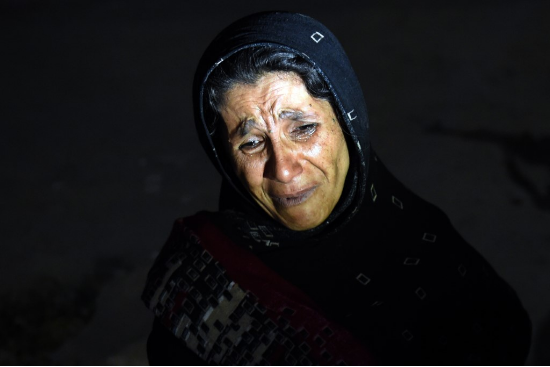
                      Afghan woman cries.


                      The work of terrorist thug, Raheel Sharif, head of the Pakistan army who organize and run the anti-Afghan terrorists.


                      NO CONDEMNATION FROM TURKEY


                      Turkey, a regime which sponsors terrorists such as ISIL and backs Jamaat e Islami in Bangladesh, has not condemned this massacre.

                      Turkey is a major ally of Pakistan and also supports pro-Pakistan terrorists and war criminals in Bangladesh.


                      Erdogan, his regime have failed to condemn the Kabul massacre. Turkey is a sponsor of terrorism and a staunch ally of Pakistan.


                      NO CONDEMNATION FROM SAUDI ARABIA


                      Adil Jubeir, Saudi regime thug and "foreign minister", whose regime have yet to denounce the Kabul massacre. Saudi is a major ally of Pakistan and also supports pro-Pakistan terrorists and war criminals in Bangladesh.


                      The Saudi regime, another major sponsor of terrorism, have also failed to condemn the Kabul massacre and are in fact also staunch allies of the Pakistani regime.


                      However despite almost unconditional backing from the Turkish and Saudi regimes for Pakistani terrorist and thug, Raheel Sharif, and the rest of the murderous generals in Rawalpindi, Afghans are strong and resilient and have endured failed invasions for thousands of years.

                      Raheel Sharif will have to be careful of karmic consequences, despite strong support from America, China, Turkey, Saudi Arabia for his army and regime.


                      Thug and terrorist, Raheel Sharif, enjoying strong support from America, Saudi Arabia and Turkey.


                      What will China do?

                      China is a strong supporter of Pakistan and arms the brutal military there. It was also a strong supporter of the Pakistani military during its failed but brutal genocide of Bengalis in 1971.

                      China was defeated in 1971 as it backed the racist and genocidal Pakistani military and despite China's hard attempts to stop Bangladeshi freedom, China failed.

                      I sincerely hope that Afghans like Bengalis are able to defeat the Chinese-backed Pakistanis.

                      Oh Allah please help our Muslim brothers and sisters in Afghankhwa and Pakhtunkhwa against the Pakistani army and its supporters in America, Saudi Arabia, Turkey and China.

                      Ameen, thumma ameen.
                      Last edited by Bengal_Tiger; 08-09-2015, 09:07 PM.
                      * * * * * * * * * * * * * * * * * * * * * * *

                      Comment


                      • #12
                        We hoped for peace but war is declared against us from Pakistani territory’: President Ghani


                        President Ashraf Ghani addressing a press conference in Kabul on Monday afternoon. (Photo: Arg)

                        BY ZARIZA CORRESPONDENT PUBLISHED 2015-08-10 | 20:44:00 762 Print |

                        In the wake of alarmingly deteriorating security situation across the country, President Ashraf Ghani addressed a hurriedly convened press conference in Kabul on Monday afternoon.

                        Flanked by many senior officials of the national unity government and security agencies, President Ghani looked visibly troubled over what he called “significant developments” over the past few days.

                        Under fire from the civil society for adopting soft approach towards Pakistan, President Ghani sought to answer many questions regarding relations between Kabul and Islamabad and the ongoing peace process.

                        During his first official visit to the U.S. in March, President Ghani had warned that 2015 would be a “difficult year”from the security point of view.

                        On Monday, he said the drawdown of over 100,000 foreign forces and the transfer of responsibility to Afghan security forces to counter insurgency was a predictable challenge.

                        The aim of these attacks, he said, is to topple states and state system in the region but the government of Afghanistan will continue to “make every effort to overcome this phenomenon”

                        “Our enemies had been waiting for a power vacuum so they could take advantage of and see the government collapse. However, none of the gloomy predictions turned to reality,” President Ghani said, recalling how some doomsayers had warned that the government will not sustain beyond few days.

                        President Ghani expressed “deepest gratitude to our brave sons and daughters in uniform for all the sacrifices they are making”.

                        On the death of former Taliban supremo Mullah Mohammad Omar, President Ghani credited National Directorate of Security (NDS), the premier security and intelligence agency of Afghanistan, for “revealing the lies and fabrications” about him being alive.

                        The confirmation of Mullah Omar’s death, President Ghani said, not only “demonstrated the strength and maturity” of Afghanistan’s intelligence agency, but reaffirmed the fact that “the war in Afghanistan is fought for and by others”.

                        Speaking on the ecology of terror, President Ghani said terrorism is a real concern for Afghanistan and the region. The terrorist attacks in Afghanistan, Saudi Arabia, Iraq, Syria, Turkey and other Muslim countries, he stressed, are “of the same nature”.

                        The aim of these attacks, he said, is to topple states and state system in the region but the government of Afghanistan will continue to “make every effort to overcome this phenomenon”.

                        Then, he spoke of the recent attacks in Kabul city, which have resulted in hundreds of civilian casualties. The attacks, he said, show that “war has changed shape”.


                        “The enemy who was fighting to gain some territory and to claim a victory has now had its backbone broken. It is so desperate now that it has turned to cowardly attacks against innocent people just to weaken people’s morale,” President Ghani affirmed.

                        Three suicide bombings in Kabul on Friday resulted in 355 civilian casualties, including 42 deaths and 313 injured, according to United Nations Assistance Mission in Afghanistan (UNAMA).

                        On Monday, at least seven civilians were killed and 18 others wounded after a suicide bomber detonated his explosive-laden car at a busy traffic junction near Kabul International Airport.

                        President Ghani said he had spoken to Pakistani Prime Minister and Pakistani Army Chief on Sunday night and made it clear that the government of Pakistan “should have the same definition of terrorism in regard to Afghanistan, just as it has for its own”.

                        Reiterating the two aspects of peace – peace with Pakistan and peace with the Taliban – President Ghani said during his visit to Pakistan last November, he made it clear that a“new window of opportunity” has opened and it depends on the capacity and will of Pakistani leadership to “change the window into a door and then to an alley and even a highway, or shut it all together”.

                        Over the past ten months since he visited Pakistan, President Ghani said the Afghan government has shown both the will and capacity to make that happen by sharing intelligence with Islamabad to carry out a comprehensive and targeted anti-terrorism campaign.

                        The government of Afghanistan, he emphasized, made “all sincere efforts for peace” but the efforts have not been reciprocated in letter and spirit

                        “We waited all this long for Pakistan to demonstrate its will through action,” he said. “However, Pakistan still remains a venue and ground for gatherings from which mercenaries send us messages of war.”

                        The incidents of the past two months in general and the past few days in particular, he said, show that “the suicide training camps and bomb making facilities used to target and murder our innocent people still operate, as in the past, in Pakistan”.

                        “Just as the incident in Peshawar and the killing of hundreds of innocent children in a school became a turning point in Pakistan, the recent incidents in Kabul and other provinces are no less and we call it a turning point for Afghanistan,” President Ghani said.


                        The government of Afghanistan, he emphasized, made “all sincere efforts for peace” but the efforts have not been reciprocated in letter and spirit.

                        “The decisions that Pakistani government will be making in the next few weeks will be significant to affect bilateral relations for the next decades,” President Ghani said.

                        “The security of our people and the national interests of Afghanistan lay the basis of our relationship with Pakistan. We can no longer tolerate to see our people bleeding in a war exported and imposed on us from outside,” he hastened to add.

                        Pakistani Prime Minister Nawaz Sharif, during his telephonic conversation with President Ghani on Monday, pledged to direct his government “to chart out an action plan against terrorism” and discuss its implementation during a visit by an Afghan delegation on coming Thursday, he said.

                        “We hoped for peace, but war is declared against us from Pakistani territory; this in fact puts into display clear hostility against a neighboring country,” President Ghani said.

                        “I ask the government and people of Pakistan to imagine that a terrorist attack just like the one in Kabul’s Shah Shahid area took place in Islamabad and the groups behind it had sanctuaries in Afghanistan and ran offices and training centers in our big cities, what would have been your reaction? Will you have looked at us as friends or enemies,” he said.

                        President Ghani urged the Taliban “who do not want their country destroyed and their people killed” to reintegrate into their society.

                        “Today, the resources that should have been spent on building factories, hospitals and on other development projects are spent for defense and fighting a war exported to us by others,” he said.

                        President Ghani said Islam is “not the issue in this war”. The political system in Afghanistan, he noted, is “based on the religion of Islam” and the Afghan Constitution is “enriched with Islamic values and ideas”.

                        “Again, the main question is how can those who claim to have been acting on Sharia can be this careless to the massacre of the innocent people? What would be their response to Aya 32, Sora Almaida of the Holy Quran which says, “Whoever kills a soul unless for a soul or for corruption [done] in the land - it is as if he had slayed mankind entirely,” he said.

                        President Ghani said there will be “no flexibility” against criminals and the judicial authorities have been directed to show “no leniency with those who have our people’s blood on their hand”.

                        All those working for outsiders to destroy Afghanistan are enemies of peace, he said.

                        “Such people fear peace, they fear rule of law and fear a stable and peaceful Afghanistan. Experience has shown that whenever there is a chance for peace, enemies are irritated and resort to violence and brutality,” he said.
                        The political system in Afghanistan, President Ghani noted, is “based on the religion of Islam” and the Afghan Constitution is “enriched with Islamic values and ideas”

                        “However, we have not and will not allow any such acts to deter us from our quest for peace or to force us into giving warmongers any concessions. We will make peace only with those who believe in the meaning of being a human, Muslim and Afghan and who do not destroy their own country on order from foreign masters,” he added.

                        He concluded by saying that the relations between Pakistan and Afghanistan are“based on our national interests”, of which security and safety of Afghans is paramount.

                        “If our people continue to be killed, relations lose meaning and I hope it will not happen,” President Ghani warned.

                        - See more at: http://www.afghanzariza.com/2015/08/....7fumRpEh.dpuf


                        [MENTION=1498]ComradePashtun[/MENTION] as you know I am generally positive about the future of Afghanistan and its ability to combat terrorism.

                        However even myself, as optimistic as I am, feel that there is little the Afghan government can do.

                        Pakistan is supported by:

                        - Turkey (a sponsor of terrorism and close ally of Pakistan which has not even condemned this attack on the capital of a nation of 30 million Muslims).

                        - Saudi Arabia, same as above, another sponsor of terrorism and close ally of Pakistan. Not a word of sympathy over the Kabul massacre.

                        - China.


                        All of these three countries are fanatically pro-Pakistan and I don't see what the Afghans can do against the brutal Pakistani regime?

                        I really don't know what to say on this.
                        * * * * * * * * * * * * * * * * * * * * * * *

                        Comment


                        • #13
                          Well BT bro, one thing is for sure that the crimes of Talib mercenaries and traitors and the Pakistani establishment against our people and country are unforgivable! These *******s together are more callous and vile than any entity we know who would perpetuate such crimes against civilians in achieving their ends which sure are nothing but evil.

                          Whether if these countries have expressed any sympathy or issued condemnation really doesn't mean that the agree or "takes side" of Pakistan in supporting the perpetrators of these terror attacks.

                          One would guess that the three of them would be interested in peaceful and stable Afghanistan.

                          China is inexorably pivoting towards Pakistan to access the Arabian sea and importantly Central Asia and Afghanistan as a source of much needed energy and minerals for its economic growth, and as a significant market and a region of immense geo-political importance. To realize its objectives one would think it would not waste time. An unstable Afghanistan would be a hindrance to put it crudely.

                          It is only chimerical if Pakistan thinks it can continue to support Talibs without compromising its national security, and let alone for projects like the CPEC to take off, but to come off the IMF life-line and face India at the same time and not have to worry.

                          I disagree, the Afghan government and army is doing impressively well. Despite the increase in tempo of war the Talibs have made little gains other than holding and then losing some isolate "districts" only.

                          I think it is about time that the Ghani set the rules of the game. I read that he has said that he instead wants Talibs and their sanctuaries to be tackled by Pakistan than facilitating the talks. He should stick to this and focus on the war effort against Talibs. Every single filthy Talib should be meted out a brutal death nothing less. The Afghan government and security forces' capability only can alter Pakistan's motivation and calculation, Ghani should stick to this area.

                          Comment


                          • #14
                            9 August 2015 – The United Nations Security Council on Sunday strongly condemned the series of terrorist attacks that have taken place in the Afghan capital, Kabul, since last Thursday and resulted in hundreds of casualties and at least 70 deaths, including children.

                            “The members of the Security Council expressed their deep sympathy and condolences to the families of the victims of these heinous acts and to the Government of Afghanistan. They wished the injured a speedy recovery and underlined the need to bring the perpetrators of these deplorable acts to justice,” said a statement issued to the press.

                            The 15-member body reiterated that no violent or terrorist acts can reverse the path towards peace, democracy and stability in Afghanistan.

                            In the wake of the latest attacks, the UN Assistance Mission in Afghanistan (UNAMA) yesterday renewed its call on anti-Government elements, including the Taliban, to cease the use of complex and suicide attacks in civilian-populated areas.

                            Between 1 January and 7 August 2015, the Mission documented 1,523 civilian casualties (282 deaths and 1,241 injured) from complex and suicide attacks launched by anti-Government elements, almost doubling the death and injuries compared to the same period in 2014


                            Comment


                            • #15
                              "and underlined the need to bring the perpetrators of these deplorable acts to justice,”

                              Comment

                              Working...
                              X