If this is your first visit, be sure to
check out the FAQ by clicking the
link above. You may have to register
before you can post: click the register link above to proceed. To start viewing messages,
select the forum that you want to visit from the selection below.
Actors Jahangir Jani and Madhu on the sets of a Pushto film.
Historically, politically and culturally, it seems the Pukhtun diaspora residing on either sides of the Durand Line shares a bond that cannot be weakened via manufactured narratives. While Karachi is gradually taking over from Lahore as the bastion of Pakistani cinema, within the regional Pashto film industry, the mantle is gradually slipping into the hands of the Afghan capital, Kabul.
Director Qaiser Sanober chose the city over Pakistani locations for filming portions of his upcoming project Yu Zal Bya Rasha whereas director Farman Khan and actor Madhu also decided to shoot a song and fighting sequences of their film Jananaa in a city that has been taken apart by terror in recent times.
With its concentration in Punjab, the Pashto film industry itself was never centered in urban centres of Khyber-Pakhtunkhwa. Now that Pakistani films are periodically being screened at cinemas of the neighbouring country, it is in a way a positive sum game for some and a negative sum game for others.
Talking to The Express Tribune, Sanober says, “Yes our shooting is under way and the response from the locals has been overwhelming. It is no secret that Pashto cinema is turning over a new leaf and investors from both countries have shown interest in injecting money into it.” He maintains the idea of shooting in Afghanistan is heavy on the pocket, but he will reap benefits in the foreseeable future. “It is a tragedy that the law and order situation has broadened the gap between our audiences in K-P and Afghanistan.” He however states Pashto films that were earlier restricted to Lahore and surrounding cities will now find a new home in Afghanistan.
The director goes on to say that the effort isn’t one sided only. “Afghan filmmakers like Haris Khan and Mohsin Khan are approaching the Pakistani government and we have every reason to believe this industry can bridge gaps.”
Nargis finds bliss in ringing the curtain up
Actor Jahangir Khan Jani feels Pashto cinema is on the brink of going digital. Trends in scripts and storylines have changed completely, he adds. “The Afghans want to see good Pashto films. The reception of our product is very promising.”
Kabul is no more a city that it once was at least ten years ago. Pakistani Pashto filmmakers have made good money spreading their wings across the volatile border and Afghan filmmakers are themselves seeing a glimmer of hope in these shifting dynamics. Since Eidul Azha, films like Ishq-e-Mamnoon, Charta Aashqan Charta Raqeeban, Ishaq Khana Kharab, Haider Khan, Zah Malung Jaan Yum, Hero Number One, Liyounay Pakhtoon, Zindan and Muhabbat Ka Dilyounoun Dy are still up and running at numerous screens across Pakistan.
Pashto films to make a mark this Eid
Madhu believes this outreach will help the industry break out of the monotony that has surrounded it for decades, contributing to its decline. “Things have to change with time. It will only worsen if we stick to our guns. Urdu and Punjabi filmmakers in India and Pakistan have been collaborating for a while. India has always ignored Pashto cinema and there is no harm in exploring a market in an area where Pukhtun art is appreciated.”
Banned by Taliban, Hamiltonian returns to Kabul to build women's studies program
'Slowly — it's long-term — but the dynamic will hopefully change.'
By Kelly Bennett, CBC News Posted: Oct 25, 2015 5:39 PM ET Last Updated: Oct 26, 2015 5:15 PM ET
Marufa Shinwari is an Afghan native who has been living in Hamilton for nearly two decades. She recently helped develop curriculum for a new women's studies program at Kabul University.
At the university where Marufa Shinwari was once forced to stop teaching because she's a woman, there's now a gender and women's studies Master's degree program. Classes started this week.
And Shinwari, who moved to Hamilton as a refugee in the mid-1990s, played a role in helping set up the curriculum, inspired in part by her own studies as a Master's student at McMaster University.
Millions of girls have gone back to school after the Taliban was booted from power in 2001. The hope, according to the United Nations Development Programme, is that the program will continue the emerging trend of Afghan women becoming decision-makers, leaders of civil society movements, journalists and entrepreneurs.
"Gender issues in Kabul is becoming widely known among the people," Shinwari said. "Slowly — it's long-term — but the dynamic will hopefully change."
Afghanistan's 1st women's studies program now in session
'It opened many doors in my mind'
A group of Afghan students gathered on the leafy campus of Kabul University this week to embark on an unlikely course - the country's first Master's degree in gender and women's studies.
It's not a theoretical exercise for Shinwari.
The Afghan native knew many educated, professional women when she was teaching law at Kabul University. But when in the early 1990s the fundamentalist Taliban overthrew the Soviet-backed government and instated Sharia law, Shinwari was not allowed to continue teaching. She lived in a refugee camp and came to Canada with her family in 1998.
Now, attitudes have shifted so dramatically as to allow a Master's in topics like feminism and gender identity, Shinwari said. And it's not just women talking about it, as sometimes Shinwari finds the conversation to look like in Canada.
"Men from academia, professors and doctors — so much interest, men, they have in this topic," she said.
Shinwari always followed women's issues and the fight for equality as a woman who was also an activist. She runs the Immigrant Culture and Art Association in Hamilton. But a few years ago her focus shifted to wanting a broader understanding of feminism and gender.
"It opened many doors in my mind," she said.
'This is the time'
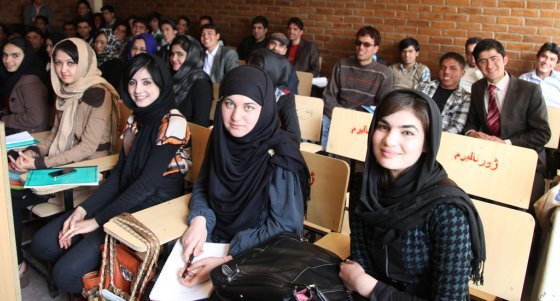
An Afghan woman speaks as students attend a class of the gender and women's studies Master's program in Kabul University.
She went to Kabul for the first time in 21 years in 2011 and has been back a couple of more times since. A recent visit coincided with the brutal mob beating of a woman accused of burning a Qur'an.
"This is the time that women need to do something," she remembers thinking.
She had conversations with former colleagues at Kabul University and with activists looking to start the program, and helped compile the curriculum using things she's learned at McMaster. She hopes the program will spark more training in the provinces, not just the capital, in feminist and equality scholarship.
And as someone who searched for materials to cite in her own thesis about the role women have played in building Afghan culture, Shinwari is looking forward to the "open door for women to be more in academia."
"Their stories, their roles, their issues will be researched, so we can have in the future something about women's roles in Afghanistan, from an Afghan woman's perspective," she said.
At the university where Marufa Shinwari was once forced by the Taliban to stop teaching because she's a woman, there's now a gender and women's studies Master's degree program - that she helped set up.
* * * * * * * * * * * * * * * * * * * * * * *
Shukran ya Masr!!!
Thanks to Egypt for supporting Bangladesh against Pakistani harassment and support for terrorists and war criminals!!
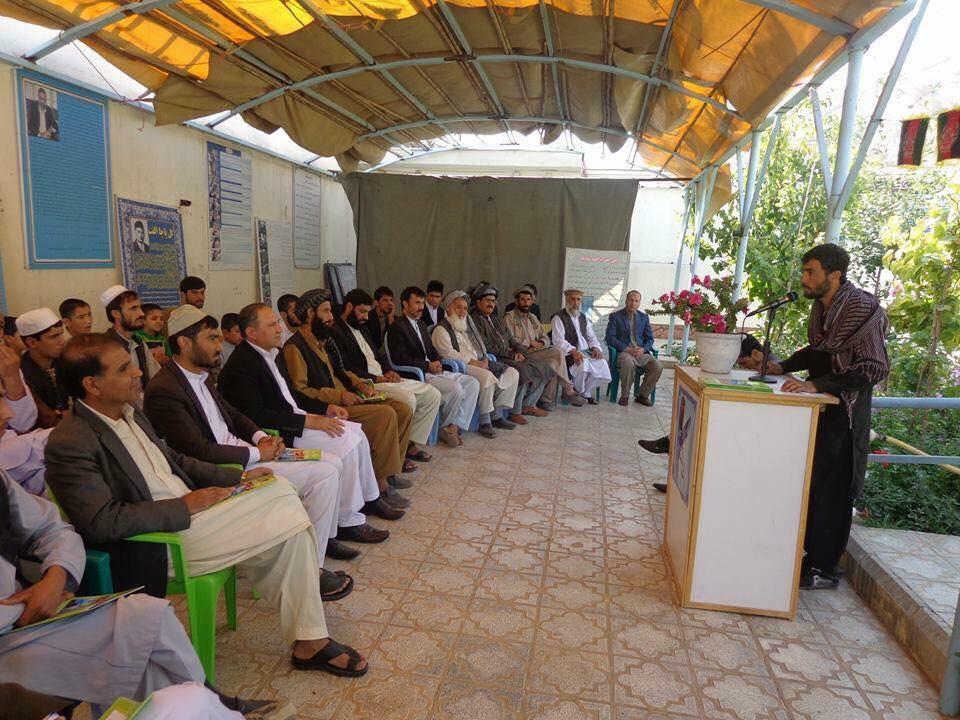
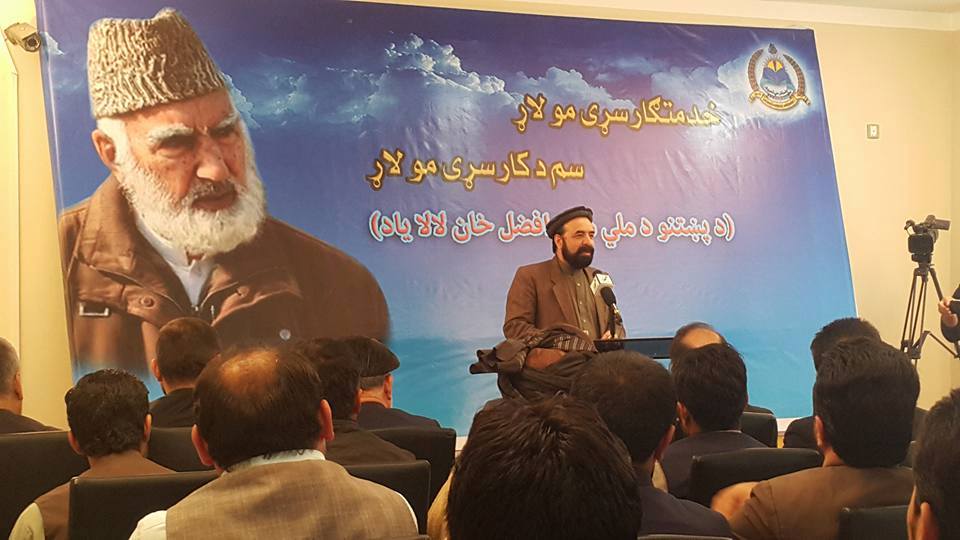
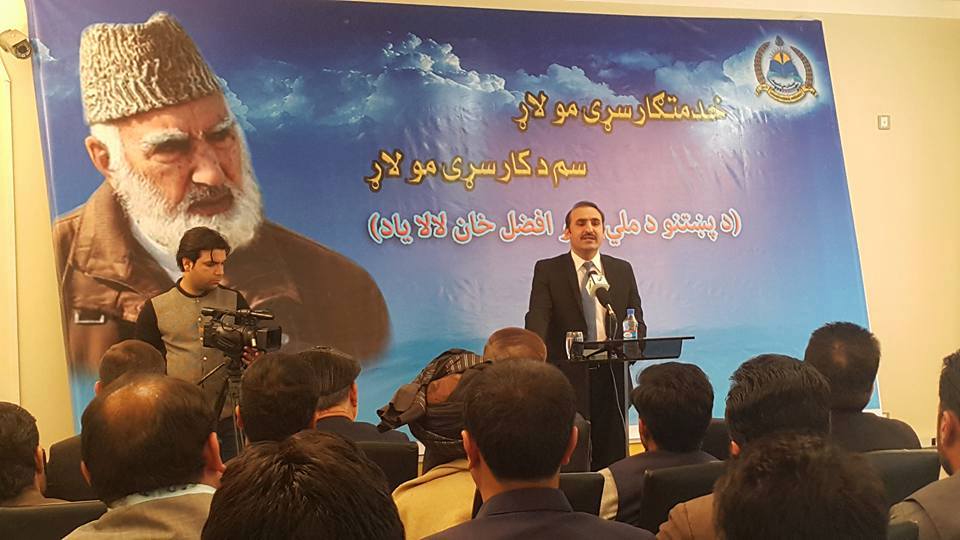
Remembrance gathering for the legendary Afzal Khan Lala, a Pashtun nationalist and ANP hero, who said he would never abandon his homeland, Pakhtunkhwa, despite Taliban threats. Afzal Khan Lala has recently passed away, rahmatullah 'alaih
* * * * * * * * * * * * * * * * * * * * * * *
Shukran ya Masr!!!
Thanks to Egypt for supporting Bangladesh against Pakistani harassment and support for terrorists and war criminals!!
 Tweet
Tweet












Comment