Announcement

Collapse
No announcement yet.

Pashto Focus

Collapse
X
 
  • Filter
  • Time
  • Show
Clear All
new posts

  • #91


    Qasim Yousafzai ‏@QasimYousafzai Nov 18

    Can't stop writing my notes in #Pashto , 15 years or so in #Journalism


    Pathan ‏@Pr0udPathan Nov 7
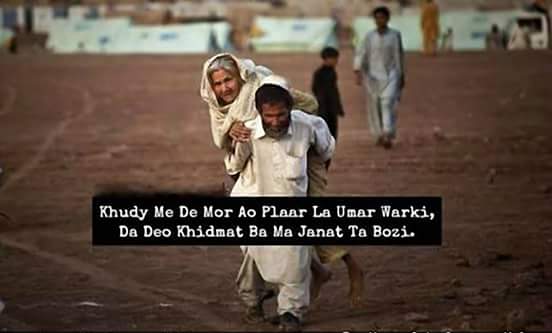
    Herawal da Pukhtano Pa Qoum ky Nishta,

    Che Me Yaar Darla Wayali Biya may Yaar ye
    #Pashto #Pukhto @Spogmai_SR


    Cheque given to Zarsanga.
    * * * * * * * * * * * * * * * * * * * * * * *

    Shukran ya Masr!!!

    Thanks to Egypt for supporting Bangladesh against Pakistani harassment and support for terrorists and war criminals!!

    Comment


    • #92


      * * * * * * * * * * * * * * * * * * * * * * *

      Shukran ya Masr!!!

      Thanks to Egypt for supporting Bangladesh against Pakistani harassment and support for terrorists and war criminals!!

      Comment


      • #93
        * * * * * * * * * * * * * * * * * * * * * * *

        Shukran ya Masr!!!

        Thanks to Egypt for supporting Bangladesh against Pakistani harassment and support for terrorists and war criminals!!

        Comment


        • #94
          Reviving Pashto folklore through tappay contest


          SADIA QASIM SHAH — UPDATED NOV 30, 2015 10:09AM


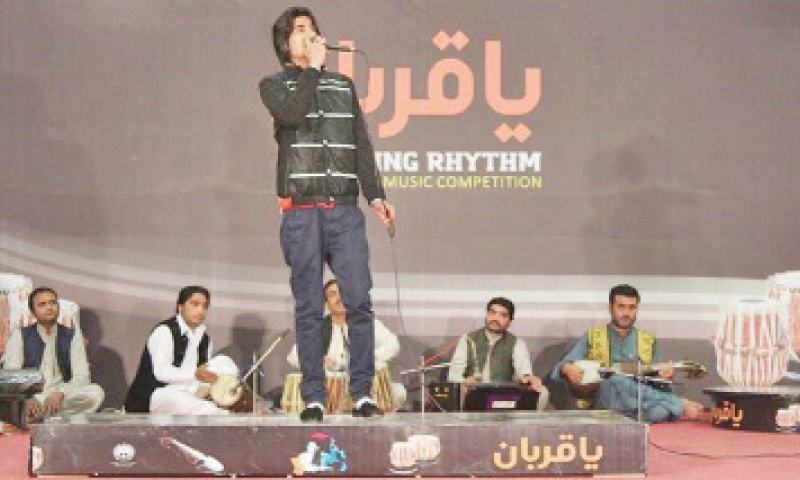
          A young contestant performs at ‘Ya Qurban’ competition at Nishtar Hall, Peshawar.


          PESHAWAR: ‘Ya Qurban’ singing competition organised by the provincial culture department and taking place in seven divisions of Khyber Pakhtunkhwa has not only encouraged talented folk singers to show their mettle, but also encouraged people to tweet their inner feelings.

          Celebrities like Reham Khan, former wife of Pakistan Tehreek-i-Insaf chairman Imran Khan, perhaps aware of the unique competition taking place in “Naya Khyber Pakhtunkhwa” also couldn’t help tweeting her feelings, “Ma de Topai pa Sar Ganrala.. Da Jeenako pa War Paida Wraka ( sic. Dooba) de Karma”.

          Those who are familiar with the Pakhtun culture could read between these lines what she was hinting at. This ‘tappa’ or folklore conveys well the feeling of disappointment when one misunderstands someone from their gentlemanly appearance. Such a tweet after a much-talked about divorce is loaded with deep meanings and feelings.

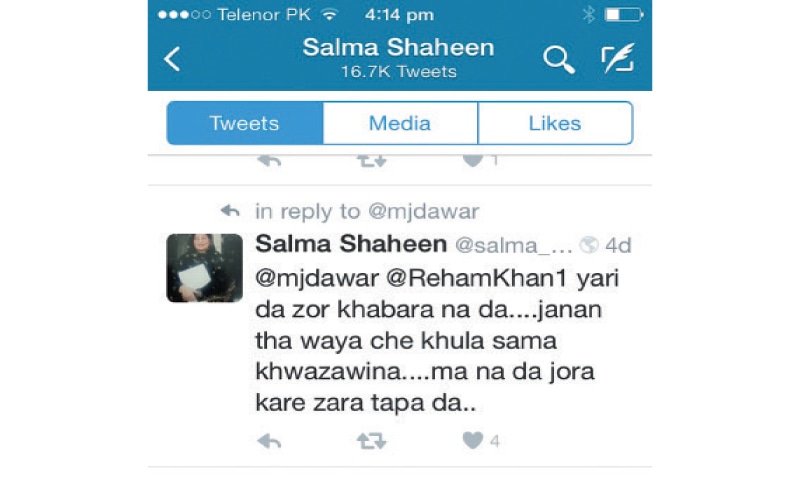
          Since it is a tradition that one can sing along and respond a ‘tappa’ with another meaningful ‘tappa’, Dr Salma Shaheen, a Pashto poetess specialising in ‘tappa’, couldn’t help speak for Imran Khan – as he himself might not even be aware what a ‘tappa’ is and most probably he can’t read Pashto.

          “Yaari de Zor Khabara Na Da, Janan ta Waya Khula Sama Khwazavina”, Dr Salma Shaheen, tweeted a ‘tappa’ which fits any embittered relation well since it implied that one can’t force others to love, ‘so my beloved you better stop blaming me’.


          In just two-liner ‘tappa’ one can convey the meanings, says Dr Salma Shaheen

          “The interesting thing about the Pashto folklore (tappa) is that in just two simple-worded lines one can convey the meanings,” says Dr Salma Shaheen, former director of Pashto Academy at the University of Peshawar who is a known poetess and has compiled some 35,000 written and unwritten folklores (tappay) into two volumes.

          Singing ‘tappay’ is in the very nature of Pakhtun rural life and as old as Pakhtuns which according to researchers is some 5,000 years old nation. Some 85 per cent of ‘tappay’ were sung by rural women while they sang of their life’s hardships, their romance and lost love as they grinded wheat or watched men working in the fields. In the serene village life, men while harvesting or irrigating fields sang ‘tappay’.

          A ‘tappa’ starting with syllables ‘Ya Qurban’ not only balances the verses, but also brings a melody which could be heard far and wide when folks sang in open fields. This was like live entertainment in rural life and in fact the only entertainment during weddings in villages. Women sang of romance and love by singing and even creating ‘tappay’ according to the occasion. When they felt suppressed they sang folklore of tragic end of innocent Maimoona on how she was killed on just a suspicion like women who are still being killed in the name of honour.


          “Maimoona Shna Shwa pe Khanda Shwa, De Mama Zoye de Ma Ba Na Halalaweena”. (Maimoona thought it was a joke. She laughed hard and said how could her cousin with whom she was in love, could slaughter her on just a suspicion).

          Just two lines, having symbols of rural life, were enough to convey very deep meaning about misery or experience of a lifetime. It depicts customs and traditions, social life and history of the Pakhtuns, says Dr Salma Shaheen.

          Dr Slama Shaheen undertook a project back in 80s to compile written and unwritten folklores. She searched for folklores in old books being sold on footpaths and went to weddings to record what folklores women sang and even wrote down those she remembered herself from her childhood in a village of Mardan. Even nationalist leader Khan Abdul Wali Khan and many others donated their collection of ‘tappay’ to her.

          Romance, stories about heroic deeds of warriors, historic events and anything that happened in Pakhtun life was topic of such folklores. Earlier, some singers like Haroon Bacha sang ‘tappay’ with the latest instruments and different tunes which made it popular among listeners. There were bad attempts to sell ‘tappay’ for commercial purpose like those sung by Nazia Iqbal, but they never were any match to the folklores originating from the rural areas even today.

          The ‘Ya Qurban’ competition taking place these days at various districts to discover such original voices and ‘tappay’ and recognise them is another initiative to revive the folklores. Those singers who were masters of folklores like Ustad Fazl-i-Rabbi, Ahmad Khan and the like are also being honoured by naming the awards after famous Pashto folk singers from the seven regions.

          The final ‘Tappay Idol’ is yet to be selected in the competition, but young and old alike have also started tweeting ‘tappay’, especially at night time.

          While the rest of the world keep sharing views and news on Twitter, Pakhtun users have set a new trend of tweeting ‘tappay’.

          Some of the politicians like Afrasiab Khattak often tweets ‘tappay’ befitting a situation and a big number of his followers reply with ‘tappay’ too.

          Twitter has proved to be an effective medium in reviving and promoting ‘tappay’ among the Pakhtun youth living abroad and in cities. Since many Pakhtuns have studied in English or Urdu medium schools so often they are either not aware of Pashto folklores or they can’t write in Pashto, but Roman Pashto has solved this problem for them.

          This has proved that hundreds of years old ‘tappa’ can still touch the hearts and help Pakhtuns express their spontaneous overflow of powerful feelings.

          * * * * * * * * * * * * * * * * * * * * * * *

          Shukran ya Masr!!!

          Thanks to Egypt for supporting Bangladesh against Pakistani harassment and support for terrorists and war criminals!!

          Comment


          • #95
            * * * * * * * * * * * * * * * * * * * * * * *

            Shukran ya Masr!!!

            Thanks to Egypt for supporting Bangladesh against Pakistani harassment and support for terrorists and war criminals!!

            Comment


            • #96


              * * * * * * * * * * * * * * * * * * * * * * *

              Shukran ya Masr!!!

              Thanks to Egypt for supporting Bangladesh against Pakistani harassment and support for terrorists and war criminals!!

              Comment


              • #97
                * * * * * * * * * * * * * * * * * * * * * * *

                Shukran ya Masr!!!

                Thanks to Egypt for supporting Bangladesh against Pakistani harassment and support for terrorists and war criminals!!

                Comment


                • #98
                  * * * * * * * * * * * * * * * * * * * * * * *

                  Shukran ya Masr!!!

                  Thanks to Egypt for supporting Bangladesh against Pakistani harassment and support for terrorists and war criminals!!

                  Comment


                  • #99
                    Death of two poets in 2015 leaves void in Pashto literature

                    By Hidayat KhanPublished: December 31, 2015


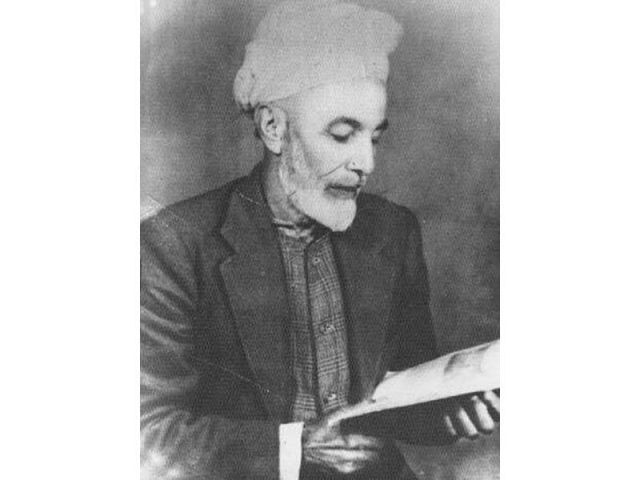
                    Shamsul Qamar Andesh

                    PESHAWAR: Two Pashto writers, poets and critics – Rajwali Shah Khattak and Shamsul Qamar Andesh –passed away in 2015, leaving a piercing void in the hearts of their fans.

                    Researcher, scholar, poet, critic and academic, Dr Rajwali Shah Khattak died of cardiac arrest at the age of 63 on July 21. Popularly known as “Wali”, he dedicated his life to Pashto literature, culture and traditions.

                    He was awarded Tamgha-e-Imtiaz by the government and received international recognition. Khattak was declared “Man of the Year” by American Biographical Institute in 2008 for his achievements that have left a positive impact on the lives of people worldwide.

                    He introduced modern research methodology in Pashto literature, worked extensively on Pukhtun culture and wrote what is known as the “constitution of Pukhtun life” or a code of “Pukhtunwali”.

                    Khattak was born in Dak Ismail Khel, Nowshera in 1952. He wrote more than 60 research papers and over 100 critical reviews. His reviews were published in international publications such as The New York Times and The Washington Post. He completed his PhD in 1985 and served as the director of Pashto Academy from 1995 to 2005.

                    His oeuvre includes a combination of modern and classical trends. They include a book on the introduction to Pukhtun culture and various works on literary movements in Pashto language. He has written a collection of poems titled Sangzar. Da Rahman Pa Shair is a study of Rahman Baba’s poetry while Ghani da Rang aw Nur Shair deals with Ghani Khan’s poetry.

                    One of his other works was called Rohology. According to Khattak, Roh is the ancient name of Pakhtunkhwa. As a result, Rohology can be understood as the study of Pakhtunkhwa, Pashto language and literature, culture and a short history of how people in Roh or Pakhtunkhwa used to live. He has also edited Rohi Mataluna (Pashto proverbs), the work of Mohammad Nawaz Tair and Thomas C Edwards.

                    March 9 was another dark day for Pashto literature. Shamsul Qamar Andesh, a senior poet, died of cardiac arrest at the age of 80 and was buried in his native town in Mayar village, Mardan.

                    His love for Pashto poetry surfaced when the independence movement was at its peak and Pakhtun Magazine was available at every house.

                    He was the poet of poets and had a specific style of writing Pashto ghazal, which was also acknowledged by the late Ajal Khattak.

                    Although he did not publish his poetry during his lifetime, his ghazals were disseminated around the province without being published.

                    “I think after Hamza Baba, the poet who received attention from intellectuals was Andesh Baba,” says litterateur Dr Israr.

                    Through his poetry, Andesh skillfully portrayed the many flavours of Pukhtun society. He expressed his dislike for violence, his distress over Pukhtun disunity and urged Pukhtuns to unite and struggle to develop the nation.

                    “He was a true follower of Bacha Khan’s philosophy of non-violence,” said Dr Israr.


                    In addition to ghazals, Andesh also wrote tappa, quadrants, poems and short stories. However, he remained the master of the Pashto ghazal.


                    [MENTION=1020]Feroz Afridi[/MENTION] [MENTION=1028]Yousafzai Pakhtun[/MENTION]
                    * * * * * * * * * * * * * * * * * * * * * * *

                    Shukran ya Masr!!!

                    Thanks to Egypt for supporting Bangladesh against Pakistani harassment and support for terrorists and war criminals!!

                    Comment


                    • Kakaji Sanober Hussain Mohmand.


                      Pashto translation of classic Persian poet Omar Khayyam hits bookstalls

                      By Nisar MahmoodJanuary 05, 2016

                      53rd death anniversary of Sanubar Hussain Kakaji marked

                      PESHAWAR: The Iranian Culture Centre in collaboration with the Pashto Academy, University of Peshawar recently published a versified Pashto translation of the renowned Persian classic poet ‘Omar Khayyam’s Rubaiyat (Quatrains).

                      Noted freedom fighter and progressive Pashto poet, Sanubar Hussain Kakaji (1897-1963) had for the first time, rendered Rubaiyat of Omar Khayyam into Pashto verse form when he was in jail during early 50s.

                      The launch of the book coincided with the 53rd death anniversary of the noted progressive Pashto poet and freedom fighter.

                      The manuscript remained unpublished for over five decades till recently when the Iranian Culture Centre, Peshawar and Pashto Academy, through a joint venture, brought out the valuable collection containing around 300 Rubaiyat of celebrated Persian mathematician, astronomer, philosopher and poet, Ghiyas-Uddin Abul Fatah Omar Ibn Ibrahim Al Khayyam Nishapuri (1048-1131).

                      Ali Yousafi, Director General, Iranian Culture Centre in Peshawar, in his remarks noted that the moment he came to know about an unpublished manuscript of versified Pashto translation of Omar Khayyam by Sanubar Hussain Kakaji, he expressed the determination to bring it in fine print.

                      “Scholars are divided over the exact number of Rubaiyat by the great Persian poet, Muhammad Ali Faroghi considers its 66, Sadiq Hidayat counts it 142 yet Ali Dashti says it runs into 76. One thing is certain that substantive work has been not done in this regard.”

                      He says Edward FitzGerald (1809-1883) was the first English poet who had introduced Omar Khayyam to the Western and European world. “Fitz had rendered 157 Rubaiyat from a Persian manuscript of Omar Khayyam written in Iranian city of Shiraz in 865 A.H. It is available in Oxford University”.

                      He says that it is difficult to determine the exact number of Omar’s Rubaiyat, however some Rubaiyat composed by other noted Persian poets, had also been attributed to Khayyam.

                      Ali Yousafi adds, “In respect of Sanubar Hussain’s fine rendition, I did not meddle with its number. I hope this fine literary work will bridge the distance between Iran and people of Pakistan to a great extent.”

                      ‘Pashto verse translation of more than 20 Rubaiyat had been lost along with a scholastic foreword of Reza Hamadani a noted Urdu research and Hindko language scholar due to mishandling of the original manuscript over the years, the book laments.

                      According to scholars, the translation of Omar Khayyam’s Rubaiyat is available in around 43 major languages of the world including, English, French, German, Russian, Danish, Italian, Swedish, Arabic and also Urdu.

                      Inspired by Sanubar Hussain Kakaji, several writers in Pashto have also tried their hand at rendering Khayyam’s quatrains, in Urdu alone, 11 translations of Rubaiyat of the master Persian poet are available done by different literati.

                      He says interestingly, Khayyam’s significance as a philosopher and teacher, and his few remaining philosophical works, have not received the same attention as his scientific and poetic writings. Al-Zamakhshari referred to him as “the philosopher of the world”. He taught the philosophy of Avicenna for decades in Nishapur, where Khayyam was born and buried,” Khalil narrates.

                      Professor Hanif Khalil while commenting on the book under review writes that there were Pashto several fragmentary translations of Omar Khayyam’s Rubaiyat, some were published in book form, others were appeared in various Pashto literary journals but Sanubar Hussain Kakaji was the first Pashtun poet to have rendered around 326 Rubaiyat from Persian into Pashto verse in a masterly manner.

                      In the foreword, written in 1988 before publication of the book Amir Hamza Khan Shinwari says, “In even otherwise difficult Rubaiyat of Omar Khayyam, Kakaji has taken care of using fluent and simple Pashto diction. Some of these are so clear in meaning that one feels no difference between the original and the rendered version.”

                      FitzGerald’s translation of Omar Khayyam’s Rubaiyat became so popular in Europe that it gave a new direction to the concept of mystic thought in the world. These two quatrains are given as an example for readers.

                      He writes that a few Rubaiyat had been rendered in free Pashto verse due to difficult Persian phraseology. He opines that the versified Pashto rendition conveyed full meaning of the original in Persian. “I would request the readers to benefit from this precious work,” Shinwari recommends.

                      Printed by the Iranian Cultural Centre in collaboration with Pashto Academy at the Printman, Peshawar, the book ‘Rubaiyat-i-Khayyam’ is available in the market for Rs100, spreads over 159 pages. The readers can enjoy Pashto translation along with original version in Persian.

                      - See more at: http://www.thenews.com.pk/print/8873....u6rJ6iuW.dpuf
                      * * * * * * * * * * * * * * * * * * * * * * *

                      Shukran ya Masr!!!

                      Thanks to Egypt for supporting Bangladesh against Pakistani harassment and support for terrorists and war criminals!!

                      Comment


                      • Funny


                        ...


                        Profound

                        * * * * * * * * * * * * * * * * * * * * * * *

                        Shukran ya Masr!!!

                        Thanks to Egypt for supporting Bangladesh against Pakistani harassment and support for terrorists and war criminals!!

                        Comment


                        • With his hatred for the Pashto language and Pashtun culture, Imran Khan alongside his "friends" in the Pakistani military as well as Pervez Khattak, the PTI and others will probably be banning the following videos as a "threat to national security".


                          Imran Khan and Pervez Khattak will probably take a break from dancing on top of containers and if reports of the de facto ending of Pashto language tuition in Khyber Pakhtunkhwa are true will probably go round burning CDs of the Pashto language and comedies as a "threat to the federation of Pakistan".


                          Pervez Khattak boogying on top of a container.


                          IMRAN KHAN: If I find any CD of a Pashto language video I will burn it!! I will do this after I kick out all Muslim children born in Pakhtunkhwa to Afghan parents out of Pakistan!!

                          * * * * * * * * * * * * * * * * * * * * * * *

                          Shukran ya Masr!!!

                          Thanks to Egypt for supporting Bangladesh against Pakistani harassment and support for terrorists and war criminals!!

                          Comment


                          • کهٔ عزت غواړې په کلي په مالت کښې
                            حٔان جدا نهٔ کړې دخپلې قبيلې نه

                            سوداګره! کهٔ د سرومال خېر غواړې
                            جدا مهٔ درومه د خپلې قافلې نه

                            توَکّل د لارې مَل کړه درومه درومه
                            وروستو نشې د دنيا مقابلې نه

                            سختې نرمې مرحلې به واړه طے شي
                            مرد کار اخلي د ھمت او حوصلې نه

                            کوم يو قام چې قاموالي باندې قربان وي
                            ھغه بچ وي د اغيارو د حملې نه

                            په ساده پښتو کښې درومه صداقت دے
                            جادو ھېر کړي له پنجاب او بنګالې نه

                            آزادي د مُقَيّد په بند قربان شه
                            چې جدا نهٔ دے د خپلې سلسلې نه
                            [MENTION=1020]Feroz Afridi[/MENTION] [MENTION=1028]Yousafzai Pakhtun[/MENTION]
                            * * * * * * * * * * * * * * * * * * * * * * *

                            Shukran ya Masr!!!

                            Thanks to Egypt for supporting Bangladesh against Pakistani harassment and support for terrorists and war criminals!!

                            Comment


                            • Recent Pashto cultural event in Baltimore, USA.


                              A recent Pashto book inauguration in Washington DC a few days ago.

                              * * * * * * * * * * * * * * * * * * * * * * *

                              Shukran ya Masr!!!

                              Thanks to Egypt for supporting Bangladesh against Pakistani harassment and support for terrorists and war criminals!!

                              Comment


                              • Poignant moments: Weaving poetry from the plight of the displaced

                                By Hidayat KhanPublished: May 29, 2016


                                Cover of Muhammad Saleem Zahib’s book. PHOTO: EXPRESS

                                PESHAWAR: Pashto poet from North Waziristan, Muhammad Saleem Zahib, has published an anthology of poems, titled Da kadwalai woraze me na kheregi, to heighten awareness about the plight of internally displaced persons (IDP).

                                The book paints a realistic picture of human lives torn by war and insurgency. It was released in April and is already out of stock in most stores. The demand for the anthology has surged. The poet intends to publish a new edition of the book even though he does not have the funds and resources to do so.

                                The 43-year-old poet from North Waziristan Agency unabashedly censures a society that has reduced the prospects of tribespeople and uses poetry as a medium to convey their misery and heartache.

                                A brave new world

                                “For the last 15 years, we have not been able to write anything that could come close to the works of great Romantic poets,” Saleem Zahib told The Express Tribune on Saturday. “[Every time we put pen to paper], we elucidate the struggles of our people.”

                                He said continuous wars in the tribal belt have compelled thousands of people to leave their homes and to settle in IDP camps. Although some of them have been repatriated, most of them are still languishing in camps in the scorching summer heat. “A new word has come into existence – we are refugees in our own homeland,” Zahib said.

                                An IDP himself, the poet wrote about the harsh realities of camp life.

                                “I would pen down a series of facts about life at the camp while I was living in them,” he said. “However, my notebooks, along with clothes and other personal items have been left in the tribal area.”

                                Potency of poetry

                                Zahib has being writing poetry for the last three decades since a majority of the tribal areas have maintained a very close affiliation with poetry. “This is one of the main sources of catharsis for tribespeople,” he said. “Poetry is now one of the few sources through which people can explain their suffering.”

                                Important topics that cannot be spoken or written about find a voice through rhyme and meter.

                                “It is through poetry that an artist conveys his/her grievances to the world,” he said. According to Zahib, poets write about subjects that are embarrassing, poignant and even heart-breaking.

                                “Most of the conditions that are mentioned in the book may make people ashamed, but they need to be heard,” he said. Reciting one of his sonnets, Zahib read, “We are neither considered alive nor declared dead.”

                                Continuing the legacy

                                The author of Da kadwalai woraze me na kheregi said he has been inspired by the Pashto poets such as Qalandar Mohmand and Rahmat Shah Sail.

                                His poetry shows no marked departure from poetic practices of his contemporaries and earlier poets of the region. However, Zahib has focused on additional subjects.

                                Apart from romanticising nature, he is not hesitant to put a spotlight on growing class prejudices, class differences and other social disparities. Zahib, through satire, explores the exploitative effects of poverty, war and societal evils on the lives of tribespeople.

                                “If we look at history, Pukhtuns have always been oppressed which their development suffered,” the poet said. “We do not want bombs, tanks and jet fighters, but need schools, hospitals and freedom.”

                                Zahib lamented that most of this work is not accessible to people in the outside world.

                                He said, “While Pukhtuns have contributed immensely to literature and maintained the rich traditions of poetry sessions, most renowned artists and poets from the tribal belt are hardly recognised beyond their local circles.” He pinned the blame on the lack of exposure and poor communication and information systems of the country.

                                Zahib was in charge of the eye ward at District Headquarters Hospital Miram Shah in North Waziristan Agency.

                                Published in The Express Tribune, May 29th, 2016.

                                Poignant moments: Weaving poetry from the plight of the displaced - The Express Tribune
                                * * * * * * * * * * * * * * * * * * * * * * *

                                Shukran ya Masr!!!

                                Thanks to Egypt for supporting Bangladesh against Pakistani harassment and support for terrorists and war criminals!!

                                Comment

                                Working...
                                X