Announcement

Collapse
No announcement yet.

Pashtun rule of northern Burma

Collapse
X
 
  • Filter
  • Time
  • Show
Clear All
new posts

  • Pashtun rule of northern Burma

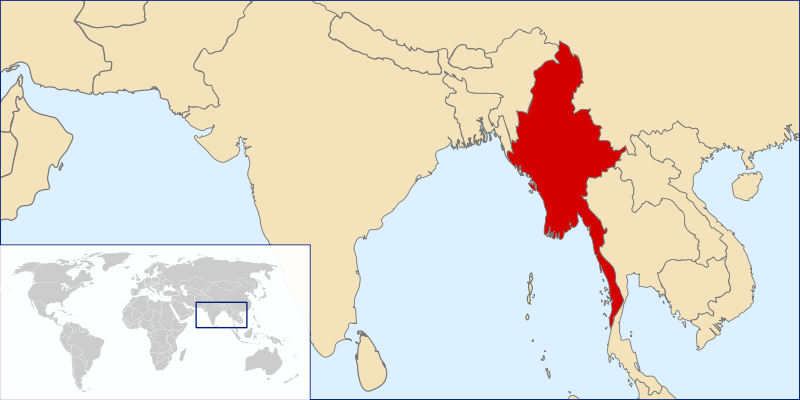
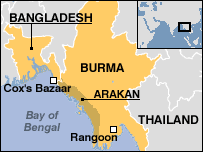
    In this thread I will post information pertaining to the Pashtun rule of the region known as "Arakan", which is now in the north of Burma.

    Before current borders were made, northern Arakan and the southern Bangladeshi region of Chittagong were often part of the same kingdom or states.

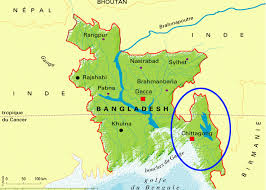


    Chittagong, whose classical Islamic name was "Islamabad" and is even today surrounded by the "Jalalabad" hills.


    Arakan or now called in Burma, the "Rakine state".


    * * * * * * *

    "After the defeat of the Mughal general Shahbaz Khan in 1584 at the hands of the local zamindar Isa Khan the Mughals had been forced to retreat from Bengal. But in 1594 Akbar sent Raja Man Singh as his new governor to Bengal (1594-1606) with the objective of crushing local resistance....

    The advance of the Mughal general forced Isa Khan and his Afghan followers to fall back behind the Brahmaputra river, and much of Isa Khan’s territories fell into the hands of Man Singh. During the rains of 1595 Man Singh decided to stay near the Brahmaputra river and built a fort he named Salimnagar at Sherpur Murcha (near Bogra)."


    Page 74-75.


    Isa Khan was a ruler of Bengal who some claim was a Pashtun whose grandfather was born in the Suleiman mountain ranges of Afghanistan/Balochistan (southern Pakhtunkhwa). He is regarded as a national hero of Bangladesh (Muslim east Bengal) and seen as a local hero against foreign invaders i.e. the Turkic Mughals. The Bengali Muslims preferred the Muslim Pashtuns to the more arrogant and racist Turkic Mughals. The Pashtuns ("Afghans") also integrated more with Bengalis and their culture whilst the Mughals kept aloof and maintained a distance.

    Plus Isa Khan is also seen as an Islamic hero fighting for Islam against the corrupted Mughal emperor and his apparently personally invented religion of "din ilahi".
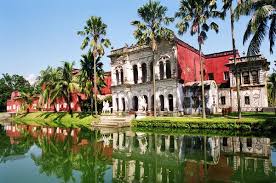


    The Sonargaon, the capital of Isa Khan (rahmatullahi 'alaih).


    To be continued....
    * * * * * * * * * * * * * * * * * * * * * * *

    Shukran ya Masr!!!

    Thanks to Egypt for supporting Bangladesh against Pakistani harassment and support for terrorists and war criminals!!

  • #2
    Do Rohinya Muslims have Pashtun ancestry?I believe Arakan state is where the Rohingyas live.
    "I bow to no one, except ALLAH. I dont bow to punjabay, do not bow to kabulay and afghanay, do not bow to faujay and mullay, do not bow to asfandyarwalay and petty khanays...i am traitor to all of them." - Smartay

    Comment


    • #3
      In 1599 Isa Khan died and in 1600 the Afghan warlord Usman Sajawal revolted and recovered parts of Orissa. The revolt of the Afghan nobles prompted Man Singh to return to Bengal. In 1601 he subdued the Afghan rebels.
      In 1602 another Afghan warlord, Usman, crossed the Brahmaputra and laid siege to the Mughal thana of Bhalwa (Bhawal). Man Singh marched to Bhalwa and defeated Usman.

      This victory left the Mughal governor in possession of a large part of Usman’s fleet and artillery. From Bhalwa Man Singh proceeded to Dhaka, and in February 1602 he sent an army across the Ichamati to attack the son of Isa Khan, Musa Khan and Kedar Rai. Musa Khan and Kedar Rai, together with their allies, blocked riverain traffic, and thus had an effective hold
      on trade in eastern Bengal. Man Singh without the help of a fleet forded the Ichamati river with his elephants and horses and drove Musa Khan and his allies back to Sonargaon


      Pp 75-76.


      The above historical information is also useful in that there has been a time in history when Pashtuns have had a navy and fought naval wars and this was in Bengal when they fought the Mughals.


      The Mughals unfortunately triumphed over the Pashtuns (Afghans) who are in the Bengali narrative seen as the heroes and defenders of Bengal, as having embraced the land and its people and being of them.


      Then in 1602 there was a war between the Mughals and the Arakanese.

      In Bangladeshi history of that period the term "Bharo Bhuiyans" (12 lords if I am not wrong [MENTION=3580]asad71[/MENTION]) is often mentioned and they included Pashtun generals and kings.


      As we saw earlier, in Bengal the arrival of the Mughals and the Arakanese had prompted a coalition of the so-called Bhara Bhuiyas to unite their forces against Mughal and Arakanese domination.

      The Bhara Bhuiyas were not one homogeneous group. The different local lords, Afghans, and Portuguese freely and frequently shifted their allegiances to take advantage of the unsettled affairs in Bengal.


      Pp 80.

      These Bharo Bhuiyans are seen as representing the Bengali Muslims and many Bangladeshis have the surname Bhuiyan including the current head of the armed forces Iqbal Karim Bhuiyan.


      Iqbal Karim Bhuiyan, the current head of the Bangladesh armed forces on the right. He may possibly have Pashtun ancestors.


      Chittagong itself (now in southern Bangladesh) had been ruled by the Pashtuns (who are referred to as "Afghans" in English language works relating to this subject):


      During the year 1538-39 Sher Shah’s General Noazish occupied Chittagong and till 1580 it was ruled by the Afgans. Though the Afghans left Bengal in 1575, Jamal Khan Panni ruled Chittagong up to 1580. In 1580 she was re-captured by the Arakans


      The Pashtuns (also called "Pathans") had also conquered Arakan (now in Burma) earlier than this Pashtun capture of Chittagong (now in Bangladesh) in what is now :


      The arrival pathan army in Arakan


      As Naramaikhla agreed to six point conditions (Arakanese kings also followed and practised them while they were independent and under no obligation), in 1429 AD, Sultan Nadir Shah sent Gen. Wali Khan as the head of 20,000 Pathan army with Naramaikhla to restore the throne of Arakan to Naramaikhla. The Pathan army conquered Arakan from the control of Mon and Naramaikhla ascended the throne. Soon Wali Khan and Naramaikhla had a dispute over the No. 5 condition of introduction of Persian language as court language of Arakan. Gen. Wali Khan arrested king Naramaikhla and locked up at Balutaung fettering him. Gen. Wali Khan ruled Arakan for one year and introduced Persian in his court which continued as state language up to 1845 AD and appointed Qazis. But some time after that Narameikhla succeeded in re-conquering Arakan with the help of a second army supplied by Nadir Shah headed by Gen. Sandi Khan. The accession of Min Sawmon to the throne ushered a new era in the history of Arakan. Upon his return, Narameikhla founded a new city, Mrauk-U on the bank of the Lembro River, now known as Mrohaung, which remain the capital until 1785 when Arakan was conquered by Burma. Narameikhla’s Muslim soldiers, who came with him from Bengal, settled in villages near Mrohaung and built the Sandi Khan Mosque, which still exists today. Muslim influence in Arakan, they may be said to date from 1430, the year of Narameikhla’s return. As a result of the close land and sea ties between the two countries, which continued to exist for a long time thereafter, the Muslims played a decisive role in the history of Arakan Kingdom.
      GACOR66 sebagai penyalur slot gacor hari ini memberikan akses bermain slot online gampang menang dengan bet kecil pasti jackpot hari ini dengan persentase terbesar setiap hari.


      The reference to Wali Khan calling for Persian to be the court language is nothing strange or negating his Pashtun origin, as

      1: Persian was the official Mughal language and Wali Khan was in origin a Mughal general of Pashtun ethnicity.

      2. Even Wali Khan's celebrated kinsman Ahmed Shah Abdali three centuries later, undisputedly a Pashtun, made Persian his court language.

      3. Arabic was seen as the language of theological texts, Persian was seen as the language of the court and empire by Muslims of that region whose native language may have been something else.


      I will show more texts highlighting the Pashtun presence in southern Bangladesh/northern Burma.


      To be continued....
      Last edited by Bengal_Tiger; 05-29-2014, 02:27 PM.
      * * * * * * * * * * * * * * * * * * * * * * *

      Shukran ya Masr!!!

      Thanks to Egypt for supporting Bangladesh against Pakistani harassment and support for terrorists and war criminals!!

      Comment


      • #4
        Muslim Arakanese or Rohingya are indigenous to Arakan. Having genealogical linkup with the people of Wesali or Vesali kingdom of Arakan, the Rohingya of today are a perfect example of its ancient inhabitants.

        The early people in Arakan were descended from Aryans. They were Indians resembling the people of Bengal. "The area now known as North Arakan had been for many years before the 8th century the seat of Hindu dynasties. In 788 A.D. a new dynasty, known as the Chandras, founded the city of Wesali; this city became a noted trade port to which as many as a thousand ships came annually;… their territory extended as far north as Chittagong; …Wesali was an easterly Hindu kingdom of Bengal following the Mahayanist form of Buddhism and that both government and people were Indian.."

        ...


        In 1430, after nearly three decades in exile in the Bengali Royal city of Gaur, king Narameikhla also known as Min Saw Mun (1404-1434) returned to Arakan at the head of a formidable force largely made up of Afghan adventurers, who swiftly overcame local oppositions and drove off the Burmans and Mons. This was the start of a new golden age for this country – a period of power and prosperity...This cosmopolitan court became great patrons of Bengali as well as Arakanese literature. Poet Dulat Qazi, author of the first Bengali romance, and Shah Alaol, who was considered the greatest of seventeenth-century Bengali poets, were among the eminent courtiers of Arakan.


        Pashtun rule of southern Bangladesh/northern Burma.

        From a wider historical perspective we can say that the furthest west that the Pashtuns (also known as Afghans or Pathans) spread their control or conquered was Iran e.g. Mirwais Hotaki and the Ghilzai's defeat of the Safavid dynasty.

        A defeat whose significance is made more notable by the fact that it is the Safavids who have defined Iran as the Shia nation as it is now and now the leader of the world's Shias.

        However the furthest east by many was seen as Bihar and many a Urdu-speaker in Karachi cites his "Pathan origins" from Bihar. However Pashtun rule went further east including in to Bengal and the very southern point of Bengal i.e. Chittagong.

        However the utmost extreme of Pashtun conquest is northern Burma or the area called Arakan.

        So it is these two countries Iran and Burma which represent the two limits of Pashtun military conquest.


        Iran, bordering the Pashtun heartland of Afghankhwa/Pakhtunkhwa.

        Last edited by Bengal_Tiger; 05-29-2014, 02:59 PM.
        * * * * * * * * * * * * * * * * * * * * * * *

        Shukran ya Masr!!!

        Thanks to Egypt for supporting Bangladesh against Pakistani harassment and support for terrorists and war criminals!!

        Comment


        • #5
          COMING OF THE PATHAN MUSLIMS TO ARAKAN

          In addition to Arab Muslims, many Muslims from India also arrived and settled in every nook and cranny of Arakan. They were Gauri Pathans from Gaur, the capital of the Sultan of Bengal. Previously, the Indian Muslims had only contact with Arab Muslims and had no relation with Rakhine Magh people of Arakan because they were non-Muslims and they thought that they (the Maghs) were wild hilly people.

          At that time the Bengal Sultanate was ruled by the Pathan Muslims with their capital at Gaur. When Narameikhia took refuge at the court of Gaur the relation between Arakan and Bengal started.

          The circumstances which made Arakan turn from the East and look west to the Moslem States were political. When Longgeret dynasty's last king Thingathu died, Narameikhia, the son of his elder brother Razathu, ascended the throne of Longgeret. Saw Pu Nyo, the sister of Anandathein (the governor of Dallah) was the most beautiful woman of Arakan at that time. Narameikhia had developed weakness for her. Being unable to control his lust for her, he took her as his queen after forced divorce from her husband which made annoyed Annandathein. He took it as an insult to the courtiers and entire people and to himself. So, he sought assistance from Ava king Min Khong-I of central Burma who succeeded the Pagan dynasty.

          King Min Khong considering the previous infiltration of Arakanese king Hla Ra Giri to Yaw,Saw, Long Shay, the request of Annada Thien and his own lust for expansion of his country, sent his 13 year old son Min Ye Kyaw Swa, as the head of 30,000 soldiers, to Arakan. Min Ye Kyaw Swa conquered Arakan in 1404 A.D. and the deposed king Narameikhia fled to Bengal and took refuge at the court of king Ahmed Shah at Gaur. That kingdom had been independent of the sultanate of Delhi for eighty six years ago.It was one of the many sovereign states of the world-wide Moslem polity. His younger brother Naranu fled to Hantha Wadi and took refuge at the court of Mon (Talaing) king Razadirize.

          When the victory of Min Ye Kyaw Swa was conveyed to King Min Khong, the king gave his daughter, Shwe Pyi Chan Tha, in marriage with Ahnawratha Saw, the governor of Kalay, and sent him to Arakan and called back his son. But his tyrannic rule was unbearable to the people of Arakan. Naranu requested help from Mon king Razadirize. King Razadirize sent Mon and Muslim army - both land and naval forces to Arakan. They conquered Arakan. Anawratha Saw and Shwe Pyi Chan Tha were taken to Hanthawidi where the former was put down to death and the latter was made queen. Naranu ascended the throne of Longgeret.

          When bad news was heard by the king Min Khong, he sent again Min Ye Kyaw Swa to Arakan. Min Ye Kyaw Swa conquered Arakan again. Naranu fled to the upper reaches of Kassapa Nadi (Kaladan River). In this way Arakan became the battle field of Burmese and Mon. Lastly, Mon won the battle.Thus Arakan fell under the subjugation of Mon.

          While Narameikhia was serving at the army of Sultan Ahmed Shah, the Indian king of Delhi (according to Rakhine Razawin, the king of Janpur, Sultan Ebrahim) invaded the Sultanate of Bengal. Narameikhia fought the battle with full of valour and skill. The king was very pleased and called him son and Naramekhia called the king father, which was written by Sayadaw U Nyana in his Danyawadi Razawintheik (the Modern History of Arakan). Hence, Rakhine Maghs and Muslims became brothers and sisters. Fraternity began between Maghs and Muslims.

          After the victory of the battle, king Ahmed Shah handed over the throne of Gaur to his son Nazir Shah in the year 1426 A.D (According to Bengal History it was not Nazir Shah but Sultan Jalaluddin Mohammed Shah). Then Narameikhia pleaded help from the king to take back his lost throne of Longgeret. The king agreed to do so when Narameikhia agreed to abide the following conditions;

          To return the twelve towns of Bengal.
          Muslim title must be used by the king of Arakan.
          The court emblem must be inscribed with Kalima Tayuba in Persian.
          The coins, medallions must be inscribed with Kalima Tayaba in Parsian and to mint them in Bengal.
          To use the Persian as court language of Arakan.
          To pay taxes and presents annually.
          Since that time onward Rakhine Maghs had to learn the Islamic history and the meaning of the triumph of Islam and how it arrived, that the chief Moslem protagonists were Mongolians. For hundred years, Arakan was a vassal state of the Muslim Bengal and paying tribute to Bengal.

          As Narameikhia agreed to the six conditions, in 1429, Sultan Nazir Shah sent Gen. Wali Khan as the head of 20,000 Pathan forces with Narameikhia to restore the throne of Arakan to Narameikhia. The Pathan army crossed Arakan through Golangi pass and another army crossed through Wall Khan (later Alt Khan) pass. They conquered Arakan from the control of Mon and Narameikhia ascended the throne.

          Soon Wali Khan and Narameikhia had a dispute over the No. 5 condition of introduction of Persian as the court language of Arakan. Gen. Wali Khan arrested Narameikhia and locked up at Balouthaung fettering him. Sir Arthur Phayer wrote that Gen. Wali Khan arrested Narameikhia with the collaboration of a Magh Chief who was his enemy (may be Ananda Thein). Gen. Wali Khan ruled the country for one year. He introduced Persian in his court and appointed Qazis. From the upper Kissapa Nadi (Kalandan River) Naranu came down and rescued Narameikhia.

          He went straight to Sultan Nazir Shah and narrated all the happenings. The king become furious and sent his right and left ministers such as Dampasu, Razamani, Setta Khan with an army larger than that of Gen. Wali Khan, now headed by Gen. Sandi Khan. They throned Narameikhia at Lounggeret and sent back Gen. Wali Khan to the Bengal.

          Narameikhia thought that the city of Lannggyet was a cursed city from where he was ousted and which city also saw the rise and fall of many kings, Harvey writes: “The turmoil of foreign inroads showed that Launggyet was ill-fated and the omen indicated Mrohaung as a lucky site, so he decided to move there; though the astrologers said that if he moved the capital he would die within a year, he insisted, saying that the move would benefit the people and his own death would matter little. In 1433 he founded Mrohaung and in the next year he died. A populous sea-port, built on hillocks amid the rice-plain, and intersected by canals which served as streets, Mrohaung remained the capital for the next four centuries."

          Narameikhia shifted his capital to a new site known as Mrauk-U or Patthri Quilla in 1433. As the Pathan soldiers of Gen. Sandi Khan was faithful to him, king Narameikhia deployed them to all important and strategic places and all bordering areas to defend the state. These Pathan soldiers were unable to return to their motherland. They served in Arakan with the posts-ranked from ministers to soldiers and built many monuments. Among them the most prominent mosque is the Sandi Khan mosque which was built in the year 1433 at Kawalong, in Mrohaung City.


          A mosque in Mrauk-U (Mrohaung). The Sandi Khan mosque - called the "Santikhan" mosque - which was built by Pashtuns coming from Bengal has been destroyed by the Burmese.


          Though the religion of Islam and the culture of Muslim began with the arrival of Arabs in Arakan, but it came to prominence with the arrival of Gauri Pathans. In U Kyi's "The Essential History of Burma", he wrote that "Rakhine Maghs became Muslims after embracing Islam in 15th century. For hundred years, from 1430 to 1530 A. D. Arakan was under the suzerainty of Muslim Bengal."

          Eleven kings successively ruled Arakan for hundred years 1430 to 1530 A.D... The relation with Bengal remained extremely cordial. The Arakanese paid tribute to Muslim Bengal and learnt Islamic history and politics.

          ....

          In the year 1556 Bengal was invaded and conquered by the General of Emperor Akbar and many Pathans and Mughals of Bengal took refuge in Arakan. T.N. Sarkar wrote that the Pathan and Mughal of Arakan had supported Shah Shuja. The twelve towns of Bengal were ruled by the Arakanese kings till king Narameikhla. These twelve towns of Bengal were returned by Narameikhla to the Sultan of Bengal and were under the control of Sultanate of Bengal for hundred years.
          * * * * * * * * * * * * * * * * * * * * * * *

          Shukran ya Masr!!!

          Thanks to Egypt for supporting Bangladesh against Pakistani harassment and support for terrorists and war criminals!!

          Comment


          • #6
            When the king Naramikhla reached the capital, he was widely acclaimed by his people. He was aided by two contingents of 50,000 Muslim soldiers (first under General Wali Khan and later under Sandi Khan) many of whom later settled in Arakan. They became his advisers and ministers making sure that the territory was not lost again to the Burmans.

            The first thing Naramikhla did after regaining his throne was to transfer the capital from Launggyet to Mrohaung, which in the hands of Bengali poets and people became Roshang (Rohang). Those Muslims established the Sandi Khan Mosque in Mrohaung. Their descendants, as noted by the Bengali poets of the 17th century, held high positions during the Mrauk-U dynasty. During the successive centuries the Muslim population in Arakan grew in large numbers as a result of inter-marriage, immigration and conversion. [In my travels around the Diaspora communities, I have come across many of the descendants of those soldiers who came and settled in Arakan during Narameikhla’s time. As Anthony Irwin had noted some 70 years ago, these Muslims look quite different than average Bangladeshis; many of them have distinct Arab and Persian touch about them; many even have Mongoloid touch.


            - These "descendants of..soldiers" are in fact the descendants of Wali Khan's Pashtun army from Bengal that conquered this part of Arakan on behalf of an Arakanese king.

            - The Rohingya are an amalgamation of different Muslim groups which include people of Arab descent and Pashtun descent but they are mainly the descendants of Islamicized Indic peoples native to this area. It is said that Arakan was originally an Indic region like Bengal as it is geographically isolated from the rest of Burma and this natural boundary separated the Indic and Mongoloid worlds.

            So some of these Muslims who can trace their ancestry to the soldiers of Wali Khan are in fact the sons of Pashtun soldiers who fought in Burma, established mosques and spread Islam to the people.
            * * * * * * * * * * * * * * * * * * * * * * *

            Shukran ya Masr!!!

            Thanks to Egypt for supporting Bangladesh against Pakistani harassment and support for terrorists and war criminals!!

            Comment


            • #7
              According to historian Professor Abdul Karim, “In the 17th century the Muslims thronged the capital Mrohaung and they were present in the miniature courts of ministers and other great Muslim officers of the kingdom. An idea of their presence is available in the writings of Muslim poets like Alaol who wrote that people from various countries and belonging to various groups came to Arakan to be under the care of Arakanese king. The Portuguese Padre Fray Sebastien Manrique visited Arakan and stayed for some time; he was also present in the coronation ceremony of the Arakanese king held on 23 January 1635. He gives a description of the coronation procession and says that of the several contingents of army that took part in the coronation, one contingent wholly comprised of Muslim soldiers, let by a Muslim officer called Lashkar Wazir. The leader rode on Iraqi horse, and the contingent comprised of six hundred soldiers. In other contingent, led by Arakanese commanders also there were Muslim soldiers. This evidence of Sebastien Manrique combined with the fact that there were several Muslim ministers in Arakan gives a good picture of the presence of the Muslim in Arakan in the 17th century. The influence of the Muslim officers over the king of Arakan is also evident from the episodes mentioned by Sebastien Manrique.”

              The Muslims of Arakan, therefore, are an amalgam of new migrants - Shaikhs, Syeds, Qazis, Mollahs, Alims, Fakirs, Arabs, Rumis (Turks), Moghuls, Pathans - from various parts of the Muslim world that settled during and before the Mrauk-U dynasty, including the captives (the so-called Kolas) brought in from various parts of Bengal and India, and the indigenous Muslims (the children of Bhumiputras who had converted to Islam over the centuries). They created the genesis of what we call the Rohingya Muslims. To put it succinctly: the Rohingya Muslims are the descendants of the indigenous 'Kalas' that either converted or mixed with the Muslim settlers/travelers/Sufis (including Arab/Persian merchants, traders) to the region, the non-returning soldiers who came to restore Narameikhla to the throne of Arakan, the unwilling captives and others that called Arakan their ancestral home. Hence, the Rohingya Muslims are not an ethnic group, which developed from one tribal group affiliation or single racial stock, but are an ethnic group that developed from different stocks of people.


              1. The soldier mentioned above, "Lashkar Wazir" was most likely a Pashtun or descendant of Pashtun of some sort.

              The Pashtuns that went to Bengal quickly adopted the Bengali language and culture, unlike the Mughal Turks.


              2. The Rohingya are mainly the same type of Indic people as across the border in Chittagong (southern Bangladesh) but with an admixture of Arab, Pashtun, Turkic and other blood.

              The Rohingya language is essentially a form of the Bengali dialect/language of Chittagong ("Chatgaya").
              * * * * * * * * * * * * * * * * * * * * * * *

              Shukran ya Masr!!!

              Thanks to Egypt for supporting Bangladesh against Pakistani harassment and support for terrorists and war criminals!!

              Comment


              • #8
                Great share bengali_tiger, i found this on wikipeia,

                During his reign, Muhammad Shah Sur conquered Arakan. He vied for power in northern India


                Ghilzai Pashtuns under Azad khan Afghan, a prominent general of nadir shah and ruler of azerbaijan , conquered Georgia and parts of kurdistan along with north-west iran during war of succession after nadir shah's murder.....so we can say Pashtun conquests stretch from gerogria to Burma.
                [URL="http://historyofpashtuns.blogspot.com.au/2014/07/afghan-sikh-wars.html"][SIZE=5][COLOR=Green]History of Pashtuns[/COLOR][/SIZE][/URL]

                Comment


                • #9
                  Originally posted by Smarty View Post
                  Great share bengali_tiger, i found this on wikipeia,

                  During his reign, Muhammad Shah Sur conquered Arakan. He vied for power in northern India


                  Ghilzai Pashtuns under Azad khan Afghan, a prominent general of nadir shah and ruler of azerbaijan , conquered Georgia and parts of kurdistan along with north-west iran during war of succession after nadir shah's murder.....so we can say Pashtun conquests stretch from gerogria to Burma.
                  1. Thank you for the information about Azad Khan Afghan, I did not know about this.

                  2. I mentioned Chittagong, since it is quite possible that though it is now in Bangladesh parts of Chittagong would now be in what is north Burma i.e. Arakan, maybe a few miles difference here and there.

                  3. The Suris are well-known about. There was another Pashtun dynasty of Bengal called the Karranis.

                  There is also Hussain Shah of Mymensingh (northern Bangladesh), another Pashtun ruler.


                  My focus in this thread is essentially to bring light to the Pashtun presence and role in northern Burma which included:

                  a: Restoring a monarch to power - similar to what the US does these days in terms of "regime change" or "regime restoration" in this particular case.

                  b: Spreading Islam in the region more than the Arabs before them did.

                  c: Establishing mosques.

                  d: Establishing the state language (Persian) and other cultural aspects of that state.

                  Post-Wali Khan Arakan is also known for being very rich in Bengali literature. Some of the Bengali poets of that period may have been elite Muslims (thus able to indulge in poetry) and of Pashtun descent.

                  The Arakan population of that time cannot have been much and the Muslim component of it prior to the subsequent conversions can't have been much, so for 20,000 Pakhtuns to have come and form the elite sector of the Muslim community there means it is highly likely the later Bengali poets of that region were of Pashtun descent.


                  Its courts and royalties patronized Bengali literature. Some of the best known classical Bengali poets (Alaol, Dawlat Qazi, Mardan) came from Arakan. Its capital city essentially became the breeding ground for Bengali literature in the 17th century. This Mrauk-U period also came to be known as the ‘Golden Age’ in the history of Arakan.


                  - The only Muslims I have ever come across using "Dawlat" (state in Arabic) as a name are Afghans, who also use the name "Dawlatzai" (for general readers, "zai" is a Pashtun suffix attached to tribal names amongst other things). The Turks do use their form "Devlet" but it is not "Dawlat" and modern Turks have no "w" in their alphabet.

                  - Mardan is a city in modern Pakhtunkhwa.


                  In the year 1429 A.D. General Wall Khan introduced Persian as state language of Arakan and also introduced Qazi courts in Arakan. Rohingya language is not recent make up. Muslim writers and poets used to write in this language since the early days in Arabic and Persian alphabets. One of the book is still in the possession of the author (Tahir Ba Tha). In addition to this, the coins of Arakan were melted in Arabic and Persian and also there are numerous Kyauksa (stone inscriptions) carved in Arabic.

                  The Rohingya literature is considerly rich in ballads, love songs, Floktales, Baramasa, legends,mystic songs, proverbs, bewsans, riddles, lullabies (Auli) and so on.

                  There are many Rohingya poets and writers who flourished in the court of Arakan kings. The Arakanese kings had come under the influence of Bengal Sultans. Most of the their courtiers were Bengali speaking people from Bengal and neighbouring Chittagong region and they encouraged the cultivation of Bengali language. The poets and writers who wrote in Bengali and a good number of their poems and works have been discovered.
                  Last edited by Bengal_Tiger; 05-29-2014, 05:40 PM.
                  * * * * * * * * * * * * * * * * * * * * * * *

                  Shukran ya Masr!!!

                  Thanks to Egypt for supporting Bangladesh against Pakistani harassment and support for terrorists and war criminals!!

                  Comment


                  • #10


                    I hope the Afghan foreign ministry issues a declaration calling for the full reinstatement of citizenship to all Rohingyas as before 1982 in Burma.
                    * * * * * * * * * * * * * * * * * * * * * * *

                    Shukran ya Masr!!!

                    Thanks to Egypt for supporting Bangladesh against Pakistani harassment and support for terrorists and war criminals!!

                    Comment

                    Working...
                    X