
 Tweet
37th Independence Day
Film screening
'Onyo Joddha': Recognising a non-Bengali freedom fighter
Fayza Haq
Lutfun Nahar Mousumi says that she has been working on her documentary Onyo Joddha for the last three years. It was her husband Hussain Md Omar who made her aware of the role Mumtaz Khan Pathan played in the Liberation War. Kader Siddiqui had sought Pathan out when he first returned to the country. She says that it was not easy to make the film as Pathan is quite camera shy.
"Very few people are aware of the role played by this individual in the Liberation War. I want the new generation to be aware of his contribution," says Mousumi. "Studying his life one realises that he has done a lot for our country and received very little in return."
Mumtaz Khan Pathan moved to the then East Pakistan immediately before the Liberation War. His lucrative business in tobacco was in the remote areas of Tangail district. When the Pakistani military regime began the blood bath, killing every Bengali in sight, on March 25 1971, Pathan could not help being moved. His acute sense of what's fair and rationality ruled over his loyalty towards the oppressors, his own people. He decided to participate actively in the war against the occupying Pakistani forces and joined the Kaderia Bahini of Tangail.
His work included supplying food and clothes for the freedom fighters of Kaderia Bahnini, managing supplies for the Ronanggon Patrika of that time, and most important of all, accumulating medicines for the wounded fighters. He often risked his life to free prisoners from the clutches of the Pakistani soldiers. Towards the end of the war, the Pakistan army found out about his actions; he was arrested and tortured. A death warrant was issued against him and Pathan could never go back to his family in Pakistan.
"He had earned thousands of takas through his tobacco business and gave it all to the freedom fighters. He married here and has four children. He gets a grant of Tk 600 from the government for his contribution to the war, which is nowhere close to enough to support him and his family," says Mausumi.
Mausumi came into the documentary scene when she did a course in films at Steps Towards Development, an NGO. Her fist film was on potters. Then she did Naho Mata Naho Konya on sexual harassment of women. She did two years of video editing. At present she is working for Rtv. Baijit Kamal and Afzalul Hassan Tipu have worked with Mausumi in Onyo Joddha. She hopes to do more work on sensitive issues, including one on clowns in Bangladesh.
Before the screening of Onyo Joddha, Dr MA Hassan admired Momtaz Khan Pathan's contribution to the Liberation War. Professor Kabir Chowdhury said that the film did a commendable job of projecting the main character. Catherine Masood commented that it was a very moving film and it was a reminder that regardless of ethnic background, the Liberation War affected all in the country and we can all identify with it.
The film was financed by Media Desk.
* I have mentioned this a few times on the forum but never been able to find the article until today.
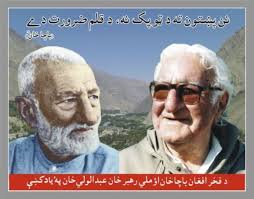
If my memory serves me right according to another article I read (which I can't find), Mumtaz Khan was an ex-Khudai Khidmatgar (a member of Pashtun nationalist, Bacha Khan's, non-violent pacifist army) back in Pakistan. He also said the way the West Pakistani officials treated the local Bengalis of east Pakistan before the war was very humiliating and he sympathized with the local Bengalis.

Film screening
'Onyo Joddha': Recognising a non-Bengali freedom fighter
Fayza Haq
Lutfun Nahar Mousumi says that she has been working on her documentary Onyo Joddha for the last three years. It was her husband Hussain Md Omar who made her aware of the role Mumtaz Khan Pathan played in the Liberation War. Kader Siddiqui had sought Pathan out when he first returned to the country. She says that it was not easy to make the film as Pathan is quite camera shy.
"Very few people are aware of the role played by this individual in the Liberation War. I want the new generation to be aware of his contribution," says Mousumi. "Studying his life one realises that he has done a lot for our country and received very little in return."
Mumtaz Khan Pathan moved to the then East Pakistan immediately before the Liberation War. His lucrative business in tobacco was in the remote areas of Tangail district. When the Pakistani military regime began the blood bath, killing every Bengali in sight, on March 25 1971, Pathan could not help being moved. His acute sense of what's fair and rationality ruled over his loyalty towards the oppressors, his own people. He decided to participate actively in the war against the occupying Pakistani forces and joined the Kaderia Bahini of Tangail.
His work included supplying food and clothes for the freedom fighters of Kaderia Bahnini, managing supplies for the Ronanggon Patrika of that time, and most important of all, accumulating medicines for the wounded fighters. He often risked his life to free prisoners from the clutches of the Pakistani soldiers. Towards the end of the war, the Pakistan army found out about his actions; he was arrested and tortured. A death warrant was issued against him and Pathan could never go back to his family in Pakistan.
"He had earned thousands of takas through his tobacco business and gave it all to the freedom fighters. He married here and has four children. He gets a grant of Tk 600 from the government for his contribution to the war, which is nowhere close to enough to support him and his family," says Mausumi.
Mausumi came into the documentary scene when she did a course in films at Steps Towards Development, an NGO. Her fist film was on potters. Then she did Naho Mata Naho Konya on sexual harassment of women. She did two years of video editing. At present she is working for Rtv. Baijit Kamal and Afzalul Hassan Tipu have worked with Mausumi in Onyo Joddha. She hopes to do more work on sensitive issues, including one on clowns in Bangladesh.
Before the screening of Onyo Joddha, Dr MA Hassan admired Momtaz Khan Pathan's contribution to the Liberation War. Professor Kabir Chowdhury said that the film did a commendable job of projecting the main character. Catherine Masood commented that it was a very moving film and it was a reminder that regardless of ethnic background, the Liberation War affected all in the country and we can all identify with it.
The film was financed by Media Desk.

* I have mentioned this a few times on the forum but never been able to find the article until today.
If my memory serves me right according to another article I read (which I can't find), Mumtaz Khan was an ex-Khudai Khidmatgar (a member of Pashtun nationalist, Bacha Khan's, non-violent pacifist army) back in Pakistan. He also said the way the West Pakistani officials treated the local Bengalis of east Pakistan before the war was very humiliating and he sympathized with the local Bengalis.

Comment