Announcement

Collapse
No announcement yet.

Bangladesh-China relations

Collapse
X
 
  • Filter
  • Time
  • Show
Clear All
new posts

  • Bangladesh-China relations


    A map from the past commemorating Bangladesh-China friendship.


    Inauguration of the 6th Bangladesh-China friendship bridge.

    Bangladesh may receive $500 billion of investment from China in the next few years.


    The Promise of Bangladesh Amid U.S. and Chinese Rebalancing


    Author: Dan Steinbock · March 25th, 2014 · Comments (0)

    Recently the US Ambassador in Dhaka, Dan Mozena, said that Bangladesh would be a “mighty contributor” to the huge flows of commerce along this 21st century trade route by turning the hub of the Indo-Pacific economic corridor thanks to its “geographical gift.”

    However, Mozena added that there were constraints and challenges that need to be addressed to encourage investment in Bangladesh.

    At the same time, China’s Ambassador in Bangladesh, Li Jun, said that Bangladesh could tremendously benefit from China’s experience in transportation, power and trade with a regional connectivity.

    In the past, Bangladesh had its most significant trade and investment relations with Washington. Now it is also looking toward Beijing.

    Low starting point, great promise

    With more than 160 million people and a rapid growth, it has often been seen as a large emerging economy. Still, the entire economy is barely half the size of Hong Kong, which has only 7 million people.

    Between 2000 and 2010, growth allowed Bangladesh to reduce the extremely high poverty rates in the country.

    However, industrialization has barely begun in Bangladesh and half of the labor force is still employed in the agricultural sector, in which the growth has decelerated.

    Today, recovery depends on the garment sector, which suffers from slowing exports to Europe and the US, and remittances, which have been harmed by construction slowdowns worldwide.

    In 2013, Bangladesh’s GDP growth decelerated for the second year in a row, to 6 percent, while inflation has moderated to 7 percent. Growth is likely to continue to trend lower, due to tighter policies, slowing economy and currency appreciation.

    Between US and Chinese rebalancing

    Last fall, Bangladesh’s foreign minister Dipu Moni met her Chinese counterpart Wang Yi in Beijing to push forward the Bangladesh-China-India-Myanmar (BCIM) Economic Corridor. The initiative is a part of China’s recent cooperation initiatives and “maritime Silk Road” in Asia.

    Surrounded by South Asia and Southeast Asia, Beijing sees Bangladesh as a potential regional transportation hub.

    Historically, Bangladesh and China share a rich history of trade and cultural exchange. In the postwar era, the Party had close ties with Bengali nationalist leaders. In 1971, China supported Pakistan, a close ally that was mediating the rapprochement between Washington and Beijing, whereas Bangladesh was still close to India and its ally, the Soviet Union.

    The assassination of Sheikh Mujibur Rahman led to a military regime, which began distancing the country from the Indo-Soviet allies and led to diplomatic relations between Dhaka and Beijing.

    By 2012, the US was Bangladesh’s most important trade partner, along with Germany and UK, while China was the country’s largest import partner. But even as President Obama’s pivot to Asia has intensified, the White House’s relations with South Asia have seen significant deterioration.

    Meanwhile, trade between Bangladesh and China reached a record high of $10 billion in 2013, with a growth rate of 22 percent year-on-year. The accumulated Chinese investment including that of Hong Kong and Taiwan to Bangladesh reached $1.42 billion last year, creating job opportunities for 76,000 Bangladeshis, according to Chinese sources.

    China continues to facilitate Bangladesh’s three fast-track high-profile projects including the deep-sea port, Padma Bridge. In the next half a decade, Bangladesh could enjoy $500 billion of Chinese investment.

    Rising political uncertainty

    While economic dreams are energizing entrepreneurs, Bangladesh is coping with rising political uncertainty. On January 5, Bangladesh held an election that was boycotted by the opposition party. More than half of the 300 parliament members were elected unopposed.

    Before the elections, the US State Department had urged Prime Minister Sheikh Hasina and opposition leader Khaleda Zia to find a credible way toward elections, but without success. Since then, Dhaka has been the scene of recurring political violence as friction has deepened between the two dominant political parties – the governing Awami League (AL) and its main opposition, the Bangladesh National Party (BNP).

    Prime Minister Sheikh Hasina and the AL will not start talks with the BNP unless the latter will renounce violence, drop the demand for a caretaker government and end its alliance with Jamaat-e-Islami, the large Islamic political party. The road to violence was paved two years ago, when the ruling AL scrapped the old system of a “caretaker government” to ensure fair polls. Subsequently, the BNP refused to participate in the elections.

    Assuming continued uncertainty, Bangladesh’s growth is likely to slow to 5.5 percent. A more promising medium-term outlook would fuel the recovery of investment, which would make possible a return to 6.5 percent growth toward the late 2010s.

    Thanks to its strategic geopolitics, Bangladesh is now being courted by both China and the United States. It is a historical moment when right economic policies, appropriate investment levels and favorable demographics could unleash a period of growth and prosperity.

    However, with wrong policies, Bangladesh could suffer a new era of stagnation, poverty and fall behind its regional peers.

    Originally released by China-US Focus on March 22, 2014

    - See more at: http://www.economonitor.com/blog/201....OWbh1n0S.dpuf


    *Bangladesh could receive $500 billion of investment from China according to this article.

    I personally doubt that. I cannot imagine $1/2 trillion being poured in to the country.

    However Bangladesh is definitely an important country for China, soon to be the biggest economy on earth.

    If Bangladesh was ruled by people like the Chinese, it would now be one of the richest countries in Asia and the world. China has generated huge economic growth in some of its south-eastern provinces and if Bangladesh had replicated that it would be more like Malaysia now but with a bigger economy due to population size.
    * * * * * * * * * * * * * * * * * * * * * * *

  • #2
    Dhaka-Beijing ties gain momentum


    Senior Correspondent, bdnews24.com
    Published: 2014-04-23 20:13:02.0 BdST Updated: 2014-04-23 20:19:56.0 BdST


    Dhaka and Beijing will host “a series of high-level visits” this year showing “concerted effort” and “good momentum” in bilateral relations, Chinese ambassador Li Jun has said.


    RELATED STORIES
    China for peaceful, prosperous and open Asia: Li Jun
    2014-04-23 18:15:16.0


    He said on Wednesday that President M Abdul Hamid was scheduled to go to Shanghai in the end of May to attend the Asia Confidence Building Summit, and Prime Minister Sheikh Hasina and political party leaders had been invited to visit China at “a mutually convenient time”.

    The ambassador said the Vice Chairperson of China’s National Congress and Vice Chairperson of China’s National Military Commission would “successively come to Bangladesh early next month”.

    He said the Vice Minister of China’s Ministry of Water Resources would visit Bangladesh later this year “for renewing the agreement on hydrological data and information exchange between the two governments”.

    Ambassador Li was delivering a lecture on China’s development and its relations with Bangladesh at the Bangladesh Institute of International and Strategic Studies (BIISS) on Wednesday.

    He said China welcomed “a prosperous, stable and united” Bangladesh and would continue to take “an active part” in Bangladesh’s social and economic development.

    He highlighted the current China-Bangladesh relations and said they were growing faster than ever.

    People-to-people exchanges had crossed 70,000 last year and the two-way trade soared to over $ 10 billion, he said.


    The annual application for Chinese government scholarship was also being received.

    With new reform measures getting under way, China was looking at investing an additional $ 500 billion in other countries, import goods over $ 10 trillion, and send 400 million tourists abroad over the next five years.

    The ambassador said China’s current reforms would create “new and greater opportunities” for China’s relations with the external world.

    As a neighbour, he reiterated that “Bangladesh should have a good share of it”.

    He said development visions of both sides were “inspiring to each other and giving tremendous impetus to the bilateral co-operation”.

    BIISS organised the lecture as part of its series of country-specific talks, an event chaired by its Chairman Munshi Faiz Ahmad.

    Its Director General Maj Gen SM Shafiuddin Ahmed was also present.

    বাংলাদেশ ও বিশ্বের ব্রেকিং নিউজ সবার আগে পেতে ভিজিট করুন bdnews24.com. Read trusted, 24/7 live bilingual news, business, and entertainment updates
    * * * * * * * * * * * * * * * * * * * * * * *

    Comment


    • #3
      Posted : 24 Apr, 2014 00:00:00 AA-A+
      printer


      Beijing awaits Dhaka's decision on deep seaport, satellite projects


      China is now waiting to know the government decision about two vital projects-building a deep seaport and launching Bangladesh's first satellite 'Bangabandhu Satellite' in the space - as the world's number two economy has already expressed its interest for the projects, reports UNB.

      "It's for Bangladesh government to make its decision…also there're different voices coming from the government side, so I keep silence," Chinese Ambassador Li Jun told a country lecture session titled 'China's Development and China-Bangladesh Relationship' in the city on Wednesday.

      He mentioned that these two projects and constructing an exhibition centre here were among the several important projects discussed during Bangladesh Prime Minister's visit to China in 2010.

      The government is examining the proposals of some countries to invest in the proposed deep seaport at Sonadia Island while the offer extended by China Great Wall Industry Corporation (CGWIC) over the launch of the country's first satellite is also under consideration.

      CGWIC is the sole commercial organisation authorised by the Chinese government to provide satellites, commercial launch services and to carry out international space cooperation.

      Regarding progress on the exhibition centre, Jun said Chinese experts visited Bangladesh and almost finalised the design. "It's progressing but still there are things to be discussed."

      Terming Bangladesh the best destination for Chinese investment, the Chinese envoy said an exclusive EPZ for China will be much helpful for an easier access for the investors. "Let Chinese companies come here as they know the Chinese market's need."

      China is now restructuring its economy and the annual outbound Chinese investment has been around US$ 100 billion in the last few years.

      Quoting a Chinese importer, the diplomat said Bangladesh's RMG export to China will climb to US$ 1-billion mark from the current US$ 100-million one within 3-5 years.

      "Thinking that the Chinese market for RMG is over US$ 200 billion and the labour cost skyrockets in China, I don't think his prediction is unreasonable," he added.

      Jun also talked about Bangladesh-China-India-Myanmar Economic Corridor (BCIM-EC) and mentioned that transportation connectivity will lay an important foundation.


      Bangladesh's leading English-language daily newspaper covering economy, business, politics, and national news.


      1. Below are some of the projects the current centre-left government in Bangladesh wants to implement:


      Nuclear power: Russians, the Russians have won the deal for that though there is a question mark over it.


      Metro rail: The Japanese have won that.


      Sonadia deep sea port: The Chinese should be building it though Denmark has expressed an interest.


      Gas terminal: The Americans.


      If you notice no Muslim country has been given any of these awards (though Qatar will be supplying us with gas), but nor has any Catholic or Hindu country either. However the point is the Muslim world lacks in engineering quality in comparison to the Japanese for example.

      Also I am glad that neither the Turks or the GCC Arabs (especially Saudi) are getting any of these contracts until they reform their behaviour and stop supporting the Jamaat e Islami organization and war criminals and Pakistani bullying of Bangladesh.

      Bangladesh's true friends are:

      - Japan
      - China
      - South Korea
      - Malaysia

      (Possibly in that order, though some would say China is no.1)

      With potentially hundreds of billions to be invested and to be earned in Bangladesh in the next decade or two, it will be our fellow Asian neighbours that will be making most of the money, neighbours who have always supported us and are genuine friends.


      Image from Bangladesh Development Corporation site.


      China is waiting to see if it will be given the contract for developing Bangladesh's first satellite.
      * * * * * * * * * * * * * * * * * * * * * * *

      Comment


      • #4
        China wants Bangladesh ties on a new high

        Senior Correspondent, bdnews24.com

        Published: 2014-05-13 01:56:45.0 BdST Updated: 2014-05-13 02:27:48.0 BdST

        China wants to take its relations with Bangladesh to “a new height”.


        4 military agreements signed with China


        2014-05-12 19:30:11.0

        The visiting vice-chairman of the Chinese Central Military Commission General Xu Qiliang conveyed this message when he called on Prime Minister Sheikh Hasina on Monday.

        The Prime Minister’s Special Assistant Mahbubul Hoque Shakil told journalists after the meeting that Hasina also told him that she wanted “deep relations” with China.

        Shakil said the prime minister particularly wanted to strengthen military ties between the two countries.

        The Chinese military delegation led by Qiliang came to Dhaka on May 11 and signed four agreements with Bangladesh armed forces to provide military support including training on Monday.

        Shakil said China would help Bangladesh to modernise and strengthen its armed forces as desired by Hasina.

        He said the purpose of the 15-member delegation’s visit was to deepen the bilateral relations of “trust and cooperation”.

        The prime minister also sought Chinese cooperation for building a developed Bangladesh by 2041 that her Awami League party envisages.

        Quoting the vice-chairman, Shakil said his main purpose was to strengthen military ties that he said would eventually impact bilateral relations.

        China established diplomatic and military relations with Bangladesh 40 years ago.

        People-to-people exchanges had crossed 70,000 last year and the two-way trade soared to over $ 10 billion.

        With new reform measures getting under way, China is looking at investing an additional $ 500 billion in other countries, importing goods over $ 10 trillion, and sending 400 million tourists abroad over the next five years.

        The Chinese ambassador in Dhaka had earlier said as a neighbor “Bangladesh should have a good share of it”.

        Shakil said the vice-chairman also appreciated Bangladesh government’s policy towards China.

        He handed his prime minister’s greetings to Hasina and congratulated her on forming a government for the second successive term.

        Hasina also spoke about the proposed BCIM cooperation in which an economic corridor was expected to be built from Kunming to Dhaka via Kolkata and Myanmar.

        She said it would increase the two-way trade further and regional stability could be ensured through cooperation among neighbouring countries.

        Prime Minister’s Principal Secretary Abdus Sobhan Sikder, Principal Staff Officer of armed forces Lieutenant General Abu Belal Mohammad Shafiul Haque and Chinese ambassador in Dhaka Li Jun were present during the meeting.

        বাংলাদেশ ও বিশ্বের ব্রেকিং নিউজ সবার আগে পেতে ভিজিট করুন bdnews24.com. Read trusted, 24/7 live bilingual news, business, and entertainment updates


        * * * * * * * * * * * * * * * * * * * * * * *

        Comment


        • #5
          After establishment in Pakistan of islamic form of rule of Bangladesh it is necessary to return in the complement of Pakistan.

          Comment


          • #6
            Originally posted by Zubr-Zubr View Post
            After establishment in Pakistan of islamic form of rule of Bangladesh it is necessary to return in the complement of Pakistan.
            during this process to kill people as much as you can inshallah
            faye's chauffeur

            Pashton's girlfriend

            I'm a Pashtun Princes


            Comment


            • #7
              Originally posted by Hallo View Post
              during this process to kill people as much as you can inshallah
              1. Please do not quote the troll "Zubr-Zubr" as he is on my ignore list.

              2. He is ignorant and cannot even write in English properly.

              3. Bangladesh is an independent state, if Pakistan wants to take peoples land or "unite" with anyone they can do so with their next door neighbours Iran and Afghanistan whom they share a common border with and blood with (e.g. Pashtuns and Balochis on both sides).

              Historically the Bengal region has had nothing to do with "Pakistan" (Punjab and Sindh) and far more historical connections with Afghans (e.g. Afghan rulers ruled parts of Bengal in different periods).

              The brief 24 year (1947-1971) period of union between West Pakistan and East Bengal ("East Pakistan) was an unfortunate period and aside from that time we Bengalis have had no historical relations with Punjabis whatsoever.

              4. The thread is not about Pakistan but about Chinese-Bangladeshi relations.

              Bangladeshis think that either China or Japan is our best friend, though we respect both countries.

              Strategically however China is our closest ally and some Bangladeshi nationalists even think of going under the Chinese nuclear umbrella. Nuclear umbrella means that you enjoy the protection of a nuclear state i.e. if you are attacked with nuclear weapons by a foreign state the allied nuclear power will use a nuclear bomb against the aggressor.


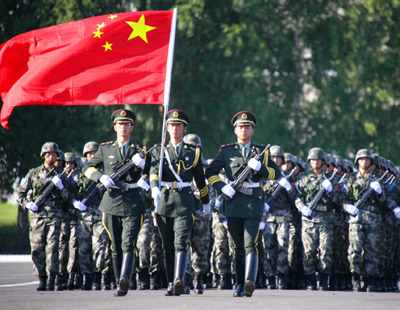
              Chinese army.

              [MENTION=3580]asad71[/MENTION]

              So for example South Korea and Japan are - in theory - under the American nuclear umbrella meaning if anyone were to attack them with nuclear weapons the US military is legally "obliged" (in theory) to retaliate with a nuclear strike against the aggressor state.

              However I personally am not in favour of going under a Chinese nuclear umbrella or having a Chinese military base in our country. We will never go to war with India. We cannot defeat India but nor can they defeat us (i.e. invade+occupy us). The best thing is to try and establish normal, healthy relations with them. However that is being sabotaged by Pakistan which is using its proxies, the Jamaat e Islami terrorist organization, to create tension between Bangladesh and India.

              This is very evident in the anti-Bangladeshi propaganda site, defence.pk.


              The Chinese are very clever and shrewd and can see past Pakistani propaganda against Bangladesh.
              * * * * * * * * * * * * * * * * * * * * * * *

              Comment


              • #8
                1.BD - China relations are so much related to the attitude of India. Modi has catapulted himself to power in Delhi. Behind all the talk of development,etc, the core message of his electioneering campaign was hatred towards Muslims. He aroused a huge anti-Muslim emotion to sail in that wave.

                2. Modi's rise should worry all S Asians. It is like the rise of Hitler and Fascism. For the complacency of the European leaders the world had paid in WW II.

                Comment


                • #9
                  Originally posted by asad71 View Post
                  1.BD - China relations are so much related to the attitude of India. Modi has catapulted himself to power in Delhi. Behind all the talk of development,etc, the core message of his electioneering campaign was hatred towards Muslims. He aroused a huge anti-Muslim emotion to sail in that wave.

                  2. Modi's rise should worry all S Asians. It is like the rise of Hitler and Fascism. For the complacency of the European leaders the world had paid in WW II.
                  Modi and his Group is very racist toward bangladesh.

                  I doubt bangladesh will enjoy congress sort of relation with india.Not too long i watched a video of BJP leader in a live talk show saying "Hum hakoomat bananay k baad sab se pehle illegal bangladeshis to mulk se bagayenge".it was posted on PDF earlier this year.

                  China is a true partner
                  "[B][SIZE="3"]Seer Speen Wazeer[/SIZE][/B]"

                  Comment


                  • #10
                    Originally posted by Da Bannu Mazdigar View Post
                    Modi and his Group is very racist toward bangladesh.

                    I doubt bangladesh will enjoy congress sort of relation with india.Not too long i watched a video of BJP leader in a live talk show saying "Hum hakoomat bananay k baad sab se pehle illegal bangladeshis to mulk se bagayenge".it was posted on PDF earlier this year.

                    China is a true partner
                    Yes, he is Adolf Modi truly. By"illegal Bangladeshis" did he mean that the overwhelmingly Muslim majority stateof BD is illegal in his Akhand Bharat? He is a menace to all Muslims in SA -Afghanistan to BD.

                    Comment


                    • #11
                      1. The BJP have been in power before and nothing major happened despite all their pre-incumbency Hindu nationalist rhetoric.

                      Obama and Imran Khan also promised the world to their followers and have not changed much.

                      Often radical parties in different countries are very militant with their rhetoric whilst in the pursuit of office but moderate and live with reality when in power.

                      Nations are not just the property of one single leader, or one single party they are a society composed of many different important sub-parts, the business establishment, intelligentsia, military, minorities. All of these groups together form what is Indian society and would not allow a Hindu extremist group to abolish India's secularism. Plus India is a federal state with a lot of power in the hands of individual states. The BJP rule states across India now but are not killing Muslims.

                      2. There are not that many real differences between the BJP and Congress beyond the rhetoric. Yes the BJP rank and file are Hindu fascists and anti-Muslim but when in power in New Delhi the BJP leadership live in the real world.

                      The real differences between Congress and the BJP in terms of national/international governance include these:

                      a: - The BJP is more pro-private business than the traditionally socialist Congress.

                      b: - The BJP is more pro-American than the traditionally pro-Russian Congress.


                      Narendra Modi and friend, Imran Khan.


                      3. India will never invade Bangladesh as it cannot occupy a Muslim country of 160 million people. It is struggling to hold on to Kashmir with a few million Muslims and has placed 0.7 million Indian troops there, Bangladesh is far more dangerous.

                      Indiaphobia is promoted by pro-Pakistan elements in Bangladesh such as the Jamaat e Islami terrorist organization who working on behalf of their masters in Pakistan want Bangladeshis to hate India. Pakistan wants Bangladesh to support anti-Indian separatists in north-eastern India so this will help Pakistan in its war (not Bangladesh's war) with India.

                      Bangladesh would only suffer as it will arouse the antagonism of a nuclear power next door.

                      This is not to say that India has problems in its Bangladeshi policies which include:

                      - Killing of unarmed Bangladeshi civilians on the Bangladesh-India border (the same Indian forces also kill Indian civilians on that border, something not mentioned in the Pakistani propaganda site, defence.pk).

                      - Issues to do with water and rivers.

                      - India blocking Bangladeshi access to the Indian market via false promises, lying, reneging on treaties and agreements on false pretexts etc, whilst Bangladesh allows Indian access to the Bangladeshi market.


                      However the main problem between Bangladesh and India which was India's attempt to dismember Bangladesh and support the break away of the Chittagong Hill Tracts has been resolved. The Bangladeshi military has defeated this attempt.

                      The Bangladeshi military is actually the supreme force in Bangladesh and there are red lines that no leader, including Hasina, can cross and this includes the territorial integrity of the nation.
                      Last edited by Bengal_Tiger; 05-17-2014, 06:26 AM.
                      * * * * * * * * * * * * * * * * * * * * * * *

                      Comment


                      • #12
                        Chinese FM pledges more investment in Bangladesh

                        Xinhua 2014-05-22 15:22 (GMT+8)


                        Wang Yi, right, shakes hands with Abul Hassan Mahmood Ali in Shanghai, May 21. (Photo/Xinhua)

                        Chinese foreign minister Wang Yi on Wednesday met with his Bangladesh counterpart Abul Hassan Mahmood Ali in Shanghai, pledging to support more Chinese investment in Bangladesh.

                        Wang congratulated Bangladesh on its new membership of the Conference on Interaction and Confidence-Building Measures in Asia (CICA) and noted that Bangladesh is an important partner for China in south Asia and the Indian Ocean region.

                        China treasures traditional friendship with Bangladesh and highly values the progress of bilateral ties, Wang said, adding that China is willing to work with the country to maintain high-level engagement and upgrade bilateral relationship.

                        "China will encourage more enterprises to invest in Bangladesh, support them to carry out pragmatic cooperation in various sectors and make joint efforts in building the economic corridor among Bangladesh, China, India and Myanmar," Wang said.

                        Ali voiced hope to cooperate with China in various fields, including industry, economy and trade, investment, hi-tech and personnel training, and play a positive role in promoting the economic corridor construction.

                        * * * * * * * * * * * * * * * * * * * * * * *

                        Comment


                        • #13
                          Chinese firm to build core structure of Bangladesh bridge


                          Xinhua 2014-05-21 08:54 (GMT+8)

                          The contract to build core structure of a Bangladesh mega bridge project will be awarded to a Chinese company.

                          A high-ranking official of Bangladesh's Ministry of Communications confirmed it to Xinhua on Monday.

                          Bangladesh communications minister, Obaidul Quader, also told reporters that the relevant authorities have selected China Major Bridge Engineering Company after scrutinizing its proposal.

                          He said the country's cabinet committee on purchase would issue the work order within three weeks after approval.

                          The Bangladeshi government on June 26 last year launched international bids for construction of the Padma Multipurpose Bridge. The Chinese company, which had earlier constructed mega structures including Hangzhou Bay Bridge, was the only firm to submit their financial proposal.

                          Quader had earlier said the tender for the construction of the main bridge will be worth 100 billion taka (US$1.3 billion).


                          1. The Padma bridge is to connect the isolated south-west of the country to the rest of the country.


                          When constructed, the 6.15-kilometer-long bridge will connect 21 districts in the country’s southern part to capital Dhaka directly.
                          বাংলাদেশ ও বিশ্বের ব্রেকিং নিউজ সবার আগে পেতে ভিজিট করুন bdnews24.com. Read trusted, 24/7 live bilingual news, business, and entertainment updates


                          2. It is claimed (though it may be incorrect) that it would increase the country's GDP growth by 1%.

                          So Bangladesh's GDP is $150 billion and so 1% of that is $1.5 billion.

                          The current rate of growth for the Bangladeshi economy is roughly 6%, thus 6% of 150 billion is $7.5 billion and add the $1.5 billion to that sum and it would be $9 billion.

                          However the revenue in economic growth generated by the Padma bridge would not be a static $1.5 billion but 1% of whatever the GDP is that year.


                          So if next year it grows to $157 billion then 1% of that is $1.57 billion, and so on.


                          3. It is now a symbol of Bangladesh's decreased dependence on the west as initially the money for it was going to be funded by the World Bank who then turned around and refused and now the government is funding it itself.
                          * * * * * * * * * * * * * * * * * * * * * * *

                          Comment


                          • #14
                            PM’s visit to bolster China ties

                            Senior Correspondent, bdnews24.com
                            Published: 2014-06-03 17:41:19.0 BdST Updated: 2014-06-03 17:41:19.0 BdST

                            Bangladesh expects “to add new dynamism” to the bilateral relations with China during Prime Minister Sheikh Hasina’s upcoming visit.

                            The foreign ministry says Hasina would visit China from June 6 to June 11 at the invitation of her counterpart Li Keqiang.

                            It would be her first visit to the country after assuming office for the second successive term. China backed the Jan 5 election results, which the West did not find credible enough, as the major opposition BNP had boycotted the poll.

                            The foreign ministry said the Prime Minister’s visit was “a reaffirmation of the close and comprehensive partnership between the two countries”.

                            A ministry release said the ties were “expected to add new dynamism to the bilateral relations in the coming days”.

                            China established diplomatic and military relations with Bangladesh 40 years ago.

                            People-to-people exchanges had crossed 70,000 last year and the two-way trade soared to over $ 10 billion.

                            With new reform measures getting under way, China is looking at investing an additional $ 500 billion in other countries, importing goods over $ 10 trillion, and sending 400 million tourists abroad over the next five years.

                            The Chinese ambassador in Dhaka had earlier said that, as a neighbour, “Bangladesh should have a good share of it”.

                            The foreign ministry said during her visit the Prime Minister would hold official talks with the Chinese Premier and meet Chinese President Xi Jinping.

                            She will also meet the Chairman of the Chinese People’s Political Consultative Conference (CPPCC), Yu Zhengsheng, and hold meeting with the Chinese Vice-Premier, Wang Yang.

                            She will address the Bangladesh-China Economic and Trade Cooperation Forum hosted by the China Council for Promotion of International Trade (CCPIT) to facilitate investment and trade between Bangladesh and China.

                            On her way to Beijing, Hasina is expected to inaugurate the 2nd China South Asia Exposition in Kunming as a Special Guest on June 6.

                            The foreign ministry said Yunnan Governor Li Jiheng invited the Prime Minister for the inauguration.

                            She will also address a gathering of the China-South Asia Business Forum in Kunming on June 7.

                            বাংলাদেশ ও বিশ্বের ব্রেকিং নিউজ সবার আগে পেতে ভিজিট করুন bdnews24.com. Read trusted, 24/7 live bilingual news, business, and entertainment updates
                            * * * * * * * * * * * * * * * * * * * * * * *

                            Comment


                            • #15
                              Bangladesh signs MOU with China to extend railway

                              Written by David Briginshaw


                              Bangladesh signs MOU with China to extend railway

                              BANGLADESH Railway has signed a memorandum of understanding with China Railway Group to build a new line to serve the southeast of the country.

                              The 100km line would run south from the existing metre-gauge railhead at Dohazari via Ramu near the border with Myanmar to the coastal town of Cox's Bazar.
                              A feasibility study followed by a detailed design has already been completed and was funded by the Asian Development Bank.


                              1. I've read elsewhere this will be one of China's 200 km per hour trains.


                              Chinese bullet train.


                              2. 200km per hour trains are old and slow trains by Chinese standards.

                              The train below travels at 420 km per hour.


                              3. Chittagong is Bangladesh's 2nd city and main port so the land links between Dhaka and Chittagong, Bangladesh's main trading link with the outside world are of huge importance.

                              In 10 years time we can become like Thailand.

                              In 20 years time we can become like Japan/South Korea.
                              * * * * * * * * * * * * * * * * * * * * * * *

                              Comment

                              Working...
                              X