Announcement

Collapse
No announcement yet.

Morocco Focus

Collapse
X
 
  • Filter
  • Time
  • Show
Clear All
new posts

  • Morocco Focus

    Morocco Focus

    - One of the biggest countries in the Muslim World.Third biggest country in the Arab world.

    - Rich in Islamic history and heritage.

    - The land of Ibn Batutta, Yusuf Tishfeen, Abdel Karim Khattabi and others.


    Abdel Karim Khattabi (rahmatullahi 'alaih) the Amazighi ("Berber") leader who fought two major European powers at the same time, Spain and France and said to be the man who inspired both Ho Chin Minh and Che Guevara with his military tactics.


    Khattabi with the Amazighi ("Berber") flag.


    Boy in Amazighi flag with picture of Abdel Karim.


    The Amazighi flag, the Imazighen ("Berbers") are the original people of north Africa before the Arab conquest.


    An Amazighi ("Berber") girl from Morocco.


    Amazighi ("Berber") flag with the words in Arabic "Antum fee quloobina ya Sana'a tareekhuna" (You are in our hearts oh makers of our history), with pictures of Abdel Karim and Muhanad Amziyan.
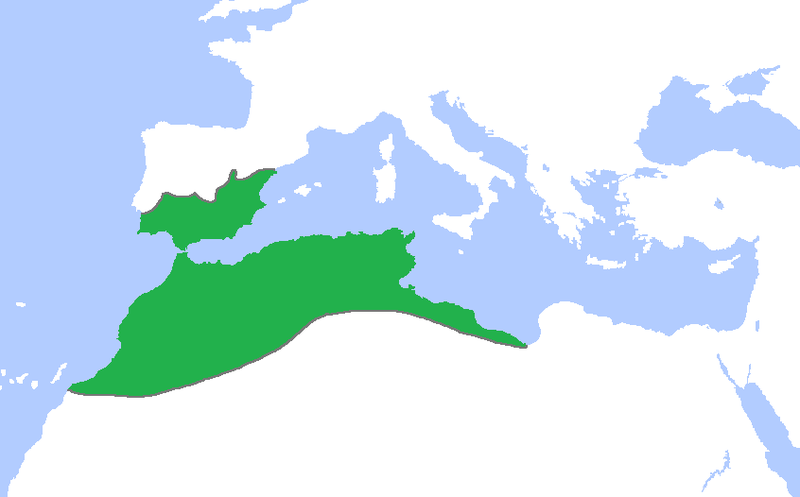


    Al-Muwahidun empire of Morocco.


    Murabitun empire of Morocco, "Almoravids".


    Yusuf bin Tashfeen.


    Chefchaouen, the blue city in the north.


    The only city in the world with an 8 sided minaret.


    The Octagonal minaret.


    Fez, the Kairaouan mosque, one of the oldest universities in the Mediterranean world.
    Last edited by Bengal_Tiger; 11-21-2015, 12:09 PM.
    * * * * * * * * * * * * * * * * * * * * * * *

  • #2
    Morocco Will Soon Become the World's Solar Energy Superpower


    Eventually, the country's solar energy agency would like to export its renewable power to countries in the Middle East and Europe.


    Morocco's environment minister, Hakima El Haite, walks in front of a solar array that is part of the Noor 1 solar power project in Ouarzazate.


    NOV 19, 2015

    David McNair is an award-winning reporter and editor based in Charlottesville, Va. He runs the hyper-local news site The DTM and his fiction has appeared in Virginia Quarterly Review.
    Bio

    Next month, Morocco will be taking the first step toward becoming the world’s solar energy superpower. That’s when the first phase of a planned renewable energy plant will go online under the Saharan sun outside the city of Ouarzazate.


    Environment minister, Hakima El Haite.

    “We are very proud of this project,” Morocco’s environment minister, Hakima El Haite, told The Guardian. “I think it is the most important solar plant in the world.”


    The planned solar energy mega-complex, which will eventually include hydro and wind plants, will cover roughly the same area as the country’s capital, Rabat, and provide half of Morocco’s electricity by 2020. The solar plant alone is expected to produce enough electricity to power 1 million homes.

    The first phase of the project, called Noor 1, involves the installation of 500,000 solar mirrors along 800 rows that follow the sun as it moves across the sky. Unlike rooftops across the world that use photovoltaic panels, Noor 1 uses mirror technology, or concentrated solar power, which is more expensive but allows the system to continue producing energy after the sun goes down.

    The mirror panels focus heat on steel pipes filled with a special synthetic thermal oil solution that gets pumped to a heat tank lined with molten salts, which can store the heat for three hours. The heated solution is then mixed with water to create steam that powers the generators that produce electricity. Eventually, when the Noor 2 and 3 plants are built, heat energy will be stored for as long as eight hours, which could provide solar energy to the region around the clock.

    Eventually, the Moroccan Agency for Solar Energy would like to export its renewable power to countries in the Middle East and Europe.

    “We believe that it’s possible to export energy to Europe but first we would have to build the interconnectors which don’t yet exist,” said Maha El Kadiri, a spokeswoman for the agency. “Specifically, we would have to build interconnections, which would not go through the existing one in Spain, and then start exporting.”


    And that’s not far-fetched. Earlier this year, the European Union laid the groundwork for establishing cross-border infrastructures between France, Portugal, and Spain for delivering “affordable and sustainable” energy by calling on EU nations to make 10 percent of their power exportable by 2020.

    “We are already involved in high-tension transportation lines to cover the full south of Morocco and Mauritania as a first step,” said Ahmed Baroudi, manager of Société d’Investissements Energétiques, the national renewable energy investment firm.


    Another reason the Moroccan government is so committed to the $9 billion project, which is mainly being funded by international institutions such as the World Bank and the European Investment Bank, is to gain energy independence.

    “We are not an oil producer. We import 94% of our energy as fossil fuels from abroad and that has big consequences for our state budget,” El Haite told the Guardian. “We also used to subsidize fossil fuels which have a heavy cost, so when we heard about the potential of solar energy, we thought, why not?

    * * * * * * * * * * * * * * * * * * * * * * *

    Comment


    • #3
      Moroccan Scientist Develops Breakthrough in Battery Technology

      Tuesday 1 December 2015 - 21:12


      Moroccan Scientist Develops Breakthrough in Battery Technology


      By Cindy Basah

      Rabat – Moroccan scientist Rachid Yazami has developed a microchip to monitor the health of rechargeable lithium-ion batteries.

      Users are already notified when a battery is overheating. This warning often comes after the battery has already been damaged, causing device failure.

      Yazami’s chip can be inserted into most batteries, making it usable for cell phones and other small devices. It could also have commercial uses, such as car batteries and airplanes. One malfunction in these devices could be disastrous.

      “Usually big battery packs have hundreds of cells or more bundled together to power the vehicle or aircraft. If there is a chemical fire caused by a single failed battery, it could cause fires in nearby batteries, leading to an explosion” said Yazami in a Nanyang University press release.

      This technology will also have practical uses, as it allows batteries to charge faster.

      Typically, lithium-ion battery devices are charged slowly at a low-voltage to avoid any damage. However, if this chip is added to a device such as a cell phone, it can be charged at a higher voltage, because the user would be alerted of any battery failure.

      This technology, which took over five years to develop, is expected to be available for commercial use by the end of 2016.

      “My vision for the future is that every battery will have this chip, which will in turn reduce the risk of battery fires” said Yazami.

      Yazami, a researcher at the Nanyang Technological University, is an award-winning specialist in thermodynamics. He won the 2014 Draper Prize for Engineering for his role in the development of the lithium-ion battery, one of the most widely used batteries.

      He has published over 200 scientific papers and holds over 50 patents on his work.

      * * * * * * * * * * * * * * * * * * * * * * *

      Comment

      Working...
      X