Announcement

Collapse
No announcement yet.

Inventions and technology focus

Collapse
X
 
  • Filter
  • Time
  • Show
Clear All
new posts

  • Inventions and technology focus

    In this thread I be providing regular updates on inventions and technology in the rapidly changing world that we live in, this will also help to bring in more traffic to the forum.

    Inventions and technology focus

    Bacteria Programmed to Develop Basic Computing Elements Like Sensors, Memory and Circuits

    BY ADARSH VERMA · JULY 19, 2015


    The researchers at the Massachusetts Institute of Technology have successfully programmed the friendly bacteria inside our body to detect diseases like colon cancer and immune disorder- and treat them. They have unveiled sensors, circuits, and memory switches to be encoded in bacterium Bacteroides thetaiotaomicron, found in human gut system.

    A group of MIT researchers recently published a research paper in the journal Cell Systems and explained how these basic computing elements could be encoded in the bacteria. This ground-breaking technology allows bacteria to detect the signals in gut, and then respond to them accordingly. They can also memorize the signals and their own behavior.


    This programmed bacteria could be used in early detection of inflammatory bowel diseases and their treatment. This concept of sensing and detecting diseases can also be used in other parts of the body with suitable bacteria.

    “We wanted to work with strains like B. thetaiotaomicron that are present in many people in abundant levels, and can stably colonize the gut for long periods of time,” according to Timothy Lu, an associated professor of biological engineering, electrical engineering, and computer science.

    The researchers used CRISPR interface technology to control the bacteria genes by turning on and off. This test was done by providing the bacteria some sort of genetic memory. However, the team didn’t reveal the process of retrieving the information from the bacteria.

    In addition to this development, further progress could be made by making advanced genetic computing circuits.


    “Whereas others have developed tools and applications for engineering genetic circuits, or biosensors, in bacteria that are then placed in the gut, this paper stands out from the crowd by first engineering a member of the Bacteroides genus, the most common type of bacteria found in our guts,” Tom Ellis, group leader of the Centre for Synthetic Biology at Imperial College London, who was not involved in the research, says.

    * * * * * * * * * * * * * * * * * * * * * * *

  • #2
    The above technology is somewhat alarming.

    If used wrongly it could lead to humans that are human but also quasi-computerized being.

    We are indeed entering a new era of human existence.

    [MENTION=1772]BarakzaiAbdali[/MENTION] [MENTION=17579]Loy Afghanistan[/MENTION] [MENTION=1201]Toramana[/MENTION] [MENTION=5723]Kushan Prince[/MENTION]
    * * * * * * * * * * * * * * * * * * * * * * *

    Comment


    • #3
      New workplace inventions that might be coming to an office near you


      With two workplace advancements going viral this week, there's a chance you could take a nap at your desk in the near future — or end up playing a childhood game to find office space.

      According to Refinery 29, Greek design company NL Studio developed a nap desk. The desk, made of metal, wood and white leather, looks like a typical counter, but its top slides out to make it a desk — uncovering a spot underneath for workers to take a break.


      NL Studio designer Athanasia Leivaditou crafted the desk while working in "busy, cramped" New York, saying it helps professionals find balance in a work-dominated world, a CityLab report stated.

      "The main concept was to comment on the fact that many times our lives are 'shrinking' in order to fit into the confined space of our office," Leivaditou said. "Eventually, I realized that each civilization may have a very different perception of things depending on its social context. For example, this desk could be used for a siesta or for a few hours of sleep at night on those days when someone struggles to meet deadlines."

      According to CityLab, the desk is not yet available for retail. However, there's another workplace trend you could encounter quickly that deals with office space: hot desking.
      Slate defines hot desking as distributing "too few desks among too many people, in a sort of never-ending office musical chairs" to use space efficiently and "encourage new relationships."
      Slate's report detailed an Amsterdam company that deploys the practice: With 1,000 desks for 2,500 workers, employees of Deloitte — a consulting firm — don't have their own desks.

      Does it work?

      In regards to creativity, yes, Regina Pazvakavambwa wrote for ITWeb.
      " ... It brings employees together — particularly in creative environments which involve a lot of brainstorming, bouncing around of ideas, and creative communication," according to ITWeb.


      Pazvakavambwa said today's workers only need a laptop and Wi-Fi to complete tasks, but Slate's piece indicated more elements prove important in the office, making a new trend like hot desking "rarely successfully implemented in its entirety, due mainly to the sheer number of variables in play."

      Read more at http://national.deseretnews.com/arti...Fv3zmdXjASm.99

      * * * * * * * * * * * * * * * * * * * * * * *

      Comment


      • #4
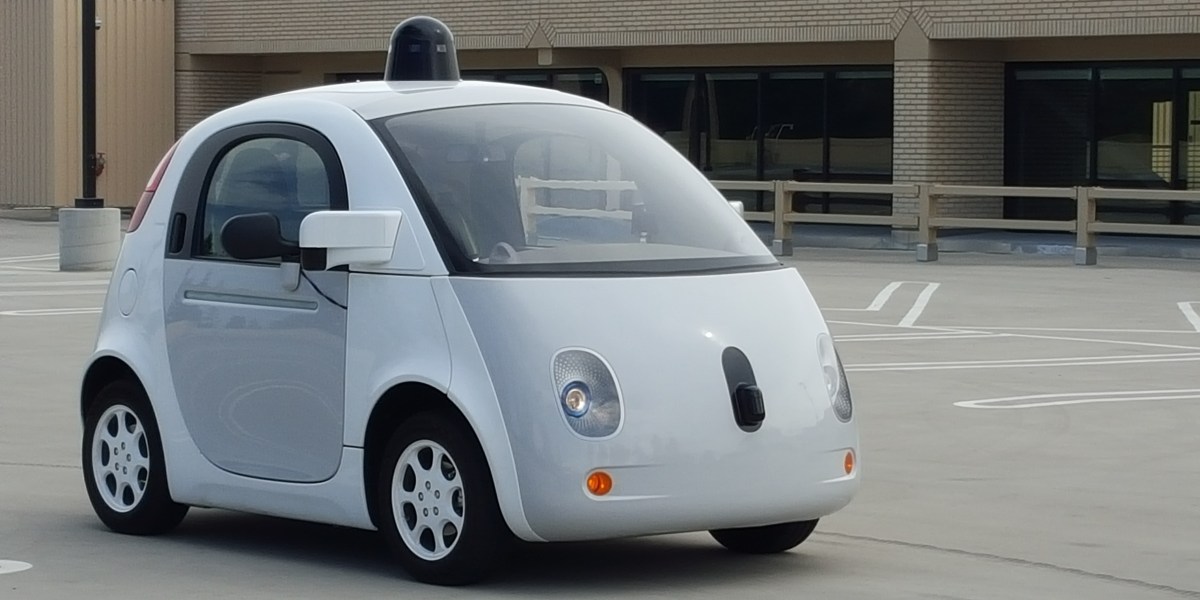
        Google's self-driving cars are coming sooner than you think

        by Doron Levin @DoronPLevin OCTOBER 2, 2015, 12:45 PM EDT


        There are some clear signs that Google’s self-driving car may come to market in four years.

        The Google self-driving car project is looking more and more like a valid, tangible and feasible technology that could be commercialized sooner rather than later.

        Google this week invited journalists to inspect and ride in two prototypes that demonstrate the self-driving software it has developed so far, which can identify objects seen by sensors on or near roadways – whether that’s a stop sign, a child running from between parked cars or a fire engine – and instructs the vehicle how to respond safely.

        This writer drove in both prototypes and was quite impressed. While the prototypes’ performance was hardly perfect, as my colleague Kirsten Korosec noted, they conveyed an artificial intelligence that already suggests itself to be superior in many ways to the distracted, impatient and often imprudent behavior of human drivers.

        Most auto executives have predicted that a commercial autonomous car is a decade or more away. But Google seems to be on a path to have a self-driving car on the market far sooner. Chris Urmson, Google’s director of the self-driving cars division, was asked when, specifically, such a vehicle might be available for purchase, he indicated a four-year time horizon. “I have a 12-year-old son,” he said. “My goal is for him not to need a driver’s license.” In California, you can get a driver’s license at the age of 16.

        In what was another clear sign of how high a priority the project is, Sergey Brin, Google president and co-founder, paid a surprise visit to the press briefing.

        Interestingly, though, Google executives acknowledged that they don’t wish to build cars — but rather will partner with automakers to bring the project to fruition. “To bring this project to scale, we need to partner with top-tier OEMs (original equipment manufacturers – automakers),” Brin said. That, no doubt, will quiet the anxieties of auto executives from Detroit to Munich, though Apple Inc., another Silicon Valley enterprise that wants to get into self-driving car business, has made no such public assertion.


        Earlier this month, Google hired as CEO of the project John Krafcik, an auto industry veteran and former chief executive officer of Hyundai Motor Co.’s North American subsidiary. Krafcik, no doubt, will begin forging formal alliances with automakers and major parts suppliers. Google’s technological progress, meanwhile, has lit a fire under the world’s automakers.

        Auto executives and engineers increasingly discuss and demonstrate their own initiatives to develop technologies that take over for drivers in certain situations. Volkswagen AG’s Audi luxury vehicle subsidiary, for example, offers in its new Q7 large SUV an array of digital safety technologies. One, called traffic jam assist, allows a driver in slow, heavy highway traffic to turn over most of the driving to the car.

        Traffic jam assist draws from a slightly older radar-based technology called “adaptive cruise control,” which is becoming more common on all automobiles. By integrating cruise control with radar, a vehicle may be set to drive at a certain speed and will automatically slow down when approaching a slow moving vehicle. An even newer feature, automatic emergency braking, can prevent most rear-end collisions.

        As automakers develop more such features, they are advancing toward a vehicle that is very nearly autonomous. Yet automakers are achieving autonomy via a different route than Google, which is creating a “robot” that evaluates images and decides what to do.

        General Motors Co. executives, meeting with investors at a business conference on Thursday, said they hoped to demonstrate an autonomous Chevrolet Volt extended range electric vehicle a year from now.

        Google showed off two impressive prototypes and a top executive says that it wants to have a self-driving car for sale in four years.


        Interrresting.
        * * * * * * * * * * * * * * * * * * * * * * *

        Comment


        • #5
          Danish invention capable of massively reducing pesticide use


          Computer program and algorithm can tell the plants from the weeds

          The days of spreading whole fields may be numbered

          October 5th, 2015 6:38 pm| by Philip Tees


          A Danish invention has found a way to reduce the use of pesticides in agriculture by as much as 95 percent, the engineering publication Ingeniøren reports.

          Morten Stigaard Laursen developed the invention as part of his PhD project at the University of Southern Denmark. It uses a camera connected to a computer programmed with a patented algorithm to differentiate between weeds and crops.

          Targeted weed killing

          Laursen explained that the system functions by targeting the application of chemicals instead of spraying them over all crops at the same rate.

          “The control program in the computer is made so that the boom only sprays pesticides in a small demarcated area if the camera sees weeds in them. The use of pesticides is thereby reduced,” he said.

          While other systems working on the same principle have been developed in the past, they have struggled with the problem of differentiating between overlapping plants and have broken down when this happens. Laursen said that his algorithm can deal with this.

          “That’s what I’ve been able to do: to find a solution to this. The system doesn’t break down when two leaves overlap. There’s just a bit more noise in the readings,” he said.

          The next step for the project before the invention can reach the market – which Laursen is working on with another project – is to find a camera up to the job of finding weeds as they go by at a speed of up to 25 km/h.


          Commentary:

          Our survival is dependent on eating food.

          Our health is based on what food we eat.

          Many complain about the chemicals and other things present in modern day mass produced food.

          This is a major achievement.
          * * * * * * * * * * * * * * * * * * * * * * *

          Comment


          • #6
            Chinese firm makes world's first 3D blood vessel bio-printer

            IANS | Oct 26, 2015, 02.40 PM IST


            Blood vessels that transport nutrients to organs are indispensable elements when creating any organs, according to James Kang, an expert who led the programme.


            BEIJING: A Chinese biotechnological company announced that it has developed the world's first 3D blood vessel bio-printer, which makes it possible to produce personalized functional organs, the media reported.


            Sichuan Revotek, based in Chengdu, said the significant breakthrough has been achieved through its self-developed stem cell bio-ink technology, 3D bio-printer and cloud computing platform, the China Daily reported.
            "The creative breakthrough in the 3D blood vessel bio-printing means we have mastered the stem cell-based 3D bio-printing technology," said Yang Keng, the company chairman said.

            Blood vessels that transport nutrients to organs are indispensable elements when creating any organs, according to James Kang, an expert who led the programme.
            Kang's team has created a novel type of bio-ink - "Biosynsphere", whose primary goal is the personalized stem cell bio-printing to pave the way for organ regeneration.

            "We have successfully realized the blood vessel regeneration by relying on the 3D bio-printer, the biosynsphere technology and the data model based on cloud computing," he said.

            Times of India brings the Latest & Top Breaking News on Politics and Current Affairs in India & around the World, Cricket, Sports, Business, Bollywood News and Entertainment, Science, Technology, Health & Fitness news & opinions from leading columnists.


            [MENTION=17579]Loy Afghanistan[/MENTION]
            * * * * * * * * * * * * * * * * * * * * * * *

            Comment


            • #7
              Cambridge chemists make breakthrough with “ultimate” battery which can power a car from London to Edinburgh

              Research published in the Science journal details how Cambridge chemists are tackling obstacles

              Ashley Cowburn @ashcowburn Saturday 31 October


              The authors of the report warn that practical lithium-air batteries remain at least a decade away

              Scientists have made a breakthrough at Cambridge University by solving issues related to a battery that, in theory, could enable a car to drive from London to Edinburgh on a single charge.

              A research paper published in the journal Science details how the team at Cambridge University overcome obstacles in the development of lithium-air batteries. The batteries, touted as the “ultimate battery” theoretically have the ability to store ten times more energy than lithium-ion batteries.


              But until now, unwanted chemical reactions and problems with efficiency associated with lithium-air batteries have plagued efforts by scientists to develop them.

              The researchers at Cambridge are claiming to have solved a number of the issues and if the team’s laboratory experiment can be turned into a commercial product it will enable a car, on a single charge, to drive from London to Edinburgh.


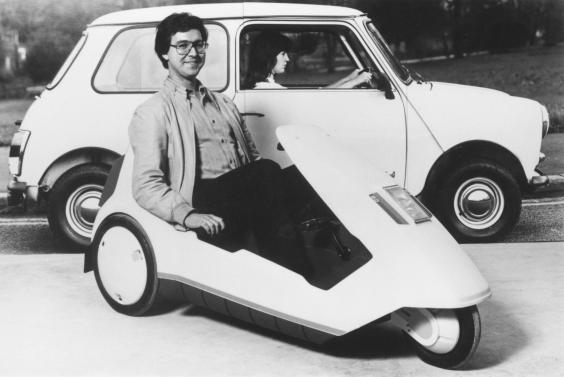
              A driver demonstrates a miniature electric car, in 1985

              Professor Clare Grey, one of the paper’s senior authors, said: “What we’ve achieved is a significant advance for this technology and suggests whole new areas for research – we haven’t solved all the problems inherent to this chemistry, but our results do show routes forward towards a practical device.”

              But the report’s authors do warn that a practical lithium-air battery still remains at least a decade away – there are several practical challenges that need the batteries become a viable alternative to gasoline.

              Prof Grey added: “While there are still plenty of fundamental studies that remain to be done, to iron out some of the mechanistic details, the current results are extremely exciting – we are still very much at the development stage, but we’ve shown that there are solutions to some of the tough problems associated with this technology.”

              * * * * * * * * * * * * * * * * * * * * * * *

              Comment


              • #8

                "To burn always with this hard gemlike flame, to maintain this ecstasy, is success in life."


                Comment


                • #9
                  Japan is running out of people to take care of the elderly, so it's making robots instead


                  Countries around the world are grappling with how to care for a growing population of elderly people.

                  The percentage of the US population aged 65 or older is currently at 13%, but that number is expected to nearly double by 2050, according to the Pew Research Center.

                  But the United States isn’t even close to the oldest nation in the world — that title is reserved for Japan.

                  In fact, 20% of Japan’s current population is 65 or older.

                  But as countries witness a climbing number of seniors, the amount of caregivers remains stagnant.

                  This is particularly a problem in Japan, as a nearly 300-page Merrill Lynch report projects a shortage of 1 million caregivers by 2025 for the country.

                  To address the issue, Japanese companies are leading in the development of Carebots.

                  Carebots are robots specifically designed to assist elderly people, and it’s an industry that’s growing in a big way. One-third of the Japanese government’s budget is allocated to developing carebots.

                  The global personal robot market, which includes carebots, could reach $US17.4 billion by 2020, according to the Merrill Lynch report.

                  For example, Honda’s Asimo robot is an autonomous, humanoid robot that could help the elderly by getting them food or turning off lights.

                  “ASIMO was designed to help those in society who need assistance,” said Satoshi Shigemi, senior chief engineer of humanoid robots in Japan, at an event last year.


                  Robobear can pick you up.

                  The International Organisation for Standardization (ISO), an independent organisation that sets standards for 164 member countries, recently created a new standard to ensure interactions between carebots and humans remain safe — highlighting a growing number of robots of this nature.

                  The standard — formally called the ISO 13482 standard for service robots — allows for “close human-robot interactions so that there will be protection against litigation in the event of an accident occurring,” Gurvinder Virk, a professor of robotics who helped lead the creation of the ISO standard, told Tech Insider.

                  There are three categories that fall under the ISO standard: physical assistant robots, mobile servant robots, and person carrier robots.

                  The Panasonic Resyone carebot was the first robot to officially meet the standard for service robots.

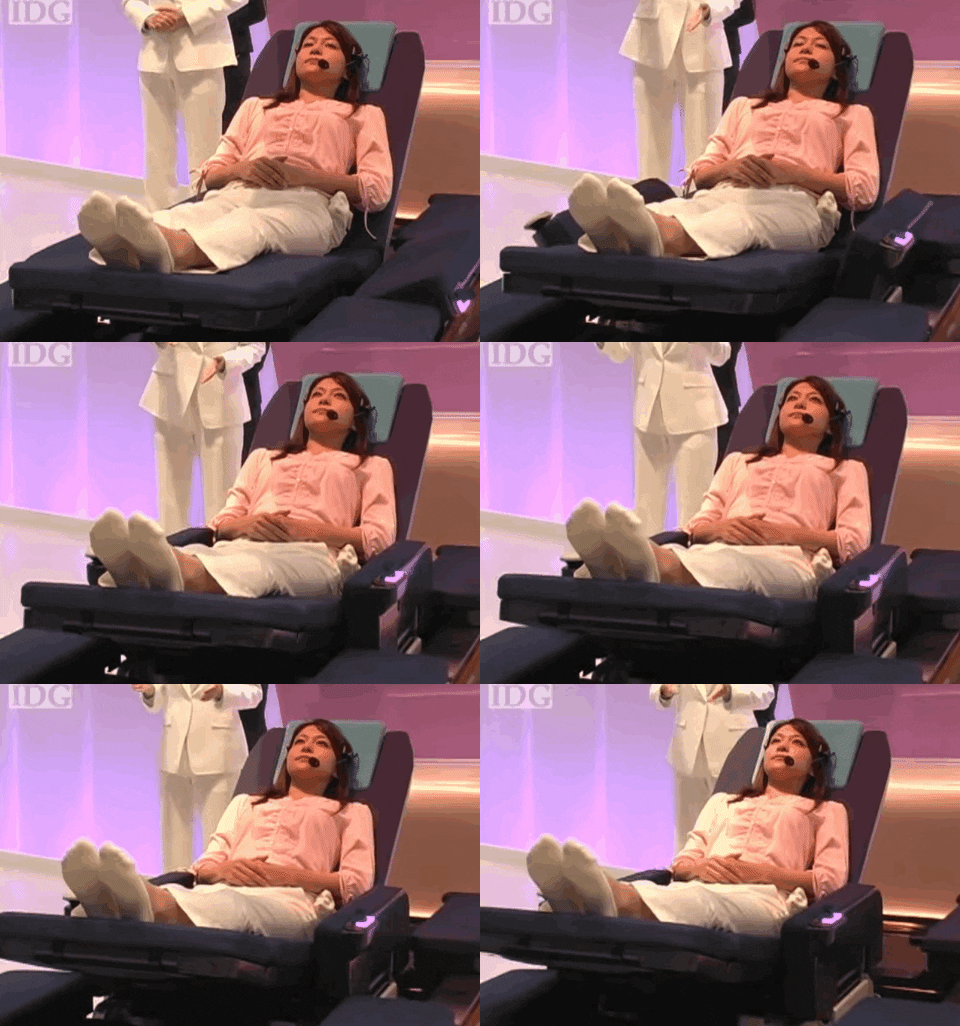
                  Resyone is a robotic device that transforms from an bed to an electric wheelchair, eliminating the need for multiple caregivers.


                  Like Resyone, a humanoid robot called Robobear, could also eliminate the need for multiple caregivers by helping transfer seniors from the bed to a wheelchair. The nursing robot, which is still in the experimental phase and was designed by engineers from Japan’s research institution RIKEN, is capable of lifting people.

                  Sales of robots designed specifically to assist elderly people are expected to reach 12,400 units between 2015 and 2018, with that number expected to “increase substantially” over the next 20 years, according to the Merrill Lynch report.

                  And it goes beyond personal care robots too. Robot cats are currently being sold to keep seniors company.

                  Robots in general are becoming increasingly popular in different spheres, from the kitchen to construction, but it seems likely that your first interaction with one may be at your grandparents’ house.

                  * * * * * * * * * * * * * * * * * * * * * * *

                  Comment


                  • #10
                    New Polymer Could Purify Water In Seconds: Study

                    World | Press Trust of India | Updated: December 26, 2015 11:19 IST


                    New Polymer Could Purify Water In Seconds: Study
                    Whereas activated carbon filters must undergo intense heat-treating for regeneration, cyclodextrin filters could be washed at room temperature with methanol or ethanol.

                    NEW YORK: Scientists have developed a new reusable polymer that can remove pollutants from flowing water within seconds, just like air fresheners trap invisible air pollutants in the home and remove unwanted odours.

                    Researchers have used the same material found in air fresheners, cyclodextrin, to develop a technique that could revolutionise the water-purification industry.

                    The team, led by Will Dichtel, associate professor at Cornell University in the United States, developed a porous form of cyclodextrin that has displayed uptake of pollutants through adsorption at rates vastly superior to traditional activated carbon - 200 times greater in some cases.

                    Activated carbons have the advantage of larger surface area than previous polymers made from cyclodextrin - but they do not bind pollutants as strongly as cyclodextrin.

                    "What we did is make the first high-surface-area material made of cyclodextrin combining some of the advantages of the activated carbon with the inherent advantages of the cyclodextrin," Mr Dichtel said.

                    "These materials will remove pollutants in seconds, as the water flows by," he said.

                    Whereas activated carbon filters must undergo intense heat-treating for regeneration, cyclodextrin filters could be washed at room temperature with methanol or ethanol.

                    Recyclability is another advantage of the cyclodextrin polymer, Mr Dichtel said. Whereas activated carbon filters must undergo intense heat-treating for regeneration, cyclodextrin filters could be washed at room temperature with methanol or ethanol.

                    The findings were published in the journal Nature.

                    * * * * * * * * * * * * * * * * * * * * * * *

                    Comment


                    • #11
                      Bengaluru doctor designs Rs 50 device to give patients their lost voice back

                      Sunitha Rao R | TNN | Dec 25, 2015, 05.15 AM IST

                      Bengaluru-based oncologist Dr Vishal Rao has invented a voice prosthesis priced at just Rs 50.


                      BENGALURU: Throat cancer patients who have lost their voice can look forward to speaking again, without having to shell out thousands on an artificial voice box. A Bengaluru-based oncologist has invented a voice prosthesis priced at just Rs 50. The device weighs just about 25 grams and is seen as a boon for the poor.

                      "Speaking is a right. When the voice box of patients is removed during surgery, they crave to speak. As if the trauma of the disease is not enough, the shock of having lost their voice takes a toll on them, emotionally. The prosthesis available in the market costs Rs 20,000 (to be changed once in six months) and is not viable for many poor patients. My objective was to design something that is affordable and can give them their voice back," said Dr Vishal Rao, oncologist and head and neck surgeon, HCG Cancer Care.
                      The device has been aptly named Aum voice prosthesis. "We decided to term it Aum, as that is the sound which first resonated across the universe. Regaining one's voice is so much like a rebirth," said Rao. He took the help of his friend Shashank Mahesh, an industrialist, to deal with the financial aspect of the project. Though it costs Rs 50, they called it the $1voice box to make it match international standards.

                      While Dr Rao provided the technical inputs, Shashank brought in the industrial perspective and looked into the project's feasibility. "We imported platinumcured silicone (two-component high tear strength and flexible mould or casting compounds) from Germany to design the prosthesis. We had to make sure it didn't react with body tissues," said Dr Rao.
                      Ramakrishna, 55, a watchman from Peenya suffering from throat cancer, was the first recipient of the prosthesis."He was a beedi addict. He Had been smoking for years to keep awake at night. He suffers from throat cancer and we had to remove his voice box. He was given a western voice prosthesis.

                      Though it had a shelf life of six months, he used it for two years as he couldn't afford a new one. He came to me with tears in his eyes saying that food was leaking through the prosthesis. Our deviceinnovation was just about ready and we offered it to him for Rs 50. He regained his speech and returned with a million dollar smile, telling me that he was doing fine. That was the biggest gift for me," said Dr Rao.

                      So far, the $1voice prosthesis has benefited three patients in HCG. It recently bagged the state innovation award at a recent conference of oncologists. In the next three months, the duo will keep track of its functioning and upgrade it if necessary. The ethical committee and the scientific committee at HCG has cleared it for further research on itthe device.
                      At any given point of time, there are over 1.5 lakh cases of tobacco-induced cancer in the state, and one-third of them are of head and neck cancer, which poses the risk of voice box removal.

                      * * * * * * * * * * * * * * * * * * * * * * *

                      Comment

                      Working...
                      X