
 Tweet
Originally posted by Insight
View Post
-
banned them from fasting Ramadan. this is not true, it was a just rumor -
-
$60bn assistance package illustrates China’s commitment to Africa
TMG Digital | 06 December, 2015 11:06
The $60bn assistance package for Africa announced by Chinese President Xi Jinping on Friday clearly illustrates China’s commitment to ensure that its development takes place in conjunction with the developing countries of the South‚ particularly those in Africa‚ says President Jacob Zuma.
He was speaking at the conclusion of Summit of the Forum on China-Africa Cooperation (FOCAC) which he said had taken the relationship between Africa and China to its highest level ever.
At the beginning of the Johannesburg summit‚ President Xi announced a major and historic concrete development partnership plan with Africa comprising 10 priority programmes aimed at addressing three of the primary bottlenecks hindering Africa's development‚ namely the lack of infrastructure‚ skilled personnel and funding.
The ten initiatives specifically identified for cooperation over the next three years to address these bottlenecks include‚ industrialisation‚ agricultural modernisation‚ infrastructure‚ finance‚ green development‚ trade and investment facilitation‚ poverty eradication and people’s wellbeing‚ public health‚ people-to-people and cultural exchanges‚ and peace and security.
A package of capital assistance to support the ten areas to the tune of $60bn was announced. This includes grants‚ preferential and concessional loans‚ a China-Africa industrial cooperation fund and debt relief.
“This is a significant amount. It clearly illustrates China’s commitment to ensure that China’s development takes place in conjunction with the developing countries of the South‚ particularly those in Africa‚” said President Zuma.
He noted that President Xi had also expressed strong support for peace and security in Africa including the fight against terrorism in the continent.
“You have also voiced your strong and unambiguous support for the African Union position that all peace efforts must be led by Africa and that solutions to Africa’s problems must come from Africa.”
He added that the Chinese president had also made a pledge in the United Nations General Assembly to provide concrete material support for African peace missions‚ which will be African-led.
Referring to China’s declaration in September that its military might would be used for peace‚ to prevent wars and to support vulnerable countries‚ President Zuma noted that the Asian super power already had peacekeepers on the ground in Africa.
“We certainly look forward to continuing to work with China to build peace in Africa‚” he added.
Referring to the FOCAC partnership‚ President Zuma stated: “We fully support this new high and more focused level of the partnership.
It has the potential to significantly enhance the African Continental agenda‚ as embodied in African Union Agenda 2063 and its First 10-Year Implementation Plan.
“The AU Agenda includes the commitments to support railway and road infrastructure‚ power generation and distribution networks‚ industrial and technology parks and human resources development‚ to name but a few.
“There is also the commitment to significantly enhance trade and investment rates.
“The AU agenda also supports peace and stability.
“Africa wishes to achieve a united‚ prosperous and peaceful Africa; a better Africa in a better world. FOCAC clearly responds to these imperatives.
“The announcements made by President Xi to the Summit also respond to these imperatives.
“We are therefore aligned and are on the same path towards development and progress.”
President Zuma concluded by saying that the announcements and agreements made at the summit must translate to concrete action and outcomes that would be felt by the people of the two regions.
“In this regard‚ our implementation mechanisms should ensure that we see swift action and that an effective monitoring and evaluation is undertaken.”


A picture of President Xi from another trip.
 * * * * * * * * * * * * * * * * * * * * * * *
Comment
-
Saudi Arabia spends $50 billion on murdering Yemeni women and children and bombing the poorest country in the Arab world.
China spends $60 billion on helping Africa.
Spot the difference.
 * * * * * * * * * * * * * * * * * * * * * * *
Comment
-
Why Malaysian Muslim singer Shila Amzah had to move to China
Spot on Hunan TV talent show 15 months ago propelled 25-year-old to stardom. Now she's mastered Putonghua and is learning Cantonese with an eye to Hong Kong market
PUBLISHED : Tuesday, 05 May, 2015, 6:24am
UPDATED : Wednesday, 06 May, 2015, 1:43pm
COMMENT: 1
Her signature look - the hijab, or Muslim head scarf - may draw instant recognition, but her voice, back story and hard work are what have won Malaysia-born singer Shila Amzah (known to her fans as Shila) millions of fans all over China.
After appearing on Hunan TV's popular singing competition I Am a Singer last year in February, Shila became an overnight sensation. Later in the year, she was hired as a mentor on the TV programme Let's Sing, Kids and today the Muslim singer has almost 2.5 million fans on Weibo, China's micro-blogging platform.
Shila started singing at the age of 10 and has a celebrity father - N.D. Lala was one of Malaysia's most popular singers. However, she wanted to be a singer in her own right rather than being known as "N.D. Lala's daughter".
So, in 2012, Shila went to China to develop her career.
Being a Muslim already makes Shila, 25, stand out in a crowd. "To create curiosity is the best part," she says.
But not knowing much Putonghua beyond ni hao (hello) and xiexie (thank you) was problematic at the start. Even during last year's I Am a Singer, her skills were still minimal.
"After I sang my song and went into the room full of performers, I had no idea what they were talking about … I nodded when they called my name. When people laughed, I laughed too," Shila recalls.
I have to work harder than I did in Malaysia ... This brings out the best in meSHILA AMZAH
So she began taking lessons, and her hard work has paid off. From her rendition of The Night I Was Missing You, you'd have thought she was a native Putonghua speaker. She can now distinguish regional accents and is, reportedly, also learning Cantonese as she wants to break into the Hong Kong market, according to local entertainment reports.
Shila says relocating to China was the right decision for her. She has received more respect and encouragement from mainland audiences. But with that, she also feels the pressure.
"I have to work harder than I did in Malaysia - pushing myself to become a better person, a better singer, a better performer. This brings out the best in me," she says.
Shila has also become a cultural ambassador. She sang for President Xi Jinping in October 2013, when he visited Malaysia. In December 2014, the Chinese government gave Shila an award for her "special contribution to building friendship between China and Malaysia".
As a Muslim, she is aware that her religious beliefs and practices may be a sensitive issue in some parts of China. For example, in one city in Xinjiang, citizens with head scarves, veils and long beards are banned from public buses. Some view this as discrimination against Uygurs; the authorities think the ban strengthens security especially when major events are being held in cities.
Shila has a different view. "There are a lot of things in our religion that are really simple. It's not the religion that makes it hard, but it is the people who make it hard.
"Religion is about trust, about believing in yourself. Whatever your religion, it's really beautiful to have something to believe in. All religions teach us to be nice, to be kind and to have courage. Those are the values I want my fans to have."
Now that she has established herself in the mainland, a triumphant return to Malaysia is on the cards.
"If someone becomes famous abroad, they will also become popular back in their own country … Don't people think that way?" says Shila, looking forward to the day when she will no longer be just N.D. Lala's daughter.
Why Malaysian Muslim singer Shila Amzah had to move to China | South China Morning Post
3416 Shila Amzah New Album Press Conference 茜拉首张华语大碟《心旅》新闻发布会 Eng Sub - YouTube* * * * * * * * * * * * * * * * * * * * * * *Comment
-
CHINESE INVENT FUTURISTIC BUS CARS CAN DRIVE THROUGH
Posted: May 22 2016, 4:32am CDT | by Luigi Lugmayr, in News | Cars & Vehicles
Updated: May 22 2016, 4:40am CDT
Chinese Invent Futuristic Bus Cars Can Drive Through
Credit: Chiana Xinhua News

The straddling bus or land air bus spawns two lanes. Passenger compartment floats over the traffic and the cars can drive under the bus. This is a genius transport invention and it looks super sci-fi (Video).
This is real. A Beijing based company has invented a bus that floats above traffic with a stilts design. The bus straddles two lanes, allowing cars to drive under the bus. The land air bus runs on special tracks placed along the sides of the road.
A Chinese video report refers to the futuristic transport vehicle as bus, but it looks more like a train. The company behind the new transport concept says that the main advantage of the system is the much lower cost and faster construction than subway train systems. The straddle bus can carry up to 1,400 passengers and travel at speeds fo 60km/h.
The electricity powered bus has been unveiled at the Beijing International High-Tech Expo. At the expo the company showed the straddling bus in a scaled down model setup. The company stated though that a full size straddle bus is in construction and will be tested this summer in a Chinese city in the north of the country.
The video below shows the straddle bus, which looks like straight out of a science fiction movie. The only thing I wonder is how to get on this bus. The video report does not show how passengers would get on and off the bus. I assume special elevated bus stations are necessary.
What will a China-made magnet straddle-type monorail train look like? It runs unimpeded by "devouring" cars beneathhttps://t.co/bxsHIw1iIy— China Xinhua News (@XHNews) May 22, 2016
Concepts of a straddling airbus appeared first in 2010 by a Shenzhen based company called Shenzhen Huashi Future Parking Equipment Co., Ltd. The new version of the straddling Bus (aka straddle bus, tunnel bus or land airbus) has come a long way.
Chinese Invent Futuristic Bus Cars Can Drive Through* * * * * * * * * * * * * * * * * * * * * * *Comment
-

1. Right on the far western borders with Afghanistan we can see "Wakhi" marked in red.
Wakhi language - Wikipedia, the free encyclopediaWakhi is one of several languages that belong to the areal Pamir language group. Its relationship to the other Iranian languages is not clear; in certain features Wakhi shows affinity to the extinct Saka language in particular.
The Wakhi people are occasionally called Pamiris and Guhjali. The origin of this language is Wakhan and it is, according to many sources,[which?] more than four thousand years old. It is spoken by the inhabitants of the Wakhan Corridor of Afghanistan, parts of Gilgit–Baltistan (the former NAs) of Pakistan, Gorno-Badkhshan (mountainous-Badakhshan, in Russian) region of Tajakistan, and Xinjiang in western China.
[MENTION=18277]Afghanfootball[/MENTION]

Scythians/ Sakas.
2. A lot of people think that the term "Han Chinese" refers to a homogeneous group of people constituting over 90% of China. This is fallacious.
The Han is a generic term for a diverse group of people whose languages are sometimes more different to each other than Korean is to Japanese.
However due to historical and political reasons they identify with the Chinese state and are loyal to it and thus see themselves as "Han".
However "Han" is more like European (a generic term) than like Greek (a specific ethnic group with a singular language).* * * * * * * * * * * * * * * * * * * * * * *Comment
-
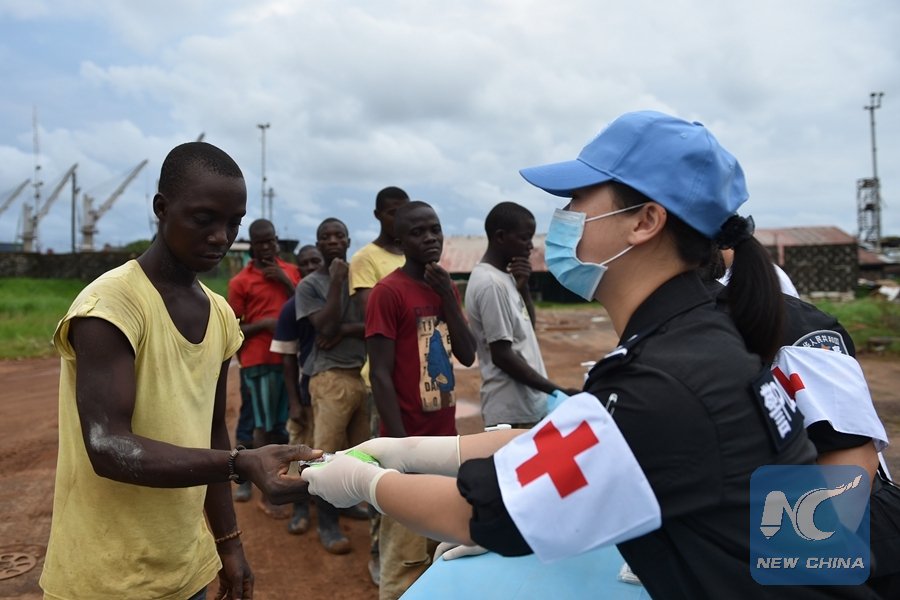
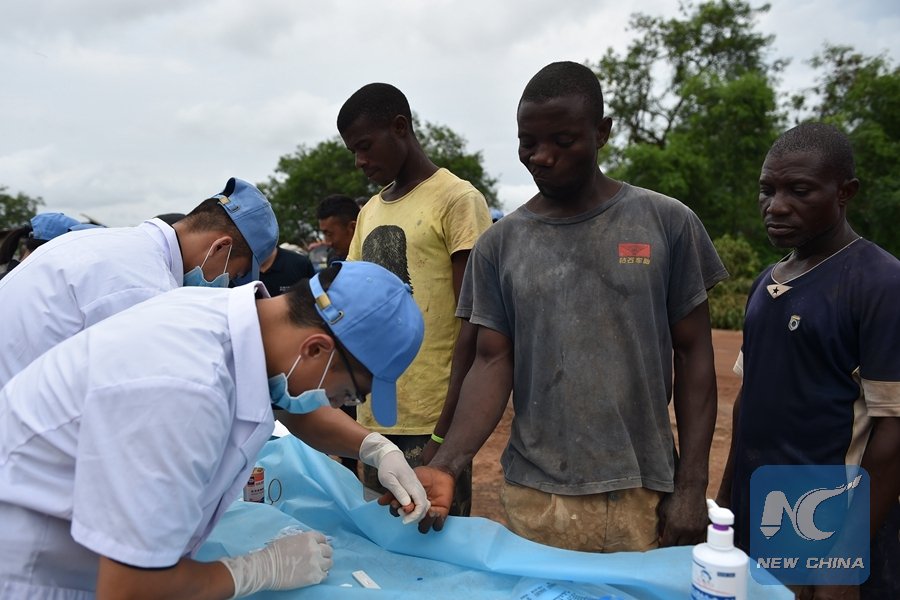
Medical staff of China peacekeeping police teach anti-Ebola knowledge, offer medical supplies in Liberia.

 * * * * * * * * * * * * * * * * * * * * * * *
Comment
-
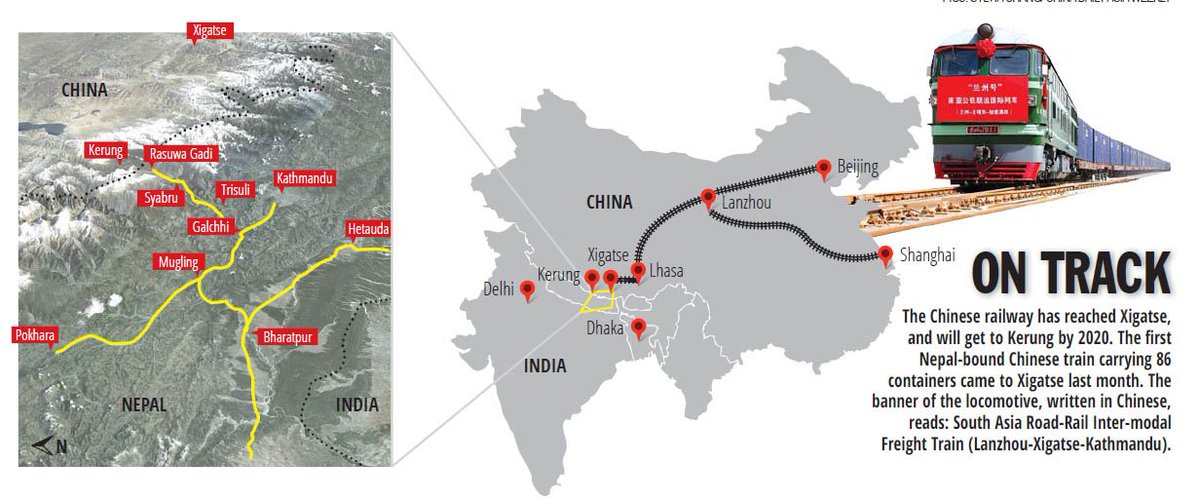
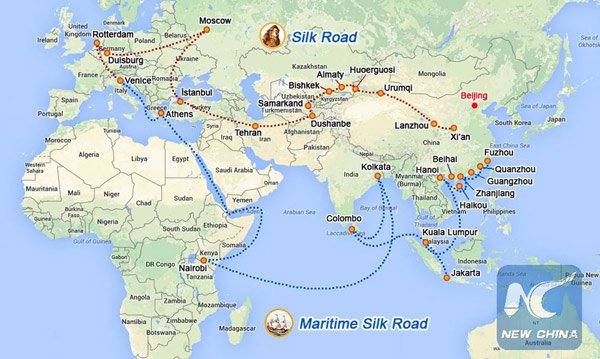

Indian youth delegation to China to widen bilateral relations.



China offers cloud-seeding technology to drought-hit Maharashtra

China offers cloud-seeding technology to drought-hit Maharashtra - The Economic Times* * * * * * * * * * * * * * * * * * * * * * *Comment
-
Russia And China Discuss Joint Outer-Space Exploration, Moon And Even Mars
Tim Daiss , CONTRIBUTOR
Geopolitical analyst and journalist based in Southeast Asia.
Opinions expressed by Forbes Contributors are their own.
TWEET THIS
China and Russia are discussing joint cooperation in outer-space exploration, including missions to the Moon and even Mars
JIUQUAN, CHINA: A Long March 2F rocket carrying the country’s first space laboratory module Tiangong-1 lifts off from the Jiuquan Satellite Launch Center on September 29, 2011 in Jiuquan, Gansu province of China. The unmanned Tiangong-1 stayed in orbit for two years and docked with China’s Shenzhou-8, -9 and -10 spacecraft with the eventual goal of establishing a manned Chinese space station around 2020. (Photo by Lintao Zhang/Getty Images)
China and Russia are discussing joint cooperation in outer-space exploration, including missions to the Moon and even Mars , according to a statement by Russian Deputy Prime Minister Dmitry Rogozin on Wednesday.
“Yesterday, we (Rogozin and Vice-Premier of China’s State Council Wang Yang) worked for three and a half hours, discussing cooperation in the nuclear sphere and cooperation in the issues of interaction between our space agencies where there are such large projects as the deliveries of rocket engines, and cooperation in navigation systems,” the Russian vice-premier said.
He made his remarks during a talk with the heads of Russian regions and Chinese provinces and the managers of companies from both countries. The expo is an annual industrial exhibition held since 2014 within the framework of the Harbin Trade Fair.
“We’re developing an understanding for the rocket and space industry for possible interaction in such profound and technologically complex projects as the future exploration of the Moon, Mars and piloted cosmonautics,” he said.
Rogozin added that both countries have the potential to implement such impressive projects as trust exists both at the political level and at the level of specialists solving these issues.
Rogozin’s statement’s come less than a month after Russian President Vladimir Putin’s visit to Beijing. During that meeting the two sides inked a pact setting out the legal framework for protecting their rights to sensitive space technologies in joint projects like launch vehicles and rocket engines
Forbes Welcome


 * * * * * * * * * * * * * * * * * * * * * * *
Comment
-

Children in eastern China take part in a painting related to the Rio Olympics.
China leads world in mobile tech
Source: Xinhua 2016-08-05 16:57:21
BEIJING, Aug. 5 (Xinhua) -- Silicon Valley has long enjoyed a reputation for technological innovation, while times may have changed as industry insiders are currently seeing China as further ahead, especially in mobile tech, the New York Times recently reported.
The Times article took WeChat, Alipay, and YY.com -- all native Chinese social media giants -- as outstanding examples that first popularized barcodes-scanning payment and money transfer, mobile order services and video-streaming, among other hits, that some U.S. tech giants, such as Facebook and Snapchat, are following suit.

Beijing, China.
In 2015, China has surpassed the United States in mobile payment. Also, more people in China, than anywhere else, are using mobile devices to order services, make friends and watch videos, according to the article.
Some business insiders interviewed by the Times shared the view that China has become the leader on many fronts in the mobile world. Ben Thompson, the founder of the tech research company Stratechery, told the Times that "the trope that China copies the U.S. hasn't been true for years," and in today's mobile world, "the U.S. often copies China."
The article also pointed out that in comparison with the idea among their U.S. peers of making apps simple, Chinese tech firms often stuff several functions into one app -- you can chat, order food and car rides, do shopping, book trips and hotels all through a single platform. They also allow other companies to grow within them to directly offer services, which have created many successful business stories, the article said.
Meanwhile, Chinese tech giants are also exploring overseas markets themselves. On Thursday, WeChat, the most widely used mobile messaging app in China, announced it was entering the New Zealand payments market with its automatic payment app WePay.
WePay has 400 million active users in China, processing over 500 million payment transactions a day.
China leads world in mobile tech: media
- Xinhua | English.news.cn
*Western companies following centuries old practice of emulating and copying China whether it be acupuncture, Tai Chi, gunpowder, pasta & noodles, martial arts etc.
China leads....the west follows.* * * * * * * * * * * * * * * * * * * * * * *Comment
-
Anyone Looking To Make $300,000 Should Go Fly Planes In China
Kristen Lee
Today 9:35

The Chinese demand for travel has skyrocketed in recent years, which has in turn increased the need for experienced pilots to fly the tourists to their destinations. Some airlines want more pilots badly enough that they are offering salaries of $300,000 and above to foreigners. That’s a lot better than you can do elsewhere.
China’s airlines, which include Qingdao Airlines and Sichuan Airlines, are contacting as many pilots as they can, reports Bloomberg. Qingdao, which is a regional carrier, is offering as much as $318,000 a year. Sichuan, which travels to Canada and Australia, offers $302,000. Comparatively, a commercial senior-level captain’s salary tops out at around $209,000 in the United States, according to Bloomberg.
Sometimes, it’s not even the big and well-known airlines that are paying handsomely. Little-known startup airlines are paying close to 50 percent more than what some senior captains are making at Delta.
Demand in China is so high that its airlines need to hire about “100 pilots a week for the next 20 years.” Basically, there’s an unlimited need for pilots right now. International recruiters, from the U.S. to New Zealand, are given pretty much free rein to fill cockpits.
Along with lofty salaries, some recruiters offer signing bonuses, overtime pay and contract-completion payouts. One recruiter said that a monthly paycheck of a pilot who he signed at Beijing Capital Airlines was $80,000.
Eighty thousand dollars a month. Did your jaw just drop? Because mine sure did.
From Bloomberg:
However, such rapid expansion seems to be outpacing the bureaucratic hoops that people have to jump through in order to start flying in China. The documentation, the work permits, the immigration and the medical insurance processes can still take up to two years to clear before a pilot can begin work.Aviation is booming in China, where the number of airlines has increased 28 percent to 55 in the past five years. The fleet has more than tripled in a decade to 2,650, according to the Civil Aviation Industry Statistics Report.
The growing ranks of low-cost airlines favor single-aisle jets such as the A320, which can seat about 180 people. With passenger numbers in China increasing 11 percent last year, carriers are scheduling more flights to handle demand. And that requires more captains.
Offering a fat paycheck is the only option for the newest carriers because they have minimal brand recognition and a limited performance record, said Liz Loveridge, who’s responsible for China recruitment at Rishworth Aviation in Auckland. Chinese airlines are paying as much as five times more than some Asia rivals for new hires, she said.
“They can’t attract people through any other means,” Loveridge said. “They think money’s the only answer.”
Hiring foreign pilots is also seen as a social advantage. “Some of the airlines see some value in having a Western accent in the cockpit,” a recruiter told Bloomberg. “They’ve got the experience.”
Well, if you’re an Uber or a taxi driver and you’re tired of the threat of autonomous cars, maybe a new career is waiting for you in China.
Anyone Looking To Make $3, Should Go Fly Planes In China
1. Traditionally prosperous white western countries have hosted migrant communities. These white western countries are quite tolerant and democratic and have given citizenship and full legal rights to non-white migrants e.g. UK and others.
2. However just as we see a large white expatriate community working in the gulf for lucrative salaries we may see this happening more so in China in the future and possibly rather than Bangladeshi, Afghan, Turkish, African expatriate communities as in Europe, white expatriate communities in China.
I am not saying that these luxurious pilot salaries signify that, far from it...but in the future we may witness something like this. Brown people going to white countries, whites going to brown and yellow countries and the world becoming more and more mixed.
[MENTION=2329]Karachi[/MENTION]
[MENTION=19433]Aryana[/MENTION]* * * * * * * * * * * * * * * * * * * * * * *Comment


Comment