Announcement

Collapse
No announcement yet.

China focus - The return of the dragon!

Collapse
X
 
  • Filter
  • Time
  • Show
Clear All
new posts

  • China focus - The return of the dragon!

    CHINA FOCUS - THE RETURN OF THE DRAGON

    * Biggest population on earth.

    * Biggest country on the biggest continent in the world, an Asian giant.

    * Biggest economy on the planet (by PPP) and soon to be by nominal GDP.

    * Nuclear power with massive army, air force and navy.

    * Neighbour of Afghanistan (with the "Republic of China" i.e. Taiwan claiming parts of Afghan territory).

    * A land of technological innovation and at its cutting edge.


    A civilization of thousands of years now engaged in a global bully, the USA, just over 2 centuries old.


    Background:

    For thousands of years the Chinese dragon was a strong power and for a long time dominated half of Asia. It's GDP was a huge percentage of overall global GDP. It was far more advanced than Europe, when Europe was in the dark ages.

    Then for the last few centuries the dragon was subdued and repressed.

    Now the dragon has started waking up from its slumber.

    The whole world is now watching the dragon as it spreads its wings across the globe.
    * * * * * * * * * * * * * * * * * * * * * * *

  • #2
    400,000 elementary schools in China to be provided with 3d printers

    Posted on April 9, 2015 by iamjosephyoung@gmail.com

    Simon Shen, the CEO of Kinpo Group, the parent company of XYZ printing announced that the Chinese Government has approved a new policy which states that the government will provide over 400,000 elementary schools in the nation with 3D Printers.


    Mr. Shen believes there is a high possibility of XYZ printing’s 3D Printers being a massive portion of the 3D Printers that the government plans to purchase.

    The 3D Printers of XYZ printing cost around 500 USD and are extremely simple and user friendly. The ABS and PLA 3D Printers use plastic filaments to rapidly print out prototypes and 3D models with precision.

    Currently, XYZ printing is partnered with a child company of Lenovo called Magic Factory and plans to distribute around 100,000 to 120,000 3D Printers this year.


    The details of the ambitious plan of the China Government have not been released to public yet. An update will be made to this post if any other information from the Chinese Government regarding this policy is announced.


    *400,000 schools is at least 40 million student, because each school will be at least 100 students. However in 3rd world countries, schools are much bigger than that and let's say it was:

    1 school on average was 500 students, that's a 3d printer for 200 million children.

    The dragon is back.
    * * * * * * * * * * * * * * * * * * * * * * *

    Comment


    • #3


      Beijing.


      Shanghai.


      Guanghzhou.


      * * * * * * * * * * * * * * * * * * * * * * *

      Comment


      • #4
        China to me is a threat, they clearly want to dominate Asia and now they are even pushing in the boundaries of south asia. I wouldn't have a problem with china if they were normal democratic country, however they are far from it. Life of an average chinese person is horrible, I was watching on Cnn how many of normal chinese population is made to work like robots for up 16 hours a day. Most of the stuff we buy in the west is from china, but at what human cost? people have no lives there, it's just the state that benefits from most of the things. Also the way they treat muslims and buddhists is horrible. This is why China is a threat to humanity in the long run
        Last edited by Karachi; 04-10-2015, 10:57 PM.

        Comment


        • #5
          Originally posted by Karachi View Post
          China to me is a threat, they clearly want to dominate Asia and now they are even pushing in the boundaries of south asia. I wouldn't have a problem with china if they were normal democratic country, however they are far from it. Life of an average chinese person is horrible, I was watching on Cnn how many of normal chinese population is made to work like robots for up 16 hours a day. Most of the stuff we buy in the west is from china, but at what human cost? people have no lives there, it's just the state that benefits from most of the things. Also the way they treat muslims and buddhists is horrible. This is why China is a threat to humanity in the long run
          It wouldn't be correct for you to believe media blindly. It has a habit of portraying those that it perceives as rivals or threat to its interests as devils and those that fit its global politics as angels. I have Chinese friends and they say they don't care about democracy as long as Chinese govt. performs better and improves their lives.

          And they say Chinese govt is doing many positive things .

          And it is quite irrational saying that China is threat to the world in the long run. In its long history it has never been an aggressive power. It doesn't interfere with other countries internal affair, is introvert by its very nature, and seems to be interested in interacting with others in terms of economy only.

          It doesn't export/impose its ideologies or values on others.

          We need a multipolar world and don't want to be dictated like slaves by a unipolar world order dominated by a single power whether China, or US, EU, or Russia. In the long-run, the existence of many powers including the present super-powers is necessary for weak and smaller countries to have the freedom to pursue their own path of development.

          China rise on the contrary will stabilise Asia rather.

          This Fox News style propaganda against China or any other country wouldn't do any good.
          Last edited by Toramana; 04-10-2015, 11:56 PM.

          Comment


          • #6
            China is not perfect and the epitome of goodness, but nor it is as evil as its haters say it is. The same applies to the Americans. However in response to some of the issues raised about China.


            1. Treatment of Buddhists and Muslims.

            I don't know much about its treatment of Buddhists, perhaps apart the whole Tibet issue. However prior to the PRC (People's Republic of China) taking over Tibet was a feudal state run by monks who treated ordinary people as serfs, apparently basically as slaves.

            As for Muslims, there are different types of Muslims in China.

            The Hui look exactly like the Han Chinese but are said to have Arab, Persian or other foreign origins.

            They are pro-China, and are more religious than the Uighurs.

            The Uighurs are less religious and anti-Hui too. The reason the Uighurs don't like the Hui is because they view them as "traitors" for not siding with them during various rebels. It's like the way the Turks are raised by their state and media to hate Arabs.


            Hui Muslims.

            However I don't agree with some of the PRC policies in response to Uighur separatist terrorism e.g. a harsh clamp down on some religious practices. As a Muslim and a friend of China I urge them to abstain from that.


            2. Workers conditions.

            I don't know much about that.

            All I can say is yes maybe the Chinese are wrong in this, but are these factories run by western companies? If they are then the western companies should be blamed too.


            3. Foreign policy

            America is the most aggressive state in the history of humanity. It has killed according to some around 40 million people since WW2 and has been involved in countless war crimes and atrocities.

            China has invaded no one and has a generally non-interventionist foreign policy.


            It's good that people question China however, but on the whole I'd say there's far more good about it than bad.
            * * * * * * * * * * * * * * * * * * * * * * *

            Comment


            • #7
              Tajik Muslim girl in China.


              There are said to be 33 million Tajiks in China.


              Tajik Muslim police officer in the People's Republic of China.


              [MENTION=5723]Kushan Prince[/MENTION] and others, I think I've read comments on this forum about Tocharians, well...


              Tocharian mummy.


              The Tocharians were a Caucasoid Indon-European people based in what is now western China, i.e. like Pashtuns they were Indo-Europeans and not too far from the area where Pashtuns live and not too far from the Pamir mountains, an area which has a variant of "Tajik" (Farsi) very close to Pashto.

              Last edited by Bengal_Tiger; 04-11-2015, 05:48 AM.
              * * * * * * * * * * * * * * * * * * * * * * *

              Comment


              • #8


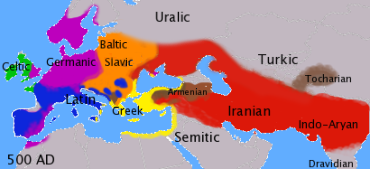
                As one can see there are different hypotheses as to the spread of the different Indo-European languages.

                Apparently Tocharian isn't that close to the Iranic languages, though I don't know much about this field.


                Anyway back to Tajiks:


                A Kyrghiz girl in China.
                * * * * * * * * * * * * * * * * * * * * * * *

                Comment


                • #9


                  Kushans are shown above.


                  Some say the Scythians or "Sakas" are said to be the ancestor of Pashtuns.

                  [MENTION=18140]Kushan Saka[/MENTION]


                  Anyway China has the biggest population in the world and is a diverse country with a predominantly Mongoloid population but also Iranic, Turkic and other elements.

                  Even the "Han" Chinese are not a homogeneous group but a collection of different races with different languages, sometimes not mutually intelligible including Hokkians, Cantonese and others but who unified under one empire adopted over the centuries a common national identity and have one official state language, Mandarin.

                  Anyway in this thread I will be focusing more on the economics, politics, history and culture of the PRC (People's Republic of China) rather than on racial anthropology.
                  * * * * * * * * * * * * * * * * * * * * * * *

                  Comment


                  • #10
                    Anyway back to mainstream China.

                    Some pictures of Shanghai.


                    * * * * * * * * * * * * * * * * * * * * * * *

                    Comment


                    • #11
                      Originally posted by Toramana View Post
                      It wouldn't be correct for you to believe media blindly. It has a habit of portraying those that it perceives as rivals or threat to its interests as devils and those that fit its global politics as angels. I have Chinese friends and they say they don't care about democracy as long as Chinese govt. performs better and improves their lives.

                      And they say Chinese govt is doing many positive things .

                      And it is quite irrational saying that China is threat to the world in the long run. In its long history it has never been an aggressive power. It doesn't interfere with other countries internal affair, is introvert by its very nature, and seems to be interested in interacting with others in terms of economy only.

                      It doesn't export/impose its ideologies or values on others.

                      We need a multipolar world and don't want to be dictated like slaves by a unipolar world order dominated by a single power whether China, or US, EU, or Russia. In the long-run, the existence of many powers including the present super-powers is necessary for weak and smaller countries to have the freedom to pursue their own path of development.

                      China rise on the contrary will stabilise Asia rather.

                      This Fox News style propaganda against China or any other country wouldn't do any good.
                      Yup you are right, I think China main focus now is development, how they are going to act in the future we will see. USA was also quite introvert in the begining they did not even wanted to get involved in WWII but look at them now...Hopefully China will not become same as USA, but the chance is there that they will.....

                      Comment


                      • #12
                        Rising china is great news for Pakistan, our relations with China is unlike another country including so called ummah countries.

                        China plans to shift part of $300b textiles to Pakistan
                        | Pre-feasibility studies already done for establishing industrial zone in Pakistan | Govt must ensure safety of Chinese investors for plan’s successful implementation
                        April 10, 2015
                        SHARE :


                        Atif Khan


                        inShare


                        ISLAMABAD - China is seriously planning to shift part of its $300 billion textile industry to Pakistan, in coming years.

                        This was revealed by one of the Pakistani delegates, who returned to Pakistan on Thursday after eight days official visit to China.
                        After spending more than one week and meeting senior government officials and Chinese businessmen, I can surely say that China is very serious and it is working out a plan to shift textile industry to Pakistan, in coming years, official said.

                        In this regard, Chinese bank, Industrial and Commercial Bank of China Limited, ICBC and Pakistani Habib Bank have already carried out studies to establish an industrial zone in Pakistan.

                        During the briefings Chinese bank representatives told us that they have already done pre-feasibility studies in Gwadar, Pind Daden Khan and Bahawalpur areas, to find an appropriate place to establish 5000 acres industrial zone, he said.

                        He said that the representatives did not disclosed that which locality they have finally select but hinted that it would be close to Silk Route.
                        The official said that during meetings China showed keen interest in three sectors, namely steel, cement and textiles.
                        He said the Chinese delegates were fully prepared and they asked macro level questions.
                        We answered the pertinent questions with precise answers, for example we told them they could invest in filaments, manufacturing of textile machinery, shuttle less looms and so on, he said.

                        He said Chinese showed their concerns and wanted to know that how government will provide safety to Chinese business in prevailing law and order situation in Pakistan.

                        We told them that government was taking stringent and practical measures to restore law and order situation and that businessmen have no threat as the terrorist activities were confined to some areas, and generally business community has no threat, he said.
                        Secretary Board of Investment and Secretary Ministry of Textiles also gave comprehensive presentations and answered the questions like Chinese could start a joint venture or on their own, as there were no restrictions in the country as compare to neighbouring country India, he said.

                        The official said that Chinese investors also asked about the energy issues and they were told that any industry could have their own captive plants and that the government policies were pro investment.
                        He said Chinese bank had hired a chartered accountant who gave specific answers to Chinese business community queries regarding investment related matters.

                        Sharing his observations the official said that China has reduced subsidies to its textile sector, and only running the sector for employment purpose, after enjoying the world’s second top cotton producing country status.
                        There is a general understanding that due to one child policy, in coming days, one child will replace his parents, who are already on the verge of life expectancy and have entered old age, in near future, the population would reduce, while the resources would improve, due to inheritance, it would have less manpower, so in coming days China would reduce textiles and would go for food security, he said Adding, and to meet its domestic demands it wants to shift industry somewhere else, most likely to Pakistan, he said.

                        If one of the prominent Chinese banks is investing in Pakistan to establish industrial zone, it means China is serious and wants business, now it is up to Pakistan that whether it utilises the opportunity by offering maximum facilitation to Chinese investors or not, the official concluded.

                        ISLAMABAD - China is seriously planning to shift part of its $300 billion textile industry to Pakistan, in coming years.This was revealed by one of the
                        Best post in PF history
                        [I]
                        ''Today the ideology of Pakistaniat within Pakistanis is so strong that even if world war 3 is fought within Pakistan boundries,Pakistan will survive.'' [/I]Da Bannu Mazdigar

                        Comment


                        • #13
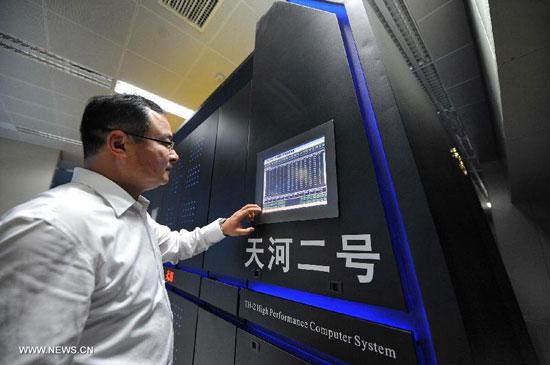
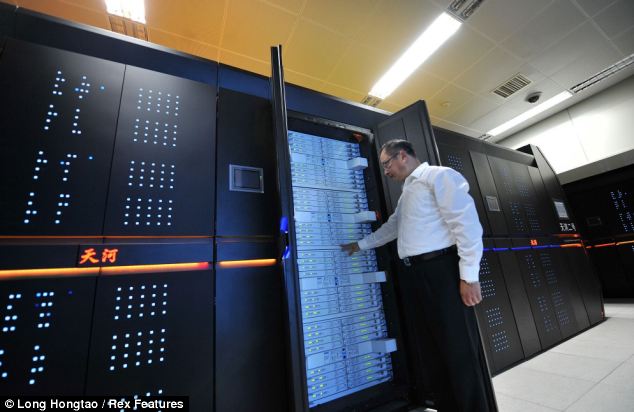
                          China currently has the world's fastest computer.


                          In June 2013, Tianhe-2 topped the TOP500 list of fastest supercomputers in the world. The computer beat out second place finisher Titan by nearly a 2-to-1 margin. Titan, which is housed at the U.S. Department of Energy's Oak Ridge National Laboratory, achieved 17.59 petaflops, while Tianhe-2 achieved 33.86 petaflops. Tianhe-2's phenomenal performance returned the title of the world's fastest supercomputer to China after Tianhe-I's début in November 2010. The Institute of Electrical and Electronics Engineers said Tianhe-2's win "symbolizes China's unflinching commitment to the supercomputing arms race"
                          * * * * * * * * * * * * * * * * * * * * * * *

                          Comment


                          • #14
                            U.S. Agencies Block Technology Exports for Supercomputer in China

                            Moves comes as U.S. technology companies grapple with Beijing’s proposed restrictions


                            REUTERS
                            By DON CLARK
                            Updated April 9, 2015 9:14 a.m. ET

                            U.S. officials are blocking technology exports to facilities in China associated with the world’s fastest supercomputer, a blow to Intel Corp. and other hardware suppliers that adds to the list of tech tensions between the two countries.

                            Four technical centers in China associated with the massive computer known as Tianhe-2 have been placed on a U.S. government list of entities determined to be acting contrary to U.S. national security or foreign-policy interests.

                            The system, which is powered by two kinds of Intel microprocessor chips, and an earlier system called Tianhe-1A “are believed to be used in nuclear explosive activities,” according to a notice dated Feb. 18 and posted by the U.S. Commerce Department.

                            The Commerce Department didn’t immediately respond to requests for comment.


                            Intel was denied an export license late last fall to supply more chips associated to Chinese supercomputer projects, Intel spokesman Chuck Mulloy said Tuesday.

                            China’s Ministry of Industry and Information Technology, three of the centers, and Chinese computer maker Inspur Group Co.—which helped build the machine—didn’t immediately respond to requests for comment. The National Supercomputing Center in Guangzhou said it didn’t immediately have a comment.

                            Intel’s Mr. Mulloy said the chip maker is in compliance with the law. Designers of the Tianhe-2—or the Milky Way-2 in English—have said it is mostly used for scientific projects like genome research.

                            The blockage comes at a time when U.S. technology companies are grappling with Beijing’s proposed new restrictions on their ability to do business in the vast Chinese market amid rising concerns there over cybersecurity. The companies are protesting China’s new banking-technology procurement rules as well as a proposed counterterrorism law that they say are overly invasive and involve handing over sensitive material. The Obama administration has called on Beijing to hold back on those efforts.

                            Supercomputers—room-sized systems that yoke together large numbers of processor chips—are often used in weapons research, code breaking, weather forecasting and many scientific disciplines. The U.S. has long dominated the field, which has become a symbol for national competitiveness in technology.

                            The Tianhe-2 system in 2013 vaulted to the top of a twice-yearly ranking of supercomputers, based on its performance on a series of standard computing tests.

                            The U.S. government action effectively blocks Intel and others from selling newer chips to update the system. They must seek an export license to sell technology to be used by the four Chinese sites. Such licenses are “usually subject to a policy of denial,” according to the Commerce Department notice.

                            Intel has dealt with Inspur rather than directly with the Chinese centers, said Mr. Mulloy, the Intel spokesman. He said the company was informed in August by the Commerce Department that an export license would be required to supply chips associated with previously disclosed supercomputer projects associated with Inspur.

                            “Intel complied with the notification and applied for the license, which was denied,” Mr. Mulloy said.

                            Despite the potential use of supercomputers for military applications, governments have rarely applied export restrictions to the technology. One potential reason is that most of components used in such systems are widely available around the world and their shipments would be hard to stop.

                            China significantly lags behind the U.S. in chip design, though the government has been bankrolling research to improve the capabilities of local chip makers.

                            Horst Simon, a supercomputer expert and deputy director of the U.S. Department of Energy’s Lawrence Berkeley National Laboratory, said the U.S. restrictions in the long run will help Chinese chip makers and hurt U.S. companies.

                            “The Chinese will be more incentivized to develop their own technology, and U.S. manufacturers will be seen as less reliable and potentially not able to satisfy foreign orders,” Mr. Simon said.

                            The U.S. government restrictions list national supercomputing centers in the cities of Changsha, Guangzhou and Tianjin, as well as the National University of Defense Technology in Changsha.

                            News of the government restrictions was reported earlier by the website VR World.


                            *This "ban" is nonsensical even according to an American writer from computerworld.com


                            But there's almost no chance a ban could be effective when anyone with a Paypal account and Internet connection can buy Xeon chips and Xeon Phi coprocessors directly, or get whole supercomputing nodes, shipped fast, on discount.
                            U.S. Department of Commerce uses bogus excuse to ban sale of Xeons for Tianhe-2 supercomputer, impacting nothing except Intel's sales.
                            * * * * * * * * * * * * * * * * * * * * * * *

                            Comment


                            • #15
                              Aston Martin turns to China to soup up supercars


                              BY WALL STREET JOURNAL, APRIL 20 2015, 11:11


                              Aston Martin looks to raise funds for new models

                              SHANGHAI — Aston Martin, the car brand most associated with superspy James Bond, is turning to China to soup up its supercars.

                              In a deal expected to be announced on Monday, Aston Martin Lagonda will tie up with Chinese online entertainment company Letv as part of the British luxury car maker’s broader push to incorporate high-end Chinese technology into its vehicles.

                              "There are some things, particularly in the technology space, where China is moving very quickly," Aston Martin CE Andy Palmer said on Saturday.

                              The company had formed relationships over the past six months with various Chinese suppliers, Mr Palmer said.

                              "That really helped put our arm around Chinese technology," he added.

                              Letv, officially known as Leshi Internet Information & Technology, is a Chinese provider of internet-enabled televisions.

                              The company announced last year ambitions to make its own electric cars. It is also expanding in other areas, and launched its first smartphone this month.

                              Letv CEO Yueting Jia said in a statement that the two companies would collaborate on a study to make smart car systems.

                              "The partnership between Letv and Aston Martin marks a new step of Letv’s globalisation strategy," Mr Jia said in the statement.

                              The technical collaboration will focus on in-car entertainment, a spokesman from Aston Martin said, without elaborating.

                              Aston Martin already partners with Hanergy, a Beijing-based solar-panel maker, to provide solar power to its race cars.

                              Mr Palmer said Aston Martin is also interested in electric vehicles and that China, tipped to become the world’s largest market for such vehicles, is also home to companies that understand how electric cars are relevant to Chinese car buyers.

                              Collaboration with Chinese companies is important because China is an important market for Aston Martin, he said.

                              "If you have a vehicle coming out that needs to appeal to Chinese customers, then we need to understand what kind of tech is being used," Mr Palmer said.

                              Aston Martin could do with a leg up in China, a market where it arrived late and has performed poorly.

                              The company has been averaging annual sales of about 250 cars since 2012.

                              "That’s not good enough," said Mr Palmer.

                              The brand also suffered a setback in China last year when it blamed a defect that led to a recall on a Chinese supplier, drawing widespread criticism in China, including from the official Xinhua News Agency, which accused the company of using "Made in China" as an excuse for its own error.

                              Mr Palmer said lessons had been learnt from that incident, including the importance of fostering closer ties with suppliers.

                              Now the company’s goal is to increase sales to more than 500 cars annually over the next six years, by which time global sales are also expected to grow to about 7,000 cars from the current 4,000 or so.

                              Aston Martin’s planned crossover vehicle and executive large sedan are expected to be significant contributors to its growth in China, the company said.

                              Aston Martin currently has 15 dealers in China and plans to expand to more than 20 over the same time period, said the head of the company’s China business.


                              The above is a picture of a Lagonda.
                              * * * * * * * * * * * * * * * * * * * * * * *

                              Comment

                              Working...
                              X