Announcement

Collapse
No announcement yet.

Biographies of great humanists and freedom-struggle leaders

Collapse
X
 
  • Filter
  • Time
  • Show
Clear All
new posts

  • Biographies of great humanists and freedom-struggle leaders

    I am admirer of the great leaders whose biographies I am sharing here. They should be a source of inspiration and moral examples for those that want to work for their people. Positive, progressive, humanists, inclusionist, their lives should be a guiding light for us.


    Mahatma Gandhi
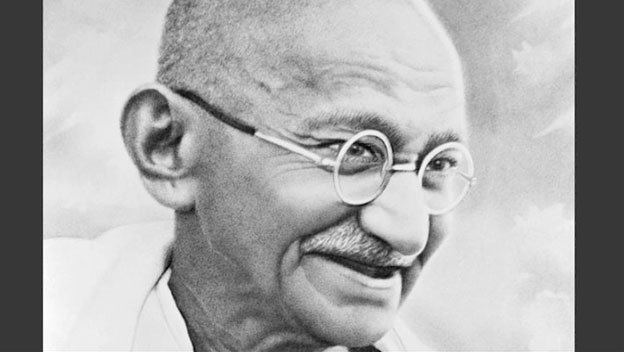


    Mohandas Karamchand Gandhi (/ˈɡɑːndi, ˈɡæn-/;[2] Hindustani: [ˈmoːɦənd̪aːs ˈkərəmtʃənd̪ ˈɡaːnd̪ʱi] ( listen); 2 October 1869 – 30 January 1948) was the preeminent leader of Indian independence movement in British-ruled India. Employing nonviolent civil disobedience, Gandhi led India to independence and inspired movements for civil rights and freedom across the world. The honorific Mahatma (Sanskrit: "high-souled", "venerable"[3])—applied to him first in 1914 in South Africa,[4]—is now used worldwide. He is also called Bapu (Gujarati: endearment for "father",[5] "papa"[5][6]) in India.

    Born and raised in a Hindu merchant caste family in coastal Gujarat, western India, and trained in law at the Inner Temple, London, Gandhi first employed nonviolent
    Last edited by Toramana; 02-02-2015, 08:14 PM.

  • #2
    Another giant of the freedom struggle. His book "India wins freedom" is an excellent book of the events leading to independence.


    Abul Kalam Azad


    Abul Kalam Muhiyuddin Ahmed Azad (Bengali: আবুল কালাম মুহিয়ুদ্দিন আহমেদ আজাদ, About this sound pronunciation (help·info); Urdu: ابو الکلام محی الدین احمد آزاد‎ Abul Kalam Azad; 11 November 1888 – 22 February 1958) was an Indian scholar and a senior political leader of the Indian independence movement. Following India's independence, he became the first Minister of Education in the Indian government. In 1992 he was posthumously awarded India's highest civilian award, the Bharat Ratna.[1] There is also a theory which suggests that earlier when he was offered Bharat Ratna he promptly declined it saying that it should not be given to those who have been on the selection committee. Later he was awarded posthumously in 1992. He is commonly remembered as Maulana Azad; the word Maulana is an honorific meaning 'learned man', and
    Last edited by Toramana; 02-02-2015, 08:12 PM.

    Comment


    • #3
      Another giant of Indian freedom movement and a great "Third World" leader. A statesman and a visionary, Nehru wrote marvelous books on Indian history. "Discovery of India" is the name of one book.


      Jawahirlal Nehru


      Jawaharlal Nehru (/ˈneɪruː, ˈnɛruː/;[5] Hindustani: [ˈdʒəʋaːɦərˈlaːl ˈneːɦru] ( listen); 14 November 1889 – 27 May 1964) was the first Prime Minister of India and a central figure in Indian politics for much of the 20th century. He emerged as the paramount leader of the Indian independence movement under the tutelage of Mahatma Gandhi and ruled India from its establishment as an independent nation in 1947 until his death in office in 1964. Nehru is considered to be the architect of the modern Indian nation-state: a sovereign, socialist, secular, and democratic republic.
      The son of Motilal Nehru, a prominent lawyer and nationalist statesman and Swaroop Rani, Nehru was a graduate of Trinity College, Cambridge and the Inner Temple, where he trained to be a barrister. Upon his return to India, he enrolled at the Allahabad High Court, and took an interest in national politics, which eventually replaced his legal practice. A committed nationalist since his teenage years, Nehru became a rising figure in Indian politics during the upheavals of the 1910s. He became the prominent leader of the left-wing factions of the Indian National Congress during the 1920s, and eventually of the entire Congress, with the tacit approval of his mentor, Gandhi. As Congress President in 1929, Nehru called for complete independence from the British Raj and instigated the Congress's decisive shift towards the left.
      Nehru and the Congress dominated Indian politics during the 1930s as the country moved towards independence. His idea of a secular nation-state was seemingly validated when the Congress, under his leadership, swept the 1937 provincial elections and formed the government in several provinces; on the other hand, the separatist Muslim League fared much poorer. But these achievements were seriously compromised in the aftermath of the Quit India Movement in 1942, which saw the British effectively crush the Congress as a political organisation. Nehru, who had reluctantly heeded Gandhi's call for immediate independence, for he had desired to support the Allied war effort during the Second World War, came out of a lengthy prison term to a much altered political landscape. The Muslim League under his old Congress colleague and now bête noire, Muhammad Ali Jinnah, had come to dominate Muslim politics in India. Negotiations between Nehru and Jinnah for power sharing failed and gave way to the independence and bloody partition of India in 1947.
      Nehru was elected by the Congress to assume office as independent India's first Prime Minister, although the question of leadership had been settled as far back as 1941, when Gandhi acknowledged Nehru as his political heir and successor. As Prime Minister, Nehru set out to realise his vision of India. The Constitution of India was enacted in 1950, after which he embarked on an ambitious program of economic, social and political reforms. Chiefly, he oversaw India's transition from a monarchy to a republic, while nurturing a plural, multi-party democracy. In foreign policy, Nehru took a leading role in Non-Alignment while projecting India as a regional hegemon in South Asia.
      Under Nehru's leadership, the Congress emerged as a catch-all party, dominating national and state-level politics and winning consecutive elections in 1951, 1957, and 1962. He remained popular with the people of India in spite of political troubles in his final years and failure of leadership during the 1962 Sino-Indian War. In India, his birthday is celebrated as Children's Day.
      Last edited by Toramana; 02-02-2015, 08:14 PM.

      Comment


      • #4
        A giant of the freedom movement a pacifist who continued to hold on to the principle of nonviolence till his last breath.
        Khan Abdul Ghaffar Khan (1889 -1988): "The tallest among the freedom fighters, Khan Abdul Ghaffar Khan, wielding neither power nor purse, was aptly described as "Frontier Gandhi". He was a noble embodiment of Gandhian values of non-possession and non-attachment. As a "Khudai Khidmatgar" he considered service of the people as service of god. In the pre-independence phase as well as post-freedom era, suffering was to him a badge of honor. He instilled among the Pathans of the north-west frontier the indomitable courage he possessed."


        Khan Abdul Ghaffar Khan


        Khān Abdul Ghaffār Khān (6 February 1890 – 20 January 1988) (Pashto: خان عبدالغفار خان‎), nicknamed as Bāchā Khān (Pashto: باچا خان, lit. "king of chiefs"), Pāchā Khān (پاچا خان), or Bādshāh Khān (بادشاه خان), was a Pashtun independence activist against the rule of the British Raj. He was a political and spiritual leader known for his nonviolent opposition, and a lifelong pacifist and devout Muslim.[1] A close friend of Mahatma Gandhi, Bacha Khan was nicknamed the "Frontier Gandhi" in British India.[2] Bacha Khan founded the Khudai Khidmatgar ("Servants of God") movement in 1929, whose success triggered a harsh crackdown by the British Empire against him and his supporters, and they suffered some of the most severe repression of the Indian independence movement.[3]
        Bacha Khan strongly opposed the All-India Muslim League's demand for the partition of India.[4][5] When the Indian National Congress declared its acceptance of the partition plan without consulting the Khudai Khidmatgar leaders, he felt very sad and told the Congress "you have thrown us to the wolves."[6] After partition, Bacha Khan pledged allegiance to Pakistan and demanded an autonomous "Pashtunistan" administrative unit within the country, but he was frequently arrested by the Pakistani government between 1948 and 1954. In 1956, he was again arrested for his opposition to the One Unit program, under which the government announced to merge the former provinces of West Punjab, Sindh, North-West Frontier Province, Chief Commissioner's Province of Balochistan, and Baluchistan States Union into one single polity of West Pakistan. Bacha Khan also spent much of the 1960s and 1970s either in jail or in exile. Upon his death in 1988 in Peshawar under house arrest, following his will, he was buried at his house in Jalalabad, Afghanistan. Tens of thousands of mourners attended his funeral, marching through the Khyber Pass from Peshawar to Jalalabad, although it was marred by two bomb explosions killing 15 people. Despite the heavy fighting at the time, both sides of the Soviet war in Afghanistan, the communist army and the mujahideen, declared a ceasefire to allow his burial.[7]

        Comment


        • #5
          A giant of the freedom struggle and a determined anti-imperialist. Shubhas made the famous great escape via Peshawar helped by Abbad Khan and Akber Shah Mian Badrashi author of "da azadai pa thalash"


          Subhas Chandra Bose


          Subhas Chandra Bose (About this sound listen (help·info); 23 January 1897 – 18 August 1945 (aged 48)[1]) was an Indian nationalist whose attempt during World War II to rid India of British rule with the help of Nazi Germany and Japan left a troubled legacy.[4][5][6] The honorific Netaji (Hindustani language: "Respected Leader"), first applied to Bose in Germany, by the Indian soldiers of the Indische Legion and by the German and Indian officials in the Special Bureau for India in Berlin, in early 1942, is now used widely throughout India.[7]
          Earlier, Bose had been a leader of t

          Comment

          Working...
          X