Announcement

Collapse
No announcement yet.

Bowe Bergdahl, U.S. soldier held in Afghanistan, freed in swap

Collapse
X
 
  • Filter
  • Time
  • Show
Clear All
new posts

  • Bowe Bergdahl, U.S. soldier held in Afghanistan, freed in swap

    Sgt. Bowe Bergdahl, the American soldier held captive for nearly five years by militants during the Afghanistan war, has been released, the White House said.


    Sgt. Bowe Bergdahl, the American soldier held captive for nearly five years by militants during the Afghanistan war, has been releasedin exchange for five Guantanamo detainees, authorities said Saturday...........

  • #2


    By The Associated Press
    May 31, 2014 - 7:52 pm EDT
    Statements by President Barack Obama and Bob and Jani Bergdahl on the release of Army Sgt. Bowe Bergdahl. They spoke Saturday in the Rose Garden (as provided by the White House):
    PRESIDENT BARACK OBAMA
    Good afternoon, everybody. This morning, I called Bob and Jani Bergdahl and told them that after nearly five years in captivity, their son, Bowe, is coming home.
    Sgt. Bergdahl has missed birthdays and holidays and the simple moments with family and friends, which all of us take for granted. But while Bowe was gone he was never forgotten. His parents thought about him and prayed for him every single day, as did his sister, Sky, who prayed for his safe return.
    He wasn't forgotten by his community in Idaho, or the military, which rallied to support the Bergdahls through thick and thin. And he wasn't forgotten by his country, because the United States of America does not ever leave our men and women in uniform behind.
    As commander in chief, I am proud of the service members who recovered Sergeant Bergdahl and brought him safely out of harm's way. As usual, they performed with extraordinary courage and professionalism, and they have made their nation proud.
    Right now, our top priority is making sure that Bowe gets the care and support that he needs and that he can be reunited with his family as soon as possible.
    I'm also grateful for the tireless work of our diplomats, and for the cooperation of the government of Qatar in helping to secure Bowe's release. We've worked for several years to achieve this goal, and earlier this week I was able to personally thank the emir of Qatar for his leadership in helping us get it done. As part of this effort, the United States is transferring five detainees from the prison in Guantanamo Bay to Qatar. The Qatari government has given us assurances that it will put in place measures to protect our national security.
    I also want to express gratitude to the Afghan government, which has always supported our efforts to secure Bowe's release. Going forward, the United States will continue to support an Afghan-led process of reconciliation, which could help secure a hard-earned peace within a sovereign and unified Afghanistan.

    Accompanied by President Barack Obama, Jani Bergdahl, and Bob Bergdahl speak during a news conference in the Rose Garden of the White House in Washington on Saturday, May 31, 2014 about the release of their son, U.S. Army Sgt. Bowe Bergdahl. Bergdahl, 28, had been held prisoner by the Taliban since June 30, 2009. He was handed over to U.S. special forces by the Taliban in exchange for the release of five Afghan detainees held by the United States. (AP Photo/Carolyn Kaster)

    As I said earlier this week, we're committed to winding down the war in Afghanistan, and we are committed to closing Gitmo. But we also made an ironclad commitment to bring our prisoners of war home. That's who we are as Americans. It's a profound obligation within our military, and today, at least in this instance, it's a promise we've been able to keep.
    I am mindful, though, that there are many troops who remain missing in the past. That's why we're never going to forget; we're never going to give up our search for service members who remain unaccounted for. We also remain deeply committed to securing the release of American citizens who are unjustly detained abroad and deserve to be reunited with their families, just like the Bergdahls soon will be.
    Bob and Jani, today families across America share in the joy that I know you feel. As a parent, I can't imagine the hardship that you guys have gone through. As president, I know that I speak for all Americans when I say we cannot wait for the moment when you are reunited and your son, Bowe, is back in your arms.
    So, with that, I'd like Bob to have an opportunity to say something, and Jani, if she'd like as well. Please.
    JANI BERGDAHL
    I just want to say thank you to everyone who has supported Bowe. He's had a wonderful team everywhere. We will continue to stay strong for Bowe while he recovers. Thank you.
    BOB BERGDAHL
    I'd like to say to Bowe right now, who is having trouble speaking English — (speaks in Pashto) — I'm your father, Bowe.
    To the people of Afghanistan, the same — (speaks in Pashto) — the complicated nature of this recovery was — will never really be comprehended. To each and every single one who effected this, in this country, in the service branches, at the State Department, throughout the whole of American government, and around the world, international governments around the world, thank you so much. We just can't communicate the words this morning when we heard from the president.
    So we look forward to continuing the recovery of our son, which is going to be a considerable task for our family. And we hope that the media will understand that that will keep us very preoccupied in the coming days and weeks as he gets back home to the United States.
    Thank you all for being here very much.

    Comment


    • #3
      Taliban-held U.S. soldier released in exchange for Afghan detainees


      Taliban-held U.S. soldier released in exchange for Afghan detainees


      Video: Army Sgt. Bowe Bergdahl, the only American soldier held prisoner in Afghanistan, was freed Saturday in exchange for the release of five Afghan detainees at Guantanamo Bay.


      By Ernesto Londoño,


      U.S. Army Sgt. Bowe Bergdahl, the only U.S. service member known to be held hostage in Afghanistan, was handed over Saturday morning by members of the Taliban in exchange for five Afghan detainees held at the military prison in Guantanamo Bay, Cuba, U.S. officials said.
      The deal was brokered by the government of Qatar, which has agreed to host the five Taliban inmates in the Gulf emirate for at least one year. The men were en route to Qatar aboard a U.S. military aircraft as of early Saturday afternoon, a defense official said, speaking on the condition of anonymity. They were being accompanied by representatives of the Qatari government.


      After the soldier was aboard a helicopter, he grabbed a paper plate and wrote the letters “SF?” to inquire whether the troops he was with were Special Forces, a senior Defense Department official said.
      “Yes,” one of the members of the team responded. “We’ve been looking for you for a long time.”
      Bergdahl broke down in tears.
      In an appearance Saturday evening in the Rose Garden with Bergdahl’s parents, President Obama said the United States had worked for “several years” to obtain Bergdahl’s release, and thanked Qatar for its assistance.
      “He wasn't forgotten by his country because the United States of America does not ever leave our men and women in uniform behind,” Obama said. “Right now, our top priority is making sure Bowe gets the care and support he needs”
      Recovering Bergdahl had become an increasingly urgent priority for the U.S. military as the imminent end of the U.S. combat mission in Afghanistan, scheduled for December, dimmed the prospects of his freedom.
      “It is our ethos that we never leave a fallen comrade,” Gen. Martin E. Dempsey, the chairman of the Joint Chiefs of Staff, said in a statement. “Today we have back in our ranks the only remaining captured soldier from our conflicts in Iraq and Afghanistan. Welcome home Sgt. Bowe Bergdahl.”
      Washington and Doha signed a memorandum of understanding recently spelling out the terms under which the Afghan inmates would be released. The men will remain in Doha for at least a year, but it was not clear what travel or movement restrictions they might face beyond that.
      “The United States has coordinated closely with Qatar to ensure that security measures are in place and the national security of the United States will not be compromised,” Defense Secretary Chuck Hagel said in a statement. “Sgt. Bergdahl’s return is a powerful reminder of the enduring, sacred commitment our nation makes to all those who serve in uniform.”
      Hagel informed members of Congress on Saturday about the prisoner swap deal. The administration is required by law to notify Congress about its intention to release Guantanamo detainees in advance.
      “Due to a near-term opportunity to save Sergeant Bergdahl’s life, we moved as quickly as possible,” a senior administration official said, speaking on the condition of anonymity to explain the timing of the congressional notification. “The administration determined that given these unique and exigent circumstances, such a transfer should go forward notwithstanding the notice requirement” in the law.
      The prisoner swap deal, which the Obama administration has pursued for several years, began gaining traction last fall after members of the Taliban indicated they were amenable to negotiating on that narrow issue, but through intermediaries.
      Earlier this year, the administration sought to enhance the American offer of a prisoner exchange by proposing to release the five men simultaneously. Taliban representatives had objected to the previous proposed plan, under which the inmates would be turned over in stages in an effort to test whether the Taliban and the Qatari intermediaries could guarantee that the men would not return to militancy.
      Among the released inmates is Mullah Mohammad Fazl, a former Taliban deputy defense minister who arrived in Guantanamo on Jan. 11, 2002, along with the first wave of inmates imprisoned there. The others are Mohammad Nabi Omari, Khirullah Said Wali Khairkhwa, Mullah Norullah Noori and Abdul Haq Wasiq.
      Bergdahl, who was believed to be in the custody of the Haqqani network, a hard-line faction of the Taliban, was handed over peacefully to a team of Special Operations troops in an unspecified location in Afghanistan, U.S. officials said.
      The soldier, who went missing after walking off his base in June 2009, appeared to be in relatively good health and was walking when U.S. troops swooped down in helicopters to meet his captors.
      U.S. officials said they are hopeful this step could open the door for the resumption of peace talks between the Taliban and the Afghan government, but they cautioned that the militant group has not indicated it is willing to engage in broader negotiations.
      In Bergdahl’s hometown of Hailey, Idaho, there was jubilation Saturday. Residents had been planning a June 28 concert to call attention to his plight. They were expecting up to 7,000 people to attend, and singer Carole King was going to perform for free.
      The concert will go on, said organizer Stefanie O’Neill, but it is now going to be “the biggest welcome-home party the country has ever seen.”

      Karen DeYoung, traveling in Asia with Defense Secretary Chuck Hagel, and Anne Gearan and Julie Tate in Washington contributed to this report.

      Comment


      • #4
        This is a good trust building measure which should bode well for peace talks.
        There are people today who think that admitting God’s absolute greatness decreases the value and importance of humans in the creation, as if God and mankind are rivals competing in greatness and power. Meanwhile I feel that whenever our perception of God’s greatness increases, with it we become greater, because we are the creation of a great God.

        Sayyid Qutb

        Comment


        • #5
          This is like Showtimes "Homeland". I wonder if Bowe is a Muslim now for being around them daily for years. I'm sure his time served is different than Gitmo prisoners in every way, shape and form.

          Comment


          • #6
            Originally posted by کیش View Post
            This is like Showtimes "Homeland". I wonder if Bowe is a Muslim now for being around them daily for years. I'm sure his time served is different than Gitmo prisoners in every way, shape and form.
            I got a white friend that's a marine that served with him. From what my friend told me, the guy was anti-social. He walked off the base to the taliban to wage war on his own people.

            He was not a stable guy and has psychotic issues.

            Comment


            • #7
              Originally posted by Pakwatan View Post
              I got a white friend that's a marine that served with him. From what my friend told me, the guy was anti-social. He walked off the base to the taliban to wage war on his own people.

              He was not a stable guy and has psychotic issues.
              your white friend is a loser in the making. ask why then did he leave his weapon if he was going to wage war on his own people. just because he turned against the war, they are turning him into a terrorist supporter.

              Comment


              • #8
                Taliban prisoner swap makes sense

                http://www.cnn.com/2014/06/05/opinio...bergdahl-deal/

                Taliban prisoner swap makes sense

                By Anand Gopal
                updated 4:01 PM EDT, Thu June 5, 2014

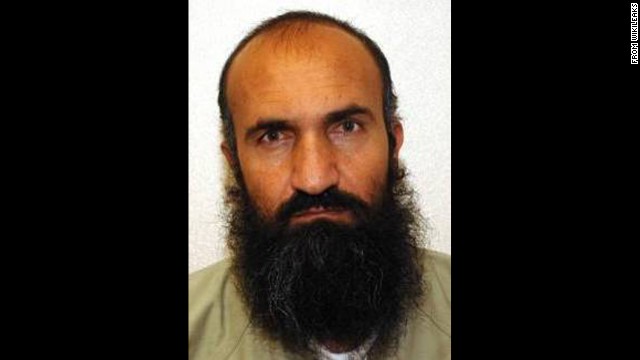
                .cnn_html_slideshow_metadata > .cnn_html_media_utility::before{color:red;content: '>>';font-size:9px;line-height:12px;padding-right:1px} .cnnstrylccimg640{margin:0 27px 14px 0} .captionText{filter:alpha(opacity=100);opacity:1} .cnn_html_slideshow_media_caption a,.cnn_html_slideshow_media_caption a:visited,.cnn_html_slideshow_media_caption a:link,.captionText a,.captionText a:visited,.captiontext a:link{color:#004276;outline:medium none} .cnnVerticalGalleryPhoto{margin:0 auto;padding-right:68px;width:270px} These are photos, obtained by WikiLeaks that match the names of the detainees released by the Department of Defense. The Department of Defense would neither confirm nor deny their accuracy. Khair Ulla Said Wali Khairkhwa was an early member of the Taliban in 1994 and was interior minister during the Taliban's rule. He was arrested in Pakistan and was transferred to Guantanamo in May 2002. During questioning, Khairkhwa denied all knowledge of extremist activities.

                Mullah Mohammad Fazl commanded the main force fighting the U.S.-backed Northern Alliance in 2001, and served as chief of army staff under the Taliban regime. Fazl was detained after surrendering to Abdul Rashid Dostam, the leader of Afghanistan's Uzbek community, in November 2001. He was transferred into U.S. custody in December 2001 and was one of the first arrivals at Guantanamo, where he was assessed as having high intelligence value.

                Mullah Norullah Noori served as governor of Balkh province in the Taliban regime and played some role in coordinating the fight against the Northern Alliance. Like Fazl, Noori was detained after surrendering to Dostam, the Uzbek leader, in 2001.

                Abdul Haq Wasiq was the deputy chief of the Taliban regime's intelligence service. Wasiq claimed, according to an administrative review, that he was arrested while trying to help the United States locate senior Taliban figures. He denied any links to militant groups
                .
                Mohammad Nabi Omari was a minor Taliban official in Khost Province and was the Taliban's chief of communications and helped al Qaeda members escape from Afghanistan to Pakistan. He also said that he had worked with a U.S. operative named Mark to try to track down Taliban leader Mullah Omar.


                5 Taliban leaders are released in a deal to trade for POW Sgt. Bowe Bergdahl
                • Anand Gopal: Three of the five had joined or tried to join the Afghan government
                • He says the notion of "terrorist" is remarkably fluid in the context of Afghan politics
                • Gopal: Prisoner swap could be a step toward a negotiated settlement


                Editor's note: Anand Gopal is a Bernard L. Schwartz Fellow at the New America Foundation and author of "No Good Men Among the Living: America, the Taliban, and the War Through Afghan Eyes." The opinions expressed in this commentary are solely those of the author.

                (CNN) -- Early in 2002, shortly after the U.S. overthrow of the Taliban regime, Taliban leader Khairullah Khairkhwa phoned Afghan President Hamid Karzai asking for a job. As a member of the same tribe, he had known the Karzai family for years, and was hoping to use this link to switch allegiances to the new U.S.-backed Afghan government, a move typical of the twists and turns of the country's 30 years of war. Karzai promised to help, and referred Khairkhwa to his brother Ahmed Wali Karzai, a close CIA ally based in Kandahar province.

                Ahmed Wali Karzai agreed to send a representative to meet Khairkhwa in Pakistan. But before this could transpire, a rival Taliban figure alerted the Pakistani border police to Khairkhwa's presence. He was arrested, handed over to the Americans, and sent to Guantanamo.

                Khairkhwa is one of the five Taliban leaders who were released from Guantanamo over the weekend in a deal for Sgt. Bowe Berghdahl, the lone American POW in Iraq and Afghanistan.
                Anand Gopal


                I learned of Khairkhwa's story, which is corroborated in his Guantanamo detainee files, from interviews with the late Ahmed Wali Karzai and other Afghan government officials.

                In fact, all five of the swapped prisoners were initially captured while trying to cut deals, and like Khairkhwa, three had been attempting to join, or had already joined, the Afghan government at the time of their arrest.
                This history shows that the categories we take as rigid and unchanging, such as "terrorist," are in fact remarkably fluid in the context of Afghan politics. Uncovering the stories of these men tells us much about Guantanamo, the Taliban, and the possibility of a negotiated end to the conflict.


                Bergdahl swap from mouth of the Taliban


                Secret Bowe Bergdahl report made public

                Mohammad Nabi Omari, the most junior ranking of the five, was a small-time commander linked to pro-Taliban strongman Jalaluddin Haqqani in the 1990s. After 2001, he was among the many Haqqani followers who switched allegiances to the Karzai government. Malem Jan, another ex-Haqqani commander who switched sides, remembers him vividly. "Omari was angry with the Taliban for throwing the country away (for Osama bin Laden)," he said in a 2010 interview. "He would sit there and tell me, 'if I see a Talib, I won't even let him take a piss, I'm going to turn him in.'"
                Malem Jan, Omari, and other former Haqqani commanders began working for the CIA. In his Guantanamo file, Omari describes dealing with an American named "Mark." "We worked for the Americans," Malem Jan recalls. "We met them regularly to get instructions and give intelligence."
                In those days, the United States was handing out money freely for such intelligence, which inadvertently provided incentive for bogus accusations. Some Afghan officials in Khost allege that Omari reaped profits from falsely accusing others of al Qaeda membership. If so, he certainly accrued enemies, and in September 2002, he, too, was accused of insurgent membership by rival warlords and politicians, despite being publicly aligned with the Karzai government. "He was on our side," said Malem Jan, who now lives in Kabul. "And then all of a sudden, he was in Guantanamo."

                In October 2001, Abdul Haq Wasiq, another of the five, traveled to Ghazni province for a clandestine meeting with the CIA and Afghan warlords in an attempt to strike a deal. Wasiq worked with the Taliban's spy agency, and he was negotiating on behalf of his boss, according to the memoir of Harry Crumpton, then deputy chief of operations at the CIA's Counterterrorism Center. The CIA, however, was not interested in reconciliation, only in intelligence leading to bin Laden or other top al Qaeda figures. Wasiq could not deliver this because he, like most Taliban members, did not actually have access to the Arabs. So the American team bound and gagged Wasiq and his companion, eventually shipping them to Guantanamo.

                The six soldiers at center of Bergdahl debate
                Of the five, only Mullah Mohammad Fazl and Mullah Norullah Noori were significant military commanders. In November 2001, as their movement was collapsing around them, they surrendered, along with their foot soldiers, to the U.S.-backed warlord Abdul Rashid Dostum. (Fazl is a notorious human rights violator, as is Dostum).

                Years earlier, Fazl had helped Dostum escape a precarious battlefield situation, and he engineered the deal in the hopes of having the favor returned. But Dostum sold them to the Americans and massacred hundreds—some sources say thousands—of their foot soldiers and conscripts by suffocating them in shipping containers.

                Instead of being recalcitrant terrorists bent on fighting America, this history indicates that all five can make pragmatic deals if the conditions are right. Does this mean they won't pose a threat upon their release?

                How big a terror risk are former Guantanamo prisoners?
                It's difficult to say; two Taliban commanders who surrendered to Dostum alongside Fazl and Noori were also sent to Guantanamo. Upon their release in 2007, they quickly joined the insurgency and rose to its top ranks. Ghulam Rohani, who was arrested with Wasiq, has rejoined the fight since his release that same year. On the other hand, other Taliban leaders have successfully returned to civilian life after their Guantanamo release, including Taliban Ambassador Mullah Abdul Salam Zaeef, Commerce Minister Mullah Abdul Razak, and Gov. Naim Kuchi.

                What is clear, though, is that with the ongoing turnover of the Taliban's mid- and senior-level leadership in recent years, the arrival of a few individuals to Qatar is unlikely to make a significant impact on the battlefield in Afghanistan.

                Who was swapped for Bergdahl?
                So, the cost of the prisoner swap may be low, but the potential payoff is high. In a country that has seen few openings for peace in the last decade, this could mark the first tangible step toward a negotiated settlement.
                There is little trust, understandably, between the Taliban and the United States, and in this vein the mutual release of prisoners could be a confidence building measure. To be sure, a grand deal may never come—there are many divergent interests within the Taliban, their patrons in Pakistan, and Afghan society at large. But when endless war is the only alternative, even the most difficult paths are worth pursuing.

                Comment


                • #9
                  So with the information in the above article what I see is that the 5 Taliban prisoners that were released were greeted with hugs and kisses while the American prisoner is being greeted with hate and criminal charges.

                  just because the guy turned against the war, therefore he is a criminal.

                  Comment


                  • #10
                    Originally posted by khushal View Post
                    So with the information in the above article what I see is that the 5 Taliban prisoners that were released were greeted with hugs and kisses while the American prisoner is being greeted with hate and criminal charges.

                    just because the guy turned against the war, therefore he is a criminal.
                    Only some right wing pundits/newspapers are making it seem as if there is a public uproar. Majority of Americans in fact do not care one way or the other.

                    The polls conducted are highly biased. The HuffPost poll shows 40 % for Bergdahl release and 43% against is not a significant. Its evenly split, assuming the poll is accurate which it is not.
                    Last edited by Shah-i-Kot; 06-09-2014, 10:15 PM.

                    Comment

                    Working...
                    X