Announcement

Collapse
No announcement yet.

Indonesia focus

Collapse
X
 
  • Filter
  • Time
  • Show
Clear All
new posts

  • Indonesia focus

    NEWS & IMAGES OF THE WORLD'S BIGGEST MUSLIM COUNTRY.


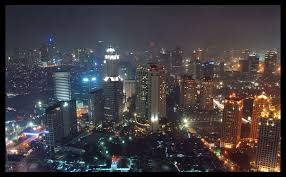
    Jakarta.


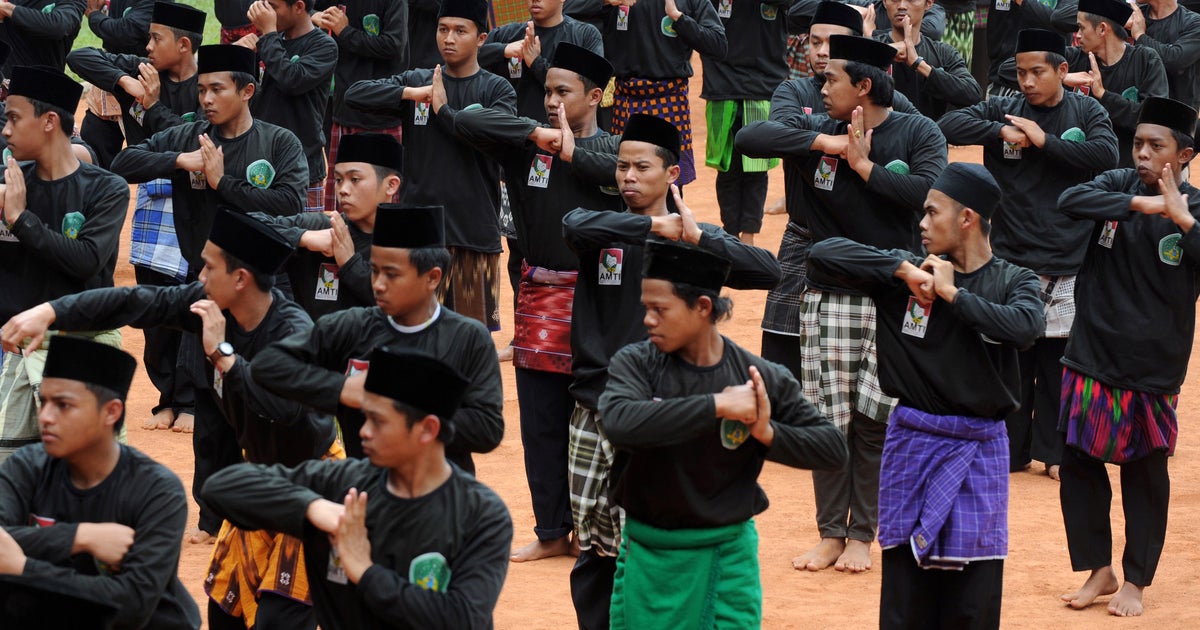
    - BIGGEST MUSLIM COUNTRY IN THE WORLD.

    - BIGGEST AND RICHEST MUSLIM ECONOMY IN THE WORLD.

    - 4TH BIGGEST COUNTRY ON EARTH (POPULATION).

    - 3RD BIGGEST COUNTRY IN ASIA (POPULATION)

    - BIGGEST COUNTRY AND "LEADER" OF ASEAN, BLOC OF 0.6 BILLION PEOPLE.


    * * * * * * * * *


    RI wants to be one of UNs
    biggest troop contributors


    The government expects the Indonesian Military (TNI) to provide more personnel to join United Nations peacekeeping forces, so that Indonesia can become one of the top-10 largest UN troop contributors.

    “Indonesia now ranks 17th, with 1,815 personnel,” President Susilo Bambang Yudhoyono said in Jakarta on Wednesday as quoted by Antara news agency.

    He said Indonesia could achieve its target as one of the biggest UN troop contributors within a short period.

    To that end, he said, Indonesia must provide more than 4,000 personnel to join UN peacekeeping forces. That was why during his two terms between 2004 and 2014, there was an almost 400-percent increase in the military budget and almost a four-fold increase in spending on the National Police and public security guards (Kamtibmas).

    Based on UN data, Bangladesh tops the list of 10 countries, providing 8,316 personnel. Pakistan ranks second with 8,250 personnel, followed by India (7,848), Ethiopia (6,534), and Nigeria (4,949).

    Other countries are Rwanda with 4,683 personnel, followed by Nepal (4,553), Jordan (3,381), Ghana (2,907) and Egypt (2,865). (idb/ebf)

    The government expects the Indonesian Military (TNI) to provide more personnel to join United Nations peacekeeping forces, so that Indonesia can become one of the top-10 largest UN troop contributors
    * * * * * * * * * * * * * * * * * * * * * * *

  • #2
    Salary row derails Saudi-Indonesian talks

    Last updated: Tuesday, May 20, 2014 8:34 PM

    Saudi Gazette report


    RIYADH — A source in the Saudi Council of Chambers (SCC) said a meeting held on Monday between members of the Saudi national recruitment committee and a delegation from the Indonesian industrial union has failed due to differences over wages.

    The source noted the Indonesian side had demanded salaries of at least SR1,900 a month for its workers and the Saudi side rejected the stipulation.

    The source said: “The Indonesian side has asked for a SR1,500 monthly salary in addition to SR400 for working on Fridays, clear exploitation by the Indonesians.

    “The Saudi side instead offered a SR1,000 monthly salary, in addition to SR200 for working on Fridays.”

    The source noted the Saudi side could not accept the Indonesians’ demand and that visas from Indonesia should not be issued unless a salary agreement is reached.

    Investor in the recruitment sector, Faisal Al-Harandahah, said the high salaries demanded by the Indonesians are an exploitation of Saudi citizens and there are alternative countries that export workers to the Kingdom such as the Philippines, Sri Lanka, Morocco and soon India.

    He added that the concerned authorities should be strict with such exploitation of Saudi citizens and such demands should not be met.

    Al-Harandahah stressed Indonesians are the biggest losers since Saudi Arabia is the largest market for recruiting labor.

    The delegation arrived in Riyadh at the beginning of this week to discuss the agreement signed with the Kingdom in February for the recruitment of Indonesian workers.

    The Ministry of Labor has signed agreements with three countries for the recruitment of workers, while 14 other countries have expressed their preliminary acceptance to export workers to the Kingdom.

    Earlier this week, Saudi Gazette quoted Deputy Minister of Labor Dr. Mufarrej Al-Huqbani as saying that the labor contract with India will encourage other Asian and African countries to enter into bilateral agreements on the recruitment of domestic helpers.

    Addressing the third annual meeting of ambassadors and labor representatives for countries sending workers to the Kingdom, Al-Huqbani said the arrival of Indian workers to the Kingdom is drawing near. This is the evidence of the effectiveness of the bilateral agreement with countries sending workers to the Kingdom, he was quoted as saying.

    Saudi Arabia and India signed the bilateral agreement on labor cooperation for domestic workers’ recruitment in New Delhi in January this year.


    - Well done to Indonesia for standing up to these barbaric Saudi thugs and bullies.

    Indonesia has shown the Saudi regime it cannot be bullied and pushed around and that it's people are not cheap.


    Only today the media covered a story of a Filipino women tortured by Saudis:


    Comments:

    Vegalante, Oxford, United Kingdom, 48 minutes ago

    They treated her like a slave, some people are true evil. Hope someone helps her out of there


    worldmaster, London, United Kingdom, 53 minutes ago

    this is why id never set foot in suadi


    Stardrop, Somewhere, United Kingdom, 1 hour ago

    Monsters.


    med4kmd, Chicago, United States, 1 hour ago

    Absolutely no one deserves to be burned on purpose for any reason. I pray this lady will heal completely from her horrific injuries and experience and find peace,love, health,and a good job with a living wage.


    Toughtask, Birmingham, United Kingdom, 1 hour ago

    The Saudis are the most arrogant, vile and vicious people.They are known worldwide for the brutality and humiliations they dish out to foreign workers who they treat as slaves. 5 minutes on the internet can unearth some horrific examples.
    * * * * * * * * * * * * * * * * * * * * * * *

    Comment


    • #3
      Comments from the Arab news:


      erico • 2 days ago

      This is the sole reason why ethiopians took the matter in their own hands. Domestic work visas to saudia should be completely banned by the philippines. Try importing from nigeria this time.


      aamir • 2 days ago

      It's unfortunate that some Saudi women are uneducated uncivilised and barbaric.


      Saiqa • 2 days ago

      Horrible, inhumane, barbaric! They need imprisonment!!! Justice must be served!!!


      sami • 2 days ago

      this is called slavery...


      Amir • 2 days ago

      Have you forgotten God ?????? ................Are you not afraid of Allah (SWT), that one day you have to face Allah (SWT) & you will be answerable to the crimes you are doing on your maids & workers .................. what are you people doing with your workers ............. Shame on you people ............ This is utterly AGAINST ISLAM.......... People like these will create a very bad image of ISLAM ........ People start thinking negative about Islam ......... but the reality is that our Prophet Mohammed (PBUH) is that he taught us not only to be merciful to the humans but also to the plants & animals. He never in his life beat his own servant, instead he adopted him (Zaid RA) as his son. He instead encouraged liberating of bonded slaves in exchange of expatiation of so many sins.......... but now what you are doing is just reverse of his teaching ....... instead of liberating a bonded slave, you started imagining that the worker or maid is your bonded slave and started treating them worst than what is expected even of a bonded slave ......... shame ......... stop at once such kind of behavior. ............ those who see this kind of treatment & keep quite are also part of this grave sin. Hence voice your concern.


      davd • 2 days ago

      this is barbaric behavior of the employer, they must be legally punished with prison terms and financial damagers to the maid the employer not less than 1/2 million riyals to set an example for others


      Rameez Sehgal AvidReaderKnowledgeSeeker111 • 14 hours ago

      Donations?? Are you sure?

      Let's ARREST and SUE her SAUDI employer first. Let's make that Saudi Employer pay for all her medical expenses, her salary and expenses for traveling back to home - plus financial and criminal charges for treating a worker in this barbaric way.

      Avid Reader. Dont just seek knowledge, apply some knowledge too. Its a common sense. Workers in your home are not animals. Even animals are supposed to be treated with kindness. This was a human being.

      Your concerns about the originality of the picture, intentions of the picture taker are all really very disgusting. You want to charge the doctor because he allowed someone to take the picture, but you dont want to charge the Saudi Employer who beat this woman.

      I feel sorry for the sick state of mind you have.


      Ali • 2 days ago

      This is crazy! So inhuman act, or just another daily routine of saudis.


      Saq • 10 hours ago

      No matter if the Saudi Authorities dont react to it but on the day of judgement Allah (SWT) will definately do justice with this women and all those who are victims of such incidents. I pray to Allah (Swt) to help this women and her family...


      Dr. Shamim A. Hassan • 19 hours ago

      How could you do such a horrible thing to a human being. Legal action must be taken against the employer, and the poor lady compensated for her suffering.


      Ad • a day ago

      Only a wild animal could do this to a human being.....


      Proud to be Pinoy • 2 days ago

      Saudi Arabia is known as HOLY Land for all Muslims and also considered as very conservative culture. Saudis are praying 5 times daily but why there are so many Saudis abusing expats especially those who are domestic helpers. This might be the reason why there is NO Saudi maids because they know the real attitude of their own. There are so many crimes that are not shown in the public. crimes that Saudi did in their maids. Is this what they learned from Holy Quran and praying 5 times a day???!!! I dont think so because Holy Quran is teaching Good Morals that other Saudis o Muslims to be followed. Hope that Saudi Government must do some actions on this kind of abusing employers. Expats cannot complained because most of them doesnt speak Arabic but the worst thing is that Saudis who is normally getting foreign workers must learned who to speak English as this is considered the International Language.

      The Saudi Government should start a program to teach their citizens on how to speak in English especially in the Public Sectors like Police, immigration Officers, and other services. In this way all communications can be done easily.


      Saba • 2 days ago

      Those who are responsible should be punished severely and there should be some organization set up to look after or have follow up with how maids are managed all over in Ksa by their sponsors.


      inhumane • 2 days ago

      barbaric !
      * * * * * * * * * * * * * * * * * * * * * * *

      Comment


      • #4
        Indonesia is the most populous Islamic country in the world.

        That means, Indonesia is ahead of Saudi Arabia in Islamic influence.

        Comment


        • #5
          Indonesia to start work on world's biggest geothermal plant in June

          JAKARTA Wed May 28, 2014 5:26am EDT


          May 28 (Reuters) - Indonesia will begin construction next month of its long-delayed $1.6-billion Sarulla project, the world's biggest geothermal power plant, the country's chief economic minister said on Wednesday.

          Southeast Asia's largest economy, home to the world's largest geothermal resources, is racing to meet power demand growth of more than 7 percent a year, with plans to add 60 gigawatts of capacity to its existing grid by 2022.

          But the sector has struggled to attract investment because of complex regulations and difficulties securing project finance. A government plan to derive 12 percent of the country's energy mix from geothermal power by 2025 seems unrealistic.

          "The Sarulla groundbreaking will be very soon," Coordinating Economic Minister Chairul Tanjung told reporters, adding that the project had reached financial closing and the government expected construction to begin next month.

          He declined to give further details.

          The project was originally initiated in 1990 but ground to a halt during the Asian financial crisis in 1997. Its first phase is expected to begin operation in 2016, with the next two phases to follow within 18 months of the first phase.

          The 330-MW Sarulla project is envisioned to provide clean power to an Indonesian grid dominated by fossil-fuel energy. Sarulla is expected to reduce 1.3 million tonnes of carbon dioxide emissions a year when completed in 2018.

          The financing of the project has been heralded as a breakthrough for Indonesia's largely undeveloped 29 gigawatts of geothermal potential.

          The banks involved in the financing are the Japan Bank for International Cooperation (JBIC) and the Asian Development Bank (ADB) along with Bank of Tokyo-Mitsubishi UFJ Ltd, ING Bank NV (a unit of ING Groep NV ), Societe Generale, Sumitomo Mitsui Banking Corportation, Mizuho Bank Ltd and National Australia Bank Ltd.

          The project is sponsored by Itochu Corporation (25 percent), Kyushu Electric Power Company (25 percent), PT Medco Power Indonesia (37.5 percent), a unit of Medco Energi Internasional and Ormat International, a unit of Ormat Technologies Inc (12.5 percent).

          The Sarulla plant's recent financial close makes it Indonesia's first geothermal project to gain financing since Star Energy's 227-MW Wayang Windu plant commenced in 1997.

          * * * * * * * * * * * * * * * * * * * * * * *

          Comment


          • #6
            Indonesia’s African Outreach


            A newly defined African presence could give Indonesia greater political and economic clout on the global stage.

            By Istvan Tarrosy

            May 27, 2014

            Since the fall of the Suharto dictatorship in 1998, Indonesia has had an impressive rise in world politics. As the largest economy in Southeast Asia and the fourth largest population in the world, with more than 248 million people in 2012, the country had often made its voice heard, particularly on issues connected with the former Third World, today known as the Global South.

            Of course, Indonesia has been a leading actor in the developing world since the 1955 conference of twenty-nine nations of Asia and Africa, the First Asia-Africa Conference held in the city of Bandung. But since 2001, Indonesia has consistently achieved GDP growth in excess of 5 percent, which “is forecast to dip slightly in 2014 before recovering next year,” according to the Asian Development Bank. In a regional context, as Abdul-Latif Halimi states, Indonesia’s rise will be “very significant, even if gradual.” Certainly, Indonesia’s growing presence will have implications for many countries nearby, including China, whose regional hegemony will surely be challenged. The Natuna Islands in the South China Sea are one possible flashpoint. Surrounded by a gas-rich seabed, the islands lie between China’s nine-dash line and Indonesia’s Exclusive Economic Zone, and could be a source of future tensions.

            In an interregional context, the Indonesian government is seeking to bolster relations with Africa. It is worth looking at business interest in entering (or reentering, in some cases) African markets. An interview with the Indonesian Ambassador to Senegal, HE Andradjati, revealed that a number of Indonesian companies have approached the embassy in Dakar in the past two years. Many ventures took part in the annual International Trade Fair/Foire Internationale de Dakar (FIDAK). Another group of companies participated in the Trade Mission to Senegal and The Gambia organized by the Ministry of Trade of Indonesia in cooperation with the embassy. Yet another group visited Senegal, Sierra Leone and Guinea (Conakry) seeking to open up markets in these countries. “Although it is still below full potential there has been an increase in Indonesian private sector interest in doing business with Africa,” says Andradjati.

            Indonesia’s turn towards Africa is part of Jakarta’s assertive and pragmatic foreign policy, which since the early 2000s has been focusing on building a political and security community within the Association of Southeast Asian Nations (ASEAN) and also tightening links with the U.S., India, Australia, Russia, as well as other emerging countries. Indonesia is also a member of the G20.

            In fact, Indonesia’s rising global profile is also evident in the new numeronyms and acronyms created in the last couple of years: PricewaterhouseCoopers, for instance, coined “E7,” representing the world’s seven major emerging countries: China, India, Brazil, Mexico, Russia, Indonesia and Turkey. Goldman Sachs speaks of the “N-11” (Next Eleven), referring to Bangladesh, Egypt, Indonesia, Iran, Mexico, Nigeria, Pakistan, the Philippines, Turkey, South Korea and Vietnam, as the emerging countries with the potential to join the club of the largest economies over the course of the 21st century. This N-11 can be compared to CIVETS, coined by the Economist Intelligence Unit, which lists Colombia, Indonesia, Vietnam, Egypt, Turkey and South Africa on the same grounds. All include Indonesia, a nod to its size and potential.

            As Karen Brooks points out in her excellent 2011 article in Foreign Affairs: “the real driver of the country’s recent economic growth has been the Indonesian consumer, with consumption accounting for roughly 60 percent of GDP.” It is not surprising, then, that the private sector concentrates on the country’s internal market and on expanding in Asia. Africa still seems rather distant these Indonesia’s entrepreneurs.

            The government, however, wants market diversification, and is targeting several African countries with “non-oil-and-gas products,” according to the Jakarta Post. According to Andradjati, Indonesian businesses are competitive in Africa, able to compete with other Asian actors. “One of the strengths of Indonesian players is the quality of their products,” which include palm oil and associated products, textiles, footwear, cars and automotive components, and electronics. According to Statistics Indonesia (BPS), major African trading partners for Indonesia in 2011 were South Africa, Nigeria, Egypt, Algeria and Tanzania, while trade with Madagascar, Kenya, Benin, Angola and Ghana was growing.

            Beyond bilateral agreements, a regional approach can be detected in Indonesia’s actions. Apart from the Southern African Development Community (SADC) and the East African Community (EAC), the Economic Community of West African States (ECOWAS) offers abundant opportunities to boost trade with Africa. There have been some recent developments, as Andradjati mentions, which can support these efforts. “The establishment of the Joint Commission of Bilateral Cooperation (JCBC) between the government of the Republic of Indonesia and the Republic of The Gambia is a good example in this respect. Follow up actions from the JCBC meeting took place in Jakarta in March 2014 in the areas of agriculture, education, health, trade and technical cooperation. The government of Indonesia has donated hand tractors to the governments of Senegal and The Gambia to support the mechanization of agricultural sectors in these countries. The same developments are now being processed as well with other West African countries.”

            In bilateral trade, the win-win strategy for Indonesia and ECOWAS countries is to create direct trade relationships. It will also be essential to oversee the financial export guarantee schemes and incentives, as well, according to Professor Georges Suha, former Gambian ambassador to UNIDO and currently dean of the Hong Kong-based Alfred Nobel Open Business School. Suha emphasized in an interview that, “Indonesia recognizes Senegal’s potential as its entrance to West African markets. The biggest trophy of this penetration is the Senegalese intention of buying two CN-235-220 planes from state aircraft manufacturer PT Dirgantara Indonesia.” Also worth noting, in 2012 West Africa attracted the largest FDI volumes of any African region, estimated at USD15.1 billion, driven mostly by demand for resources, as reported by the African Economic Outlook 2013.

            Indonesia’s legislative elections in April resulted in a win for the main opposition party (Indonesian Democratic Party of Struggle – PDI-P), as expected. Notes Oliver Oehms, senior economic advisor on trade and investment at the Indonesian Chamber of Commerce: “The elections [and later on the presidential election in July 2014] will not harm businesses but can help to change the perspective of Indonesia. The country does not fully use its export potential and the trade pattern that has been characterizing Indonesia for five years has not really changed.” Greater political commitment could contribute to more trade beyond Asia, too.

            Stronger cooperation with Africa would give Indonesia a greater role, not only on the African continent but in the rapidly changing context of Afro-Asian relations. Seeking ways to boost trade, assisting African countries in different forms along the lines of the “Bandung solidarity,” and pursuing a pragmatic foreign policy under a new president could all result in an even more powerful and assertive Indonesia, one that may even warrant inclusion in the BRICS, perhaps as a replacement for Russia in a new BIICS group. As economist Nouriel Roubini argued, “from an American perspective, Indonesia is an attractive alternative to Russia.” In any case, the addition of Indonesia would obviously redefine the BRICS, but it would also bolster its claim to be the most important interregional grouping in the Global South.


            Istvan Tarrosy is co-editor of The African State in a Changing Global Context. Breakdowns and Transformations (Berlin, 2010), and is Assistant Professor of Political Science at the University of Pecs, Hungary. He was Fulbright Visiting Research Fellow at the Center for African Studies, University of Florida in 2013, early 2014.


            Indonesia's CN-235-220 plane.


            An Indonesian CN-235-220 plane bought and used by the Portuguese.
            Last edited by Bengal_Tiger; 05-29-2014, 04:18 AM.
            * * * * * * * * * * * * * * * * * * * * * * *

            Comment


            • #7
              1. BRIC consists of four countries. Three of them nuclear giants i.e. China, Russia and India. The other one is Brazil, a south American giant.

              Then there is the BRICS, with the S standing for South Africa.


              Then some have spoken about the BRIICS, with the additional I standing for Indonesia.

              If Indonesia were to be part of this group of 6, it would represent the Muslim world and also ASEAN.


              2. In a few years time Indonesia's economy will be bigger than either Italy or Spain's.

              Italy is the 4th biggest economy in Europe and part of the G7.


              3. Indonesia is the 4th biggest country in the world in terms of population, 3rd biggest in Asia and biggest Muslim country.


              4. Unlike Turkey which is disliked for its arrogance it does not try to flaunt its power despite its huge size and wealth.

              However it will be looked up to by others for leadership and support because of its size and strength.

              * * * * * * * * * * * * * * * * * * * * * * *

              Comment


              • #8
                What Indonesia Can Teach Thailand and Egypt About Democracy (and Vice Versa)

                Yenni Kwok @yennikwok 4:22 AM ET


                With democracy besieged in much of Asia and the Muslim world, Indonesia is something of a beacon. The world's most populous Muslim nation has successfully rid its politics of military intervention, and is about to embark on another free and fair direct election for its next leader

                A coup in Thailand. A landslide electoral victory in Egypt for a former military chief who overthrew an elected government. Democracy remains elusive in much of Southeast Asia and in much of the Muslim world. Yet, one Muslim-majority country in Southeast Asia proves it is not necessarily so.

                Indonesia, which holds both parliamentary and presidential elections this year, is a testament to transformation. In 2001, three years after the fall of authoritarian President Suharto, Indonesia faced a multitude of crises, from Christian-Muslim sectarian strife and Islamist terrorist attacks, to separatist conflicts. That year, Thaksin Shinawatra won elections by landslide and became Thailand’s Prime Minister, but Indonesia’s first democratically elected President,
                Abdurrahman Wahid, popularly known as Gus Dur, was forced to step down after months of wrangling with lawmakers.


                And yet, instead of turning to the men in uniform, Indonesia pressed ahead with political reform — reformasi, as it’s called in Bahasa Indonesia. In 2004, it not only held its first directly elected presidential vote (Gus Dur was elected by legislators), but the military lost its reserved parliamentary seats. “Reformasi achieved a great accomplishment for Indonesian democracy: pushing the military back into the barracks,” says Ulil Abshar Abdalla, an associate researcher at the Jakarta-based think tank Freedom Institute.

                On July 9, Indonesia is set to choose its next President, in the third poll in which voters can directly elect their country’s top leader. The two presidential contenders are polar opposites. Joko Widodo is a soft-spoken and immensely popular Jakarta Governor. Prabowo Subianto is a former special-forces commander with a dubious human-rights record and infamously fiery temper.

                Prabowo’s camp touts the ex-general as a decisive and firm leader, while Joko’s camp takes pride in his humble and down-to-earth quality. “One represents the culture of a tough military commander, and the other the culture of ordinary, rather than aristocratic, Javanese people,” wrote senior editor Endy Bayuni in the Jakarta Post.

                Although the military is out of politics, many retired officers build their second career in it. Prabowo naturally attracts quite a few former soldiers, and there are a number on Joko’s side too, including Wiranto, the Hanura Party’s founder who, in 2000, lost his post as Security Minister over alleged involvement in East Timor’s referendum violence.

                But no retired officer is more polarizing than Prabowo. His critics see the 62-year-old as part of Suharto’s authoritarian regime — he was married to a daughter of Suharto, joined elite military units and took part in military operations in the separatist provinces of East Timor and Irian Jaya. His quick
                rise through the ranks was cut short in 1998 after he was discharged from the military because of his alleged role in the abduction of pro-democracy activists in the months before the fall of Suharto.

                His Gerindra Party has formed a coalition with three Islamic parties, two of which are known for intolerant views toward religious minorities. Gerindra’s manifesto has also raised alarm. While it guarantees freedom of religion, it also says that “the state is required to guarantee the purity of teachings of the religions acknowledged by the state from all forms of defamation and deviation.” That is likely to spell more trouble to groups like the Shi‘ite and Ahmadi Muslims, who are frequent victims of violence and intolerance.

                Although opinion polls show that Prabowo has gained ground, the 52-year-old Joko, nicknamed Jokowi, is the front runner in the presidential race. But even if Prabowo wins the election, some analysts argue that it will be difficult for him to bring back military rule. “Indonesia’s democratic institutions are pretty solid and can’t be overturned by him,”
                Ulil says, adding that people should be more worried about “the radical forces around him that support his agenda.”

                Prabowo himself tries to assuage fears. “I don’t want to lead in an authoritative manner,” he said on Twitter, responding to a tweet that suggested if the former general became President, he could follow in the footsteps of the Thai junta, which threatened to block social media (and, according to some reports, briefly did so on Wednesday). “Whatever my political rivals say, I support freedom of the press and of expression.”

                But many remain skeptical. “The first obstacle that we have to face,” said Fadjroel Rachman, a student activist turned political commentator, “is the return of the danger of fascism.” And if anything, Indonesia should look to Thailand and Egypt to draw the most important lesson of all: democracy should never be something to be taken for granted.

                * * * * * * * * * * * * * * * * * * * * * * *

                Comment


                • #9
                  Indonesia hopes its citizen can become Imam at Masjidil Haram


                  Jakarta (ANTARA News) - Indonesias Religious Affairs Minister Lukman Hakim Syaifuddin has expressed hope that in the future, an Indonesian citizen can become an imam at the Masjidil Haram or Nabawi mosque.

                  "I hope and will propose the appointment of an Indonesian citizen as the imam of Nabawi or Masjidil Haram mosque," he stated while accompanying President Joko Widodo at a meeting with the high priest of the Haram grand mosque Sheikh Abdul Rahman As Sudais at the State Palace compound here on Friday.

                  Lukman Hakim remarked that many Indonesian citizens are proficient in reading the Koran and are qualified to become prayer leaders.

                  "We have many imams who can recite the Koran very well," he pointed out.

                  Besides being imams, Lukman was optimistic that an Indonesian citizen could also become a "muadzin" (a prayer caller) at the Masjidil Haram or Nabawi mosque.

                  Sheikh Abdul Rahman As Sudais met Vice President Jusuf Kalla after holding a meeting with President Joko Widodo (Jokowi).

                  He then left for the Istiqlal Mosque, the countrys biggest mosque, to conduct a Friday prayer along with Vice President Jusuf Kalla and other Muslims.

                  (Reporting by Panca Hari Prabowo/Uu.H-YH/INE/KR-BSR/S012)

                  Indonesias Religious Affairs Minister Lukman Hakim Syaifuddin has expressed hope that in the future, an Indonesian citizen can become an imam at the Masjidil ...


                  Insha'Allah I too hope that an Indonesian will soon become the Imam of the holy mosque in Mecca.

                  However due to the fact that Saudi Arabia is a state whose ideology is based on tribalism that is unlikely. However let us make du'a for our Indonesian brothers and sisters.


                  ‫جائزة دبي للقرآن 2013- اندونيسيا Dubai Quran 2013 Indonesia‬‎ - YouTube

                  Indonesian reciter of the holy Quran.
                  * * * * * * * * * * * * * * * * * * * * * * *

                  Comment


                  • #10
                    Indonesia releases detained Saudi officials after airspace incursion

                    THE AUSTRALIAN NOVEMBER 04, 2014 4:14PM

                    Australia-bound plane ‘intercepted’

                    A Saudi Gulfstream IV aircraft has been allowed to continue its journey to Brisbane after being forced to land by the Indonesian miliatry enforcing an airspace violation.

                    AN aircraft carrying Saudi Arabian officials bound for Brisbane which was forced to land yesterday by Indonesian air force jets has been allowed to continue its journey.

                    Air force spokesman Hadi Tjahjanto said the Gulfstream IV aircraft, carrying seven passengers and six crew, was allowed to leave Kupang, West Timor, last night about 9pm Jakarta time for Darwin, en route to Brisbane.

                    Air Marshall Hadi would not confirm that a fine was paid for unauthorised entry of Indonesian air space to secure the swift release, but local media reports said the Saudi embassy in Jakarta paid Rp60 million (about $A5690) before the aircraft and crew departed.

                    Two Australians who were forced by air force jets to land at Manado, northern Sulawesi, in similar circumstances last month were released after several days to continue their journey to Cebu, central Philippines, having paid a similar fine.

                    Air Marshall Hadi indicated the Saudis were released once it was realised the aircraft was carrying state officials to Brisbane on diplomatic business, apparently to organise for a visit to Australia by a Saudi prince ahead of next week’s G20 meetings.

                    “The plane was on an unscheduled flight but it can be characterised as a state plane because it was being used to carry staff who wanted to prepare for a state visit of (a member of) the Saudi royal family.”

                    The Gulfstream aircraft was traversing from Singapore, where it refueled, to Darwin when it was detected in Indonesian air space with clearance over South Kalimantan about midday yesterday. “When we found it did not have a permit we forced it down,” said Air Marshall Hadi.

                    Two Sukhoi jet fighters from the squadron’s air base in Makassar, southern Sulawesi, escorted the aircraft to land in Kupang, but unlike the incident with the Australians, the Saudi crew complied quickly with an instruction to land.

                    Air Marshall Hadi said he could not comment on whether two such incidents involving jet fighters within a month indicated a toughening of Indonesian responses to unauthorised entries of Indonesian air space.

                    The country’s new President Joko Widodo has signalled he will take a tougher land than his predecessor on defending the sovereignty of Indonesia’s borders.

                    Additional reporting: Telly Nathalia


                    1. Indonesia captured a Saudi plane with a prince and only let it go after the Saudis paid money (a fine) for its release.

                    This would not happen in Bangladesh or Pakistan.

                    - Bangladesh is ultra-sensitive about offending the Saudis due to the 2 million Bangladeshi expatriates working there.

                    - Pakistani nationalists regularly boast about their nuclear weapon but it is a weak state bombed by Indians, Afghans, Iranians and Americans and also ordered around by Saudis and others. If a Saudi plane intruded in to Pakistani air space they would let it go, if it was detained for some reason they would let it go as soon as they knew it was a Saudi prince.


                    2. Indonesia is in real terms a stronger and more powerful state than Pakistan for example (and Bangladesh as well).

                    3. It has the largest economy in the Muslim world, a powerful army, a very developed indigenous defence industry and stable unlike the volatile middle-east (Arabia, Turkey etc).
                    * * * * * * * * * * * * * * * * * * * * * * *

                    Comment


                    • #11
                      RI, Norway agree to enhance cooperation on Afghanistan

                      Bagus BT Saragih, The Jakarta Post, Jakarta | World | Sun, April 19 2015,

                      Indonesia and Norway have agreed to enhance their triangular cooperation aimed at boosting development in Afghanistan, a country in South-Central Asia which has been troubled by conflict for decades.

                      The agreement was announced on Monday on the sidelines of the commemoration of the Asian African Conference’s 60th anniversary in Jakarta.

                      “Indonesia and Norway reiterate our commitment to contribute to development in Afghanistan. Since the Asian African Conference 60 years ago, Indonesia has been active in contributing to the development of countries in the two continents,” Dian Triansyah Djani, the director general for American and European affairs at the foreign ministry, told a press conference.

                      During the meeting, they shared views and discussed the ongoing triangular cooperation that they believed to have potential to spur positive social development in Afghanistan.

                      Indonesia and Norway have jointly implemented a number of cooperation projects with Afghanistan in the area of law enforcement, women’s empowerment and inclusive education.

                      The three also agreed to continue the cooperation within the South-South framework with the development goals and national priorities of all countries involved as guiding principles, Dian said.

                      Norway’s ambassador to Indonesia, Stig Traavik, who also attended the conference, welcomed the agreement to enhance the triangular cooperation.

                      “We are proud of the cooperation we have with Indonesia, a country which I think is a superpower in one area: pragmatism in tolerance,” he said.

                      “I went to Bandung to visit our teacher training program for Afghans, it went very well,” he added.

                      Amanullah Saleem, the deputy chief mission of the Afghan embassy in Jakarta, who was also present at the conference, said, “I sincerely express gratitude for this assistance during our hard situation and difficult times.”

                      Indonesia has been providing assistance to Afghanistan since 2013 kicking off with a capacity building program on training for Afghan policewomen.

                      A group of female police officers from Afghanistan received training in community policing in Indonesia, last year.

                      - See more at: http://www.thejakartapost.com/news/2....2NtC4oVY.dpuf
                      * * * * * * * * * * * * * * * * * * * * * * *

                      Comment


                      • #12


                        Indonesian Auditionee Makes His Way to Afghan Star

                        Friday, 26 December 2014 15:01
                        Written by Shakeela Ibrahimkhail


                        An Indonesian contestant, who was auditioned online for the largest TV reality show in Afghanistan, has come to Kabul and took part in the top 12 round of Afghan Star, opening a new window to flourish Afghan music and culture abroad.

                        After 30 years of war and violence in Afghanistan, the Tolo Television launched the first and most popular music talent show "Afghan Star" in 2005, searching for the most talented singers across Afghanistan.

                        Agus Pratama, the Indonesian national auditioned for Season 10 of the program, enthusiastically sings Afghan songs both in Dari and Pashto national languages of Afghanistan.

                        He believes that his dream to visit Afghanistan and participate in the Afghan Star has now come true.

                        The 24-year-old participant told TOLOnews that after he returns to his country, he will introduce the Afghan music and culture to his countrymen.

                        He added Afghanistan is a loving country having different and rich cultures and music.

                        "Before to come to Afghanistan, I knew this country only through internet but now I found many positive things here," Pratama said.

                        Broadcasted two days a week, the Afghan Star has now become a must-watch TV show for the Afghans both inside and outside the country.

                        The program begins every year with auditions in all major cities of the country where the judges select the best auditionees and put them through to the public voting round of the contest.

                        * * * * * * * * * * * * * * * * * * * * * * *

                        Comment


                        • #13
                          Indonesia To Start Implementation Of One Million Houses Program

                          Minggu, 19 April 2015 10:15 WIB | 531 Views

                          Jakarta (Antara News) - Providing adequate houses for Indonesias population of over 250 million is certainly not easy, but the government is determined to realize the One Million Houses Program expected to be launched officially on April 30, 2015, by President Joko "Jokowi" Widodo.

                          Coinciding with the National Labor Day, the launch will be held in Ungaran, Semarang District, Central Java Province, which will be simultaneously followed by 17 provinces that are ready to support the program.

                          President Jokowi has, in fact, set an ambitious target of building 10 million houses for low-income people by 2019, or two million houses annually.

                          The government will start working on reducing a backlog of some 13.5 million housing units this year by implementing the program.

                          Public Works and Public Housing Minister Basuki Hadimuljono has said the One Million Houses Program is part of Nawacita, or the nine priorities of the Jokowi administration.

                          To support the program, every stakeholder must first understand the significance of a house adds to ones dignity, he stated.

                          The government allocates Rp 10 trillion of the 2015 revised state budget draft to realize the program.

                          The allocated state budget will not only be used to construct houses, but also to fund the Housing Loan Liquidity Facility (FLPP), government-backed mortgages which was set up in 2010 to help low-income people acquire housing.

                          The Indonesian Government and Real Estate Indonesia (REI) should develop a synergy to realize the program, according to the minister.

                          "The One Million Houses program designated by the government cannot be realized if there is no synergy and unity for its realization," Minister Basuki Hadimuljono said recently.

                          The government has allocated Rp220 billion in the revised State Budget 2015 for assistance in the down payment for housing credits.

                          Those who are entitled to the financial assistance are the buyers of modest houses who have a maximum salary of Rp4 million per month and the buyers of modest apartments who have a salary of Rp7 million per month.

                          The government is expected to provide subsidies for interest on credits obtained for buying houses by low-income people. The interest rate is also expected to be reduced from 7.25 percent annually to 5 percent annually for a period of 20 years.

                          In procuring the low-cost houses, the government will also lower down payment to 1 percent from 5 percent of the prices, he pointed out.

                          The Public Works and Housing Ministry and state-owned housing developer PT Perumnas will team up to carry out the government program of building 10 million units of houses over the next five years.

                          In a bid to accelerate implementation of the program, Perumnas will receive Rp1 trillion to build houses for low income people.

                          In March 2015, President Jokowi chaired a closed-door meeting with several ministers to discuss the procurement of low-cost houses.

                          Minister Basuki Hadimuljono told the press after the meeting that the president would monitor the implementation of the program to build one million houses for low-income people this year.

                          The government plans to build one million houses: 603,516 houses for low-income citizens (MBR), and 396,484 for non-MBR.

                          He added that some 600 thousand of the one million houses would be built using state budget funds allocated to the Public Works and Public Housing Ministry and the Finance Ministry through housing financing liquidity facilities.

                          "Members of the community who have no payroll as bank collateral can use the smallholder business credit system," the minister noted.

                          To ensure clean governance, the government has adopted an e-procurement mechanism for the implementation of strategic programs, including the one-million-house program, according to Basuki.

                          The e-procurement mechanism has reached 9,850 packages, or 71.69 percent of the total 13,739 packages worth Rp59.9 trillion, or 77.48 percent of the total ceiling at Rp77.4 trillion.

                          In the meantime, President Director of State Savings Bank (BTN) Maryono earlier this year said the government so far managed to construct only 300-400 thousand houses annually, despite the backlog of over 13.5 million houses.

                          Of the 13.5 million houses needed, 6.5 million houses are considered priority as they are for people having no houses, while 7.2 million are for residents who have no permanent houses.

                          "The demand is high, and now, the question is how investors or developers could meet the high needs," he remarked.

                          Sumatra Islands needs 2,963 houses, Java requires 7,794 houses, Bali and East Nusa Tenggara 692 houses, Kalimantan 805, Sulawesi 950, Malauku Islands 139, and Papua 183 houses.

                          Director Executive of Indonesia Property Watch Ali Tranghanda recently described the One Million Houses Program as a multi-sector one involving a number of ministries.

                          To make the program a success, the government should set up a land bank to control land prices and prevent any hike.

                          Regional administrations under the coordination of the home affairs ministry should play a major part in establishing the land bank, he noted.

                          The National Agrarian Agency will have a role in deciding land spatial arrangement, while the Finance Ministry must assist in providing tax exemptions, he pointed out.

                          The NGO lauded the governments plan to reduce bank interest to five percent, down payment of only one percent, and Rp4 million-financial assistance for down payment to be enjoyed by low-income buyers.

                          He, however, remarked that the government should ensure that adequate land is available for those housing constructions.

                          "Even if the purchasing power improves, there is still no adequate land for public housing constructions, then it is merely like a dream," he pointed out.

                          The NGO,therefore, reminded the government to not force the launch of the One Million Houses Program in late April 2015 when it is not fully ready.

                          "The government will soon launch the One Million Houses Program. The government should have a better concept and clearer vision and not just launch the housing program as it is," Ali Tranghanda noted in a press statement recently.

                          He is of the view that the program does not have a well-planned mechanism and system in place.

                          Besides, land prices continue to increase, therefore several developers refuse to build modest houses for low-income people, he added.

                          Meanwhile, Vice President Jusuf Kalla urged Indonesias urban population to accustom themselves to living in vertical housing complexes due to space constraints.

                          "In cities, space is limited, and so, the only solution is to live in vertical housing complexes to save space," Jusuf Kalla emphasized late last year.

                          Due to the countrys rapid urbanization rate, some 60 percent of its population is estimated to live in cities by 2020, he forecast.

                          Providing adequate houses for Indonesias population of over 250 million is certainly not easy, but the government is determined to realize the One Million ...


                          House in Indonesia.


                          Jakarta.


                          1. Whilst the Arabs in the middle east bomb, fight and kill each other in Syria, Yemen, Saudi Arabia, Iraq, Egypt the Muslims of Indonesia are busy making their economy, the biggest in the Muslim world, even bigger.


                          2. Even 1 million houses a year is an absolutely massive project, and in addition to the construction of the houses themselves, people then have to buy furniture, household goods, cars and other things which stimulates the economy.


                          Such news and developments in the Muslim world is hidden by the Islamophobic and racist western media.
                          * * * * * * * * * * * * * * * * * * * * * * *

                          Comment


                          • #14
                            Meet the startup power couple dominating Indonesia's tech scene

                            2.9k
                            SHARES


                            CEO and founder of HijUp, Diajeng Lestari


                            BY ARIEL BOGLE
                            AUSTRALIA
                            NOV 12, 2015

                            It's one thing to be the founder of a successful startup, quite another to have two in one household.

                            Achmad Zaky and Diajeng Lestari are an Indonesian couple whose respective businesses, Bukalapak and HijUp, are taking on the world of online sales.


                            Founded in 2010 by Zaky, Bukalapak, which means "open store" in Indonesian, is an ecommerce platform serving 2 million visitors a day. HijUp is an editorial and sales platform for Muslim fashion that Lestari started in 2011, and which now has more than 500,000 monthly visitors.

                            In Sydney on Oct. 29 for the startup conference SydStart, the pair spoke with Mashable Australia about what it's like to be entrepreneurs in Indonesia, and offered insights for foreign startups eyeing the increasingly tech-savvy nation.

                            The story of Bukalapak

                            When Zaky started Bukalapak at university, he couldn't imagine it would grow into such a big business. "At the time, it was just a hobby," he said. "We are now one of the largest [ecommerce sites] in Indonesia by traffic."


                            Achmad Zaky, cofounder of Bukalapak.

                            He has big ambitions for the site, which operates similarly to eBay. "Every day, 50 million Indonesians check in on Facebook. That's huge potential," he suggested. Of course, he's comparing a sales platform to social media, but Zaky pointed to Chinese sales giant, Alibaba, as an example of a company that can reach those kinds of numbers.

                            "Alibaba is the same class compared to Weibo or even Facebook," he said. 'I believe an Indonesia player, and especially Bukalapak, will go in that direction."

                            The story of HijUp

                            Also working in ecommerce, HijUp is an online platform for designers creating Muslim fashion. Zaky said he calls it the "ASOS of the Islamic world."

                            Lestari explained she started the business because she didn't have a lot of choice of wardrobe when working. "It was frustrating to drive from one mall to another mall, because the traffic in Jakarta is very bad," she said. She talked to Zaky about her idea when he was already running Bukalapak, and he advised her to start something online.


                            The target audience for HijUp is both very specific and very large. "Our target market is me: A Muslim woman, modern, cosmopolitan," Lestari said. She believes the western media projects only one image of Muslim women. "We're wearing all black, wearing a burka ... There is a market there for a Muslim woman who is quite modern, moderate and openminded."

                            In Indonesia alone, there are more than 205 million Muslims, and 1.7 billion Muslims around the world. Given around half of those are women, the size of the potential audience for HijUp is significant.

                            The state of Indonesian startups

                            With a population of 255 million people, Indonesian startups have a healthy home market to work with, and one that is increasingly online.

                            According to Zaky, the growth rate of Internet users per month in Indonesia is immense. "In the next three years, I believe we will have like 150-170 million Internet users," he said.

                            Indonesia's large population makes all the difference for local startups, supplying millions of potential customers. "All the players, I think, are focusing on Indonesia and that's why they win," he said. "We are a huge market. That's why most players are playing local.

                            "We have a lot of competitors from Japan, from China, from Germany, but we can say that we are winning the game and that's because we understand Indonesia very, very well compared to other players."


                            The domestic focus can make it difficult to expand beyond the country's borders, however. "It's a huge challenge for us, because we don't understand the global market very well," he said. "I think that's the next 20-years road map for Indonesian startups."

                            Challenges for Indonesian startups

                            One of the biggest hurdles for Indonesian startups is finding talent, agreed Zaky and Lestari.

                            For the last five to 10 years, most graduates have gone to work for big corporations like banks, oil and mining companies, they explained. "We need to change graduates' minds," Zaky said. "Look at startups, you have a better opportunity. It's higher risk, yes, but it's a better [culture] ... We have a lot of computer science graduates, but changing their minds is tricky.

                            "We have talent, but they prefer to work abroad," Lestari added. "The challenge is how to attract talent abroad and in Indonesia to join this new opportunity."


                            Advice for startups looking to open in Indonesia

                            For foreign startups looking to open up shop in Indonesia, Zaky had two words of advice: "Be local."

                            Saving that, make a great product that everyone around the world needs. He pointed to companies like Facebook and WhatsApp as huge success stories in Indonesia. "If you have great products, relevant to people all over the world, then it's relevant to Indonesia," he said.

                            Given the popularity of smartphones in Indonesia, Zaky also suggested looking to mobile-first. "Everyone would prefer to buy a smartphone than McDonald's or KFC," he said. "I think this is a huge opportunity and that's why Bukalapak grew so fast, because mobile is growing like crazy."

                            More than 70% of traffic on Bukalapak is now via mobile. "95% of Indonesia Internet users will be mobile in the next three years, that's my prediction," Zaky said.

                            Zaky and Lestari believe the startup ecosystem in Indonesia is at a tipping point and venture capitalists are taking notice, such as one well-known American investor firm, 500 Startups, who also invested an undisclosed amount in Bukalapak and HijUp.

                            "The number of entrepreneurs is growing, the market is ready and I think right now we are trying to make Indonesia go to the next level," Zaky said.


                            Indonesia should keep on growing its economy and stay away from troublesome middle easterners e.g. Arabs, Turks and Iranians.

                            Bangladesh, Indonesia, Malaysia and Brunei should form our own sub-group within the Muslim bloc, and keep a distance from the middle east.

                            As a Muslim Bangladeshi, the Muslim country I feel closest to the most is Malaysia.

                            [MENTION=3580]asad71[/MENTION]
                            * * * * * * * * * * * * * * * * * * * * * * *

                            Comment


                            • #15
                              World's Largest Islamic Organization Tells ISIS To Get Lost


                              A 50-million strong Sunni movement in Indonesia just launched a global anti-extremism campaign.


                              Krithika Varagur

                              Associate What's Working Editor, The Huffington Post

                              Each time the Islamic State, al Qaeda or another terrorist group commits violence in the name of Islam, a familiar refrain arises: What's the Muslim world doing about it?
                              In fact, anti-extremism efforts abound in the global Muslim community: Muslim leaders and scholars have denounced the Islamic State group, the U.K.'s Muslim Youth League has declared "ideological holy war" against extremism, and YouTube has even tried to recruit American Muslims to counter extremist content.
                              And in Indonesia, home of the world's largest Muslim population, a massive anti-extremism movement is underway.
                              Nahdlatul Ulama, or NU, is the largest independent Islamic organization in the world, with 50 million members. Part Sunni religious body, part political party and part charity, it was founded nearly 90 years ago, in 1926, as a response to another Sunni movement, Wahabbism.
                              Wahhabism is the ultra-conservative reform movement based in Saudi Arabia that advocates for puritanical laws from the time of Islam's origins. It rejects the modern notion of "religion as a purely private activity" and the separation of church and state. The Islamic State is highly committed to Wahhabi principles, using its religious textbooks and embracing its hardline tradition of killing unbelievers.
                              NU's stated goal is to "to spread messages about a tolerant Islam in their respective countries to curb radicalism, extremism and terrorism," which, it claims, "often spring from a misinterpretation of Islamic teachings." It launched its global anti-extremism initiative in 2014.
                              Its work was recently magnified by the Paris terror attacks, which Indonesia's Vice President, Jusuf Kalla, who serves on the NU Advisory Board, condemned at a three-day conference last week in Malang, Indonesia. The conference was held by the International Conference of Islamic Scholars, another Indonesian anti-radicalism project that its Foreign Ministry started in 2002, in wake of the Sept. 11 attacks. Kalla said, "There is nothing religious about such attacks because Islam never justifies them."
                              NU is setting its sights globally. In December 2014, it created an American nonprofit called Bayt ar-Rahmah in Winston-Salem, North Carolina, to serve as headquarters for its international activities. It is planning "an international conference and cultural event in Washington, D. C." in Spring 2016, NU General Secretary Yahya Cholil Staquf told the Huffington Post.
                              It is also building a "prevention center" in Indonesia to train Arabic-speaking students to combat jihadist rhetoric, alongside NU theologians. And it's has created a joint program with the University of Vienna in Austria called VORTEX, the Vienna Observatory for Applied Research on Radicalism and Extremism. The project, which is funded by the Ministry of Internal Security, works to "produce counter-narratives against radical ideas and propagate them globally," said Staquf. He said NU is also working on future projects with the Swedish and British governments.
                              There are domestic concerns about NU's global ambitions, since there's still a need to counter extremism within Indonesia itself. The country has faced a number of deadly terrorist attacks in recent years, including on its beach resorts and luxury hotels. But NU says its campaign applies "equally to local radicals," according to the New York Times. And NU suggests that the specific differences of Indonesian Islam, which it believes is more moderate and tolerant than that of the Middle East, should be both encouraged at home and propagated abroad. "When we learn that the threat of radicalism is global, we need to consolidate globally to challenge it," Staquf told HuffPost.
                              Indonesia is home to one of the most liberal Muslim populations in the world. On Nov. 14, the Indonesian Ulema Council, the country's top Muslim clerical body, which includes NU, announced a plan to mobilize 50,000 preachers to spread moderate, or "Wasathiyah," Islam within Indonesia.
                              As suggested in a 2012 article in the Indonesian policy journal Strategic Review, pluralism may be the "big idea" that Indonesian Islam can bring to the world stage. Although Indonesian Muslims are a numerical majority, they live alongside Hindus and Buddhists who predated them on the island, and they share and mix spiritual traditions. Indonesia's national motto is bhinneka tunggal ika, or "unity in diversity,” and that ethos is central to the country's Muslim traditions. It's the backdrop for the school of Islam Nusantara, or “Islam of the Archipelago,” a 500-year-old strain of Sunnism that emphasizes Hindu-Buddhist tenets like nonviolence and religious tolerance.
                              In a 90-minute film released by NU called "The Divine Grace of Islam Nusantara," Indonesian Islamic scholars systematically criticize and denounce the Islamic State’s interpretations of the Quran and Hadith.
                              The film underscores the ambition and scope of NU's anti-extremism platform. “At the upstream level, it is the job of clerics to combat embryos of terrorism, while on the downstream side, it is the job of law enforcement institutions to do so,” said Muzadi, who also serves as secretary-general of ICIS.

                              CORRECTION: An earlier version of this story incorrectly identified Jusuf Kalla as NU's VP. He is the Vice President of Indonesia and a member of NU's advisory board

                              * * * * * * * * * * * * * * * * * * * * * * *

                              Comment

                              Working...
                              X