
 Tweet
India, Saudi Arabia sign defence cooperation deal
Last Updated: Wednesday, February 26, 2014, 23:11
New Delhi: India and Saudi Arabia Wednesday signed a memorandum of understanding on defence cooperation for greater exchange of information and training.
The agreement was signed on the first day of the three-day visit of Saudi Arabia's Crown Prince Salman bin Abdulaziz Al Saud, who arrived here Wednesday afternoon.
Hours after his arrival, the crown prince met Vice President Hamid Ansari.
The agreement was signed by Saudi Arabia's Minister of State for Foreign Affairs Nizar Bin Obaid Madani and India's Minister of State for Defence Jitendra Singh.
Crown Prince Salman's is the highest level political visit from the kingdom after the January 2006 landmark trip by King Abdullah bin Abdulaziz Al Saud as the chief guest at the Republic Day celebrations.
The crown prince, who is next in line to the throne and is the deputy prime minister and defence minister, will call on President Pranab Mukherjee and Prime Minister Manmohan Singh Thursday.
The two countries are eager to work together in curbing money laundering and drug trafficking and enhance cooperation in areas ranging from hydrocarbons to security.
Saudi Arabia sees India as an attractive investment hub for its business interests in Asia and seeks Indian investments in areas such as consultancy, construction, telecom, information technology and pharmaceuticals.
Saudi Arabia is India's fourth largest partner with bilateral trade of over $43 billion in 2012-13. Saudi Arabia is also India's largest crude oil supplier accounting for about one-fifth of total imports in 2012-13.
Indians form the largest expatriate community in Saudi Arabia with about 2.88 million Indian nationals working there.


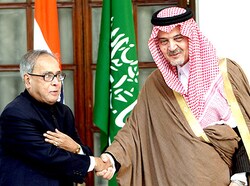
Saudi crown prince in Delhi on a major visit.
*Saudi Arabia is traditionally and historically anti-Bangladeshi and for example has imposed sanctions on Bangladesh when the electorate there vote for the centre-left Awami League. This is because of the influence of Pakistan and the radical Jamaat e Islami terrorist organization. In the past few years the Saudi regime has:
- Signed economic and military deals with Hindu India.
- Signed labour and other deals with Buddhist Sri Lanka.
- Punished Muslim Bangladesh with ban on workers.
The Saudi bullying and punishment of Bangladesh will of course delight Pakistan, Jamaat and the strong pro-Pakistan lobby in Saudi such as notorious anti-Bangladeshi propagandist, Ali Al-Ghamdi.

Ali Al-Ghamdi with an anti-Bangladeshi Pakistani organization in Karachi. Ghamdi regularly lobbies for Pakistani interests in Saudi. Saudi is historically and traditionally an enemy of Muslim Bangladesh, whose independence it tried to crush and which it vilifies through its media.

Ali Al-Ghamdi, lobbying for Pakistan, on the right.

Ali Al-Ghamdi in Jiddah, celebrating the birthday of the controversial politician, Ali Jinnah. The pro-Pakistan lobby in Saudi is very strong and lobbies for the banning of Bangladeshi workers when there is a centre-left Awami League government.
Though Saudi Arabia has been bullying Muslim Bangladesh for its friends the Pakistanis it has good relations with Hindu India and Buddhist Sri Lanka.
Saudi Arabia does this:
1. To please Pakistan
2. Jamaati propaganda which influences Saudi decision makers
3. It views Muslim Bangladesh as a weak state it can bully unlike Hindu India which it percieves as strong.
However the problem for the Saudis now is that their traditional support for the pro-Iranian and anti-Indian Jamaat e Islami in Bangladesh will anger India.
India sees Bangladesh as a neighbour and in its region in the way Saudi sees Yemen. Saudi support for anti-Indian Jamaat would be akin to Indian support for the anti-Saudi Houthi militia in Yemen.
So will Saudi keep on working to destabilize and bully Bangladesh by supporting Jamaat or will it finally once and for all accept that Bangladesh is a sovereign and independent state (not a colony of Pakistan) which should be respected?
It will be a tough decision for the anti-Bangladeshi Saudis who hate Bangladesh, Bangladesh's independence and Bengalis in general whom they view as inferior to lighter-skinned Pakistanis, as their love for bullying and their love for Pakistan will clash with their need to avoid angering the Indians who are opposed to Jamaati influence in Bangladesh.
Saudi Guy Beats & Whips Worker for Allegedly Hitting on His Wife - YouTube
Saudi beating and humiliating Bangladeshi worker.
Last Updated: Wednesday, February 26, 2014, 23:11
New Delhi: India and Saudi Arabia Wednesday signed a memorandum of understanding on defence cooperation for greater exchange of information and training.
The agreement was signed on the first day of the three-day visit of Saudi Arabia's Crown Prince Salman bin Abdulaziz Al Saud, who arrived here Wednesday afternoon.
Hours after his arrival, the crown prince met Vice President Hamid Ansari.
The agreement was signed by Saudi Arabia's Minister of State for Foreign Affairs Nizar Bin Obaid Madani and India's Minister of State for Defence Jitendra Singh.
Crown Prince Salman's is the highest level political visit from the kingdom after the January 2006 landmark trip by King Abdullah bin Abdulaziz Al Saud as the chief guest at the Republic Day celebrations.
The crown prince, who is next in line to the throne and is the deputy prime minister and defence minister, will call on President Pranab Mukherjee and Prime Minister Manmohan Singh Thursday.
The two countries are eager to work together in curbing money laundering and drug trafficking and enhance cooperation in areas ranging from hydrocarbons to security.
Saudi Arabia sees India as an attractive investment hub for its business interests in Asia and seeks Indian investments in areas such as consultancy, construction, telecom, information technology and pharmaceuticals.
Saudi Arabia is India's fourth largest partner with bilateral trade of over $43 billion in 2012-13. Saudi Arabia is also India's largest crude oil supplier accounting for about one-fifth of total imports in 2012-13.
Indians form the largest expatriate community in Saudi Arabia with about 2.88 million Indian nationals working there.
Saudi crown prince in Delhi on a major visit.
*Saudi Arabia is traditionally and historically anti-Bangladeshi and for example has imposed sanctions on Bangladesh when the electorate there vote for the centre-left Awami League. This is because of the influence of Pakistan and the radical Jamaat e Islami terrorist organization. In the past few years the Saudi regime has:
- Signed economic and military deals with Hindu India.
- Signed labour and other deals with Buddhist Sri Lanka.
- Punished Muslim Bangladesh with ban on workers.
The Saudi bullying and punishment of Bangladesh will of course delight Pakistan, Jamaat and the strong pro-Pakistan lobby in Saudi such as notorious anti-Bangladeshi propagandist, Ali Al-Ghamdi.
Ali Al-Ghamdi with an anti-Bangladeshi Pakistani organization in Karachi. Ghamdi regularly lobbies for Pakistani interests in Saudi. Saudi is historically and traditionally an enemy of Muslim Bangladesh, whose independence it tried to crush and which it vilifies through its media.
Ali Al-Ghamdi, lobbying for Pakistan, on the right.
Ali Al-Ghamdi in Jiddah, celebrating the birthday of the controversial politician, Ali Jinnah. The pro-Pakistan lobby in Saudi is very strong and lobbies for the banning of Bangladeshi workers when there is a centre-left Awami League government.
Though Saudi Arabia has been bullying Muslim Bangladesh for its friends the Pakistanis it has good relations with Hindu India and Buddhist Sri Lanka.
Saudi Arabia does this:
1. To please Pakistan
2. Jamaati propaganda which influences Saudi decision makers
3. It views Muslim Bangladesh as a weak state it can bully unlike Hindu India which it percieves as strong.
However the problem for the Saudis now is that their traditional support for the pro-Iranian and anti-Indian Jamaat e Islami in Bangladesh will anger India.
India sees Bangladesh as a neighbour and in its region in the way Saudi sees Yemen. Saudi support for anti-Indian Jamaat would be akin to Indian support for the anti-Saudi Houthi militia in Yemen.
So will Saudi keep on working to destabilize and bully Bangladesh by supporting Jamaat or will it finally once and for all accept that Bangladesh is a sovereign and independent state (not a colony of Pakistan) which should be respected?
It will be a tough decision for the anti-Bangladeshi Saudis who hate Bangladesh, Bangladesh's independence and Bengalis in general whom they view as inferior to lighter-skinned Pakistanis, as their love for bullying and their love for Pakistan will clash with their need to avoid angering the Indians who are opposed to Jamaati influence in Bangladesh.
Saudi Guy Beats & Whips Worker for Allegedly Hitting on His Wife - YouTube
Saudi beating and humiliating Bangladeshi worker.




Comment