Announcement

Collapse
No announcement yet.

Saud tribe struggles for its survival

Collapse
X
 
  • Filter
  • Time
  • Show
Clear All
new posts

  • Saud tribe struggles for its survival

    In this thread I will focus on the Saud tribe, who rule "Saudi" Arabia (i.e. central Arabia and the Hejaz), and their struggle for surival. I will post news and analyses.

    "Saudi" Arabia is a very important country for all Muslims due to the two holy cities of Mecca and Medina, and anything which effects them is of concern to the entire Muslim world.

    Background

    The Al-Saud tribe are a tribe from central Arabia (Najd) who are historically said to have been supporters of the Islamic preacher Abdul Wahab and helped him and his followers establish his form of Islam or "Wahabiyaa" in Arabia.

    There was a Saudi state in the 18th century which declined and then another Saudi state in the 19th which continues to this day. That Saudi state the current one worked in conjunction with the Americans and British.


    Abdul Aziz al Saud with British war criminal, Winston Churchill. Churchill was involved in a number of war crimes incuding gassing the Kurds


    Abdul Aziz al Saud with American leader, Roosevelt.


    Saud tribe's fear of Iran and Shiasm

    The Saud tribe that rule "Saudi" Arabia (only country on earth to be named after a family) want to remain in power with all the wealth that brings. To remain in power they must be loyal to the Americans and British who helped their rise. However they feel that they must also contain what they percieve as the Shia threat.

    "Saudi" oil regions are in Shia areas, and if these areas were to ever break away with Iranian or pan-Shia support then "Saudi" Arabia's oil based economy would tumble.

    Thus "Saudi" Arabia does everything in its power to contain Iran and Shiasm, which includes.

    - Sending troops to majority Shia Bahrain to crush protests there against the minority Sunni regime.

    - Financing terrorists and radicals in Syria.


    Saudi-supported militants and "rebels in Syria.
    * * * * * * * * * * * * * * * * * * * * * * *

  • #2
    Saudis want end to pro-Iran regime in Syria

    Syria was the only pro-Iranian state in the Arab world, this was more due to ideology and also hatred of Saddam's Iraq than the much exaggerated "Shia" nature of the Alawi Assad family.

    Contrary to common misconceptions Syria is not an "Alawi state" (the writer has lived in Syria for one year and has visited Damascus, Tartous, Latakia, Aleppo, Homs, Hama, Dar'a, Busra etc). If Syria were an Alawi state we would find these things.

    - The economy would be dominated by Alawis (in Egypt Copts are 8% but control 40% of the Egyptian economy). The average Alawi in fact remains power and is socially looked down upon. The traditional elite Sunni families of Damascus and other cities are still socially on the top of the social structure and dominate the economy.

    - Political positions would be dominated by Alawis. That is not the case and the Baath party is a secular pan-Arab socialist party and has Sunni, Christian and other major political leaders.


    Bashar Assad with Farouk Sharaa, a Sunni and former foreign minister and one of the most powerful men in Syria.

    - Alawi areas would be the richest in the country with state funds given to them to make them the richest and most powerful region in the country. In fact the Assad family have done very little for Alawis and places like Qardaha (Assad's hometown) remain poor.

    - Alawism/Shiasm or even a secular leftist ideology would be pushed down the Syrians and be similar to the situation in Turkey where mainly Sunni Turkey has seen a huge amount of people accepting secular Turkish nationalism (Kemalism) which is quite hostile to Islam and reject traditional Sunni value.

    Far from it. Apart from their traditional hostility to Islam (similar to other socialist Arab states ruled by Sunnis such as Qaddafi, Saddam, BenAli) due to Baathism, the Assad government have never made any attempt to spread Alawism/Shiasm or (as the Alevis in Turkey do) an anti-Islamic secular leftist ideology amongst mainly Sunni Syrians.

    The Muftiate in Syria has always been Sunni and Bashar himself married a woman from an elite Sunni family and when he prays Eid, he prays in a Sunni mosque.

    The only way in which Syria can be said to be an Alawi state is that the Assad family assigns top military and security (and not political) positions to his family members and other Alawis.

    However Alawis in Syria are not an elite class but an underclass who are seen as socially inferior, country bumpkins, who are poor and who when they migrate to Damascus must speak in the Sunni Damascene accent not to be sneered at.

    However Alawis are in the military and dominate it, but this is in a wider context where they are a poor and somewhat stigmatized community.

    Syria has never been an Alawi state.

    - Bahrain is a Sunni-controlled state where majority Shias are not allowed to do many jobs.

    - Saddam's Iraq was a Sunni controlled state where majority Shias were not allowed to practise certain aspects of their religion and where Saddam built up his home region of Tikrit. Saddam did more for Tikritees than the Assads ever did for the Alawis.

    - "Saudi" Arabia is a country ruled by a small tribe who regard the country as their personal property and who do not have to work but live lives of luxury based on free oil with each prince, princess getting "salaries" that are higher depending on how close they are to the "King" (Saudi tribal chief).

    The western media and also the "Saudis" and others have attempted to potray Syria as a Shia state. It is not.

    It is an Arab state (Kurds where oppressed) with an Alawi ruling family, Alawi military officer corps but economically, spiritually, culturally dominated by Sunnis and the political elite were Baathists.

    Syria is:

    - Economically dominated by Sunnis

    - Culturally dominated by Sunnis

    - Spiritually dominated by Sunnis (e.g. Sunni Muftiate)

    - Militarily controlled by Alawis (whose home regions are poor and backwards)

    - Politically controlled by a multi-religious Baathist elite.

    It is only in the military and security apparatus that Alawis had any real power.

    Alawis in general were and are poor and some when they go to Damascus end up converting to Sunnism. Maybe not explicitly but just imitating the practises of their Sunni neighbours and being impressed by Sunni Islamic speakers that other Syrians saw on T.V. e.g. Amr Khaled.

    However the western media want to potray Syria as a Shia state as part of their agenda of divide and rule i.e. Sunni v Shia.
    * * * * * * * * * * * * * * * * * * * * * * *

    Comment


    • #3
      To weaken their arch enemy and assure their survival the Saud tribe want to destroy Iranian/Shia influence in Syria.

      The Shia crescent

      There were fears a few years ago of a Shia crescent from Iran to Iraq to Syria (which is not even a Shia nation or state) to Lebanon (in the form of Hizbullah).

      This has not happened as Iraq is not a satellite state of Iran but a federal state where both the Sunni minority and Shia majority live and operate in a context of compromise. Iraq today is no way as overwhelmingly Shia run as Saddam's Iraq was Sunni run.

      However the Saudis want to remove the pro-Iranian Assad government in Damascus and weaken Iran.

      This would break the Iran to Syria to Hizbullah link.

      This is a major strategic objective of the Saud tribe. The weakening of the Iran/Shia bloc in Saudi eyes means their survival.

      Saudi Arabia is the de facto leader of the Gulf Arabs who all dislike Shias (Kuwait is slightly different as 1/3 or more of Kuwaitis are Shia and the Kuwaiti government does not want Sunni-Shia conflict in the country as many powerful tribes are partly Sunni, partly Shia anyway). Apart from the GCC (Gulf Arabs).

      - The Americans wanted Assad removed, to remove Russian influence and to continue their agenda of spreading radical Islam to destabilize America's enemies.

      - The Turks wanted Assad removed to pursue Neo-Ottomanism and around two years ago the Turkish media arrogantly speculated of a unilateral Turkish invasion of Syria on humanitarian pretexts.

      So the west, GCC and Turkey wanted to remove Assad and financed and supported extremists and terrorists.

      However Russia, China and Iran decided that Syria was a red line and that Libya was their "Czechoslovakia"


      Syria the Sino-Russian "Poland"


      Nazis invaded Czechoslovakia.

      Czechoslovakia was the last country the Nazis invaded before their invasion of Poland which led to WW2.

      Czechoslovakia was the last straw and the point where France and Britain said if anything else happened they would declare war, which they did after Hitler took over Poland (Russia also invaded Poland along with Hitler but western history books omit that "inconvenient" detail since it would mean that France and Britain should have declared war on Russia too).

      Russia and China said that after Libya they would not accept another country being invaded by America/NATO.

      The Americans and their proxies, Saudi Arabia and Turkey started working on Syria and planned to ultimately invade it as they had done in Afghanistan, Iraq and Libya (where they had a no-fly zone and US-supported Libyans overthrew Qaddafi).

      However despite many feeling (even the writer himself) that Assad's removal and his regime's collapse was inevitable it seems that Assad has survived and will remain Syrian leader, he has essentially won the war.

      However we will still have to wait and see what happens in Syria.

      Russia and China regard the war in Syria as their war. They regard this as a war against them though with the actual theatre of war in a foreign state.

      If Syria falls and becomes a Saudi-aligned Sunni "Islamist" state and a Turkey-Saudi axis dominates the middle-east, they know that the US will, with Turkey and Saudi Arabia, use the international "jihadi" network and "Islamist" movement to then spread their ideology in ex-Soviet regions and China. They knew that if Syria fell, Iran was next, and after Iran it was Russia and China via proxies i.e. "Jihadist" rebels.

      This may not seem plausible to some but when you consider that Russia faced the Chechen war and faces a Waziristan-style crisis right now in the North Caucasus, mainly Dagestan and that China is worried about Uighur separatism in its western Xianjang province than you can understand that for Russia and China, Syria is a question of their very survival.

      - Syria is not about Tartus or naval bases
      - Syria is not about having a client state
      - Syria is not about selling Russian arms
      - Syria is not about just showing Russian power.

      Syria is about the very survival of Russia itself.

      If Syria goes and falls to "jihadists", then these "jihadists" will target Russia and China.

      The Russian capital, Moscow has already been attacked by "Jihadists" in the past.


      Russian security forces rescue civilians during a militant attack on a Moscow theatre, a few years ago.

      Islamists/Jihadists fought the Russians (Soviets) in Afghanistan and killed many, they fought them in Chechnya and there was a lot of bloodshed, the future American plan is to once again use Islamists/Jihadists to fight Russia.

      This is why Russia is believed to have shot down two American missiles in the Mediterranean after the American regime threatened to bomb Syria. After shooting down these two missiles the Russians apparently warned the Americans that "any attack on Damascus is an attack on Moscow".

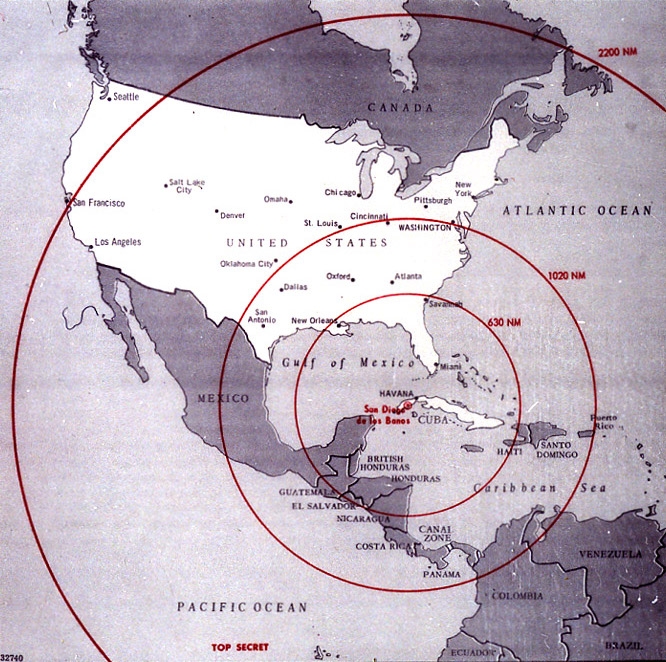
      The world had its most dangerous moment since the Cuban missile crisis of 1962.


      This time however instead of America threatening the Russians (Soviets) it was the Russians threatening the Americans with war.

      The world was on the verge of possible nuclear war.


      America backed down.

      Vladimir Putin saved the planet.

      * * * * * * * * * * * * * * * * * * * * * * *

      Comment


      • #4
        Saudis furious

        The Saudi regime have gone absolutely beserk since that time.

        Russia threatened the Americans and since then:

        - Americans have praised Assad for his role in giving up chemical weapons.

        - Turkey has distanced itself from militants.

        - Turkey has recently shelled positions belonging to militants.

        - Americans are speaking to Iran and there could be a possible improvement in relations.

        The power hungry Saud tribe do not want this.

        They want their arch enemy Iran to be destroyed at all costs.

        Thus there can be no US-Iranian reconciliation.

        There should be no Assad government in Damascus as that government would be a link between Iran and Hizbullah (Hizbullah aside from fighting Israel has relations with Shia groups in the GCC).

        The Saudi regime have gone mad, they have hit the roof.

        - Saudi regime foreign minister has lashed out at the UN in a speech in New York.


        - The Saudi regime have refused a UN security council position given to them (an absolute travesty as the Saudi regime is a sponsor of terrorism, a backwards society and a land known for inhumane cruelty to foreign workers including regular raping of Filipino maids).

        The Saudi regime have been camouflaging their fury over Syria around the language of "human rights", "concern" for the Syrian people etc.

        However this is the same regime that:

        - Supports war criminals in Bangladesh that raped and murdered Muslims in Bangladesh in 1971 and threatens Bangladesh if it were to take action against them.


        Muslim Bengali women were raped by Pakistani soldiers in the 1971 war and by Jamat e Islami, loyal to Pakistan. "Saudi" Arabia supported the genocide and supports war criminals and threatens Bangladesh to this day over this issue.

        - This is the same regime that during the Gulf war closed its borders to Iraqi refugees while much poorer Syria hosted 2 million Iraqis.


        Iraqi refugees.

        Much poorer Pakistan has hosted millions of Afghan refugees.

        Much poorer Bangladesh has hosted around a million Rohingya refugees (in the past few decades)

        Poorer Iran has hosted hundreds and thousands of refugees from Afghanistan.

        - Turkey has hosted half a million Syrian refugees.

        However the Saudis who shared blood ties with many Iraqi Arabs (e.g. tribes of Banu Tamim, Unayzah etc) refused to open their borders for the Iraqis while being much richer than Syria. The evil "Shia" dictator Assad (married to a Sunni and praying in Sunni mosques) however let 2 million Iraqis in.

        Where was the Saudi concern for suffering? Where was the Saudi concern for human rights? Where were the Saudi (crocodile) tears for poor Arabs?

        Why is it the Al-Saud tribe care for Syrians but not for Iraqis (whom they are blood brothers with)?

        How many Syrian refugees have the Al-Saud tribe hosted?


        Maybe, just maybe - let us be a bit cynical here - is it possible that the Al-Saud tribe doesn't actually care about Syrians or their suffering but wants to remove a government they see as a threat to their hold on power?

        Is that a more plausible explanation?
        * * * * * * * * * * * * * * * * * * * * * * *

        Comment


        • #5
          The Al-Saud tribe are in a state of anxiety and concern for their survival and their corrupt and wretched rule.

          They are angry at their defeat in Syria.

          They were scared of a Muslim brotherhood government in Egypt that might then lead to people opposing monarchies in the wider Arab world.

          They have worked with the Nasserite Egyptian military to remove the brotherhood, the same Egyptian military that is pro-Assad and pro-Syria.

          They are angry at Turkey, another arrogant state seeking - and fortunately failing - to realize maglomaniac ideas of "neo-Ottomanism".

          They are angry at the USA.

          They are angry at the UN.

          They are angry at the world.

          Despite having millions, fancy cars, young women, children going to the best universities, diamonds, gold, jewellery the Al-Saud tribe are angry.

          They say they are angry at the suffering of Syrians, but this is the same tribe that supports the rape of Muslim Bengali women and kicked out 0.8 million Yemenis in 1991 and closed the Saudi-Iraqi border and wouldn't accept Iraqi refugees.

          We will have to wait and see to find out how this power-hungry, brutal and depraved regime will behave.

          Maybe they can ask their friends, the rapists and war criminals of Jamat e Islami in Bangladesh for advice on geo-political strategy and regime survival.


          Muslim Bengali civilians massacred by Saudi supported Pakistan army. To this day "Saudi" Arabia supports the 1971 genocide and threatens Bangladesh over Jamati war criminals. "Saudi" Arabia is a sponsor of terrorism, has threatened Russia with terrorism and is destabilizing Syria and Iraq. It views Pakistan as one of its main allies, if not its greatest ally.


          Tribal chieftain and current head of the Al-Saud tribe and so-called "King", Abdullah Al-Saud, his tribe and regime are in a state of anxiety and fury about the survival of their corrupt tribe and regime. The Al-Saud tribe are a major sponsor of terrorism and cause destabilization around the world.

          Child beaten by Saudi wahabi Exposed - YouTube

          "Saudi" beats young black boy. Despite oil wealth the Saud tribe have not improved education or general social behaviour much in their country. The Al-Saud tribe are "concerned" about Syrians but not about children being abused in their country

          Saudi kid whipping a garbage collector until the poor worker cries - YouTube

          "Saudi" beats South Asian worker until he makes him cry. The Saud tribe are "concerned" about Syrians and angry with the UN and rest of the world but won't allow Syrian refugees in "Saudi" and not doing anything to stop mistreatment of foreign workers in "Saudi" Arabia.
          * * * * * * * * * * * * * * * * * * * * * * *

          Comment


          • #6
            Horrifying video of Ethiopian refugees being beaten by their Arab captives in Saudi Arabia - YouTube

            Saudis torture Ethiopians, comment from the video by a Saudi:

            ابوراكان والنعم 5 hours ago
            Monkeys Ethiopians and black Africans who come to Saudi Arabia
            We will deal with them with murder and arson fire........................
            we do not want to see you in my contery , go to Europe or any other country,


            User: ‫

            Saudi Arabian police torture Ethiopians - YouTube


            Saudi police torturing Ethiopians. Saudi tribal chief, Abdullah Al-Saud or "King Abdullah" is concerned about Syrians - whom he refuses to allow as refugees in the country - but is not doing anything about police brutality in "Saudi" whilst he cries day and night for Syrians (whom he refuses to allow as refugees in to his country.


            However the struggle for reform is starting and the Al-Saud tribe and dictator Abdullah Al-Saud won't be able to stop people's desire for freedom and justice.

            Saudi prince defects: 'Brutality, oppression as govt scared of Arab revolts' (EXCLUSIVE) - YouTube
            * * * * * * * * * * * * * * * * * * * * * * *

            Comment


            • #7
              The biggest blame goes on the US for keeping these people in power, if US wasn't there, some muslim country would have swallowed them long ago

              PS, the last few videos of them beating Ethiopians is just horrifying, they have no humanity.

              Comment


              • #8
                Saudi Arabia's Threats To Its Own Survival

                Oct 19, 2013 - 12:44 PM GMT
                By: Andrew_McKillop


                Saud al-Faisal, the foreign minister of the Saudi regime and "prince" who has become hysterical recently due to his regime's failure at overthrowing Assad in Syria.


                PRINCELY SULKING


                Prince Saud al-Faisal, the foreign minister of the family enterprise called the Wahabite Kingdom did not make his annual address to the United Nations General Assembly, this year. The Kingdom wanted to score a diplomatic snub against the UN Security Council's five permanent members.


                Saud al-Faisal's ministry, Friday 18 October, announced the Kingdom had also turned down a two-year non-permanent membership seat in the Security Council alongside Chad, Nigeria, Lithuania and Chile, replacing the five previous non-permanent members. The Kingdom cited two main reasons for its two-part action of refusing to make an address to the Assembly and rejecting a non-permanent seat. It is enraged by the five permanent members' internal standoff between its Western members, and China and Russia, leading to no military action in Syria, which Riyadh says shows that the “permanent five” are operating “double standards in the Security Council”. Riyadh said it also delivered the double snub because the Security Council and the international community have been “failing to find a solution to the Palestinian cause for 65 years”.

                Saud al-Faisal repeated his country's well-worked and well-known theme of Bashr al-Assad's regime using chemical weapons “to kill its own people”, but did not add that Saudi-paid mercenaries do the same, and according to Turkey, either possess or possess and use chemical weapons.

                In particular, according to the Saudi prince "allowing the regime in Syria to kill its own people.... without confronting it or imposing any deterrent sanctions ... is a proof of the inability of the Security Council to carry out its duties and assume its responsibilities". The prince went on to criticize Council failure to remove or destroy weapons of mass destruction in the Middle East, and especially identified nuclear weapons as a regional threat to peace.

                We can name the countries he did not mention. Nuclear weapons are certainly held by Israel, and possibly held by Iran.

                Saudi Arabia plans to construct 16 nuclear power reactors over the next 20 years at a cost of more than $80 billion, with the first reactor on line in 2022. This programme will “confer” it the status of possessing huge nuclear Dirty Bombs when these reactors are completed and have operated at full power more than about a year, due to build-up of highly radioactive materials.

                The Wahabite Kingdom's determined attempts to encourage or incite Western powers and Israel into attacking Iran are very well known. Its “objective ally” in this quest – Israel – would have little alternative but to attack all large Iranian nuclear targets, designated either “civil” or “military”, to carry out the Hebrew State's repeated threats of unilaterally stopping Iran from being able to produce nuclear weapons.

                Exactly the same logic could apply to Saudi civil reactor “soft targets”. When or if the Kingdom is judged by other well-armed countries as possessing too many large nuclear facilities and installations on its territory, able to produce nuclear weapons “with a few turns of a screwdriver” they could be the target of military attack. Being an oil exporter like Iran, the same political rationale would apply – Saudi Arabia does not need and has no justification for possessing nuclear reactors or nuclear facilities of any kind.

                SAUDI HISTRIONICS HIDE THE REAL GOAL

                In a theatrical gesture towards the UN Security Council's five permanent members, the Prince said: “Accordingly, the Kingdom of Saudi Arabia......announces its apology for not accepting membership of the Security Council until the Council is reformed and enabled, effectively and practically, to carry out its duties and responsibilities in maintaining international peace and security”.The Prince went on to accuse the Security Council of “enabling” al-Assad to press his military campaign against rebels “with impunity”, including the use of chemical weapons.

                Saudi Arabia often claims that it wants “to make the Middle East a free zone of all weapons of mass destruction”, but this is directed much more at Iran than Israel. The Kingdom's policy towards Iran – extreme hostility – counts on Israel as its only or best regional ally able to do the dirty work, and take the military risk of bringing down Iran's government. This would cause massive human casualties due to Israel's likely or certain use of nuclear weapons for first strike against Iran.

                At its core, Iranian-Saudi rivalry is about religious-political power and oil money. The two oil giants vie for control of the Strait of Hormuz, the narrow sea passage through which the US EIA estimates about 17 million barrels a day was shipped in 2012, almost exactly 33% of world traded oil and about 19% of world total oil consumption. Since the fall of the last Shah in 1979 and the rise of Iran's “political Islam”, Saudi Arabia's ruling family and clans have developed an extreme, almost hysterical, existential fear of Iran.

                The founder of the Iranian regime, Ayatollah Ruhollah Khomeini, condemned the Saudi monarchy as a tyrannical, illegitimate clique that answers to Washington, not Allah.

                Saudi royals have spent vast amounts of money funding the spread of the extreme-Sunni Wahabi sect or school of Islam, seeing this ultra-conservative, totally literal interpretation of the Coran as a bulwark against Iran's Shia branch of Islam. Ensuring deep religious animosity with Tehran, the official title of the Saudi King includes his self-assigned duty of "Guardian of the Two Holy Places", Mecca and Medina, suggesting or claiming divine authority. Pursuit of its own religious-political strategy over the last 33 years has led the Wahabite Kingdom to firstly support and finance the Muslim Brotherhood across the entire MENA region, then to rabidly oppose the Brotherhood, most extremely and recently with its open support to the Egyptian army's overthrow of Brotherhood-backed president Moursi.

                LIMITS OF SAUDI POWER

                As we know, both China and Russia were, and remain totally opposed to military action by Security Council members US and France against Syria's government. In the case of Russia, it likely harbors highly negative views on the Wahabite Kingdom's islamic destabilization campaign in the Russian Caucuses. International weapons inspectors are now inside Syria seeking to identify and dismantle its stocks of chemical weapons under a deal brokered last month by Russia and the US, ignoring Saudi pressure, to avert American and French military action in reprisal for alleged poison gas attacks by the regime, near Damascus on August 21.

                The effective or de facto US-Russian agreement for avoiding the use of military force against the Syrian government has enraged the Wahabite Kingdom, followed by increasing signs of the Saudis' worst nightmare becoming real - the US administration “striking a grand bargain with Iran”. According to former US ambassador to Saudi Arabia, Robert Jordan, in a Reuters interview this week the nightmare is treated as a near-mortal threat by Saudi royals. Such a deal could, for example, see Washington willing to tolerate Iran's influence in Syria in exchange for international inspection of Iran's nuclear facilities, followed by Iran increasing its oil production and exports.

                "If the Saudis perceive Iranian influence in the region to be threatening, clearly any approach that suggests a US-Iranian rapprochement would be very worrying", the leading regional analyst John Barnes-Dacey told Deutsche Welle this week, "The Saudis are intent on pushing back against groups linked to Iran, whether that be Assad or Hezbollah, but it also means pushing back groups like the Muslim Brotherhood, who subscribe to a political ideology the Saudis see as a threat internally”.

                Marc Pierini, former EU ambassador to Syria and a scholar at Carnegie Europe, pointed out that US re-engagement with Iran may be the only way to resolve the Syrian crisis, "If the US wants to resolve the chaos in Syria, there is no way around the involvement of Iran," he said in interview with Reuters this week. "The nuclear issue is also a further reason to engage. Everything else has to be seen in that context - not that anyone should trust Iran blindly, but Tehran is an essential component."

                Effectively, he says, the gravity of the Syrian conflict shown by Assad allegedly using chemical weapons against his own people, has sidelined the regional power play of Saudi Arabia. Other analysts and commentators say the Wahabites have almost certainly gone too far in recruiting and financing tens of thousands of Islamic insurgents in Syria, with constantly rising potential for spillover across the region when the Syrian civil war ends, starting with Iraq.

                At the same time as the US is being forced into a more diplomatic, less gung ho approach in Syria, driven by strong public opposition to any kind of military intervention, observers note that the US is war-averse, today, in the Arab world – due to Iraq and Afghanistan. In both these cases, starting with the 1980-88 war between Saddam Hussein's Iraq and Iran, the 1991 Kuwait war, the 2003 Iraq war, and the now-12 year US led military campaign inside Afghanistan, Saudi Arabia has played a major leading role, but has never exposed its own regular armed forces to any risk.

                LOSING ATTEMPTS AT REGIONAL HEGEMONY

                The Saudis have shown that they are now openly willing to defy Washington because they see their interests threatened and above all see a “bang for the buck” using their petrodollars.

                As soon as influential voices in Washington called for the US to cut aid to Egypt, after the ouster of Brotherhood-backed president Mohammed Moursi, Riyadh immediately started delivering lifeline billions of dollars – among other things to import food – to keep the al-Sisi military coup in place and secure. US aid was indeed partially cut, but since July 18 Saudi Arabia has given Egypt more than $5 billion - three times Washington's annual contribution – and extended this with gifts from other minority Sunni-ruled Gulf monarchies to a total exceeding $10 billion.

                More serious in fact, Saudi ideologues have clung to the belief that Wahabism is a “one size fits all” political-religious lever for power in any Sunni-majority Muslim society. Highly ironic given the over-20-years of unstinting financial and political support given by Saudi royals to the Muslim Brotherhood, terminating in the 1990s and featuring the growth of the al-Qaeda movement, Saudi Arabia now harbors an obsessional fear that the Brotherhood is extending its influence across the Middle East and North Africa. Reasons for this are purely ideological and concern the Brotherhood's very longstanding opposition to all monarchies, for Islamic ideological reasons, which for the Saudi royal family would be impossible not to know.

                For Barnes-Dacey, the fear of Saudi royals is that the Brotherhood will spawn “a string of Brotherhood organizations in places like Egypt, Syria, and beyond, who could then empower similar ideological groups in Saudi Arabia". These would then overthrow the Saudi royal family.

                He goes on to claim that despite the clear falling out of Riyadh and Washington on Egypt and Syria, the “depth of their historical alliance”, dating from 1945 and signed in oil and petrodollars, as well as non-Saudi blood, can or might limit the clear trend of the Wahabites taking an aggressively independent line in the Middle East and North Africa. The real strength of this historical alliance is however open to question, in part due to Wahabism clearly being nationalist Arabian, xenophobic, anti-democratic and Islamic fundamentalist, which for US geostrategists is impossible not to know.

                Inside Egypt, the pace of political change is such that major new groupings brought together by the Tamarod movement are themselves a threat to both Riyadh and Washington, due to their mix of Egyptian nationalism and secular anti-religious politics. Inside Syria, Riyadh is heading for a lose-lose outcome whereby either the survival of Bashr al-Assad, allied to Iran and totally anti-Saudi, or victory for Sunni extremist rebels including Brotherhood forces, can easily blowback against Saudi Arabia.

                Saudi action in the region can now be called “wild card” or “loose cannon” due to the intensity of the Wahabite Kingdom's ideological belief and geostrategic view that the moment has come for it to extend its power across the region – and ensure its survival. The means it uses are however turning into a real threat for its own survival. Where it goes now is hard to forecast, but its ability to play the “oil card” may be less than it counts, due for example to surging US production of shale oil and gas, high levels of Russian oil output, and growing supply from other nonOPEC sources.

                By Andrew McKillop

                Contact: xtran9@gmail.com

                Former chief policy analyst, Division A Policy, DG XVII Energy, European Commission. Andrew McKillop Biographic Highlights

                Co-author 'The Doomsday Machine', Palgrave Macmillan USA, 2012

                Andrew McKillop has more than 30 years experience in the energy, economic and finance domains. Trained at London UK’s University College, he has had specially long experience of energy policy, project administration and the development and financing of alternate energy. This included his role of in-house Expert on Policy and Programming at the DG XVII-Energy of the European Commission, Director of Information of the OAPEC technology transfer subsidiary, AREC and researcher for UN agencies including the ILO.


                * The Saudi regime have gone insane at their failed attempt to overthrow the pro-Iranian Assad government in Syria, masked in the rhetoric of "human rights" (when the Saudi regime won't even allow Syrian refugees in to Syria and blocked the "Saudi"-Iraqi border in the gulf war, whilst Syria hosted 2 million Iraqi refugees).

                * The fact that a disgusting regime like "Saudi" Arabia was even offered a seat in the UN security council shows what a shameful organization the UN is.

                "Saudi" Arabia should never have been offered such a seat. It is a disgusting state and regime and as Muslims we pray for the removal of this corrupt and brutal tribe, and for freedom and justice in the land where our beloved prophet, the best of creation Muhammad bin Abdullah, solAllahu 'alaihi wa sallam strugged.

                Oh Allah please remove the Saud tribe from power in Arabia, please bring justice in Arabia and an end to the suffering of all the people there be they Muslim or non-Muslim, Arab, Filipino, Indian, Bangladeshi, Afghan.

                Oh Allah please destroy the evil Saud tribe.

                ameen, thumma ameen.

                wa sallee 'alaa sayyidina Muhammad wa 'aalihi.
                * * * * * * * * * * * * * * * * * * * * * * *

                Comment


                • #9
                  Turki: Riyadh favours engagement with Iran

                  Saudi prince hopes US overture will lead to Iran’s return to international community

                  Staff ReportPublished: 18:58 October 19, 2013Gulf News
                  .
                  Dubai: Senior Saudi Prince Turki Bin Faisal Al Saud has said that new Iranian President Hassan Rouhani will have to deliver before others take him seriously.
                  In his recent address to the Iranian American community, Prince Turki said that despite King Abdullah Bin Abdul Aziz’s invitation to the new Iranian President to perform Haj this year, Rouhani has “unfortunately declined to accept”.

                  Prince Turki, a former Saudi Ambassador to US, said Saudi Arabia favours engagement with Iran, and President Barack Obama’s overture to Rouhani will hopefully lead to Iran’s return to the International community as a contributor to peace and stability.

                  “Rouhani’s sensible discourse is in distinct contrast to [Mahmoud] Ahmadinejad’s bluster and bombast. With the world community opening its arms to embrace Rouhani, his major obstacle lies in the forces of darkness in Qum and Tehran. He has to shed Khomeini’s interventionist legacy and, like his own discourse, adopt sensible policies,” Prince Turki told the Iranian American community, the National Iranian American Council website says.
                  Prince Turki said the Iranian leadership has the opportunity to share so much of Iran’s heritage and wisdom with other Muslims. “But if they wish to gain the respect of other countries, they must first show respect to the traditions, heritage, and political identity of their peers.”

                  Prince Turki said, “Iranians can be proud of their history and heritage. Arabs have the greatest respect for the faith and culture of Iranians as well as the indelible Persian contribution to the marvels of Islamic society.”
                  But, he said, like all worthwhile achievements, Persia’s greatest masterpieces were the product of cooperation and education, of learning from and with people of other backgrounds.


                  Prince Turki said just as Arabs, Africans, Europeans and Asians continue to be enriched by Persian knowledge and culture, Iran has been greatly enriched by its Arab, Asian, and European partners.

                  “Pushing away these interlocutors, dividing Muslims with bombastic claims to religious leadership, threatening their neighbours with false claims to Bahrain, and refusing all rational solutions to the dispute over [the three occupied] Emirati islands, will not restore the former glory of Iran; it will do just the opposite,” he said.
                  “[Iranian Supreme Leader Ayatollah Ali] Khamenei’s meddling in Iraq is the cause of the daily killings and suffering that the Iraqi people are enduring. The situation in Syria, in which the Iranian government has chosen to support the butcher [Bashar] Al Assad, is a case in point. Ruhollah Khomeini was famous for his claim as the champion of the “mustazafin”. Today, Khomeini’s successors have chosen to support the oppressor, not the oppressed,” he said.

                  Referring to Iran’s controversial nuclear programme, Prince Turki said Iran has the right to use nuclear power for peaceful purposes, but brinksmanship policies and the construction of secret facilities do nothing to serve the country’s best interests; nor do these policies allay the world’s suspicions.
                  “All member countries of the United Nations, not just the West, are bound by the Security Council’s sanctions on Iran. If Iran’s leaders seek equitable treatment on this issue, they must come clean about its nuclear programme. The best way to move forward fairly on this issue is for Iran’s leaders to follow the policy set down by the Shah in 1974. The establishment of a Zone Free of Weapons of Mass Destruction in the Middle East will ensure a level playing ground for all nations in the region. Iran’s leaders claim to support the Zone. That support should not be by lip service only,” he added

                  Turki: Riyadh favours engagement with Iran | GulfNews.com


                  *Whilst this senior Al-Saud tribesman or "prince" does criticize Iran and its policies in Syria and Iraq, he might be opening the way for reconciliation with Iran.

                  The "Saudis" may have realized that their wet dreams of Americans doing their dirty work for them and invading Syria and Iran are over, so the "Saudis" may have to adjust to the new realities of the region, hence the Persian ass-kissing.

                  Meanwhile the "Saudi" regime have apparently locked up 40,000 people in jail for political dissent and opposition to the rule of their desert tribe is growing.

                  "Saudi" Arabia needs to learn how to behave itself and stop sponsoring terrorism and supporting murderers and radicals in the Muslim world such as "Jamat i Islami" in Bangladesh, or otherwise I can assure you there will be trouble for them.

                  A Saudi prince defecting from them a few months ago is just the beginning for the end of their backwards tribal rule and dictatorship.
                  * * * * * * * * * * * * * * * * * * * * * * *

                  Comment


                  • #10
                    A supporter of Assad and Hasina critisizing Saudis. Thats like a crocodile accusing a hayena of creulty.
                    Originally posted by Firdousi
                    Never talk with Afghans about politics. All their political knowledge is limited to conspiracy theories, political demonization and contradictions. No logic, no reason.

                    Comment


                    • #11
                      Saudi Prince: Fracking Is Threat To Kingdom


                      As the fracking revolution eases demand for the kingdom's oil and gas, a billionaire prince warns his nation to find new income.9:49am UK, Monday 29


                      A billionaire prince has warned Saudi Arabia of the fracking threat


                      A Saudi prince has warned that his oil-reliant nation is under threat because of fracking technology being developed elsewhere around the world.

                      Billionaire Prince Alwaleed bin Talal said the Gulf Arab kingdom needed to reduce its reliance on crude oil and diversify its revenues.

                      His warning comes as rising shale energy supplies in the United States cut global demand for Saudi oil.

                      In an open letter to his country's oil minister Ali al Naimi and other government heads, published on Sunday via his Twitter account, Prince Alwaleed said demand for oil from Organisation of the Petroleum Exporting Countries (Opec) member states was "in continuous decline".


                      Saudi Aramco is the world's biggest oil company
                      State-owned Saudi Aramco was hit by a huge cyberattack last year


                      He said Saudi Arabia's heavy dependence on oil was "a truth that has really become a source of worry for many".

                      He added that the world's biggest crude oil exporter should implement "swift measures" to diversify its economy.

                      Prince Alwaleed, owner of international investment firm Kingdom Holding, is unusually outspoken for a top Saudi businessman.

                      But his warning reflects growing concern in private among many Saudis about the long-term impact of shale technology.

                      It is allowing the US and Canada to tap unconventional oil deposits which they could not reach just a few years ago.


                      Small towns, like Carroll County in Ohio, have been boosted by fracking

                      Chancellor George Osborne has also announced support for fracking in Britain and in offshore waters, to ease a reliance on foreign oil and gas.

                      Some analysts think this may push demand for Saudi oil, as well as global oil prices, down sharply over the next decade.

                      Over the past couple of years the Saudi government has taken some initial steps to develop the economy beyond oil.

                      It has sought to liberalise the aviation sector and provided finance to small, entrepreneurial firms in the services and technology sectors.


                      Cuadrilla has been exploring for gas in Britain, despite public protests

                      Mr Naimi said publicly in May that he was not concerned about rising US shale oil supplies.

                      Prince Alwaleed told Mr Naimi in his open letter, which was dated May 13 this year, that he disagreed with him.

                      The prince said: "Our country is facing a threat with the continuation of its near-complete reliance on oil, especially as 92% of the budget for this year depends on oil.

                      "It is necessary to diversify sources of revenue, establish a clear vision for that and start implementing it immediately."

                      The prince said Saudi Arabia should move ahead with plans for nuclear and solar energy production to cut local consumption of oil.

                      The shale oil threat means Saudi Arabia will not be able to raise its production capacity to 15 million barrels of oil per day (mbpd), Prince Alwaleed argued.


                      George Osborne reveals tax breaks to spur fracking investment
                      Current capacity is about 12.5mbpd; a few years ago the country planned to increase capacity to 15mbpd, but then put the plan on hold after the global financial crisis.

                      While most Saudi officials have in public insisted they are not worried by the shale threat, Opec has recognised that it needs to address the issue.

                      In a report earlier this month, Opec forecast demand for its oil in 2014 would average 29.61mbpd, down 250,000bpd from 2013. It cited rising non-Opec supply, especially from the US.


                      Riyadh has announced a metro system to ease car usage
                      :: The fracking warning comes as Saudi Arabia announced three foreign consortiums - led by US, Spanish and Italian firms - have won a $22.5bn contract to build Riyadh's 110-mile, six-line metro train network.

                      Saudi Prince: Fracking Is Threat To Kingdom

                      Saudi Prince: Fracking In United States Is A Threat To Saudi Economy - YouTube


                      *The "Saudi" regime realizes that its oil wealth is declining. With a population expanding and income decreasing the "Saudi" regime will face a more and more difficult time keeping "Saudis" (i.e. Arabs ruled by their tribe) satisfied.

                      A "Saudi" regime with less money also means less Wahabism and less Saudi-backed terrorism and support for extremist groups, and less ability to bully other Muslim countries such as Bangladesh, Indonesia etc.
                      * * * * * * * * * * * * * * * * * * * * * * *

                      Comment


                      • #12
                        Bengal Tiger,
                        You are guilty of hypocrisy. you cant condemn one torturer and praise the other torturer. Saudi, iran, Syria, Russia all torture and interfere in others affairs. They are different faces of the same entity.

                        Comment


                        • #13
                          Originally posted by khushal View Post
                          Bengal Tiger,
                          You are guilty of hypocrisy. you cant condemn one torturer and praise the other torturer. Saudi, iran, Syria, Russia all torture and interfere in others affairs. They are different faces of the same entity.
                          I have criticized all four regimes, Saudi is a Wahabi state that sponsors terrorism, Iran is a Shia supremacist state and Persian nationalist, Syria oppressed its Kurds (which I mentioned above) and Russia has its own set of problems.

                          Anyway lay off the personal attacks and insults and comment on the topic. I am not going to bother replying to you as you are one of those who likes to make personal comments about members rather than discuss the subject.
                          * * * * * * * * * * * * * * * * * * * * * * *

                          Comment


                          • #14
                            This is the subject, your just saying that because Im revealing your hypocrisy.
                            You saying that Putin saved the world as though he is some prophet is hypocrisy. They guy is a suppressor of freedoms and has committed war crimes in the Caucasus. He is not different than Saud.


                            You are committing what is called confirmation bias. you are biased against the Saudi state only because of its support for Pakistan. You'll support one criminal against another criminal. You don't care about justice, you only care about which criminal is bad because of your personal feelings.

                            hypocrite. ofcourse your not going to answer me because you cant answer your own hypocrisy. that is why shamlawar always chickens out. When caught with hypocrisy, you guys are like uhhhhhh, ummmmmmmm, uhhhhhhhhh, shirk this apostate that, personal this, subject that. both of you are intellectual weaklings.
                            Last edited by khushal; 10-20-2013, 06:34 PM.

                            Comment


                            • #15
                              Bengali is just angry because saudis were offered to take part in the kuffars security council. This is why he made this thread now. He is jealous of saudis endulgence in kufr.
                              Originally posted by Firdousi
                              Never talk with Afghans about politics. All their political knowledge is limited to conspiracy theories, political demonization and contradictions. No logic, no reason.

                              Comment

                              Working...
                              X