Announcement

Collapse
No announcement yet.

Burmese army bombs Buddhist temple

Collapse
X
 
  • Filter
  • Time
  • Show
Clear All
new posts

  • #31
    Myanmar census: risk or reward for Rohingya Muslims?

    MARCH 9, 2014


    Rohingya people from Myanmar, who were rescued from human traffickers, react from inside a communal cell at Songkhla Immigration Detention Centre (IDC) where they are kept near Thailand’s border with Malaysia, February 12, 2014. — Reuters pic


    SITTWE (Myanmar), March 9 — In the desolate camps of western Myanmar many homeless Muslims are determined to assert their identity as Rohingya after years of persecution, in a census some fear will spark further turmoil.


    Myanmar’s first census in 30 years — which starts at the end of March with United Nations help — will provide new data on the country, until now relying on figures from a flawed population tally in 1983.

    But observers warn that controversy over rigid official definitions of ethnicity and entrenched mistrust of authorities after decades of junta rule risk damaging the country’s fragile peace efforts and further inflaming religious tensions after waves of anti-Muslim violence.

    Questions of identity go to the very heart of divisions in Rakhine State, where long-held animosity between Buddhist and Muslim communities erupted into bloodshed two years ago, leaving scores dead and displacing 140,000 people — mainly among the stateless Rohingya.

    Violence has already flared in the camps on the outskirts of the state capital Sittwe as anxieties over the possible impact of the census run high.

    Eindarit, 36, lay beaten and bandaged in a wooden shack following an effort to prevent dozens of fellow Rohingya from fleeing Myanmar by boat.

    “He asked them not to leave because we have to take part in the census,” said Hla Mint, a 58-year-old retired policeman and de facto local leader, speaking his behalf.


    But it ended in violence. Eindarit was badly wounded, losing most of his teeth. The attack left him requiring strapping to his jaw.

    “He was cut with knives on his head and hands and beaten with a pipe,” Hla Mint said, blaming the clash on local human traffickers.

    Suspicion runs deep

    The incident adds weight to observers’ fears that the census is stirring up new divisions in the already combustible state.

    “I think this is going to create a huge mess. Everyone is extremely worried this is going to erupt into a new stage of violence,” said Chris Lewa, of the Arakan Project, which campaigns for Rohingya rights.

    Myanmar’s 800,000 Rohingya — who are stateless, and considered by the UN to be one of the world’s most persecuted minorities — face restrictions that hamper their ability to travel, work, access health and education and even to marry.

    Many Rohingya are deeply distrustful of the government — which maintains that most in the community are illegal immigrants from neighbouring Bangladesh — and fear it could use its census findings to somehow extinguish their potential citizenship claims.

    The survey form does not have a dedicated box for Rohingya, who are not one of the country’s 135 official ethnic minorities — despite the fact many can trace their ancestry back generations in Myanmar.

    But they can still identify themselves as Rohingya in the census — there is a box for “other” with space to write any group or name they wish to be identified as, which some see as a breakthrough in their efforts to assert their identity.

    Many of Rakhine’s Muslim population were listed as Bengali in the last census.

    “We are labelled ‘Bengali, Bengali’ all the time. Evidence that we were born here, that we have been staying here, is crucial to us,” Hla Mint told AFP.

    Census fraught with risk

    The census “risks inflaming tensions at a critical moment” in Myanmar’s democratic transition, according to a recent study by the International Crisis Group (ICG), which added that controversial sections on religion and ethnicity should be dropped in favour of a focus on key demographic data.

    It said the results, many of which will be released before Myanmar holds its first national polls since the end of junta rule, had “direct political ramifications” because the country has some constituencies carved out along ethnic minority lines according to population size.

    But the government and United Nations Population Fund (UNFPA) have rejected those suggestions.

    They say information on ethnicity is needed as part of efforts to provide a crucial snapshot of the country for national planning.

    UNFPA’s Myanmar chief Janet Jackson said most ethnic armed groups — apart from Kachin rebels near the Chinese border — had accepted the census.

    She told AFP that efforts are under way to ensure everyone is counted in Rakhine “sensitively and with calm”, adding the survey would not be linked to citizenship.

    The UN aims to find census-takers among Rakhine’s Muslim population to ease inter-communal mistrust.

    But divisions fester and in Sittwe, Buddhist politicians expressed deep animosity towards their Muslim former neighbours.

    “There is no such thing as the Rohingya ethnicity... it is just a term. Ethnic Rakhines know their intention. It is a political aim,” said Shwe Maung, a senior member of the Rakhine Nationalities Development Party.

    The ICG said the previous census was believed to have deliberately under-reported the size of Mynamar’s Muslim population, at four rather than 10 per cent.

    Consequently, this census could show a misleading “three-fold increase” in the Muslim population, “a potentially dangerous call to arms” for extremists in the Buddhist-majority nation, the study said.

    For Muslims trapped between risking defiantly identifying themselves as Rohingya and the on-going precariousness of statelessness, the path ahead is fraught with uncertainty, said Rohingya politician Kyaw Min.

    “The future is very dark, gloomy — very dangerous,” he told AFP. — AFP

    - See more at: http://www.themalaymailonline.com/wo....qk6UIaDq.dpuf
    * * * * * * * * * * * * * * * * * * * * * * *

    Comment


    • #32
      Muslims urged to stop 'Muslim cleansing' in Myanmar

      Sun Mar 9, 2014 2:18AM

      Myanmar case, state-sponsored violence
      ‘West ignores Rohingya Muslims’ plight’


      Head of a UK-based Muslim center has called for greater action against the “ethnic cleansing” campaign waged against the Rohingya Muslims in Myanmar.

      “If there was a will amongst the Muslim nations to do something, something could happen…I think the Muslim states and the Muslim people can do a lot more,” Jahangir Mohammed, director of the Manchester-based Center for Muslim Affairs, told Press TV on Saturday.

      “The Muslim Ummah …can act globally just like other minority communities do – We are not a minority, we are a very, very big community,” he noted.

      Mohammed denounced the persistent persecution of Myanmar’s 800,000-strong Muslim minority by Buddhist extremists as an act of cleansing that has to do with both ethnicity and religion, especially religion.

      He also criticized the West’s inaction over the plights of Muslims, including the Rohingyas in Myanmar, compared with its reaction to developments elsewhere in the world.

      “If this was any other community…being persecuted in this way, it would be on the news 24/7; people would be talking about it; they would be talking about war crimes and crimes against humanity,” he stated.

      The government of Myanmar refuses to recognize Rohingya Muslims, who account for about five percent of the country’s population of nearly 60 million.

      The community, which the UN describes the Rohingya as one of the world's most persecuted minorities, have faced torture, neglect, and repression since Myanmar gained independence in 1948.

      Myanmar’s government has been repeatedly criticized for failing to protect the Rohingya Muslims.

      * * * * * * * * * * * * * * * * * * * * * * *

      Comment


      • #33
        Open-air prison: Rohingya cut off in Myanmar town

        By Jonah Fisher
        BBC News, Aung Mingalar, Rakhine state


        MSF allowed to resume Myanmar work
        Rohingya discrimination 'is policy'
        Thailand deports Rohingyas to Burma


        Getting into Aung Mingalar as a journalist is relatively simple. We visited a couple of government offices, had a letter written for us and then after having our documents forensically examined, were allowed in.

        For the Buddhists who dominate the Rakhine capital, Sittwe, it is even easier. Their buses, rickshaws and motorbikes just get waved through by the police. Many even use the main road as a short cut just to reach another part of town.

        For the residents of Aung Mingalar, however, things are very different.

        The 4,000 Muslim Rohingya who live inside are effectively prisoners - restricted first by the police checkpoints and then by the Rakhine Buddhist community that surrounds them on all sides and constantly looks on.

        "The police will not allow us out, because if they do, they know we will be beaten by the Rakhine [Buddhists]," a young Rohingya man said.

        Rohingya mother Kurshidaka and her baby girl. Kurshidaka badly needs treatment for her infected wound from a caesarean section


        Rohingya residents of Aung Mingalar have no regular access to doctors or healthcare

        Three years ago the Muslim and Buddhist communities in Sittwe lived fairly amicably side by side. Then in 2012 there were several outbreaks of sectarian violence and most of Sittwe's Muslims fled into camps to the north-west of the town.

        Both communities were affected, but the vast majority of those killed and displaced were Rohingya. Stateless and unwanted by either Myanmar (also known as Burma) or Bangladesh, it is thought that about 800,000 of them live in Rakhine state, their movements and rights heavily restricted.


        The United Nations describes them as a persecuted religious and linguistic minority from western Burma.

        The Burmese government, on the other hand, says they are relatively recent migrants from the Indian sub-continent.

        Neighbouring Bangladesh already hosts several hundred thousand refugees from Burma and says it cannot take any more.


        When violence swept through Sittwe, the people of Aung Mingalar were among the few Muslims who decided to stay in their homes. Their neighbourhood quickly turned into a Rohingya ghetto, wrapped in barbed wire and over-run by security.

        Cut off from the outside world, it is now a miserable open-air prison. Despite its central location, there are no regular aid deliveries here and just getting money to buy food is a struggle for many.

        Prior to the violence, Maung Ni was a successful tailor working mainly for Buddhist customers. Now he sits in a shack with a leaky roof, sewing on a machine that a friend has kindly lent him.

        "I've sold everything I can," he said. "My bicycle, my rickshaw - I just don't know what to do next."

        Healthcare 'backbone'
        Twice a week, the people of Aung Mingalar club together to make a shopping trip. On Wednesdays and Sundays, six Rohingya pay 20,000 kyat ($20, £12) each in return for a security escort from the police.

        There is a big market just round the corner, but such is the local animosity that they must leave Sittwe and go to the camps for displaced Rohingya to buy more supplies.

        There is also a hospital, Sittwe General, just a few blocks away. But for now the residents of Aung Mingalar have no access to doctors or healthcare.


        Tailor Maung Ni successfully worked as a tailor before the sectarian violence


        The medical aid agency Medecins sans Frontieres (MSF) used to visit regularly and, if necessary, would arrange an escort to one of the 10 beds in the hospital designated for Rohingya patients.

        That has now stopped after a well-organised campaign by Buddhist groups led to the government suspending MSF across Rakhine state. It has left a big hole in the international aid effort.

        "MSF has been the backbone of the entire international health response in Rakhine. They have been providing healthcare to over half a million people," said Mark Cutts, head of the United Nations Office for the Co-ordination of Humanitarian Affairs Myanmar office.

        Few of the aid agencies operating in Rakhine will speak openly about their work.

        MSF's "crimes" in the eyes of their critics are two-fold. Firstly, by stressing that they assist people on the basis of needs rather than over simple even-handedness, many Buddhists believe the charity has favoured the Muslims over them.

        Secondly, in what may have been the final straw, MSF released information corroborating reports that Rohingya communities had been under attack.

        In January the government vehemently denied that there had been violence near the border town of Maungdaw, only for MSF to contradict them by saying their clinic had treated 22 people fleeing the area.

        "If MSF were just doing their job - they wouldn't have to leave," said Than Thun, one of the organisers of the anti-MSF demonstrations.

        "But MSF kept getting the wrong information about these Bengalis, or Rohingya, and giving it to the international community. They have inflamed the conflict here."


        This woman says she is 105 years old and needs treatment for high blood pressure and diabetes


        The Burmese government says they will be sending medics to Rakhine state
        During the day we spent in Aung Mingalar, we saw a sick baby girl, her ailing mother and several elderly people badly in need of medicine. For now there is no one to see them or offer treatment.

        The Burmese government say they will send medics from outside Rakhine state to fill the gap left by MSF's suspension. But after years as one the world's most poorly-funded healthcare systems, it is not equipped to move quickly, and the doctors may still not be accepted in Muslim communities.

        Thoughts are now turning as to whether the suspension might in fact be temporary and once emotions have cooled, MSF could be quietly allowed back.

        It is far from certain that the Buddhists will allow it to happen.

        Segregation has brought a degree of stability, but the deep scars from recent violence remain raw and show little sign of healing.


        The BBC's Jonah Fisher on why the Muslim Rohingya living in a district of the Burmese city of Sittwe, in violence-hit Rakhine state, are effectively prisoners.
        * * * * * * * * * * * * * * * * * * * * * * *

        Comment


        • #34
          Myanmar summons Dhaka envoy over article

          Senior Correspondent, bdnews24.com
          Published: 2014-03-27 01:46:00.0 BdST Updated: 2014-03-27 02:55:47.0 BdST


          Bangladesh’s ambassador has been summoned by the Myanmar government after a Dhaka-based newspaper ran an opinion piece calling for a referendum in the Arakan state.


          English daily ‘Dhaka Tribune’ in an Op-Ed titled “A referendum in Rakhine state?” on March 20 suggested that Rohingya-majority parts of the state should hold a referendum on whether to secede from Myanmar.

          The Rohingya issue has been a thorn in Myanmar-Bangladesh relations as hundreds of Muslim Rohingyas fled the coastal state in the southern Myanmar and took refuge in Cox’s Bazar following sectarian violence over the years.

          Bangladesh has long been demanding that the international community press the authoritarian government of the Southeast Asian nation for their repatriation.

          Its government, however, denies them citizenship and terms them “Bengalis” to suggest most are illegal immigrants from Bangladesh.

          The UN and international researchers accuse the Myanmar authorities of large-scale human rights violations against the Muslim group and of backing the local Buddhist community during outbursts of inter-communal violence.

          The editorial writer drew inspiration from Russia’s annexation of Ukraine’s Crimea dominated by ethnic Russians to make the suggestion.

          Dhaka’s Ambassador Anup Kumar Chakma told the newspaper that the Myanmar government expressed its displeasure at the article on Monday after summoning him.

          “I told them the media in Bangladesh is free and the content of the article reflects individual view. It does not reflect the position of the government.”

          The article has also upset local people of Myanmar including journalists.

          Myanmar newspaper The Irrawaddy reported that Mya Aye, an 88 Student Generation leader and a Muslim, said in a reaction on his Facebook page that “the article is just incitement and inflames the current racial and religious conflicts in Burma”.

          “I want to tell the writer that we, the (Muslims) in Burma, have never betrayed our country and are not accepting any kind of violence or terror acts and strongly object to any outside interference,” he wrote.

          The Myanmar Journalists Association also condemned the article.

          The platform said it “intends to incite religious and racial hatred and conflicts in Myanmar, violates journalistic ethics, interferes in Myanmar’s domestic affairs and infringes on Myanmar’s sovereignty”.

          The President’s Office Director Zaw Htay told The Irrawaddy that it was important that the government reacted to last week’s op-ed as it touched upon the ongoing inter-communal tensions between the Muslim minority and Buddhist population in Arakan State.

          “The stability of our state outweighs the freedom of the expression of foreign media writing about our domestic affairs,” he said.

          “The conflict in Rakhine [Arakan] State is still in a sensitive condition and we do not want any public anxiety on the ground because of the article,” he added.


          বাংলাদেশ ও বিশ্বের ব্রেকিং নিউজ সবার আগে পেতে ভিজিট করুন bdnews24.com. Read trusted, 24/7 live bilingual news, business, and entertainment updates


          [MENTION=3580]asad71[/MENTION]


          1. The fascist Burmese should shut up. They have raped Christians and burnt Christian churches as well as bombed Buddhist temples.


          2. Unlike Burma, Bangladesh is a (relatively) free country and you can criticize the government and express your opinions.


          3. The Burmese regime seems to have been frightened by a few words in a newspaper.

          The Burmese army is not a very good one and if Bangladesh supported Muslim rebels in Arakan, they could easily create their own de facto statelet as all the other major ethnic groups in Burma have already done so.


          Bangladesh should start doing military exercises with the Thai army, as the Buddhist Thais absolutely hate the aggressive and racist Burmese.


          Bangladesh-Thailand signing ceremony.


          Leaders of Bangladesh and Thailand.
          * * * * * * * * * * * * * * * * * * * * * * *

          Comment


          • #35
            ‘Rohingya’ term banned from census


            People sit in a vehicle as they travel at the Rohingya refugee camp outside Sittwe on Saturday.

            AGENCE FRANCE PRESSE
            Published — Sunday 30 March 2014
            Last update 29 March 2014 10:16 pm

            SITTWE, Myanmar: Myanmar said Saturday that Muslims would not be allowed to register as “Rohingya” in its first census in three decades despite UN assurances, on the eve of a survey that has fanned sectarian tensions.
            The move came as Buddhists in an unrest-hit western state vowed to boycott the census over fears it could lead to official recognition for the Rohingya, viewed by the United Nations as among the world’s most persecuted
            minorities.

            “If a household wants to identify themselves as ‘Rohingya’, we will not register it,” government spokesman Ye Htut told reporters in Yangon.
            He said people could call themselves “Bengali,” a term used by the authorities who view most Rohingya as illegal immigrants from neighboring Bangladesh.
            Foreign aid workers fled the restive western state of Rakhine this week after Buddhist mobs attacked their offices as tensions escalated in the run up to the census.

            An 11-year-old girl was killed by a stray bullet after police fired warning shots to disperse angry crowds in the state capital Sittwe.
            Humanitarian workers in the region have come under increasing pressure from Buddhist nationalists who accuse them of bias in favor of local Muslims.
            The United Nations is pulling some 50 international and Myanmar staff from the region, while other major humanitarian groups are also removing their workers temporarily.
            Households across Sittwe were seen Saturday bearing signs declaring: “This house is protesting against the census. Do not register.”


            1. The Rohingyas will not call themselves "Bengalis" as they are not Bengali and if they do, then their enemies can say that they should go to Bangladesh i.e. they are foreigners.


            2. If they are not registered on the census then officially they do not exist and the Burmese regime does not have to cater for them or provide any schools, clinics or other resources for them.

            The Rohingya crisis it seems can only be solved if Bangladesh starts supplying arms to the Rohingyas to expel the Burmese from their region.

            The Burmese are not interested in a peaceful and just resolution to this crisis.
            * * * * * * * * * * * * * * * * * * * * * * *

            Comment


            • #36


              Bangladesh, Saudi Arabia and Turkey need to work together to fund and support Rohingya resistance groups to stop their genocide.


              Rohingyas still being killed by the Bamar-controlled Burmese army.


              Rohingya cause enjoys world wide Muslim support.


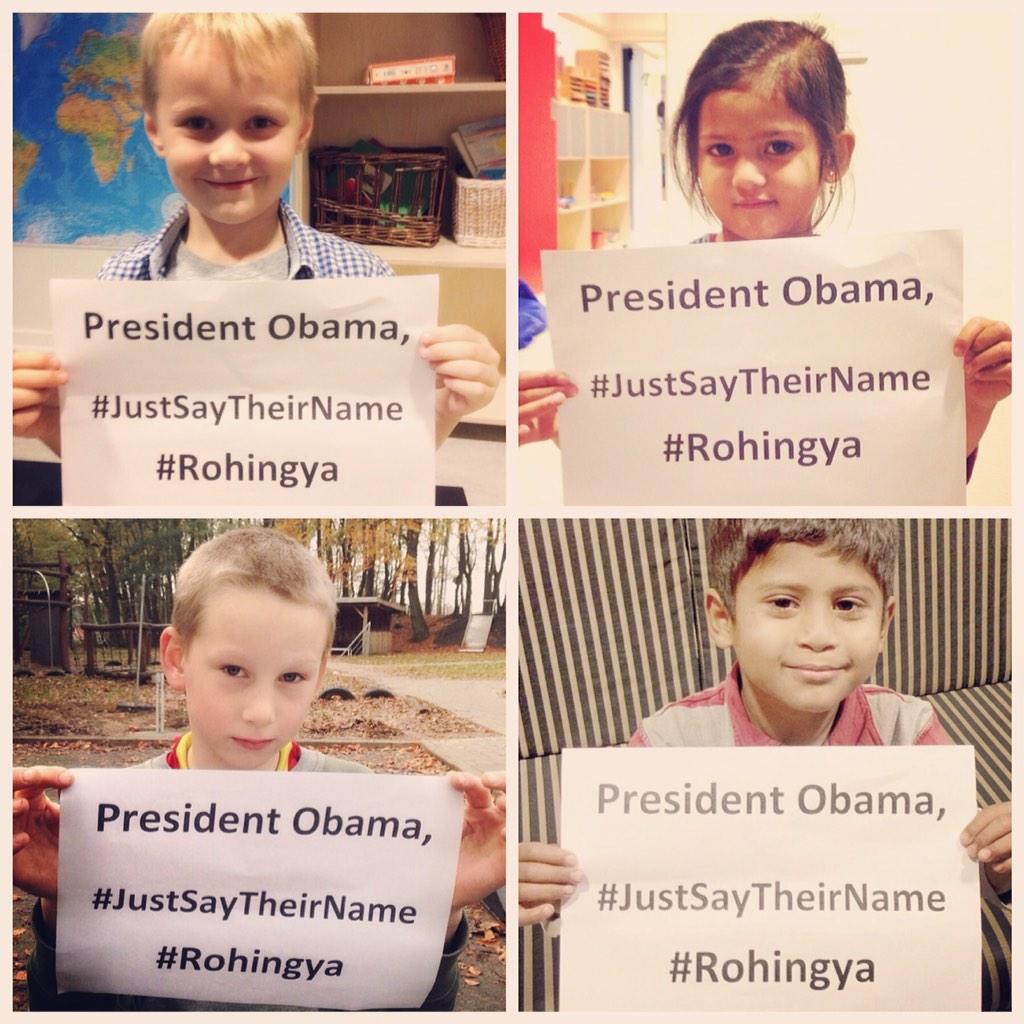
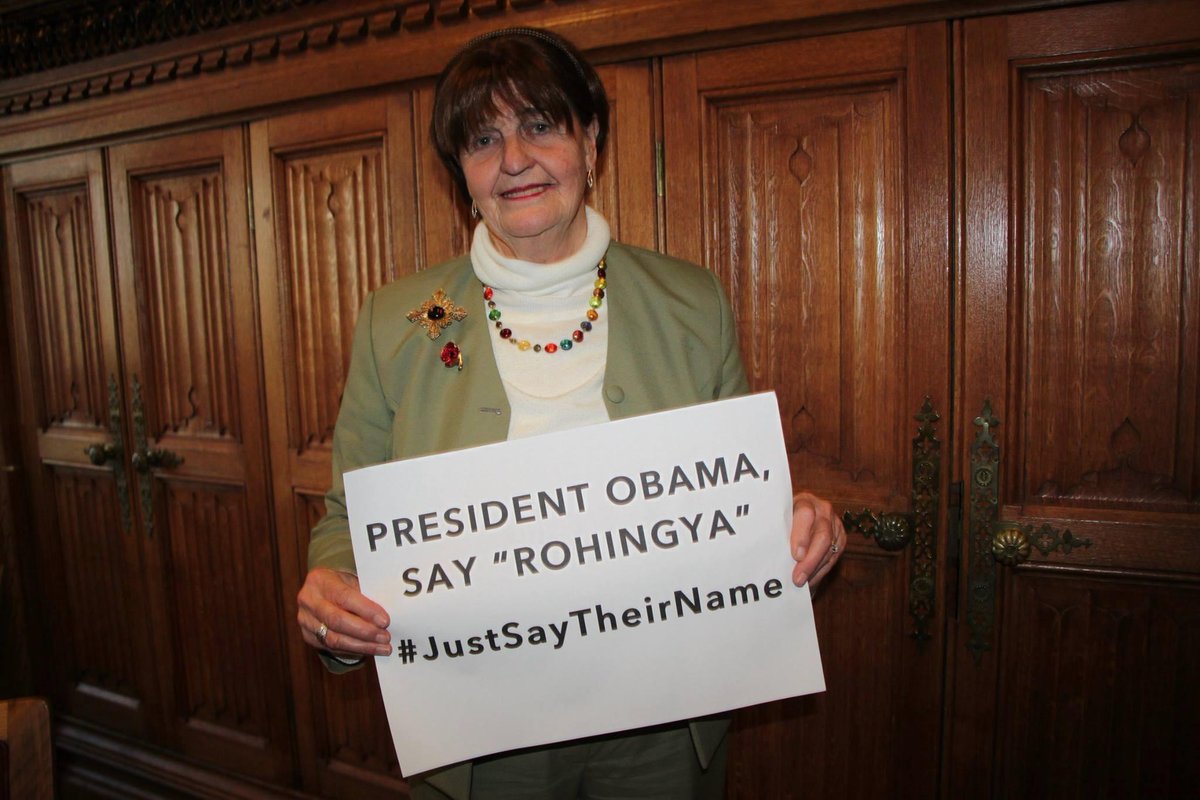
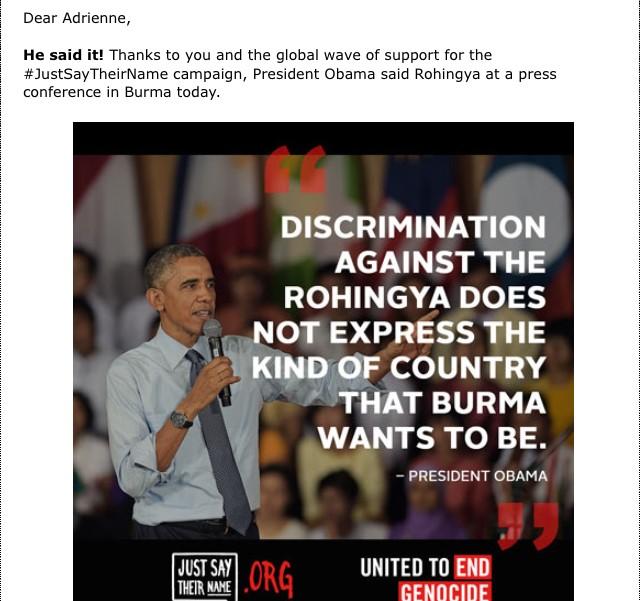
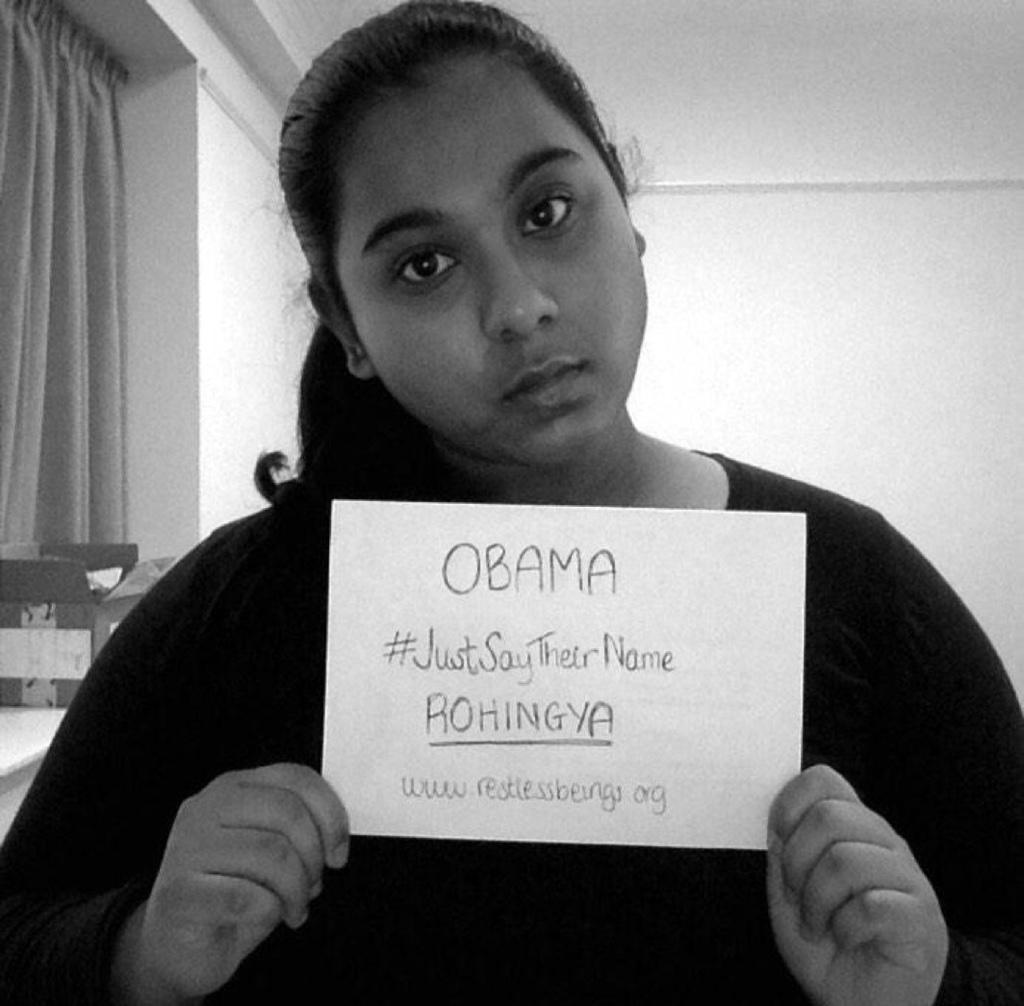
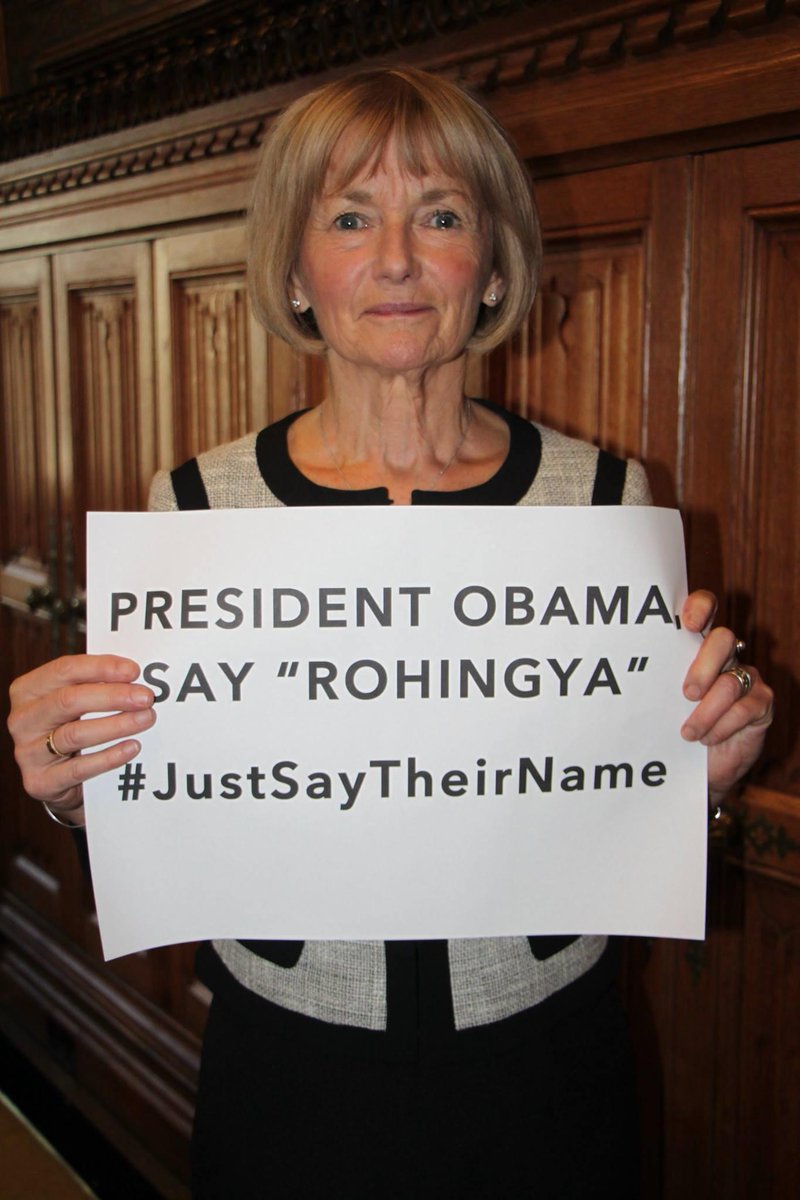
              President Obama has to be commended for speaking up for human rights in Burma, when the likes of Russia and China are silent on this.


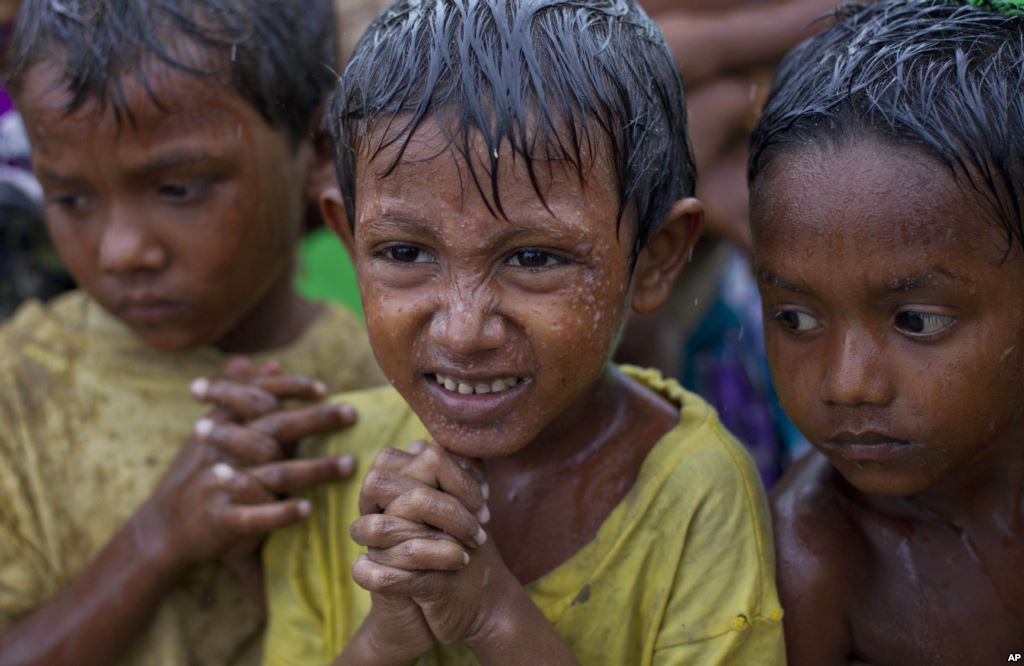
              Rohingyas suffering.


              Anti-Muslim Buddhist extremists arrested by Bangladeshi security forces. It seems they were planning to kill and massacre more Muslims in Arakan.


              Arakan occupied by the Bamar-dominated Burmese junta.


              Buddhist extremists of Arakan.


              Rohingyas were official citizens of Burma before 1982.


              Rohingya refugee camp. 150,000 Rohingyas now live in squalid camps.


              Muslims from other parts of Burma have also been killed by the Burmese.


              ROHINGYA GENOCIDE: THE WORLD IS SILENT. THE BANGLADESHI MILITARY IS SILENT AND DOES NOTHING BUT STAY IN ITS BARRACKS, NOT EVEN MOVING A BRIGADE CLOSE TO THE BORDER AS A WARNING TO THE BURMESE REGIME.

              SHAME ON YOU HASINA.


              THE 160 MILLION PEOPLE OF BANGLADESH MUST BE PREPARED TO SUPPORT THE ROHINGYAS TO DEFEND THEIR HOMES FROM THE BAMAR ARMY.


              Indonesia armed forces. Indonesia, Saudi Arabia, Turkey and others must support the Rohingya.
              * * * * * * * * * * * * * * * * * * * * * * *

              Comment


              • #37


                Baroness Cox, a British parliamentarian in the Houses of Parliament.


                Baroness Kinnick, mother-in-law of the Danish prime minister.


                * * * * * * * * * * * * * * * * * * * * * * *

                Comment


                • #38
                  Rohingya are mainly in bangladesh...some in burma.There is a tussel between bangladesh a nd burma over these refugees as to who is more good in getting rid of rohingyas.Many rohingya women were sold to indian pimps and working as sex slaves.This plight also needed to be dealth with.

                  Since these rohingyas are suffering...crime rate isalso increasing in them..sometimes they steal.
                  sigpic"When it is said to them: "Make not mischief on the earth," they say: "Why, we only Want to make peace!" (2.11)

                  And when it is said to them (hypocrites): "Believe as the people (followers of Muhammad Peace be upon him , Al-Ansar and Al-Muhajirun) have believed," they say: "Shall we believe as the fools have believed?" Verily, they are the fools, but they know not."(2.13)

                  Comment


                  • #39


                    The Thai government has said it is serious about tackling human trafficking, though no government minister has publicly acknowledged that slavery exists in the fishing industry.


                    Huge number of them are trafficked across thailand ,burma,bangladesh to malaysia,india and even in pakistan they ve arrived.Some to gulf.
                    sigpic"When it is said to them: "Make not mischief on the earth," they say: "Why, we only Want to make peace!" (2.11)

                    And when it is said to them (hypocrites): "Believe as the people (followers of Muhammad Peace be upon him , Al-Ansar and Al-Muhajirun) have believed," they say: "Shall we believe as the fools have believed?" Verily, they are the fools, but they know not."(2.13)

                    Comment


                    • #40


                      When a widely circulated newspaper like the New York Times picks up the matter of ill-treatment of the Rohingya refugees in Bangladesh, it is no small matter.

                      It is a matter of grievous concern and shame to tens of thousands of Bangladeshi-Americans who live in and around the Big Apple state.

                      In its February 20 publication the headline read,*“Burmese Refugees Persecuted in Bangladesh.”*It said, “Stateless refugees from Myanmar are suffering beatings and deportation in Bangladesh, according to aid workers and rights groups who say thousands are crowding into a squalid camp where they face starvation and disease.” It described the situation as a*humanitarian*crisis.

                      The NY Times report should come as no surprise to many of us who have been following the inhuman condition of the Rohingyas around the world for a number of years. In its Special Report, dated February 18,*“Bangladesh: Violent Crackdown Fuels Humanitarian Crisis for Unrecognized Rohingya Refugees,”*the Doctors Without Borders (MSF) criticized the Bangladesh government for violent crackdown against the stateless Rohingyas in Bangladesh.

                      It was a chastising report in which the MSF called for an immediate end to the violence, along with urgent measures by the Government of Bangladesh and the office of the United Nations High Commissioner for Refugees (UNHCR) to increase protection to Rohingya refugees seeking asylum in the country.

                      Last month the Physicians for Human Rights (PHR) issued an emergency report,*“Stateless and Starving: Persecuted Rohingya Flee Burma and Starve in Bangladesh”.*This report reveals a PHR emergency assessment of 18.3% acute malnutrition in children. This level of child malnutrition is*“considered “critical” by the World Health Organization (WHO), which recommends in such crises that adequate food aid be delivered to the entire population to avoid high numbers of preventable deaths.”

                      The extreme food insecurity causing this critical level of malnutrition is the direct consequence of Bangladesh government authorities’ restricting movement and, therefore, income generation of the Rohingya, and actively obstructing the amount of international humanitarian aid to this population.

                      Last week, the American Muslim Taskforce (AMT), an umbrella organization that includes the Council on American-Islamic Relations (CAIR) and the Islamic Circle of North America (ICNA), amongst other Muslim organizations in the USA, hosted a press conference in the National Press Club, Washington D.C. to discuss human rights abuses in Bangladesh. In his inaugural statement, Mr. Wright Mahdi Bray of the AMT brought up the squalid living conditions of the Rohingya refugees inside Bangladesh. In the last few years we have raised the Rohingya issue a few times with Bangladesh government, but have failed to improve the deplorable condition.

                      Denied citizenship rights and subjected to repeated abuse and forced slave labor in their ancestral homes in the Arakan/Rakhine state of Burma by a xenophobic Buddhist government, where they cannot travel, marry or practice their religion freely, and betrayed and battered by their Magh Rakhine co-residents, many Rohingya Muslims have hardly any option left for them to survive with dignity other than seeking refuge outside. The neighboring Bangladesh to the north-west with her huge Muslim population and historical ties with Chittagong and Cox’s Bazar, dating back centuries earlier during the Arakanese rule of those districts (1538-1666), provides a natural setting for seeking shelter. Thus, when the Burmese genocidal campaigns – Naga Min (1978-79) and Pyi Thaya (1991-92) – forced eviction of some 300,000 and 268,000 Rohingya refugees, respectively, to seek shelter outside it was Bangladesh where they ended up.

                      With the assistance of the UNHCR, Bangladesh repatriated most of those refugees back to Arakan. Still, however, tens of thousands of Rohingyas never returned, especially from the second batch of major exodus in 1991-92. The on-going Nasaka operation and targeted violence by the Rakhine Maghs inside the Rakhine state have also forced many Rohingyas to leave their ancestral land and return again to Bangladesh. Many of those refugees have often used Bangladesh as a transit point to seek better shelters elsewhere. Many of the Rohingyas have ended up in Saudi Arabia and other Gulf states, and also in Pakistan.

                      As noted recently by Syed Neaz Ahmad in a New Age article, the late King Faisal’s kind gesture to offer the fleeing Rohingyas a permanent abode in Saudi Arabia is no longer respected by the new rulers who have restricted their employment and movement within the Kingdom.

                      According to him some three thousand Rohingya families are in Makkah and Jeddah prisons awaiting their deportation. It is good to hear that the Pakistan government has agreed to take these unwanted refugees. (Islamabad can also do a noble job, albeit a delayed one for the past four decades, in taking some 300,000 stranded Pakistanis – living a miserable life in camps in Bangladesh.)

                      There are some 13,600 Rohingyas registered with the United Nations High Commissioner for Refugees (UNHCR) in Malaysia, an estimated 3,000 in Thailand, and unknown numbers in India.

                      Small number of Rohingya refugees also lives in Japan, Australia and the USA. The total number of Rohingya refugees living inside Bangladesh today is not known. The UNHCR stopped documenting the Rohingyas after 1991 as they shifted their focus to Africa and Eastern Europe. From my contacts within the Rohingya leadership, the estimate is around 400,000. Of these refugees, only 28,000 are recognized as prima facie refugees by the Government of Bangladesh and live in official camps under the supervision of the UNHCR. The official camp has everything: primary schools, a computer learning centre funded by the Bill and Melinda Gates Foundation, health care centers, adult literacy centers, supplementary food centers for children and pregnant women.

                      Except a handful of wealthy Rohingyas who have been able to settle comfortably within the big cities, the rest of the refugees struggle to survive unrecognized and largely unassisted and unprotected, living in dire humanitarian condition with food insecurity, poor water and appalling sanitation. They live mostly in and around Cox’s Bazar and the Hilly districts of Chittagong.

                      Some of the unfortunate refugees have also ended up living in slums of big cities like Dhaka and Chittagong. As reported by the MSF and the Amnesty International, these Rohingya refugees are treated as unwanted folks and have faced repeated beatings and harassment, including forcible repatriation to Myanmar. Many refugees, who had been repatriated to their country in the past, had entered Bangladesh again as they did not find any development and change in the attitude of the Myanmar authorities.

                      Some Rohingya refugees live at a makeshift camp in Kutupalong, south of Cox’s Bazar. Last June and July the local authorities destroyed 259 homes in that makeshift camp to clear space around the perimeter of the official UNHCR camp at Kutupalong. There was a crackdown in October in Bandarban District, east of Cox’s Bazar, forcing many Rohigyas to take shelter in the makeshift camp in Kutupalong. In January 2010, another crackdown followed the refugees living in Cox’s Bazar District. To add to the brutality of the authorities, the Rohingyas also suffer at the hands of the local population, whose anti-Rohingya sentiment is fuelled by local leaders and the media.

                      This was not the first time that this kind of problem emerged for the fleeing Rohingyas. In 2002 during the police action “Operation Clean Heart” many Rohingyas were violently forced from their homes, which led to the establishment of the original Tal makeshift camp on a swamp-like patch of ground. This camp relocated, and in the spring of 2006 MSF started a medical program at the new site, where at the time around 5,700 unregistered Rohingya lived in awful, unsanitary conditions on a small strip of flood land in Teknaf in the Cox’s Bazar District. After two years of providing humanitarian assistance, and following strong advocacy by MSF, which ultimately gained the support of UNHCR and the international community, the Government of Bangladesh allocated new land in Leda Bazar for around 10,000 people in mid-2008. Less than one year later, nearly 13,000 people were living in Leda Bazar Camp, their fundamental living conditions having changed little. According to the MSF, these people continue to struggle to survive without recognition and opportunities to provide for themselves inside an increasingly hostile environment.

                      With a total population of over 28,400, the unregistered Rohingya at Kutupalong makeshift camp now outnumber the total registered refugee population supported by the UNHCR in Bangladesh. The Bangladesh government has repeatedly stopped registration of those unfortunate refugees living outside the official camps. Without official recognition these people are forced to live in overcrowded squalor, unprotected and largely unassisted. Prevented from supporting themselves, they also do not qualify for the UNHCR-supported food relief. And sadly, the UNHCR, which is mandated to protect refugees worldwide, makes little or no visible protest at the injustice of this situation.

                      According to the MSF, the UNHCR is guilty of not taking the return of the Rohingyas as a priority issue. The Office of the UNHCR must take greater steps to protect the unregistered Rohingya seeking asylum in Bangladesh. The UNHCR must not allow the terms of its agreement with the government to undermine its role as international protector of the Rohingyas who have lost the protection of their own state - Myanmar, and have no state to turn to. Any failure to protect the Rohingyas inside and outside Myanmar is simply not acceptable. We are told that as a poor country, Bangladesh faces a dilemma about the Rohingya refugees.

                      If she shows too much flexibility a huge influx may occur, while being harsh creates concern among international community. Nevertheless, Bangladesh government’s forced repatriation of the refugees against their wishes is simply inhuman and violates international humanitarian laws. It must be immediately stopped, failing which its international image may suffer terribly.

                      It must also stop all harassment against the Rohingyas. Temporary residency permits should be provided to the refugees so that they can earn their livelihood like any other Bangladeshi. There is nothing worse than a forced poverty which leads to crime and other serious problems.

                      Should the refugees choose to leave Bangladesh for a third country the government should not hinder that process either. It must also make all diplomatic efforts to find shelters for these stranded refugees in sparsely populated and prosperous countries of Europe and North America, and the Gulf states.

                      The Rohingya refugees remain trapped in a desperate situation with no future in Bangladesh. These unfortunate people are caught between a crocodile and a snake: neither the xenophobic SPDC regime wants them back in Myanmar, nor does the Bangladesh government want them to stay because they are largely perceived as a burden on already scant resources. Outside China, none of the neighboring countries of Burma has ratified the 1951 Convention Relating to the Status of Refugees, its 1967 Protocol, the 1954 Convention Relating to the Status of Stateless Persons and the 1961 Convention on the Reduction of Statelessness. This must change by ratifying those conventions.

                      As the Thai boat crisis of 2009 made clear, regional comprehensive solutions are needed to the situation of the stateless Rohingya. The international community must support the Government of Bangladesh and UNHCR to adopt measures to guarantee the unregistered Rohingya’s lasting dignity and well-being in Bangladesh.

                      [This article is co-authored with Dr. Nora Rowley, a medical doctor, who as part of MSF worked with the Rohingya people inside Arakan. She is currently affiliated with the US Campaign for Burma.]

                      - Asian Tribune -
                      sigpic"When it is said to them: "Make not mischief on the earth," they say: "Why, we only Want to make peace!" (2.11)

                      And when it is said to them (hypocrites): "Believe as the people (followers of Muhammad Peace be upon him , Al-Ansar and Al-Muhajirun) have believed," they say: "Shall we believe as the fools have believed?" Verily, they are the fools, but they know not."(2.13)

                      Comment


                      • #41
                        Contrary to popular perception, the age-old bride bazaar continues to flourish on the back of a well-oiled network of brokers in the poverty-stricken


                        Worse situation is in burma using the women as sex slaves..even sold.Many in detention centres of millitary.
                        sigpic"When it is said to them: "Make not mischief on the earth," they say: "Why, we only Want to make peace!" (2.11)

                        And when it is said to them (hypocrites): "Believe as the people (followers of Muhammad Peace be upon him , Al-Ansar and Al-Muhajirun) have believed," they say: "Shall we believe as the fools have believed?" Verily, they are the fools, but they know not."(2.13)

                        Comment


                        • #42
                          The Arakanese Muslims are called Rohingyas. There used to be a Sultanate of Arkan for 367 years. The kingdom had established a library in the capital M'raku in the lines of the great library at Cordova. The capital city was also named after Morocco. The locals used to call these Araba/semi-Arab settlers and their descendents Moors. What is now the eastern part of BD used to be Northern Arakan till annexed by Emperor Aurangzeb in 1659.Arabs/semi-Arabs have been living in this coastal region since 50 BC when the Monsoon winds was discovered by the Byzantine navigator Hippolytus ushering in sea trade between Aden and Canton.Although southern and eastern Bangladeshis resemble the Arkanese Muslims, they are two people.

                          Comment


                          • #43
                            400 child soldiers freed from Myanmar army in 2014: UN

                            Afp, Bangkok

                            Myanmar's military freed more than 400 child soldiers last year, the United Nations has confirmed, a record number since the "tatmadaw" army signed a 2012 pact with the UN on the issue.

                            There are no verifiable figures on how many children are currently serving in Myanmar's huge military, which has faced a slew of accusations over rights abuses, including the forced recruitment of children to work as porters or even human mine detectors.

                            Since the pact was signed, a total of 595 children have been been freed, with 70 percent of the releases -- 418 -- taking place in the last twelve months, including 42 on Friday, the UN said.

                            "Within a one year period of time, this is a record number of children coming out of the Armed Forces, reflecting the accelerated efforts of the Government of Myanmar and the Tatmadaw to put an end to the harmful practice of recruiting and using children," Renata Lok-Dessallien, UN resident coordinator in Myanmar, said in a statement.

                            All those released by the military so far were under the age of 18 when the pact with the UN was signed in June 2012.

                            While human rights groups have welcomed the gradual release of child soldiers, many have decried the fact that Myanmar's military has yet to completely halt their use.

                            In October, US President Barack Obama decided to keep Myanmar on a list of nations subject to US sanctions over its use of child soldiers.

                            * * * * * * * * * * * * * * * * * * * * * * *

                            Comment


                            • #44
                              Rohingyas stripped off all nationality docs
                              Myanmar begins collecting 'white cards'


                              Afp, Yangon

                              Myanmar authorities have begun collecting temporary identification cards from displaced Rohingya Muslims in unrest-torn Rakhine state, an official said yesterday, a move that the UN has warned could strip them of all documentation.

                              Officials, backed by security forces, visited almost a dozen camps for people displaced by violence between Buddhists and Muslims in the western state.

                              They asked people there to hand back the so-called "white cards", following a shock presidential declaration in February that they would expire on March 31.

                              "Immigration officers said yesterday that the situation was OK. They collected (the cards) from 11 camps, with security personnel," Rakhine government communications officer Hla Thein told AFP, adding that he did not know how many cards had been collected.

                              Hundreds of thousands of people, mainly from the Rohingya minority, are thought to hold white cards -- ostensibly as part of a process of applying for citizenship.

                              The issue became a flashpoint in February when President Thein Sein announced that the cards would become invalid.

                              He was responding to a row over a parliamentary bill that would have allowed holders of temporary identification papers to vote in a referendum on constitutional amendments. The idea sparked protests from Buddhist nationalists.

                              The Rohingya, who are considered by the United Nations to be one of the world's most persecuted minorities, are referred to by the government as "Bengali".

                              It was not immediately clear whether those whose cards were taken were able to begin a citizenship application process.

                              Myanmar authorities have begun collecting temporary identification cards from displaced Rohingya Muslims in unrest-torn Rakhine


                              [MENTION=3580]asad71[/MENTION] Bangladesh needs to liaise with Indonesia and Saudi Arabia on supporting Rohingya resistance groups to expel Burmese occupation forces from parts of Arakan, just as the Kachin, Shan, Karen and others have done.


                              The "Burmese Hitler", Thein Sein.
                              * * * * * * * * * * * * * * * * * * * * * * *

                              Comment


                              • #45
                                The Daily Star is the highly trusted English newspaper in Bangladesh. Read 24/7 live online national, international, regional bd news and headlines.


                                The Daily Star is the highly trusted English newspaper in Bangladesh. Read 24/7 live online national, international, regional bd news and headlines.


                                No place to belong
                                The Unwavering Persecution Of Rohingyas
                                Share on facebook
                                11
                                Share on twitter
                                1
                                Share on email
                                Share on print
                                More Sharing Services
                                Nahela Nowshin
                                THAI authorities detained 76 migrants including six suspected Rohingyas in Thailand's southern Nakhon Si Thammarat province on Monday. The group is said to have been heading to Malaysia in search of work. In January, a group of 98 suspected Rohingyas were also found in pickup trucks in southern Thailand.

                                In a controversial move, Myanmar's government revoked temporary voting rights of people holding identification cards seeking citizenship after President Thein Sein declared on February 11 that said ID cards will expire on March 31, 2015. Presidential office director Maj. Zaw Htay said that the government's decision "automatically annuls the right" of temporary residents holding "white papers" to vote in the upcoming constitutional referendum. White card holders are now required to hand over their cards by May 31. The white papers were introduced in 2010 by the former military junta to allow non-citizens such as the Rohingya and other minorities to vote in a general election.

                                The Rohingya, one of the most persecuted minorities in the world, are internationally recognised as de jure stateless. The ethnic Muslim minority is denied citizenship under the country's military-drafted 1982 Citizenship Law. Sectarian violence and statelessness have resulted in structural impediments to progress for the Rohingya because of a lack of access to basic necessities, and restrictions on their freedom of movement and religion stemming from long-standing discrimination and repression of the minority.

                                ROHINGYA FACTBOX


                                Conflicting narratives
                                Moshe Yegar, heralded as an authority on the history of Muslims in Myanmar and author of "The Muslims in Burma", traces the origins of the Muslims of Arakan (now known as Rakhine) back to the ninth century when Muslim seamen first reached lower Burma and Arakan. According to Yegar, events such as the Mogul invasion, Burmese invasion and WWII which saw large-scale transnational movements of Muslim populations, played an important role in shaping the demography and politics of future Arakan. Today, the Arakanese Muslims call themselves Rohingya.

                                The other narrative, mainly driven by Buddhist nationalism, within Myanmar is that modern day Rohingyas are descendants of colonial-era (1820s) immigrants from Bangladesh. This dominant narrative has been challenged by many sympathetic to the Rohingya cause. One of the claims that refute this narrative is Francis Buchanan's (a surgeon with the British East India Company) firsthand account of travelling to Myanmar in 1799 and meeting with native Muslims who called themselves "Rooinga," indicating the presence of self-identified Rohingyas years before British rule.

                                Politicisation of identity, race, religion
                                For years, people of Arakan were known as Rakhines until some started being referred to as the Rohingya because of linguistic differences. Soon, the politicisation and dichotomy of the two identities ("Rakhines" for the Arakanese Buddhists and "Rohingyas" for the Arakanese Muslims), the foundations of which were laid in the colonial-era, led to the continued subjugation and statelessness of Rohingyas.

                                Changes in the demographic composition in the 1960s and 70s in Arakan due to large numbers of Buddhists migrating eastward provided the Myanmar government with the opportunity to use divisive tactics of race and religion to consolidate support. The government blamed the demographic transition of the declining number of Buddhists on illegal migrations from neighbouring Bangladesh. To make matters worse, in 1976, an alleged coup involving both Arakanese Buddhists and Muslims failed to come to fruition. Fearing the increased likelihood of an armed rebellion by Rohingyas residing in villages, the government forced the migration of more than 150,000 Rohingyas into Bangladesh by mid-1978.

                                The democratic movement that united the Arakanese proved to be a threat to the military regime following the end of Ne Win's rule in 1988. The age-old tactic of race and religion came in handy once again as the regime successfully drove a wedge between the relations of Buddhists and Muslims. The military, backed by China, cultivated an artificial racial situation in order to maintain a larger population of racially Mongoloid Buddhists in hopes of consolidating power with its "populist policies."

                                Stateless to refugee
                                The antagonism of the local populations in the border regions towards Rohingyas can be attributed to multiple reasons including the criminalisation of the ethnic group by the police on both sides of the border. The transition of their status from that of stateless to refugee has had severe consequences, and fuelled the militarisation of pro-Rohingya political fronts making the situation even more volatile.

                                Whether or not the Myanmarese government is exploiting the conflict-ridden region to attract developmental funds and foreign investment by driving Rohingyas out of their homes and forcing them into physical labour has come into question. For Rohingyas, multinational companies' investments in the region and the resulting economic relationship between the Myanmar government and the international community means their plight being "doubly marginalised" - nationally and internationally.

                                Ignored for too long
                                The prevailing debates about the Rohingyas' origins seem to serve as a convenient pretext that does nothing but detract from the current, much larger issues arising from their continued persecution. The failure of Myanmar's government to recognise them as citizens has prolonged their stateless status and deteriorated their condition. The 1982 Citizenship Law makes it nearly impossible for the Rohingya to ever attain citizenship; this draconian law represents one of many forms of institutional oppression and systematic denial of the minority's universal and inalienable rights.

                                The Rohingyas' abuse, humiliation and state-sanctioned paralysis have become normalised. Even the use of the word "Rohingya" in Myanmar is controversial as it invokes deep fear among Buddhists that the minority may seize their homeland. The deplorable humanitarian conditions and undocumented status of Rohingyas in Bangladesh, Malaysia and Thailand among other places have been reduced to mere headlines; pro-active approaches and viable solutions for this humanitarian crisis are severely lacking. Despite there being an agreement among six South Asian countries on a "regional solution," visible leadership is yet to be seen.

                                The Rohingyas, although portrayed as highly disempowered (and they are on many levels), must be recognised for their resilience and strength in the face of such cruel adversity. As refugees, their skills of adaptation and determination to survive are remarkable. While the international community ignores their worsening plight, the Rohingyas continue to fight to prove their existence everyday.

                                The writer is a journalist.

                                Comment

                                Working...
                                X