Announcement

Collapse
No announcement yet.

Time to profile white men?

Collapse
X
 
  • Filter
  • Time
  • Show
Clear All
new posts

  • Time to profile white men?

    My interview with MSNBC ignites a conservative media firestorm -- and exposes America's dangerous double standard


    Yesterday, during a cable news discussion of gun violence and the Newtown school shooting, I dared mention a taboo truism. During a conversation on MSNBC’s “Up With Chris Hayes,” I said that because most of the mass shootings in America come at the hands of white men, there would likely be political opposition to initiatives that propose to use those facts to profile the demographic group to which these killers belong. I suggested that’s the case because as opposed to people of color or, say, Muslims, white men as a subgroup are in such a privileged position in our society that they are the one group that our political system avoids demographically profiling or analytically aggregating in any real way. Indeed, unlike other demographic, white guys as a group are never thought to be an acceptable topic for any kind of critical discussion whatsoever, even when there is ample reason to open up such a discussion.

    My comment was in response to U.S. Rep. James Langevin (D) floating the idea of employing the Secret Service for such profiling, and I theorized that because the profiling would inherently target white guys, the political response to such an idea might be similar to the Republican response to the 2009 Homeland Security report looking, in part, at the threat of right-wing terrorism. As you might recall, the same GOP that openly supports profiling — and demonizing — Muslims essentially claimed that the DHS report was unacceptable because its focus on white male terrorist groups allegedly stereotyped (read: offensively profiled) conservatives.

    For making this point, I quickly became the day’s villain in the right-wing media. From the Daily Caller, to Fox News, to Breitbart, to Glenn Beck’s the Blaze, to all the right-wing blogs and Twitter feeds that echo those outlets’ agitprop, I was attacked for “injecting divisive racial politics” into the post-Newtown discussion (this is a particularly ironic attack coming from Breitbart – the same website that manufactured the Shirley Sherrod fiasco).

    The conservative response to my statement, though, is the real news here.

    Let’s review: Any honest observer should be able to admit that if the gunmen in these mass shootings mostly had, say, Muslim names or were mostly, say, African-American men, the country right now wouldn’t be confused about the causes of the violence, and wouldn’t be asking broad questions. There would probably be few queries or calls for reflection, and mostly definitive declarations blaming the bloodshed squarely on Islamic fundamentalism or black nationalism, respectively. Additionally, we would almost certainly hear demands that the government intensify the extant profiling systems already aimed at those groups.

    Yet, because the the perpetrators in question in these shootings are white men and not ethnic or religious minorities, nobody is talking about demographic profiling them as a group. The discussion, instead, revolves around everything from gun control, to mental health services, to violence in entertainment — everything, that is, except trying to understanding why the composite of these killers is so similar across so many different massacres. This, even though there are plenty of reasons for that topic to be at least a part of the conversation.

    Recounting the truth of these double standards is, of course, boringly mundane, which means my comment on television summarizing them is an equally boring and mundane statement of the obvious. However, as evidenced by the aggressive attempt to turn those comments into controversial headline-grabbing news over the weekend, the conservative movement has exposed its desperation — specifically, its desperation to preserve its White Victimization Mythology.

    In this mythology, the white man as a single demographic subgroup can never be seen as a perpetrator and must always be portrayed as the unfairly persecuted scapegoat. In this mythology, to even reference an undeniable truth about how white privilege operates on a political level (in this case, to prevent a government profiling system of potential security threats even though such a system exists for other groups) is to be guilty of both “injecting divisive racial politics” and somehow painting one’s “opponents as racist” — even when nobody called any individual a racist.

    In this mythology, in short, to mention truths about societal double standards — truths that are inconvenient or embarrassing to white people — is to be targeted for attack by the right-wing media machine.

    Of course, just as I didn’t make such an argument yesterday on MSNBC, I’m not right now arguing for a system of demographically profiling white guys as a means of stopping mass murderers (that’s right, the headline at Beck’s website, the Blaze, is categorically lying by insisting I did make such an argument, when the MSNBC video proves that’s not even close to true). After all, broad demographic profiling is not only grotesquely bigoted in how it unduly stereotypes whole groups, it also doesn’t actually work as a security measure and runs the risk of becoming yet another Big Brother-ish monster (this is especially true when a lawmaker is forwarding the idea of deploying a quasi-military apparatus like the Secret Service).

    Additionally, I’m not saying we should avoid the complex discussion about myriad issues (gun control, mental health, violence in Hollywood products, etc.) that we are having in the aftermath of the Connecticut tragedy. On the contrary, I believe it is good news that those nuanced conversations — rather than simplistic calls for punitive measures against a demographic group — are able to happen, and it’s particularly good news that they are persisting in the face of pro-gun extremists’ best effort to polarize the conversation.

    But the point here is that those tempered and nuanced conversations are only able to happen because the demographic at the center of it all is white guys. That is the one group in America that gets to avoid being referred to in aggregate negative terms (and gets to avoid being unduly profiled by this nation’s security apparatus), which means we are defaulting to a much more dispassionate and sane conversation — one that treats the perpetrators as deranged individuals, rather than typical and thus stereotype-justifying representatives of an entire demographic.

    While such fair treatment should be the norm for all citizens, the double standard at work makes clear it is still a special privilege for a select white few. That’s the issue at the heart of my comment on MSNBC — and it is a pressing problem no matter how much the conservative media machine wants to pretend it isn’t.

  • #2
    White Men are immune to everything they can never do anything wrong.

    This person who wrote this article will get the 3rd degree. No Doubt.
    I believe the sun should never set upon an argument.
    I believe forgiveness is the key to your unhappiness.

    Comment


    • #3
      Adam Lanza: The ultimate 'angry white male

      We are now as a nation practically drowning in a fast-flowing, deep river of blood. As we try to keep our heads up, however, we studiously avoid the single common denominator of all of these events: The overwhelming majority of the gunmen are white men.

      Instead, “liberals” have gone straight to the gun issue, while "conservatives" counter by waving the 2nd Amendment high in the air. See Ann Coulter’s tweet immediately following the shooting: “more guns, less mass shootings”.

      For others it’s all about mental illness and the ongoing health care crisis in America (despite “Obamacare”).

      Jackson Katz is an author and social critic. He asks us to “(i)magine if 61 out of 62 mass killings were done by women [or black men]? Would that [their gender or race] be seen as merely incidental and relegated to the margins of discourse? No. It would be the first thing people talked about.”

      But because we are dealing with white, middle class men, the most powerful and privileged group in this society, no one dares to ask the question. Not, as Katz suggests, the knee-jerk questions: “Where did he get the gun?” or “Why wasn’t he on medication?” But: “What is happening with white men?” (Emphasis added).
      “This is about masculinity and it’s about manhood.”

      Unlike almost anywhere else on earth, in America the gun, moreso than any other icon you can name, symbolizes manhood and masculinity. It is the ultimate phallic symbol.
      Katz goes on: “So much of gun culture in the U.S. is about masculinity but it’s unspoken. Femininity simply isn’t constructed in a way that teaches women to use violence as a means to an end. One of the ways we can understand violence is as an external manifestation of internal pain.” Men are only allowed to experience certain emotions, principally anger. Violence and anger go hand-in-hand as “acceptable” forms of male expression. “Men are rewarded for achieving certain goals and for establishing of dominance through the use of violence,” Katz says.

      Joe Madison is a talk show host out of Washington, D.C. On Dec. 19, he noted that “Nobody’s gonna call you a boy if you’re walkin’ around with an AK47.” He said that guns don’t just indicate but validate manhood in this society.

      And this culture of violence extends from the “disturbed,” or lonely, or low-self-esteemed individual straight through to the taking (read: enslaving, colonizing, raping, robbing, stealing, conquering, plundering and punishing) of the “other,” women, whole villages, countries, nations, nation-states, and continents. The most salient question here is who over the last 500 years has led the world in these pursuits? And, for most of that history, at the point of a gun.

      Katz puts it nicely: “Militarism is, in a sense, a projection of force and power as the assertion of national manhood.”

      Vengeance plays a huge role in this dynamic, too. “Often these shooters are harboring resentment -- they retreat into themselves and then develop these revenge fantasies,” Katz says. “Most of the school shootings over the past couple of decades have been revenge killings.” The victims are mere “props” in his stage act. The gunman’s gun gives voice to a terror-striking and vengeful soliloquy.

      As men, particularly as white men, “we” are socialized to objectify the world and all its contents. That’s why capitalism is so popular, a virtual article of faith, among most “Western” men. Capitalism requires no concern for anyone or anything beyond achieving strictly individualized, personal “profit.” They are socialized to not just believe but to know that they are entitled by God or by their very essence to financial success, access to women, power. When, for whatever reason, they are denied these “things,” they feel betrayed of their birthright. Many seethe in a lifelong funk of quiet desperation and longing. Others, far too many, turn to the most convenient, reliable and time-tested form of masculine validation available: violence, gun violence.

      “As a white man, the assumption is that you are the center of the world. Your needs should be met. You should be successful,” Katz says. They themselves become “victims,” in other words, when they don’t get what they are “supposed” to have. For them, every aspect of life is always a zero-sum proposition. Anybody else’s success is always viewed by them as having been obtained at their expense, as their “loss.”

      “This explains the cultural energy on the right in this past generation – so many of these men see themselves as victims of multiculturalism and of feminism,” he adds. “It’s undermining the cultural centrality of male authority.” Katz points out that we can see this worldview manifesting itself in the Men’s Rights Movement. “They are at the front line making the argument that men are the true victims.”

      Perhaps we’re just dealing with a form of sociopathy? Perhaps. A sociopath is nothing more than someone who lacks empathy. “Well,” says Katz, “we socialize empathy out of boys all the time. Sociopathy is the extreme manifestation of the way we socialize boys in our society.”

      But this, of course, is not just about “masculinity.” In its full manifestation, it is “white masculinity” that is the driving force. As white men will be overwhelmed soon by sheer force of numbers, expect these incidents to become even more frequent, more vicious, more terrible.

      So, we need to stop blaming the guns, or the lack of mental health care, or the video games. Rather, it is the society itself in which these boys are brought to manhood that needs radical change and treatment.

      Comment


      • #4
        Study Shows White Men Are More Likely To Commit Mass Murders

        Are White middle-class men more prone to shooting up schools, movie theaters and other public places??

        Study Shows White Men Are More Likely To Commit Mass Murders
        Are white men more likely to carry out mass killings like last week’s Newtown tragedy or this past summer’s Aurora killings?

        Is there something about the white, male, middle-class experience that makes it easier for sick young men to turn schools and movie theaters into graveyards? Some studies say, yes.

        Via LAWSONRY News And Analysis reports:

        While the majority of all violent crimes are perpetuated by men, American mass murders in particular seem to be the territory of white men. The Encyclopedia of Murder and Violent Crime writes that, “Compared with assailants who kill but one victim, mass murderers are overwhe


        Read more at http://bossip.com/698648/race-matter...xMJls96JBpA.99

        Comment


        • #5
          Adam Lanza: America’s crisis of masculinity personified
          The origins of the Newtown massacre can be traced back to the birth of our contemporary "pleasure economy"
          BY JAMES LIVINGSTON, JACOBIN

          Start here. Adam Lanza can’t be accused or convicted of “unconscionable evil,” not in the court of public opinion and not by the criteria of moral philosophy. He wasn’t making a moral choice when he shot his mother in the face with her own gun, and then killed 20 defenseless children. So individual responsibility and culpability aren’t at issue, as they have not been and cannot be since Columbine.

          It follows that the NRA’s slogan, to the effect that “guns don’t kill people, people kill people,” is moot at best—the killers in every case were sentient beings, but not one was a person at the law or anywhere else in the landscape of possibility most of us can take for granted. Not one was an individual who came to the scene of the crime equipped with a conscience, thus able to make moral choices.

          It also follows, logically at least, that better regulation of access to guns is actually consistent with the NR...

          Comment


          • #6
            Hugo Schwyzer says white male privilege is partly to blame for both the location and the scale of the recent Aurora, Colorado movie theater murders.

            Are white men particularly prone to carrying out the all-too-familiar mass killings of which last week’s Aurora shooting is just the latest iteration? Is there something about the white, male, middle-class experience that makes it easier for troubled young men to turn schools and movie theaters into killing fields? In a word, yes.

            Not every mass murder in recent years has been committed by a middle-class white guy. But as Jamie Utt pointed out in the hours after the Colorado theater massacre, in those rare instances where a man of color is responsible for a shooting spree (as in the 2007 Virginia Tech killings or the 2009 Fort Hood rampage), the popular reaction is to search for connections between the race or religion of the murderer and his act. After Seung-Hui Cho killed 32 people in Blacksburg, media attention focused on the likelihood that a Korean culture unwilling to acknowledge mental illness helped drive the young man to commit the worst mass murder in U.S. history. After Maj. Nidal Hasan carried out the Fort Hood shootings, his Muslim faith became all the public needed to know about his motive.

            It seems likely that Islamic extremism did lead Hasan to kill; it’s possible that Cho’s cultural background did mean that his psychological problems were particularly likely to be ignored. Ethnicity, faith, and social class are key parts of the modern human identity; they are always part of the explanation for why we think the way we think and act the way we act. The difference, as Chauncey DeVega made clear on Saturday, is that when white men commit mass murder we don’t hear how their skin color, their maleness, or their social class were contributing factors to their acts. As Peggy McIntosh famously wrote in her White Privilege Checklist, we see whites as individuals whose moral state reflects their individual will. In other words, white men kill simply because they are “sick” or “evil.” When men of color murder, it is because they are both those things and because of factors uniquely attributable to their race.

            Perhaps the greatest asset that unearned privilege conveys is the sense that public spaces “belong” to you. If you are—like James Holmes last week, or Charles Whitman, who killed 16 people on the University of Texas, Austin campus in 1966—an American-born, college-educated white man from a prosperous family, you don’t have a sense that any place worth being is off-limits to the likes of you. White men from upper middle-class backgrounds expect to be both welcomed and heard wherever they go. When that sense of entitlement gets frustrated, as it can for a host of complex psychological reasons, it is those same hyper-privileged men who are the most likely to react with violent, rage-filled indignation. For white male murderers from “nice” families, the fact that they chose public spaces like schools, university campuses, or movie theaters as their targets suggests that they saw these places as legitimately theirs.

            The vast majority of white men from comfortable backgrounds don’t commit mass murder, of course. Our entitlement doesn’t manifest in the sense that public spaces are ours to terrorize, but it does show up in the confidence with which we move in those spaces. The certainty of belonging is at the core of our privilege.

            When I went off to college at Berkeley, I felt as if I were following in the footsteps of my ancestors. I literally was; my maternal great-grandfathers had both graduated from Cal in the 19th century. I rushed the same fraternity to which my grandfather had belonged in the 1920s. Though I struggled with adolescent anxieties, I never doubted that I belonged on that campus.

            It was at Berkeley, however, that I learned about white male privilege for the first time. I saw how my sense of belonging served as an invaluable crutch in times of personal crisis. And by witnessing the experiences of roommates and friends from less advantaged backgrounds, I learned that the confidence I took for granted was given only to a few. My friends who were first-generation students did just as well in the classroom, but were often more tentative about navigating their way around institutional obstacles. My roommate Oscar—the son of farm workers from the Central Valley—once, with great effort and embarrassment, asked me to go with him to see an administrator. “I need your white boy mojo,” he said with a pained grin, caught between jest and anger.

            That “white boy mojo” can still open all sorts of doors: to boardrooms, to judge’s chambers, to country club memberships. It’s not that those institutions are still overtly racist (though a few come close). It’s not that white men are guaranteed preferential treatment in every setting. It’s that white men are raised to expect to be welcomed wherever they go. When they find that that automatic welcome isn’t forthcoming, they tend to be indignant. When angry middle-class whites gather together in political groups to “take back our country,” what they want to grab back are the privileges they sense they’ve lost.

            We don’t yet know what drove James Holmes to do the terrible things he did. We only partly understand what drove the likes of Eric Harris, Dylan Klebold, Charles Whitman, and the many other white men who have committed similar massacres. While each killer had a unique pathology that helped drive him to do the unthinkable, the fact that these white male mass murderers felt so confident choosing public spaces to commit their crimes reflects a powerful truth about the culture in which they were raised. Put simply, they did what they did because of an individual sickness—but they did it where they did it in part because of white privilege.

            It’s not that white men are more violent. Rates of domestic violence, including homicide, are roughly the same across all ethnic groups. Statistically, murderers are more likely to kill family members and intimate partners than strangers. But while men from all backgrounds kill their spouses, affluent white men are disproportionately represented in the ranks of our most infamous mass murderers. In other words, the less privileged you are, the less likely you are to take your violence outside of your family and your community.

            White men from prosperous families grow up with the expectation that our voices will be heard. We expect politicians and professors to listen to us and respond to our concerns. We expect public solutions to our problems. And when we’re hurting, the discrepancy between what we’ve been led to believe is our birthright and what we feel we’re receiving in terms of attention can be bewildering and infuriating. Every killer makes his pain another’s problem. But only those who’ve marinated in privilege can conclude that their private pain is the entire world’s problem with which to deal. This is why, while men of all races and classes murder their intimate partners, it is privileged young white dudes who are by far the likeliest to shoot up schools and movie theaters.

            Lax gun laws provided the means for the Colorado theater massacre. A yet-unexplained psychotic break provided the likely motive. And at least in part, white male privilege determined both the location and the scale.

            Hugo Schwyzer has taught history and gender studies at Pasadena City College since 1993, where he developed the college's first courses on Men and Masculinity and Beauty and Body Image. A writer and speaker as well as a professor, Hugo lives with his wife, daughter, and son in Los Angeles. Hugo blogs at his eponymous website and co-authored the recent autobiography of supermodel Carré Otis, Beauty, Disrupted. You can find him on Twitter at @hugoschwyzer.

            Hugo Schwyzer says white male privilege is partly to blame for both the location and the scale of the recent Aurora, Colorado movie theater murders. Are white men particularly prone to carrying out the all-too-familiar mass killings of which last week’s Aurora shooting is just the latest iteration? Is there something about the white, male, …

            Comment


            • #7


              Joe Scarborough said on Monday that the massacre in Newtown had forced him to rethink his "long-held" belief about gun rights.

              In a lengthy monologue, Scarborough talked about how shaken up he had been by the killing of 20 children at Sandy Hook Elementary School on Friday. He noted that his children's ages averaged that of some of the murdered victims.

              "From this day forward, nothing can ever be the same again," he said. "... Let this be our true landmark ... politicians can no longer be allowed to defend the status quo."

              He said that he was a "conservative Republican" who had been solidly aligned with the NRA during his time in Congress, and had previously held libertarian views on the Second Amendment. But he added that Friday "changed everything":

              "I knew that day that the ideologies of my past career were no longer relevant to the future that I want, that I demand for my children. Friday changed everything. It must change everything. We all must begin anew and demand that Washington's old way of doing business is no longer acceptable. Entertainment moguls don't have an absolute right to glorify murder while spreading mayhem in young minds across America. And our Bill of Rights does not guarantee gun manufacturers the absolute right to sell military-style, high-caliber, semi-automatic combat assault rifles with high-capacity magazines to whoever the hell they want.
              It is time for Congress to put children before deadly dogmas. It's time for politicians to start focusing more on protecting our schoolyards than putting together their next fundraiser. It's time for Washington to stop trying to win endless wars overseas when we're losing the war at home ... For the sake of my four children and yours, I choose life and I choose change."
              Last edited by Toramana; 12-19-2012, 09:17 PM.

              Comment


              • #9
                Masculinity, mental illness and guns: A lethal equation?
                By Michael Kimmel, Special to CNN

                Editor's note: Michael Kimmel is distinguished professor of sociology at SUNY Stony Brook. His new book "Angry White Men" will be published next year.
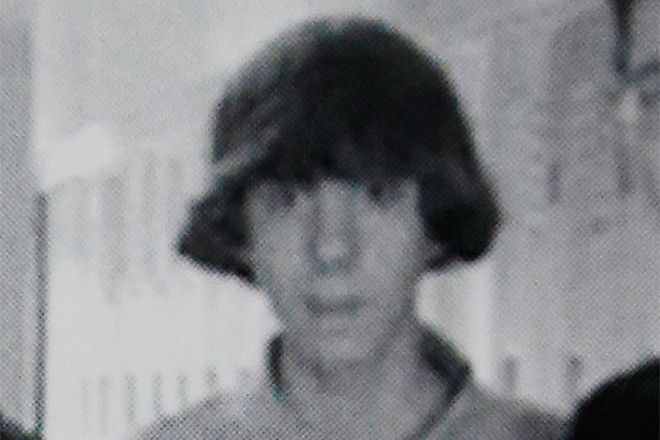
                (CNN) -- For the past few days, Americans have been weeping together and wringing our hands once again at the senseless tragedy of a mass murder inside a school. The horrific scene in Newtown, Connecticut, is now seared permanently in our collective conscience, as we search for answers. We'll look at the photograph of Adam Lanza and ask over and over again how he could have come to such a deadly crossroads.
                We still know nothing about his motives, only the devastating carnage he wrought. And yet we've already heard from experts who talk about mental illness, Asperger's syndrome, depression, and autism. The chorus of gun boosters has defensively chimed in about how gun control would not have prevented this.
                Former Arkansas Gov. Mike Huckabee offered the theory that since "we have systematically removed God from our schools, should we be so surprised that schools would become a place of carnage?" (As if those heathen children deserved it?)
                Thinking twice about violent video games
                All the while, we continue to miss other crucial variables -- even though they are staring right back at us when we look at that photograph. Adam Lanza was a middle class white guy.
                If the shooter were black and the school urban, we'd hear about the culture of poverty; about how inner-city life breeds crime and violence; perhaps even some theories about a purported tendency among blacks towards violence.
                As we've seen in the past week, it's not only those living on the fringes of society who express anger through gun violence.
                Yet the obvious fact that Lanza -- and nearly all the recent mass murderers who targeted non-work settings -- were middle class white boys seems to barely register. Look again at the pictures of Jared Lee Loughner (Tucson), James Eagan Holmes (Aurora) and Wade Michael Page (Oak Creek) -- a few of the mass killers of the past couple of years. (Yes, the case of Seung-Hui Cho, the perpetrator at Virginia Tech, the worst school shooting in our history, stands out as the exception. And worth discussing.)
                Opinion: Get serious about mental health care
                Why are angry young men setting out to kill entire crowds of strangers?
                Motivations are hard to pin down, but gender is the single most obvious and intractable variable when it comes to violence in America. Men and boys are responsible for 95% of all violent crimes in this country. "Male criminal participation in serious crimes at any age greatly exceeds that of females, regardless of source of data, crime type, level of involvement, or measure of participation" is how the National Academy of Sciences summed up the extant research.

                How does masculinity figure into this? From an early age, boys learn that violence is not only an acceptable form of conflict resolution, but one that is admired. However the belief that violence is an inherently male characteristic is a fallacy. Most boys don't carry weapons, and almost all don't kill: are they not boys? Boys learn it.
                More reading: I have Asperger's and I am just like you
                They learn it from their fathers. They learn it from a media that glorifies it, from sports heroes who commit felonies and get big contracts, from a culture saturated in images of heroic and redemptive violence. They learn it from each other.
                In talking to more than 400 young men for my book, "Guyland: The Perilous World Where Boys Become Men," I heard over and over again what they learn about violence. They learn that if they are crossed, they have the manly obligation to fight back. They learn that they are entitled to feel like a real man, and that they have the right to annihilate anyone who challenges that sense of entitlement.
                Opinion: How a boy becomes a killer
                This sense of entitlement is part of the package deal of American manhood -- the culture that doesn't start the fight, as Margaret Mead pointed out in her analysis of American military history, but retaliates far out of proportion to the initial grievance. They learn that "aggrieved entitlement" is a legitimate justification for violent explosion.
                The easy availability of guns is another crucial variable. After the terrible school shooting in Dunblane, Scotland, in 1996, Great Britain enacted several laws that effectively made owning handguns illegal in that country. The murder rate in the U.S. is more than three times higher than Britain.
                And yes, boys have resorted to violence for a long time, but sticks and fists and even the occasional switchblade do not create the bloodbaths of the past few years. In 2011, more than 80% of all homicides among boys aged 15 to 19 were firearm related.
                We need a conversation about gun control laws. And far more sweeping -- and necessary -- is a national meditation on how our ideals of manhood became so entangled with violence.
                In school shootings, patterns and warning signs
                It's also worth discussing why so many of these young mass murderers are white. Surely boys of color have that same need to prove their masculinity, and a similar sense of entitlement to annihilate those who threaten it. Perhaps the only difference is that it seems to be nearly the exclusive province of white boys to so dramatically expand the range of their revenge and seek to destroy the entire world, not simply the person or group that committed the supposed offense. Perhaps. It's a conversation worth having.
                I am not for a moment suggesting we substitute race or gender for the other proximate causes of this tragedy: lax gun laws, mental illness. I am arguing only that we can never fully understand it, unless we also add these elements to our equation. Without them, the story is entirely about him, the shooter. But the bigger story is also about us.
                In the coming weeks, we'll learn more about Adam Lanza, his motives, his particular madness. We'll hear how he "snapped" or that he was seriously mentally ill. We'll try to explain it by setting him apart, by distancing him from the rest of us.
                Risk factors among shooters
                And we'll continue to miss the point. Not only are those children at Sandy Hook Elementary School our children. Adam Lanza is our child also. Of course, he was mad -- as were Eric Harris and Dylan Klebold, and Seung-Hui Cho, Jared Lee Loughner, James Eagan Holmes, and Wade Michael Page -- and the ever-longer list of boys and young men who have exploded in a paroxysm of vengeful violence in recent years. In a sense, they weren't deviants, but over-conformists to norms of masculinity that prescribe violence as a solution. Like real men, they didn't just get mad, they got even. Until we transform that definition of manhood, this terrible equation of masculinity and violence will continue to produce such horrific sums.

                Why are angry young men setting out to kill entire crowds of strangers? They’re taught to seek revenge through violence.

                Comment


                • #10
                  (CNN) -- If you're wondering who else in the United States might fit a "profile" of becoming a mass killer, just look around: They are everywhere, and they're most likely harmless.
                  Frighteningly, we have little idea about what separates those who ponder committing slaughter from those who go through with it. Experts say that risk factors, such as social isolation and rejection, are found in many people across the United States, a country shaken by the massacre at Sandy Hook Elementary School in Newtown, Connecticut, on Friday, in which 20 children and six adults were killed.
                  Adam Lanza, 20, the shooter, whom police say turned the gun on himself Friday, attended the school. He has been described as quiet and socially awkward. There are still few details of what could have motivated his actions.
                  "The truth is that there are many people who have all the symptoms, and don't get the disease," said Jack Levin, professor of sociology and criminology at Northeastern University in Boston. "They may be loners, and strange and angry and have access to firearms, but they don't hurt anyone."

                  Experts in criminology can point to various mental, physical and situational factors that many shooters have in common, but most people who would fit into that box will never actually commit violent crimes.
                  Patterns in violent minds
                  In the United States, mass killers tend to be white males who perpetrate these acts in relatively well-to-do areas where violence is otherwise rare, places like Newtown, said Dr. Peter Ash, a forensic child and adolescent psychiatrist at Emory University School of Medicine.
                  Often, the killer has experienced chronic strain, depression or frustration over a long period, Levin said. In school, they were usually bullied, harassed and ignored.
                  The problems facing the men who commit these crimes are not uncommon, said James Garbarino, professor of psychology at Loyola University Chicago and author of "Lost Boys: Why Our Sons Turn Violent and How We Can Save Them." These include depression and anger about feelings of rejection and exclusion. Many of them have had some sort of mental health concern.
                  Read More: How a boy becomes a killer
                  Dylan Bennet Klebold, who was one of the two high school seniors who participated in the 1999 Columbine High School shooting, appears to have battled depression. Klebold and Eric David Harris killed 13 people before they both committed suicide. Klebold wrote in his journal about suicide, according to the Jefferson County, Colorado, Sheriff's Department. In one entry, he wrote: "I swear -- like I'm an outcast, & everyone is conspiring against me. ..."
                  Harris appeared to be a psychopath, lacking empathy, Levin said. Harris wrote in his diary, according to the sheriff's department, "I'm full of hate and I love it." He wrote in his 1998 yearbook, on the pictures of almost every student, words including "worthless," "die" and "beat."
                  Still, people with mental problems generally are not automatically violent. A 2006 study in the American Journal of Psychiatry found that only 5% of all violent crimes in Sweden are committed by people with severe mental illness, which is likely to be similar in other countries such as the United States, the study said.
                  Russ Hanoman, a friend of Lanza's mother, described Lanza as "very withdrawn emotionally." He and other acquaintances reported Lanza's mother said that he had Asperger's syndrome, a diagnosis of high-functioning autism that CNN has not been able to confirm. There is no link between autism and planned violence, autism groups have noted.

                  Killers tend to blame others, not themselves, for their problems. Mass killers tend to target people whom they imagine would torment them, or whom they blame for their distress, Ash said. Why Lanza would target young children remains mysterious. Did he want to provoke outrage? Ash wonders. Is it because children seem happy and carefree?
                  "I believe he also sought to get even with society at large by killing the most cherished members: our children," Levin said.
                  Opinion: Predicting mass killings impossible
                  Feeling alone, and with access to guns
                  Almost all the killers Levin has studied appeared to lack social support, having no one to turn to when in trouble. They reject their peers, and they are in turn rejected -- "alone in a psychological sense," Levin said.
                  Often the shooter has experienced a catastrophic loss, such as rejection from a girlfriend or getting fired from a job, Levin said. Parents may also inadvertently push teens and young adults over the edge by, for example, pressuring them to be successful.
                  Access to and training in the use of firearms is another major factor in executing a massacre like this, Levin said. The Bureau of Alcohol, Tobacco, Firearms and Explosives confirmed to CNN that Lanza and his mother frequented several gun ranges over the past several years. Those who knew the mother said she kept many weapons, including assault rifles and handguns, in her home. Investigators believe Lanza took his mother's guns to Sandy Hook Elementary School.
                  Although people have a constitutional right to gun ownership, they should not make them readily available to children who might be troubled or severely mentally ill, Levin said. School shootings in recent decades often happened with weapons taken from parents.
                  As much as mental health experts and criminologists may point to all these "warning signs" in the behavior of mass killers after a tragedy such as the Newtown shootings, the reality is that there are hundreds of thousands of people who fit that profile, Levin said. It's very hard to predict who will commit such a crime.

                  Carrying out planning rules out a diagnosis of psychosis, which is associated with a disconnect from reality, Garbarino said.

                  "The overwhelming majority of mass killers are not psychotic, and they're quite methodical in the way they commit an execution of the people they feel are responsible for their problems," Levin said.
                  Many shooters do appear to plan their attack over time, Ash said. From a passing thought, they become obsessed with revenge fantasies. They will read about previous shootings online; the websites they read may hint at what they're planning. From there, they move toward scoping out a location and deciding what they will wear.
                  That assassinations occur after a planning process like this is an insight from the U.S. Secret Service, Ash said. If agents come across someone who has been tracking the president's movements for six months, that's a much higher-risk situation than someone who just has an idea about attacking.
                  In the April 20, 1999, Columbine High School shootings, Harris and Klebold had clearly done significant planning. Officials found a piece of notebook paper "showing a diagram of the Columbine High School cafeteria with two X's next to the pillars," and a list of how many people were there before and after the first lunch period, the sheriff's department said. Both boys had written an itinerary for the day of the shooting.
                  The largest single school shooting in U.S. history, which occurred at Virginia Tech in 2007, was perpetrated by Seung-Hui Cho. Cho had been declared mentally ill and "an imminent danger" to himself by a Virginia special justice, CNN reported in 2007.
                  The massacre, in which Cho killed 32 people before turning the gun on himself, was not spur-of-the-moment, either. During the two hours between the two shootings he committed at different dormitories on April 16, 2007, Cho mailed a package with 27 videotaped messages and an 1,800-word statement to NBC News. "You forced me into a corner and gave me only one option," he said in one of the videos.
                  Schizophrenia is a diagnosis that has come up in some instances of mass killings -- for instance, Jared Loughner, who killed six people and wounded former U.S. Rep. Gabrielle Giffords outside an Arizona supermarket in 2011.
                  Ted Kaczynski, the "Unabomber," received a diagnosis of schizophrenia from court-appointed psychiatrists. This is an especially likely diagnosis in cases when the shooter is in his late teens or early 20s, because symptoms often do not develop until that age, Levin said.
                  But in other cases, the shooters' "pathology" is more clearly tied to their situations, Levin said. They have given up hope for the future, and they seek revenge. They believe they are the victims, and the people they are shooting are villains.
                  Opinion: Blame it on civil breakdown
                  School shootings
                  School shooters specifically tend to come from middle- or upper-class families, Garbarino said. In poorer areas already rife with violence, kids with the same vulnerabilities may drop out of school or end up in the criminal justice system much earlier than in a resource-rich community, so school itself might hold less meaning for them.
                  "For school shooters, they're sort of emotionally living and dying in high school," Garbarino said.
                  Read more: Mass killings at U.S. schools
                  Kipland P. Kinkel, a freshman at Thurston High School in Springfield, Oregon, killed his parents and two students in his school's cafeteria in 1998. His parents were both teachers. His family had taken him to therapy, concerned about his obsession with guns and explosives.

                  "They got every possible resource, and it still didn't work," Garbarino said.
                  Garbarino interviewed a young man who had brought guns and bombs to school on Valentine's Day of his senior year of high school. The boy had studied the Columbine shooting and contemplated killing himself or his tormenters, who had been bullying him. Before he acted, a couple of girls saw him and found his behavior odd; one of them went to get a police officer. He surrendered and went to jail. He said in retrospect that he didn't want the girls to get hit if he started shooting.
                  School shootings by students dropped significantly after Columbine because schools took action to encourage everyone in their communities to bring threats to school officials' attention, Ash said.
                  "We've averted a number of mass killings at schools around the country in recent years because young people are beginning to inform when they hear one of their peers threatened in the hallway," Levin said. "They may inform a resource officer, a parent, a teacher, a school psychologist."
                  In the past, "It wasn't cool for teenagers to inform on their peers, and they didn't," he said. "More and more young people now recognize the seriousness of these threatening utterances at school, and they're much more likely to inform someone."
                  What have emerged instead are instances where members of the general public have taken up arms and killed innocent people.
                  Garbarino also points to a culture of gun violence, where killing people may seem like a viable and available solution to life's problems.
                  Opinion: Get serious about mental health care
                  Stepping in
                  The good news is that most people who have these risk factors will never take the next step, Garbarino said. They may play violent video games, talk about violence with friends and research it on the Internet, but they would never implement a full plan.
                  A major problem is that often, interventions happen when a person becomes dangerous or threatening. A young person should receive help when he or she is merely "troubled," Levin said -- for instance, if he or she is being bullied and harassed, and feels a profound sense of powerlessness.
                  Anti-bullying laws can help, he said. Parents, teachers, principals and school psychologists should step in when they realize a young person feels terrorized in school, Levin said. Most school shooters had been bullied chronically; bullying is not necessarily just a part of growing up.
                  "When we see those red flags in the life of a youngster, we should intervene," Levin said. "Not to prevent a murder, but to do it because it's the right thing to do.
                  "We would improve the quality of life for lots of people," he added, "and in the process we probably would prevent a murder or two."

                  If you’re wondering who else in the United States might fit a “profile” of becoming a mass killer, just look around: They are everywhere.

                  Comment


                  • #11
                    "In a country with fewer than 350 million people but more than 310 million guns, we don't need more of them. We need fewer. And when it comes to our schools, we don't need guns at all."

                    LZ Granderson says allowing concealed weapons in places like schools and churches would just result in more tragedy, not less.

                    Comment


                    • #12
                      With the passing of one week since the savage killings at Sandy Hook Elementary school at the hands of one disturbed young man, Adam Lanza the nation still nervously wonders, will this type of violence ever happen again? The answer sadly seems to be yes.

                      For as much as many Americans wish to stop the violence and live in peace the unfortunate reality is that America’s very fiber does not let it live in peace. A deep reflection of what makes America tick will lead one to come to the realization that America was founded on violence and to this very day uses violence, both physical and psychologically to have its way not only with its own citizens but that of the world.

                      How ironic that Americans talk about peace, safety and yet in reality an unnerving reflection of its history show that it has in fact supported a gamut of wars, imperialistic notions, subverted foreign governments (from Chile, Vietnam, Korea, East Timor, Afghanistan, Iraq) and stood idly by as foreign dictators crush citizen uprisings because of pre existing relationships in place that served oligarchs needs. Never mind the subversion of its own citizens here in the United States via polarized thoughts and arguments, increasing limitation of rights, invasive social and civic laws, policies and the continuing economic disempowerment of a middle class that sadly these days is forced to live on hand outs which are slowly being taken away from them because we need to take care of our fiscal deficit (a convenient way of saying let society go to rot).

                      In the end, what keeps America running is the peddling of prevailing interests of entrenched dominant players and a compliant media who does its bidding. The media has a lot of shame to bear as it still refuses to call out much of the illicit, illegal, shameful and illegitimate behavior and repeatedly goes back to the rhetorical questions of celebrity diversions and telegenic media debates that so often fail to address real concerns but rather the hysterical and parochial.

                      It is quite sinister that such an educated nation can in effect be so easily manipulated and kept at bay and so compliant to the interests of the very few economical dominant and cultural elite. Of course that is not to say that all media in the US works that way, just the over riding bent of it as the nation is increasingly polarized and stymied as media continues to devolve in the electronic age desperately chasing ad dollars.

                      One wonders why the media refuses to engage and ask questions of how society actually works rather in the end simply preferring to ratify and glorify dominant points of views? Points of views that tacitly do nothing but glorify a rarified gilded minority who live in their untouchable ivory towers and give the false illusion that with a bit of luck and hard work the ordinary day dreaming American can rise to that level too…if only.

                      Will President Obama find the actual courage to impart a change of gun laws as the visage of weekly gun battles leaves so many of us dead? Will he actually find the courage and do something for the people or will he back down once again and fall in line behind those who insist that ammunition, guns and warfare and the untouchable status quo of the industrial complex must not be tampered with? If you want an clue as to the political resolve to impart real change and thwart the abuse of society have a look at what financial regulations were put in place after the mortgage bubble collapse of 2008 that saw many Americans financially mutilated and displaced and how 4 years later so many American financial institutions (who perpetrated so many complicit financial actions) are now reporting bumper record profits. Never mind the continuation of bad behavior of these behemoths that are so irregularly reported or publicly downplayed. Bumper profits while the average citizen is reporting bumper misery.

                      And then there’s the culture at large, countless billboards of handsome men clutching guns at a distant enemy with dizzy overhead Hollywood neon lights, countless violent video games, one after the after, countless misogynistic songs, images, portrayals denigrating women, holding them to unattainable standards that leads to so many young women feeling overt inertia and insecurity, countless beatings of gays, transgenders, because in a society like America where we ought to respect different ways of being and feeling we don’t. In fact we condemn it.

                      Instead we persecute those amongst us who are different and belittle them and attempt to humiliate and bully them. Yes the great American dream where one can have their own identity is just a marketing illusion to sell you as many fast food junkets that you can possibly consume. Is it really any surprise then once in a while the occasional citizen flips out and resorts to violence, guns to rationalize the anxiety, panic and feeling of loss?

                      Look around, the violence is endemic, whether physical or psychological. It is woven deeply into the fabric of the nation and it refuses to yield. For all the claims of peace and resolution, the reality is that in an imperialistic aggressive culture like America with the triumphant dogma of the individual’s rights, and its denouement, violence is in the end a necessary reaction to the violent subjugation of the community. Never mind disingenuous plans to counter violence with more violence, or the threat of.

                      Until there is an appreciation of what really ills and undermines America there will be more violence, but really it ought not be that way if we all found the courage to address certain elements of how our society really works and actually consider putting into place gun laws that limit the existence of guns, the creation of mental and social facilities to help address the exacerbation of the individual and the acceptance of our differences rather than the abhorrent rejection of them.

                      Comment

                      Working...
                      X