

 Tweet
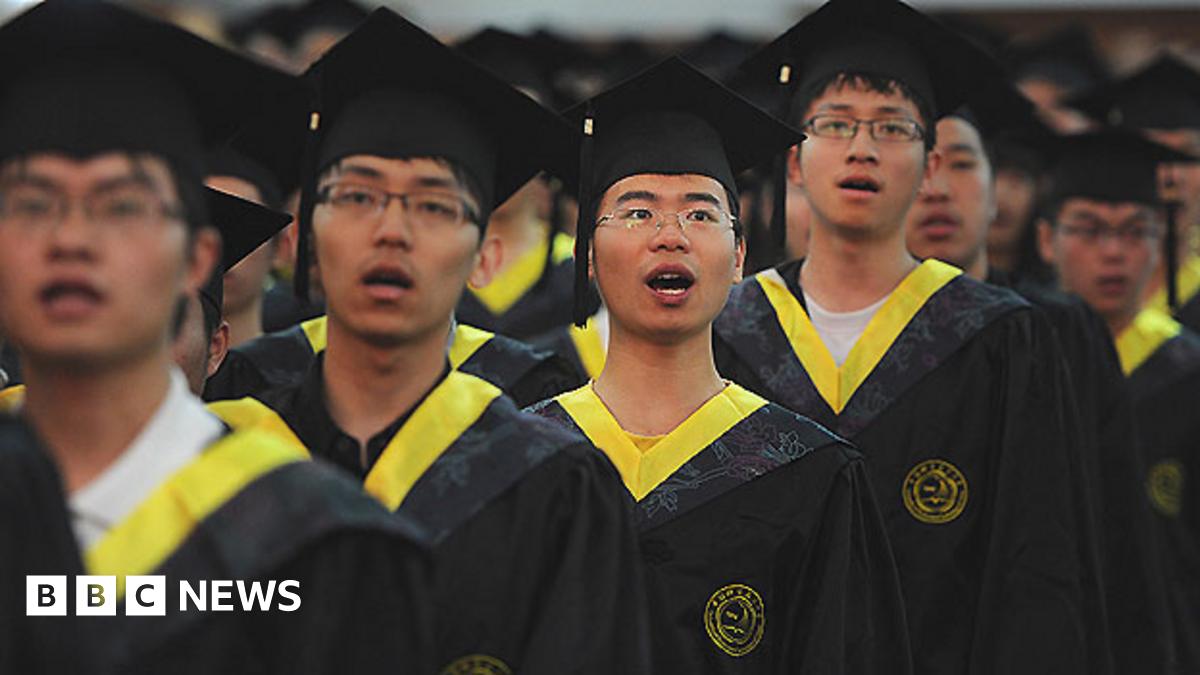
By the end of this decade, four out of every 10 of the world's young graduates are going to come from just two countries - China and India.
The projection from the Organisation for Economic Co-operation and Development (OECD) shows a far-reaching shift in the balance of graduate numbers, with the rising Asian economies accelerating ahead of the United States and western Europe.
The forecasts for the shape of the "global talent pool" in 2020 show China as rapidly expanding its graduate numbers - set to account for 29% of the world's graduates aged between 25 and 34.
The biggest faller is going to be the United States - down to 11% - and for the first time pushed into third place, behind India.
The US and the countries of the European Union combined are expected to account for little more than a quarter of young graduates.
Russia is also set to decline - its share of the world's graduates almost falling by half since the beginning of the century.
Indonesia, according to the OECD's projections, will rise into fifth place.
Fivefold growth
As the OECD figures show, this is not simply a case of countries such as China expanding while others stand still.
Across the industrialised world, graduate numbers are increasing - just not as quickly as China, where they have risen fivefold in a decade.
The OECD notes that by 2020, China's young graduate population will be about the same as the total US population between the ages of 25 and 64.
This changing world map will see Brazil having a bigger share of graduates than Germany, Turkey more than Spain, Indonesia three times more than France.
The UK is bucking the trend, projected to increase its share from 3% in 2010 to 4% in 2020.
This push for more graduates has a clear economic purpose, says the OECD's analysis.
Comment