

 Tweet
Didi's antics overshadow PM's Bangladesh visit - The Times of India
Indrani Bagchi, TNN | Sep 7, 2011
DHAKA: It was a summit that yielded much for both Bangladesh and India, but will forever be shadowed by the failure to get a pact on sharing river waters. To the extent that Manmohan Singh and Sheikh Hasina intended this summit to signal a "paradigm shift" in bilateral ties, the disappointment in Bangladesh over Mamata Banerjee's last-minute tantrum means this is still a while away.
Mamata's sudden Sunday refusal to accompany the PM to Dhaka threw the Bangladeshis, but even they did not believe that India would not finally get its act together. Bangladesh foreign minister Dipu Moni even went on record on Monday to say that she had prepared the documents for signing on Tuesday. As it became clear that Mamata was not going to relent, the sense of disappointment and anger sweeping Dhaka was acute. The fallout of the Teesta fiasco was that an exchange of letters for transit from Chittagong and Mongla ports also had to be shelved. Rajeet Mitter, India's high commissioner to Dhaka, was called in by foreign secretary Mijarul Quayes this afternoon to see if a last minute deal could be reached on Teesta, as well as conveying Bangladesh's deep unhappiness with the Teesta turnaround by Mamata. Foreign secretary Ranjan Mathai highlighted the positives from the summit, and there were many. No one can discount the importance of the land boundary agreement which, for the first time, gives India a fully demarcated longest boundary with any of its neighbours. That's huge, because it addresses a historical leftover that had begun to resemble suppurating sores.
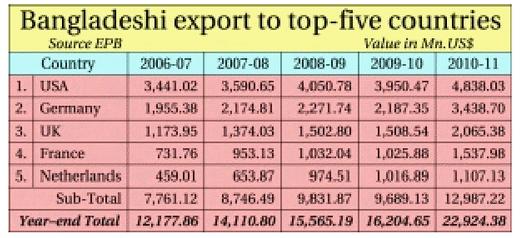
Bangladesh has got enormous satisfaction on the trade front as India lifted tariffs on 46 textile lines from its sensitive list. This will go far in addressing Bangladesh's massive trade balance problem. India has already utilized $750 million of its $1 billion line of credit for infrastructure building here. Border management issues have been addressed, while integrated checkposts, border haats, connecting Bangladesh and Indian national grids for power signal greater integration than ever before. Good are already being sent to India through the Ashuganj port, the first step in transit arrangements for India.
It should have been a real good news visit, and a signal to other neighbours that teaming up with India has real benefits. But India fell short at the last mile, because it could not rise about local politics when the bigger picture needed to be addressed.
For Sheikh Hasina, who is the real architect of the turnaround in India-Bangladesh ties, the let-down on Teesta is greater, because this would have been sold to a hostile opposition and a hopeful nation that good relations with India make political and economic sense. The lack of a water pact could make her more vulnerable to opposition attacks. A Bangladesh journalist said, "we supported Mamata during her election. Is this how she treats us?" The sentiment was echoed at the top echelons of the Bangladesh foreign ministry, where officials could scarcely hide their disappointment.
Addressing the formal banquet in the evening, Sheikh Hasina declared that an "understanding" had been reached with India on Teesta and Feni river waters. Analysts here said it could mean that she would find it difficult to climb down further on the amount of water Bangladesh could get from a future agreement. Since the Teesta agreement has been in the making for almost 20 months, Bangladeshis are finding it difficult to swallow Mamata's line that she was not consulted.
Dressed in a blue-and-white jamdani, Sheikh Hasina broke protocol to greet Singh and his entourage at the Hazrat Shah Jalal airport as they landed in a special aircraft this morning. The unique affinity between Bangladesh and India was nowhere more evident than the fact that the national anthems of the two countries were authored by the same man - Rabindranath Tagore.
But the absence of Mamata Banerjee, the chief minister of West Bengal, was all too conspicuous as was the fact that the centrepiece of the Singh visit, a water sharing treaty on Teesta river would have to be put off for a later date. It only reinforced every negative perception that Bangladeshis harbour about Indians.Top level sources in the Indian government said this morning, "India and Bangladesh have to get into the habit of working with each other." From the Bangladesh point of view, it is India that failed to step up to the plate. En route to Dhaka, high level sources tried to put a positive spin on the failure to reach a water-sharing agreement, saying India would rather wait for a more acceptable water sharing agreement than rush through one now. "We want to make this a template for other water-sharing treaties with Bangladesh," they said. India and Bangladesh share 54 rivers, though Teesta and Feni are the more important ones.
For Mamata Banerjee in West Bengal though, the Teesta stand-off may actually be a political victory. She has been apprehensive that the CPM would capitalize on the agreement with protests in North Bengal, where she has recently struck political roots. In the short-term electoral politics of India, Mamata's stand will be appreciated by farmers in Dinajpur, Malda, Murshidabad and Jalpaiguri as standing by them, particularly as the Teesta Barrage Project promises to be ready by 2015.
But ultimately, the ball remains in the prime minister's court. As before, the PMO has betrayed a political naivete that has cost the UPA government, and this time was no different. To have Mamata Banerjee as the face of a Teesta agreement should have been an easy conclusion, just as the 1996 Ganga Waters Treaty would never have been possible if Jyoti Basu was not leading the Indian charge. Like Basu, Mamata too has strong connections with the Bangladesh leadership, so this could have been given to her as a local political victory as long as the strategic objectives of Manmohan Singh's government was met. But that was not to be. And it leaves a bitter taste in the mouth in a country India desperately wants on its side.




Comment