
 Tweet
US extends drone strikes to Somalia
First drone strike in Somalia reported to have wounded senior al-Shabab militants
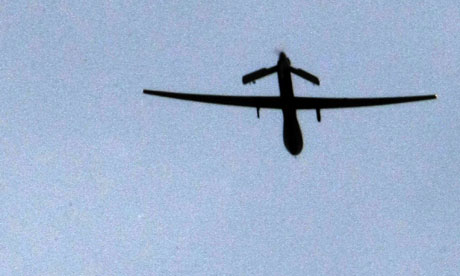
A US Predator drone in Afghanistan. The strike in Somalia means armed
drones are operating in six countries.
The US has conducted its first drone strike on Islamist militants in
Somalia, marking the expansion of the pilotless war campaign to a
sixth country.
The missile strike on a vehicle in the southern town of Kismayo,
reported last week as a helicopter assault, wounded two senior
militants with al-Shabab and several foreign fighters according to the
Washington Post.
Armed Predator and Reaper drones already operate in Afghanistan,
Pakistan, Iraq, Yemen and Libya, where they are controlled by the
US military or the CIA.
The CIA-run programmes are controversial. Although they provide
the Obama administration with a low-risk weapon against Islamist
militants, they stir intense anti-American hostility among the local
population.
Opposition is most vociferous in Pakistan, where the government said
on Wednesday it was shutting down a big CIA drone base, and had
ordered US personnel based there to leave.
The closure of Shamsi airbase is unlikely to end the strikes. The CIA
has moved its drones to bases across the border in Afghanistan, and
some strikes have already taken place from there, according to a
senior Pakistani military official.
Racked by decades of civil war, Somalia has become an al-Qaida
hub, after Yemen and Pakistan's tribal belt. The US military previously
targeted militants based there using helicopter gunships, special
forces teams and cruise missiles fired from aircraft carriers.
The US has also flown surveillance drones over Somalia – one was
shot down in October 2009 – but now they are being used for
assassination. The targets of the 23 June strike were reportedly
close to Anwar al-Awlaki, the US-born leader of al-Qaida in the
Arabian peninsula.
In May, Awlaki escaped a drone strike in Yemen carried out by the
Joint Special Operations Command, an elite military unit that
orchestrated the Osama bin Laden raid. Now control of the Yemen
strikes is reported to be passing to the CIA.
The closure of Shamsi airbase is a blow to President Barack Obama
efforts to flush al-Qaida from Pakistan. Shamsi, in western
Balochistan province, was the launchpad for strikes against al-Qaida
and Taliban militants in the tribal belt, particularly in Waziristan.
Washington politicians have warmly embraced the drone strikes,
which allow them to target elusive enemies in remote parts of the
world with little risk to US personnel. In Pakistan, drone strikes have
killed 2,500 people since 2004, according to higher estimates.
Military analysts say they represent the future of airborne warfare.
Ground personnel help the pilotless craft take off, but control quickly
passes to remote-control pilots stationed thousands of miles away in
the US.
The CIA drones are controlled from a suburban facility near the spy
agency's headquarters in Langley, Virginia, while military drones are
controlled from airbases in Texas, Nevada and elsewhere.
Shamsi was built by Arab sheikhs for falcon hunting trips, but has
been occupied by the CIA since at least 2004, when Google Earth
images showed Predator drones parked on the runway.
Pakistani defence ministry officials said they were closing the base in
retaliation to slowed payments from the coalition support fund – a
multibillion-dollar US subsidy for Pakistani military operations.
A senior US official in Islamabad said the government was engaging in
"diplomacy by headlines" but Pakistan's leaders are also responding to
hostile public opinion. A recent Pew poll found that just 3% of
Pakistanis favoured drone strikes.
The CIA is likely to continue its Pakistan campaign from its Afghan
bases. In unusually direct comments on Wednesday, Obama's
counter-terrorism adviser John Brennan said the US would continue
to "deliver precise and overwhelming force against al-Qaida" in the
tribal areas.
The widening drone campaign has elicited concerns from human
rights activists about civilian casualties, and from legal experts about
the consequences of an unaccountable form of warfare. Last year a
senior UN official warned of the risks of a "PlayStation warfare"
mentality.
First drone strike in Somalia reported to have wounded senior al-Shabab militants
A US Predator drone in Afghanistan. The strike in Somalia means armed
drones are operating in six countries.
The US has conducted its first drone strike on Islamist militants in
Somalia, marking the expansion of the pilotless war campaign to a
sixth country.
The missile strike on a vehicle in the southern town of Kismayo,
reported last week as a helicopter assault, wounded two senior
militants with al-Shabab and several foreign fighters according to the
Washington Post.
Armed Predator and Reaper drones already operate in Afghanistan,
Pakistan, Iraq, Yemen and Libya, where they are controlled by the
US military or the CIA.
The CIA-run programmes are controversial. Although they provide
the Obama administration with a low-risk weapon against Islamist
militants, they stir intense anti-American hostility among the local
population.
Opposition is most vociferous in Pakistan, where the government said
on Wednesday it was shutting down a big CIA drone base, and had
ordered US personnel based there to leave.
The closure of Shamsi airbase is unlikely to end the strikes. The CIA
has moved its drones to bases across the border in Afghanistan, and
some strikes have already taken place from there, according to a
senior Pakistani military official.
Racked by decades of civil war, Somalia has become an al-Qaida
hub, after Yemen and Pakistan's tribal belt. The US military previously
targeted militants based there using helicopter gunships, special
forces teams and cruise missiles fired from aircraft carriers.
The US has also flown surveillance drones over Somalia – one was
shot down in October 2009 – but now they are being used for
assassination. The targets of the 23 June strike were reportedly
close to Anwar al-Awlaki, the US-born leader of al-Qaida in the
Arabian peninsula.
In May, Awlaki escaped a drone strike in Yemen carried out by the
Joint Special Operations Command, an elite military unit that
orchestrated the Osama bin Laden raid. Now control of the Yemen
strikes is reported to be passing to the CIA.
The closure of Shamsi airbase is a blow to President Barack Obama
efforts to flush al-Qaida from Pakistan. Shamsi, in western
Balochistan province, was the launchpad for strikes against al-Qaida
and Taliban militants in the tribal belt, particularly in Waziristan.
Washington politicians have warmly embraced the drone strikes,
which allow them to target elusive enemies in remote parts of the
world with little risk to US personnel. In Pakistan, drone strikes have
killed 2,500 people since 2004, according to higher estimates.
Military analysts say they represent the future of airborne warfare.
Ground personnel help the pilotless craft take off, but control quickly
passes to remote-control pilots stationed thousands of miles away in
the US.
The CIA drones are controlled from a suburban facility near the spy
agency's headquarters in Langley, Virginia, while military drones are
controlled from airbases in Texas, Nevada and elsewhere.
Shamsi was built by Arab sheikhs for falcon hunting trips, but has
been occupied by the CIA since at least 2004, when Google Earth
images showed Predator drones parked on the runway.
Pakistani defence ministry officials said they were closing the base in
retaliation to slowed payments from the coalition support fund – a
multibillion-dollar US subsidy for Pakistani military operations.
A senior US official in Islamabad said the government was engaging in
"diplomacy by headlines" but Pakistan's leaders are also responding to
hostile public opinion. A recent Pew poll found that just 3% of
Pakistanis favoured drone strikes.
The CIA is likely to continue its Pakistan campaign from its Afghan
bases. In unusually direct comments on Wednesday, Obama's
counter-terrorism adviser John Brennan said the US would continue
to "deliver precise and overwhelming force against al-Qaida" in the
tribal areas.
The widening drone campaign has elicited concerns from human
rights activists about civilian casualties, and from legal experts about
the consequences of an unaccountable form of warfare. Last year a
senior UN official warned of the risks of a "PlayStation warfare"
mentality.

Comment