Announcement

Collapse
No announcement yet.

Beautiful reminders

Collapse
X
 
  • Filter
  • Time
  • Show
Clear All
new posts

  • #31


    ALLAH RESIDES IN BROKEN HEARTS:

    The Holy Prophet sallallaho alayhi waalihi wasallam was once asked,*“Ayna Allah?” (Where is Allah?), and he saw said*“ ‘Inda al-munkasirati qulubuhum” (He is with those who hearts are broken)*[Al-Rawandi, Al-Da‘awaat, pp.119-120].

    This brilliant statement unfortunately has sometimes been misconceived and misinterpreted. A common understanding is to focus mainly on the state of the broken heart, regardless of its cause and level of excellence. If this was the case, many hearts break due to the petty issues of material world. Does this dictum also refer to them? A better and more profound understanding of this hadith is gotten when we consider another similar tradition, which specifies the nature of the heart and the cause of its breaking: Amir al-mu’minin ‘Ali (ra) is reported to have said:*“Tuba lil munkasirati qulubuhum min ajli Allah”
    (A pleasant final state be to those whose hearts are broken for Allah)*[Al-Aamadi, Ghurar al-Hikam, tr.5937].

    The phrase*‘min ajli Allah’ (for the sake of Allah)here clearly depicts that the principal cause of the brokenness of hearts must be related to Allah. For example, because one has not yet achieved one’s principal goal in life which is Divine proximity, one’s heart is broken!

    One of the subtlest meanings of the verse*“Ud‘uni astajib lakum” (Call Me and I shall respond to you)*[Qur’an, 40:60] is that we are told to seek Allah only. Ud‘uni (Call “ME”).

    How selfish of us to call the only Beloved for our material and selfish motives. Ask one who is engaged to someone for marriage, the reason why he tends to call her constantly? Is it because of her wealth? Is it because of her position and fame? Is it because of the physical enjoyment he anticipates from her? If these are the reasons, then in reality he is engaged with them and not with her. Let us call the Beloved for the Beloved, and nothing else. Let us stop approaching Him as an intermediary for our mundane goals. Let us understand that He is THE GOAL.

    If we tangibly observe that our hearts are broken*“min ajli Allah” (Because of missing Allah), then we should most surely guarantee His Presence!*“I am in the presence of the broken HEARTS”
    sigpic"When it is said to them: "Make not mischief on the earth," they say: "Why, we only Want to make peace!" (2.11)

    And when it is said to them (hypocrites): "Believe as the people (followers of Muhammad Peace be upon him , Al-Ansar and Al-Muhajirun) have believed," they say: "Shall we believe as the fools have believed?" Verily, they are the fools, but they know not."(2.13)

    Comment


    • #32
      The Sanctity of Life

      The Glorious Qur’an says:

      “…take not life, which God hath made sacred, except by way of justice and law: thus doth He command you, that ye may learn wisdom.” [Al-Qur’an 6:151]

      Islam considers all life forms as sacred. However, the sanctity of human life is accorded a special place. The first and the foremost basic right of a human being is the right to live. The Glorious Qur’an says:

      “…if any one slew a person – unless it be for murder or for spreading mischief in the land – it would be as if he slew the whole people: and if any one saved a life, it would be as if he saved the life of the whole people.” [Al-Qur’an 5:32]

      The value of human life is so great, that the Qur’an equates the taking of even one human life unjustly with the killing of all humanity.

      The Verses of War

      The words that often cause consternation among those unfamiliar with Islam, are: “…and slay them wherever ye catch them…”

      The truth is that this is only part of verse 191 of Chapter 2 of the Qur’an. Let us read the verses 190 to 191 in order to get a complete picture:

      “Fight in the cause of Allah those who fight you, but do not transgress limits; for Allah loveth not transgressors. And slay them wherever ye catch them, and turn them out from where they have Turned you out; for tumult and oppression are worse than slaughter; but fight them not at the Sacred Mosque, unless they (first) fight you there; but if they fight you, slay them. Such is the reward of those who suppress faith.” [Al-Qur’an 2:190-191]

      It is a well-known fact of Islamic history, that fighting against aggressors was prohibited during the first thirteen years of the Prophet’s mission. After Muslims migrated to Medina, the verses above were revealed to enable the community to fight in self-defense. The verses that follow clearly indicate Islam’s prohibition on aggression and inclination towards peace:

      “But if they cease, Allah is Oft-forgiving, Most Merciful. And fight them on until there is no more tumult or oppression, and there prevail justice and faith in Allah; but if they cease, let there be no hostility except to those who practise oppression.” [Al-Qur’an 2:192-193]

      The verses above specifically refer to fighting against oppression and in defense of religious freedom as the Glorious Qur’an says:

      “Let there be no compulsion in religion” [Al-Qur’an 2:256]

      Fair-Dealing Towards All

      When read in context, the above verses do not even remotely suggest an exhortation for Muslims to be vicious or hateful towards people of other faiths. Far from this, the Qur’an actually requires that Muslims conduct themselves with fairness and dignity in all matters, and especially in regard to interfaith relations, as indicated by the following verse:

      “Allah forbids you not, with regard to those who fight you not for (your) Faith nor drive you out of your homes, from dealing kindly and justly with them: for Allah loveth those who are just.” [Al-Qur’an 60:8]

      sigpic"When it is said to them: "Make not mischief on the earth," they say: "Why, we only Want to make peace!" (2.11)

      And when it is said to them (hypocrites): "Believe as the people (followers of Muhammad Peace be upon him , Al-Ansar and Al-Muhajirun) have believed," they say: "Shall we believe as the fools have believed?" Verily, they are the fools, but they know not."(2.13)

      Comment


      • #33
        sigpic"When it is said to them: "Make not mischief on the earth," they say: "Why, we only Want to make peace!" (2.11)

        And when it is said to them (hypocrites): "Believe as the people (followers of Muhammad Peace be upon him , Al-Ansar and Al-Muhajirun) have believed," they say: "Shall we believe as the fools have believed?" Verily, they are the fools, but they know not."(2.13)

        Comment


        • #34
          10 Reasons to Strive for Generosity of Spirit and Kindness in Speech:

          1. The Messenger of Allah ﷺ said, “Kind speech and feeding (the hungry) guarantee you Paradise.”*(al-Tabarani)

          2.*“And speak nicely to people.”*(Qur’an, 2:83)

          3.*“When you are greeted with a greeting, greet in return with what is better than it, or (at least) return it equally.” (Qur’an, 4:86)*

          Ibn Abbas ra commented on this and said, “He who greets you return his greeting in better words even if he were a Magian.1 He also said, “If Pharoah were to speak nicely to me, I would do so to him.”

          4. Anas (ra) narrated that the Messenger of Allah ﷺ said, “Verily there are chambers in Paradise; their insides and outsides can be seen – for him who spoke kindly and fed (the hungry).”*(al-Tirmidhi)

          5. He ﷺ also said,*“A good word is also a charitable deed.”(Muslim)

          6.*“Ward off the Fire even if by giving half a date in charity. If you could not afford that then utter a kind word.”*(al-Bukhari and Muslim)

          7. `Umar (ra) said, “Generosity is an easy thing. It is a smiling face and kind words.”

          8. Some wise men said, “Do not be stingy with a word that does not arouse your Lord’s wrath yet it pleases your brother. It may happen that Allah gives you the reward of those who do good works.”

          9.*“And let not those among you who are blessed with graces and wealth swear not to give to their kinsmen, the poor, and those who left their homes for Allah’s cause. Let them pardon and forgive. Do you not wish that Allah should forgive you?”*(Qur’an, 24:22). Abu Bakr (ra) had cut off his financial support of his relative Mustah because Mustah had participated in the slander against his daughter `A’ishah (ra). After this verse was revealed, he resumed and even increased the amount he gave Mustah in financial support.

          10.*“Show forgiveness, enjoin what is good, and turn away from the foolish.”*(Qur’an, 7:199)

          sigpic"When it is said to them: "Make not mischief on the earth," they say: "Why, we only Want to make peace!" (2.11)

          And when it is said to them (hypocrites): "Believe as the people (followers of Muhammad Peace be upon him , Al-Ansar and Al-Muhajirun) have believed," they say: "Shall we believe as the fools have believed?" Verily, they are the fools, but they know not."(2.13)

          Comment


          • #35
            sigpic"When it is said to them: "Make not mischief on the earth," they say: "Why, we only Want to make peace!" (2.11)

            And when it is said to them (hypocrites): "Believe as the people (followers of Muhammad Peace be upon him , Al-Ansar and Al-Muhajirun) have believed," they say: "Shall we believe as the fools have believed?" Verily, they are the fools, but they know not."(2.13)

            Comment


            • #36
              What is recommended for the one who hears the Adhan


              1.To say what the Mu′adhin says except when he says “come to prayer, come to success.” After these he should say: “Lā hawla walā quwwata illā billah.” Meaning: “There is no ability or strength except by that of Allah.”

              2.After the Āḍhan has finished, he should say: “Ash-hadu ′an lā Ilaaha illallah wahdahu lā shareeka lahu wa anna Muhammadan ‘abduhu warasūluh. Radeetu billahi rabban wabi Muhammadi nabiyyan wabil Islami deena.” Meaning: “I bear witness that there is no god worthy of worship except Allah alone, He has no partner, and that Muhammad is His servant and Messenger. I am pleased with Allah as my Lord, with Muhammad as my Messenger and with Islam as my religion.”

              3.To ask Allah to bestow His Blessings upon the Prophet*ﷺ*after the Āḍhan and then say: ‘Allahumma rabba hathihi-d-a’wati at-taāmah wasṢalātil qāimah ′Ati Muhammadanil waseelata wal fadheelah, wab’athul maqaama mahmudanil-lathi wa’adtah.”[12] Meaning: “O Allah, Lord of this perfect call and the established prayer, grant Muhammad*ﷺ*intercession and favor, and raise him to the honored position you have promised him.”*

              4.It is expected that he supplicates for himself between the Āḍhan and the Iqāmah. Indeed, the supplication at that time is not rejected; due to the saying of the Prophetﷺ: “Surely, the supplication between the Āḍhan and Iqāmah is not rejected.”


              sigpic"When it is said to them: "Make not mischief on the earth," they say: "Why, we only Want to make peace!" (2.11)

              And when it is said to them (hypocrites): "Believe as the people (followers of Muhammad Peace be upon him , Al-Ansar and Al-Muhajirun) have believed," they say: "Shall we believe as the fools have believed?" Verily, they are the fools, but they know not."(2.13)

              Comment


              • #37
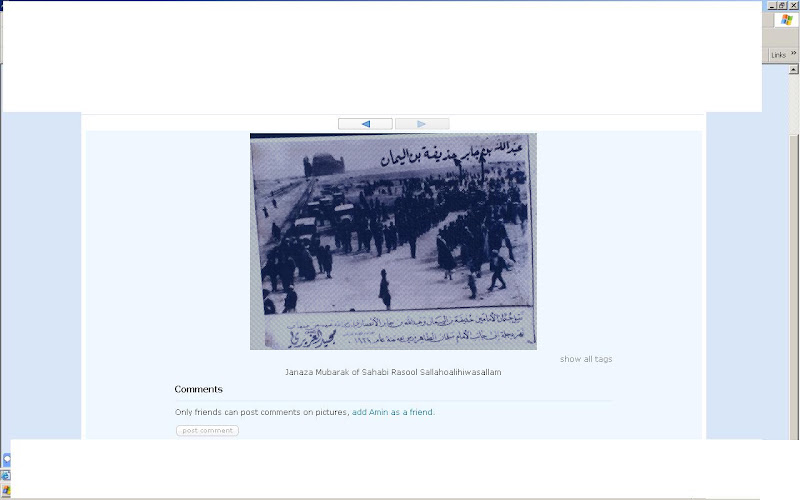
                Opening of graves of two Sahabah in Iraq in 1932:

                Though in normal cases and circumstances the dead bodies in the grave decompose and disintegrate yet there are proofs where the dead bodies of martyrs, prophets and saints have been found intact when their graves were dug.

                In 1932 A.D. (1351 A.H.) the then ruling King of Iraq Shah Faisal I, dreamt that he was being addressed by Hudhaifa al-Yamani, who said :-

                "O king ! Remove Jabir ibn Abdullah Ansari and me from the bank of river Tigris and bury us at some safe place because my grave is already water-logged, (full of water) while Jabir's grave is slowly getting water-logged."

                This dream was repeated again the next night but King Faisal I, did not pay attention to it on account of his pre-occupation with state affairs. On the third night Hazrat Hudhaifa was seen in the dream by the grand Mufti of Iraq. Hazrat Hudhaifa said to the grand Mufti :- "I have been directing the king since two nights to transfer our Bodies but he has not paid any heed. Tell him emphatically to arrange for the transfer of our graves!"

                So after discussing this matter, the King, his Prime Minister and the Grand Mufti decided to carry out this work. It was decided that the Grand Mufti should issue a fatwa(religious ruling) on this matter and the Prime Minister will issue the fatwa to the press, so that the public may know about this great event. It was declared that on 10th Zilhajj after noon prayers the graves shall be opened and the holy bodies shall be transferred to another place.

                As it was Hajj season, pilgrims had gathered in Mecca. They requested King Faisal to postpone the event for a few days so that they all could attend the event after performing the Hajj. Hence, the King postponed this event to 20th Zilhajj.

                After noon prayers, on 20th Zilhajj 1351 A.H. a large number of Muslims and non-Muslims gathered in Baghdad, and the city was heavily crowded. First when the grave of Hazrat Hudhaifa was opened water was fond inside. The body was lifted with a crane in such a way that it safely came on a stretcher. Then the stretcher was lifted by the King, the Grand Mufti, the Prime Minister and Prince Farooq of Egypt and brought to a glass coffin box made especially to keep the holy bodies. The body of Hazrat Jabir was also transferred to the glass box in the same scrupulous manner.

                The most marvelous spectacle was now seen by the huge crowd that had gathered to witness this great event. Both the holy bodies of these true companions of the Holy Prophet (SAWW) were fresh and intact while their open eyes issued forth such divine light that the spectator's eyes were dazzled. Furthermore, their coffin, clothes, kaffan were also intact and at first glance, it appeared as if these heroes of Islam were alive. The two bodies were then taken away and buried afresh near the grave of another great hero of Islam, Salman-e-Farsi, in Salman Park which is 30 miles from Baghdad. This miracle amazed the scientists, philosophers and doctors. They were all bewildered and spellbound to witness this great miracle.


                A German physiologist who had been showing a lot of interest in this was so impressed by the conditions of the bodies, which were buried for more than a thousand years, that he immediately came to the Grand Mufti, held up his hands and said, "What more evidence can there be in support of Islam. I embrace Islam so teach me about it!" Thus before thousands of people this German doctor became a Muslim. His example was followed by many Christians and Jews and for a long time it continued in Baghdad and a large number of people became Muslims as a result of this miracle.

                Now let us all sit-back and think over this event and derive a lesson from this miracle. Pondering over such events is potent food for the mind and serves as an eye-opener to humanity. Some of the material above was published in a Pakistani newspaper, "Daily Jung" on 7th June 1970.

                Let us now briefly look into the lives of these prominent personalities.


                HAZRAT HUDHAIFA AL YAMANI

                He was one of the most trusted companions of the Holy Prophet (SAWW). There are several instances in history where Hazrat Hudhaifa has proved steadfast in his loyalty to our Holy Prophet (SAWW). Hazrat Hudhaifa had responded to the Prophet's call in battle of Trench (Khandak) when the Prophet had promised Paradise to the person who would venture out to the enemy's camp with the intention of spying their activities. Hazrat Hudhaifa was known as "the possessor of the Secret", since the Holy Prophet (SAWW) had revealed to him the names and specific identity of those hypocrites who intended to kill him on his return journey from Tabuk, but had strictly instructed him not to disclose the secret. Hudhaifa was appointed governor of Madain (which is a place near Baghdad, Iraq) by Caliph Omar and held that post for many years. He was holding that post till Hazrat Ali (RA) assumed the caliphate. Hazrat Ali (RA) then sent a letter to the people of Madain, informing them of his caliphate and that Hudhaifa would continue to be the governor of Madian. Hudhaifa al Yamani died just before the battle of Jamal in 36 A.H. He was buried in Madain.*


                HAZRAT JABIR IBNE ABDULLAH-E-ANSARI

                Jabir-e-Ansari was also one of the most exalted companions of the Holy Prophet (SAW). Jabir was in the forefront in 18 battles, under the banner of Islam. Jabir -e-Ansari was the last survivor amongst the companions of the Holy Prophets(SAW). Jabir, on hearing about the martyrdom of Hazrat Hussain(RA) and his companions and the imprisonment and humiliation of the surviving members of his family, hastened towards Kerbala with his devoted friends and followers and buried the martyrs there. He was the first person to pay homage to the martyrs of Kerbala and carry out their burial rites. He was tortured by Hajjaj bin Yusuf and it is reported that molten lead was poured on the hands of Jabir by the tyrant. Jabir-e-Ansari was 94 years old when he left this world for the heavenly abode in 78 A.H. He was also buried in Madain.

                sigpic"When it is said to them: "Make not mischief on the earth," they say: "Why, we only Want to make peace!" (2.11)

                And when it is said to them (hypocrites): "Believe as the people (followers of Muhammad Peace be upon him , Al-Ansar and Al-Muhajirun) have believed," they say: "Shall we believe as the fools have believed?" Verily, they are the fools, but they know not."(2.13)

                Comment


                • #38


                  Graves of sahaba ra.They are also called as 20th century sahaba ra.
                  sigpic"When it is said to them: "Make not mischief on the earth," they say: "Why, we only Want to make peace!" (2.11)

                  And when it is said to them (hypocrites): "Believe as the people (followers of Muhammad Peace be upon him , Al-Ansar and Al-Muhajirun) have believed," they say: "Shall we believe as the fools have believed?" Verily, they are the fools, but they know not."(2.13)

                  Comment


                  • #39


                    The story of barsisa of bani israel.
                    Last edited by ghumbasa; 11-20-2014, 01:45 AM.
                    sigpic"When it is said to them: "Make not mischief on the earth," they say: "Why, we only Want to make peace!" (2.11)

                    And when it is said to them (hypocrites): "Believe as the people (followers of Muhammad Peace be upon him , Al-Ansar and Al-Muhajirun) have believed," they say: "Shall we believe as the fools have believed?" Verily, they are the fools, but they know not."(2.13)

                    Comment


                    • #40
                      Hadeeth about praying at birth place of isa aly salam.

                      Anas bin Malik narrated that the Messenger of Allah صلی اللہ علیہ وآلہ وسلم said: “I was brought an animal that was larger than a donkey and smaller than mule, whose stride could reach as far as it could see. I mounted it, and Jibril was with me, and I set off. Then he said: ‘Dismount and pray,’ so I did that. He said: ‘Do you know where you have prayed? You have prayed in Taibah, which will be the place of the emigration.’ Then he said: ‘Dismount and pray,’ so I prayed. He said: ‘Do you know where you have prayed? You have prayed in Mount Sinai, where Allah, the Mighty and Sublime, spoke to Musa, peace be upon him.’ Then he said: ‘Dismount and pray.’ So I dismounted and prayed, and he said: ‘Do you know where you have prayed? You have prayed in Bethlehem, where ‘Eisa, peace be upon him, was born.’ Then I entered Bait Al-Maqdis (Jerusalem) where the Prophets, peace be upon them, were assembled for me, and Jiba’iI brought me forward to lead them in prayer. Then I was taken up to the first heaven, where I saw Adam, peace be upon him. Then I was taken up to the second heaven where I saw the maternal cousins ‘Eisa and Yahya, peace be upon them. Then I was taken up to the third heaven where I saw Yusuf, peace be upon him. Then I was taken up to the fourth heaven where I saw Harun, peace be upon him. Then I was taken up to the fifth heaven where I saw Idris, peace be upon him. Then I was taken up to the sixth heaven where I saw Musa, peace be upon him. Then I was taken up to the seventh heaven where I saw Ibrahim, peace be upon him. Then I was taken up above seven heavens and we came to Sidrah Al-Muntaha and I was covered with fog. I fell down prostrate and it was said to me: ‘(Indeed) The day I created the heavens and the Earth, I enjoined upon you and your Ummah fifty prayers, so establish them, you and your Ummah.’ I came back to Ibrahim and he did not ask me about anything, then I came to Musaand he said: ‘How much did your Lord enjoin upon you and your Ummah?’ I said: ‘Fifty prayers.’ He said: ‘You will not be able to establish them, neither you nor your Ummah. Go back to your Lord and ask Him to reduce it.’ So I went back to my Lord and He reduced it by ten. Then I came to Musaand he told me to go back, so I went back and He reduced it by ten. Then I came to Musaand he told me to go back, so I went back and He reduced it by ten. Then it was reduced to five prayers. He (Musa) said: ‘Go back to your Lord and ask Him to reduce it, for two prayers were enjoined upon the Children of Israel but they did not establish them.’ So I went back to my Lord and asked Him to reduce it, but He said: ‘The day I created the heavens and the Earth, I enjoined fifty prayers upon you and your Ummah. Five is for fifty, so establish them, you and your Ummah.’ I knew that this was what Allah, the Mighty and Sublime, had determined so I went back to Musa, peace be upon him, and he said: ‘Go back.’ But I knew that it was what Allah had determined, so I did not go back.” (Hasan)


                      سنن نسائی:جلد اول:حدیث نمبر 453 حدیث متواتر حدیث مرفوع مکررات 25 متفق علیہ 15

                      أَخْبَرَنَا عَمْرُو بْنُ هِشَامٍ قَالَ حَدَّثَنَا مَخْلَدٌ عَنْ سَعِيدِ بْنِ عَبْدِ الْعَزِيزِ قَالَ حَدَّثَنَا يَزِيدُ بْنُ أَبِي مَالِکٍ قَالَ حَدَّثَنَا أَنَسُ بْنُ مَالِکٍ أَنَّ رَسُولَ اللَّهِ صَلَّی اللَّهُ عَلَيْهِ وَسَلَّمَ قَالَ أُتِيتُ بِدَابَّةٍ فَوْقَ الْحِمَارِ وَدُونَ الْبَغْلِ خَطْوُهَا عِنْدَ مُنْتَهَی طَرْفِهَا فَرَکِبْتُ وَمَعِي جِبْرِيلُ عَلَيْهِ السَّلَام فَسِرْتُ فَقَالَ انْزِلْ فَصَلِّ فَفَعَلْتُ فَقَالَ أَتَدْرِي أَيْنَ صَلَّيْتَ صَلَّيْتَ بِطَيْبَةَ وَإِلَيْهَا الْمُهَاجَرُ ثُمَّ قَالَ انْزِلْ فَصَلِّ فَصَلَّيْتُ فَقَالَ أَتَدْرِي أَيْنَ صَلَّيْتَ صَلَّيْتَ بِطُورِ سَيْنَائَ حَيْثُ کَلَّمَ اللَّهُ عَزَّ وَجَلَّ مُوسَی عَلَيْهِ السَّلَام ثُمَّ قَالَ انْزِلْ فَصَلِّ فَنَزَلْتُ فَصَلَّيْتُ فَقَالَ أَتَدْرِي أَيْنَ صَلَّيْتَ صَلَّيْتَ بِبَيْتِ لَحْمٍ حَيْثُ وُلِدَ عِيسَی عَلَيْهِ السَّلَام ثُمَّ دَخَلْتُ بَيْتَ الْمَقْدِسِ فَجُمِعَ لِي الْأَنْبِيَائُ عَلَيْهِمْ السَّلَام فَقَدَّمَنِي جِبْرِيلُ حَتَّی أَمَمْتُهُمْ ثُمَّ صُعِدَ بِي إِلَی السَّمَائِ الدُّنْيَا فَإِذَا فِيهَا آدَمُ عَلَيْهِ السَّلَام ثُمَّ صُعِدَ بِي إِلَی السَّمَائِ الثَّانِيَةِ فَإِذَا فِيهَا ابْنَا الْخَالَةِ عِيسَی وَيَحْيَی عَلَيْهِمَا السَّلَام ثُمَّ صُعِدَ بِي إِلَی السَّمَائِ الثَّالِثَةِ فَإِذَا فِيهَا يُوسُفُ عَلَيْهِ السَّلَام ثُمَّ صُعِدَ بِي إِلَی السَّمَائِ الرَّابِعَةِ فَإِذَا فِيهَا هَارُونُ عَلَيْهِ السَّلَام ثُمَّ صُعِدَ بِي إِلَی السَّمَائِ الْخَامِسَةِ فَإِذَا فِيهَا إِدْرِيسُ عَلَيْهِ السَّلَام ثُمَّ صُعِدَ بِي إِلَی السَّمَائِ السَّادِسَةِ فَإِذَا فِيهَا مُوسَی عَلَيْهِ السَّلَام ثُمَّ صُعِدَ بِي إِلَی السَّمَائِ السَّابِعَةِ فَإِذَا فِيهَا إِبْرَاهِيمُ عَلَيْهِ السَّلَام ثُمَّ صُعِدَ بِي فَوْقَ سَبْعِ سَمَوَاتٍ فَأَتَيْنَا سِدْرَةَ الْمُنْتَهَی فَغَشِيَتْنِي ضَبَابَةٌ فَخَرَرْتُ سَاجِدًا فَقِيلَ لِي إِنِّي يَوْمَ خَلَقْتُ السَّمَوَاتِ وَالْأَرْضَ فَرَضْتُ عَلَيْکَ وَعَلَی أُمَّتِکَ خَمْسِينَ صَلَاةً فَقُمْ بِهَا أَنْتَ وَأُمَّتُکَ فَرَجَعْتُ إِلَی إِبْرَاهِيمَ فَلَمْ يَسْأَلْنِي عَنْ شَيْئٍ ثُمَّ أَتَيْتُ عَلَی مُوسَی فَقَالَ کَمْ فَرَضَ اللَّهُ عَلَيْکَ وَعَلَی أُمَّتِکَ قُلْتُ خَمْسِينَ صَلَاةً قَالَ فَإِنَّکَ لَا تَسْتَطِيعُ أَنْ تَقُومَ بِهَا أَنْتَ وَلَا أُمَّتُکَ فَارْجِعْ إِلَی رَبِّکَ فَاسْأَلْهُ التَّخْفِيفَ فَرَجَعْتُ إِلَی رَبِّي فَخَفَّفَ عَنِّي عَشْرًا ثُمَّ أَتَيْتُ مُوسَی فَأَمَرَنِي بِالرُّجُوعِ فَرَجَعْتُ فَخَفَّفَ عَنِّي عَشْرًا ثُمَّ رُدَّتْ إِلَی خَمْسِ صَلَوَاتٍ قَالَ فَارْجِعْ إِلَی رَبِّکَ فَاسْأَلْهُ التَّخْفِيفَ فَإِنَّهُ فَرَضَ عَلَی بَنِي إِسْرَائِيلَ صَلَاتَيْنِ فَمَا قَامُوا بِهِمَا فَرَجَعْتُ إِلَی رَبِّي عَزَّ وَجَلَّ فَسَأَلْتُهُ التَّخْفِيفَ فَقَالَ إِنِّي يَوْمَ خَلَقْتُ السَّمَوَاتِ وَالْأَرْضَ فَرَضْتُ عَلَيْکَ وَعَلَی أُمَّتِکَ خَمْسِينَ صَلَاةً فَخَمْسٌ بِخَمْسِينَ فَقُمْ بِهَا أَنْتَ وَأُمَّتُکَ فَعَرَفْتُ أَنَّهَا مِنْ اللَّهِ تَبَارَکَ وَتَعَالَی صِرَّی فَرَجَعْتُ إِلَی مُوسَی عَلَيْهِ السَّلَام فَقَالَ ارْجِعْ فَعَرَفْتُ أَنَّهَا مِنْ اللَّهِ صِرَّی أَيْ حَتْمٌ فَلَمْ أَرْجِعْ

                      sigpic"When it is said to them: "Make not mischief on the earth," they say: "Why, we only Want to make peace!" (2.11)

                      And when it is said to them (hypocrites): "Believe as the people (followers of Muhammad Peace be upon him , Al-Ansar and Al-Muhajirun) have believed," they say: "Shall we believe as the fools have believed?" Verily, they are the fools, but they know not."(2.13)

                      Comment


                      • #41
                        Abu Umamah ra reported: A young man came to the Prophet, peace and blessings be upon him, and he said, “O Messenger of Allah, give me permission to commit adultery.” The people turned to rebuke him, saying, “Quiet! Quiet!” The Prophet saww said, “Come here.” The young man came close and he told him to sit down. The Prophet saww said, “Would you like that for your mother?” The man said, “No, by Allah, may I be sacrificed for you. Neither would people like it for their mothers.” The Prophet said, “Would you like that for your daughter?” The man said, “No, by Allah, may I be sacrificed for you. Neither would people like it for their daughters.” The Prophet said, “Would you like that for your sister?” The man said, “No, by Allah, may I be sacrificed for you. Neither would people like it for their sisters.” The Prophet said, “Would you like that for your aunts?” The man said, “No, by Allah, may I be sacrificed for you. Neither would people like it for their aunts.” The Prophet placed his hand on him and he said, “O Allah, forgive his sins, purify his heart, and guard his chastity.” After that, the young man never turned to anything sinful.

                        Source: Musnad Ahmad 21708

                        sigpic"When it is said to them: "Make not mischief on the earth," they say: "Why, we only Want to make peace!" (2.11)

                        And when it is said to them (hypocrites): "Believe as the people (followers of Muhammad Peace be upon him , Al-Ansar and Al-Muhajirun) have believed," they say: "Shall we believe as the fools have believed?" Verily, they are the fools, but they know not."(2.13)

                        Comment


                        • #42


                          sigpic"When it is said to them: "Make not mischief on the earth," they say: "Why, we only Want to make peace!" (2.11)

                          And when it is said to them (hypocrites): "Believe as the people (followers of Muhammad Peace be upon him , Al-Ansar and Al-Muhajirun) have believed," they say: "Shall we believe as the fools have believed?" Verily, they are the fools, but they know not."(2.13)

                          Comment


                          • #43


                            Story of Abuqudamah and a young boy ....
                            sigpic"When it is said to them: "Make not mischief on the earth," they say: "Why, we only Want to make peace!" (2.11)

                            And when it is said to them (hypocrites): "Believe as the people (followers of Muhammad Peace be upon him , Al-Ansar and Al-Muhajirun) have believed," they say: "Shall we believe as the fools have believed?" Verily, they are the fools, but they know not."(2.13)

                            Comment


                            • #44
                              HUMILITY :

                              Allah created human beings to worship Him and a practising Muslim in, essence, should be able to worship God in every second, of every hour of every day.* Islam is a way of life and it means nothing more, or less, than submission to the One God.

                              “And I (God) created not the jinn and humans except they should worship Me Alone.” (Quran 51:56)

                              The concept of God in Islam describes Him as the most Merciful and the most Loving and whatever He prescribes for humankind is in the best interest of humankind.* Submission to the will of God is a pathway to purity, to peace and ultimately to Paradise.

                              The word Quran most frequently uses to describe worship is ibadah.**Ibadah*is the root of the word ‘ubudiyyah, which means to express ones humility or humbleness, and as with most Arabic words there are many shades of meaning.**Ibadah*involves more then an awareness of humility. *It is the complete sense of humbleness that overcomes one who is totally submitted to the will of God, the Almighty.* Worship is submission to God, the essential part of submission is humility.

                              “So glorify the praises of your Lord and be of those who prostrate themselves (to Him).” (Quran 15:98)

                              Humility can guide us to Paradise, just as its opposite, arrogance,kibr*in Arabic, can only lead us into Hell.* It is Satan’s arrogance that caused his expulsion from Paradise; when he refused to humbly obey God’s command and prostrate before Adam, the father of mankind, he condemned himself and his followers to Hell. *Satan’s lack of submission, or humility, resulted in one of the most pious of God’s creatures falling into the abyss.

                              Except Satan, he refused to be among the prostrators.* God said, 'O Satan!* What is your reason for not being among the prostrators?* ‘Satan said: 'I am not the one to prostrate myself to a human being, whom You created from sounding clay...”*(Quran 15:30-35)

                              No one who behaves arrogantly or who acts as if he or she has power over others is capable of true submission.* All power and strength is from God Alone.* All human beings are equal in the sight of God and the distinctions between nations, tribes, and families are only to know each other and not for the sake pride.

                              “O mankind!* We have created you from a male and a female, and made you into nations and tribes, that you may know one another.* Verily, the most honourable of you with God is that (believer) who has*At-Taqwa*(God consciousness).* Verily, God is All-Knowing, All-Aware.” (Quran 49:15)

                              HUMILITY IS PIETY:

                              The main pillar of worship,*Ibadah, is the prayer.* The congregational prayer* is performed in rows where all men stand before God as equals.
                              There is no special place for the rich or powerful, the meek and poor are not relegated to the back lines.* Each man bows his head in humility knowing that his brothers, on either side of him are equally important in the sight of God.* Only one thing raises one man or woman above another – piety.* True piety or righteousness is not achievable without cultivating a sense of humility.

                              “And turn not your face away from men with pride, nor walk in insolence through the earth.* Verily, God likes not each arrogant boaster.” (Quran 31:18)

                              Humility comes from knowing about God and recognising His greatness, venerating Him, loving Him and being in awe of Him; and it comes from knowing about oneself and one’s own faults, and weaknesses.* God gives this characteristic to those who struggle to become close to Him through deeds of piety and righteousness. A companion close to the Prophet Muhammad saww heard him say,

                              “Wealth does not decrease because of charity, and God increases His slave in honour when he forgives others.* And no one humbles himself before God but God will raise him (in status).” (Saheeh Muslim*)

                              Humility is one of the greatest blessings God can bestow on a human being.* It allows one to achieve genuine submission.* Prophet Muhammad was truly submitted to God; his character was one of complete humility and based on sincere trust in God.* He was a model of kindness and humbleness.* In fact, the characteristics displayed by Prophet Muhammad saww were the exact opposite of pride and arrogance.* Every aspect of his life reflected humbleness, even his walking, talking, sitting or eating.

                              The Prophet saww did not behave towards others as if he was better than they were, nor did he spurn manual work.* One of his companions reported that Prophet Muhammad saww worked happily with servants or workers.* Other companions related that the Prophet saww tidied his house, tied camels, feed animals, ate meals with his servants, and helped them in kneading dough and bringing provisions from the market.* It was also reported that he used to visit the sick, attend funerals, ride on a donkey, slow down his pace for the sake of the weak and accept invitations from the poor.

                              The companions of Prophet Muhammad saww and the early generations of Muslims understood the concept of humility.* They behaved humbly towards God and mankind because of their love for God, and their fellow man, and fear of punishment in the Hereafter.

                              During his Caliphate, Omar ibn Al Khattab ra was marching upon Damascus with his army.* Abu Ubayda ra was with him.* They came upon a little lake.* Omar ra descended from his camel, took off his shoes, tied them together, and hung them on his shoulder.* He then took the halter off his camel and they entered the water together.*

                              Seeing this in front of the army, Abu Ubayda ra said, “O Commander of the Believers! How can you be so humble in front of all your men?”* Omar answered, “Woe to you, Abu Ubayda!* If only anyone else other than you thought this way!* Thoughts like this will cause the downfall of the Muslims.* Don't you see we were indeed a very lowly people?* God raised us to a position of honour and greatness through Islam.* If we forget who we are and wish other than the Islam which elevated us, the One who raised us surely will debase us.”

                              The one who is truly humble is the one who is truly blessed.* Every time he feels superior to others, he remembers God, the Most Great and Omnipotent, and humbles himself in true submission.

                              “And the slaves of God are those who walk on the earth in humility and calmness, and when the foolish address them (with bad words) they reply back with mild words of gentleness.” (Quran 25:63)

                              sigpic"When it is said to them: "Make not mischief on the earth," they say: "Why, we only Want to make peace!" (2.11)

                              And when it is said to them (hypocrites): "Believe as the people (followers of Muhammad Peace be upon him , Al-Ansar and Al-Muhajirun) have believed," they say: "Shall we believe as the fools have believed?" Verily, they are the fools, but they know not."(2.13)

                              Comment


                              • #45
                                sigpic"When it is said to them: "Make not mischief on the earth," they say: "Why, we only Want to make peace!" (2.11)

                                And when it is said to them (hypocrites): "Believe as the people (followers of Muhammad Peace be upon him , Al-Ansar and Al-Muhajirun) have believed," they say: "Shall we believe as the fools have believed?" Verily, they are the fools, but they know not."(2.13)

                                Comment

                                Working...
                                X