
 Tweet
Belgian Face Veil Ban Goes Into Effect
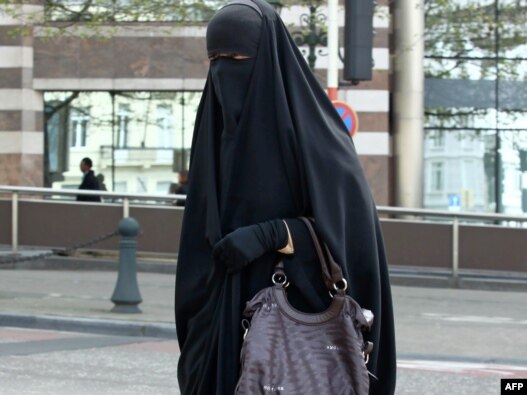
A Muslim woman dressed in niqab walks through the streets of Brussels.
Last updated (GMT/UTC): 23.07.2011 15:12
By Rikard Jozwiak
On July 23, Belgium became the second European country after France to
ban the wearing of veils covering the face in public.
The Belgian Parliament passed the law by a vote of 149-1 in April 2010. But
due to the fall of the government shortly thereafter and an inconclusive
election that left the country with a caretaker government, its
implementation was delayed until now.
The law does not explicitly mention niqabs or burqas. But it prohibits the
covering of one's face in public for security reasons -- effectively banning
the two Islamic garments. Violators will face fines of 137.50 euro and up to
seven days in jail.
Support for the legislation crossed the ideological spectrum, with
supporters calling it an effort to promote gender equality.
"I think we have to defend our fundamental principles of the Enlightenment.
Man and women are equal in all aspects," said Peter Dedecker, a lawmaker
from the center-right New Flemish Alliance.
Dedecker added that the new legislation was also "for safety reasons," as
anyone could be hiding behind and concealing anything underneath veiled
clothing.
"People just feel unsafe when they are in a mass with people with burqas,"
he said.
Dedecker stressed that he supports religious freedom, albeit within limits.
"Of course people have the freedom of religion," he said "We don't have
anything against Islam, for example, but I don't think that the burqa is a
key value of Islam…It is just crazy that women should hide their faces,
should hide their body because some men can't control themselves."
'There Are Limits' To Religious Freedom
Leen Dierick, a member of parliament with the Christian Democratic Party
agreed with Dedecker.
"Everybody has the right to have a religion and has a right to believe," she
said. "But there are limits to it and covering the face is for us the limit here
in Belgium."
The only person voting against the law was Eva Brems, a legislator from
the Green Party.
A professor of human rights law, Brems says she is convinced that the
legislation violates basic human rights and points to the fact that her stand
is backed by both the Council of Europe and rights groups, including
Amnesty International.
Brems said she also hopes that some of the Muslim women affected "will
challenge this law before the Constitutional Court and that it will be
annulled that way."
She is also concerned by the way the law was rushed through the chamber
without holding hearings with members of the Muslim community or civil
society.

It is estimated that only 28-200 women in the entire country actually wear burqas or niqabs.
Brems also questions the law's constitutionality and maintained that it was
"badly drafted."
"It is a very problematic law also from a purely legalistic viewpoint," she
said. "It does not only apply to Islamic face-covering veils, it applies to
appearing in the public in such as way that your face is not recognizable
with only very few exceptions. So actually if this law is strictly applied we
will end up in ridiculous situations where people organizing games for kids,
dressing up like clowns will be punished."
A Tiny Minority Is Affected
Perhaps the most striking aspect of the law is that it affects such a small
minority.
Some 600,000 of Belgium's 11 million inhabitants are Muslims, but the vast
majority of these are from North Africa where the culture of women
covering their faces is rare.
Various estimates show that there only are between 28 and 200 women in
the entire country that wear the soon-to-be prohibited garment.
Despite this, Mustafa Kastit, an imam at the largest mosque in Brussels,
believes the law could have negative consequences for the Muslim
community in Belgium as a whole:
"We regret the adoption of this law which risks stigmatizing the Muslim
community even more," he said.
"It also risks strengthening the climate of fear, the climate of Islamophobia
that seems to be taking root in more and more Western countries."
A Brussels native, Kastit maintains that tolerance has always been a
hallmark of Belgian society and politics, and that the country was " also a
society of compromise."
"Belgian politics and the mood in Belgium have always been distinguished by
a search for an absolute compromise," he said "Everyone tries to [ensure
their interests] but without risking the community spirit and the security of
the citizens."
Brems agrees, despite the fact that one Belgian newspaper likened her
opposition to the law to defending the Nazis.
"My theory behind this is that is not a matter of increased Islamophobia. It
is about a tension in society with Islam [and] with multiculturalism in
general that tries to find a way to manifest itself," she said.
"We are no longer accepting, luckily, manifest discrimination against
moderate or regular Islam. People feel that they should be allowed to be
intolerant vis-a-vis a more radical Islam."
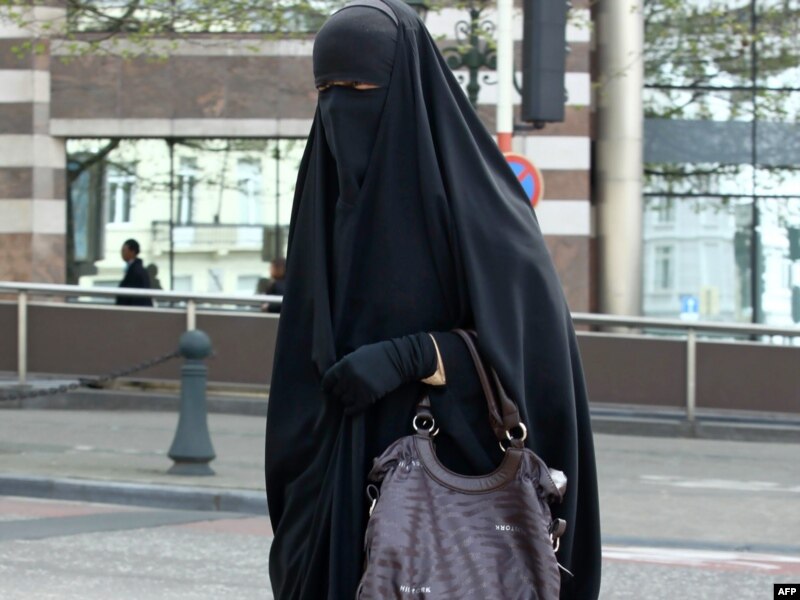
A Muslim woman dressed in niqab walks through the streets of Brussels.
Last updated (GMT/UTC): 23.07.2011 15:12
By Rikard Jozwiak
On July 23, Belgium became the second European country after France to
ban the wearing of veils covering the face in public.
The Belgian Parliament passed the law by a vote of 149-1 in April 2010. But
due to the fall of the government shortly thereafter and an inconclusive
election that left the country with a caretaker government, its
implementation was delayed until now.
The law does not explicitly mention niqabs or burqas. But it prohibits the
covering of one's face in public for security reasons -- effectively banning
the two Islamic garments. Violators will face fines of 137.50 euro and up to
seven days in jail.
Support for the legislation crossed the ideological spectrum, with
supporters calling it an effort to promote gender equality.
"I think we have to defend our fundamental principles of the Enlightenment.
Man and women are equal in all aspects," said Peter Dedecker, a lawmaker
from the center-right New Flemish Alliance.
Dedecker added that the new legislation was also "for safety reasons," as
anyone could be hiding behind and concealing anything underneath veiled
clothing.
"People just feel unsafe when they are in a mass with people with burqas,"
he said.
Dedecker stressed that he supports religious freedom, albeit within limits.
"Of course people have the freedom of religion," he said "We don't have
anything against Islam, for example, but I don't think that the burqa is a
key value of Islam…It is just crazy that women should hide their faces,
should hide their body because some men can't control themselves."
'There Are Limits' To Religious Freedom
Leen Dierick, a member of parliament with the Christian Democratic Party
agreed with Dedecker.
"Everybody has the right to have a religion and has a right to believe," she
said. "But there are limits to it and covering the face is for us the limit here
in Belgium."
The only person voting against the law was Eva Brems, a legislator from
the Green Party.
A professor of human rights law, Brems says she is convinced that the
legislation violates basic human rights and points to the fact that her stand
is backed by both the Council of Europe and rights groups, including
Amnesty International.
Brems said she also hopes that some of the Muslim women affected "will
challenge this law before the Constitutional Court and that it will be
annulled that way."
She is also concerned by the way the law was rushed through the chamber
without holding hearings with members of the Muslim community or civil
society.

It is estimated that only 28-200 women in the entire country actually wear burqas or niqabs.
Brems also questions the law's constitutionality and maintained that it was
"badly drafted."
"It is a very problematic law also from a purely legalistic viewpoint," she
said. "It does not only apply to Islamic face-covering veils, it applies to
appearing in the public in such as way that your face is not recognizable
with only very few exceptions. So actually if this law is strictly applied we
will end up in ridiculous situations where people organizing games for kids,
dressing up like clowns will be punished."
A Tiny Minority Is Affected
Perhaps the most striking aspect of the law is that it affects such a small
minority.
Some 600,000 of Belgium's 11 million inhabitants are Muslims, but the vast
majority of these are from North Africa where the culture of women
covering their faces is rare.
Various estimates show that there only are between 28 and 200 women in
the entire country that wear the soon-to-be prohibited garment.
Despite this, Mustafa Kastit, an imam at the largest mosque in Brussels,
believes the law could have negative consequences for the Muslim
community in Belgium as a whole:
"We regret the adoption of this law which risks stigmatizing the Muslim
community even more," he said.
"It also risks strengthening the climate of fear, the climate of Islamophobia
that seems to be taking root in more and more Western countries."
A Brussels native, Kastit maintains that tolerance has always been a
hallmark of Belgian society and politics, and that the country was " also a
society of compromise."
"Belgian politics and the mood in Belgium have always been distinguished by
a search for an absolute compromise," he said "Everyone tries to [ensure
their interests] but without risking the community spirit and the security of
the citizens."
Brems agrees, despite the fact that one Belgian newspaper likened her
opposition to the law to defending the Nazis.
"My theory behind this is that is not a matter of increased Islamophobia. It
is about a tension in society with Islam [and] with multiculturalism in
general that tries to find a way to manifest itself," she said.
"We are no longer accepting, luckily, manifest discrimination against
moderate or regular Islam. People feel that they should be allowed to be
intolerant vis-a-vis a more radical Islam."

Comment