

 Tweet
... falls on the December 7th (tomorrow) InshaAllah.
Obtained from IslamQA, below find some timely and relevant information which may clarify some misconceptions InshaAllah.
~-~-~
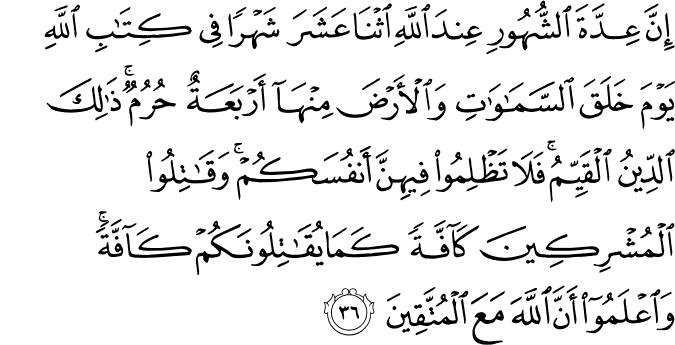
Allah’s sacred month of Muharram is a blessed and important month. It is the first month of the Hijri calendar and is one of the four sacred months concerning which Allaah says (interpretation of the meaning): “Verily, the number of months with Allaah is twelve months (in a year), so it was ordained by Allaah on the Day when He created the heavens and the earth; of them, four are sacred. That is the right religion, so wrong not yourselves therein…” [al-Tawbah 9:36]
Abu Bakrah (may Allaah be pleased with him) reported that the Prophet (peace and blessings of Allaah be upon him) said: “The year is twelve months of which four are sacred, the three consecutive months of Dhu’l-Qa’dah, Dhu’l-Hijjah and Muharram, and Rajab Mudar which comes between Jumaada and Sha’baan.” (Reported by al-Bukhaari, 2958).
Muharram is so called because it is a sacred (muharram) month and to confirm its sanctity.
Allaah’s words (interpretation of the meaning): “so wrong not yourselves therein…” mean do not wrong yourselves in these sacred months, because sin in these months is worse than in other months.
It was reported that Ibn ‘Abbaas said that this phrase (so wrong not yourselves therein…) referred to all the months, then these four were singled out and made sacred, so that sin in these months is more serious and good deeds bring a greater reward.
Qutaadah said concerning this phrase (so wrong not yourselves therein…) that wrongdoing during the sacred months is more serious and more sinful that wrongdoing at any other time. Wrongdoing at any time is a serious matter, but Allaah gives more weight to whichever of His commands He will. Allaah has chosen certain ones of His creation. He has chosen from among the angels Messengers and from among mankind Messengers. He chose from among speech the remembrance of Him (dhikr). He chose from among the earth the mosques, from among the months Ramadaan and the sacred months, from among the days Friday and from among the nights Laylat al-Qadr, so venerate that which Allaah has told us to venerate. People of understanding and wisdom venerate the things that Allaah has told us to venerate. (Summarized from the Tafseer of Ibn Katheer, may Allaah have mercy on him. Tafseer of Surat al-Tawbah, aayah 36).

Comment